Are Hokas worth it: a verdict on the Clifton, Bondi, trail shoes, lifestyle sneakers, recovery slides and boots, judged by construction and how long they last. I would say yes for people who stand and walk all day, and no for anyone who likes a flat, low shoe.
Are Hokas Worth It: The Mountain-Descent Shoe, Judged Sole to Midsole
Are Hokas worth it: a verdict on the Clifton, Bondi, trail shoes, lifestyle sneakers, recovery slides and boots.
Are Hokas worth it, in plain words
In 2009, two former Salomon employees, Nicolas Mermoud and Jean-Luc Diard, started a shoe company in Annecy, France. Their aim was narrow: a shoe that let you run downhill faster, with an oversized midsole that carried more cushion than other running shoes at the time. That is the whole origin story, and it matters for the question at hand.
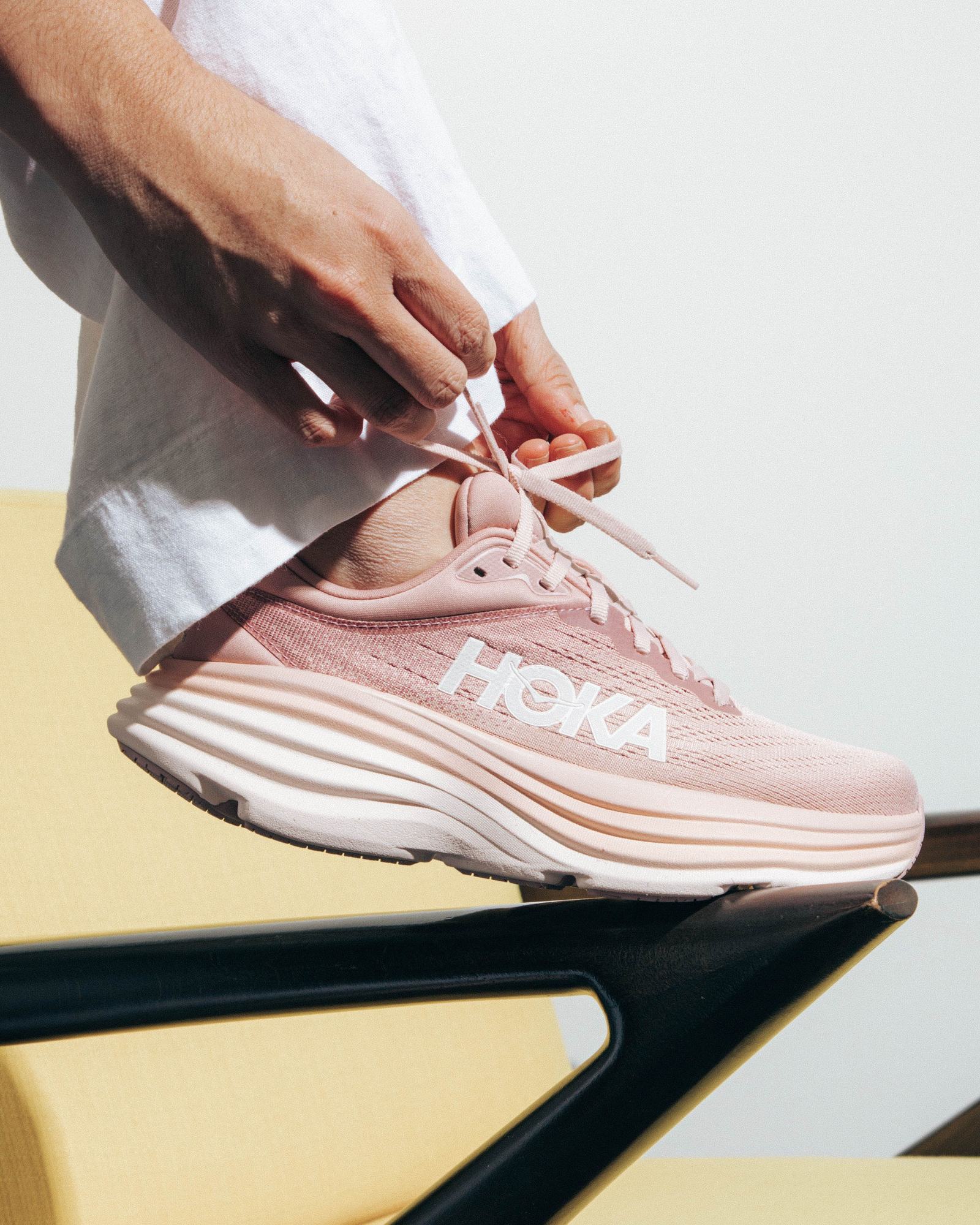
So, are Hokas worth it. My answer is yes, for a specific kind of person, and no for another. Hoka began as a technical answer to trail descents, and Meta-Rocker geometry, the curved sole shape, sits under every shoe the brand makes. Deckers, the parent of UGG and Teva, bought it in 2013. What you are paying attention to is construction: thick foam, a wide base, a rolling stride. If you spend hours on your feet, that design earns its place. If you want a flat, close-to-the-ground shoe, it will annoy you.
Start with the Clifton 11, the everyday road trainer. It has a compression-molded foam midsole, a double-lace lock and reflective details, and the mesh upper is light enough for a warm office commute. The black and white pair is the one I would reach for with straight-leg jeans. Stardust and silver, or alabaster and oat milk, sit well under a long gray coat in October. Frost and neon yuzu is for the person who wants the shoe to be the loud part of the outfit.
My test for any of them: stand in the shoes for ten minutes, then walk downhill. The heel should stay put, and the double-lace lock should hold without cranking the laces tight.

Hoka Clifton 11 colorways
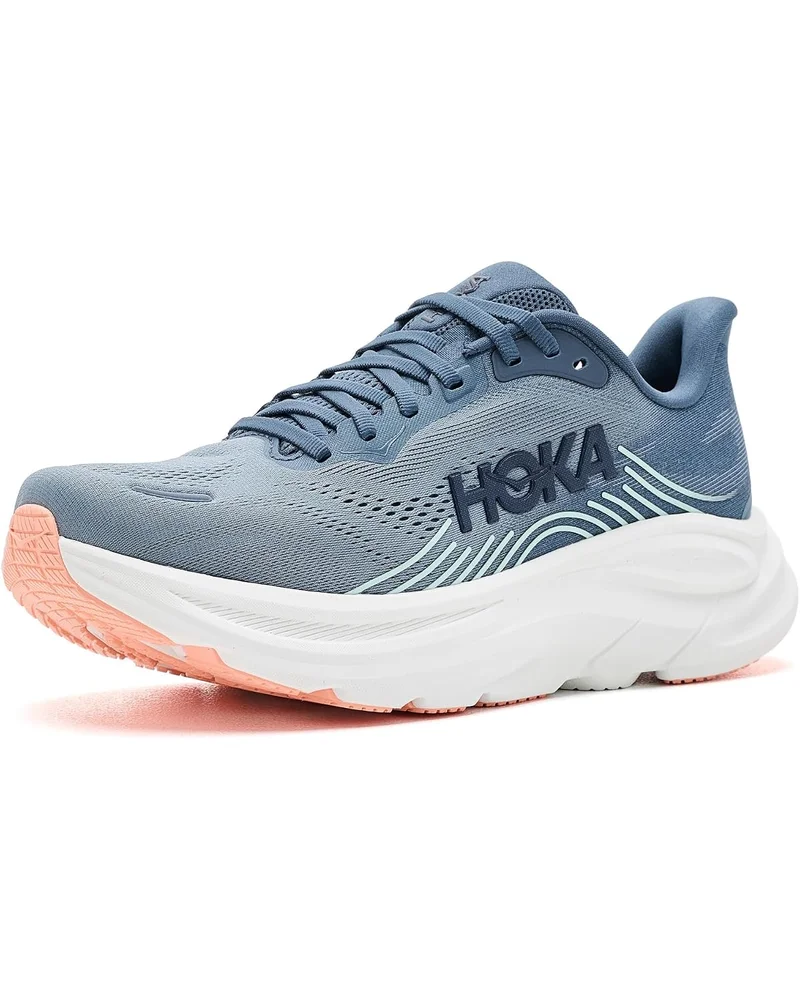
Clifton 11, Faded Navy / Glimmering Blue
HOKA
$154.95
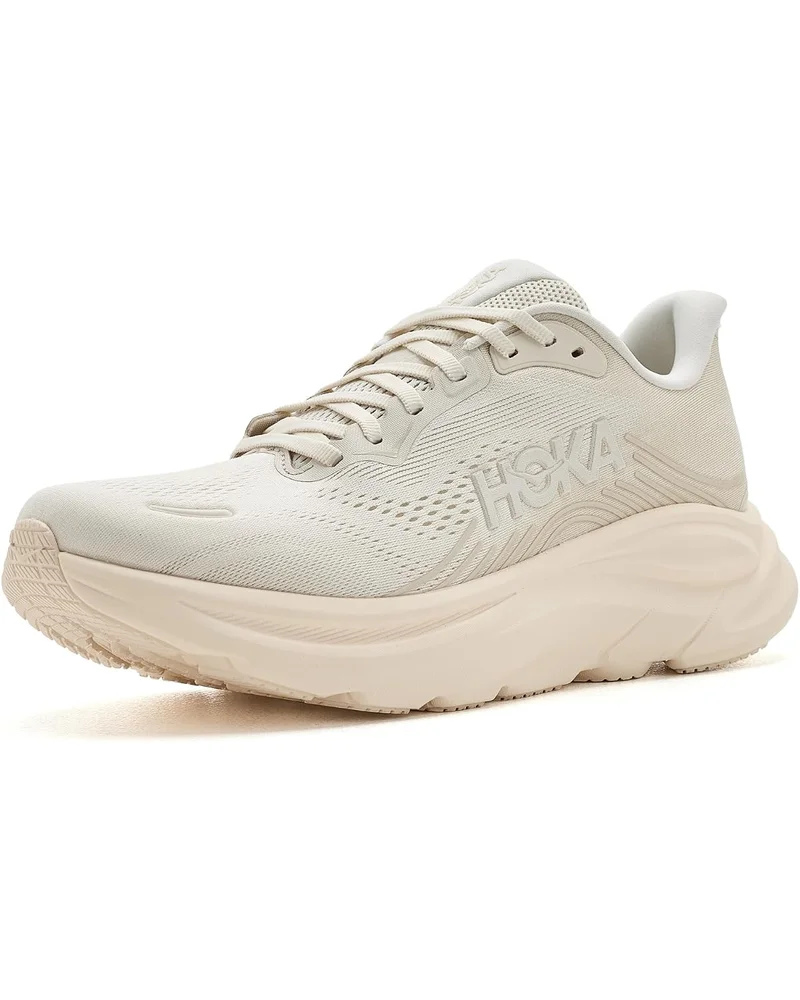
Clifton 11, Alabaster / Oat Milk
HOKA
$154.95
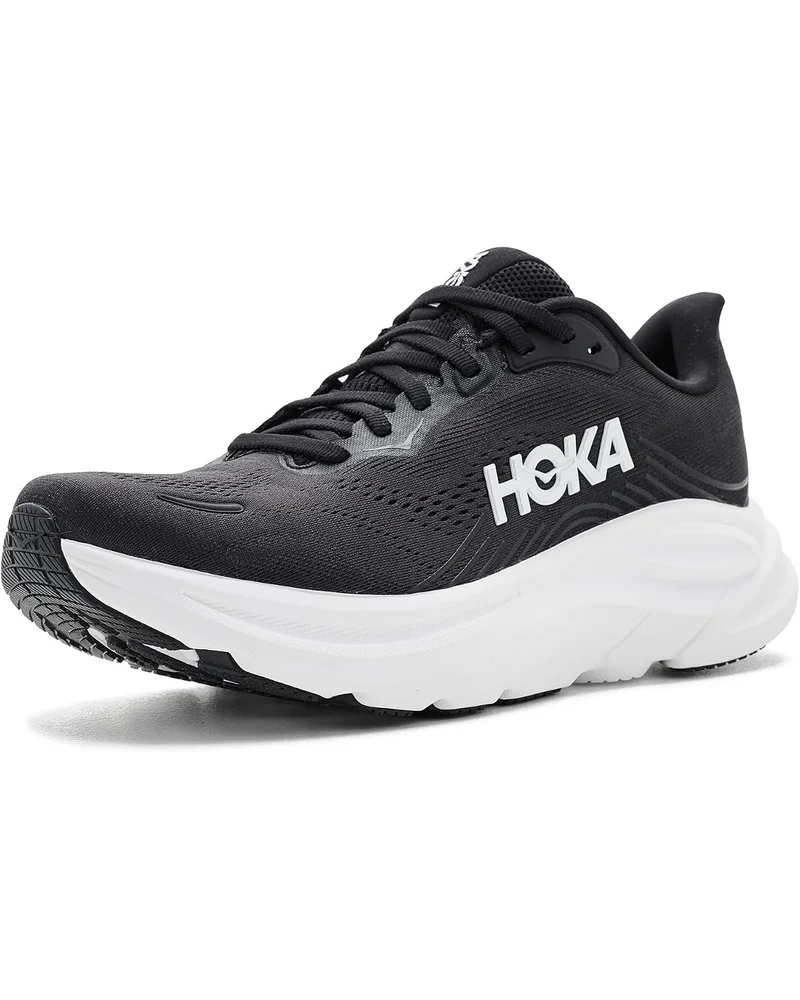
Clifton 11, Black / White
HOKA
$154.95
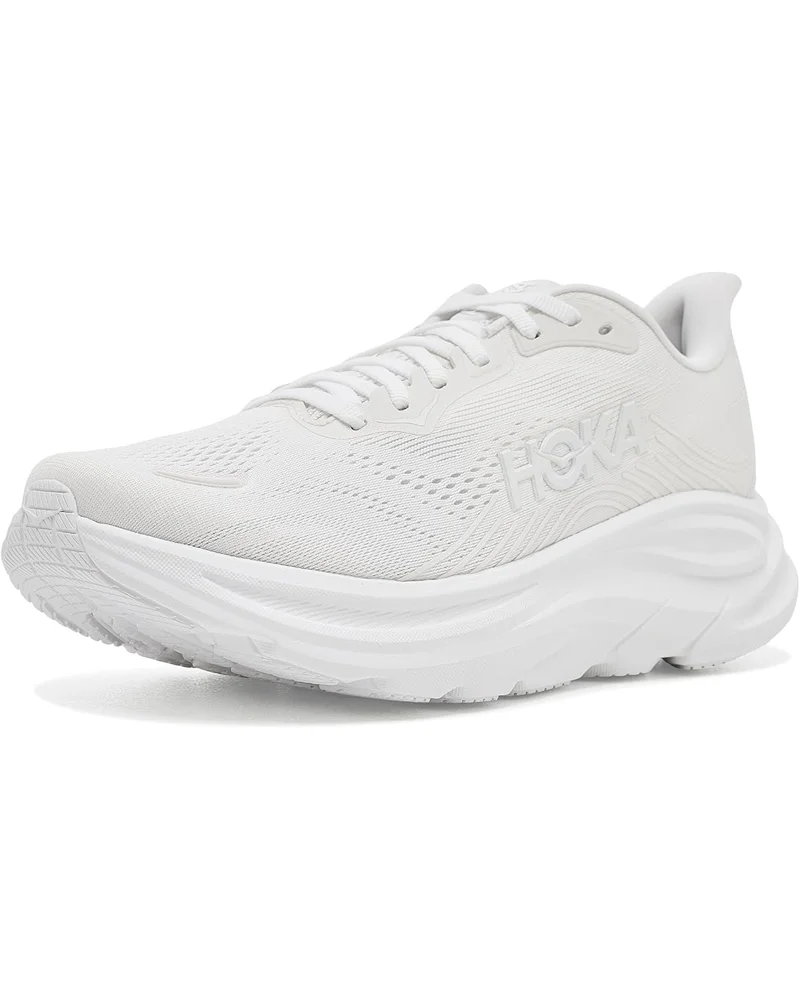
Clifton 11, White / White
HOKA
$154.95
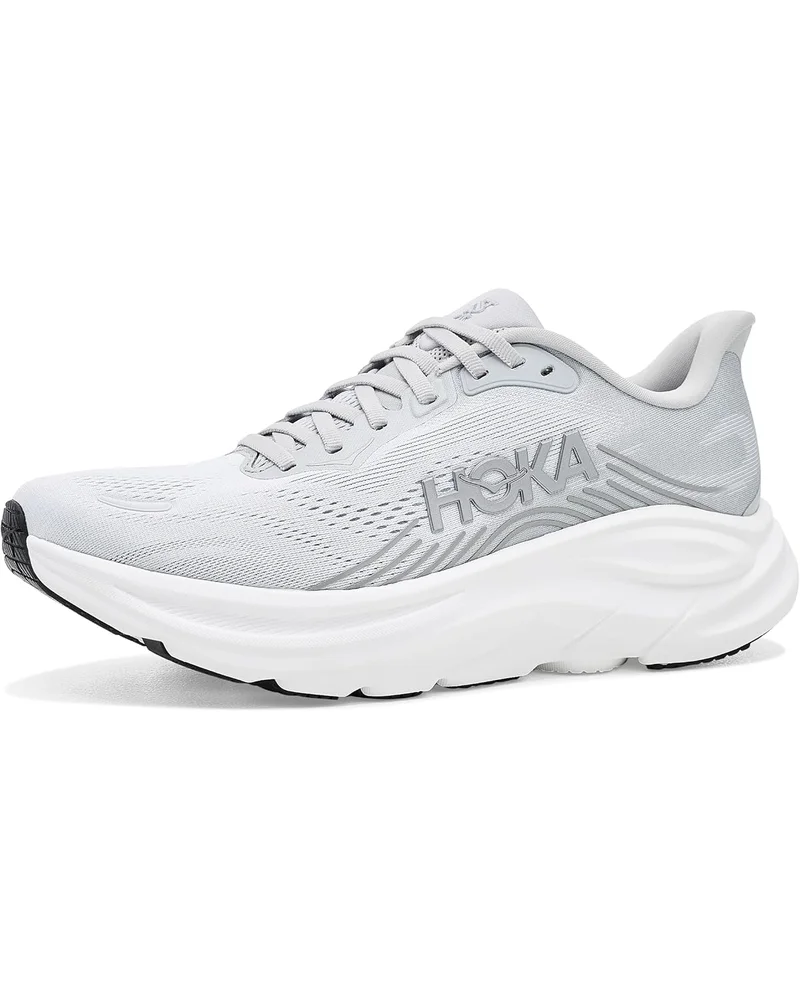
Clifton 11, Stardust / Silver
HOKA
$154.95
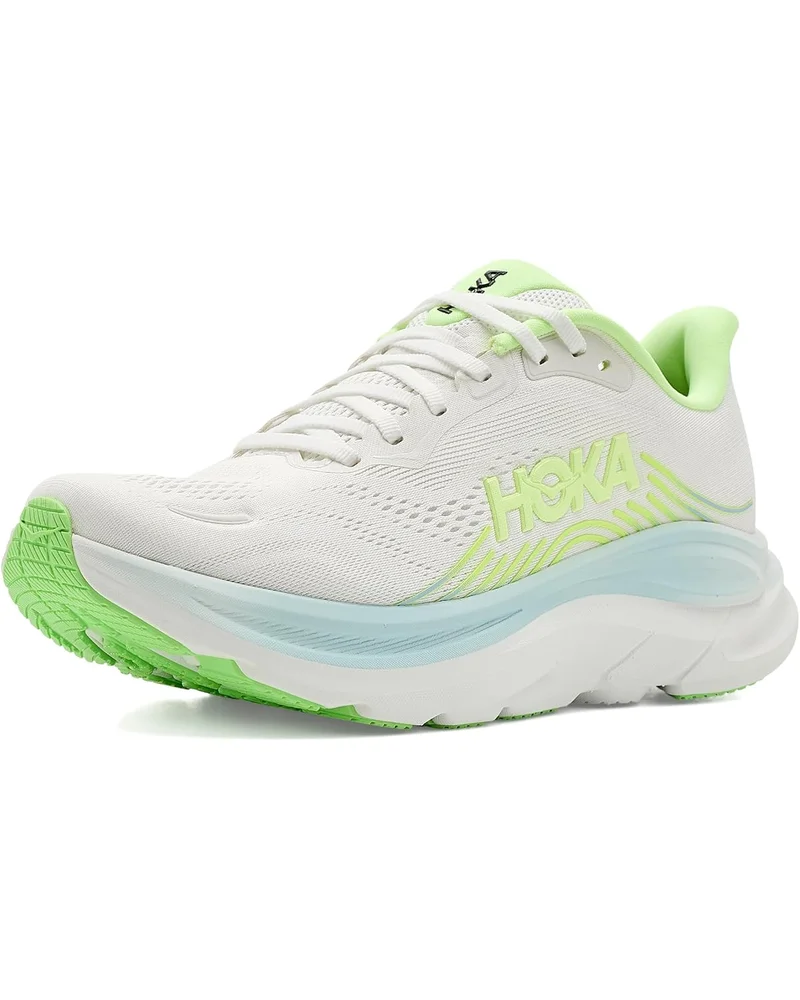
Clifton 11, Frost / Neon Yuzu
HOKA
$154.95
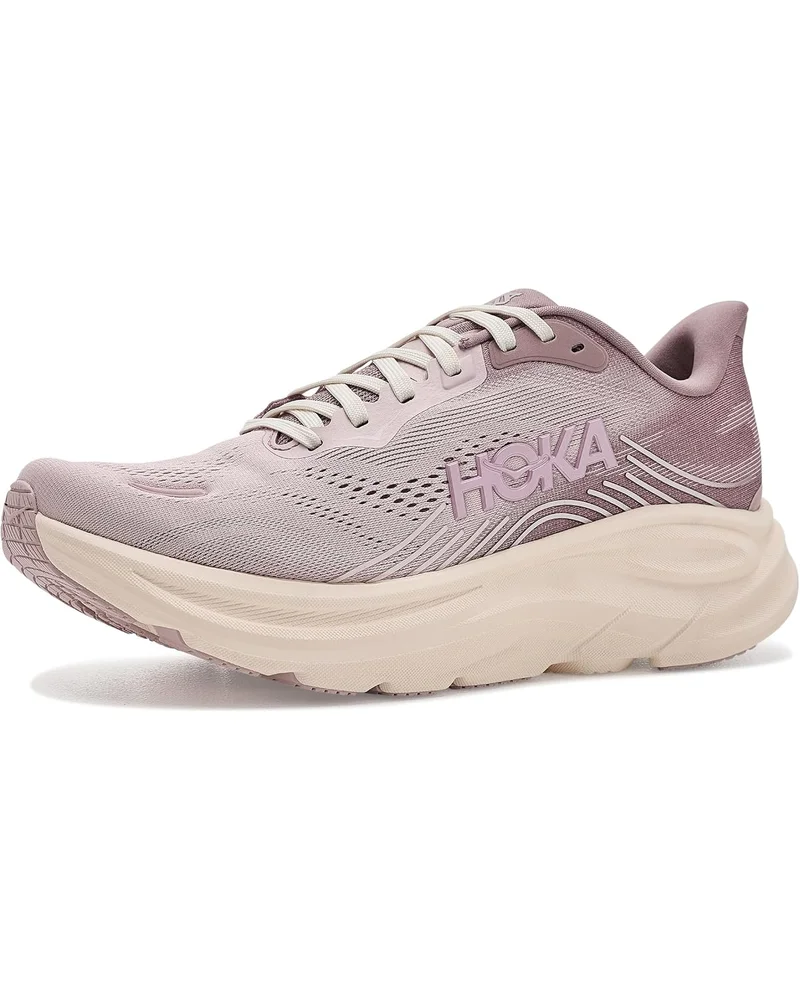
Clifton 11, Pink Opal / Quartzite
HOKA
$154.95
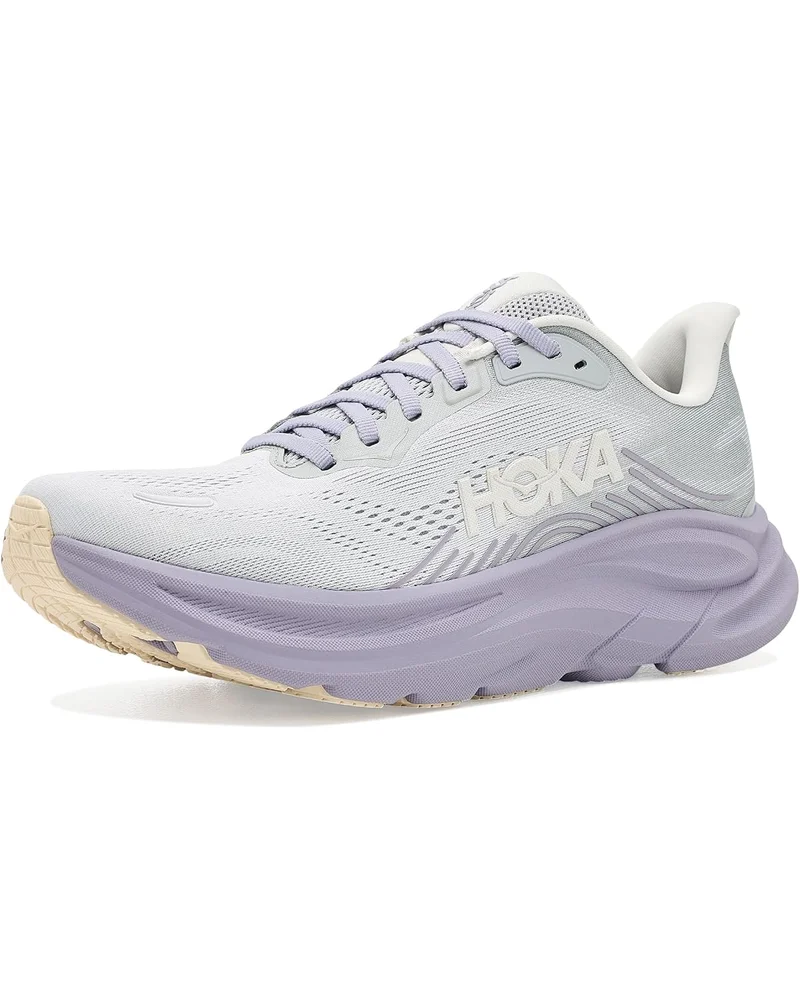
Clifton 11, Stardust / Mellow Lilac
HOKA
$154.95
The Bondi 9, built for long days
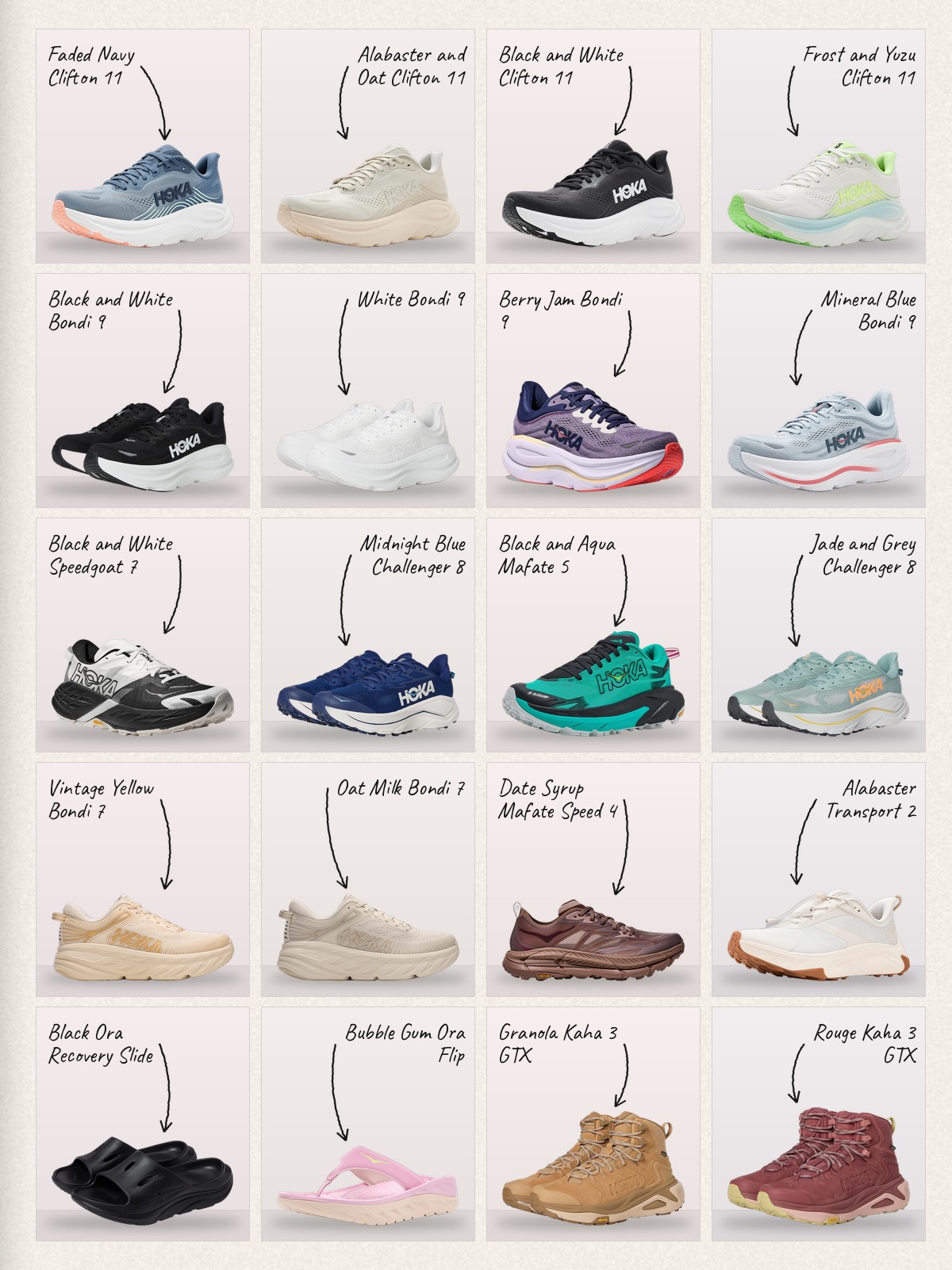
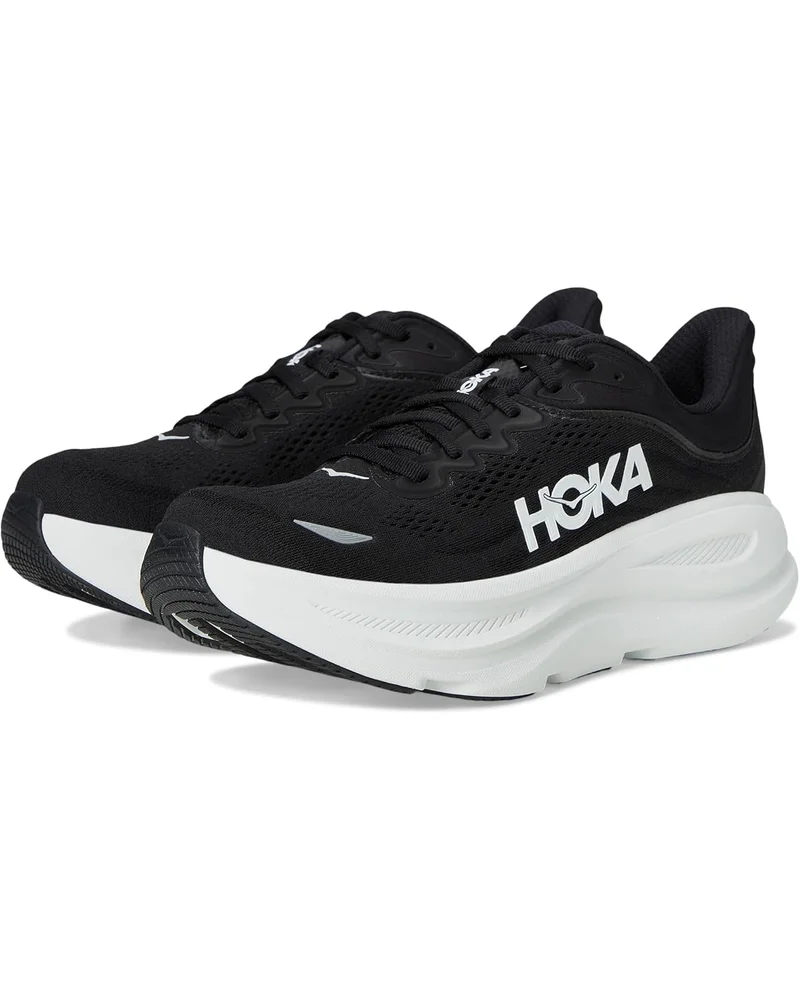
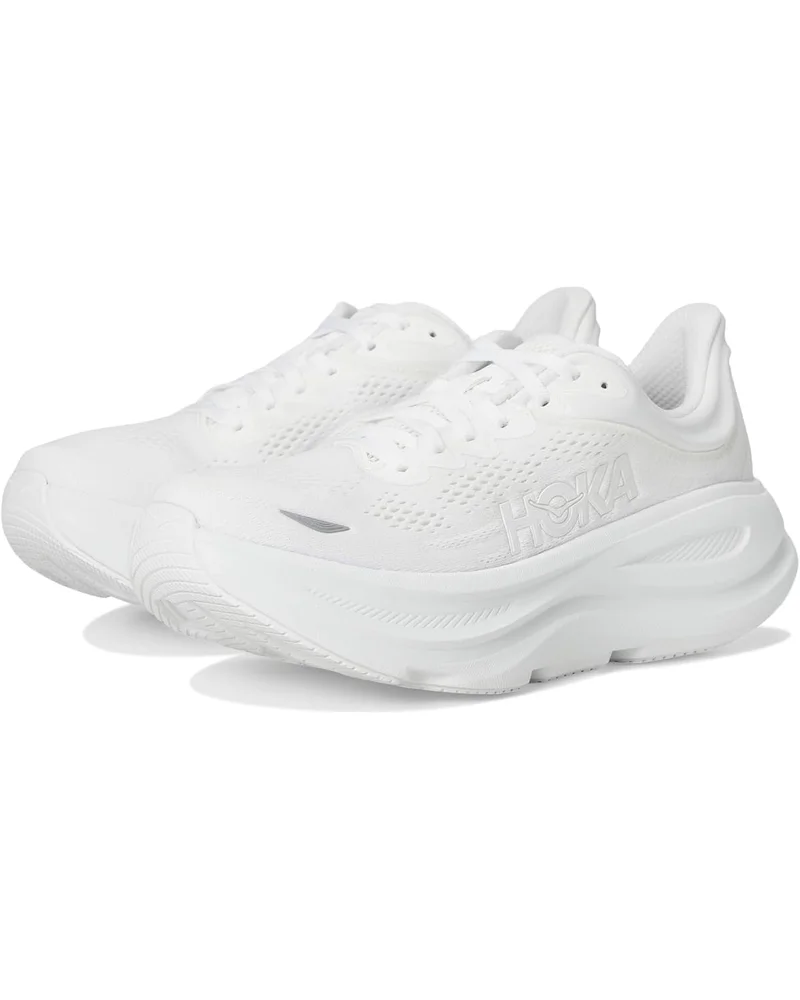
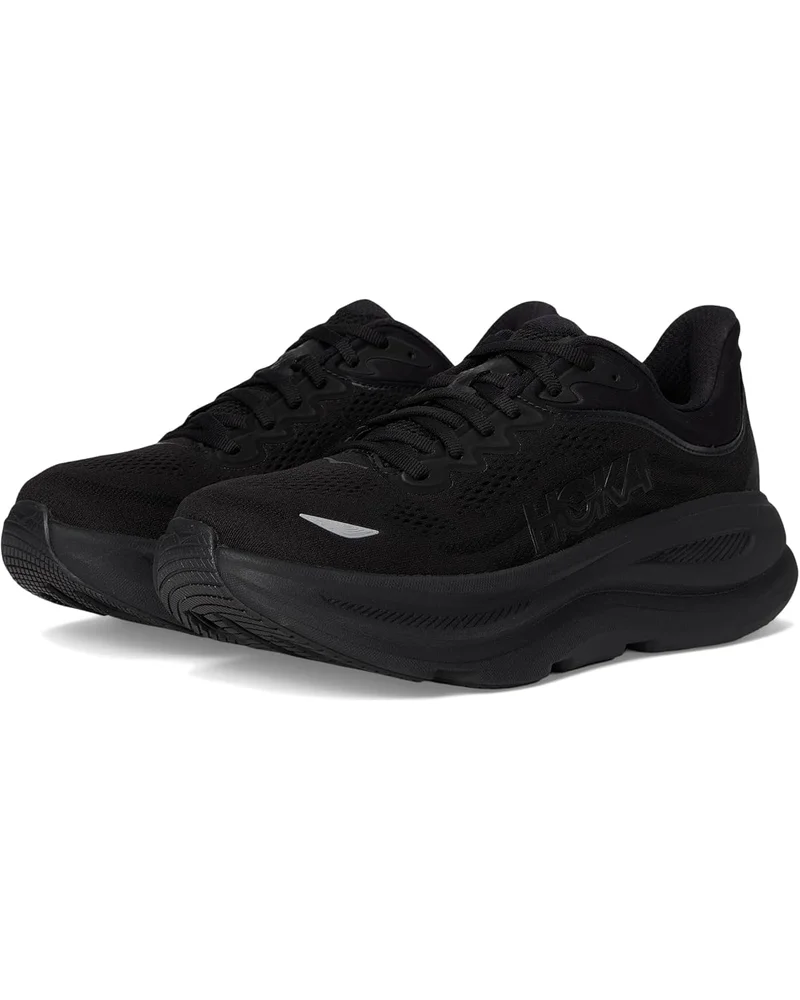
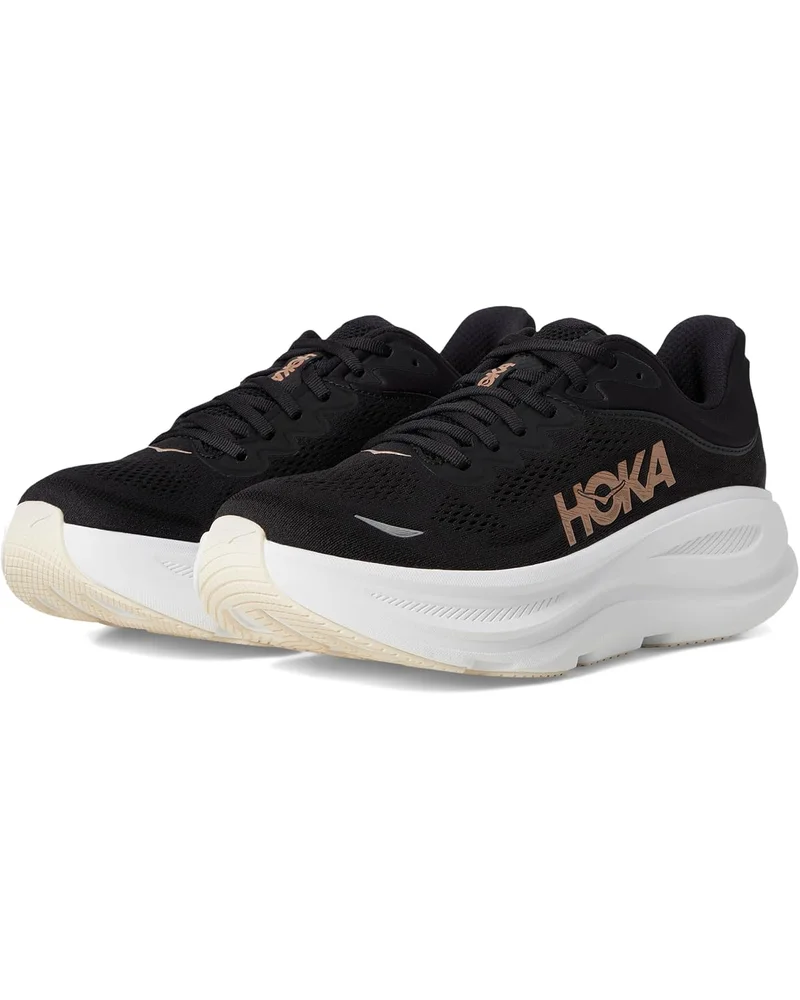
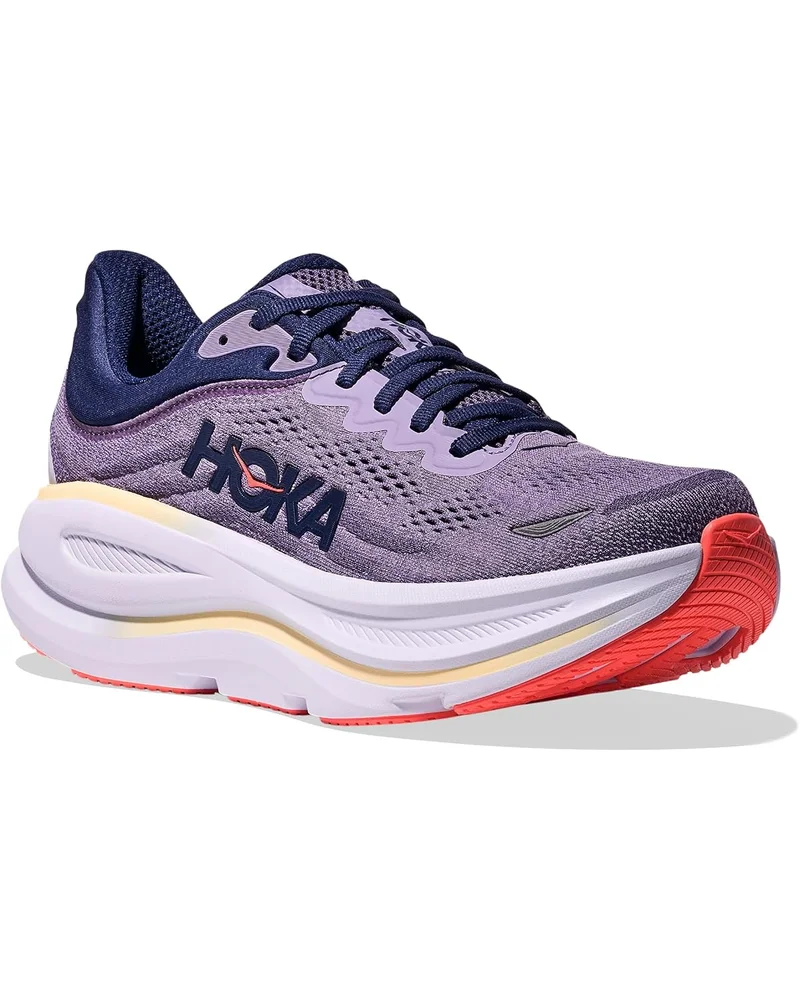
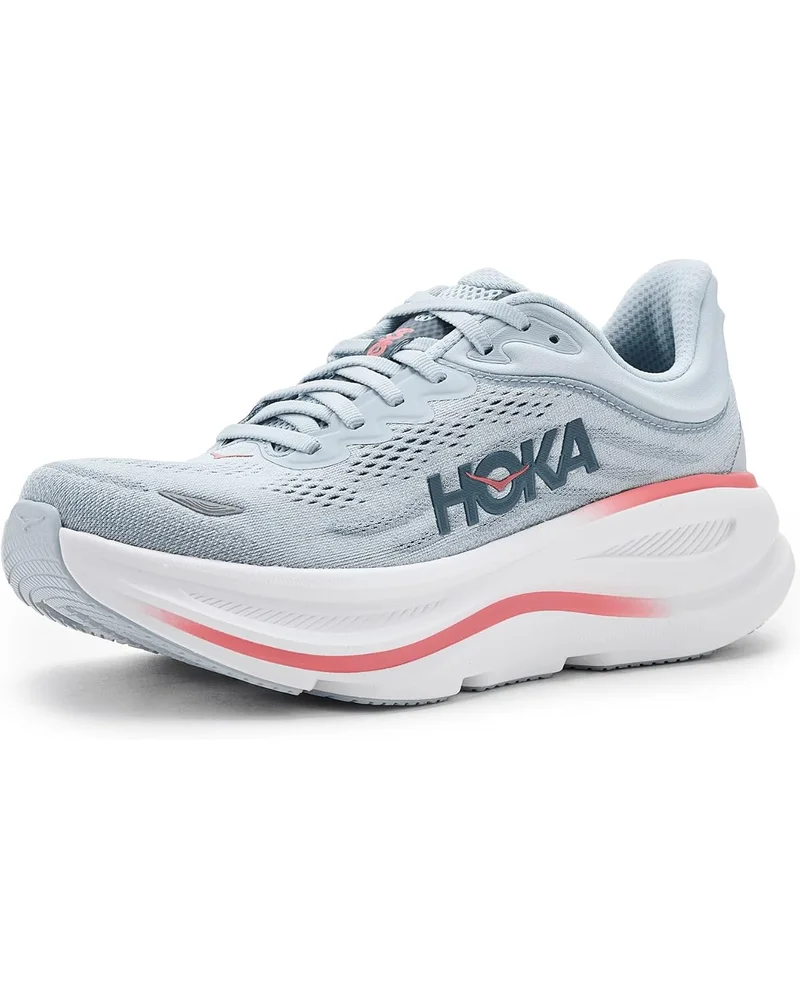
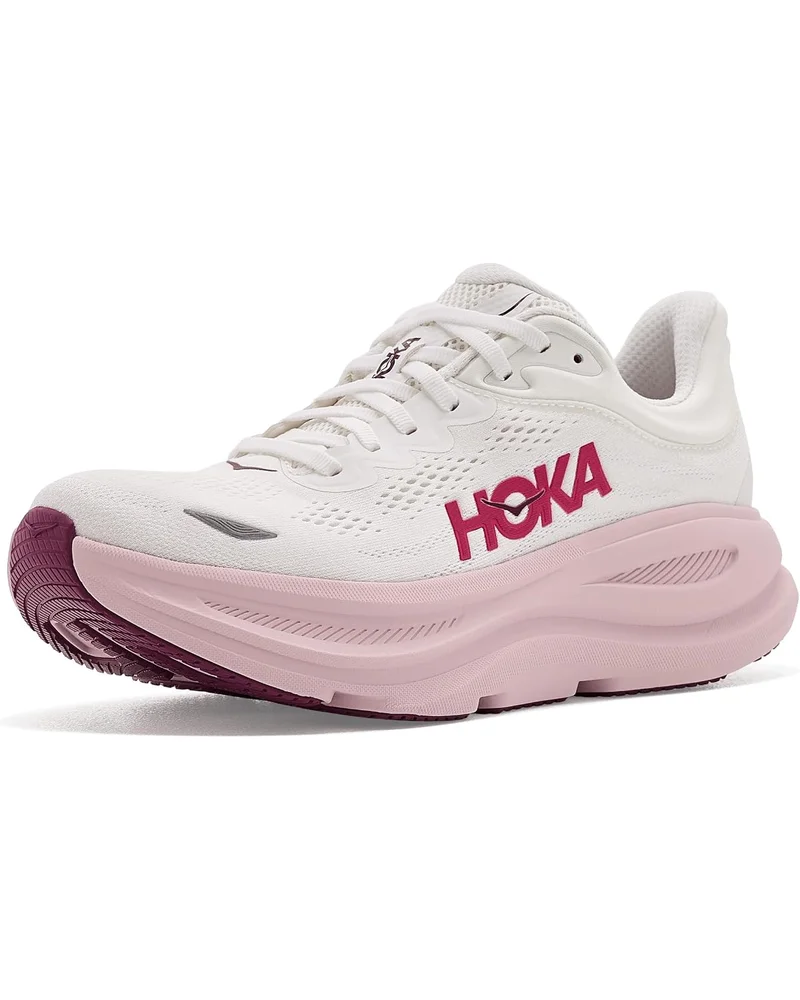
Think about what a thick midsole does to a shoe over time. Foam is the part that wears, and a tall stack of it has more to lose, so the question for the Bondi 9 is how long that cushion keeps its bounce. The Bondi is the maximum-cushion road shoe in the range: a thick sculpted midsole, a Jacquard knit engineered mesh upper, a premium foam midsole and a Durabrasion rubber outsole on the high-wear spots.
That rubber is the longevity story. In black and black, or black and white, the sole is where I would look first when a pair is a few months old: if the lugs are smooth under the heel, the shoe has done its work. The knit upper is soft and forgiving, which is lovely for wide-ish feet and sore arches, and less structured than a leather sneaker, so it will not hold a crisp shape forever.
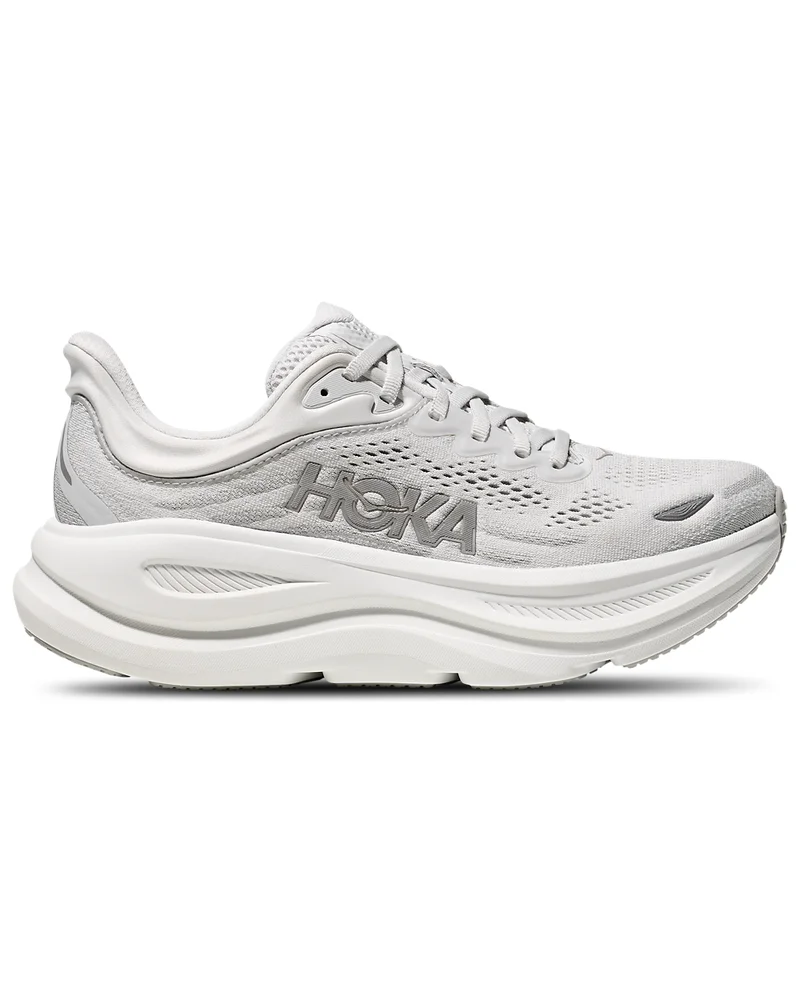
For styling, white and white goes with cropped wide trousers and a wool sock. Berry jam and berry patch, or mineral blue and washed blue, suit a person who wears one pair most days and wants it to read as a color choice. Black and rose gold is the dressier option. Stardust and silver, and white and pink opal, are lighter and softer.
Before you buy, press a thumb into the midsole sidewall and check for even give, then look at how the heel sits in the cup. What I would skip: the Bondi if you like quick, flat shoes, because the stack is tall and the sole feels rolled, not close to the ground. It is a shoe for standing, long walks and nursing tired feet.
Trail shoes that earn their lugs
Trail shoes tell you the most about whether Hokas are worth it, because that is where the brand started. The Speedgoat 7 is the cult favorite here: a lugged outsole, a new SCF midsole for more energy return and an integrated gaiter that keeps grit out. The Mafate 5 is the rugged one, with a TPU cage upper, rocker geometry and gaiter attachment points. The Challenger 8 is the road-to-trail shoe, with extra underfoot foam, a plush collar and an improved fit.
Construction decides who each suits. The Speedgoat in black and white, or alabaster and morning dew, is for people who run or hike on real dirt. The Mafate in black and electric aqua or frost and tart apple is the most protective, and the cage supports the foot on rough ground, though it is stiffer around town. The Challenger in midnight blue and grout, jade and cosmic grey, or blush and dark cedar is the one I would pick if half your miles are pavement and half are a park path.
The outsole is your longevity clue. Flip the shoe over and check that the lugs are deep and the rubber reaches the edges, then pinch the cage or upper for stitching that sits flat. A road shoe worn on trail will lose its tread faster, so match the shoe to the surface you actually use.
What I would skip: the Mafate for flat pavement and office days. Its chunky lugged sole is made for mud and rock, and it will feel clumpy on tile.

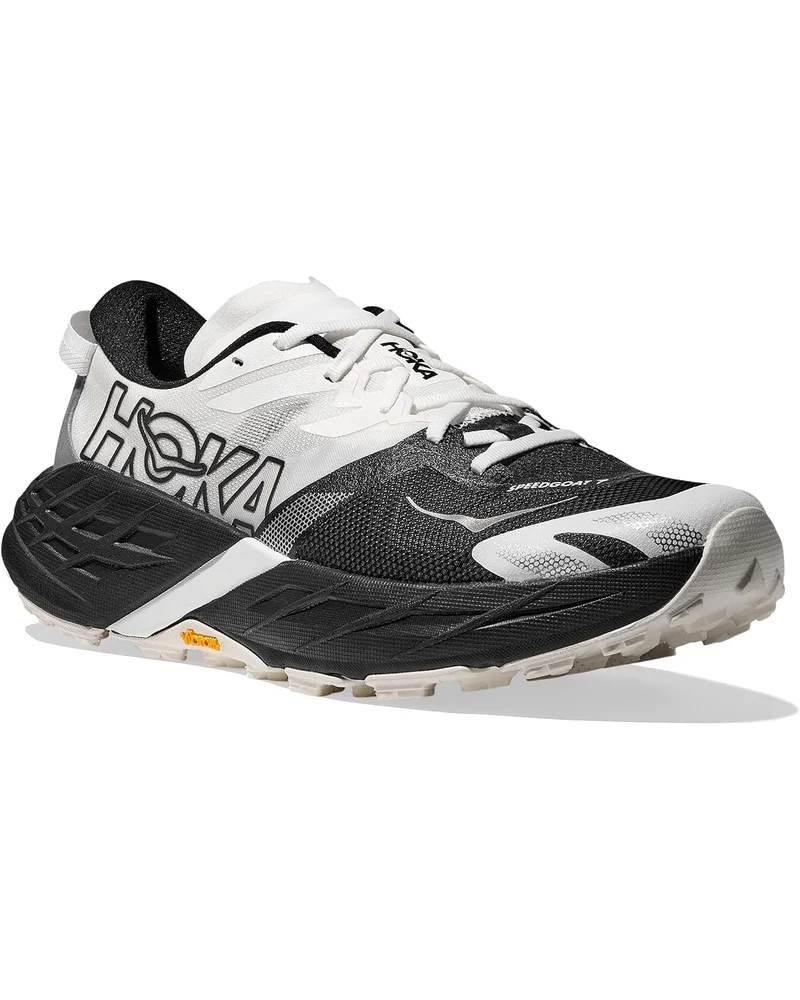
Speedgoat 7, Black / White
HOKA
$164.95
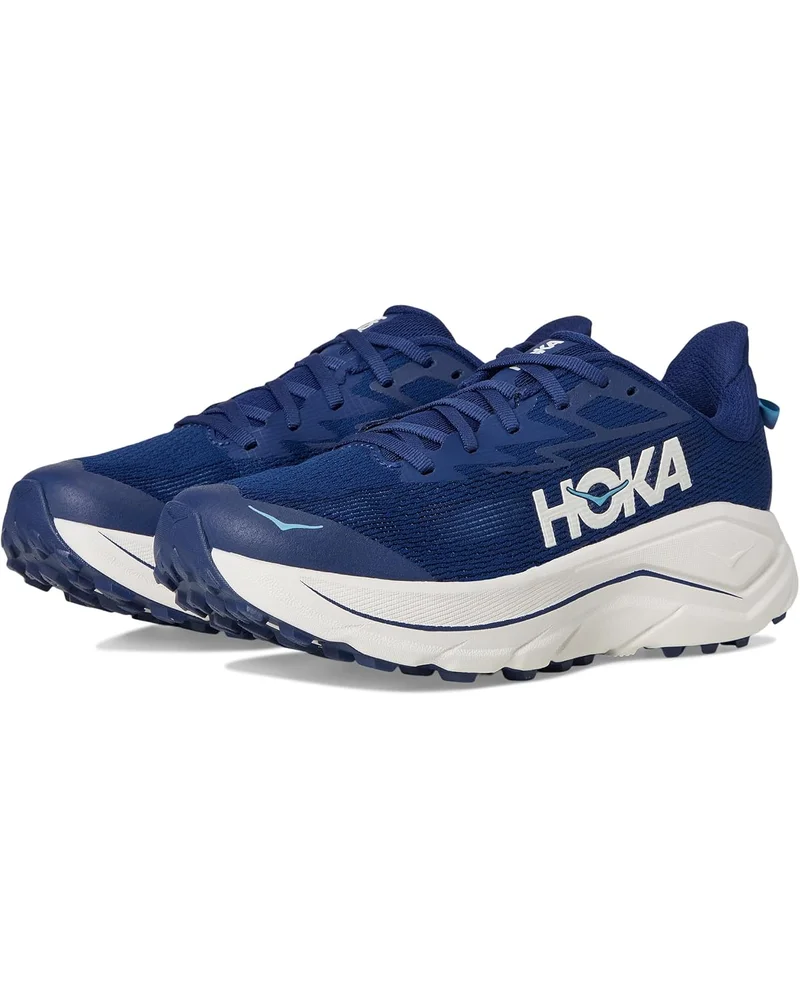
Challenger 8, Midnight Blue / Grout
HOKA
$154.95
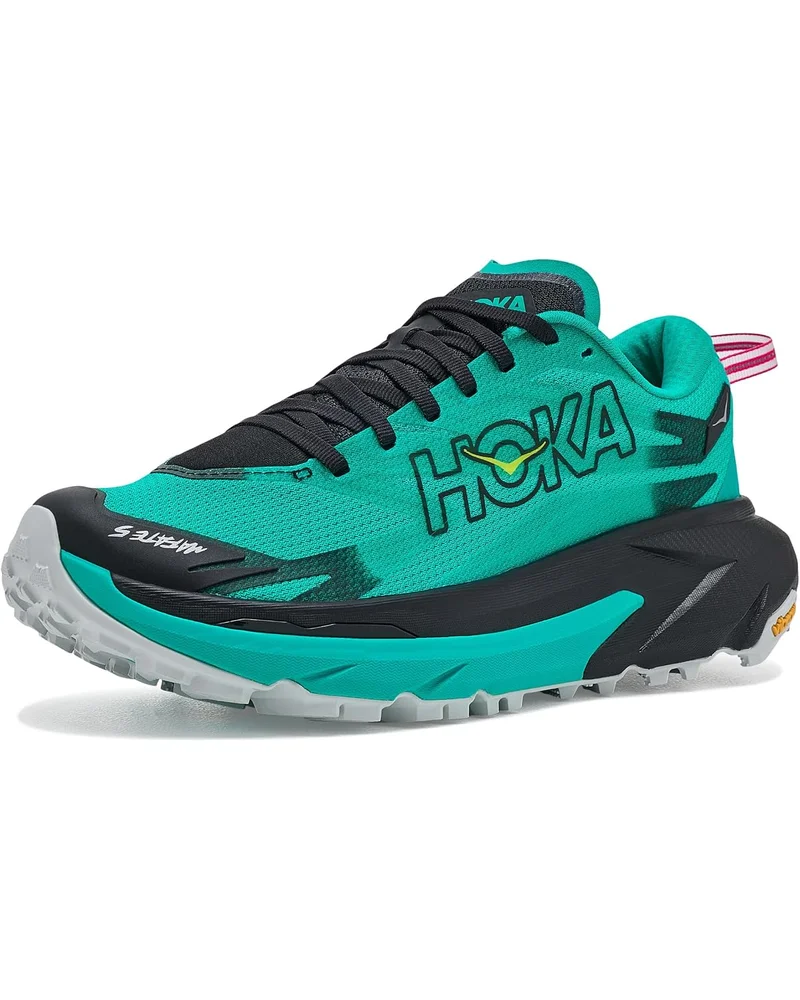
Mafate 5, Black / Electric Aqua
HOKA
$184.95
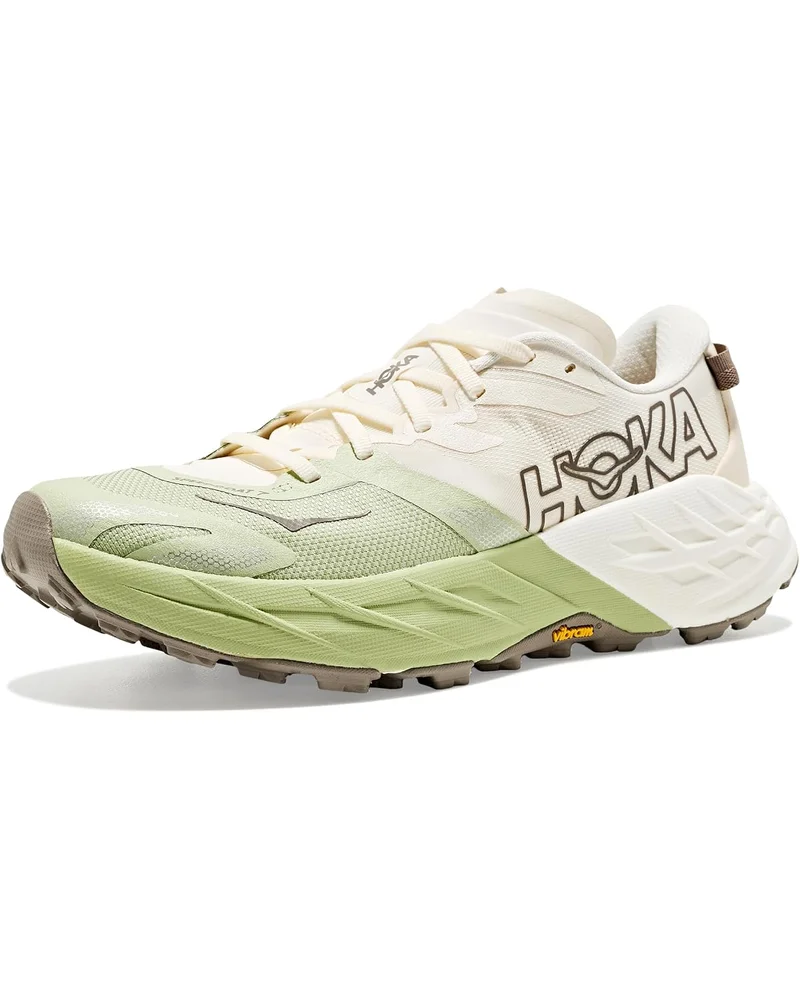
Speedgoat 7, Alabaster / Morning Dew
HOKA
$164.95
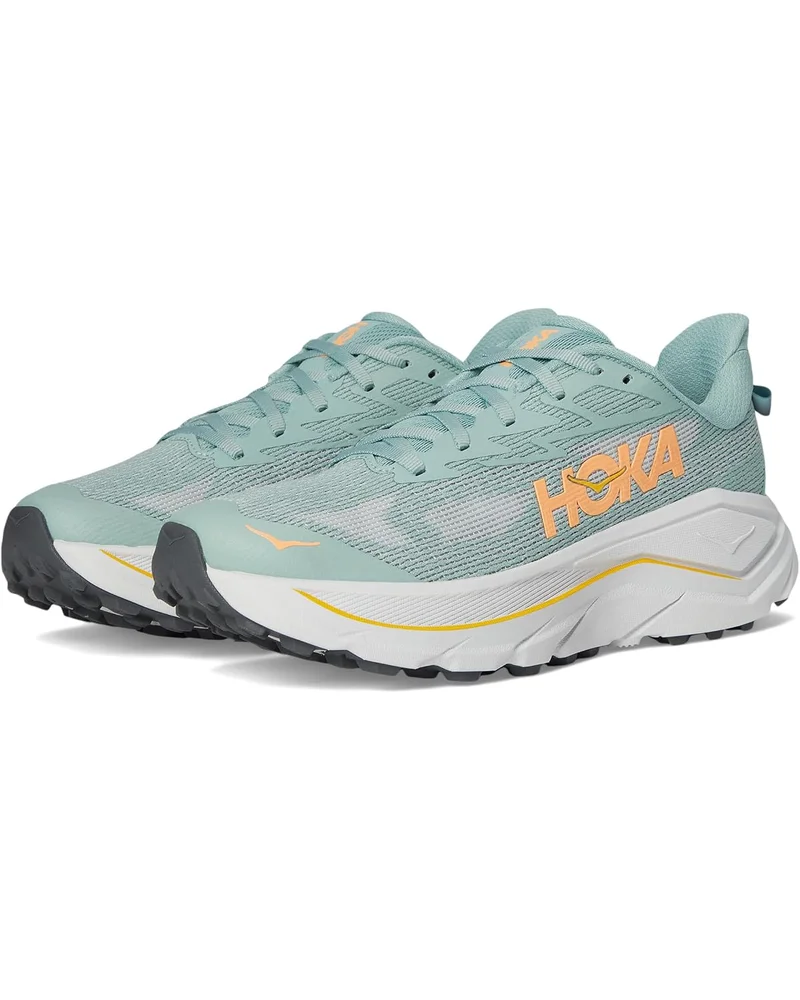
Challenger 8, Jade / Cosmic Grey
HOKA
$154.95
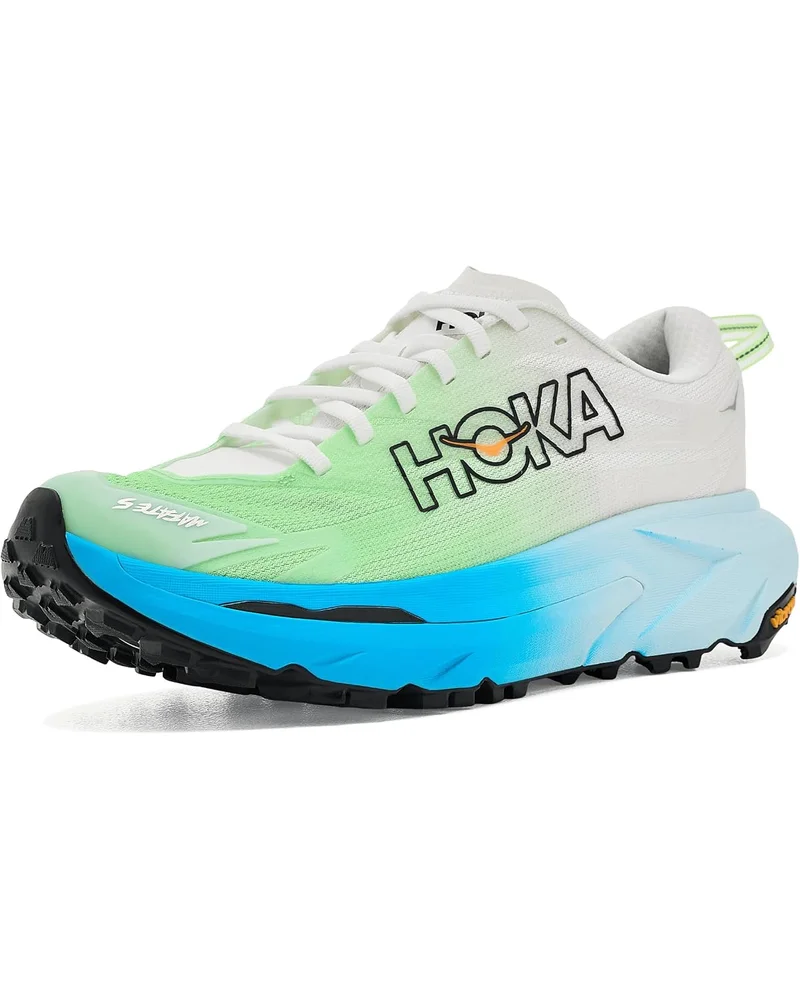
Mafate 5, Frost / Tart Apple
HOKA
$184.95
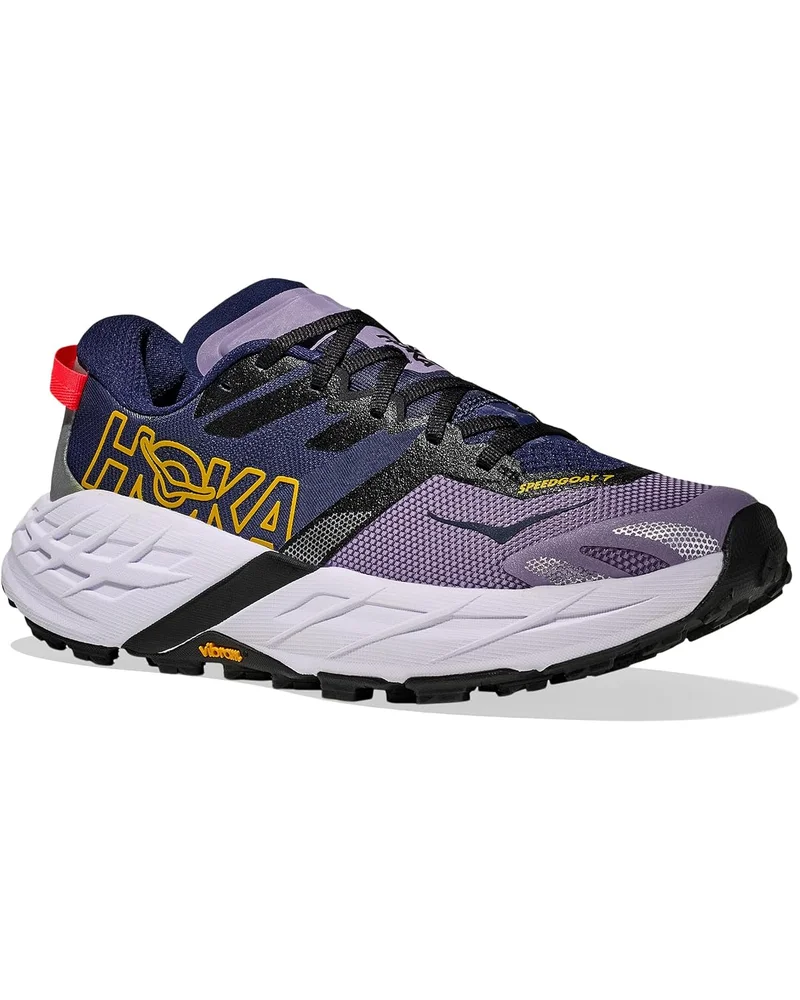
Speedgoat 7, Berry Jam / Starlight Glow
HOKA
$164.95
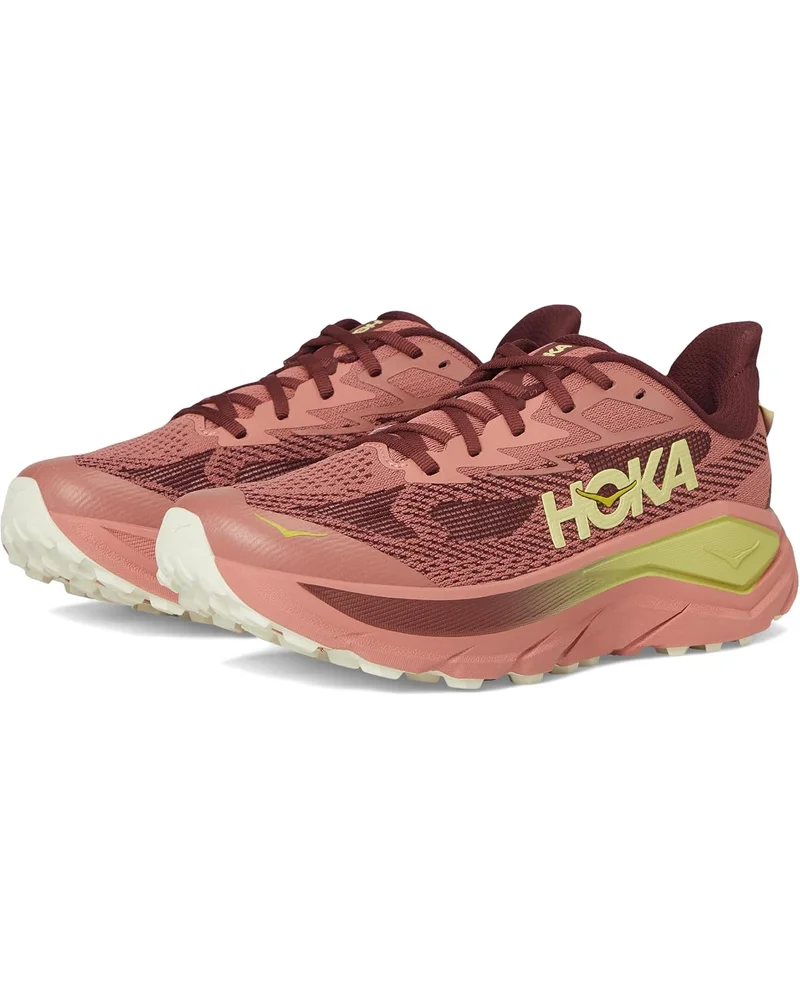
Challenger 8, Blush / Dark Cedar
HOKA
$154.95
Cushioned sneakers for the street
Hoka has leaned into the street, with models that borrow the look of a trail shoe without the dirt. The Bondi 7 is the retro-leaning cushioned runner, with a thick sculpted midsole and breathable mesh upper, here in black and rose cream, vintage yellow and honeycomb, and a one-tone oat milk. The Mafate Speed 2 in alabaster and cosmic grey, and the Mafate Speed 4 Lite in date syrup and date sugar, are chunky, lugged, trail-inspired sneakers.
For daily wear, the Transport 2 is the one I would pick for a person who walks to work. It is a low-profile everyday walking sneaker with a cushioned sole, and its primary materials contain a minimum of 20 percent recycled content. Alabaster all over looks good with a slip skirt and a cardigan, and black and alabaster is easier on a rainy week. The Hopara 2 in white is the sporty hiker-sandal-style shoe with a strap closure, which is better for a warm travel day than a sharp October one.
In a fitting room, flex the shoe at the ball and check that the sole bends where your foot does. Then walk across a hard floor. A lifestyle shoe wears out at the heel edge first, so look at how thick the rubber is there.
What I would skip: pale colors like alabaster or oat milk for muddy commutes. They are lovely, but light mesh marks quickly, and a soft brush is the only upkeep they like.

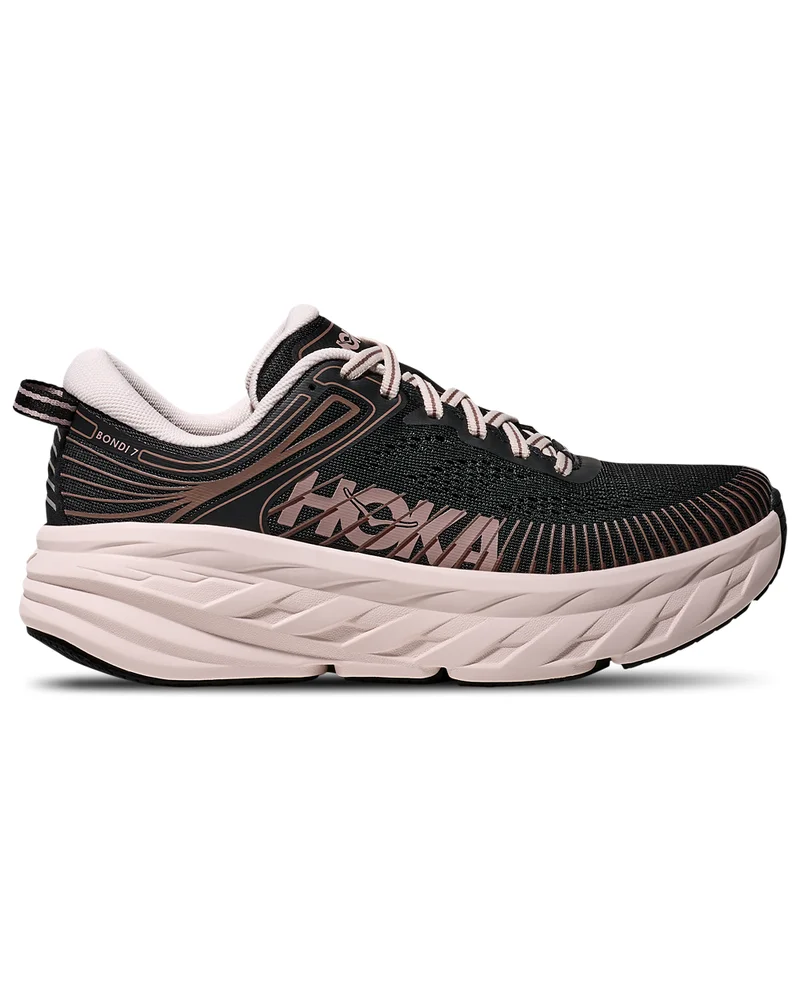
Bondi 7, Black / Rose Cream
HOKA
$165
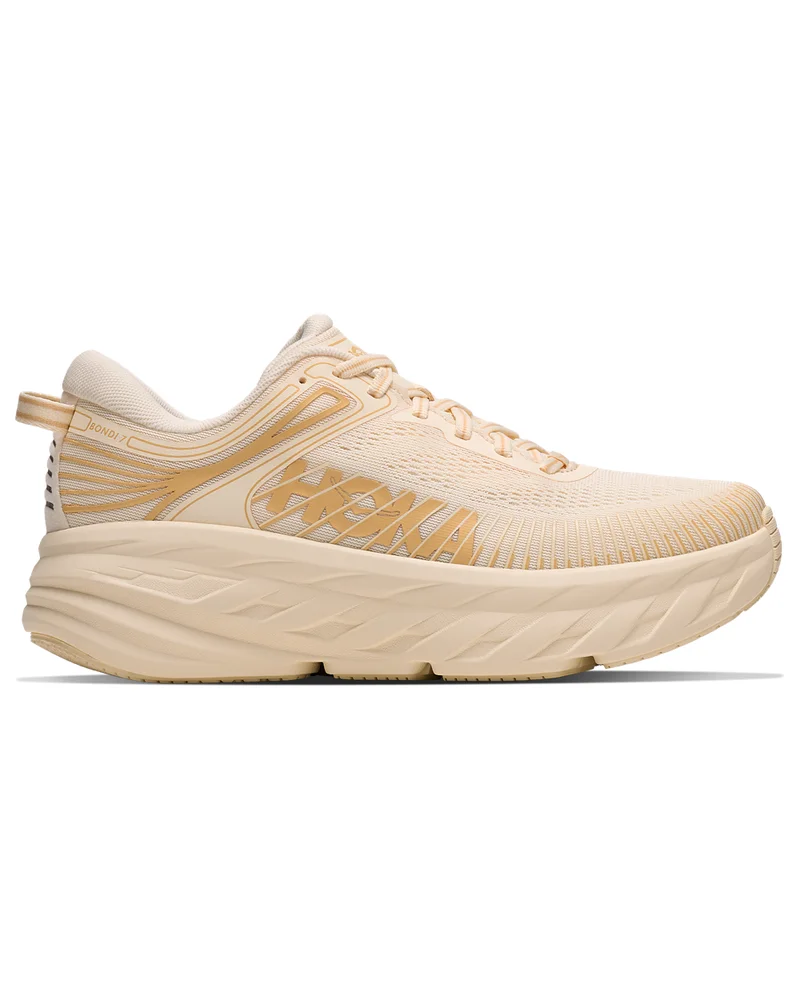
Bondi 7, Vintage Yellow / Honeycomb
HOKA
$165
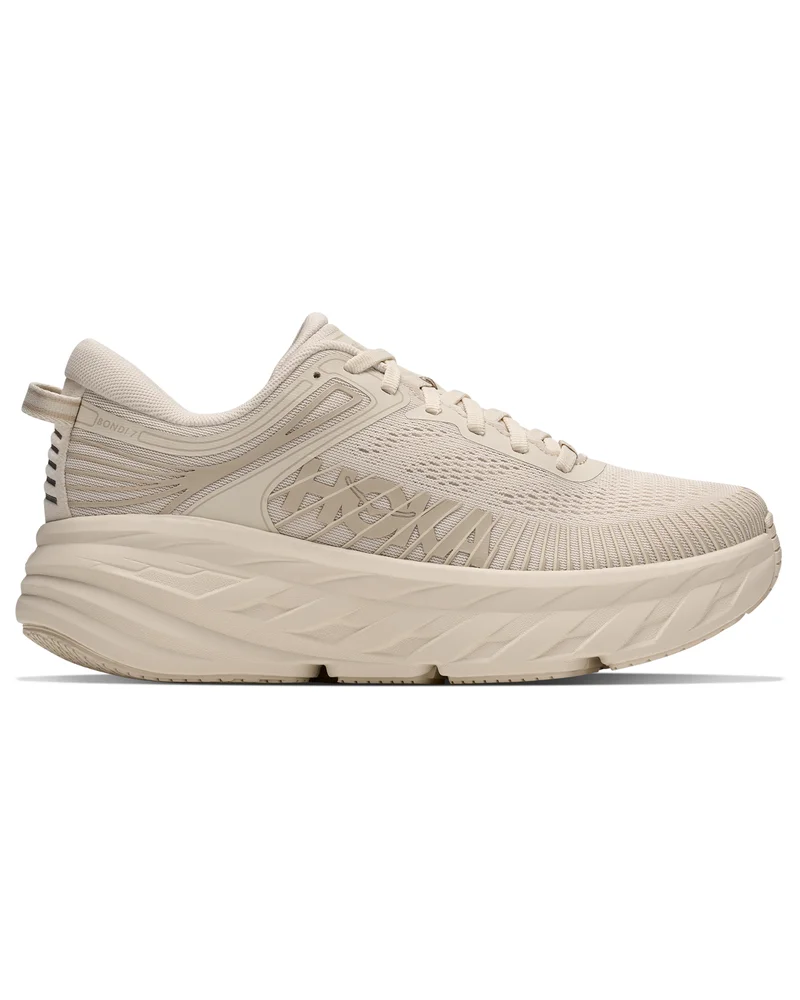
Bondi 7, Oat Milk / Oat Milk
HOKA
$165
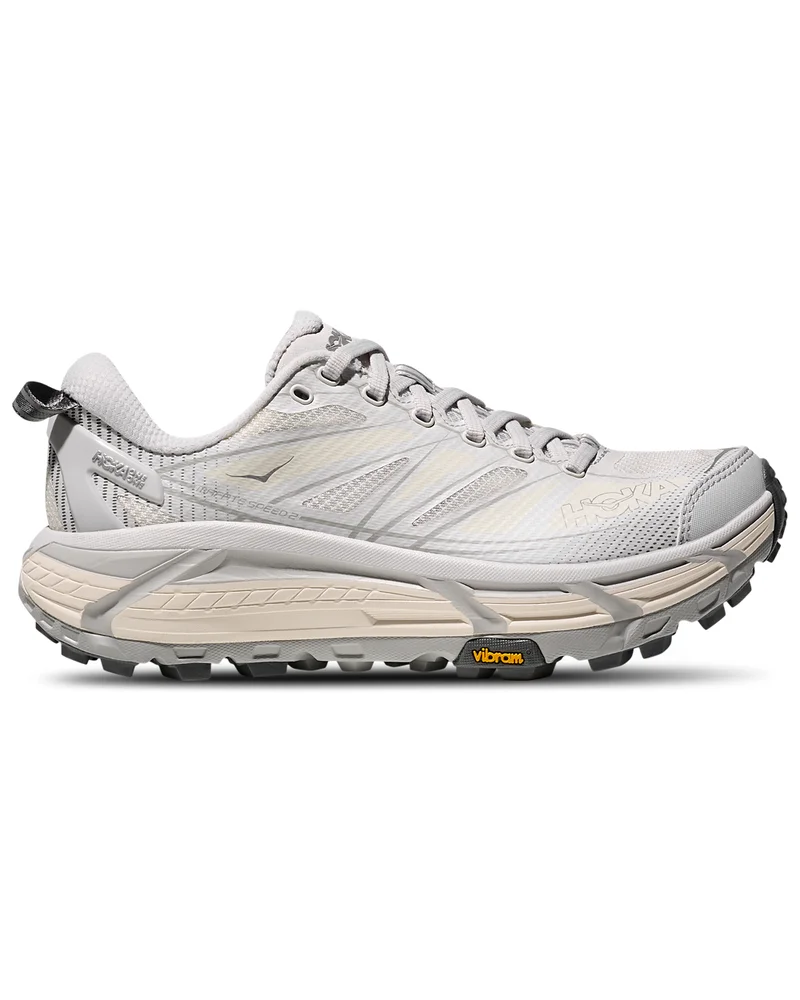
Mafate Speed 2, Alabaster / Cosmic Grey
HOKA
$170
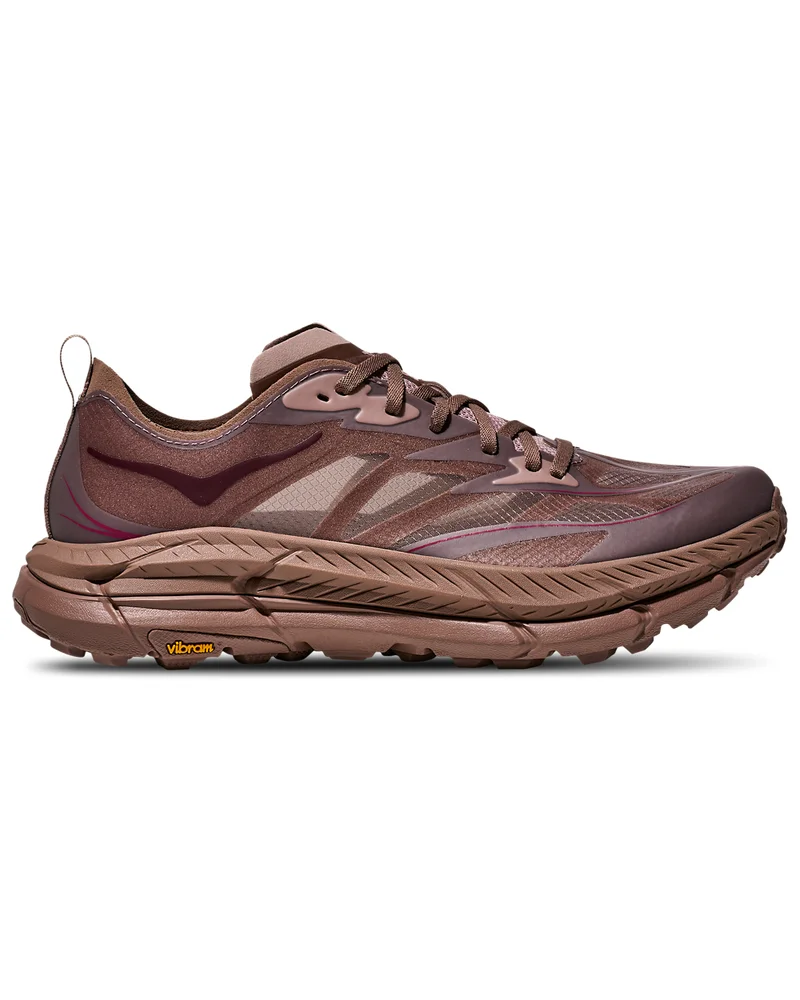
Mafate Speed 4 Lite, Date Syrup / Date Sugar
HOKA
$180
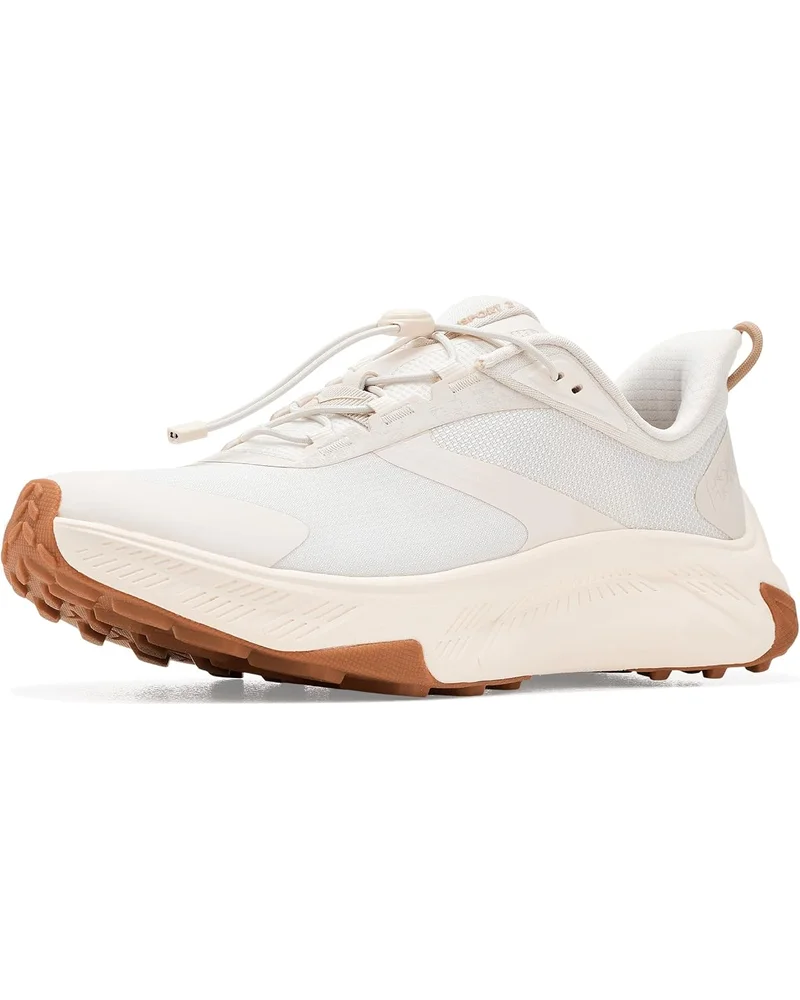
Transport 2, Alabaster / Alabaster
HOKA
$154.95
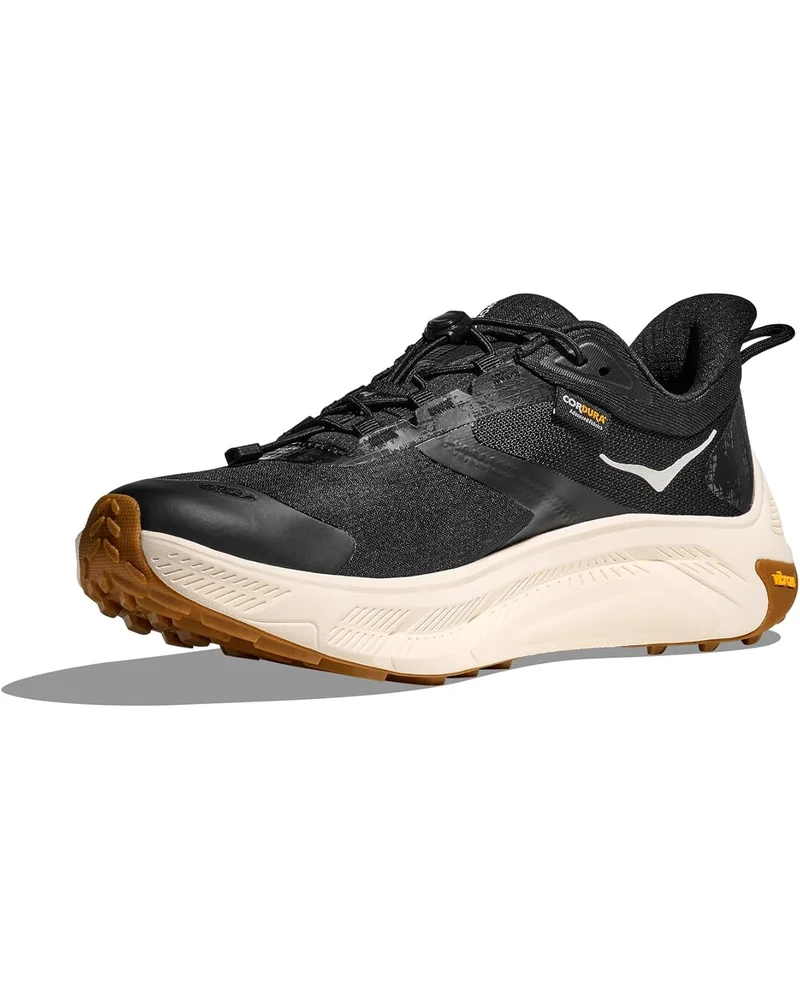
Transport 2, Black / Alabaster
HOKA
$154.95
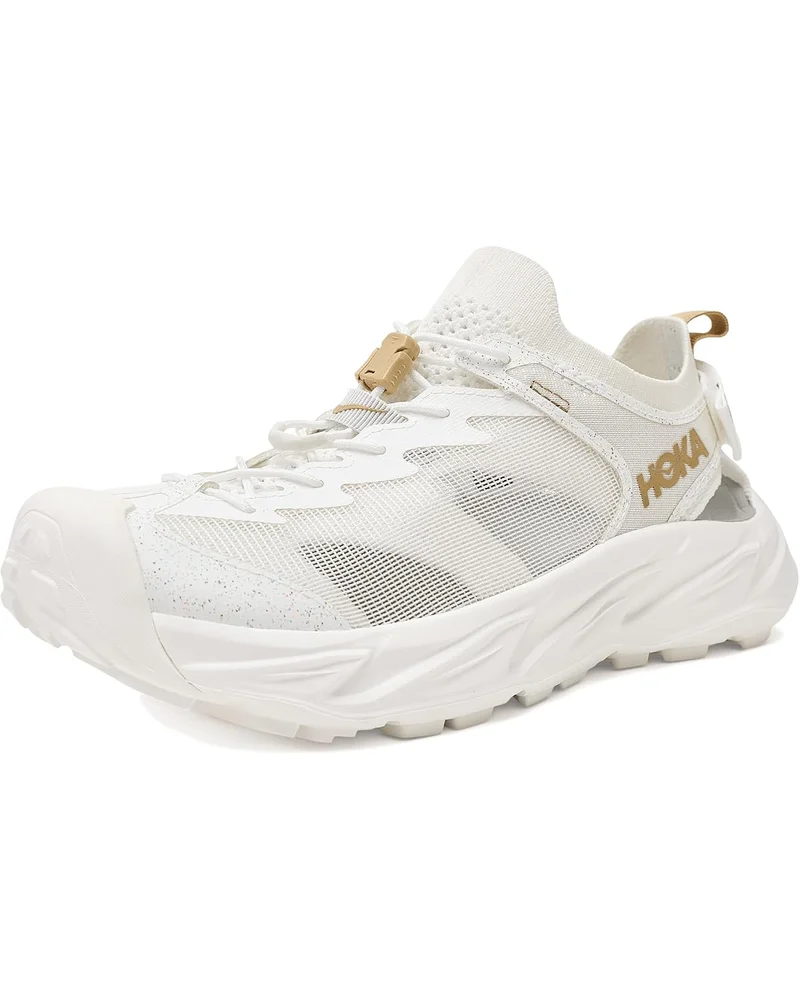
Hopara 2, White / White
HOKA
$139.95
Recovery slides and winter boots
Recovery shoes are the least glamorous part of the brand and the most honest. The Ora Recovery Slide 3 is a chunky cushioned slide with a molded footbed, and the Ora Recovery Flip is a cushioned flip-flop with a molded footbed and thong strap. Both carry the APMA seal, Approved by the American Podiatric Medical Association, which is a fair reason to trust the footbed design. I would reach for the slide in black and black after a long walk, and the flip in bubble gum and tangerine glow for a hotel pool. Alabaster and ambient blue is the soft version for the house.
The boots are where longevity matters most. The Kaha 3 GTX is a waterproof leather hiking boot with a premium leather upper, a cushy sockliner, a dual-density sugarcane EVA midsole and a Vibram Megagrip outsole. In granola and bark, or rouge and rose latte, it is a boot that will take a wet October and look better scuffed than new. The Kaha 2 Frost Moc GTX in black or sesame is the insulated winter boot, with a moc-style cuff, a cushioned sole and a minimum of 20 percent recycled content in the primary materials.
Before buying a boot, check the seams around the toe and heel, press the leather for even grain, and try it with the thickest sock you own. Leather boots reward a little conditioner and a dry spot to rest.
What I would skip: the Frost Moc for mild city days. It is built for cold and snow, and it will be too much indoors.
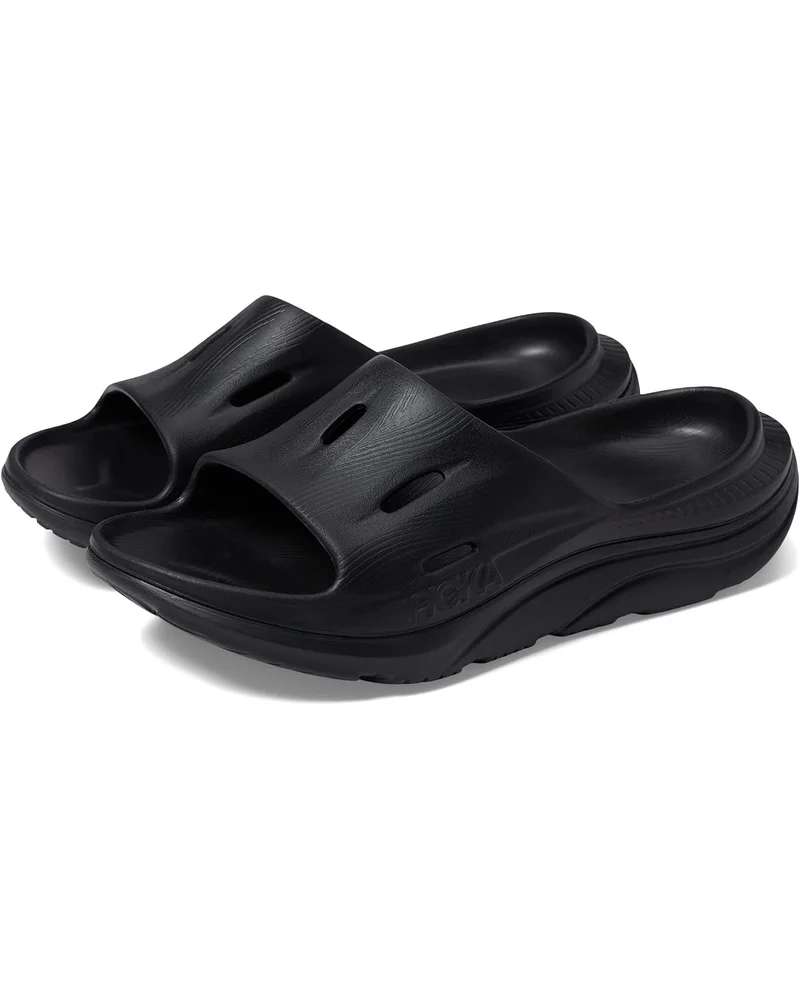
Ora Recovery Slide 3, Black / Black
HOKA
$59.95
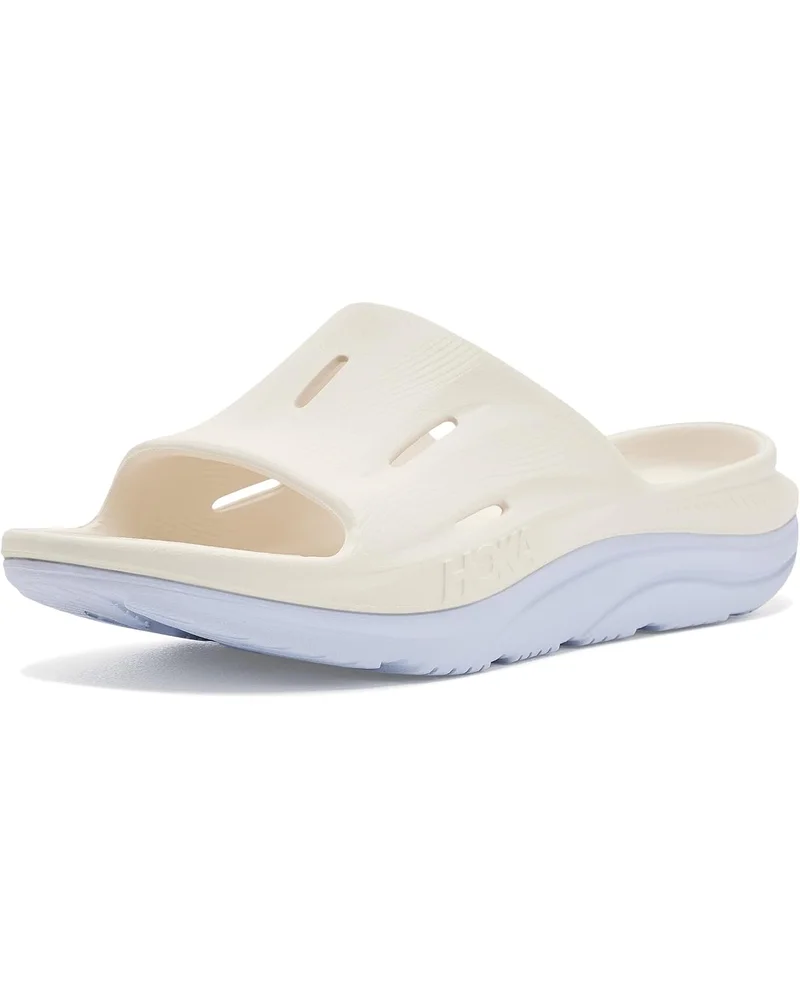
Ora Recovery Slide 3, Alabaster / Ambient Blue
HOKA
$59.95
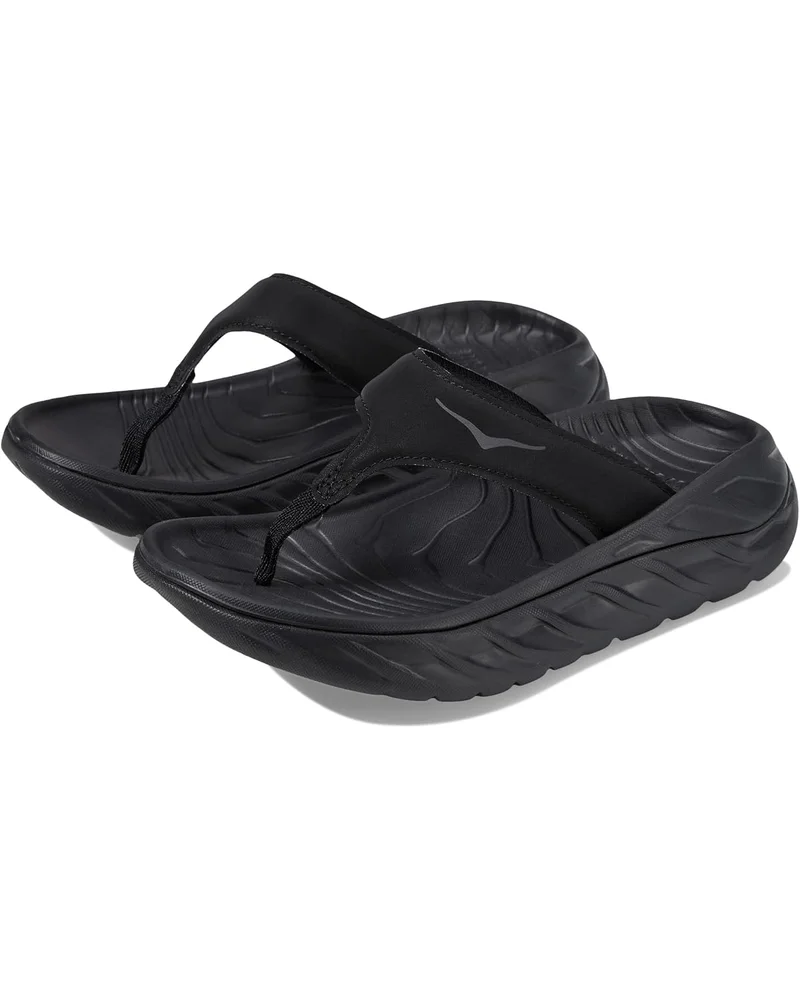
Ora Recovery Flip, Black / Dark Gull Gray 1
HOKA
$59.95
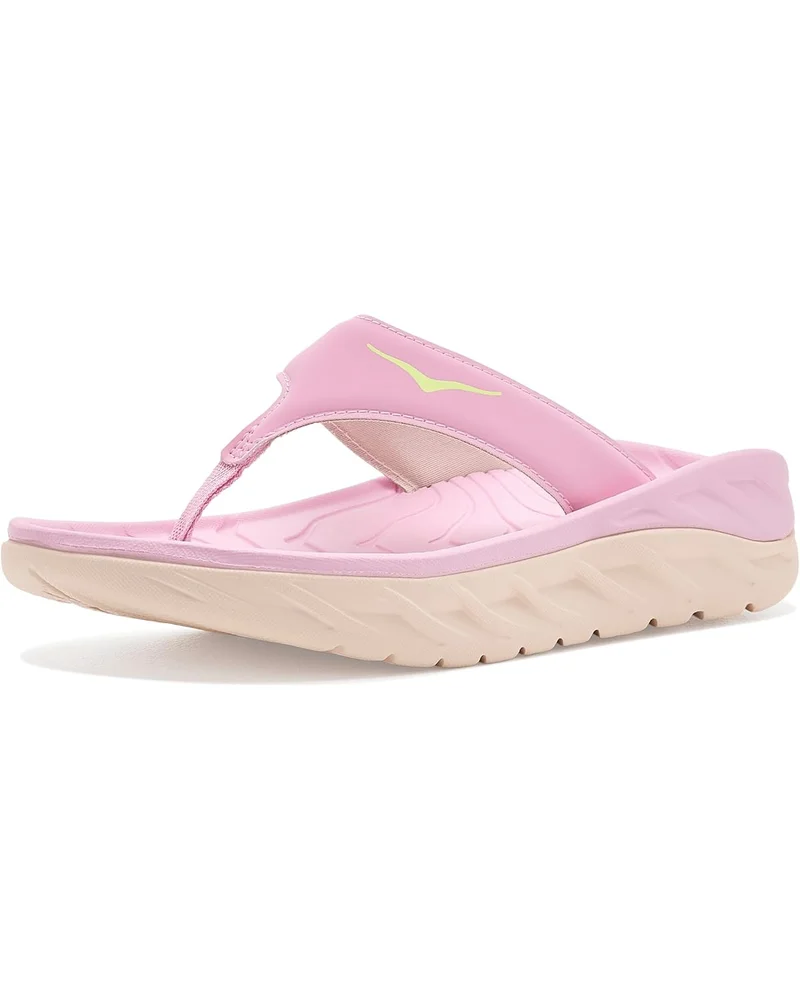
Ora Recovery Flip, Bubble Gum / Tangerine Glow
HOKA
$59.95
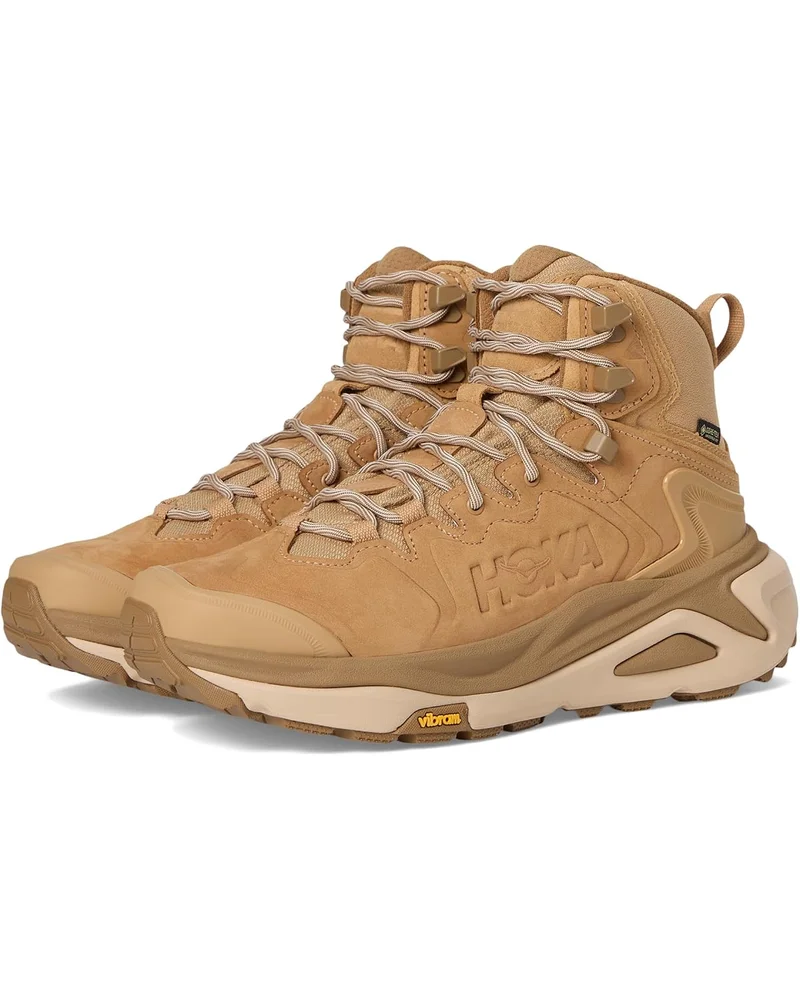
Kaha 3 GTX, Granola / Bark
HOKA
$239.95
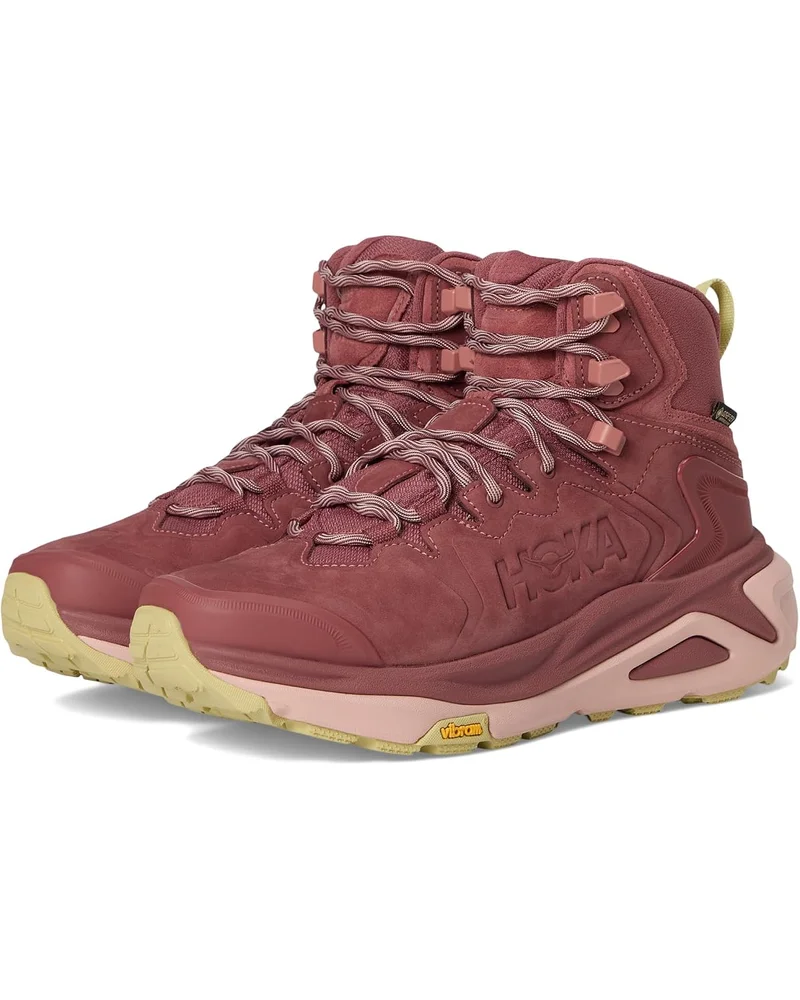
Kaha 3 GTX, Rouge / Rose Latte
HOKA
$239.95
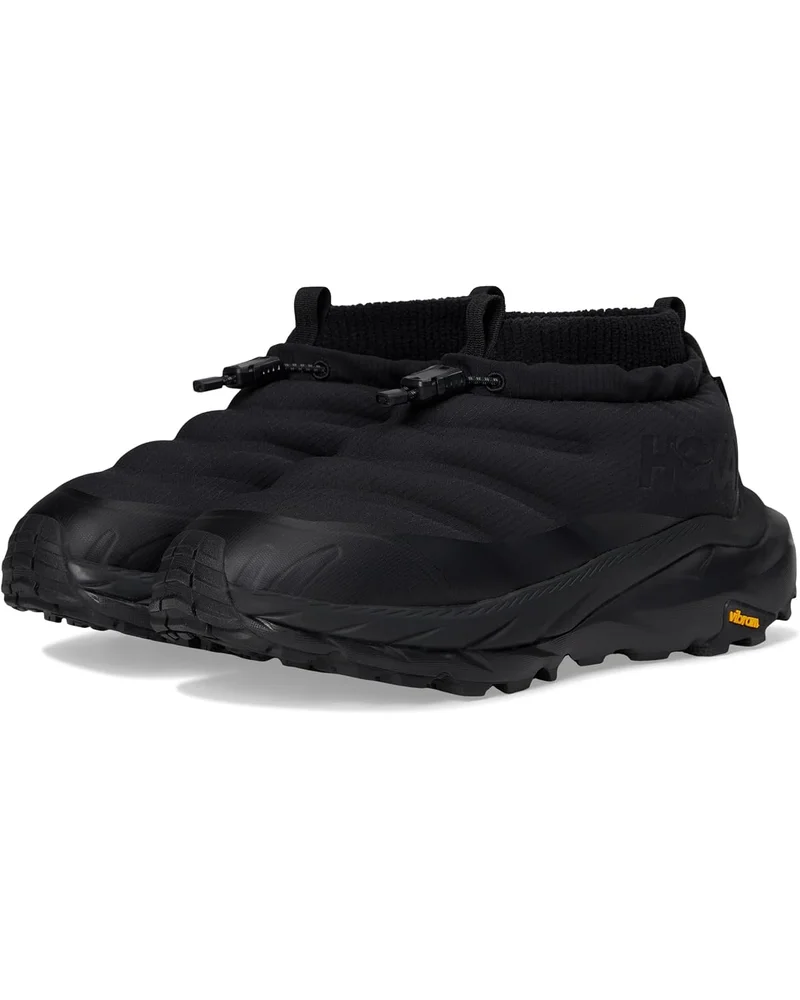
Kaha 2 Frost Moc GTX, Black
HOKA
$199.95
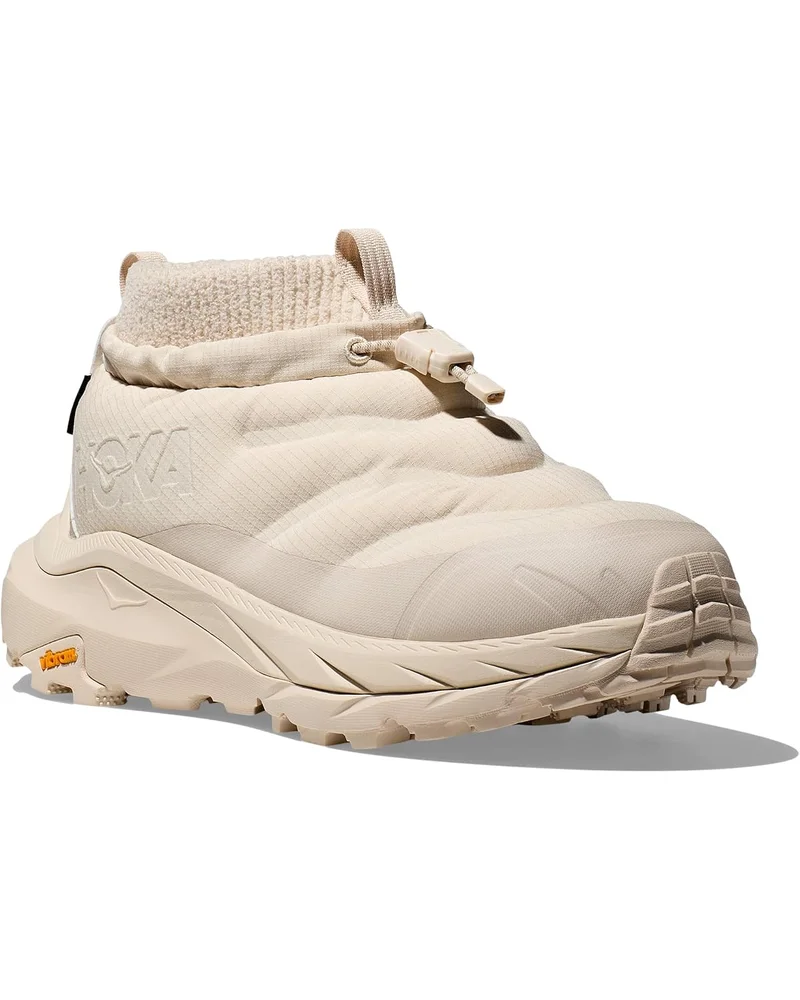
Kaha 2 Frost Moc GTX, Sesame
HOKA
$199.95
How I would choose a pair
So, are Hokas worth it. Here is how I would sort it. If you stand, walk or run for hours, buy a Clifton or a Bondi and wear it until the midsole sidewalls crease and the heel tread is smooth. If you hike, pick the Speedgoat or Kaha by the surface you use. If you want a sneaker only for looks, a Transport 2 is the calmer one.
I would keep one pair of slides by the door as a reward for tired feet. And I would treat the outsole and midsole as the clock: when the rubber is flat and the foam stays creased, the shoe has done its job, and that is a good run for a design that began on a French mountain descent.