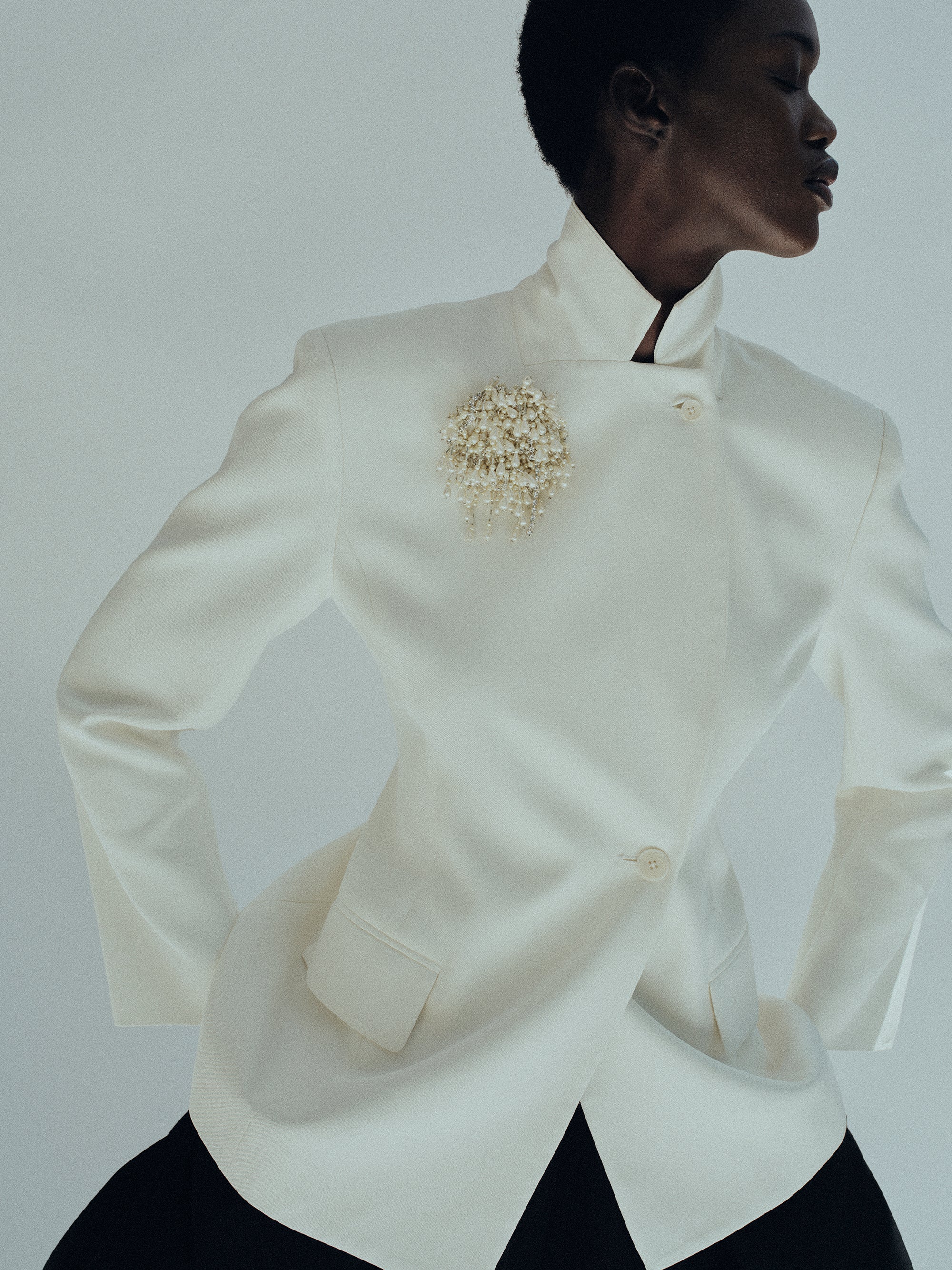
I sorted this edit of engagement rings by the feeling they give: old money, vintage romantic and modern. I included clean solitaires, rose cuts, bezels and more.
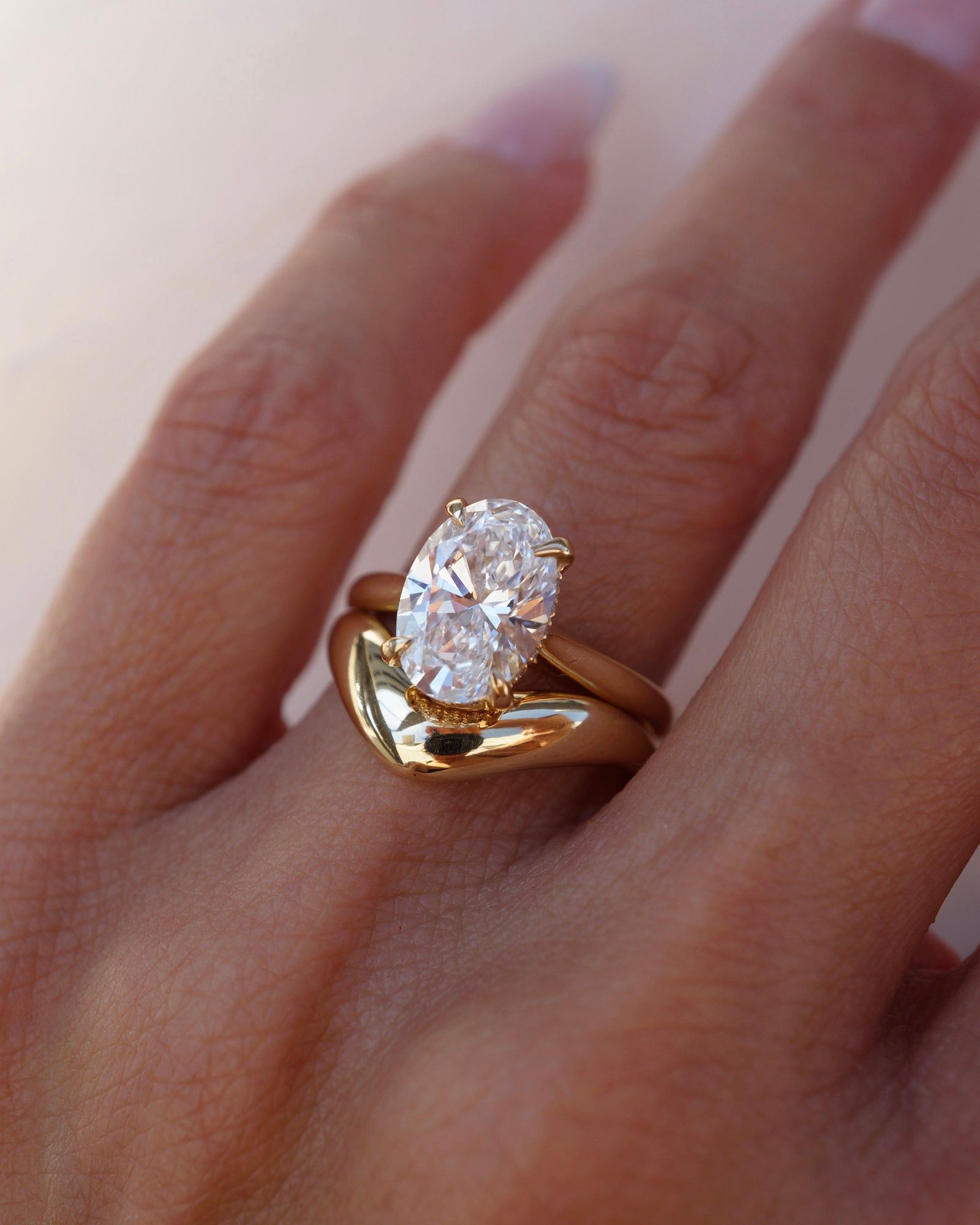
Engagement Rings by Vibe: Old Money, Vintage Romantic and Modern
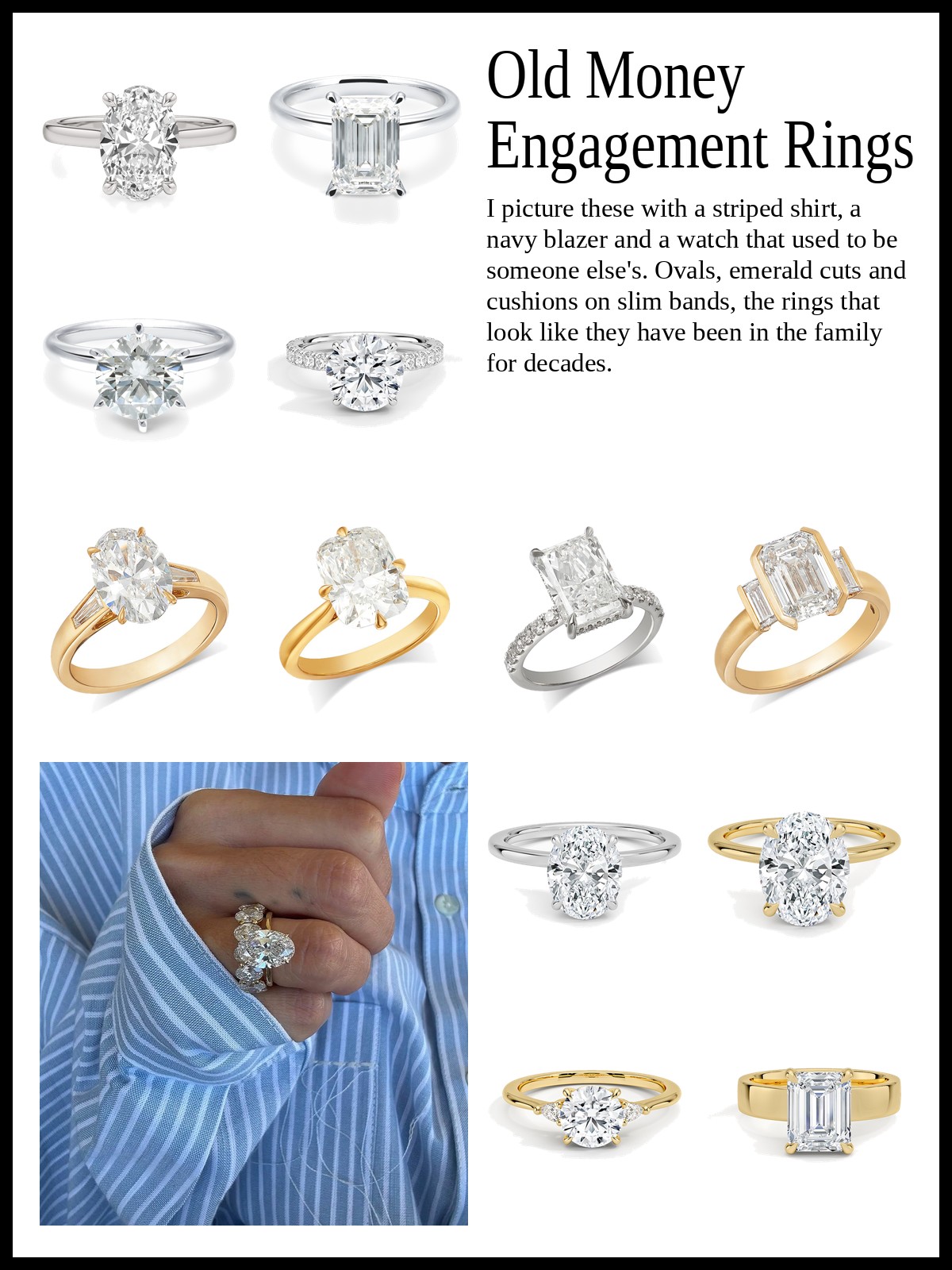
Old money: the ring that looks inherited
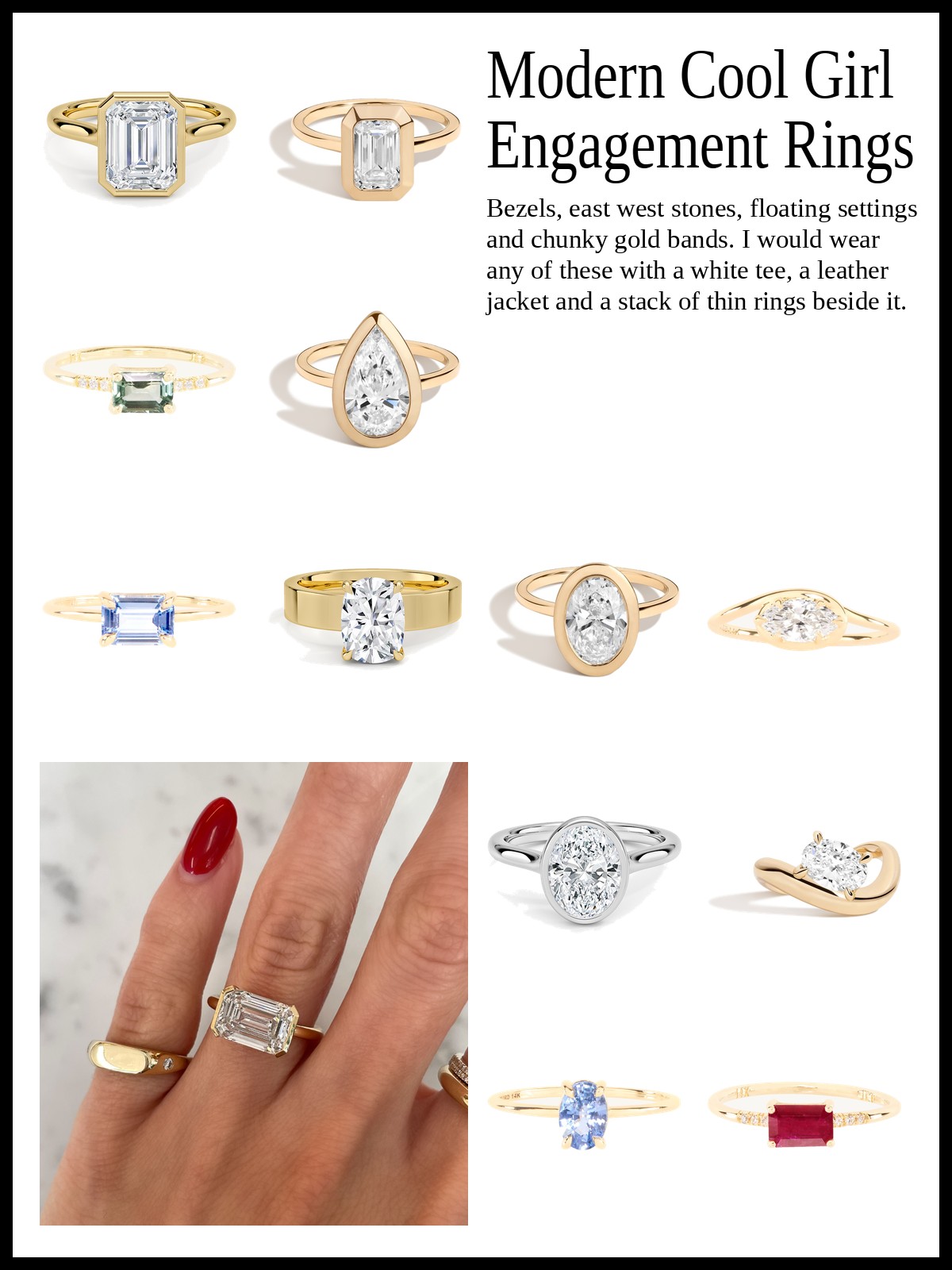
National Geographic traces the first recorded diamond engagement ring to 1477, when Archduke Maximilian gave one to Mary of Burgundy. For centuries it stayed a royal habit. Then Philadelphia copywriter Frances Gerety wrote “A Diamond Is Forever” for De Beers in 1947, and the line first ran in 1948. I find it more useful to shop the way people talk about rings: something that looks inherited, like it came from a grandmother's jewelry box, or something architectural that works with a leather jacket.
I built this edit around three moods: old money, vintage romantic and modern. For the first, Grace Kelly’s 1956 Cartier ring is still the reference: a 10.47 carat emerald cut diamond in platinum with baguettes on either side. Cartier says she wore it in High Society. I like its clean, important stone and quiet band, nothing that tries too hard.
The Clean Origin emerald solitaire and the Bloomingdale’s Fine Collection emerald cut with baguettes come closest to that idea. VRAI’s Three Stone Engagement Ring, Emerald, White Gold adds width on the hand, while Brilliant Earth’s Petite Elodie is the softer version. For yellow gold, VRAI’s Classic Engagement Ring and Brilliant Earth’s Aria Three Stone have a warmer cast, while the Clean Origin radiant and the Bloomingdale’s elongated cushion make the statement.
My test for this mood is a white shirt: hold a ring next to a crisp cuff and ask whether it looks as if it has always been there. What I would skip: a busy halo with a pavé band. One hidden halo is fine; a double row starts to read new.
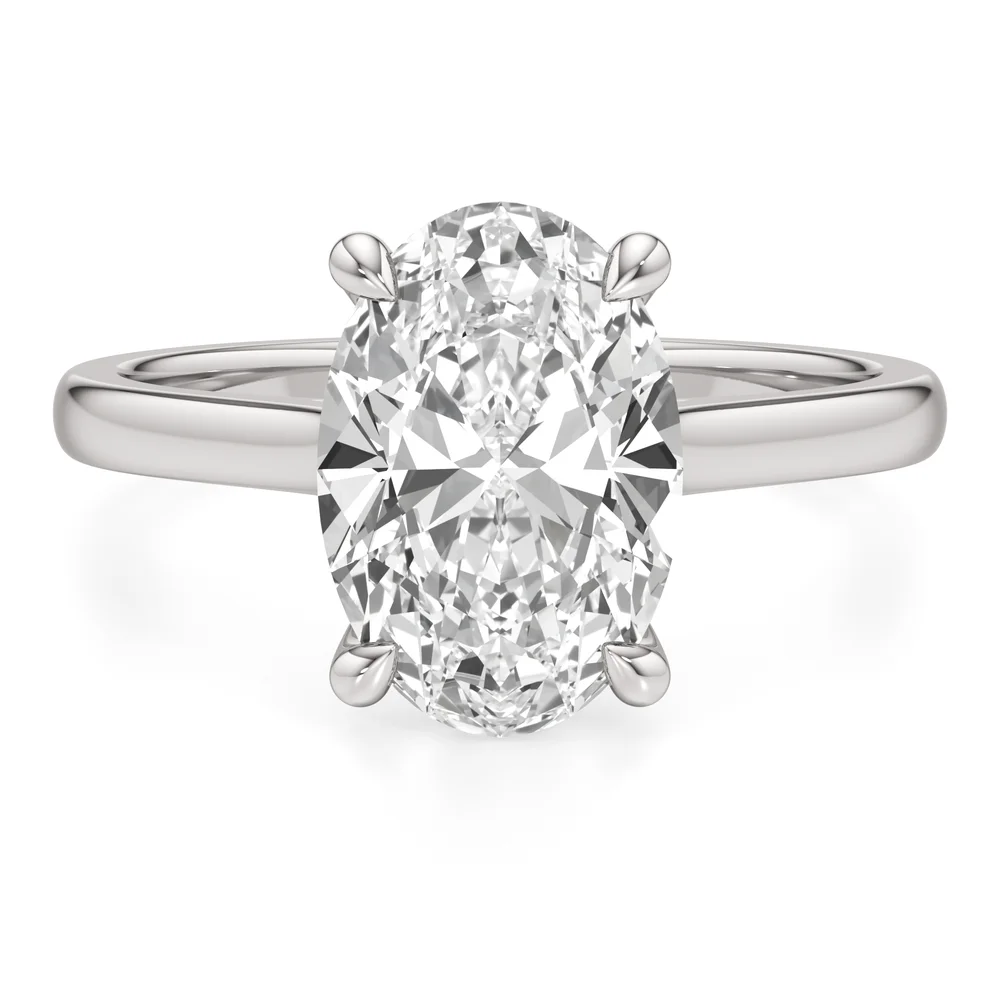
3 ct. Oval Lab Grown Diamond Solitaire Ring in 14k White Gold
Clean Origin
$1,499
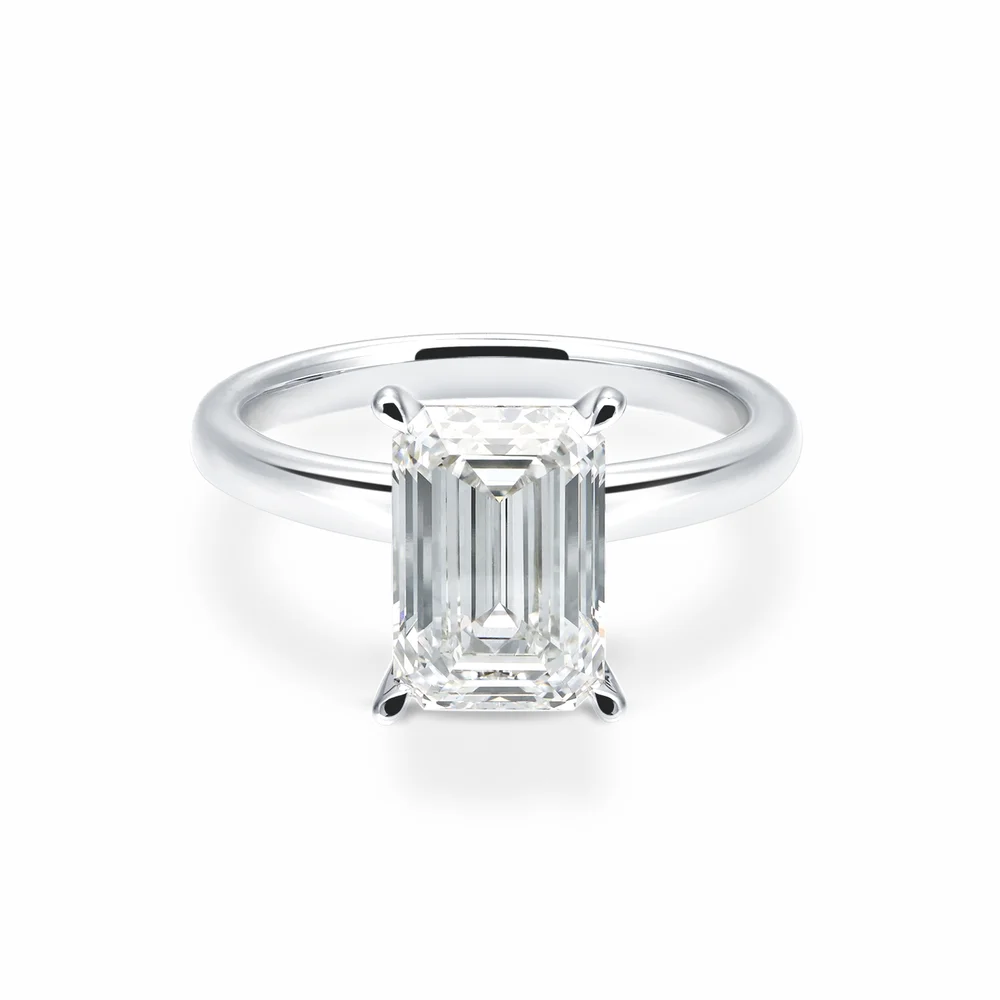
3 ct. Emerald Diamond Solitaire Ring in 14k White Gold
Clean Origin
$2,900
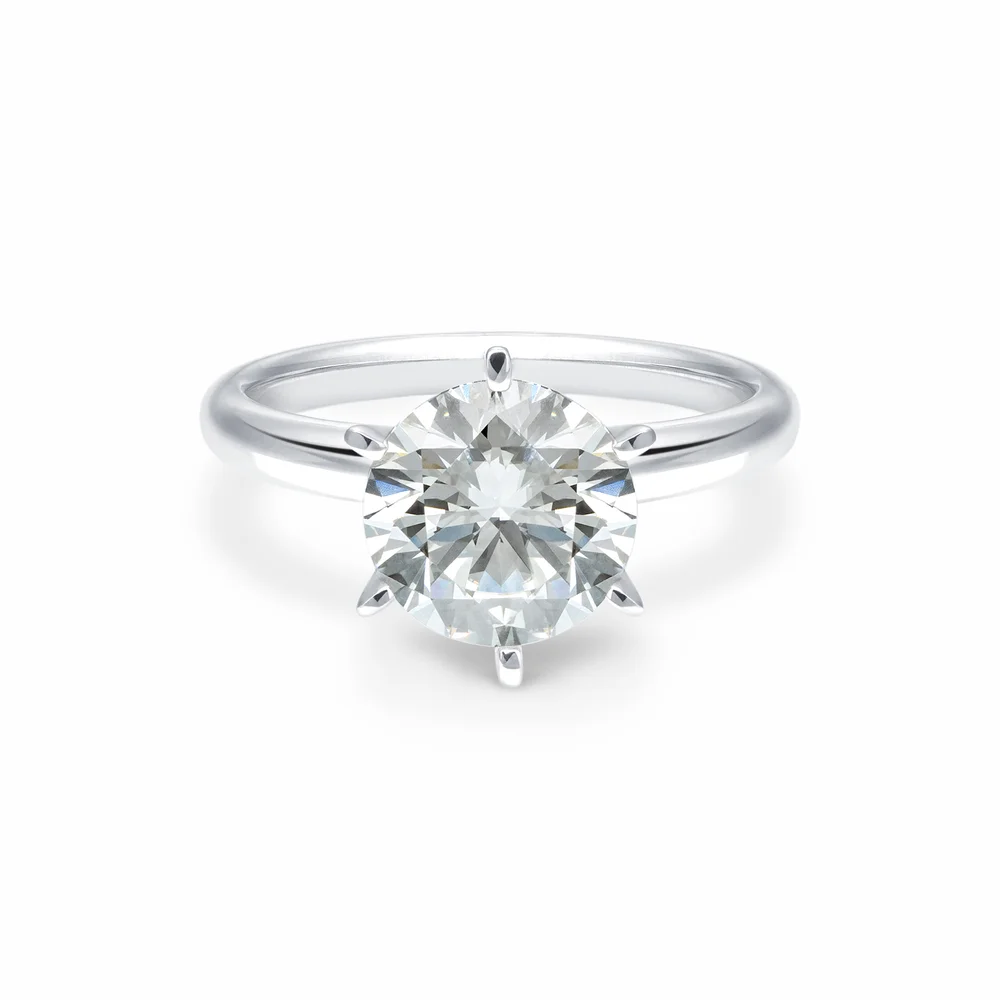
3 ct. Round 6-Prong Solitaire Ring in 14k White Gold
Clean Origin
$2,900
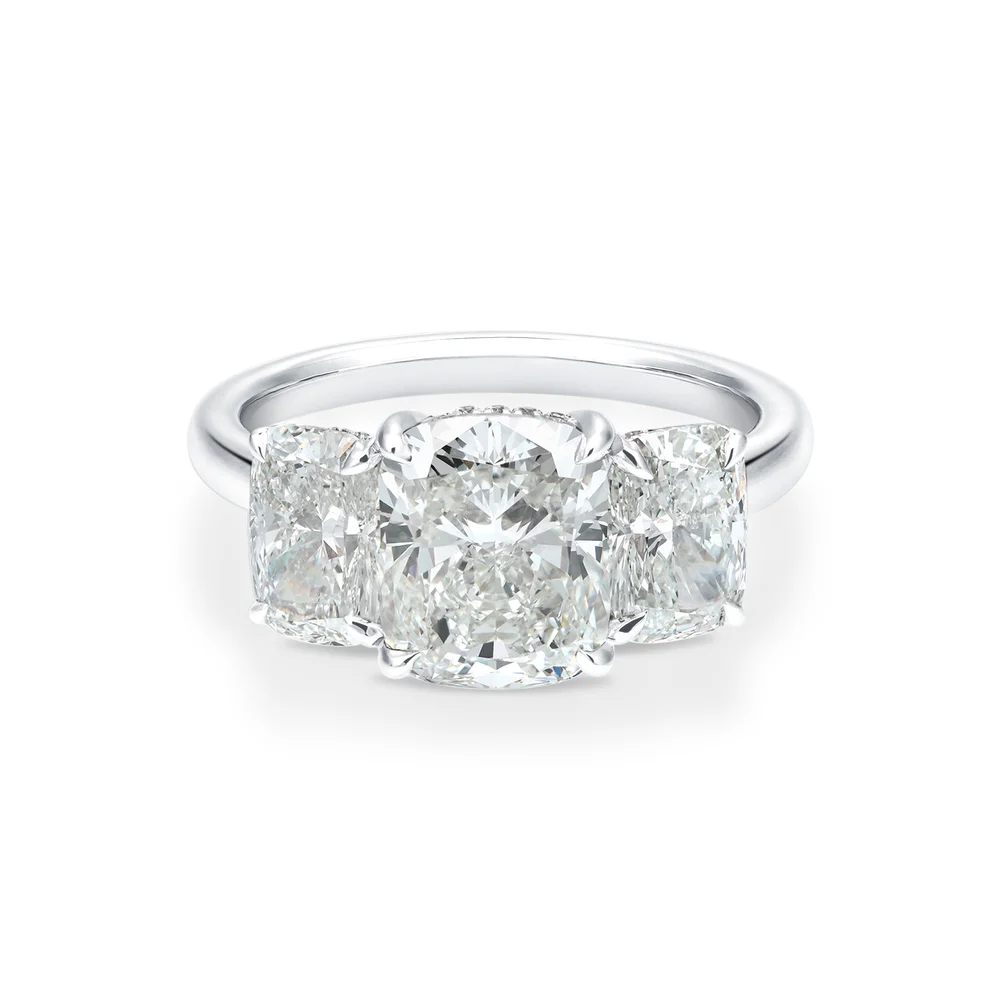
4 3/4 ct. tw. Cushion 3 Stone Ring in 14k White Gold
Clean Origin
$2,799
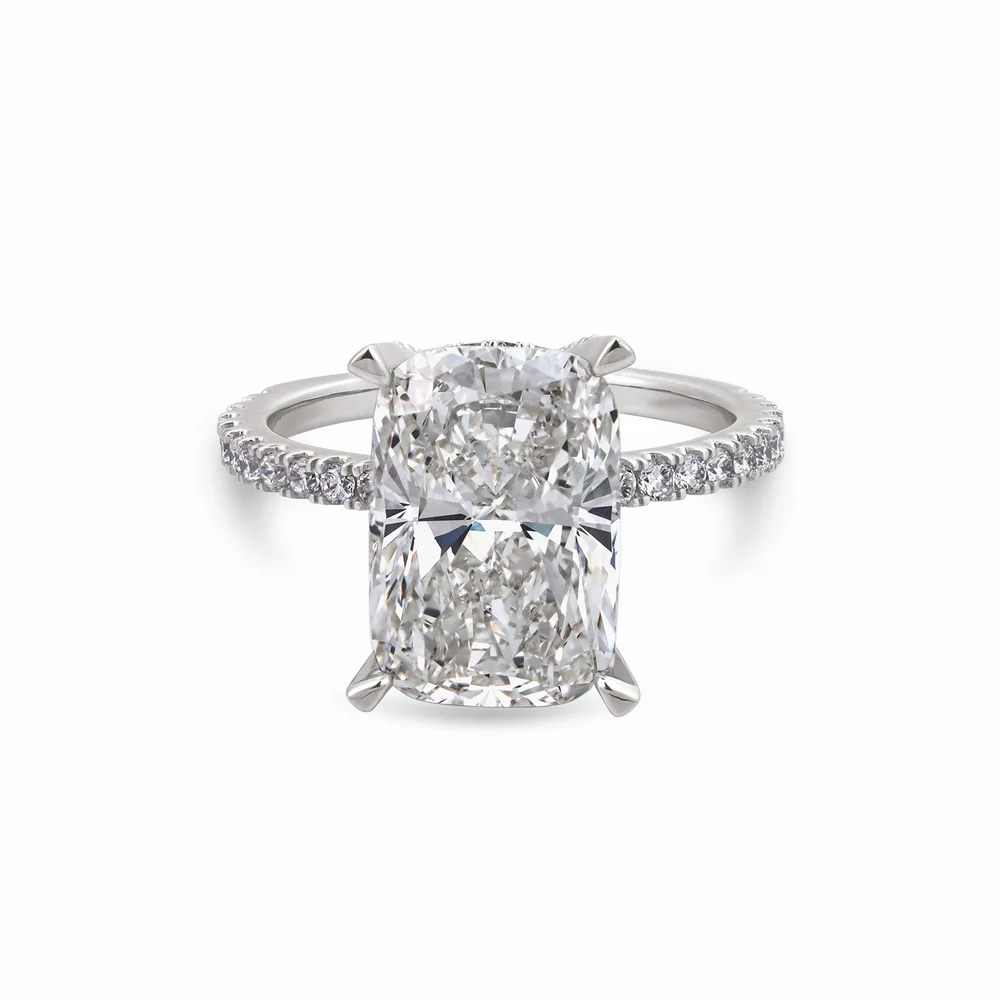
5 2/3 ct. tw. Elongated Cushion Lab Diamond Hidden Halo Engagement Ring in 14kt White Gold
Clean Origin
$2,399
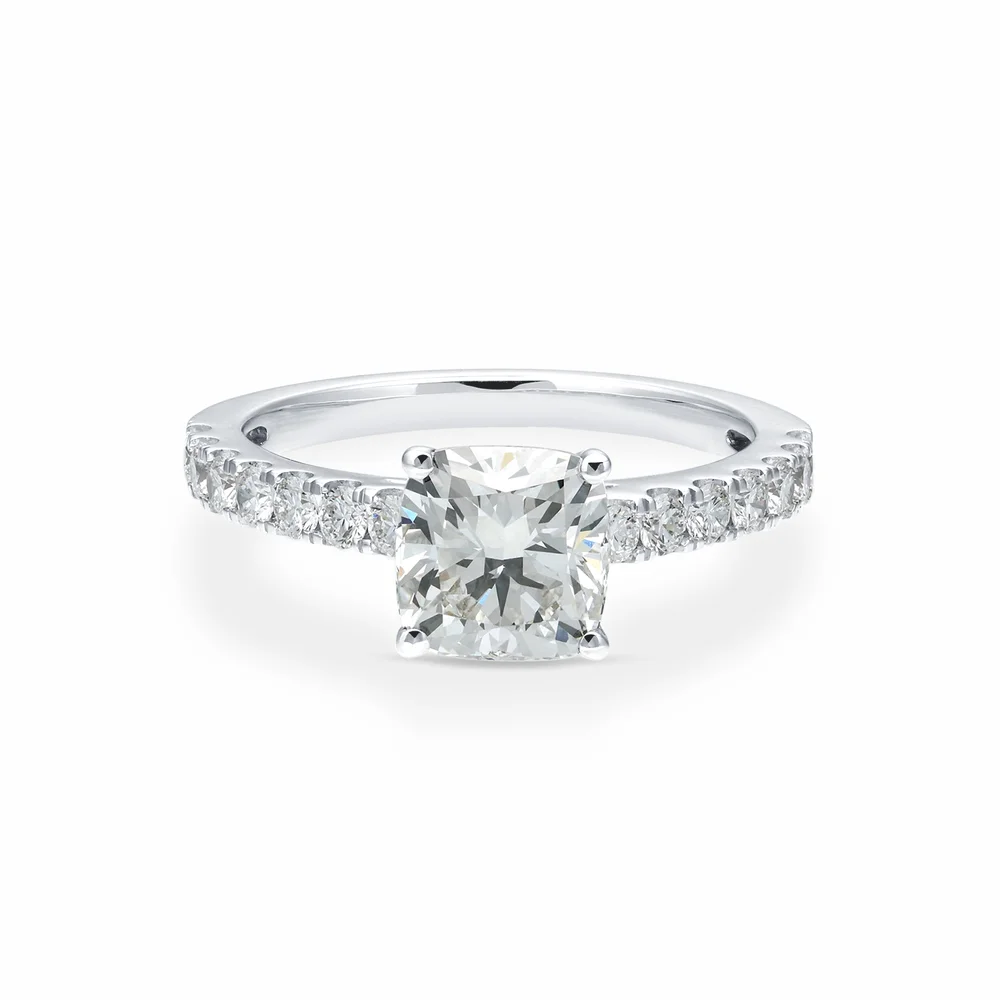
2 1/2 ct. tw. Cushion Diamond Cathedral Ring in 14k White Gold
Clean Origin
$2,500
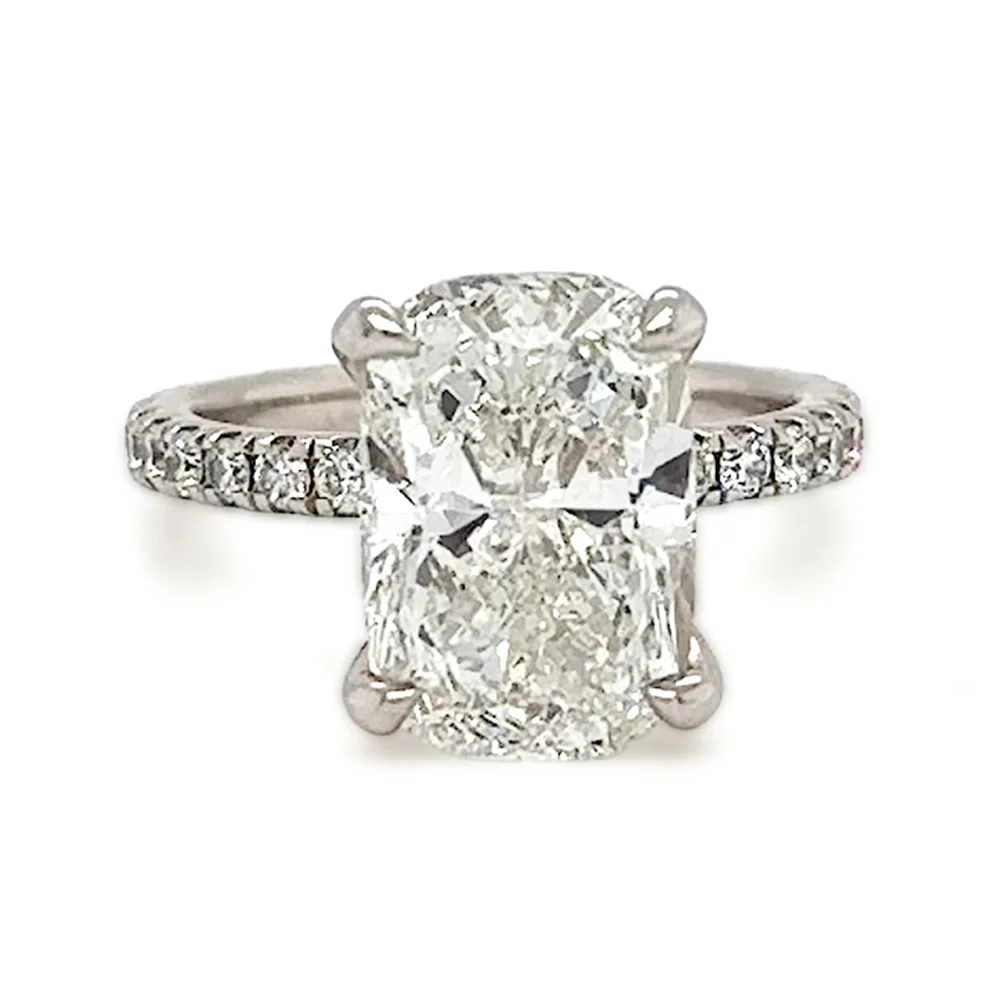
5 3/4 ct. tw. Elongated Cushion Engagement Ring Platinum
Clean Origin
$2,499
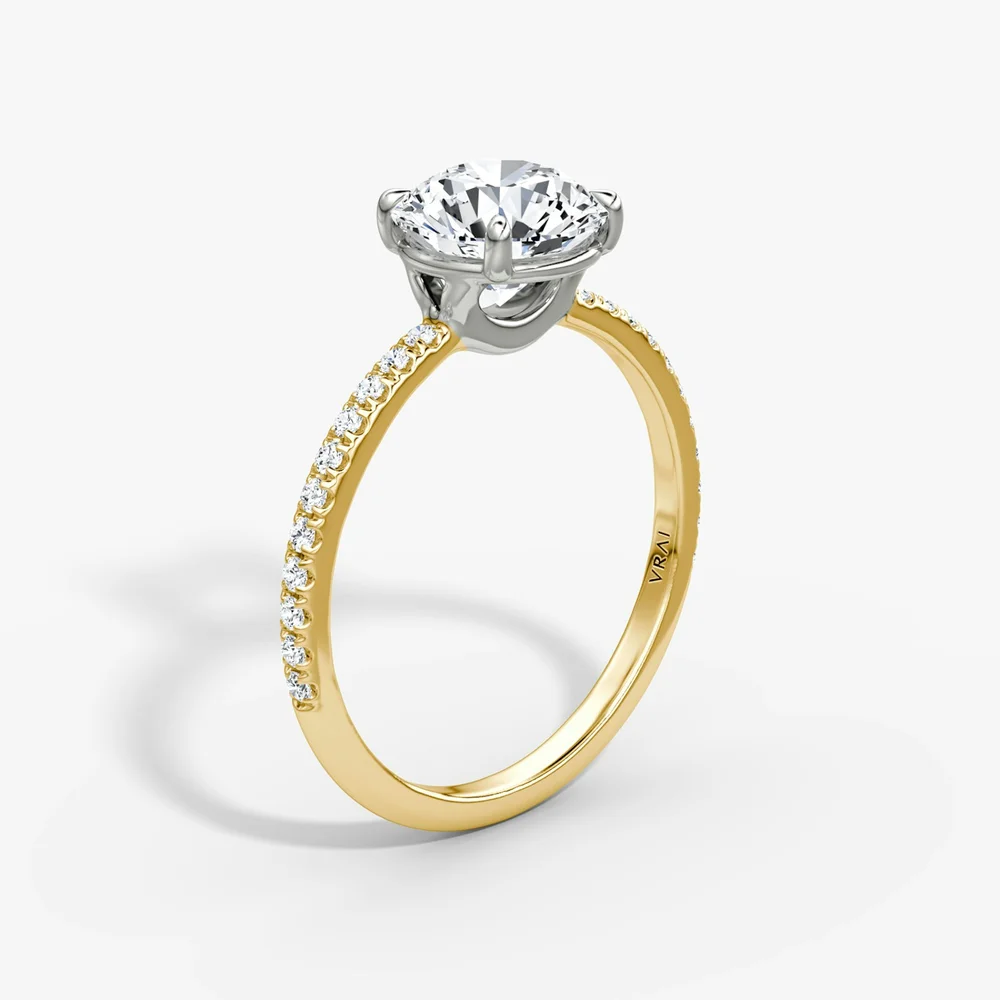
The Signature Two Tone
VRAI
$2,627
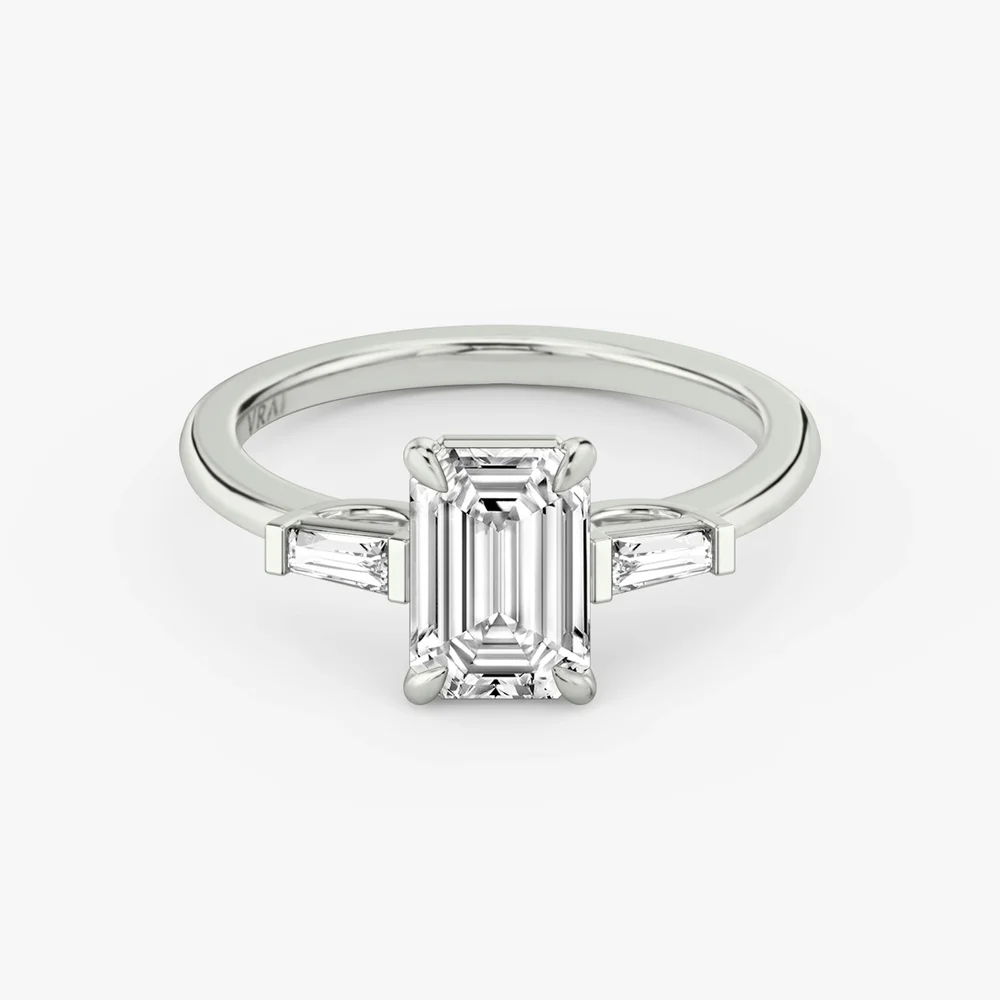
Three Stone Engagement Ring, Emerald, White Gold
VRAI
$3,268
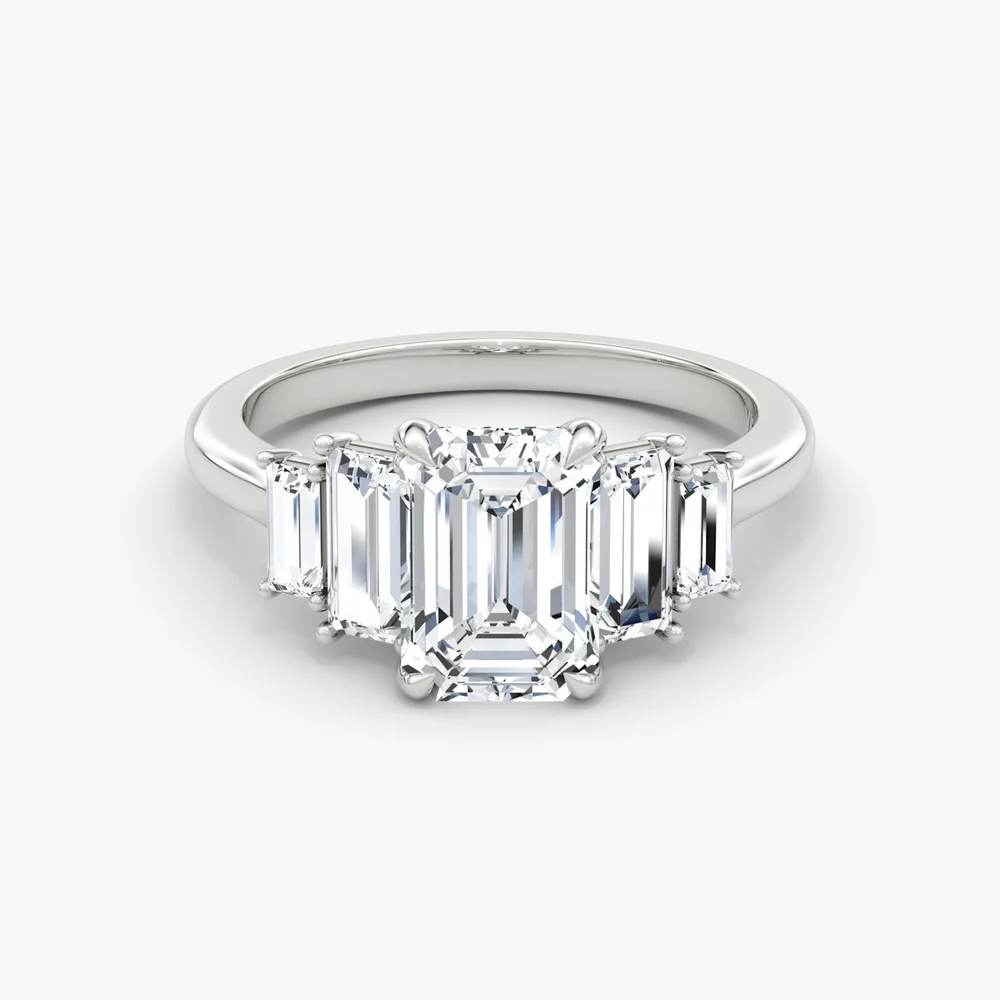
Five Stone Heirloom Engagement Ring
VRAI
$3,112
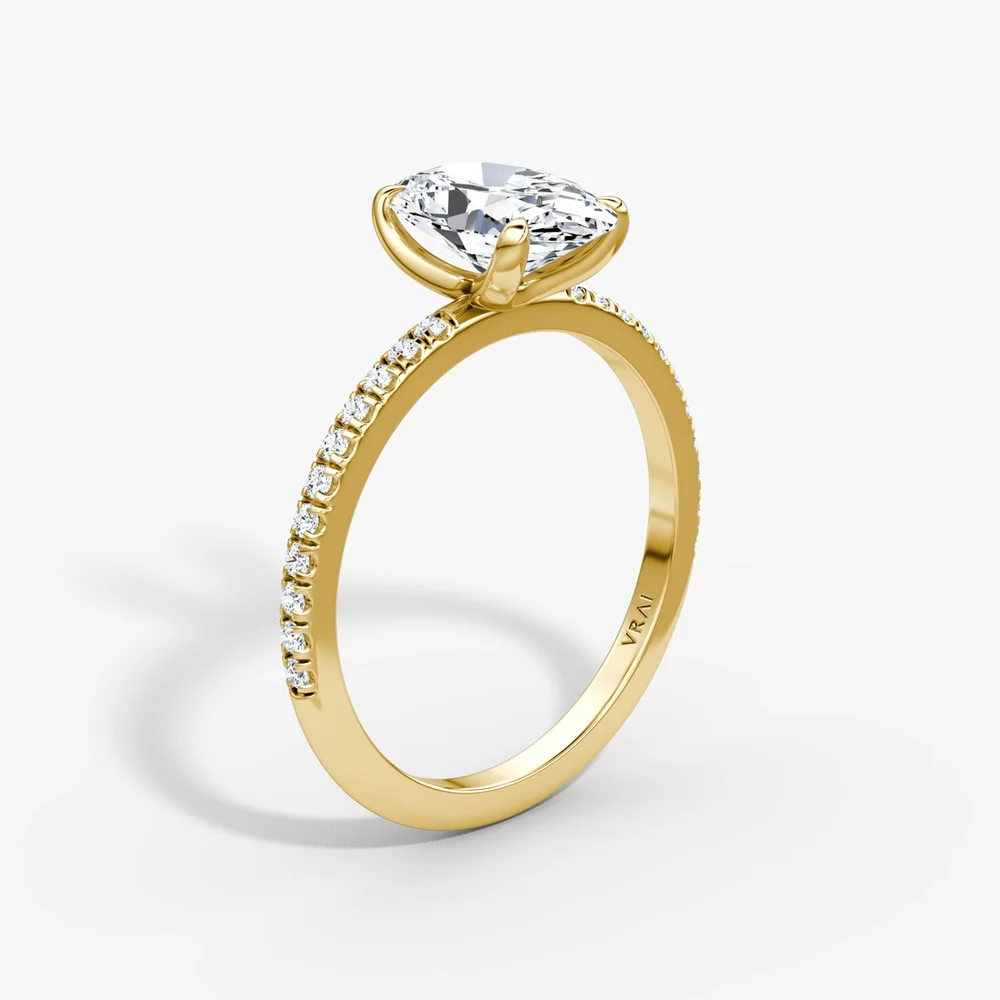
Classic Engagement Ring
VRAI
$3,490
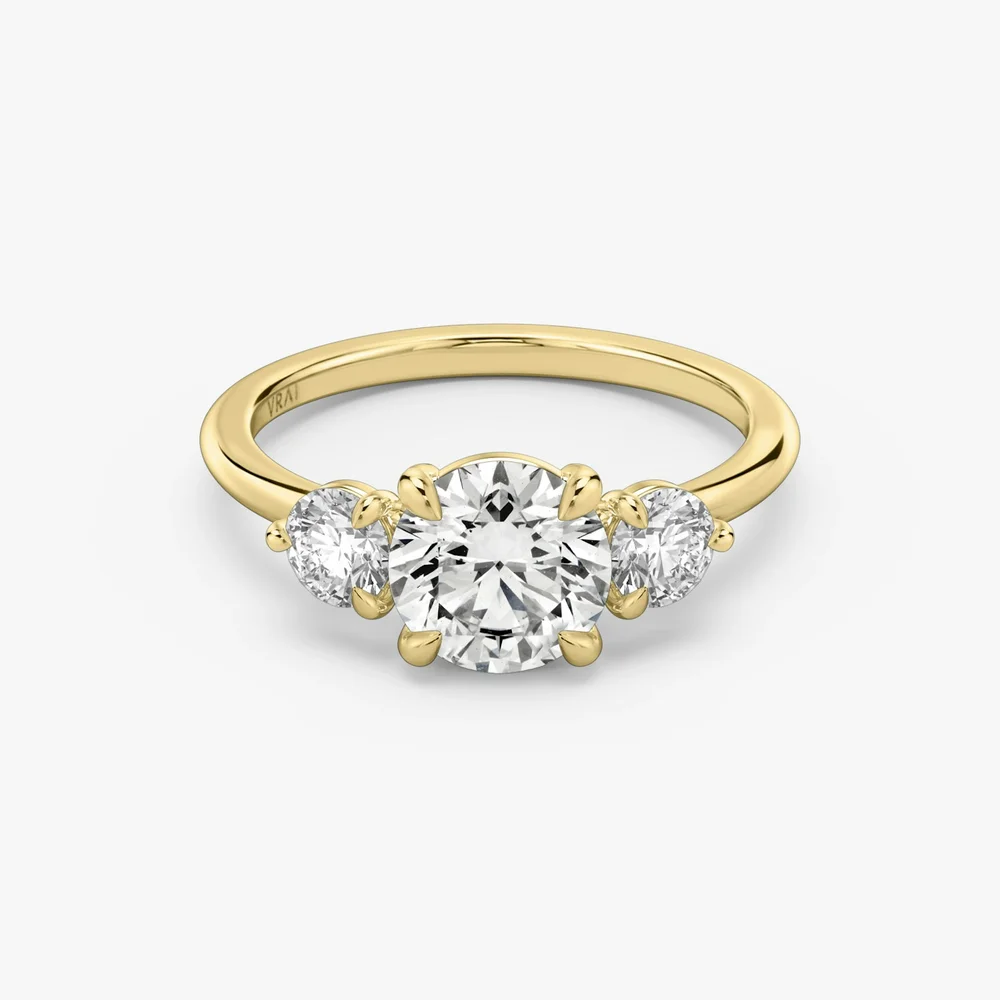
Three Stone Engagement Ring, Round Brilliant, Yellow Gold
VRAI
$3,850
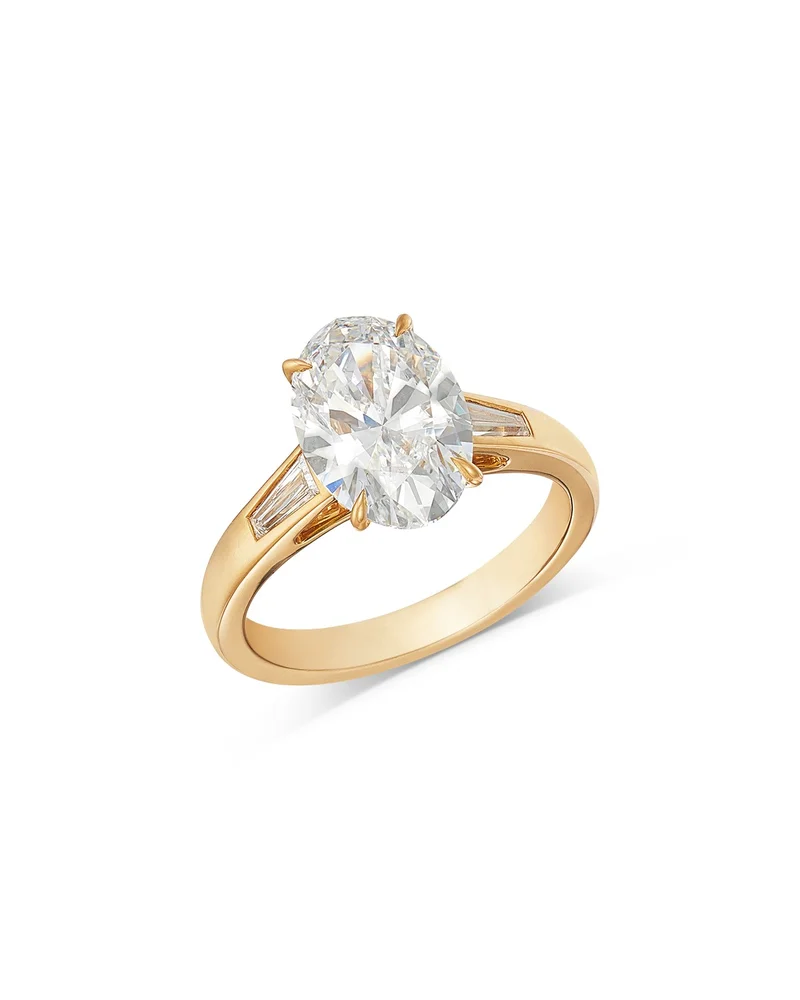
Luxe Collection Certified Lab Grown Diamond Oval & Baguette Engagement Ring in 14K Yellow Gold, 3.25 tcw
Bloomingdale's Fine Collection
$2,625
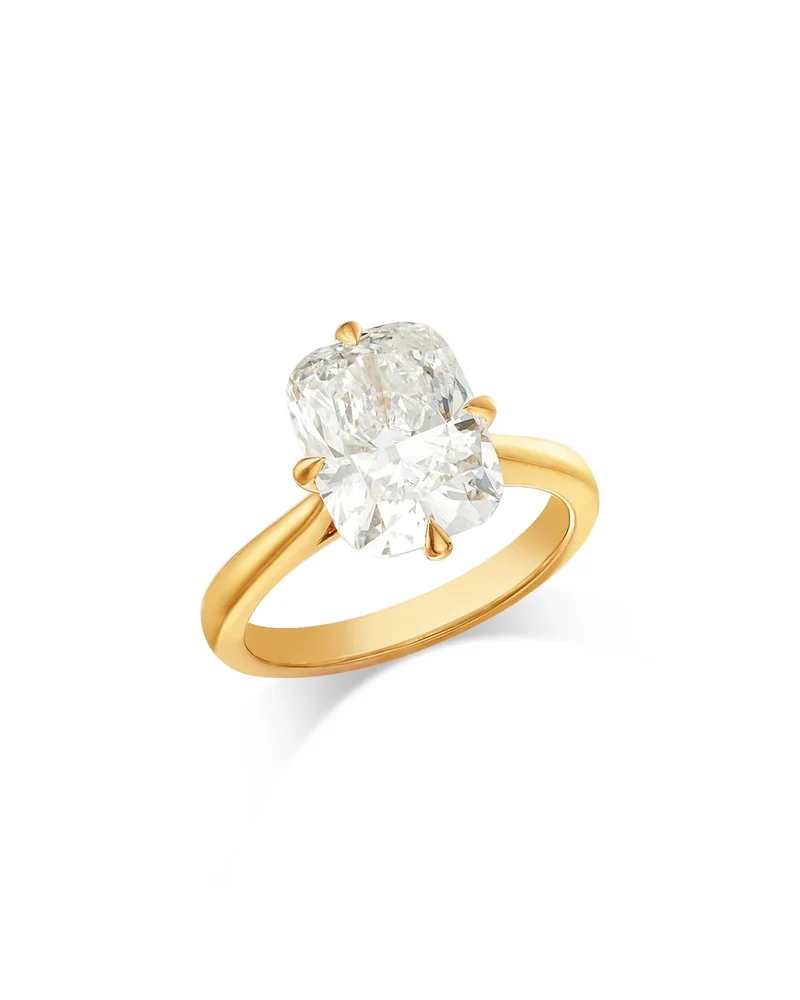
Luxe Collection Certified Lab Grown Diamond Elongated Cushion Solitaire Ring in 18K Yellow Gold, 4.0 tcw
Bloomingdale's Fine Collection
$4,305
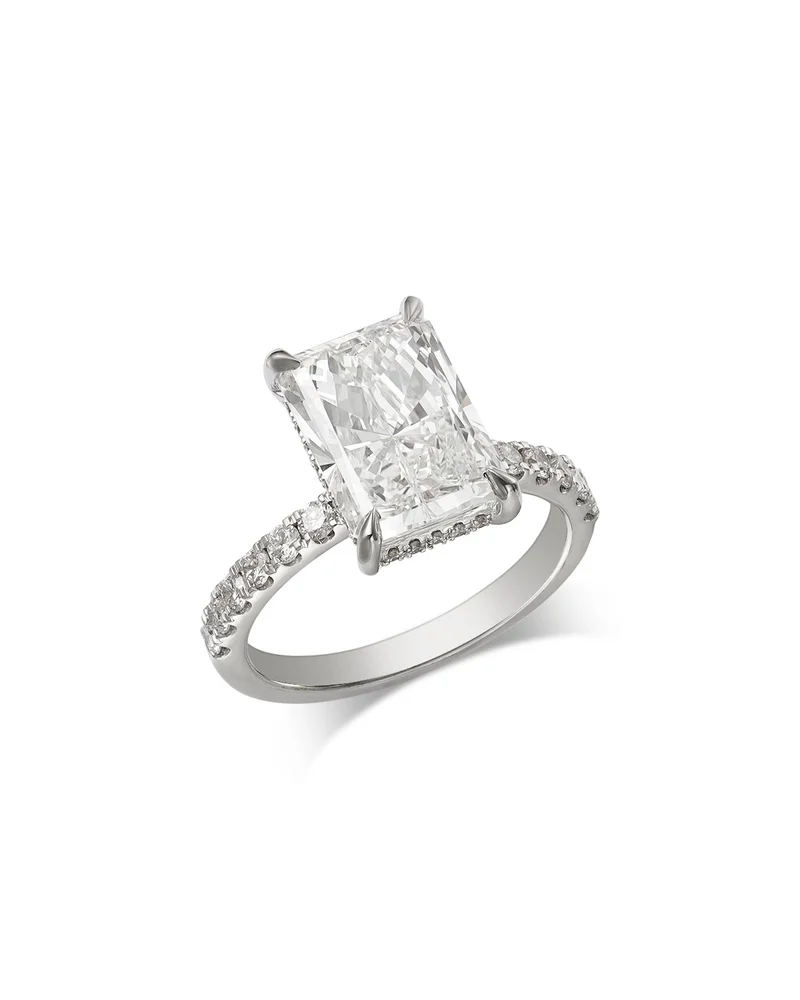
Luxe Collection Certified Lab Grown Diamond Radiant Engagement Ring in 14K White Gold, 4.5 tcw
Bloomingdale's Fine Collection
$3,465
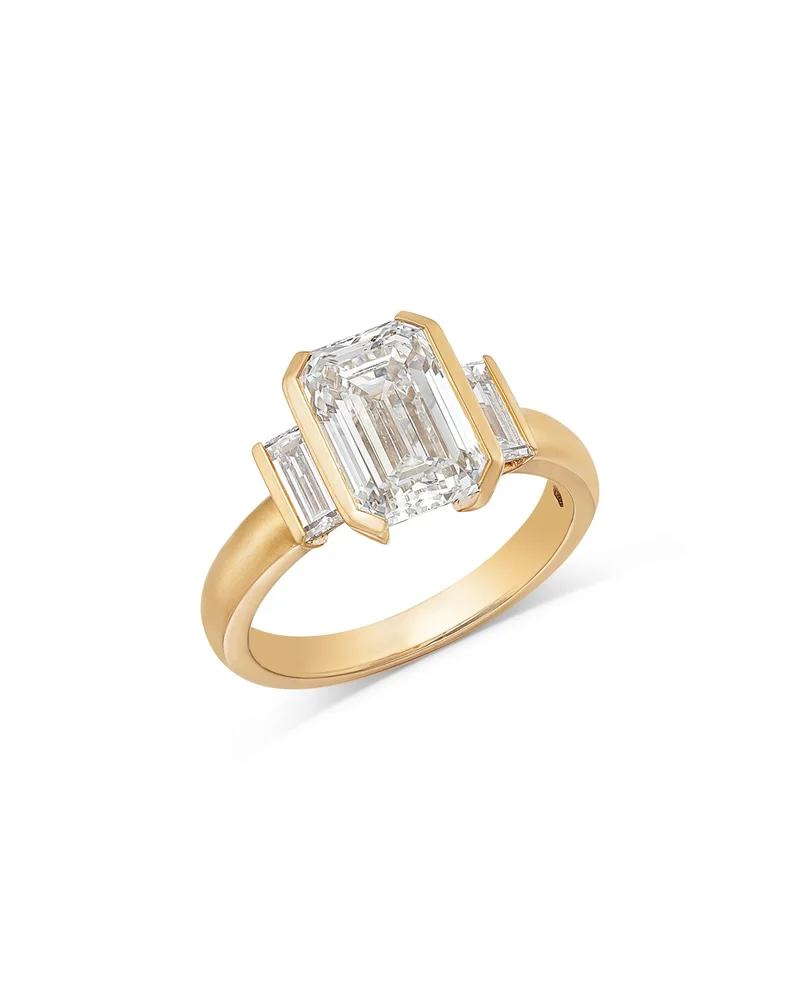
Luxe Collection Certified Lab Grown Diamond Emerald Cut & Baguette Engagement Ring in 14K Yellow Gold, 3.5 tcw
Bloomingdale's Fine Collection
$2,730
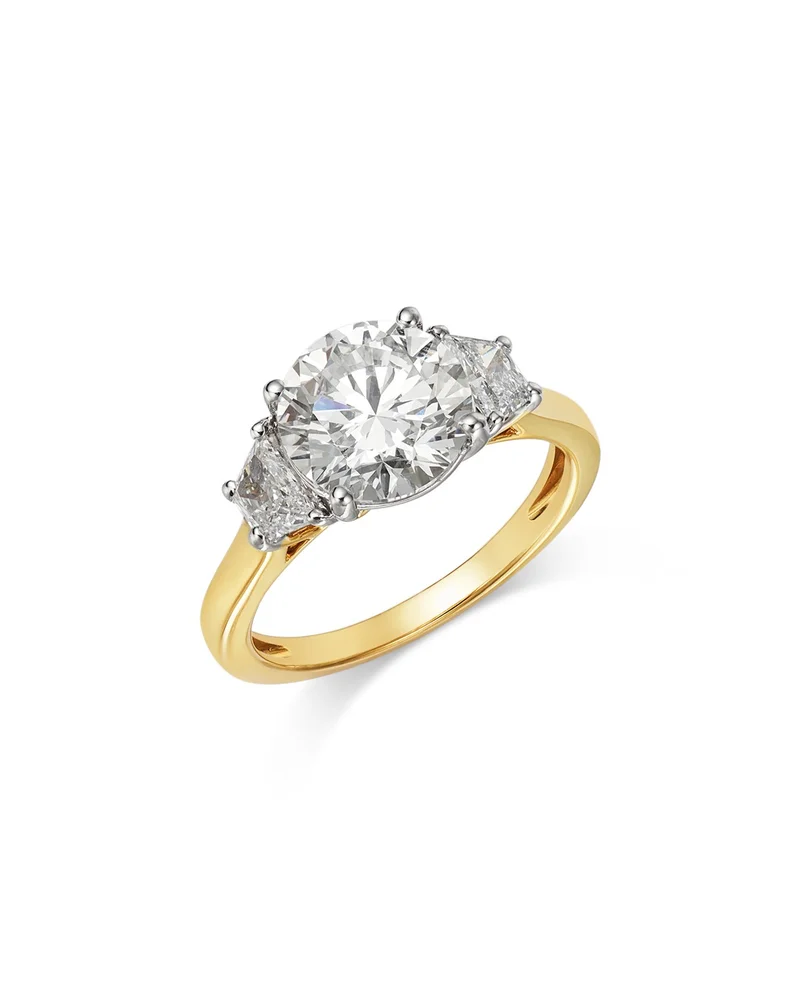
Luxe Collection Certified Lab Grown Diamond Solitaire Engagement Ring in 18K Yellow & White Gold, 3.0 tcw
Bloomingdale's Fine Collection
$2,625
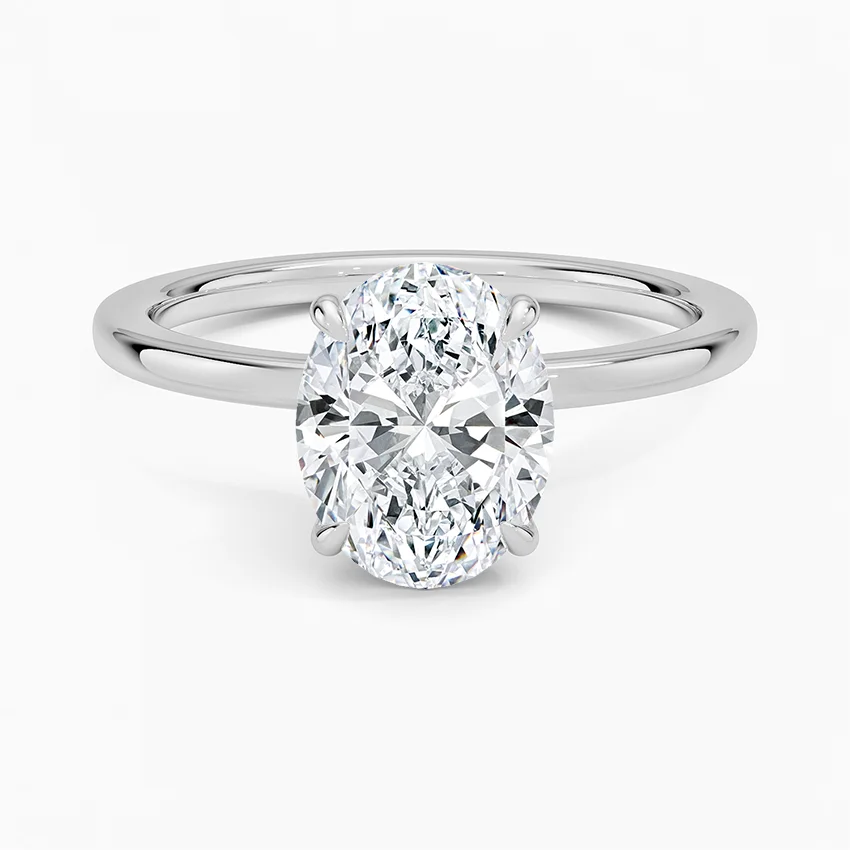
Secret Halo with 2ct Oval Certified Lab Diamond in 18K White Gold
Brilliant Earth
$3,490
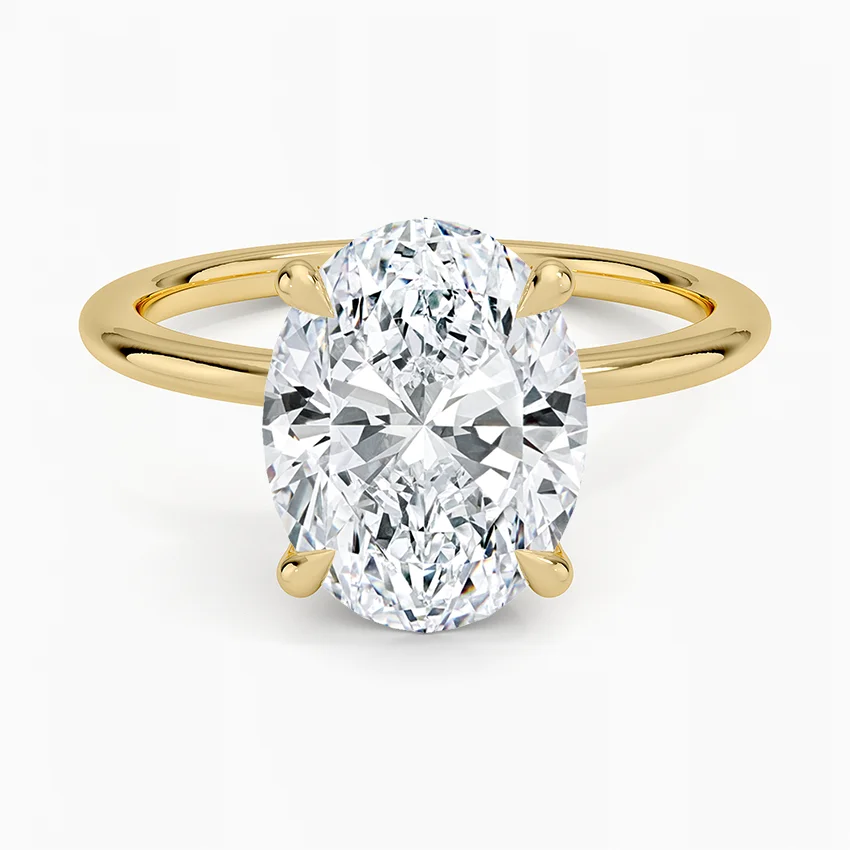
Petite Elodie 1.5mm Solitaire with 3ct Oval Certified Lab Diamond in 18K Yellow Gold
Brilliant Earth
$4,190
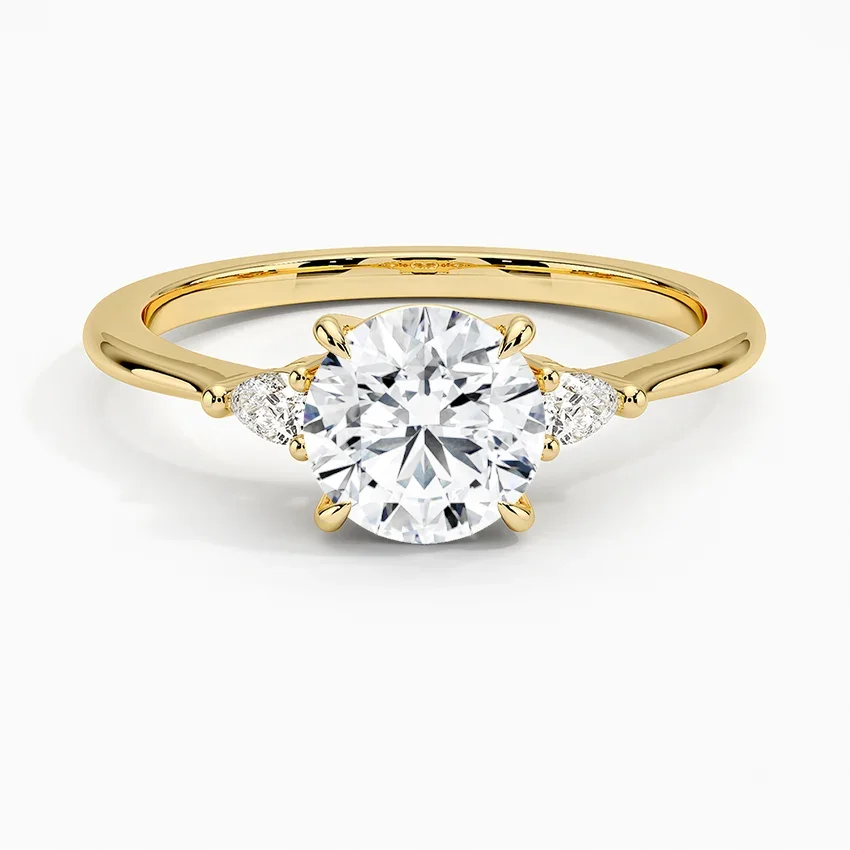
Aria Three Stone with 1ct Round Certified Lab Diamond in 18K Yellow Gold
Brilliant Earth
$1,890
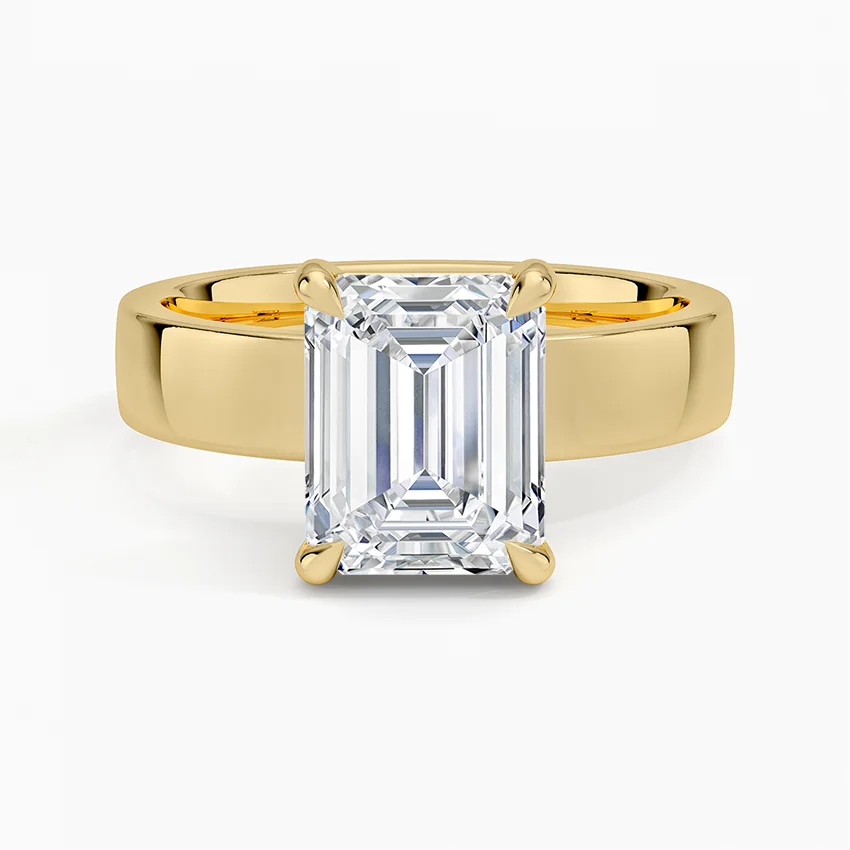
Peyton 4mm Solitaire with 2ct Emerald Certified Lab Diamond in 18K Yellow Gold
Brilliant Earth
$3,590
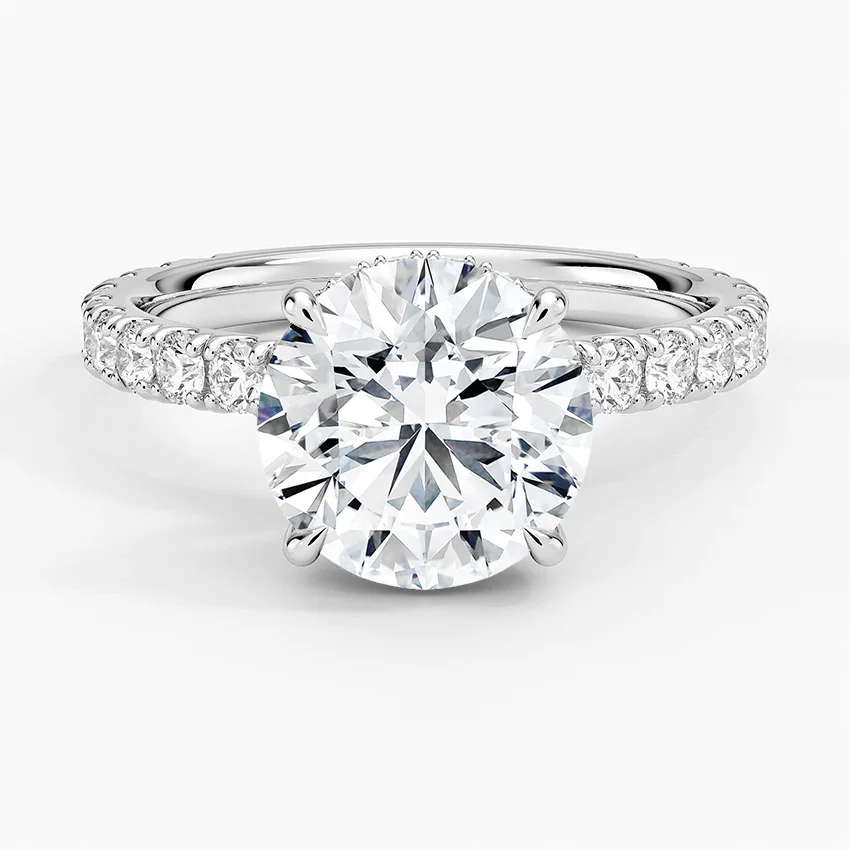
Grand Perfect Fit Three-Quarter with 2.5ct Round Certified Lab Diamond in 18K White Gold
Brilliant Earth
$5,590
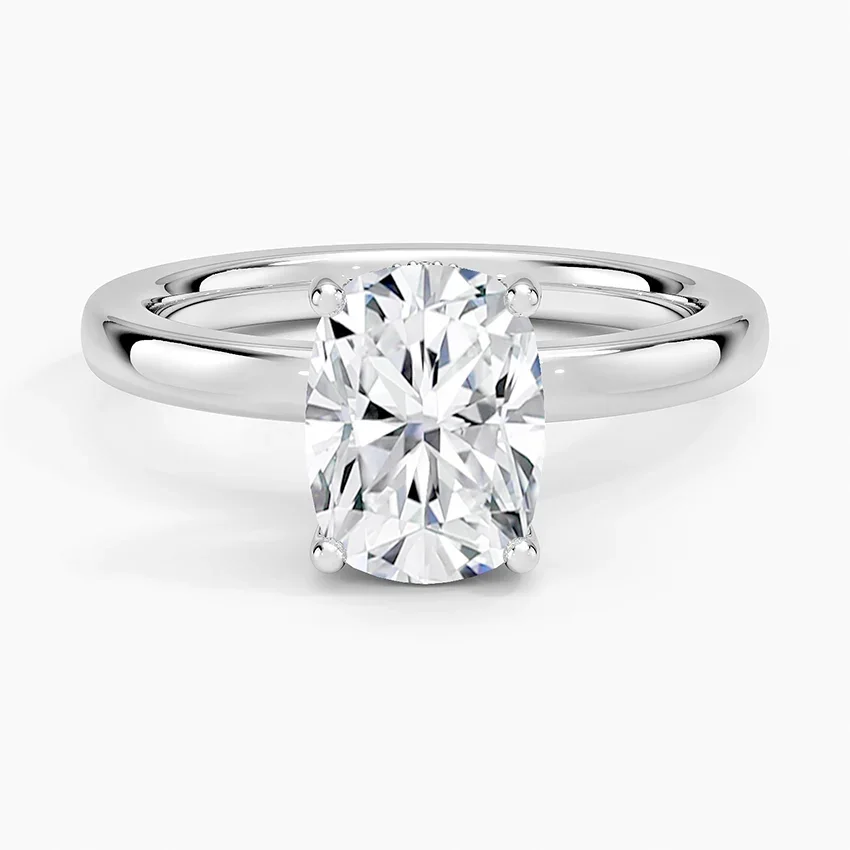
Sydney Perfect Fit Hidden Halo 2mm with 2ct Elongated Cushion Certified Lab Diamond in 18K White Gold
Brilliant Earth
$3,990
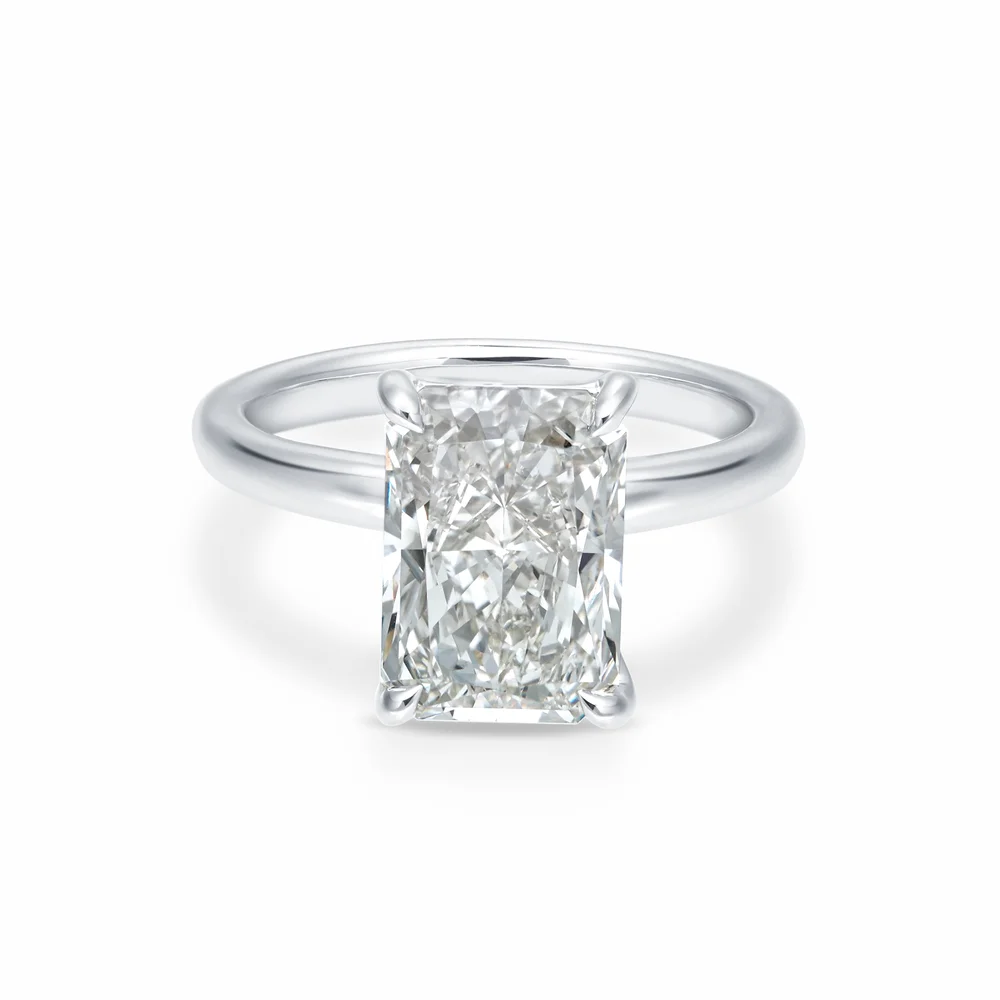
4 ct. Radiant Diamond Solitaire Ring in 14k White Gold
Clean Origin
$3,400
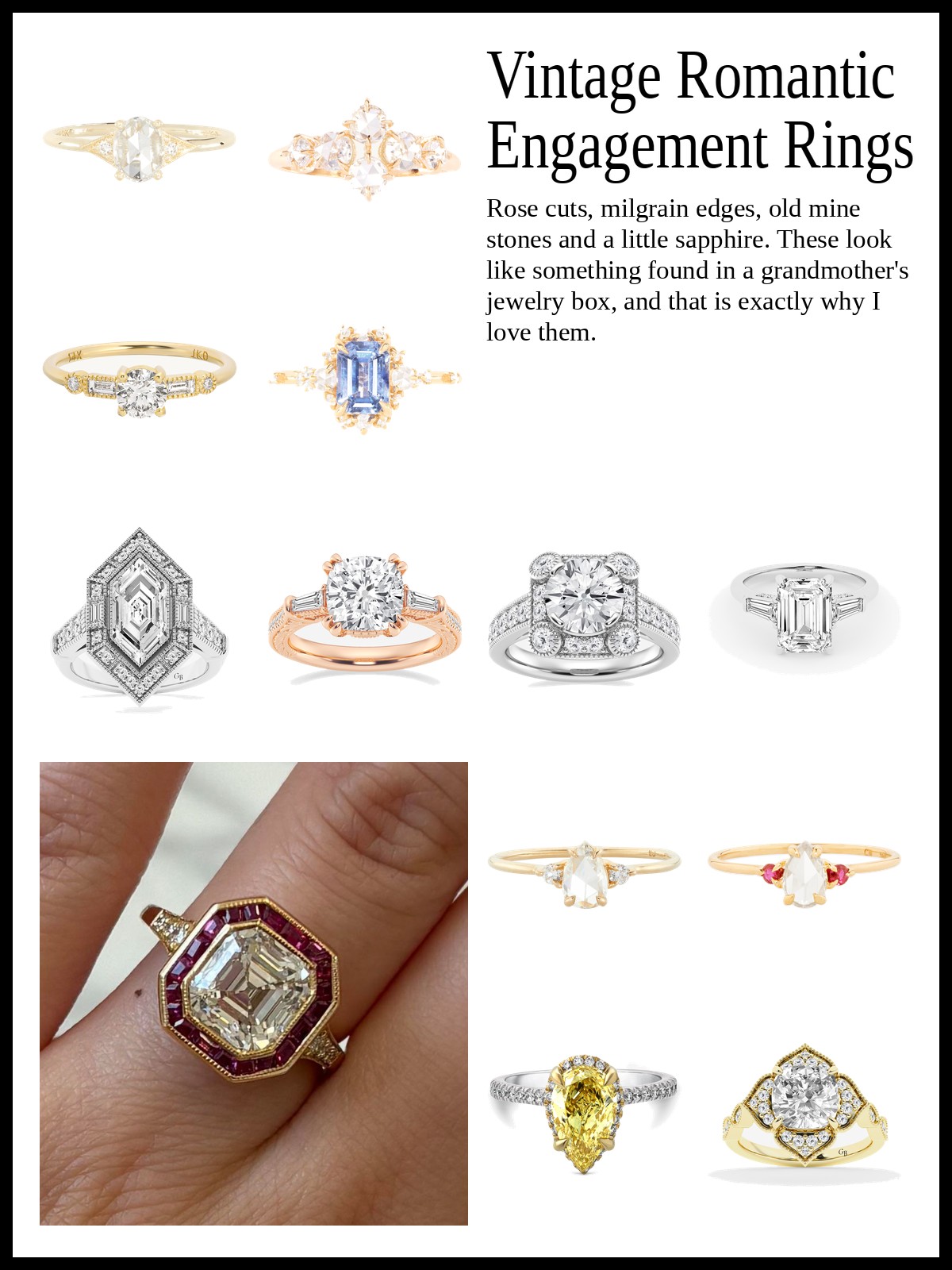
Vintage romantic: rose cuts and old mine stones
GIA describes the old mine cut as a stone shaped entirely by hand, soft and squarish, cut to shimmer in candlelight, and the most common cut in Georgian and Victorian jewelry. The rose cut is older still. GIA dates it to the 16th century: a flat base, a domed top and triangular facets that rise to a point like a rosebud. Neither one is built for maximum sparkle. They glow, which is exactly the point.
That glow is what ties these rings together. The Jennie Kwon Rose Cut Deco and the Catbird Midnight Hour, with its cluster of rose cuts, are the most romantic things on this page. Catbird's Swan Lake has a row of rose cut stones that looks like lace, and the Leda the Swan pair, one with tiny rubies, put a pear shaped diamond between two small accents.
If you want the old mine look in a lab grown stone, Grown Brilliance makes it in several settings: the Matilda in white gold, the Margaret in rose gold with filigree, and the Rania in yellow gold. The Cleopatra is pure Art Deco, a hexagon of geometry. The Catbird Night at the Ballet adds a pale sapphire, and the Clean Origin fancy yellow pear is the one for someone who wants color.
The VRAI rings lean romantic too: the Signature Floral in emerald on platinum and the Floral Cathedral in yellow gold put a flower into the setting, the pear Halo is the antique shape, and the Mixed Shape pairs an emerald with round side stones for a deco feel.
A tip: look at these in warm light, not under a jewelry counter spotlight. They were designed for candles.
What I would skip: a vintage style ring with a very high setting. The charm of these is how low and flat they sit.
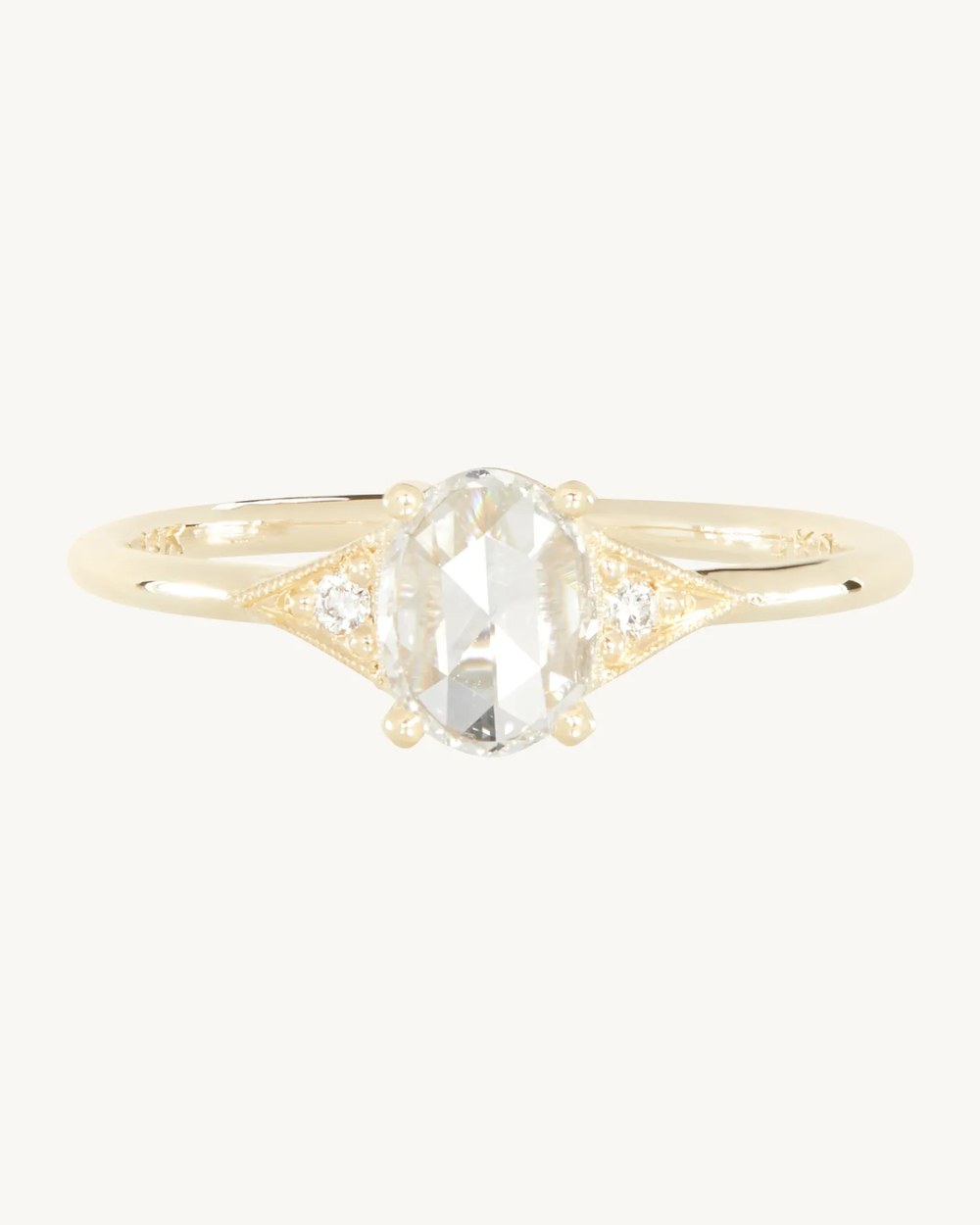
Rose Cut Deco Diamond Ring
Jennie Kwon
$4,950
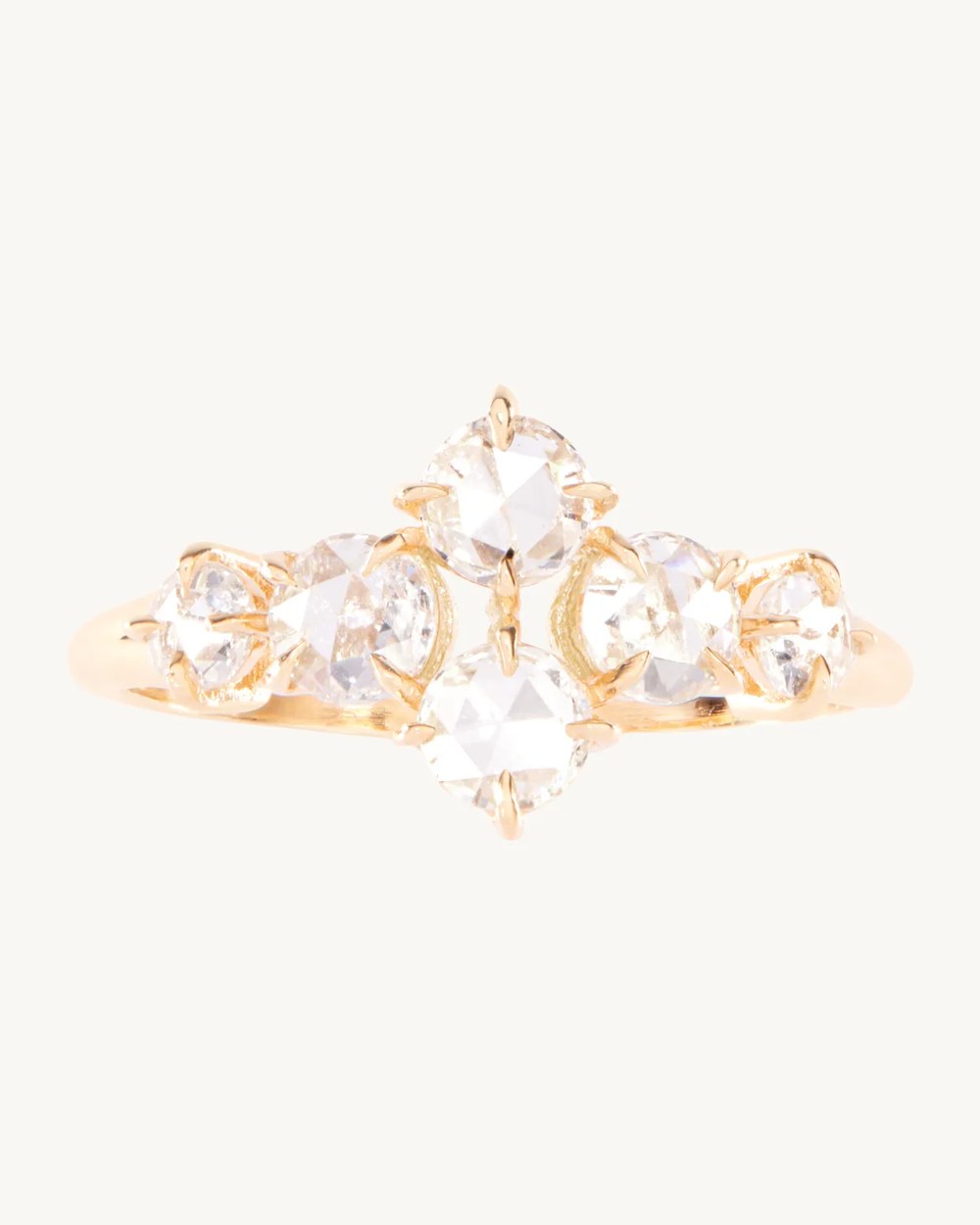
Midnight Hour Rose Cut Diamond Ring
Catbird
$3,490
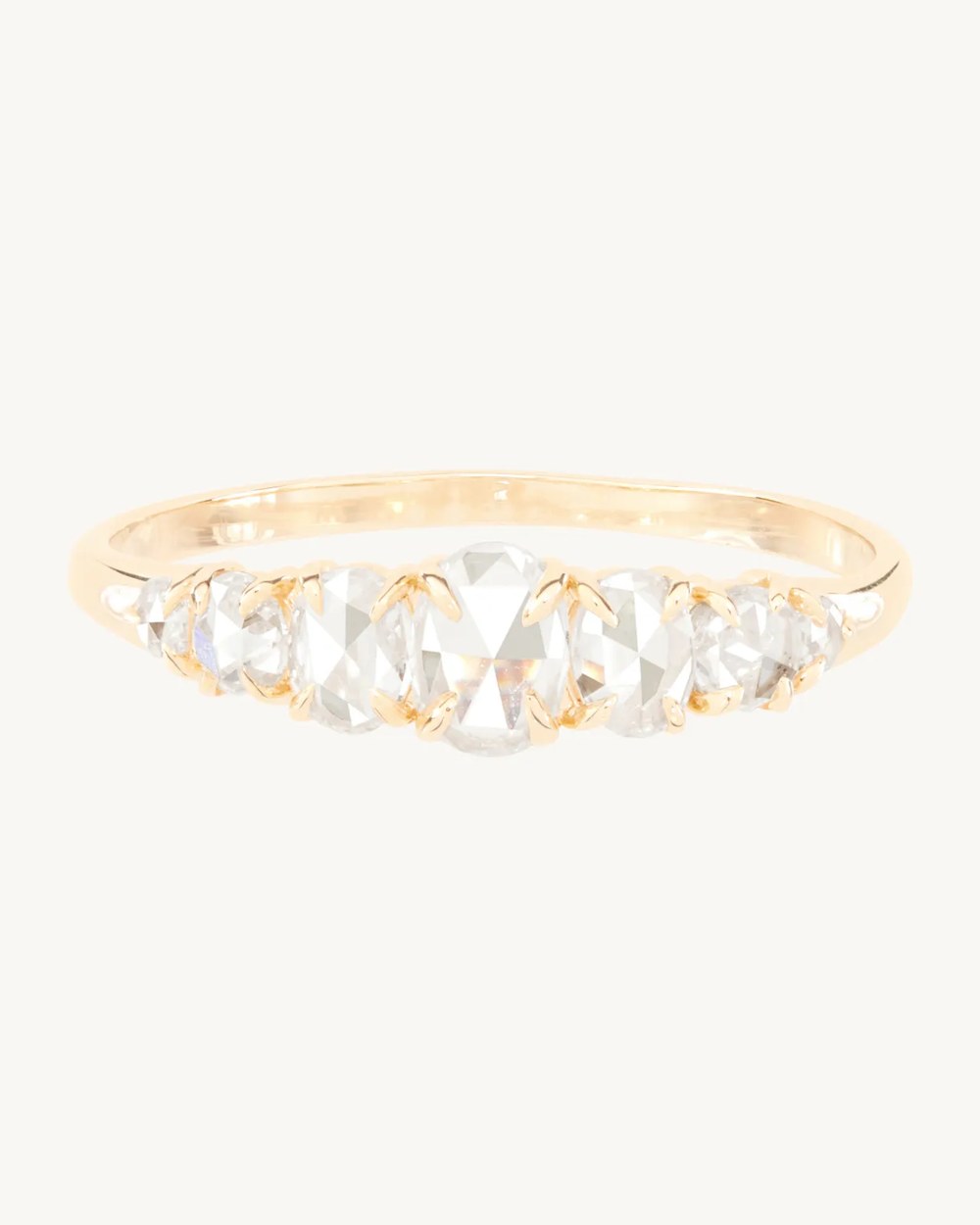
Swan Lake Diamond Ring
Catbird
$3,200
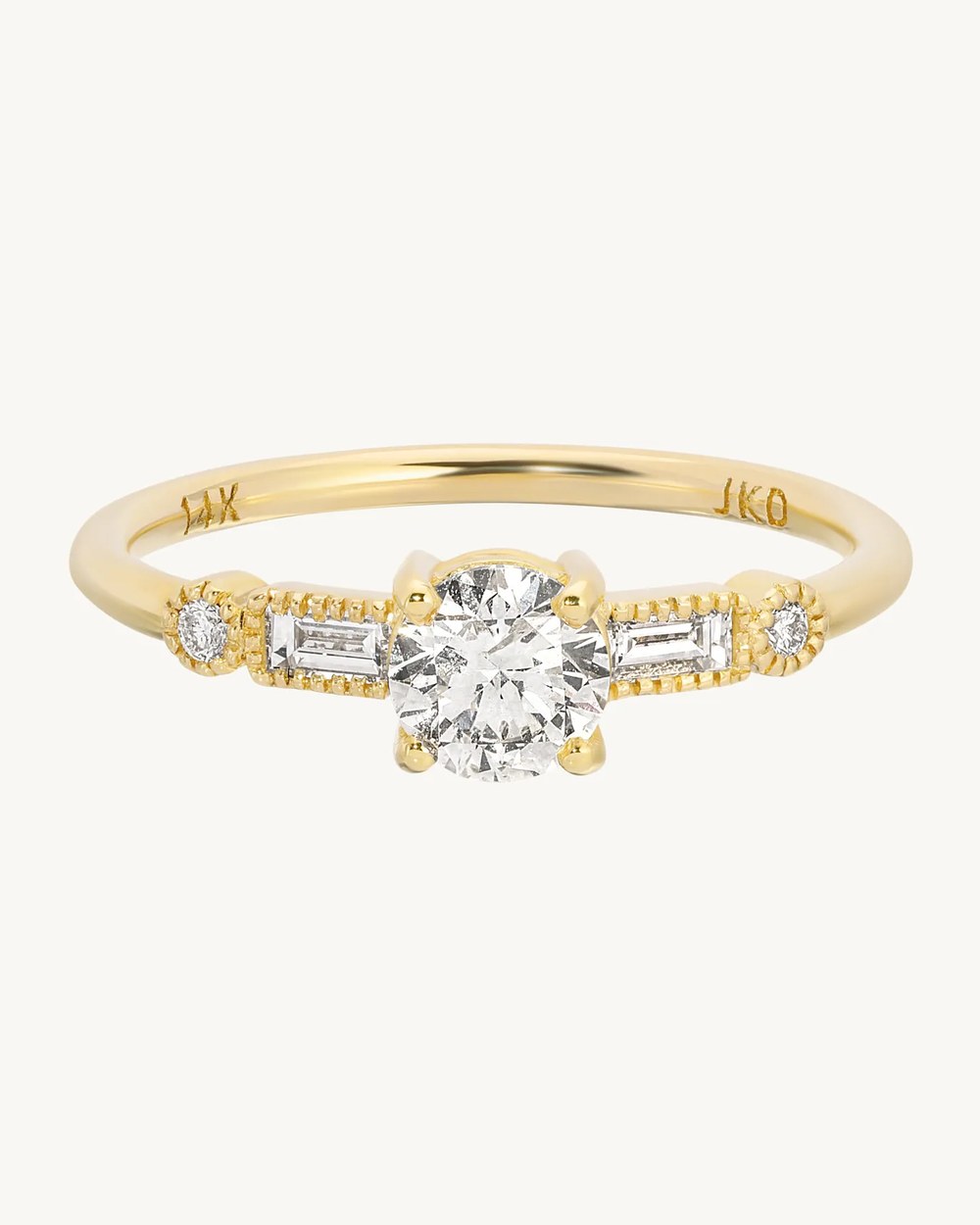
Diamond Sarabande Ring
Jennie Kwon
$3,465
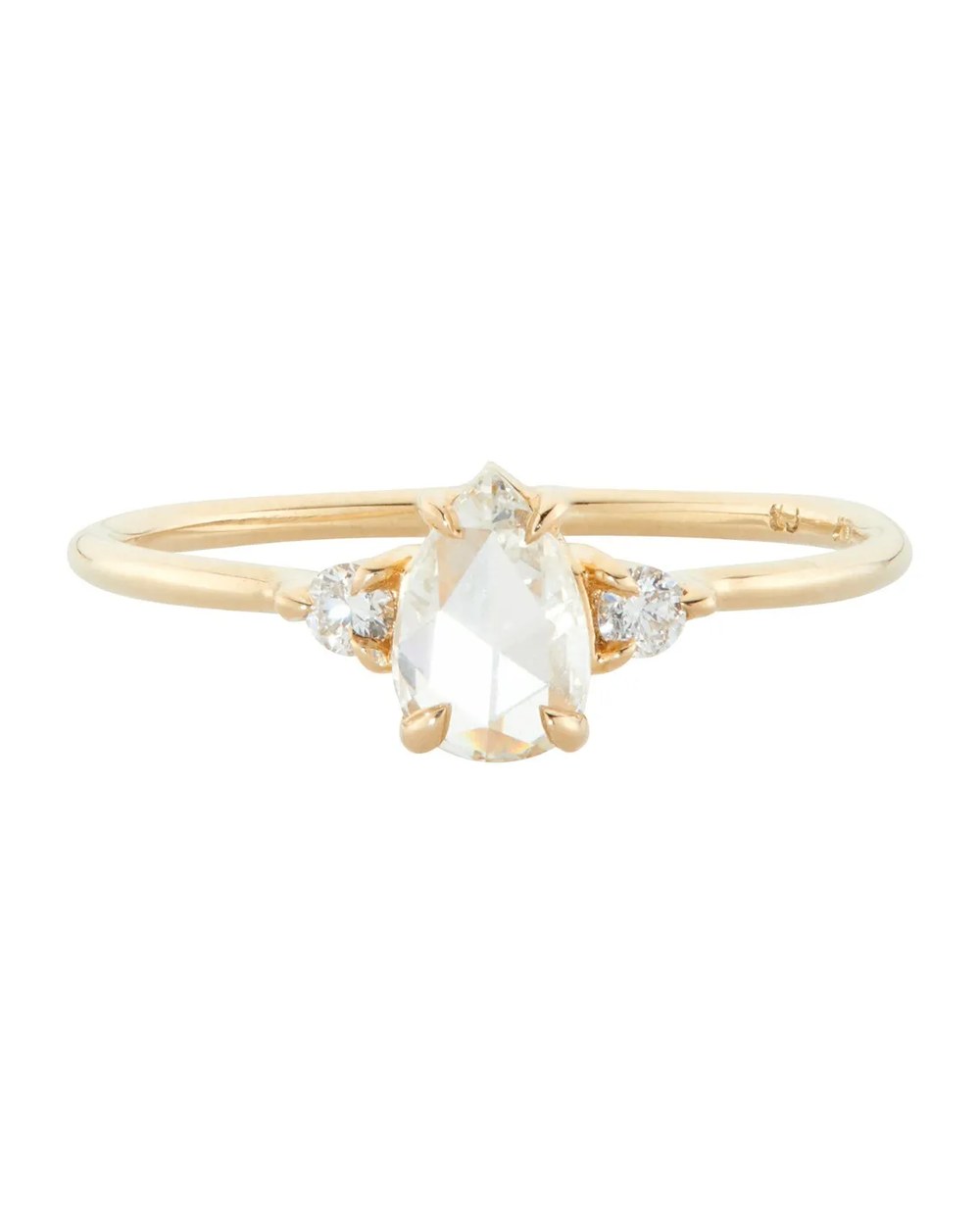
Leda the Swan Diamond Ring
Catbird
$3,900
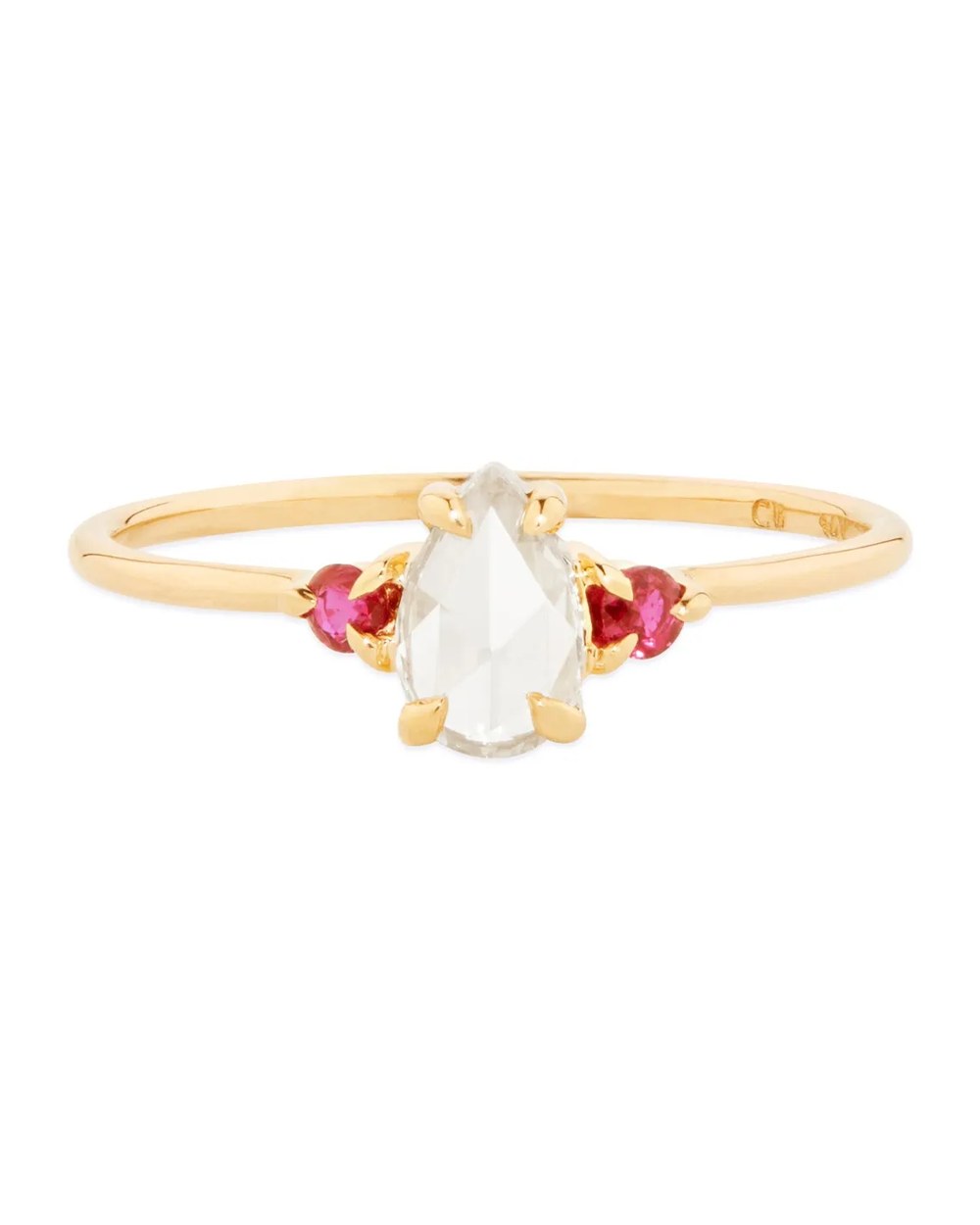
Leda the Swan, Rubies
Catbird
$3,700
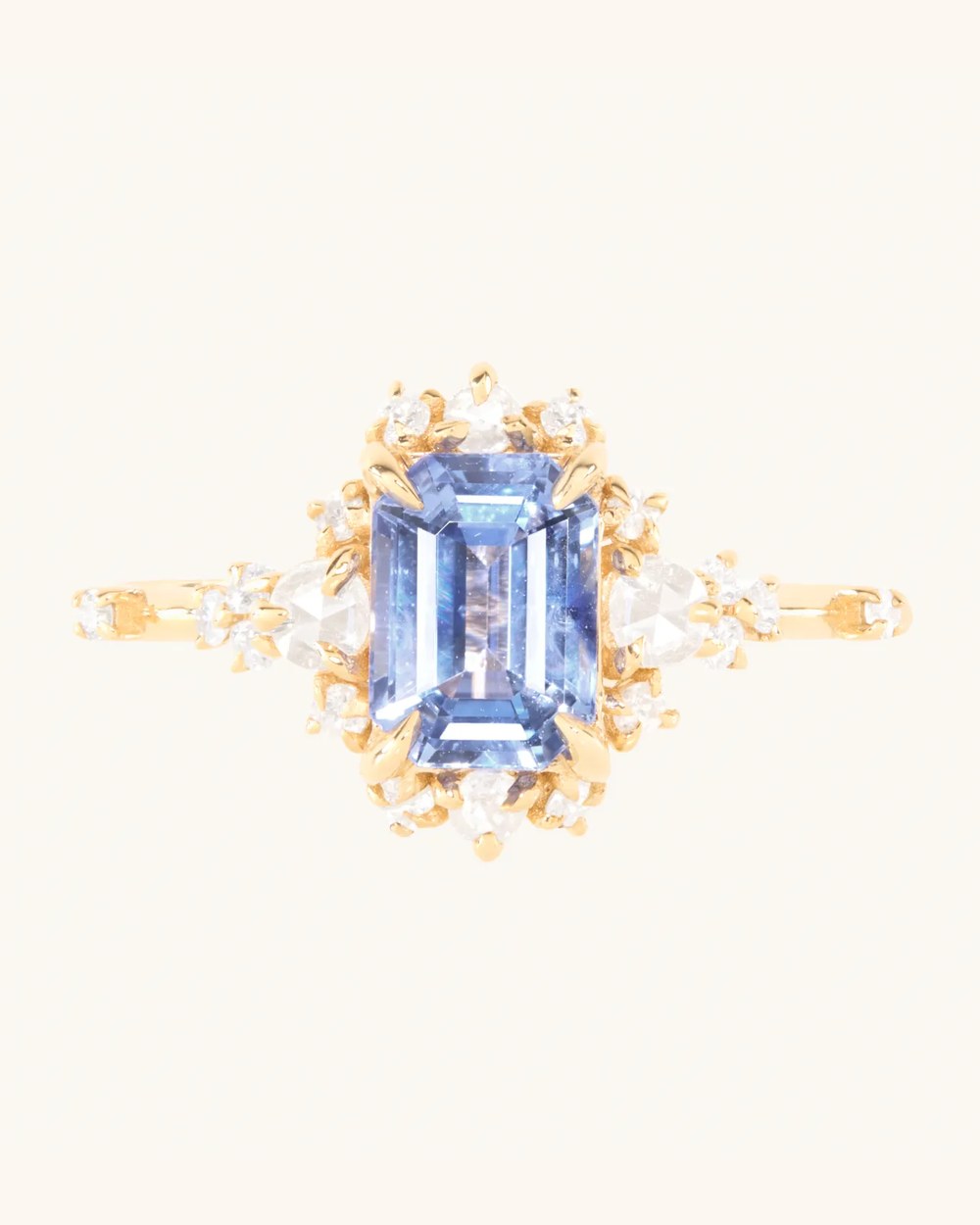
Night at the Ballet Sapphire Ring
Catbird
$2,900
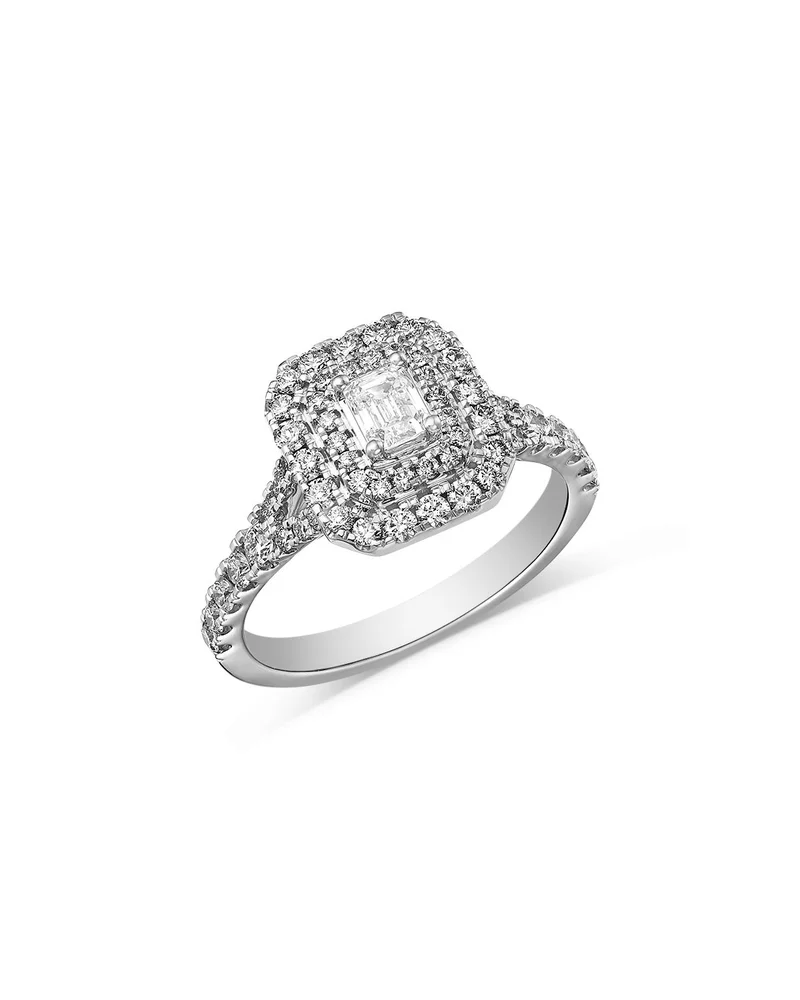
Diamond Emerald & Round Cut Halo Engagement Ring in 14K White Gold, 1.01 tcw
Bloomingdale's Fine Collection
$2,394
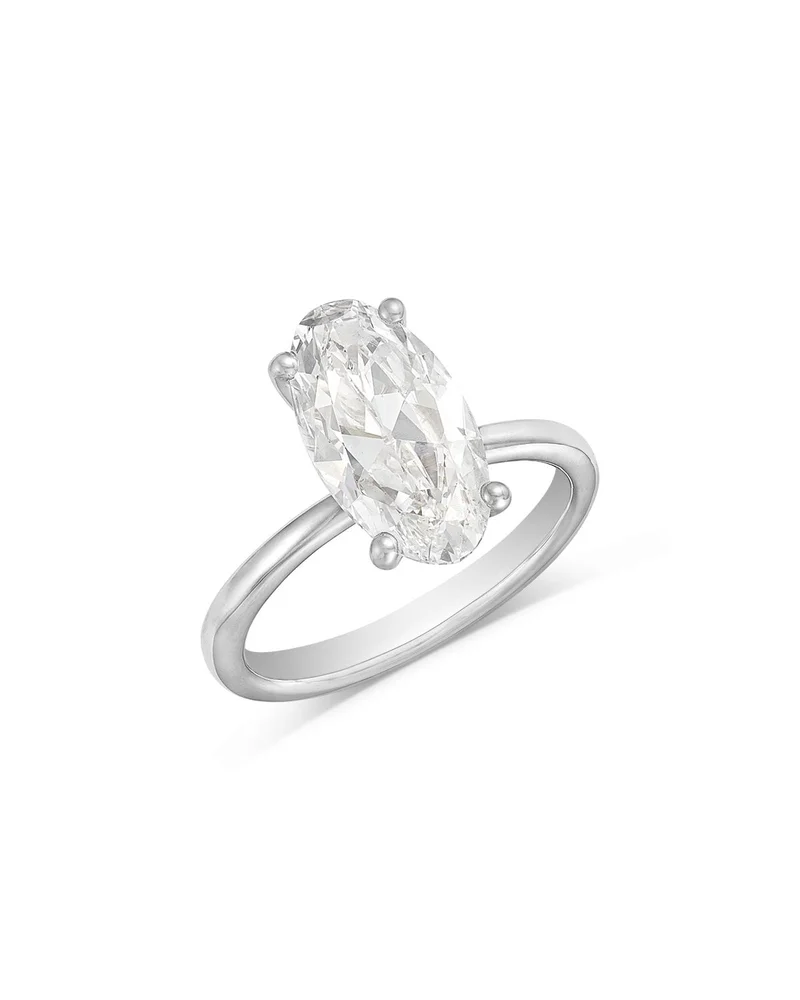
Luxe Collection Certified Lab Grown Diamond Old Mine Moval Solitaire Engagement Ring in 18K White Gold, 3.0 tcw
Bloomingdale's Fine Collection
$5,250
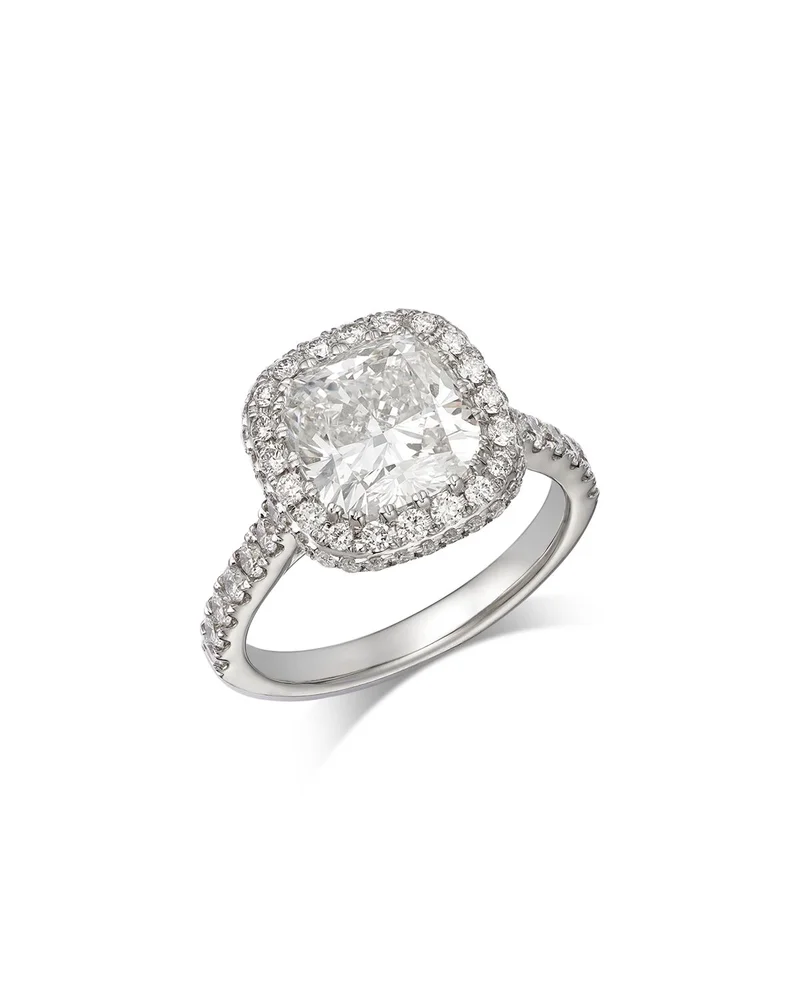
Luxe Collection Certified Lab Grown Diamond Cushion Cut Halo Engagement Ring in 18K White Gold, 4.0 tcw
Bloomingdale's Fine Collection
$3,885
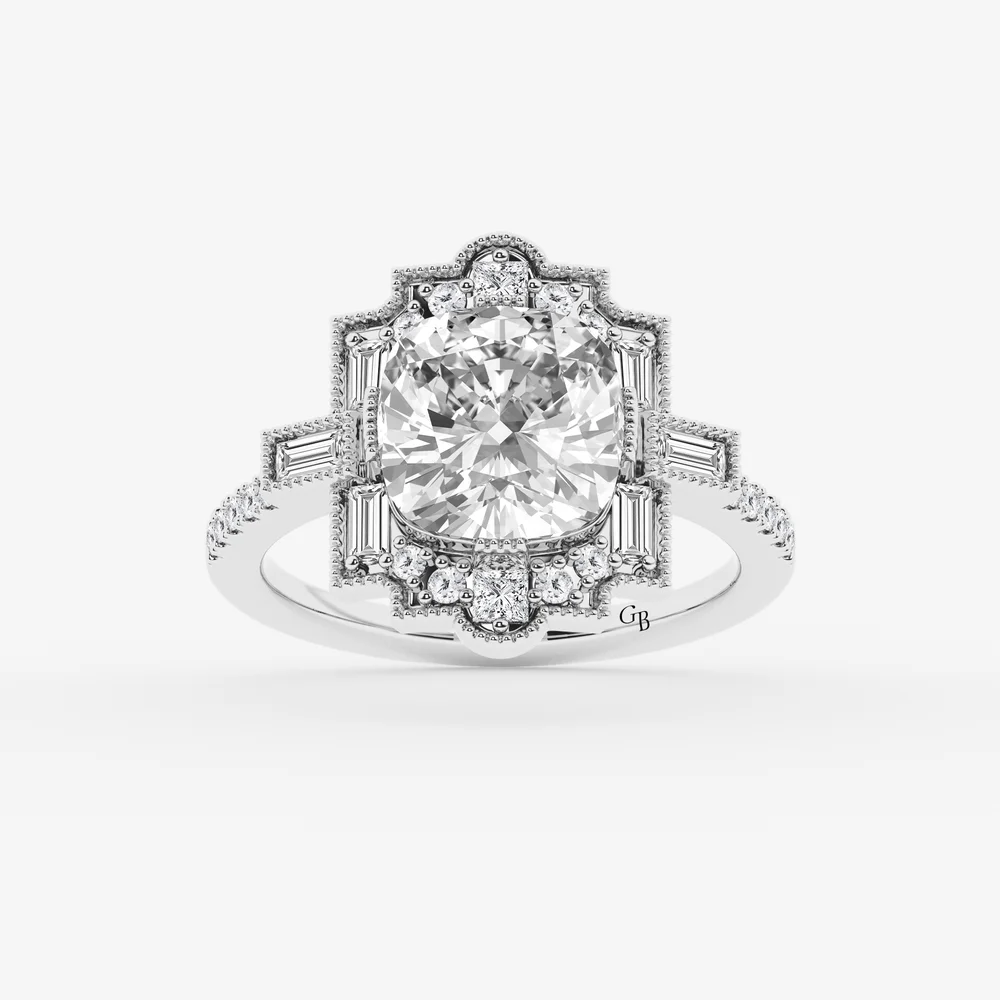
Matilda 2 3/4 ctw Cushion Old Mine Cut Lab Grown Diamond Vintage Side Stone Engagement Ring 14K White Gold
Grown Brilliance
$3,995
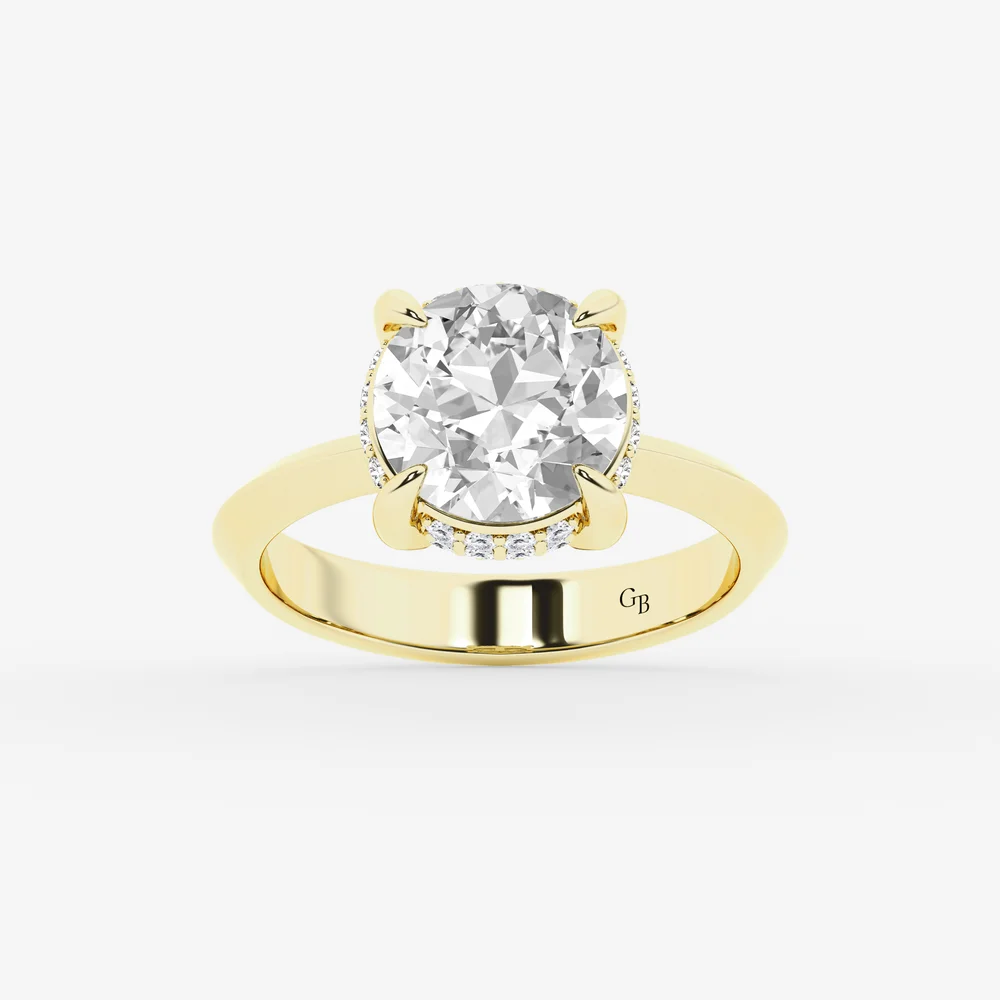
Amina 3 1/3 ctw Old European Cut Lab Grown Diamond Vintage Double Row Hidden Halo Engagement Ring 14K Yellow Gold
Grown Brilliance
$4,995
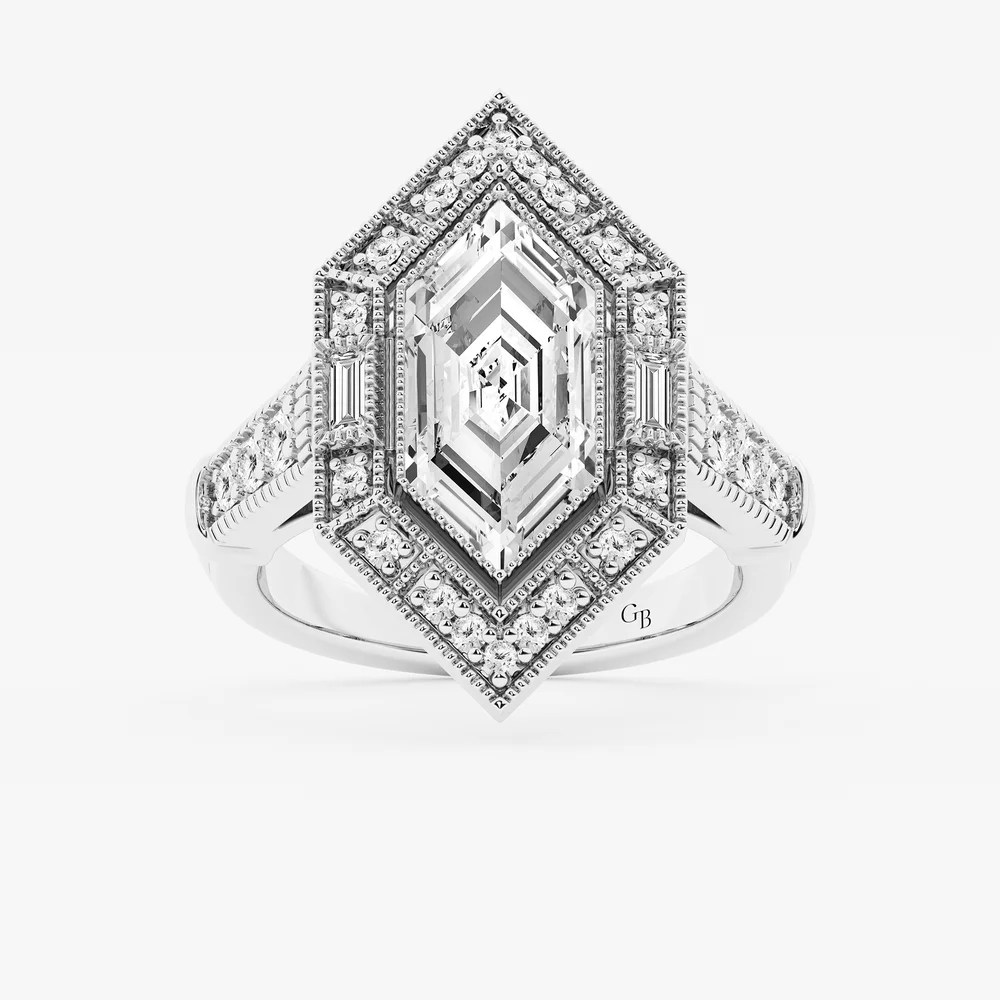
Anne 2 1/2 ctw Dutch Marquise Lab Grown Diamond Vintage Halo Engagement Ring 14K White Gold
Grown Brilliance
$5,295
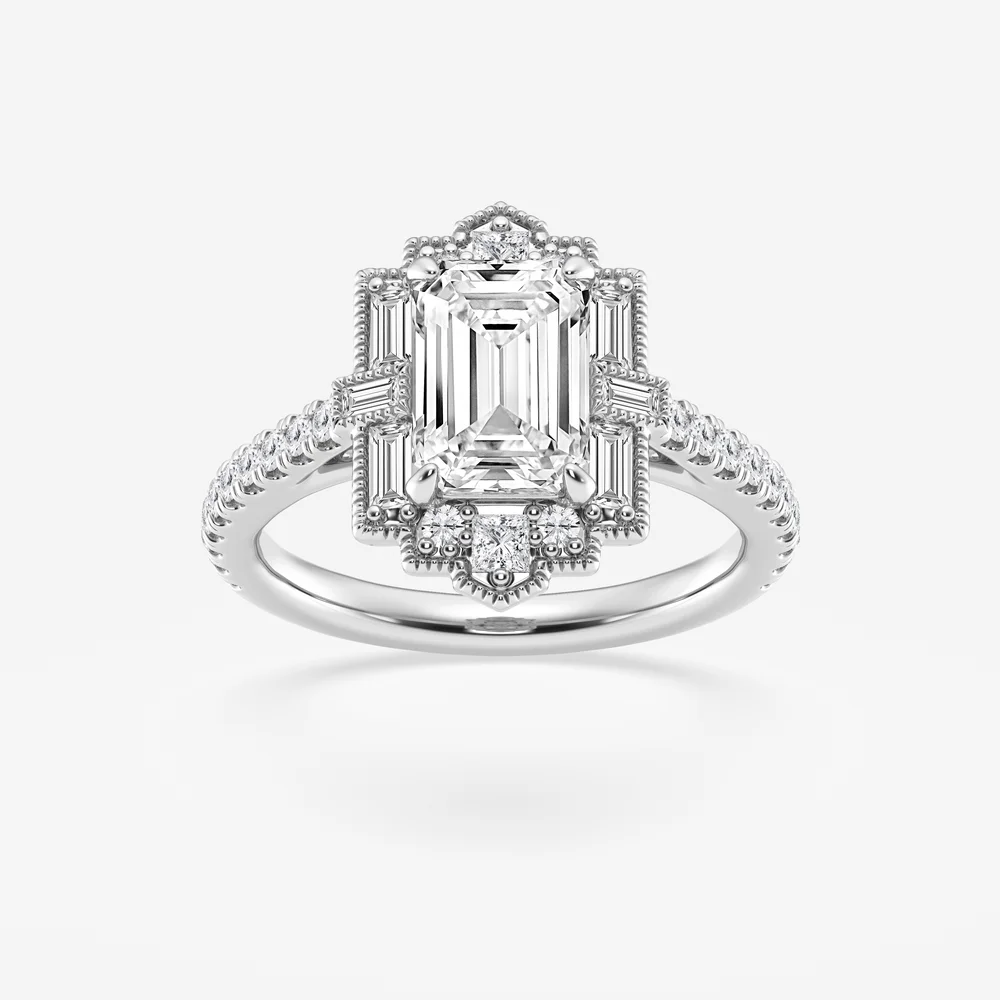
Cleopatra 2 2/3 ctw Multi-Shape Lab Grown Diamond Vintage Inspired Art Deco Engagement Ring Platinum
Grown Brilliance
$3,795
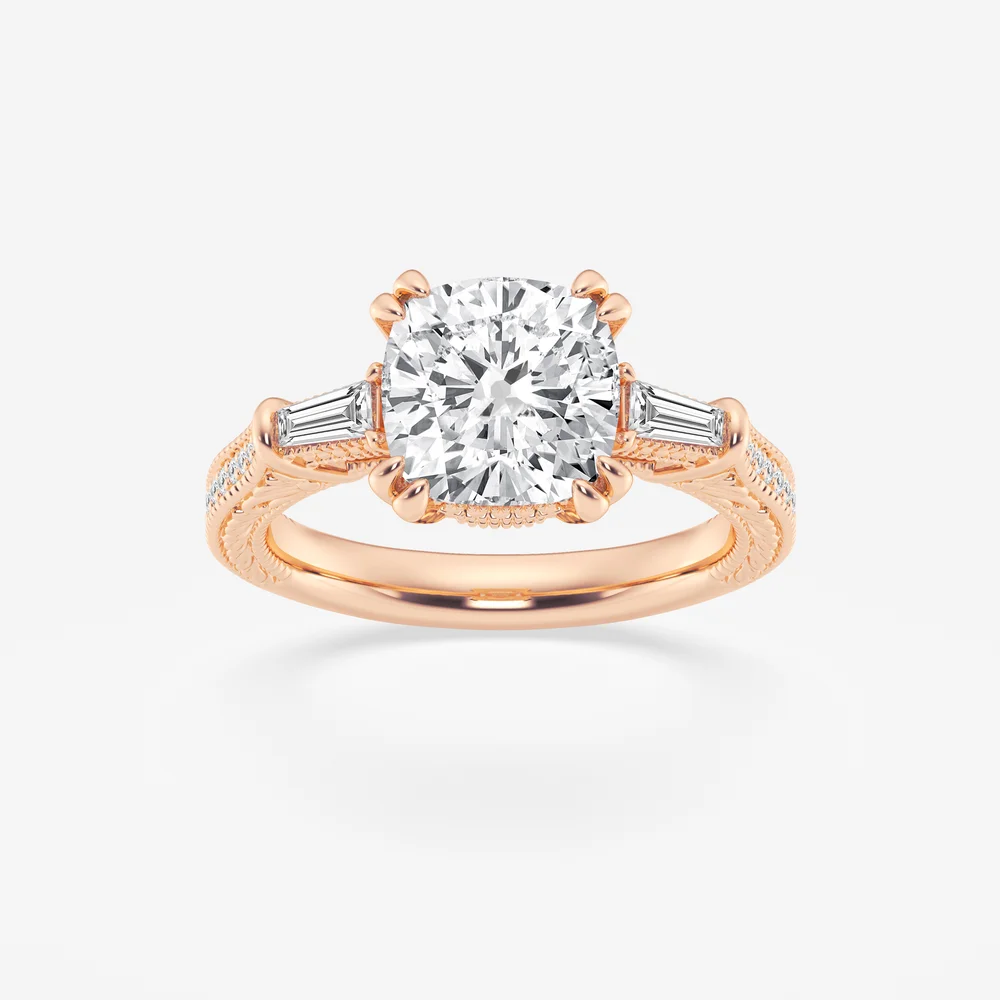
Margaret 3 1/2 ctw Cushion Old Mine Cut Lab Grown Diamond Filigree with Baguettes Side Stone Engagement Ring 14K Rose Gold
Grown Brilliance
$4,795
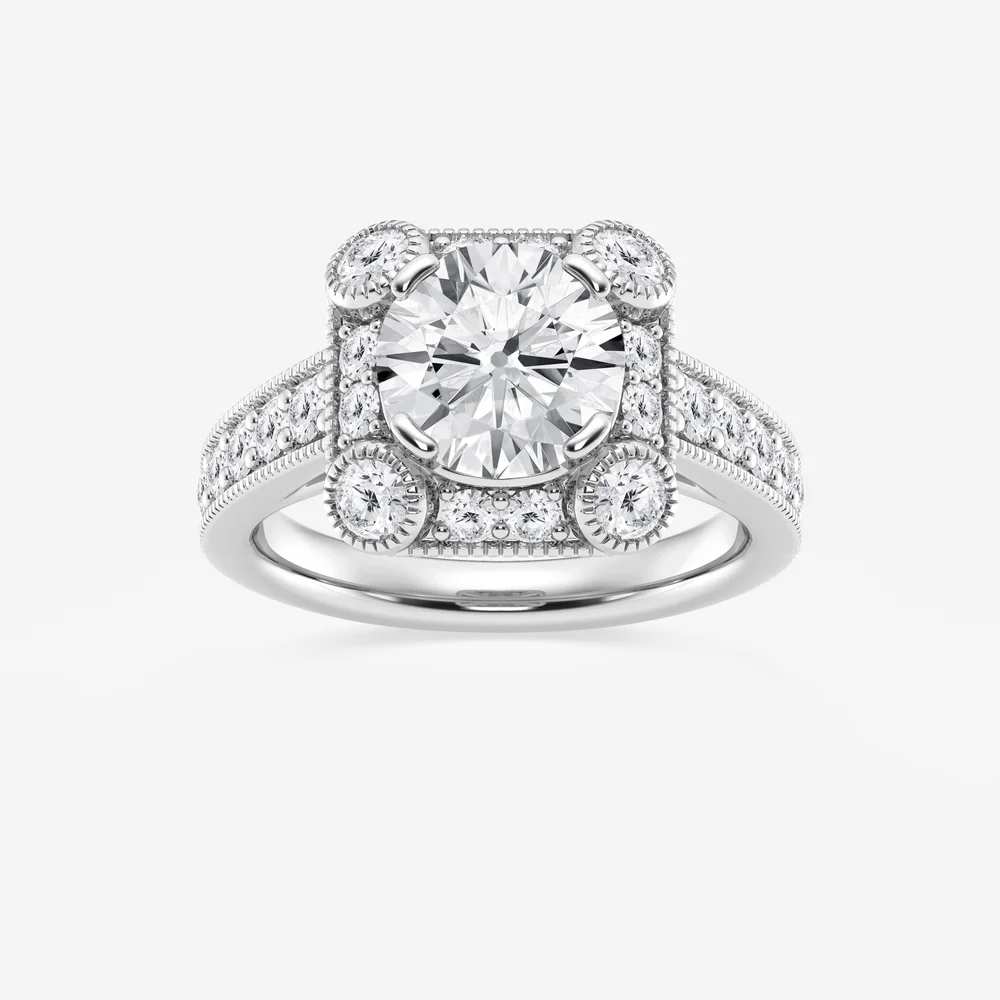
Aria 3 ctw Round Lab Grown Diamond Old Mine Cut Halo Engagement Ring in Milgrain Setting Platinum
Grown Brilliance
$4,395
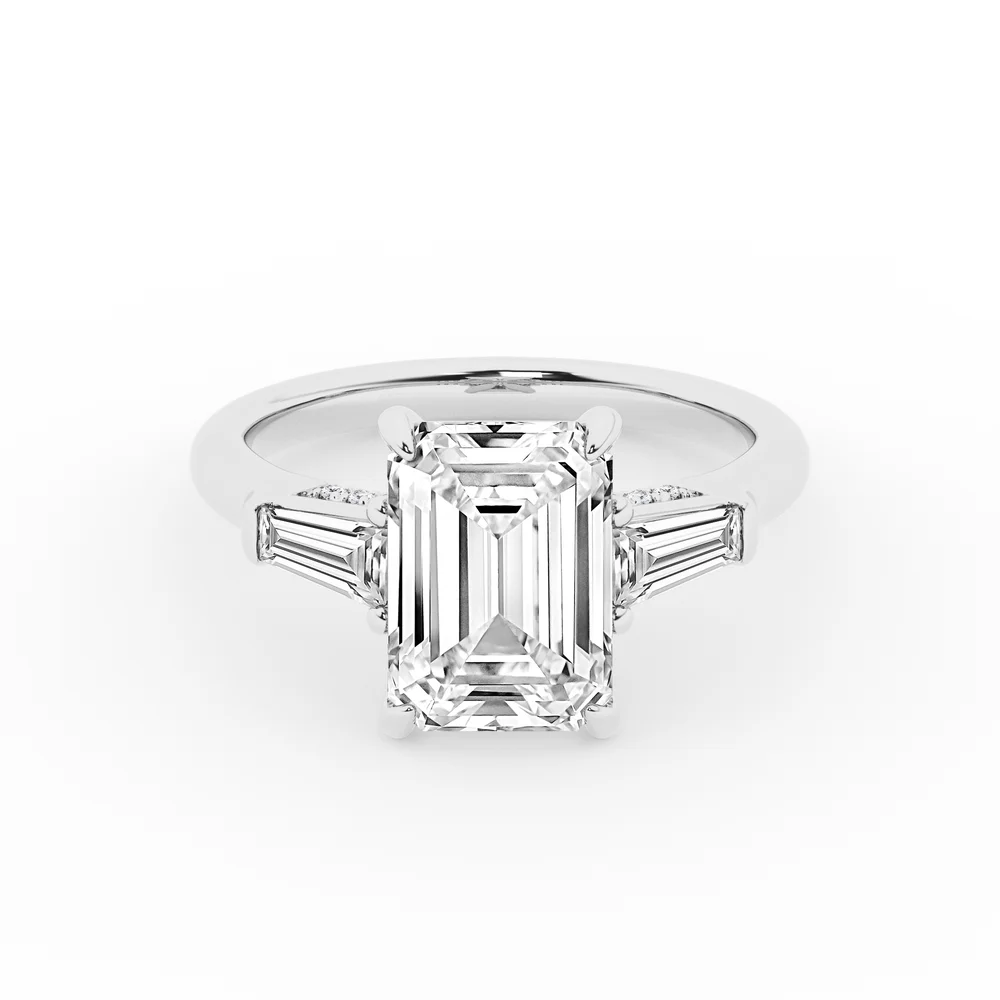
4 4/5 ct.tw Tapered Baguette 3-Stone Engagement Ring in 14K White Gold
Clean Origin
$1,999
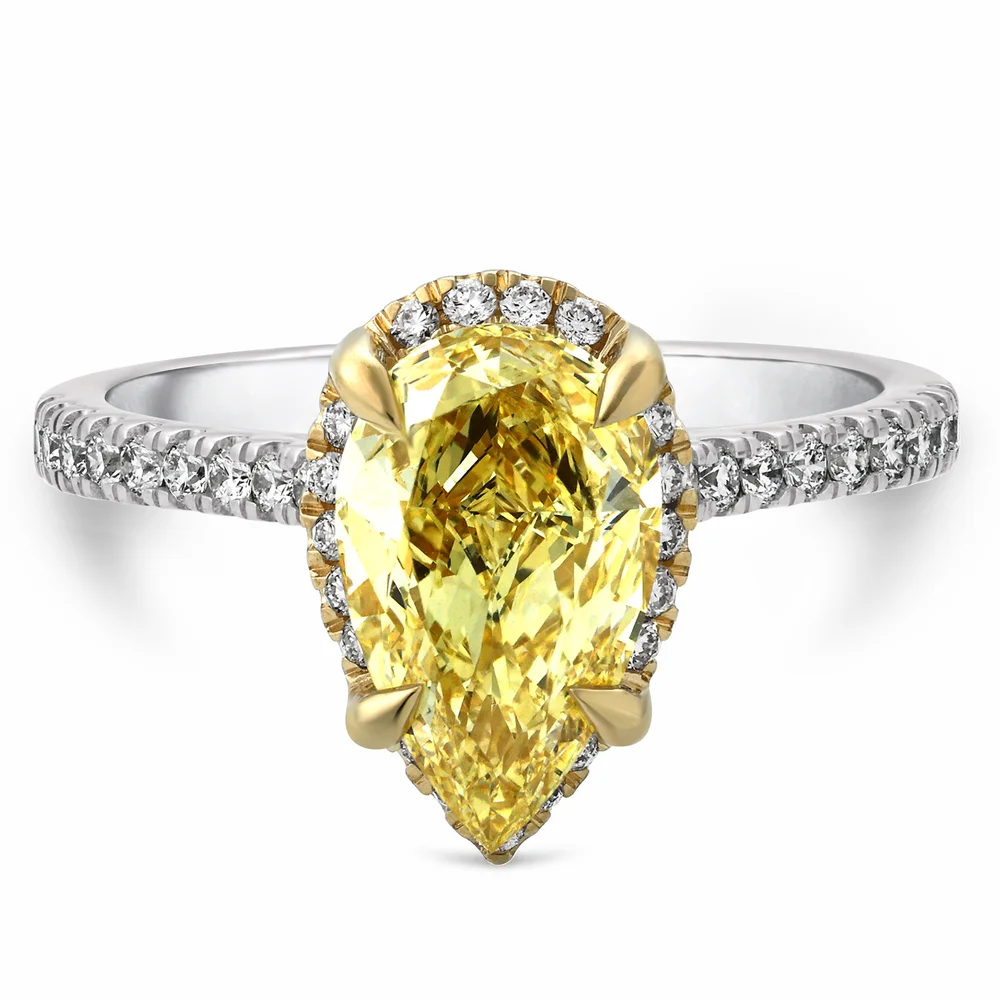
2 1/4 ct tw. Fancy Yellow Pear Engagement Ring in 14K Yellow and White Gold
Clean Origin
$1,999
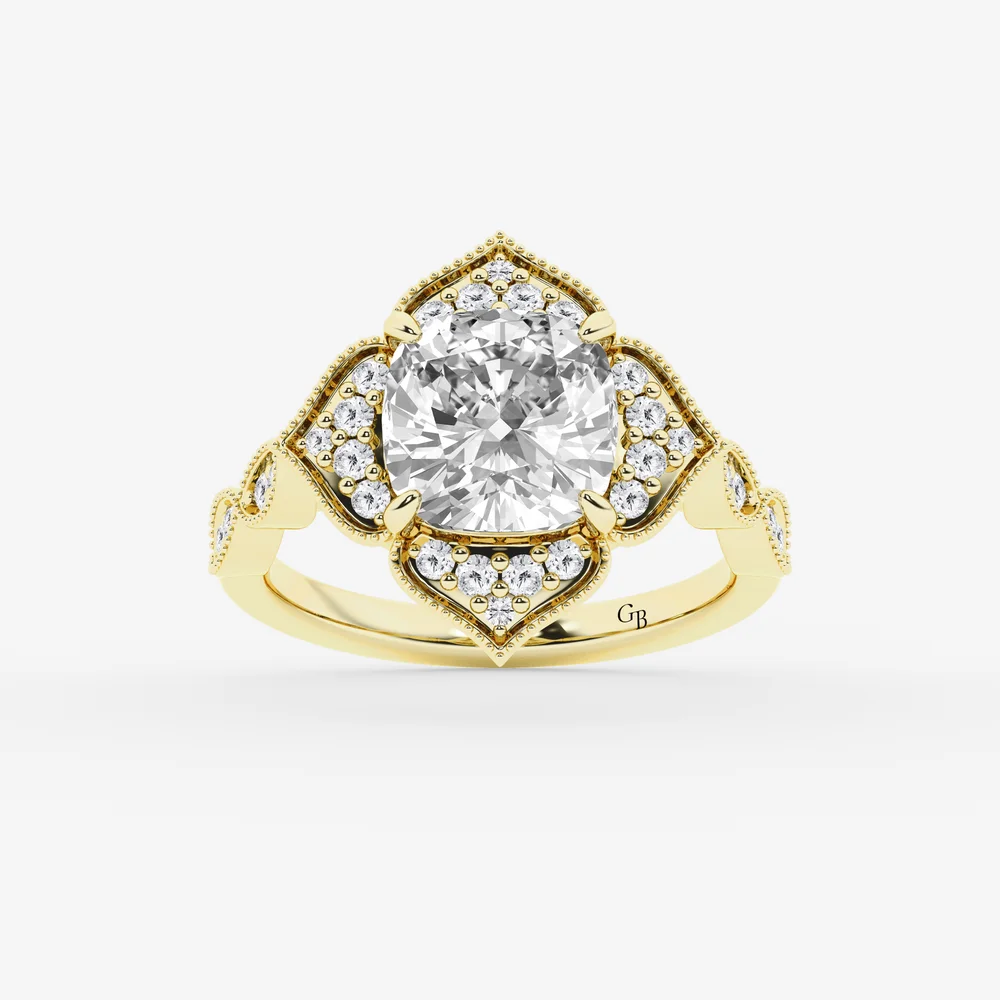
Rania 2 1/3 ctw Cushion Old Mine Cut Lab Grown Diamond Twisted Vintage Side Stone Engagement Ring 14K Yellow Gold
Grown Brilliance
$3,595
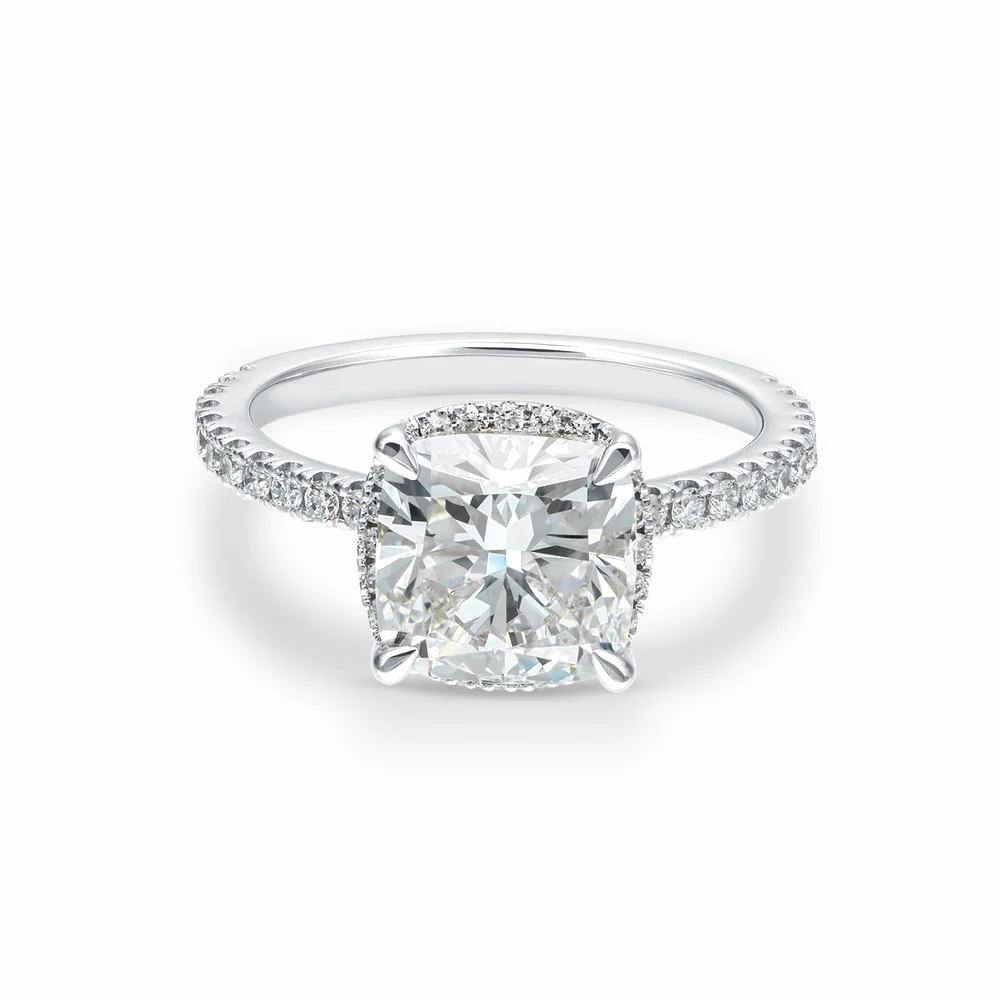
3 2/5 ct. tw. Cushion Halo Ring in 14k White Gold
Clean Origin
$3,000
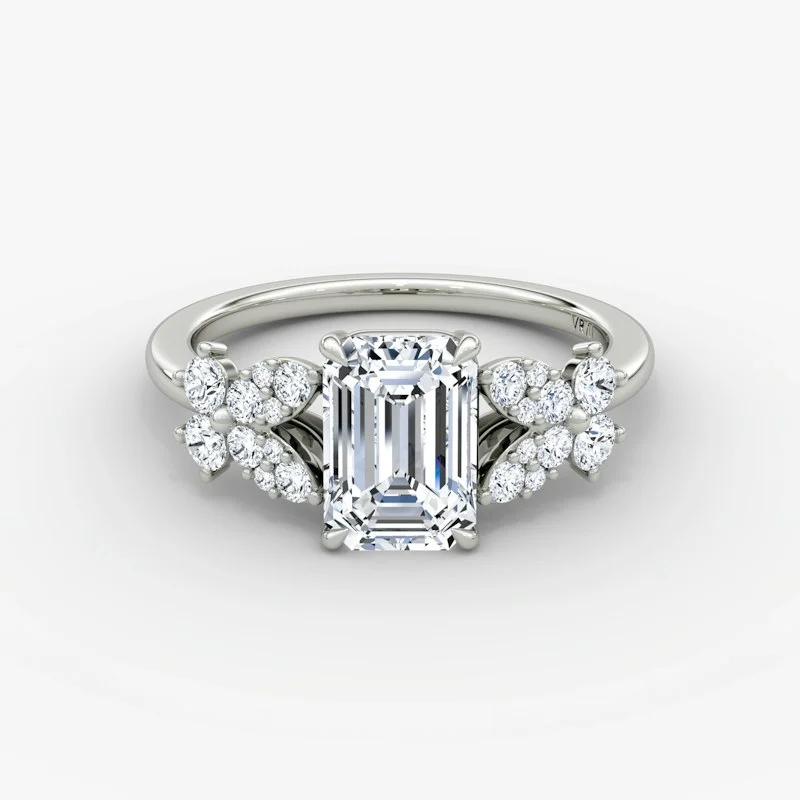
Signature Floral Engagement Ring, Emerald 2.0ct, Platinum
VRAI
$2,957
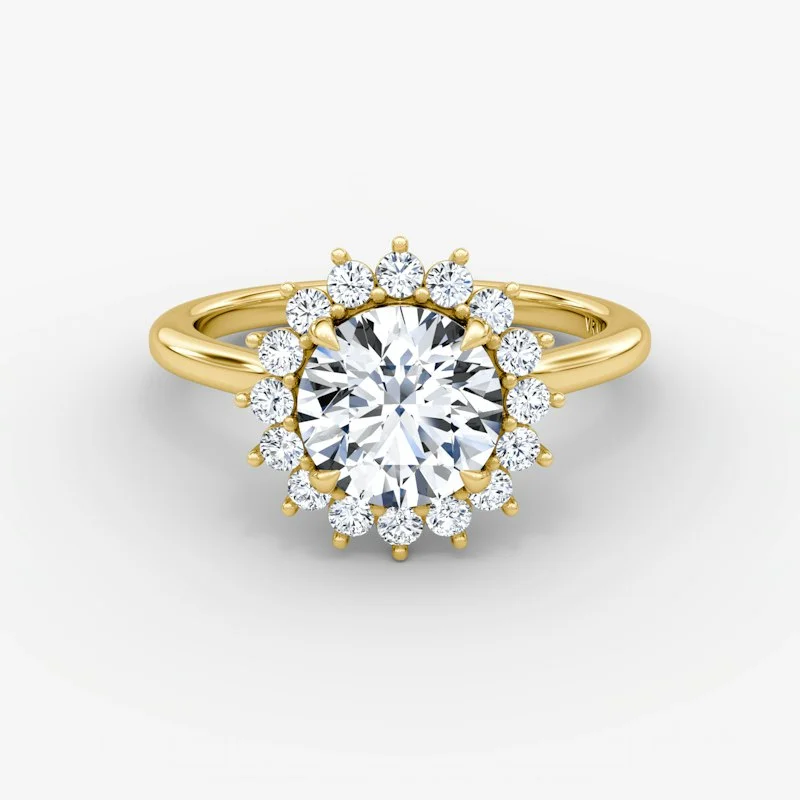
Floral Cathedral Engagement Ring, Round Brilliant 1.5ct, Yellow Gold
VRAI
$3,410
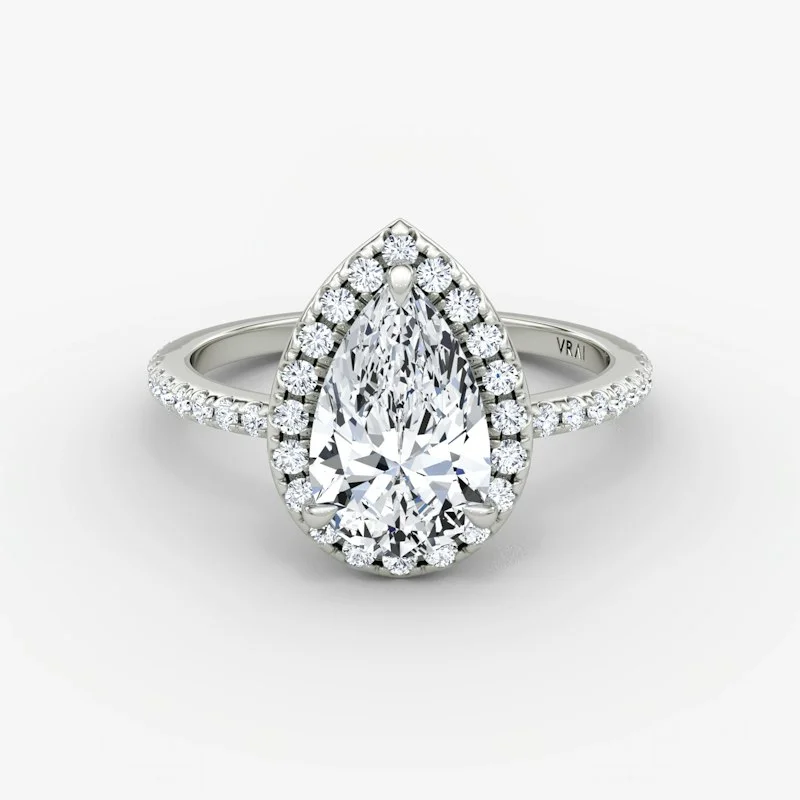
Halo Engagement Ring, Pear 2.0ct, White Gold
VRAI
$3,420
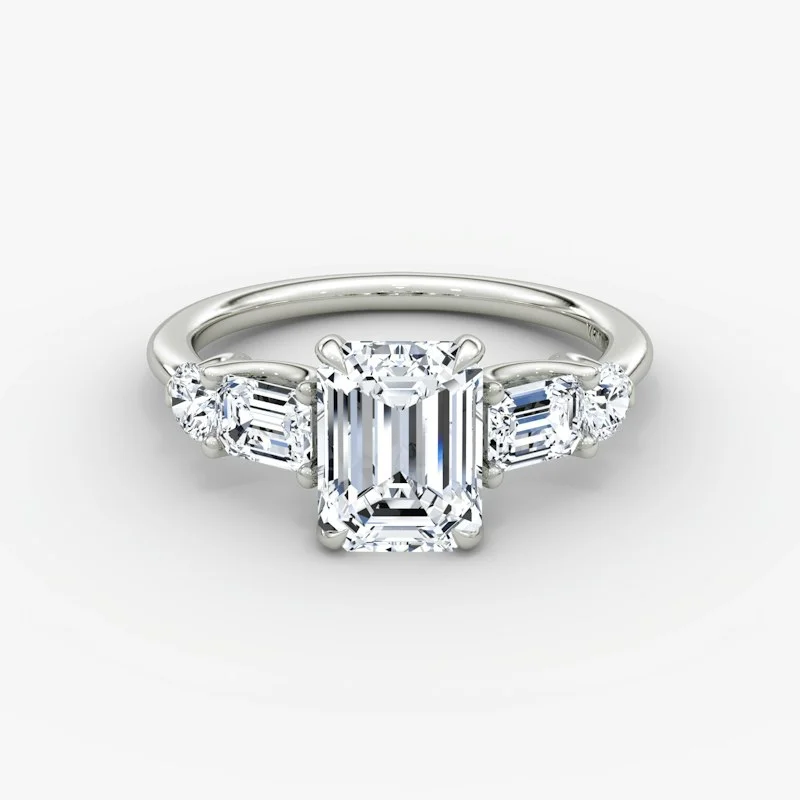
Mixed Shape Engagement Ring, Emerald 1.5ct, White Gold
VRAI
$2,909
Modern: bezels, east west stones and toi et moi
The toi et moi looks like a very recent idea, but Napoleon proposed to Josephine with one in 1796: a pear shaped diamond beside a pear shaped sapphire on a slim gold band. It stayed in the Bonaparte family for two centuries, and when it went to auction in Fontainebleau in 2013 it sold for about fifty times its estimate. Two stones, side by side, for two people. I still think that is the cleverest idea in jewelry.
VRAI does two versions here, the Toi et Moi with an emerald and a pear, and the Bypass, where the two stones overlap on a wrapped band. The rest of the modern group is about clean lines. The VRAI Signature Bezel East-West and the Cigar Solitaire turn an emerald cut sideways, which makes it read wider and calmer. The Aurate bezel rings in emerald, pear and oval and the Brilliant Earth Luna bezels wrap the stone in a smooth rim of gold, so nothing catches on a sweater.
The VRAI Statement Signet and the Sculpture Bezel are the chunky ones, closer to a signet than a bridal ring. For color, the Jennie Kwon East West Green Sapphire and East West Ruby, and Catbird's Ballet Society sapphires, are small, low and very wearable.
The newer VRAI rings extend the idea: the Signature East-West in emerald and yellow gold, the emerald Floating Split Band, the pear Signature V and the emerald Compass Solitaire, which is the most architectural of the four.
A practical note: bezels protect the stone better than prongs, which is why I like them for anyone who works with their hands.
What I would skip: a thin bezel ring stacked with a pavé band. Let the clean line stay clean.
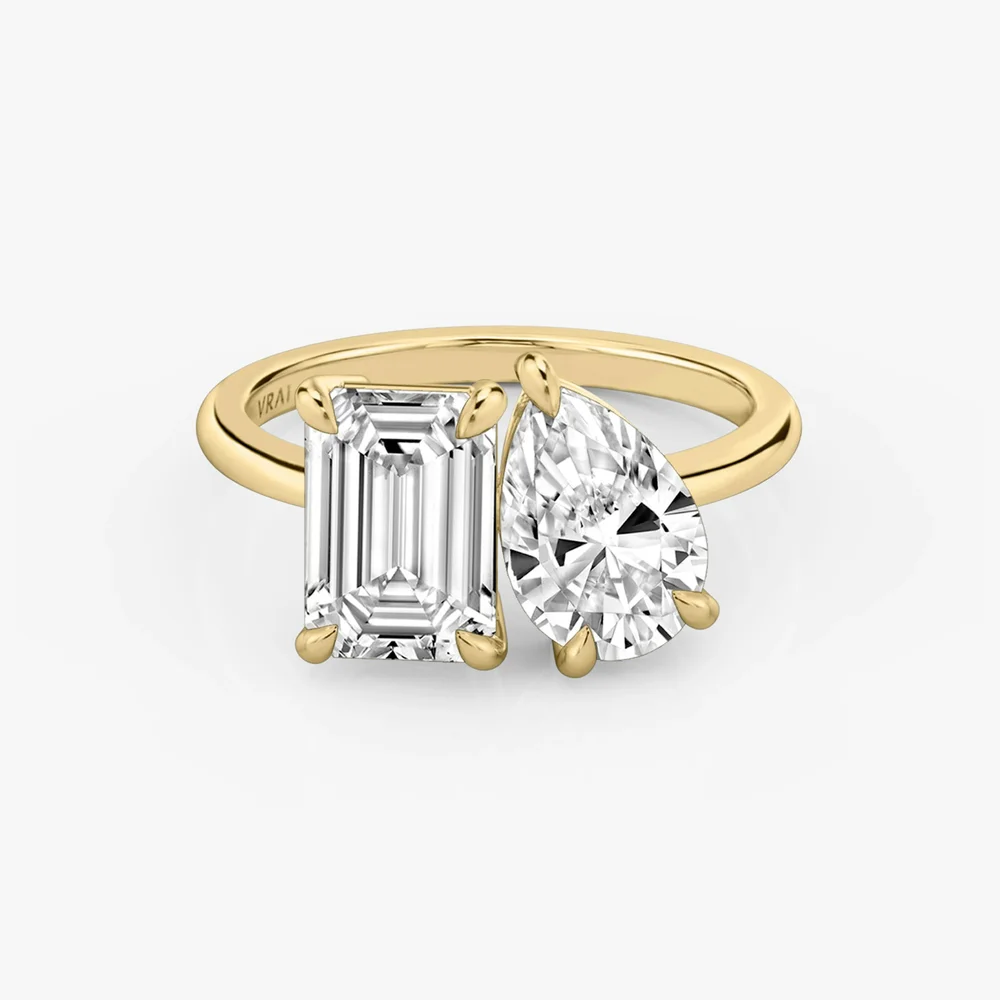
Toi et Moi Ring, Emerald and Pear
VRAI
$1,725
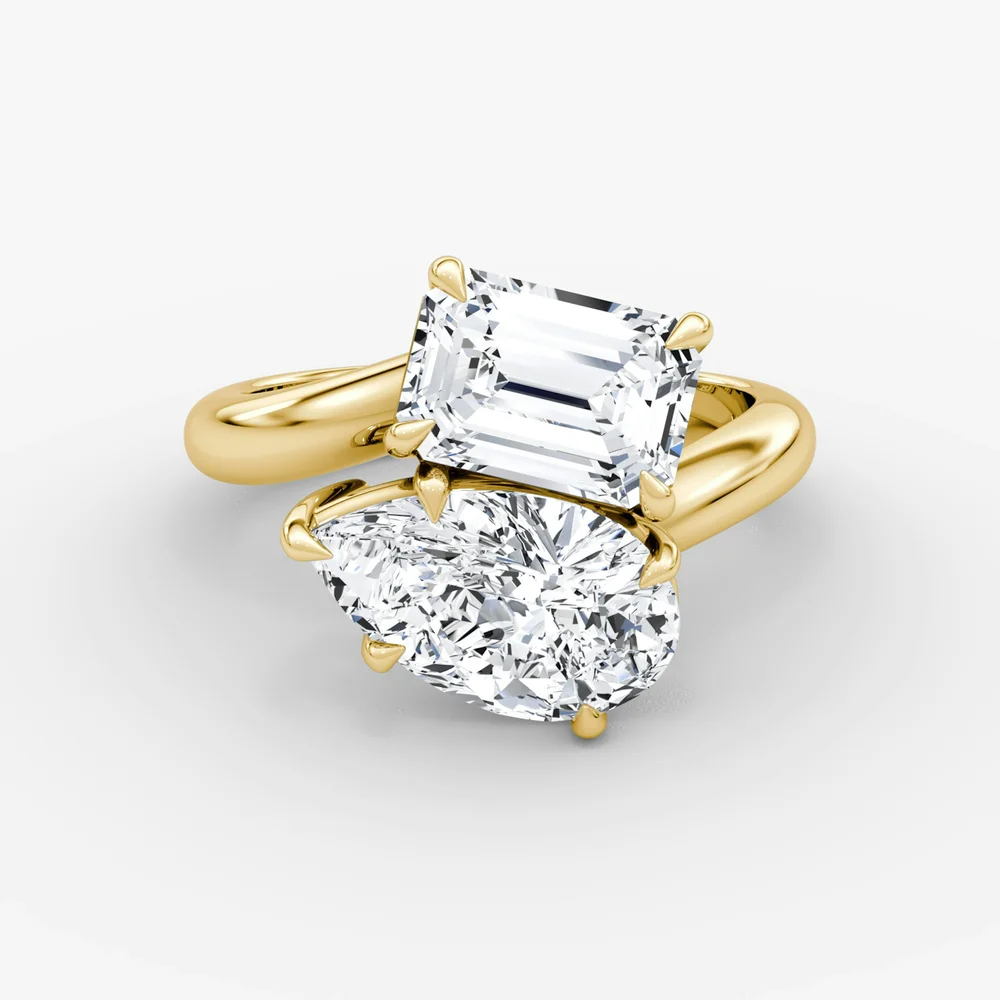
Toi et Moi Bypass Engagement Ring, Emerald and Pear
VRAI
$2,760
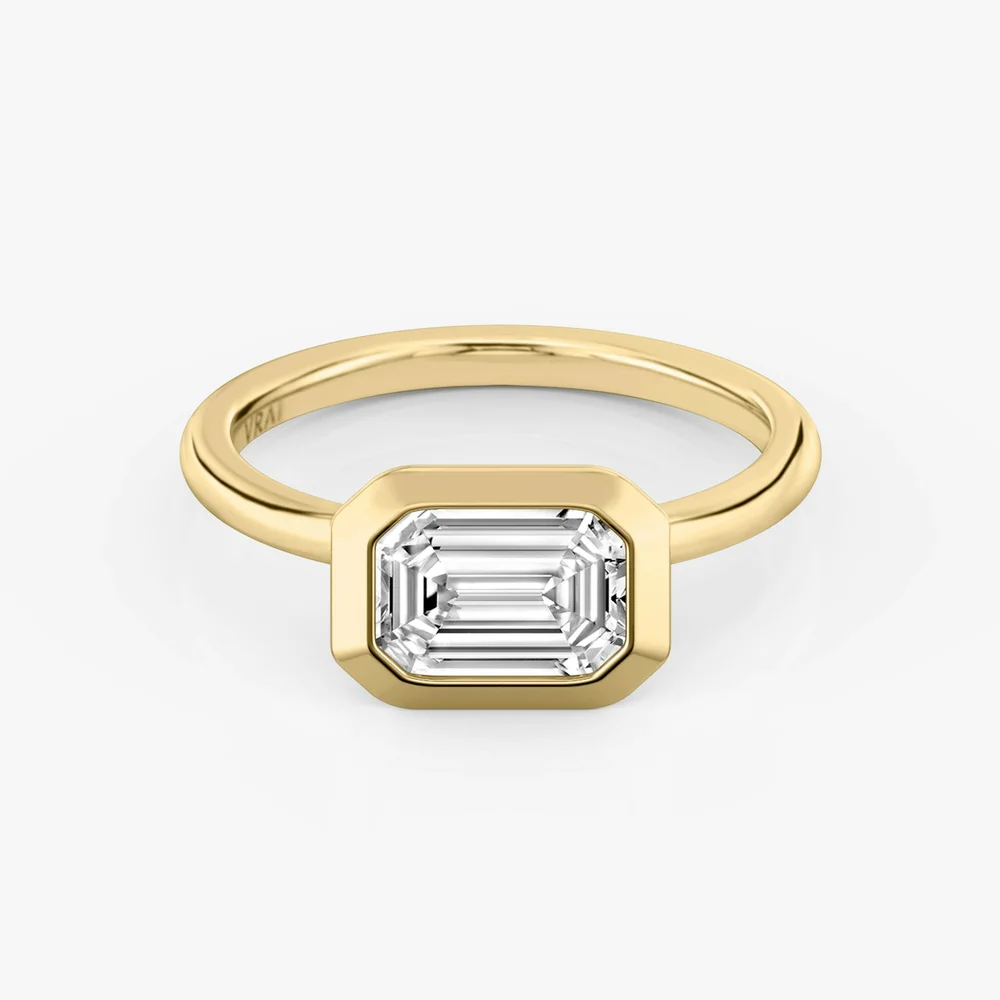
Signature Bezel East West Ring
VRAI
$1,265
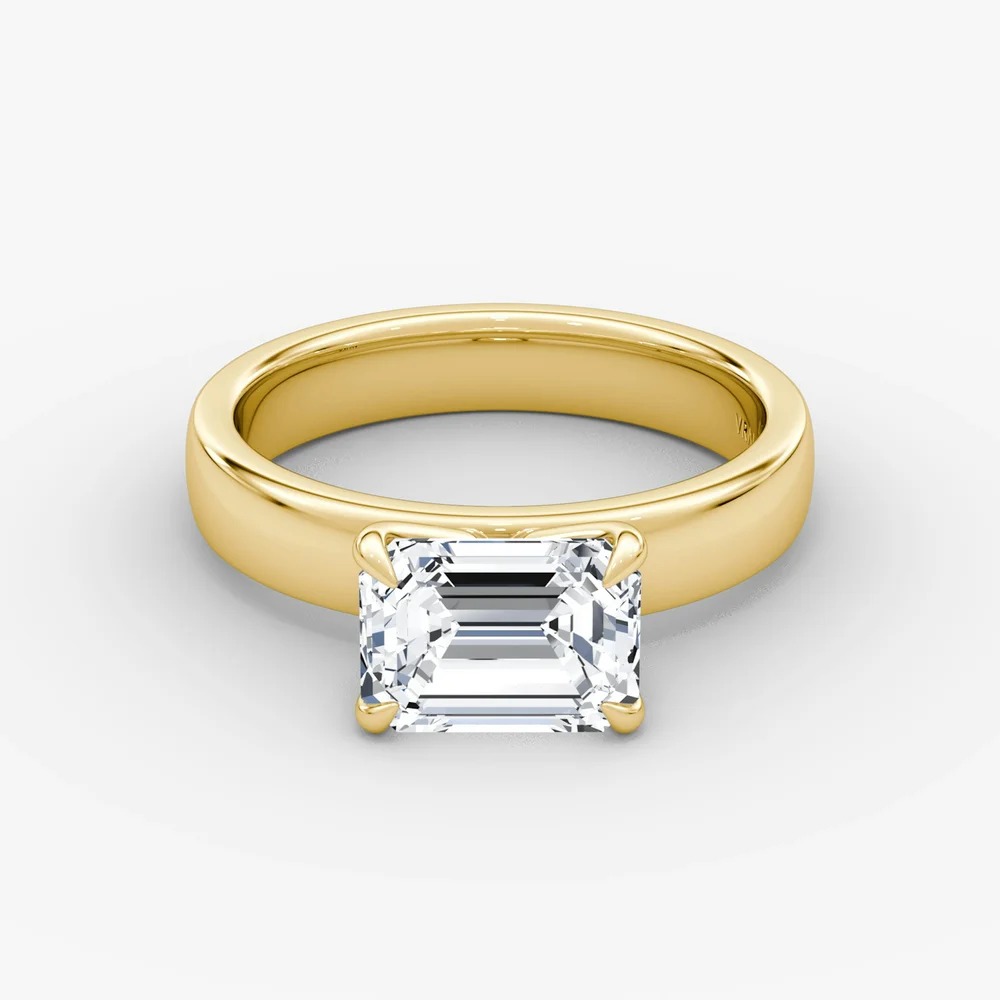
Cigar Solitaire Ring, East-West Emerald
VRAI
$2,185
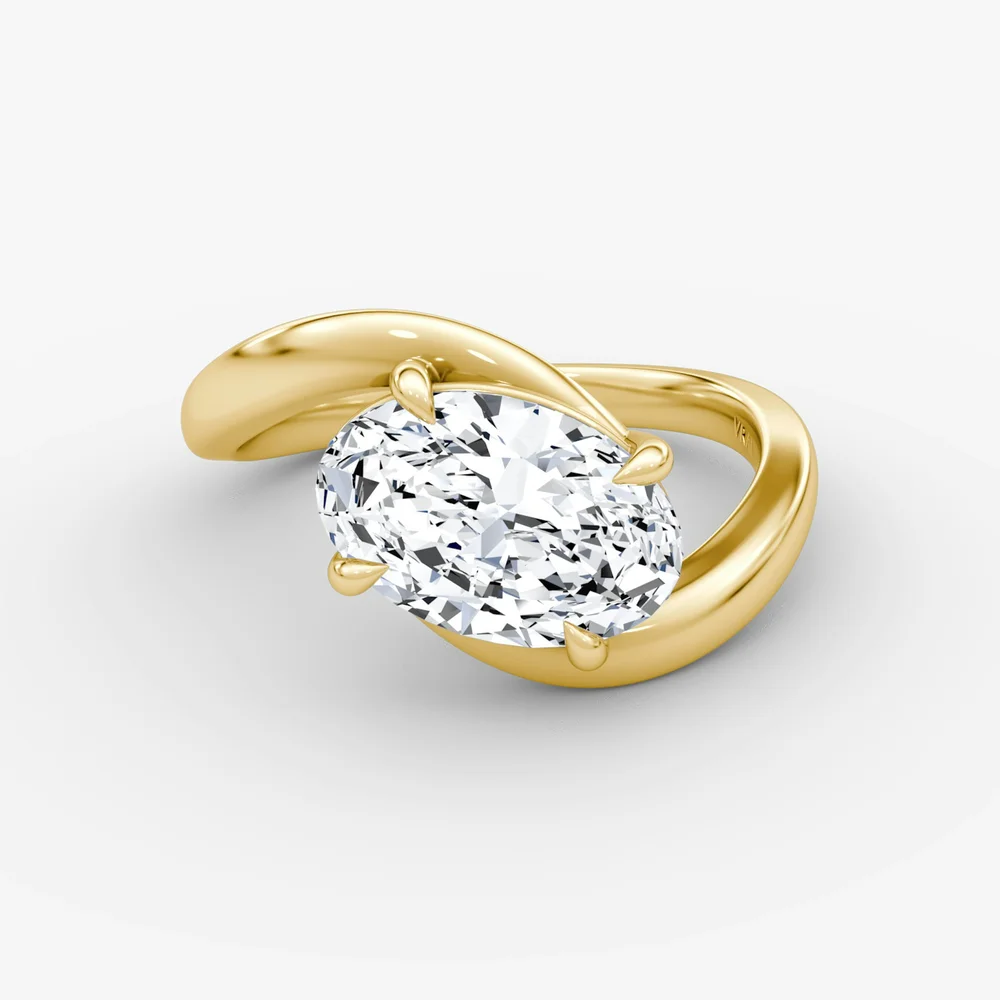
Wrapped Solitaire Ring, Oval
VRAI
$2,900
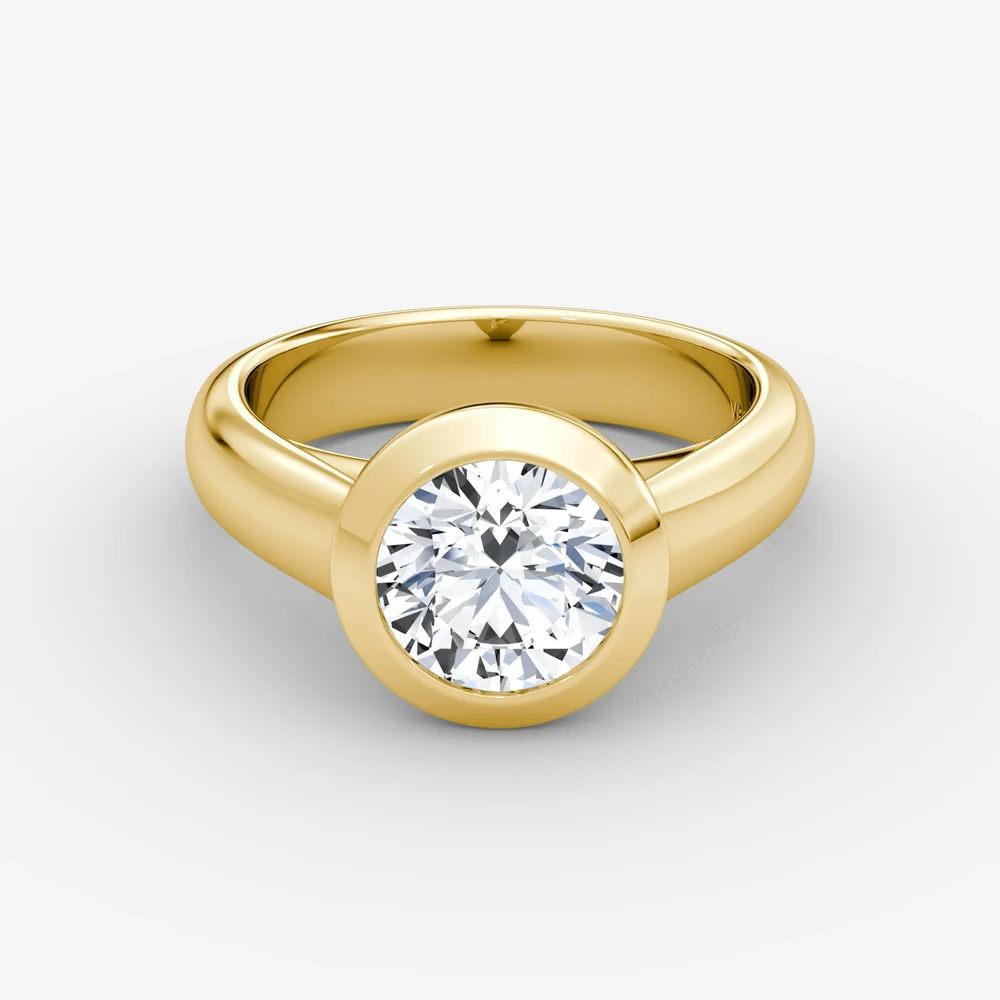
Sculpture Bezel Ring
VRAI
$2,930
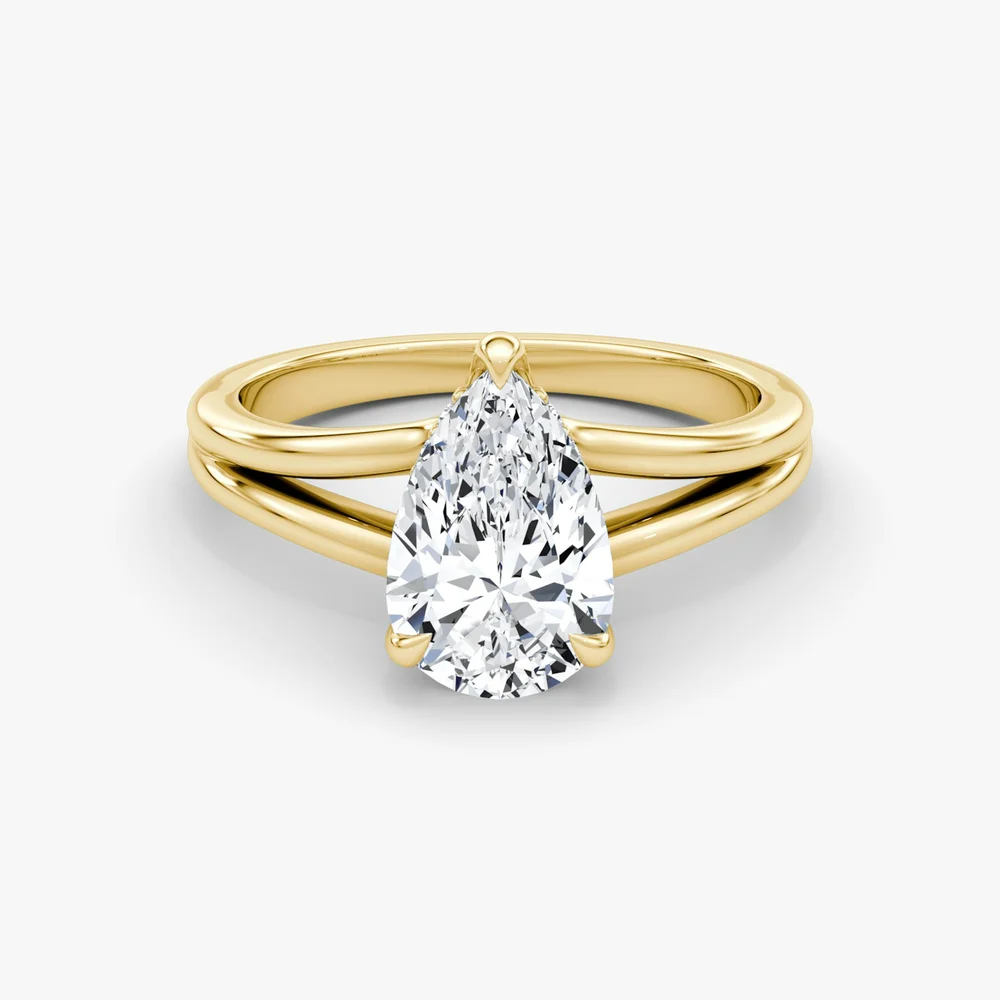
Floating Split Band Ring, Pear
VRAI
$1,265
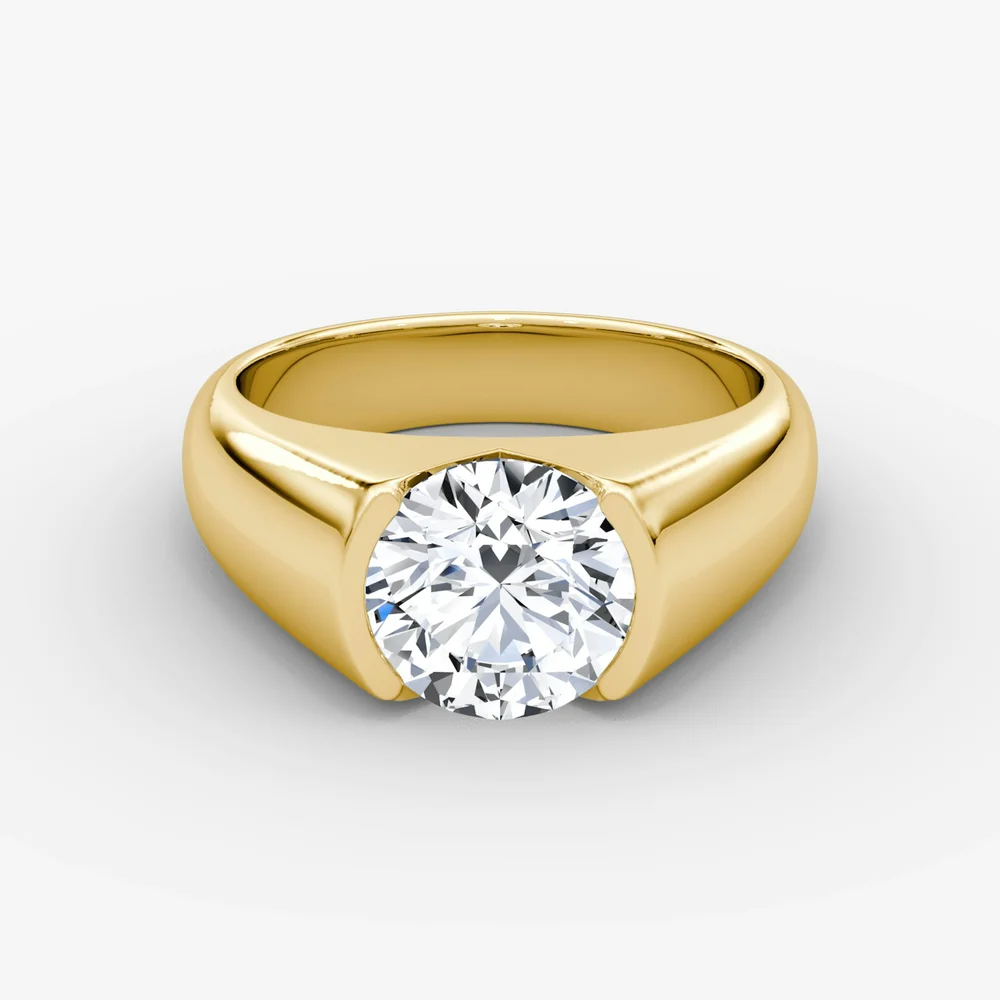
Statement Signet Ring, Round Brilliant
VRAI
$3,910
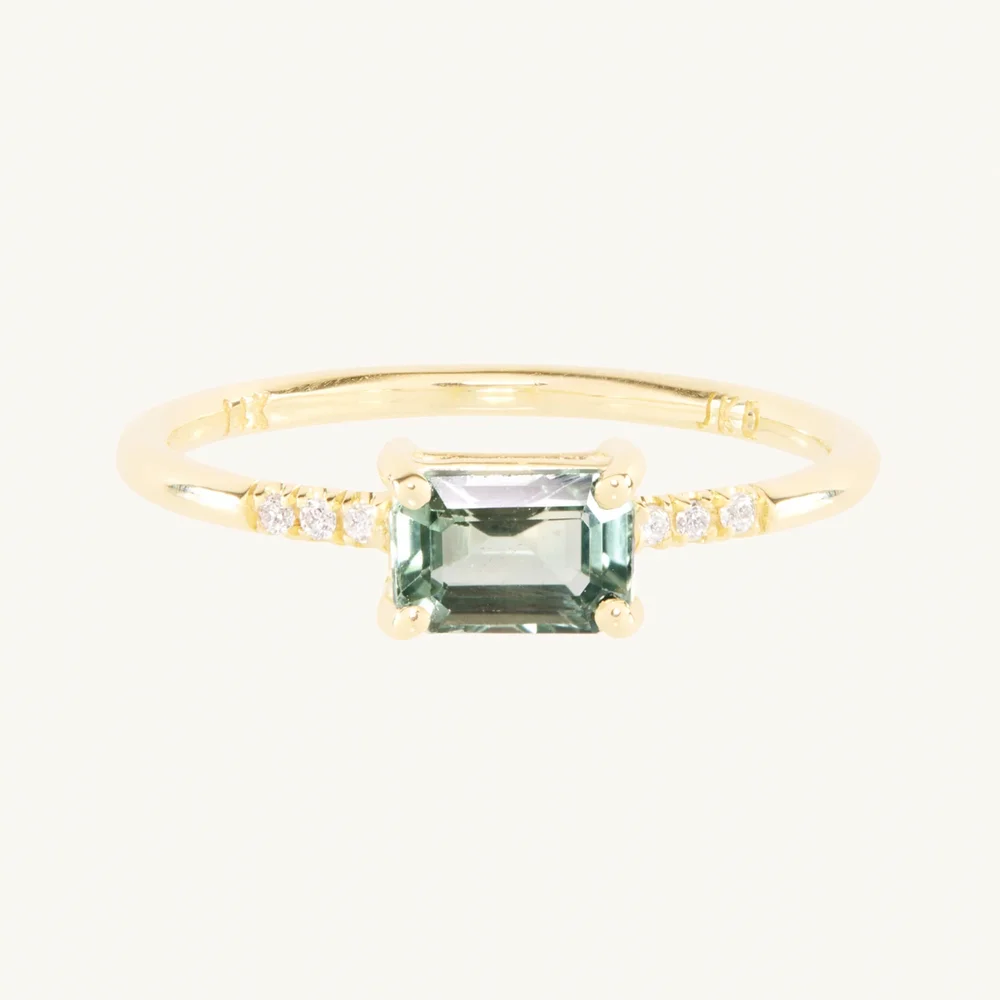
East West Green Sapphire Ring
Jennie Kwon
$1,360
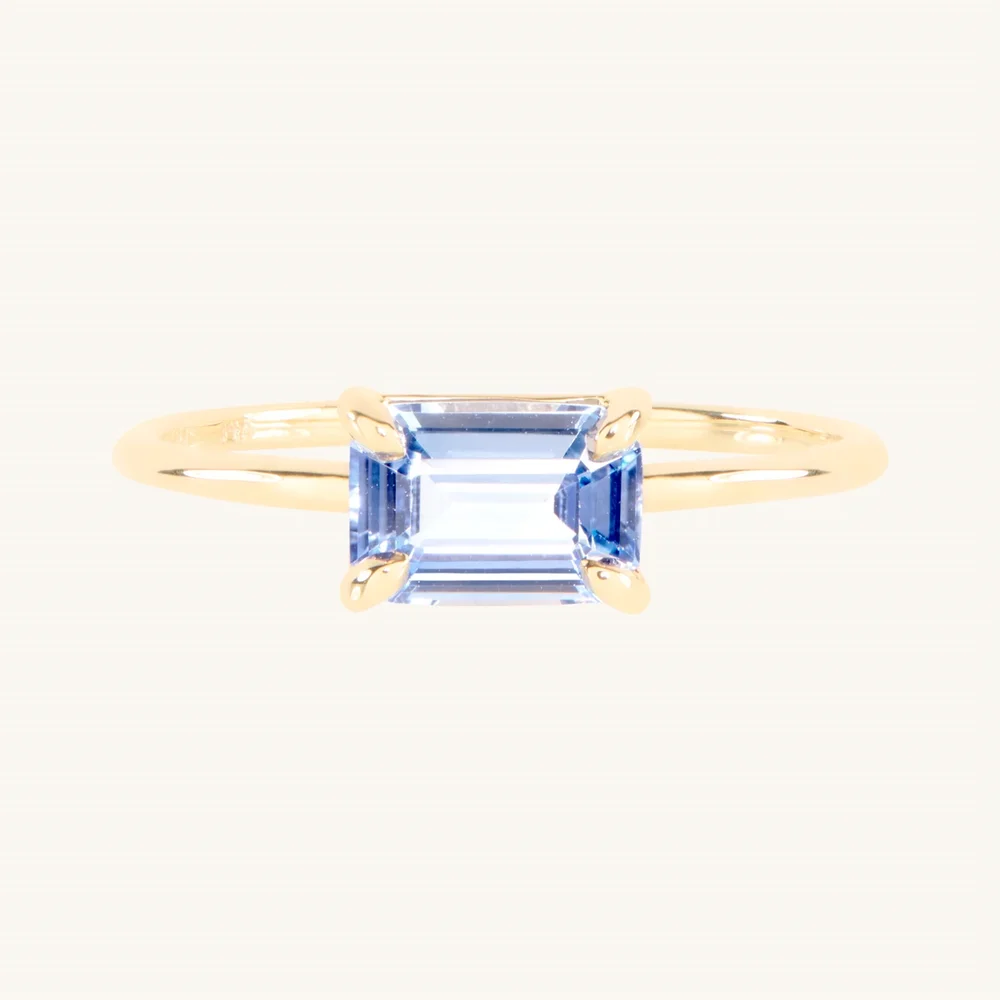
Ballet Society Sapphire Ring, Emerald Cut
Catbird
$1,590
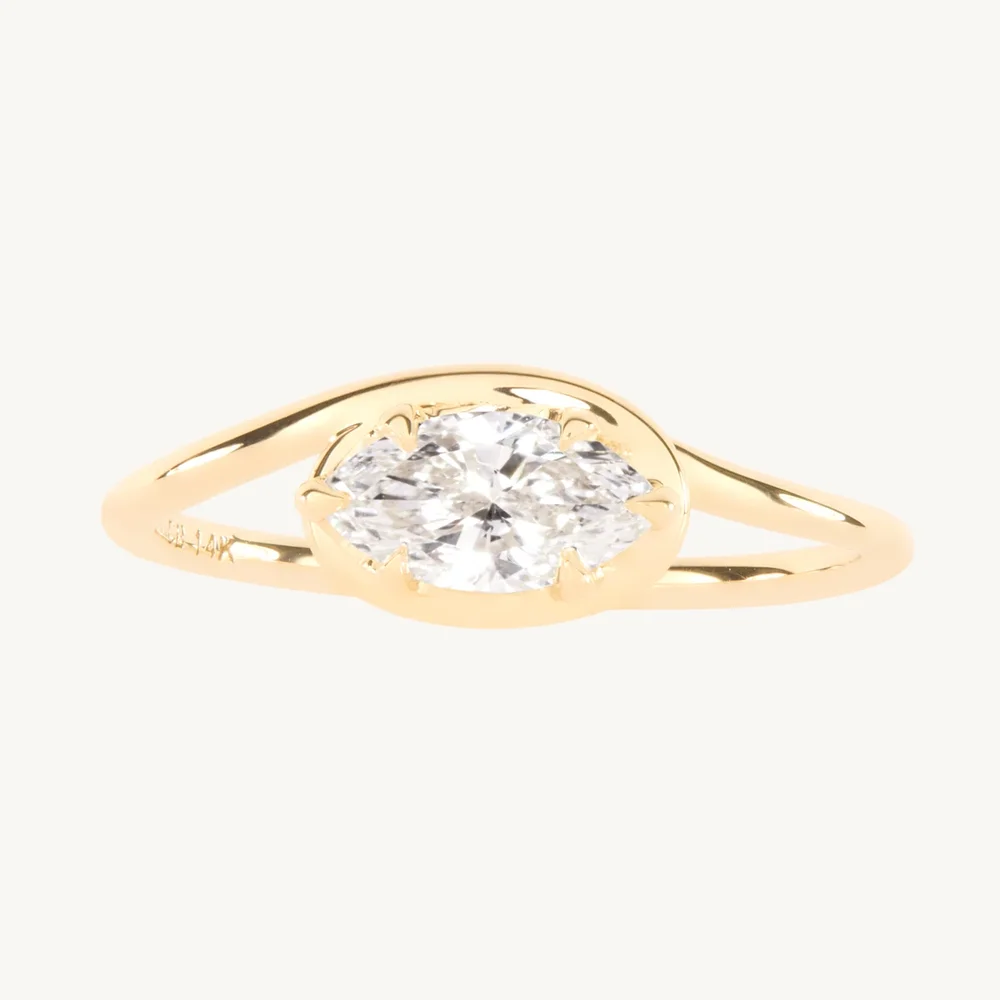
Cinema Lab-Grown Marquise Diamond Ring
Catbird
$1,640
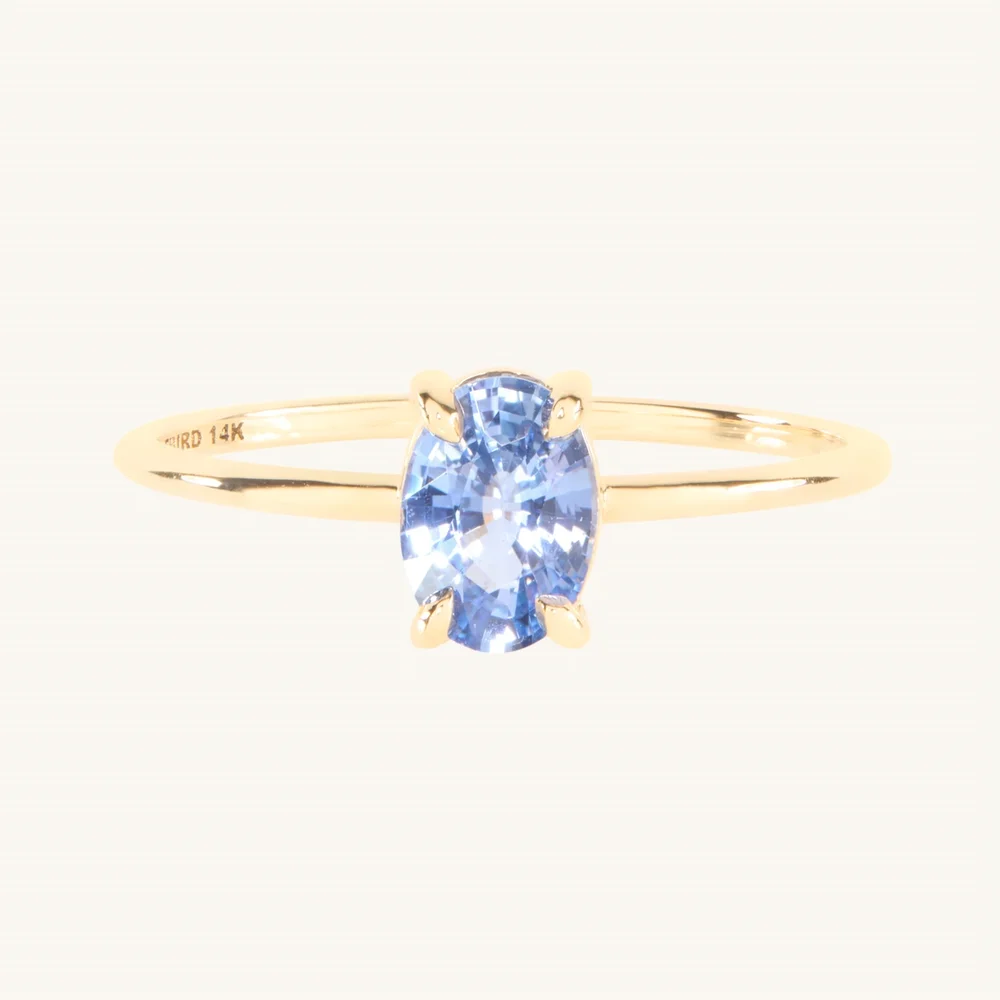
Ballet Society Sapphire Ring, Oval
Catbird
$1,590
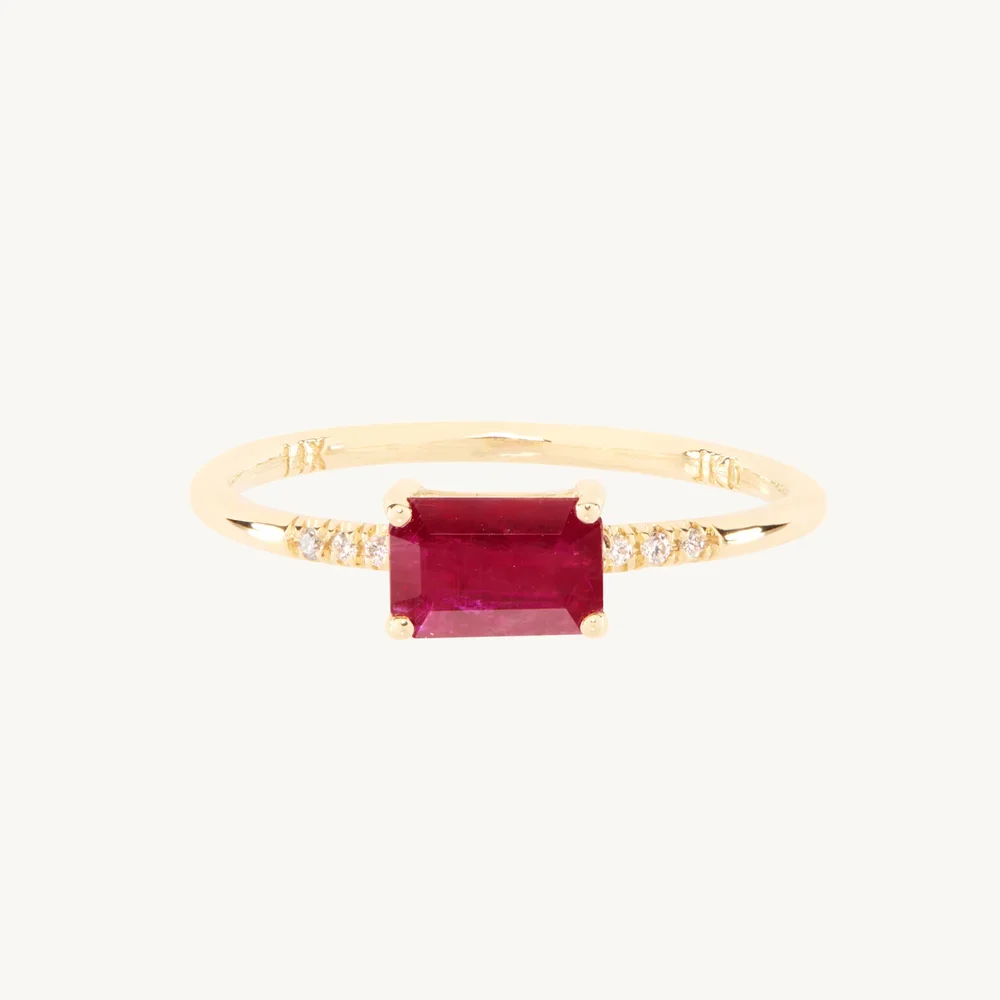
East West Ruby Ring
Jennie Kwon
$1,211.25
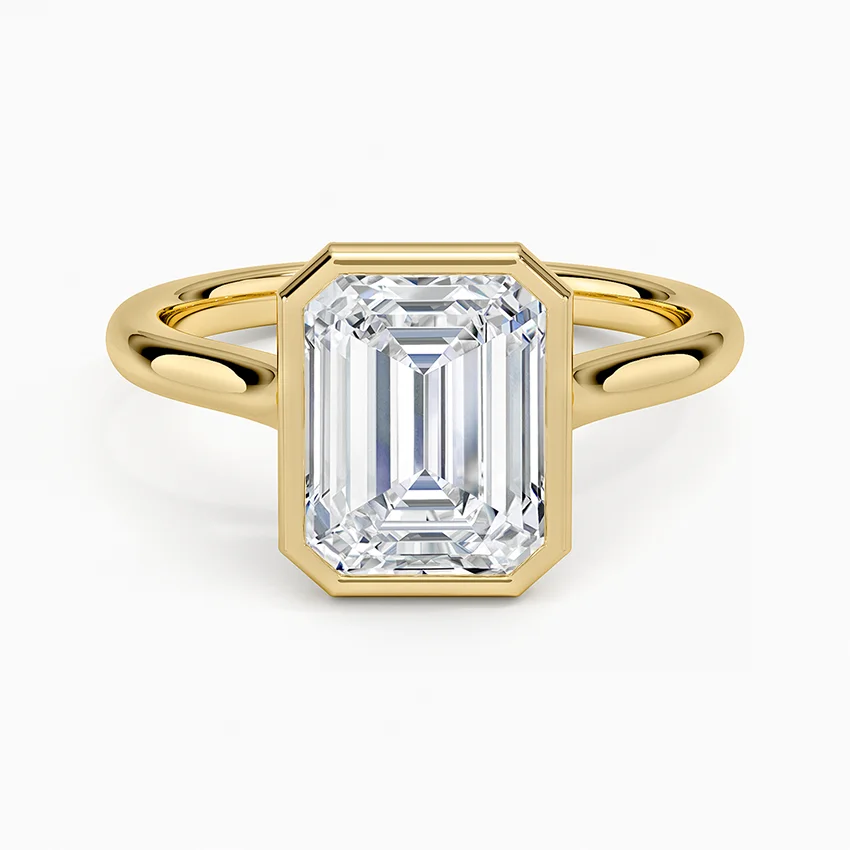
Luna 2mm Bezel Ring with 2ct Emerald Lab Diamond
Brilliant Earth
$3,190
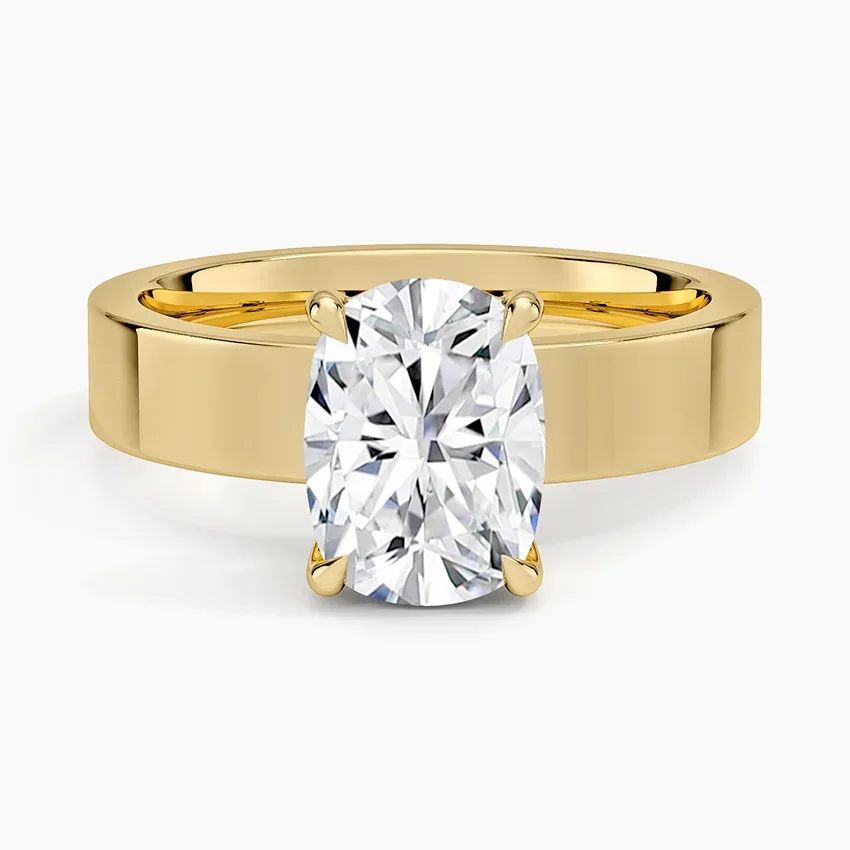
Peyton 4mm Solitaire with 2ct Elongated Cushion Certified Lab Diamond
Brilliant Earth
$3,590
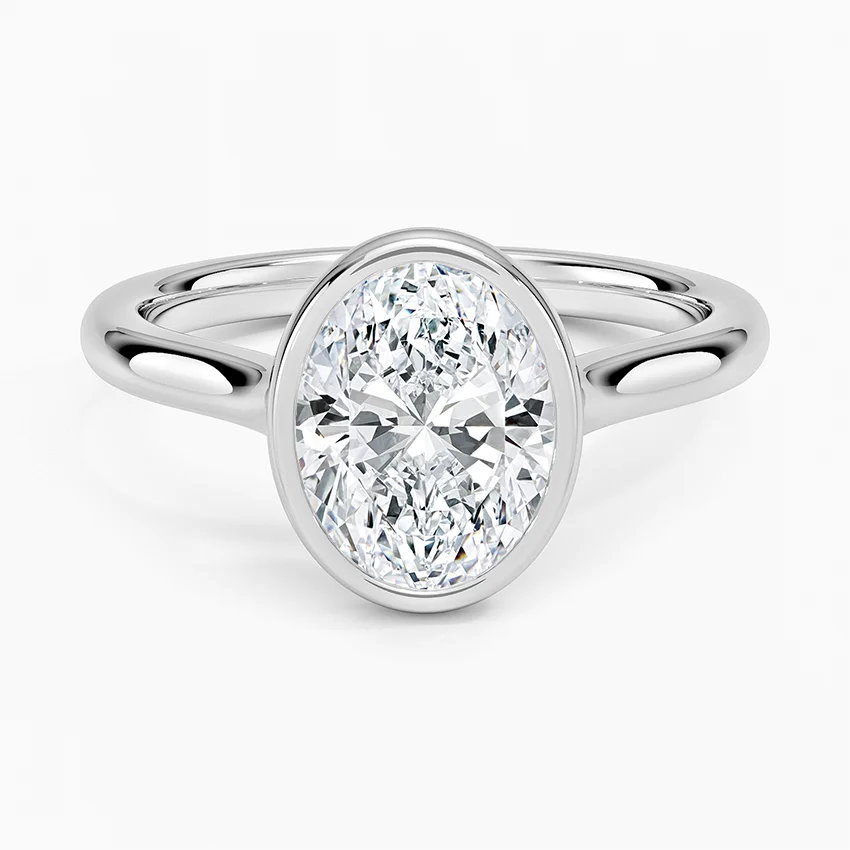
Luna 2mm Bezel with 2ct Oval Certified Lab Diamond
Brilliant Earth
$3,390
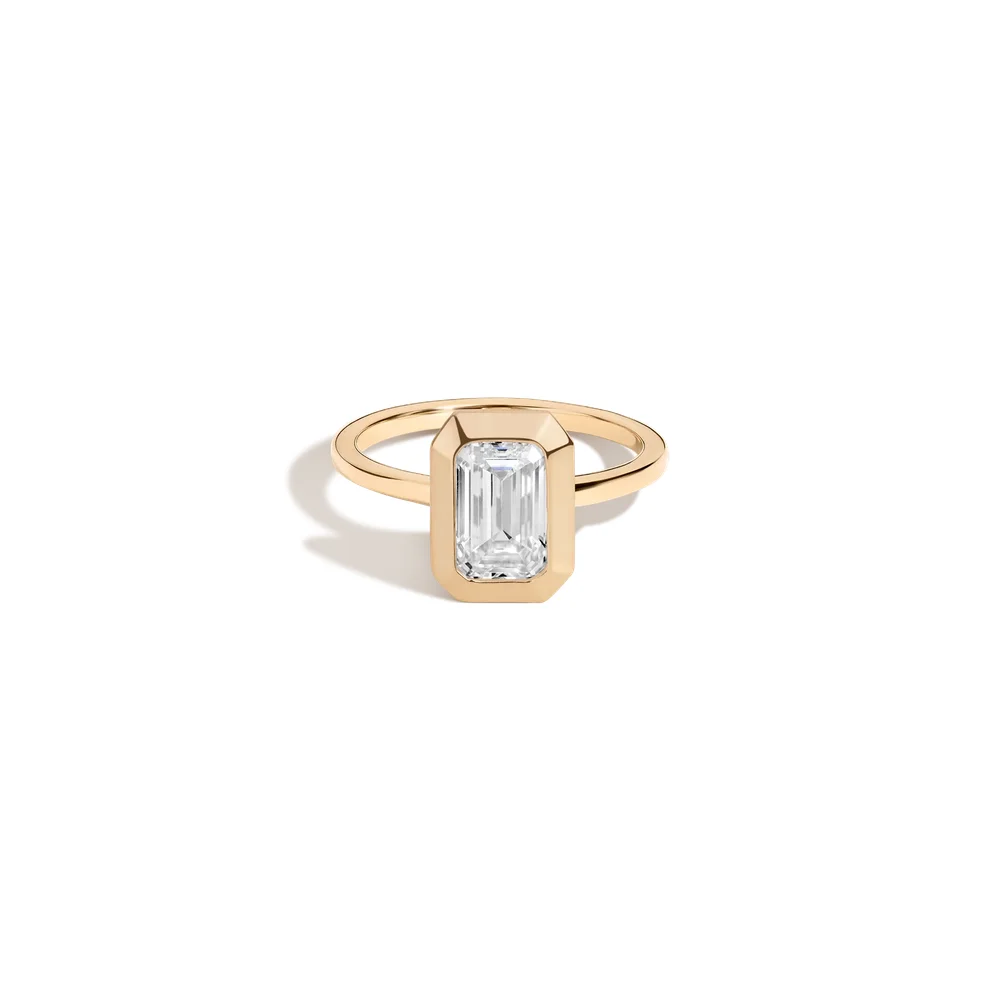
2ct Emerald Lab Grown Diamond Bezel Ring
Aurate New York
$1,968
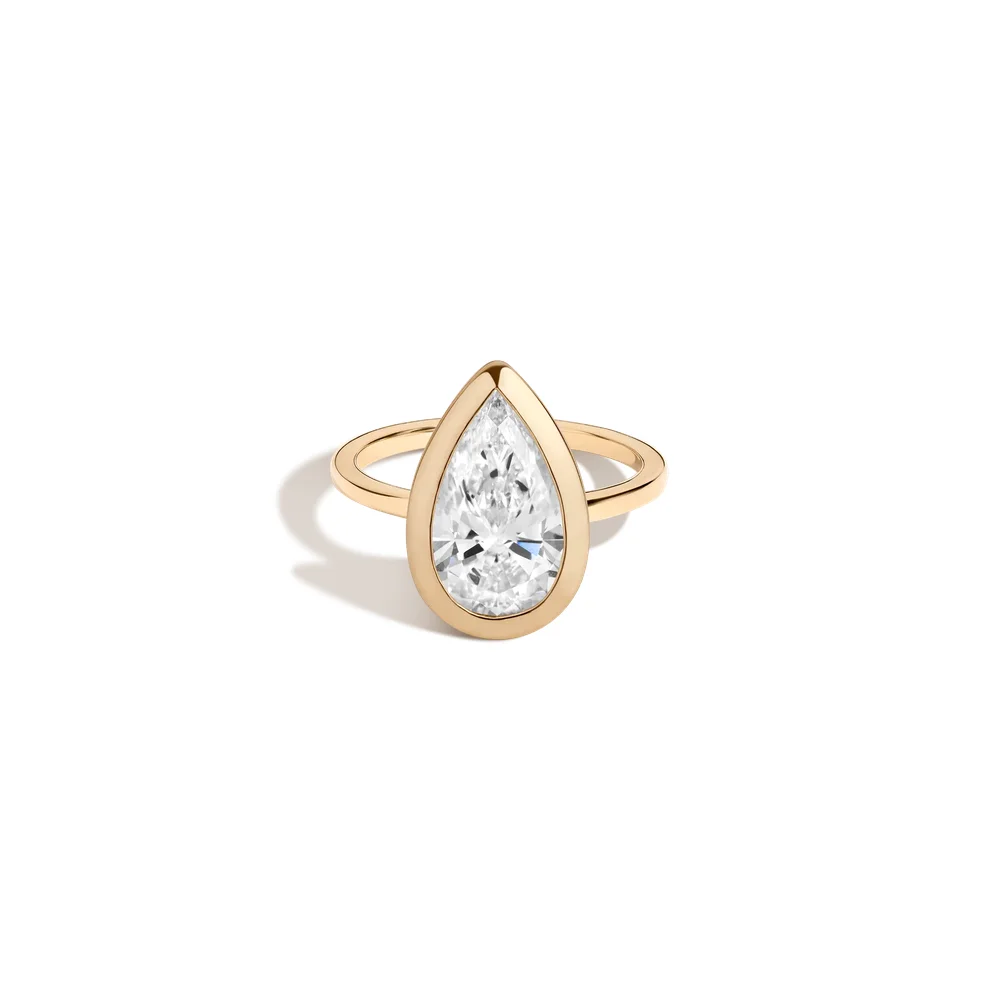
3ct Pear Lab Grown Diamond Bezel Ring
Aurate New York
$2,498
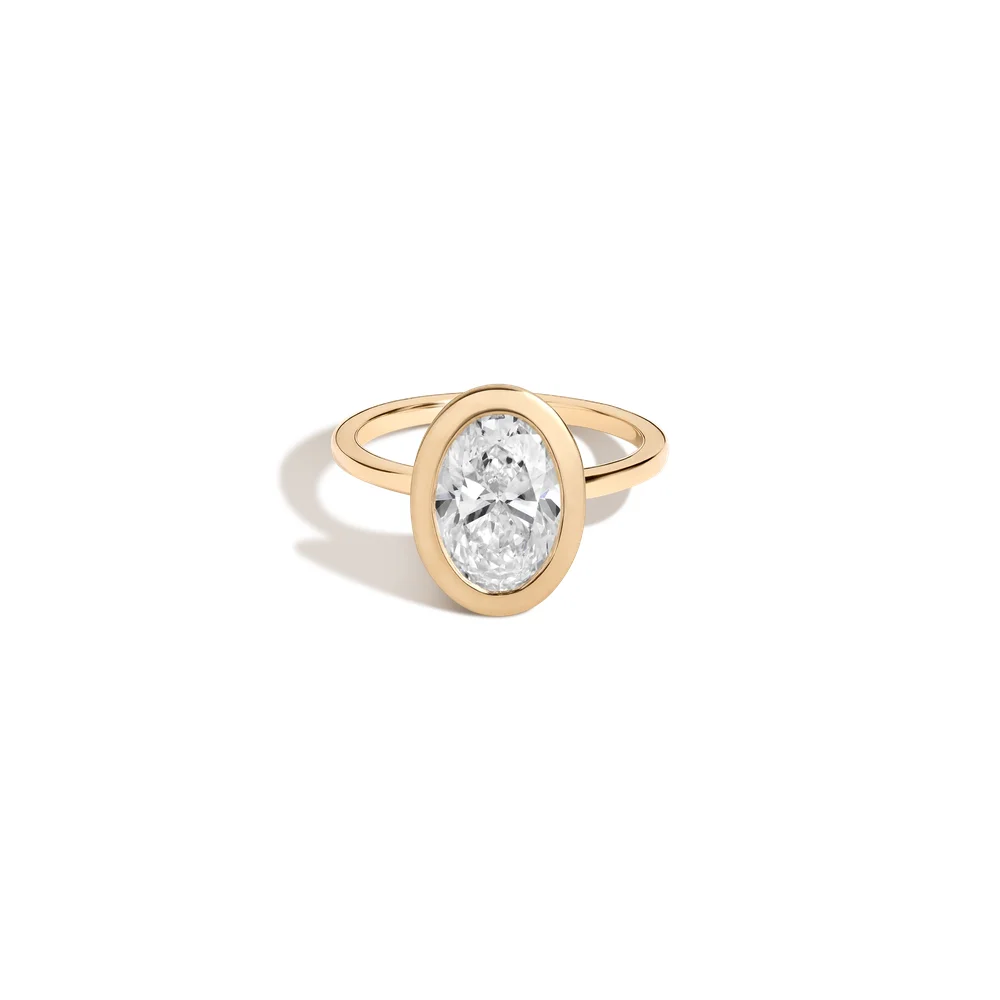
3ct Oval Lab Grown Diamond Bezel Ring
Aurate New York
$2,498
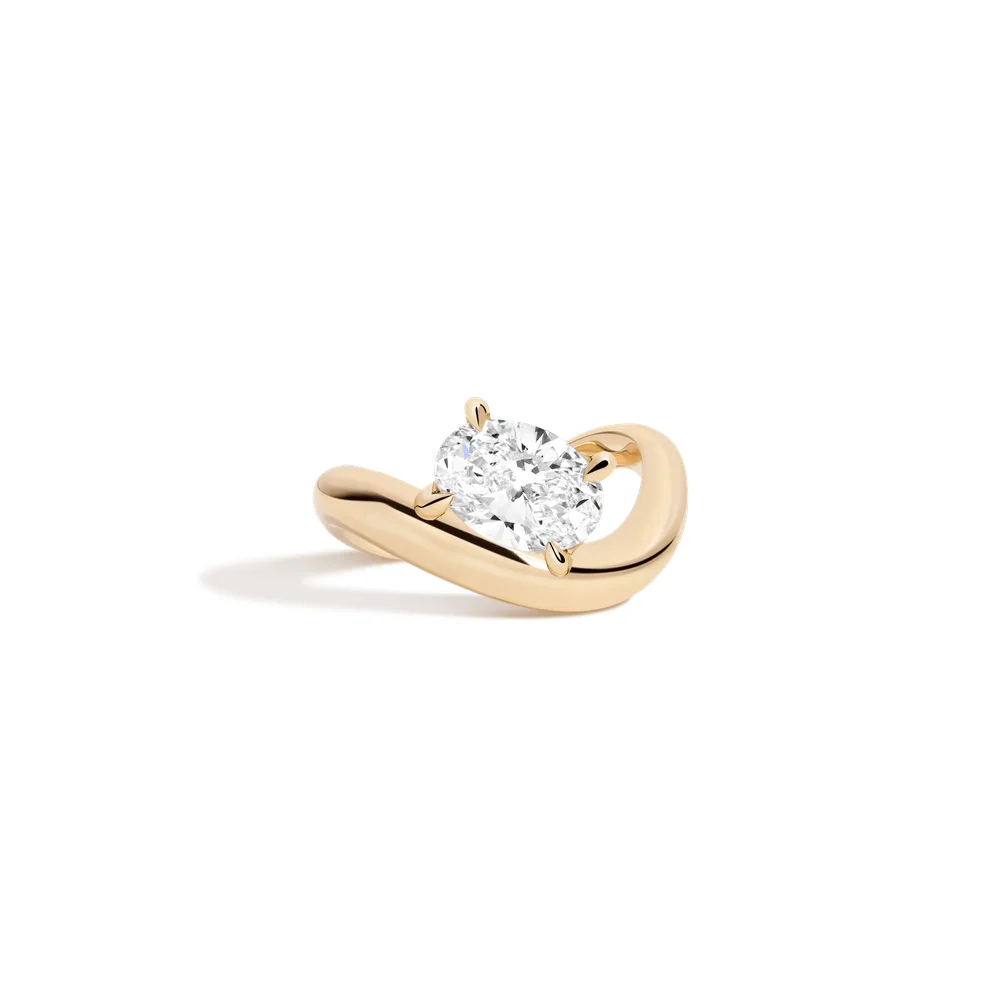
2ct Oval Lab Grown Diamond Floating Ring
Aurate New York
$3,848
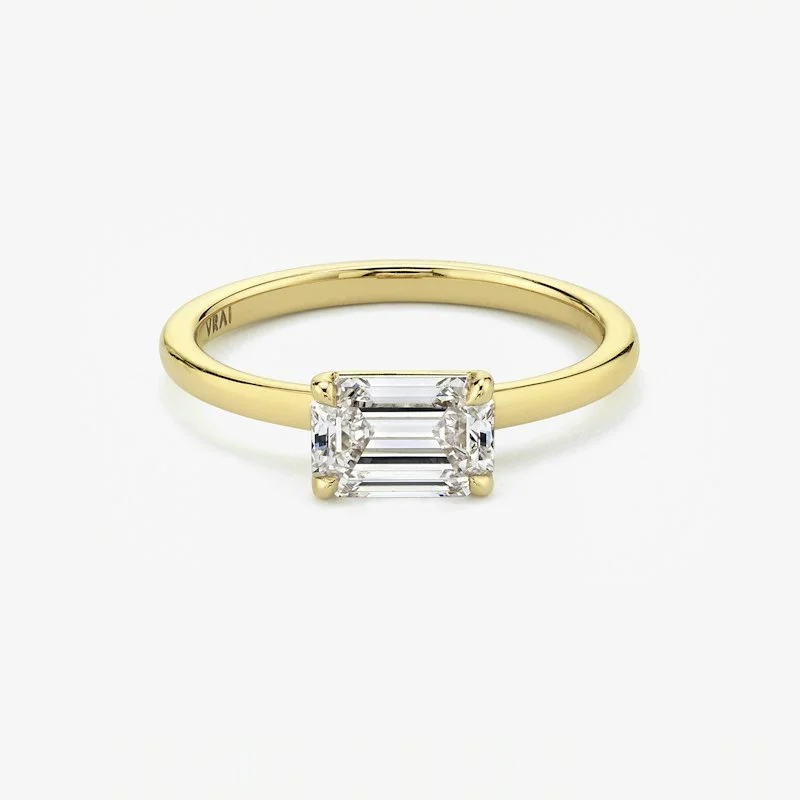
The Signature East-West, Emerald 2.0ct, Yellow Gold
VRAI
$2,700
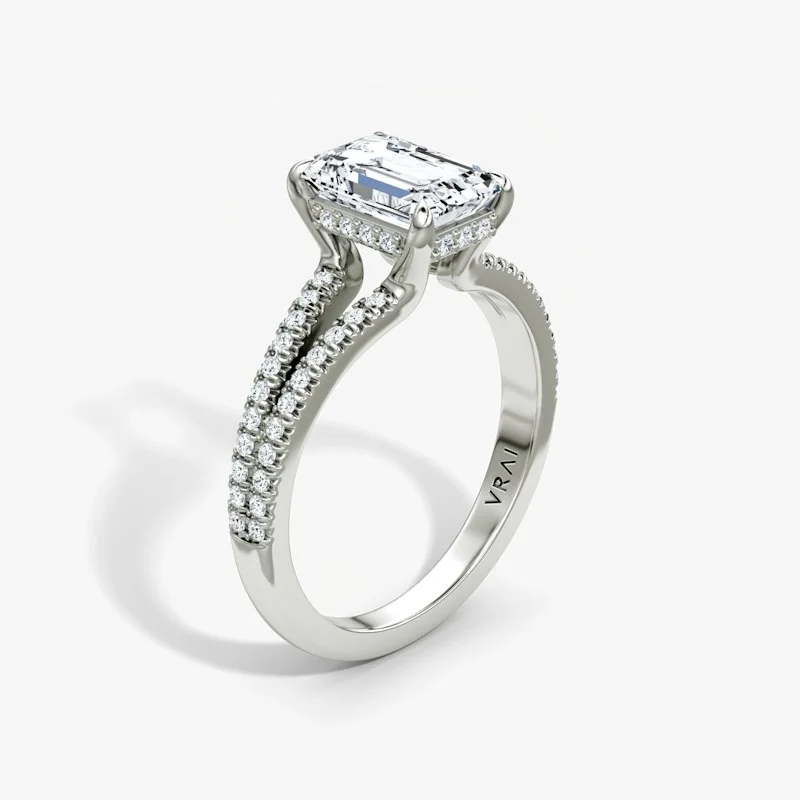
Floating Split Band Engagement Ring, Emerald 1.5ct, White Gold
VRAI
$2,770
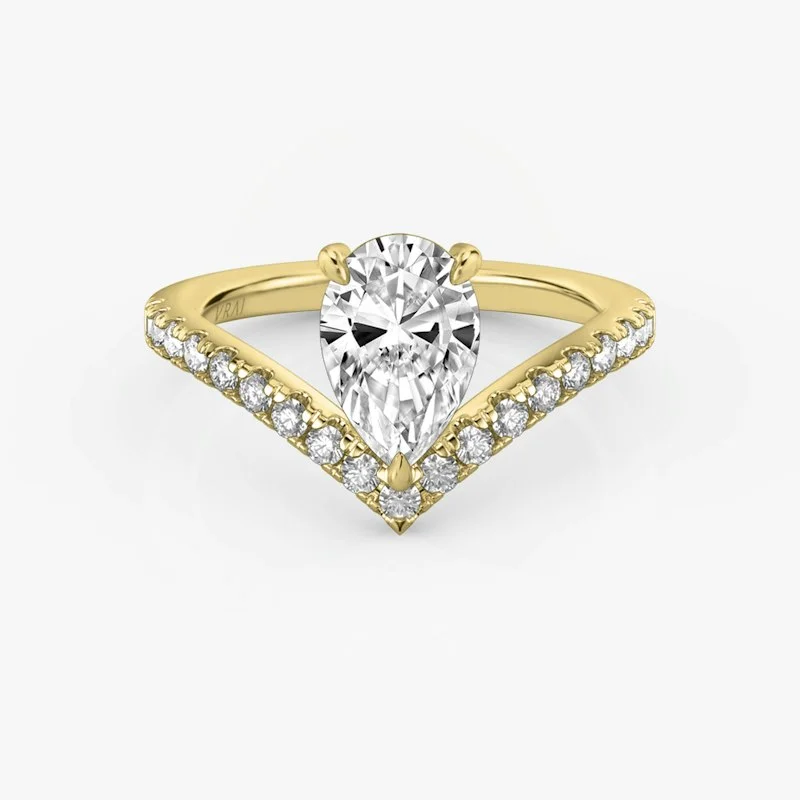
Signature V Engagement Ring, Pear 1.5ct, Yellow Gold
VRAI
$3,090
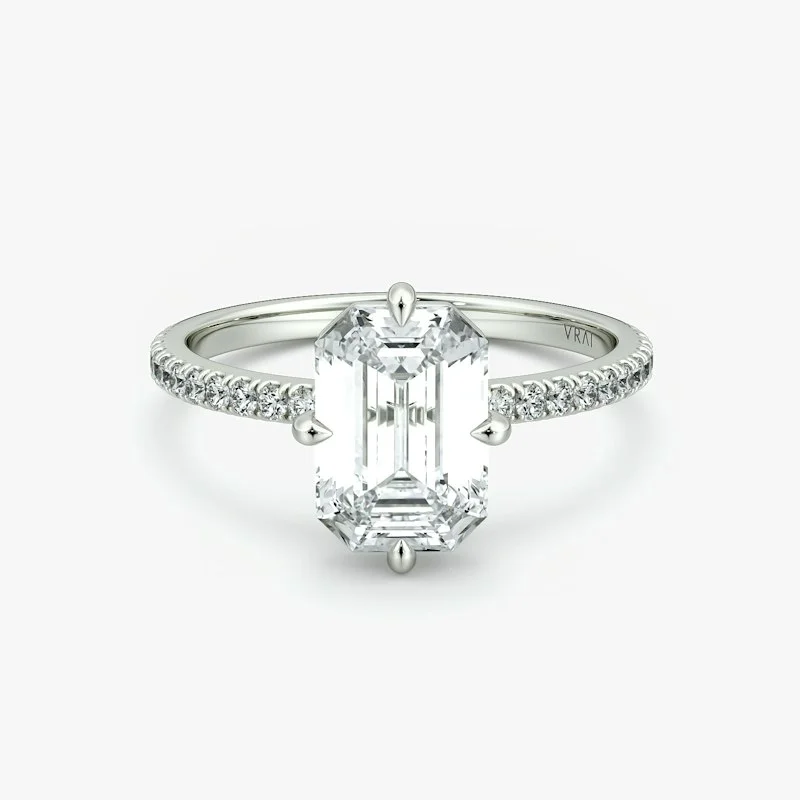
Compass Solitaire Engagement Ring, Emerald 1.8ct, White Gold
VRAI
$2,600
And the solitaire, on any finger
Every ring above is, in some way, a reaction to one design. Tiffany introduced the Tiffany Setting in 1886, six prongs lifting a single diamond up off the band and into the light, and it more or less defined what an engagement ring looks like. Old money rings refine it, vintage rings predate it, modern rings argue with it.
I still think the plain solitaire is the most useful ring ever made. It is small, it catches light, it goes with everything, and it survives daily wear better than almost any other setting. A century of marketing attached one meaning to it, but the meaning is not in the object. Move it to the right hand and it stops being a proposal and becomes a ring. Wear it on a middle finger and the reading changes again. Stack it with plain bands and it reads as part of a group.
The big stone solitaires below are all Aurate, in pear, oval, round and emerald at three and four carats, lab grown, on plain gold bands. The pear and the oval read largest for their weight, and the emerald is the calmest.
A tip if you are buying one for yourself: try it on the hand you write with first. If it does not bother you there, it will not bother you anywhere.
What I would skip: a cathedral setting on a ring you plan to wear every day. The arches look lovely, but they lift the stone and knock against everything.
The big stone solitaire
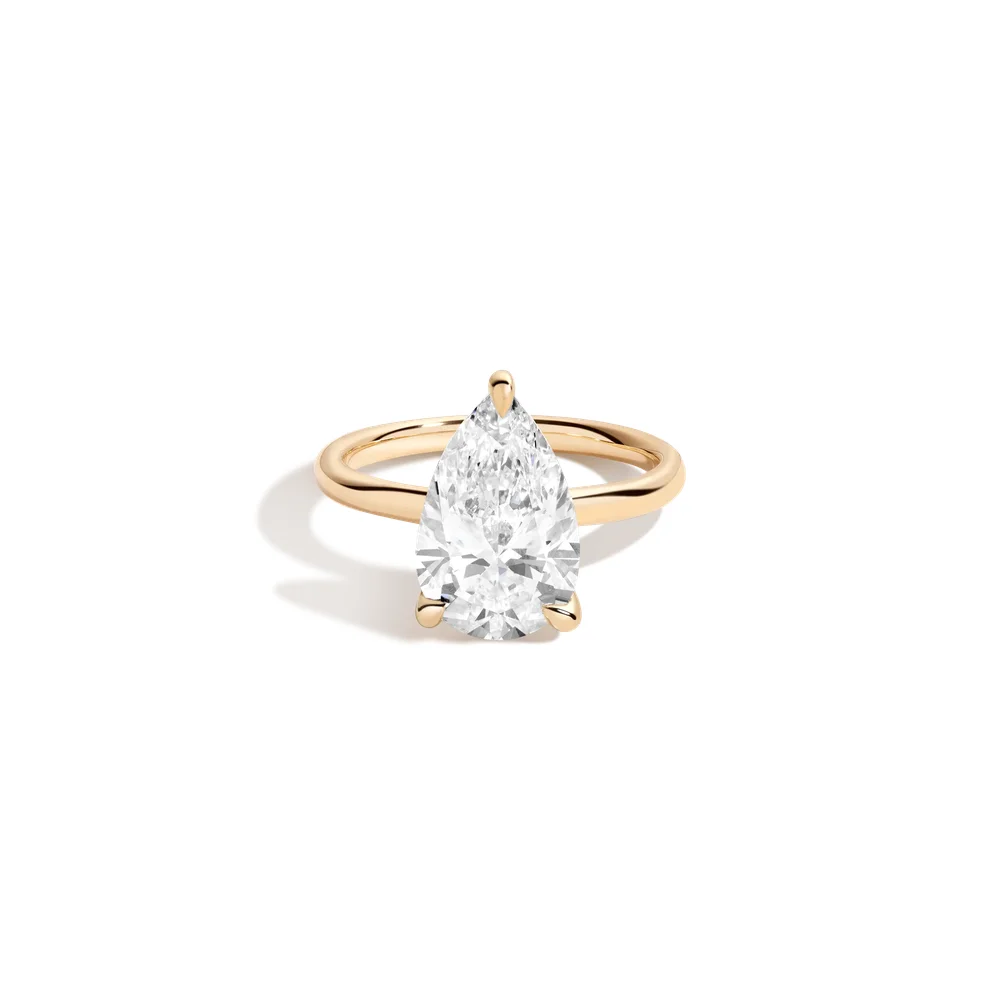
4ct Pear Lab Grown Diamond Solitaire Ring
Aurate New York
$5,058
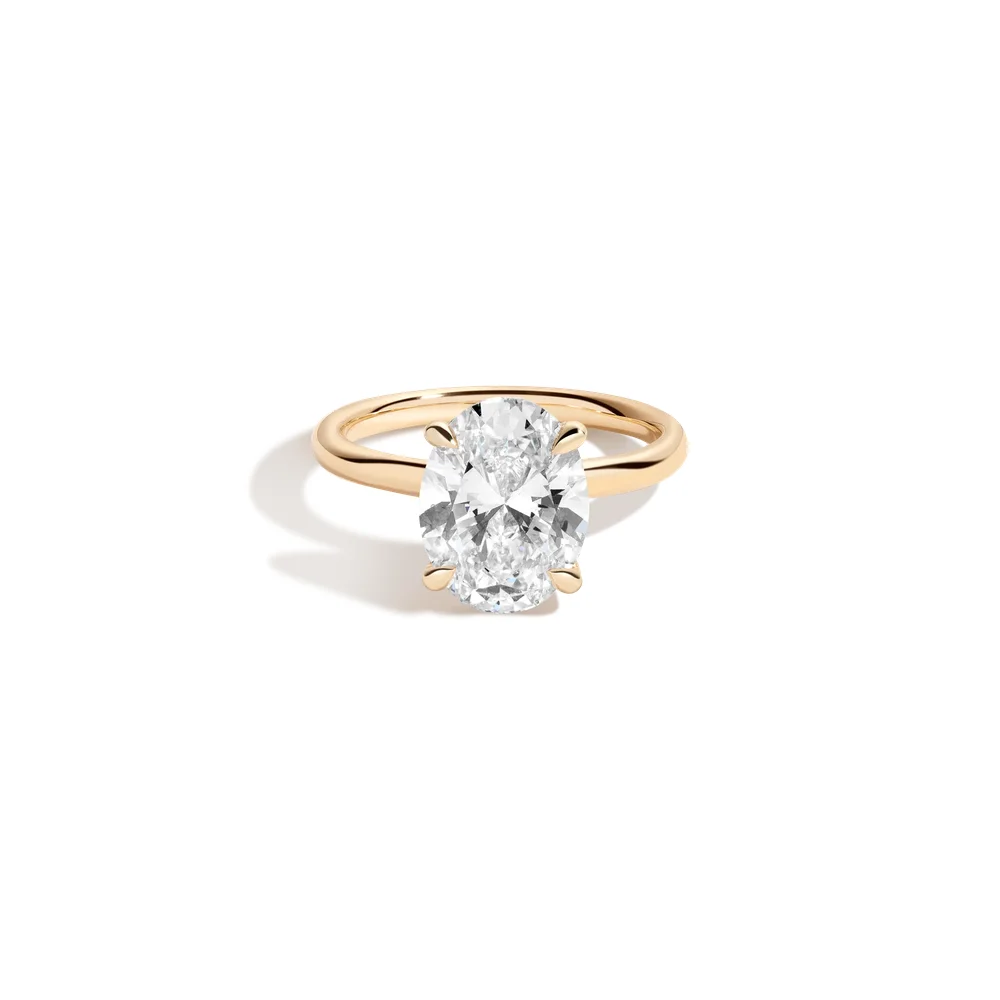
4ct Oval Lab Grown Diamond Solitaire Ring
Aurate New York
$5,058
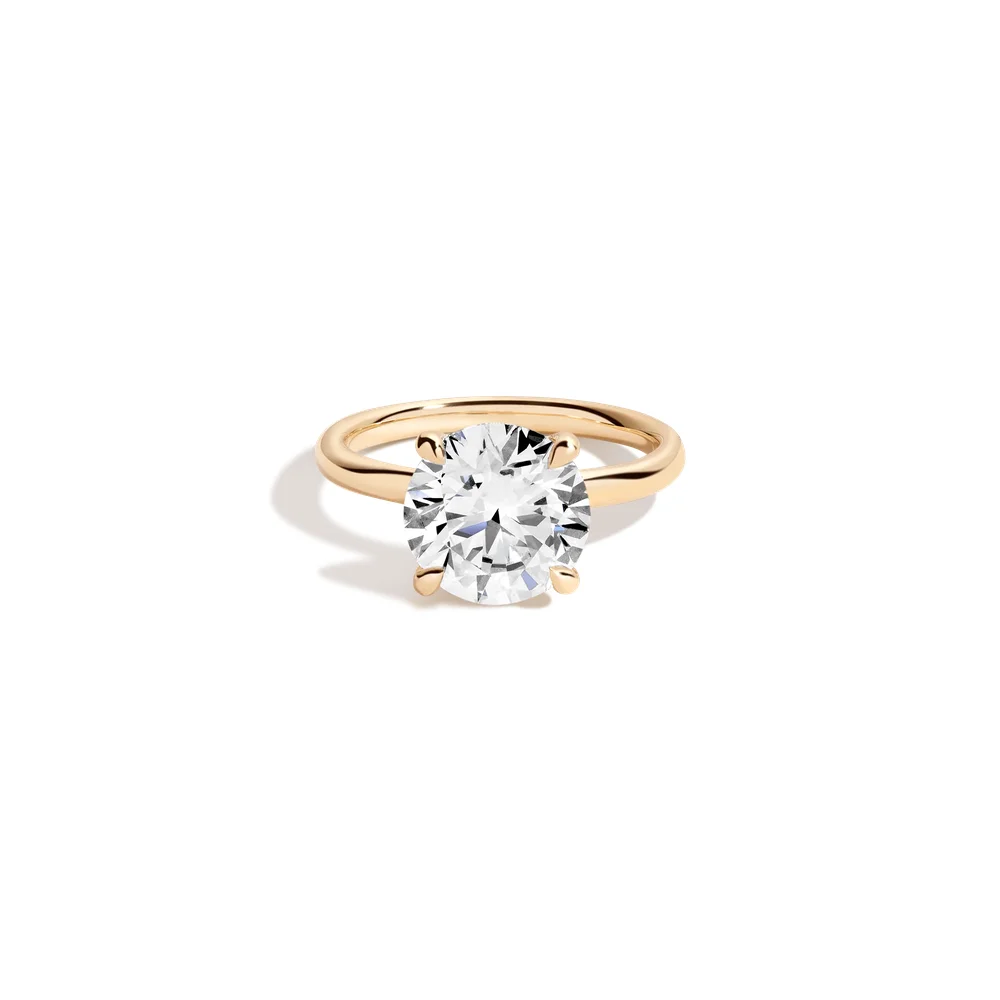
4ct Round Lab Grown Diamond Solitaire Ring
Aurate New York
$5,058
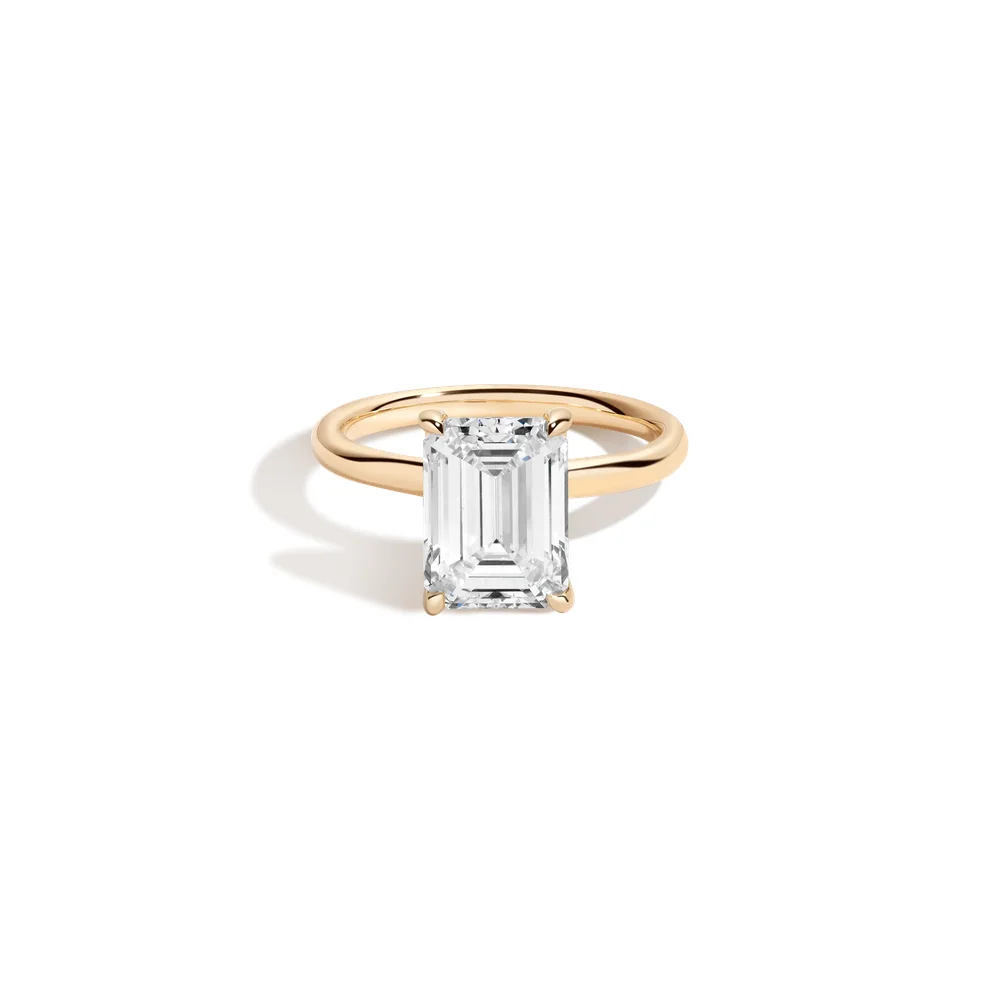
4ct Emerald Lab Grown Diamond Solitaire Ring
Aurate New York
$4,838
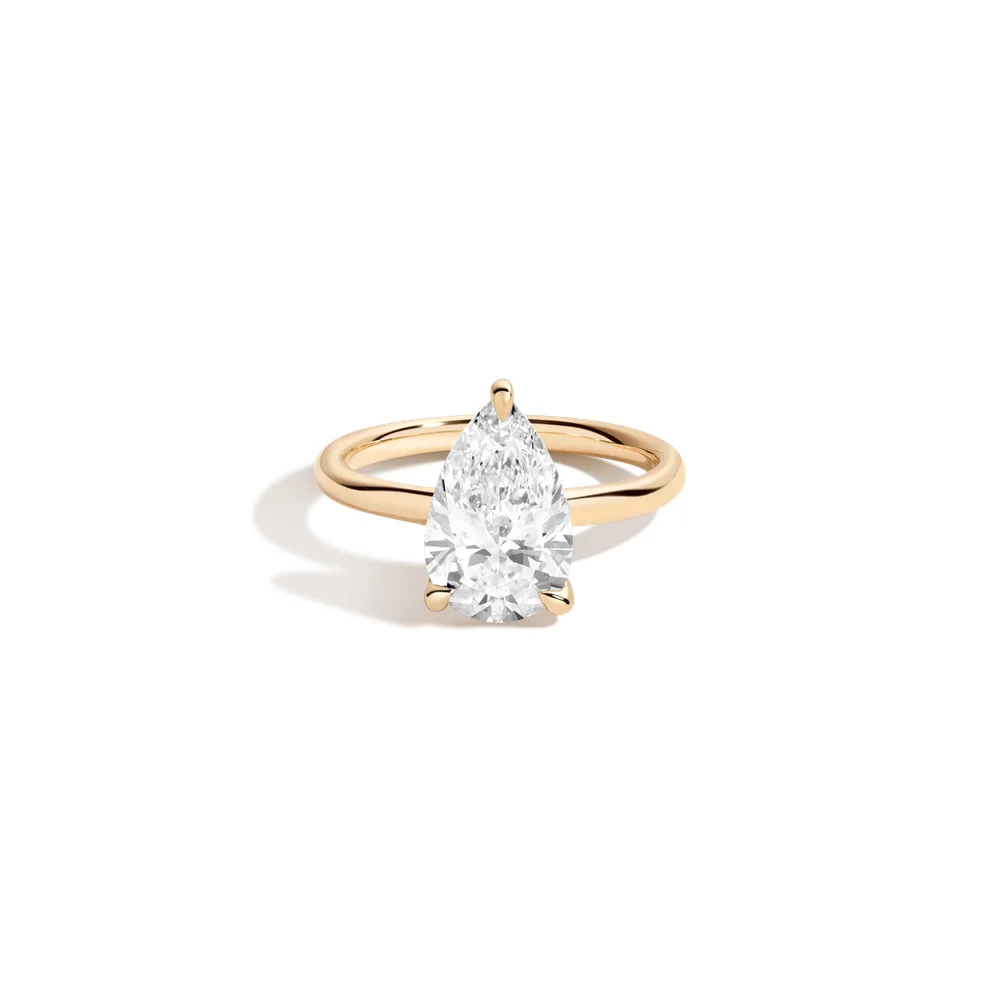
3ct Pear Lab Grown Diamond Solitaire Ring
Aurate New York
$3,958
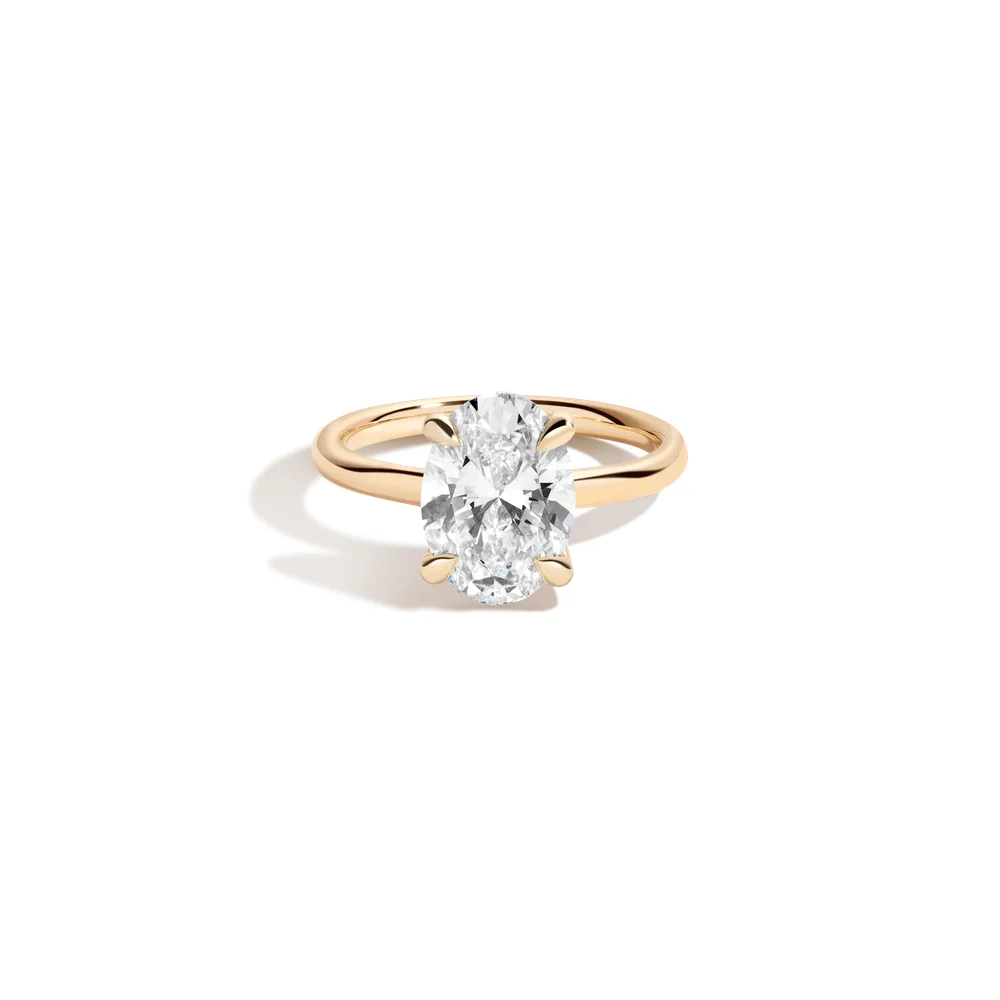
3ct Oval Lab Grown Diamond Solitaire Ring
Aurate New York
$3,958
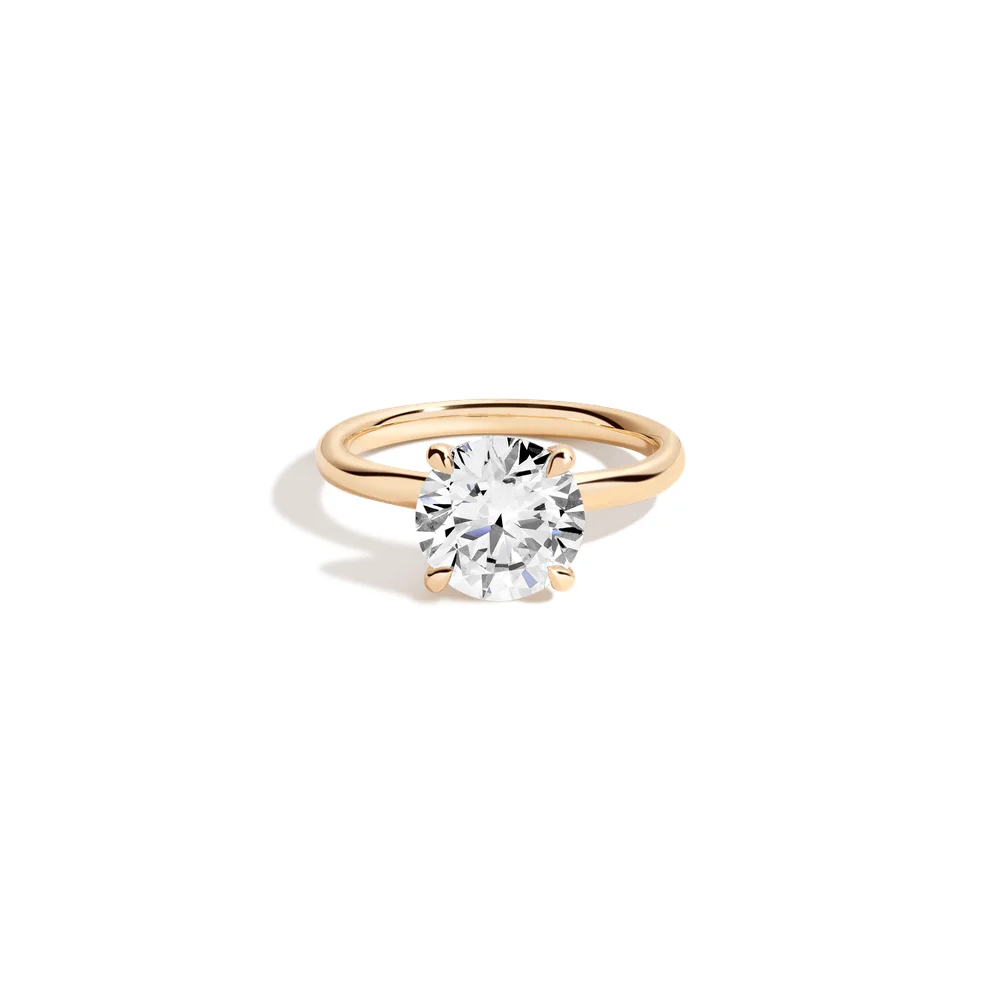
3ct Round Lab Grown Diamond Solitaire Ring
Aurate New York
$3,958
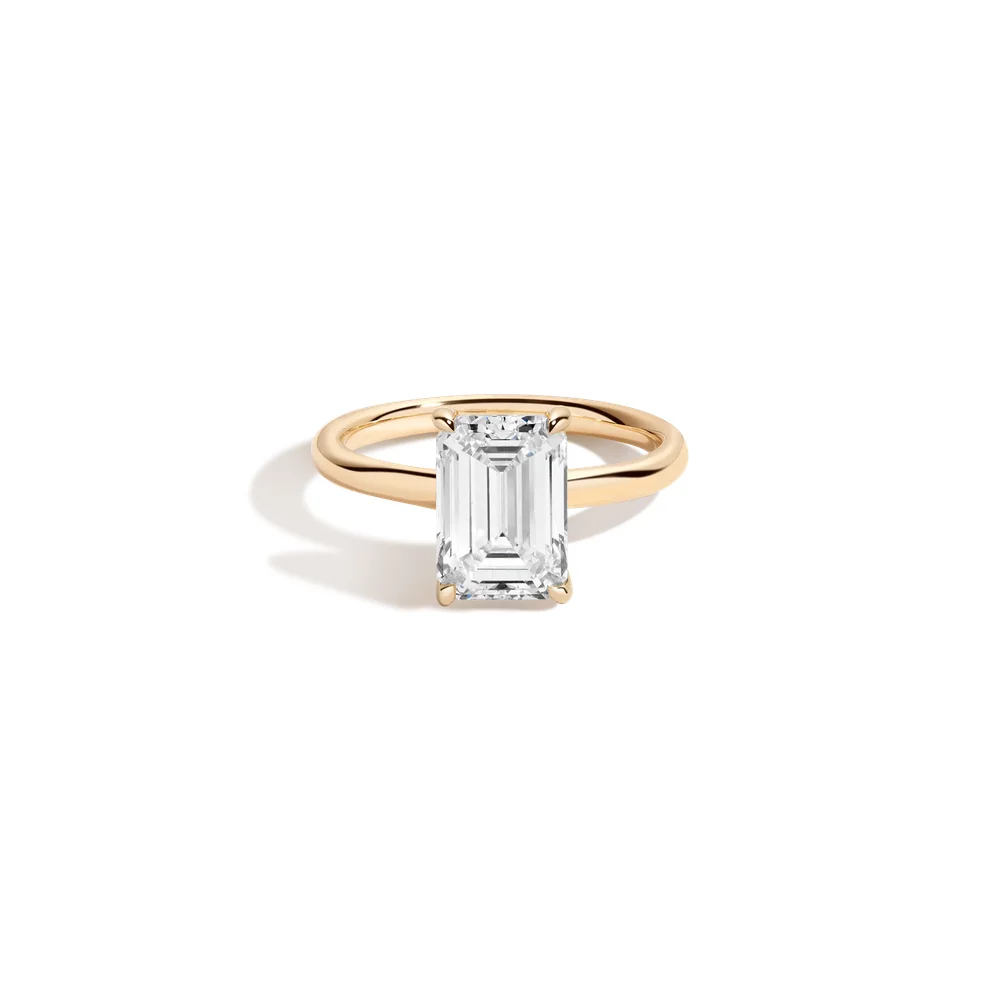
3ct Emerald Lab Grown Diamond Solitaire Ring
Aurate New York
$3,738
Cut, setting and how the stone behaves
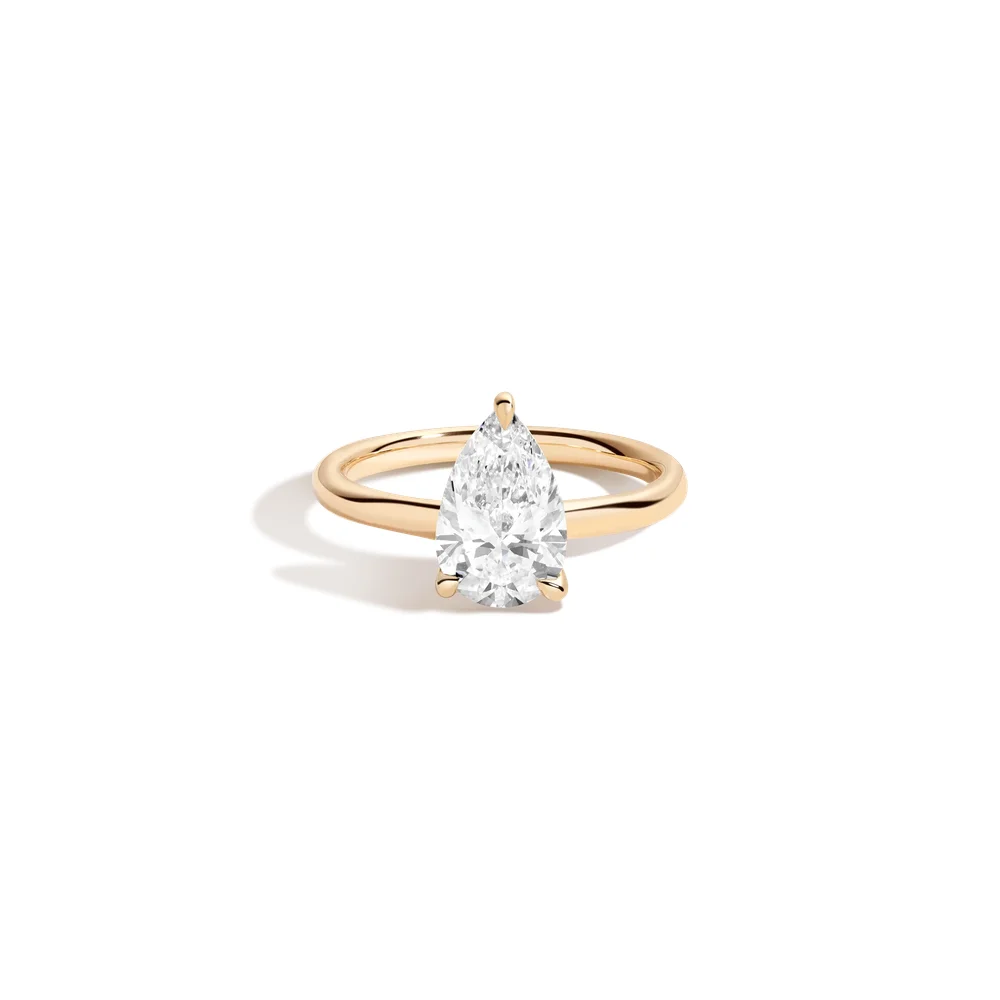
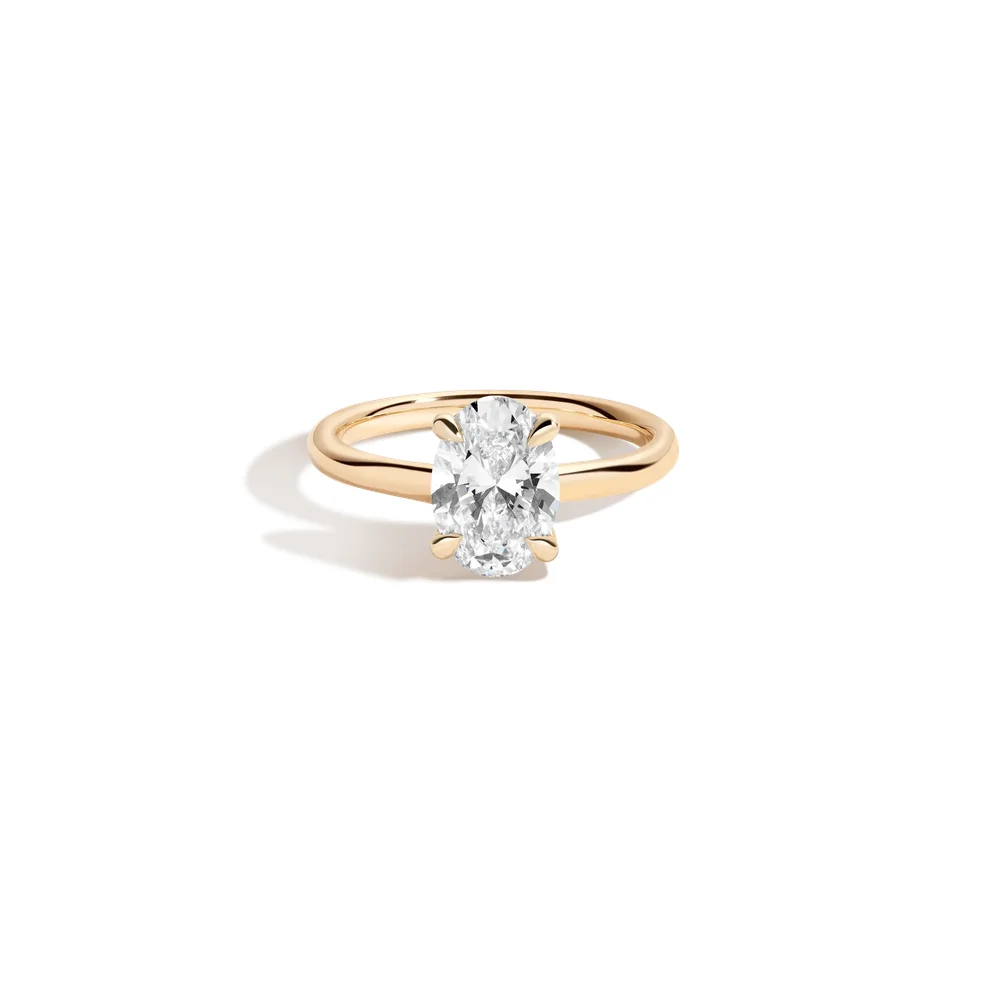
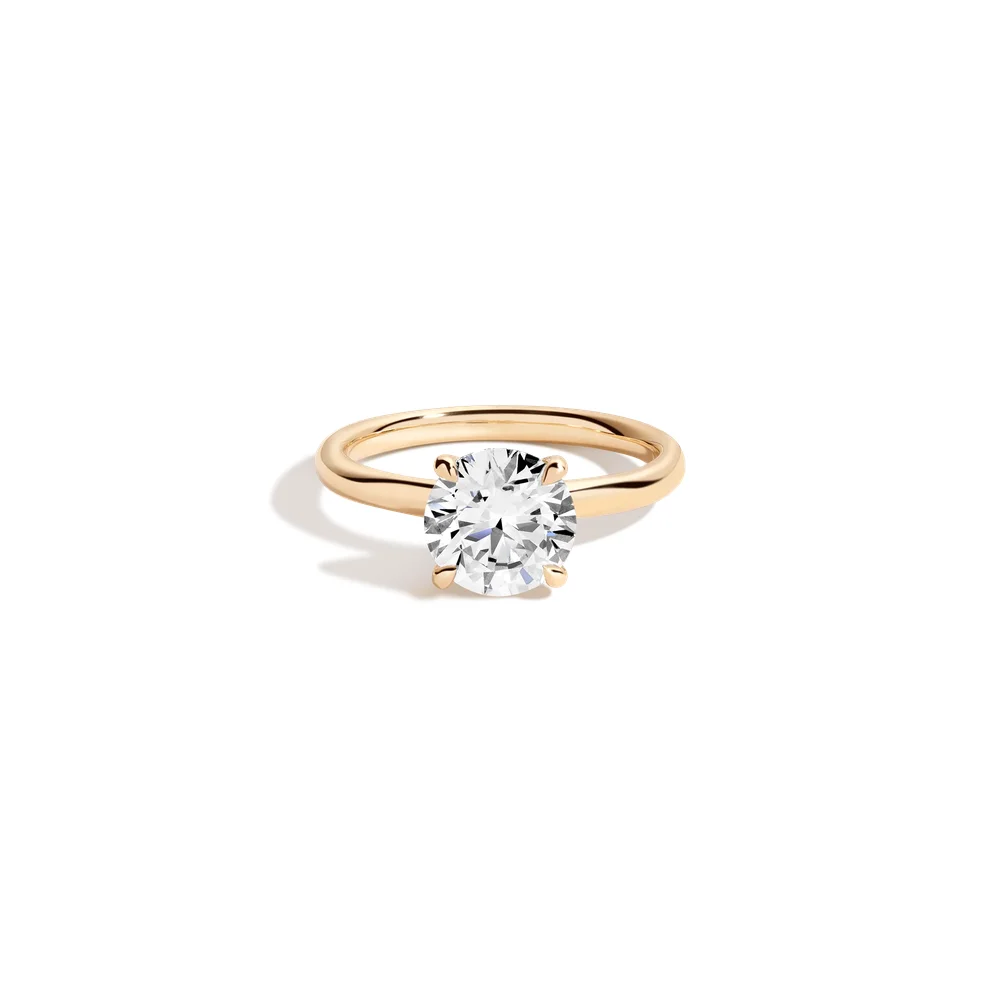
The stone shape changes the vibe more than the size does, which is why the three groups above look so different even when the carat weights are similar. A round brilliant is the brightest and the most conventional. An oval reads larger for its weight and lengthens the finger, which is why it shows up so often in the old money group. An emerald cut is calmer, with broad flashes rather than sparkle, and it shows clarity more honestly, so it wants a better stone. A pear or marquise is more directional, and turned sideways it becomes one of the modern rings.
On setting, a low bezel is the practical choice for a ring worn constantly, because there is nothing to catch and nothing to check. A four claw setting shows more of the stone and needs looking at every couple of years. Six claws are more secure and cover a little more of the stone. Height matters as much as anything: a high setting catches on knitwear and knocks against desks, and a lower one simply lives on the hand.
The two carat solitaires below are a good way to see this side by side. The pear, the oval, the round and the emerald all weigh the same, and they look like four completely different rings.
What I would skip: judging a stone from a photo alone. Ask for a video in daylight, turning slowly, before you commit.
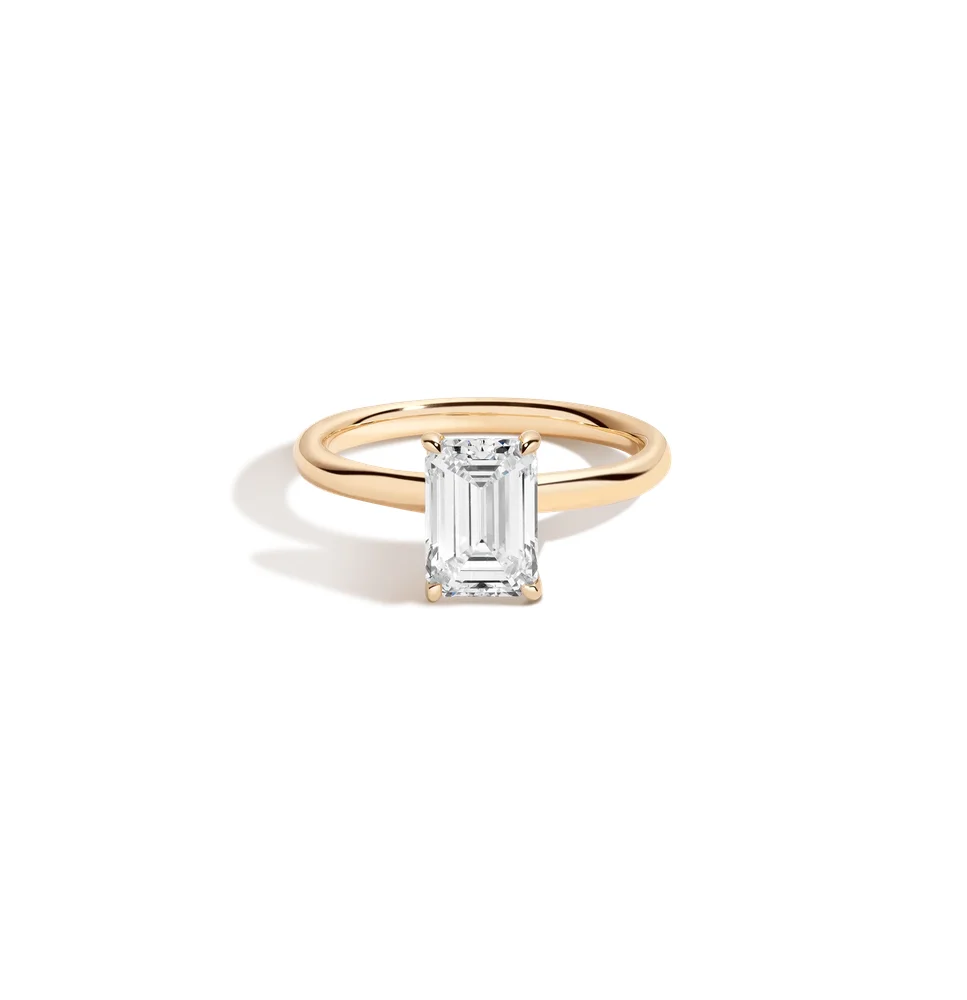
Small single stones, for every day
Not every ring here needs to be a proposal. Some of my favorite single stone rings are tiny, the kind you forget you are wearing until the light catches them. Catbird is very good at this, and its Tiniest Ring in ruby and emerald is exactly what the name says.
The Catbird signets, the Moondew with a blue sapphire and the Little Signet with an emerald or a diamond, set one small stone into a flat gold face, which is a lovely middle ground between a signet and a solitaire. The Caravaggio with a green sapphire and the Moonstone Homespun are softer and more handmade looking. The Diamond Fizz Petite is the one to stack.
From Mejuri, the Baguette Stacker in emerald and the Trillion Stacker are made for stacking with plain bands. The VRAI Knife-Edge Bezel rings, one round and one marquise, are the cleanest shapes here, with a sharp ridge down the band. SHASHI's emerald-cut bezel ring and Zoë Chicco's diamond bypass ring are two simple options, and the Bliss Diamond and LuvMyJewelry solitaires are classic four or six claw rings with lab grown stones.
A pairing idea: wear one of these next to a bigger engagement ring from the groups above. A tiny colored stone beside a clean diamond looks collected rather than matched.
What I would skip: buying a stacker in a different gold color from your main ring. Mixing metals works on a hand full of rings, less so with two.
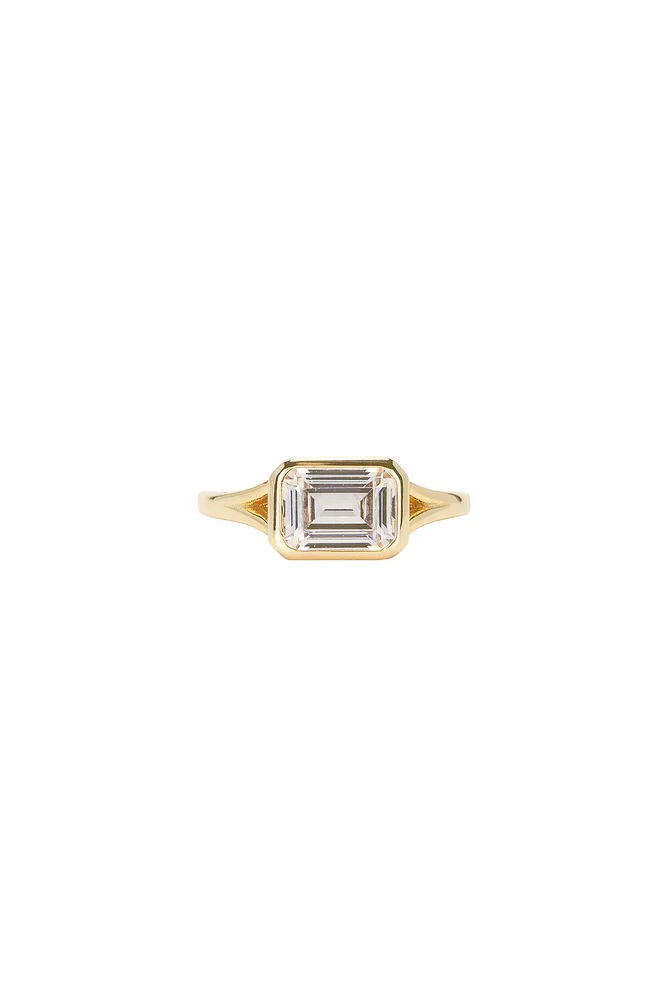
Emerald Cut Bezel Ring in Gold
SHASHI
$88
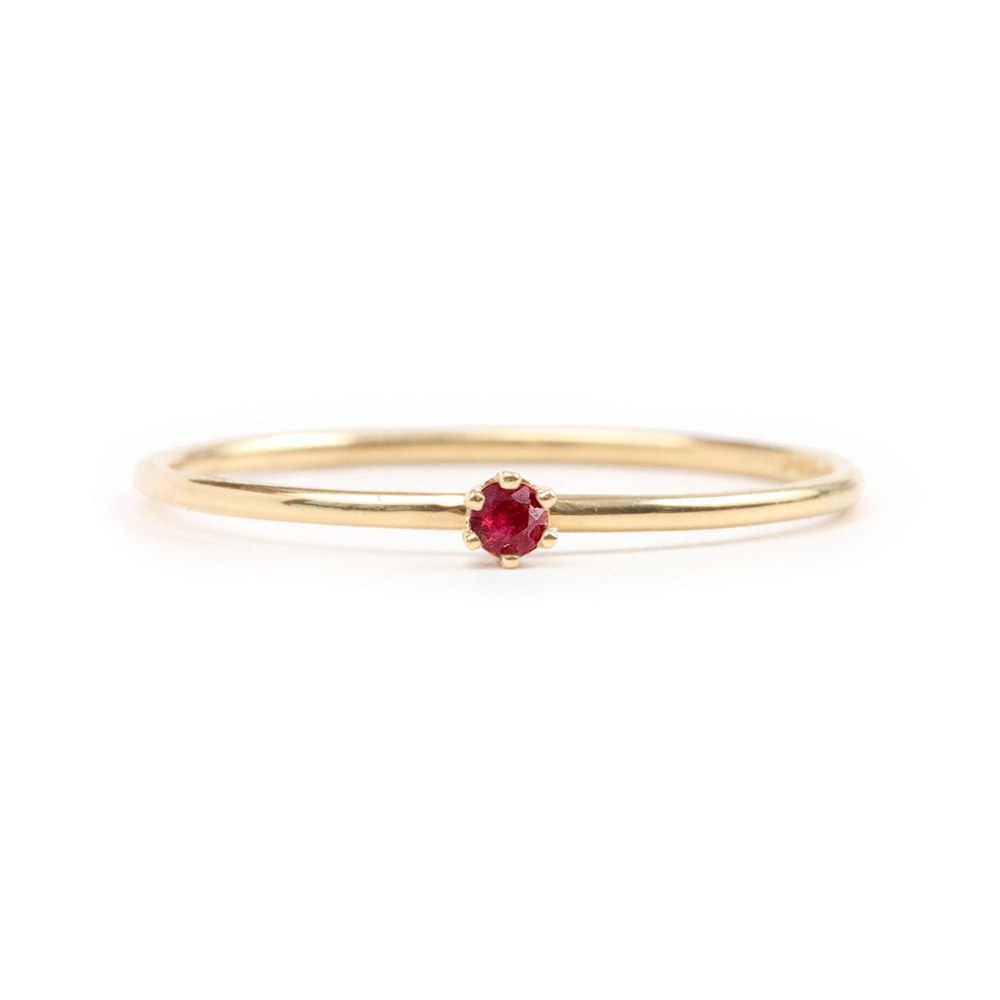
The Tiniest Ring, Ruby
Catbird
$463.50
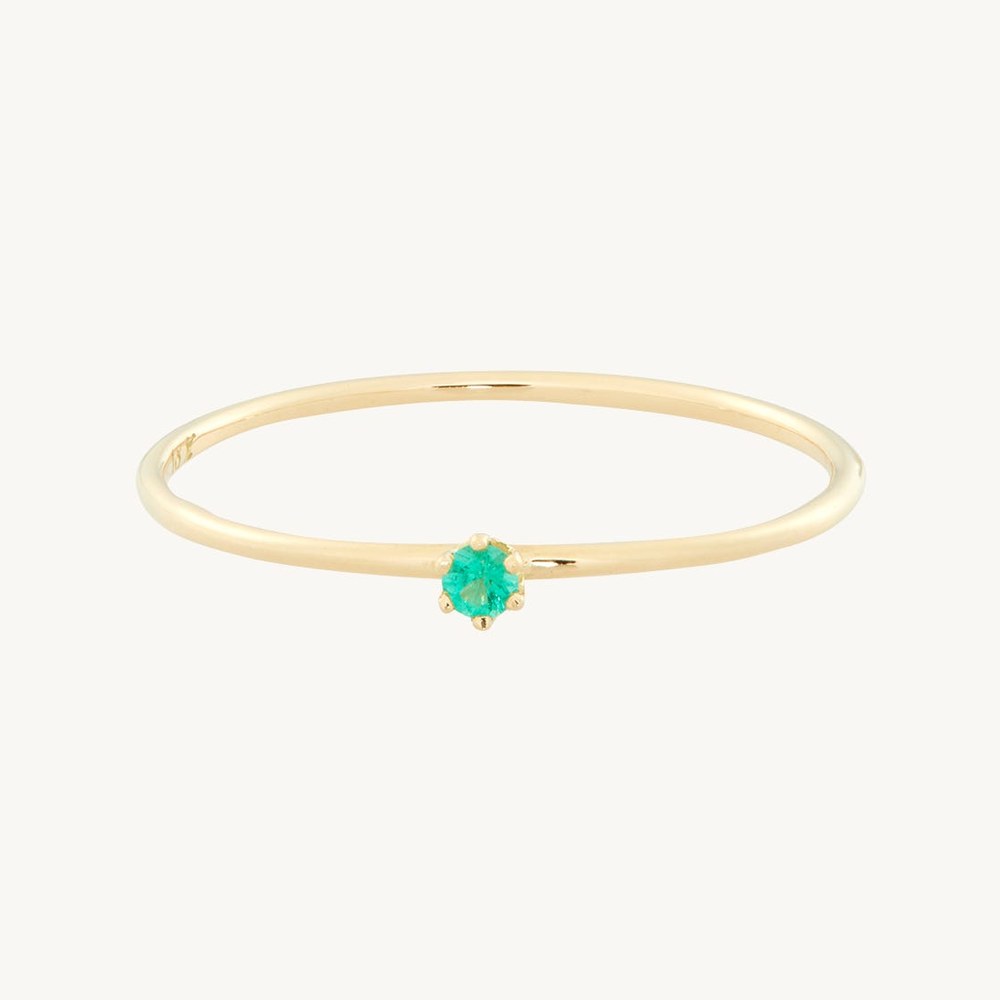
The Tiniest Ring, Emerald
Catbird
$471
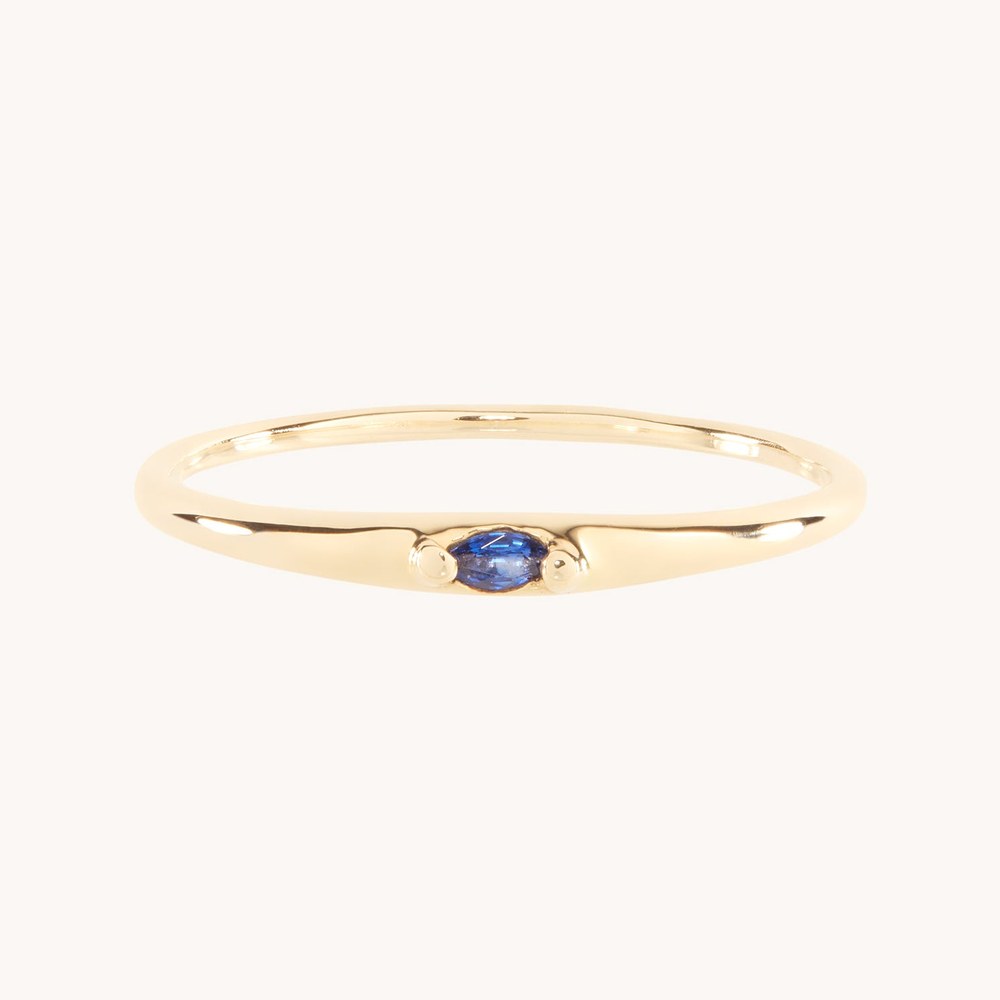
Moondew Signet Ring, Blue Sapphire
Catbird
$426
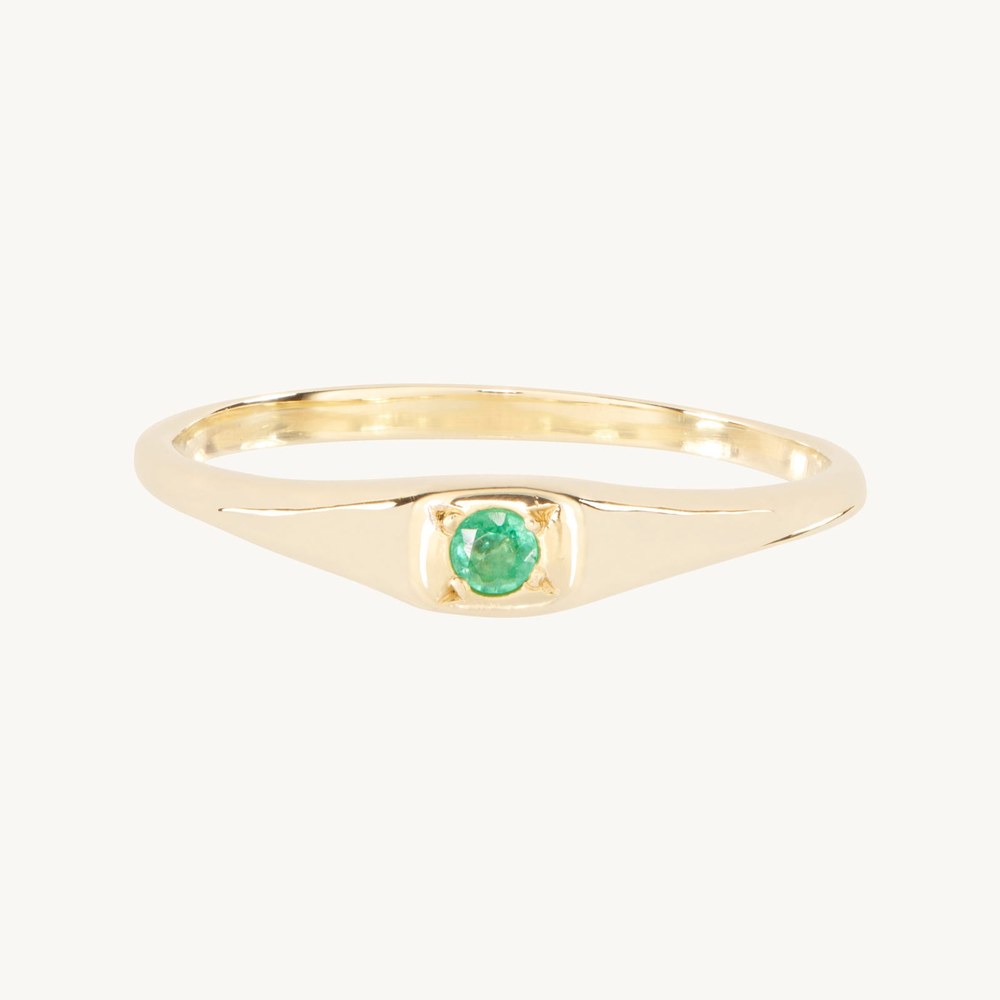
Little Signet Ring with Emerald
Catbird
$698
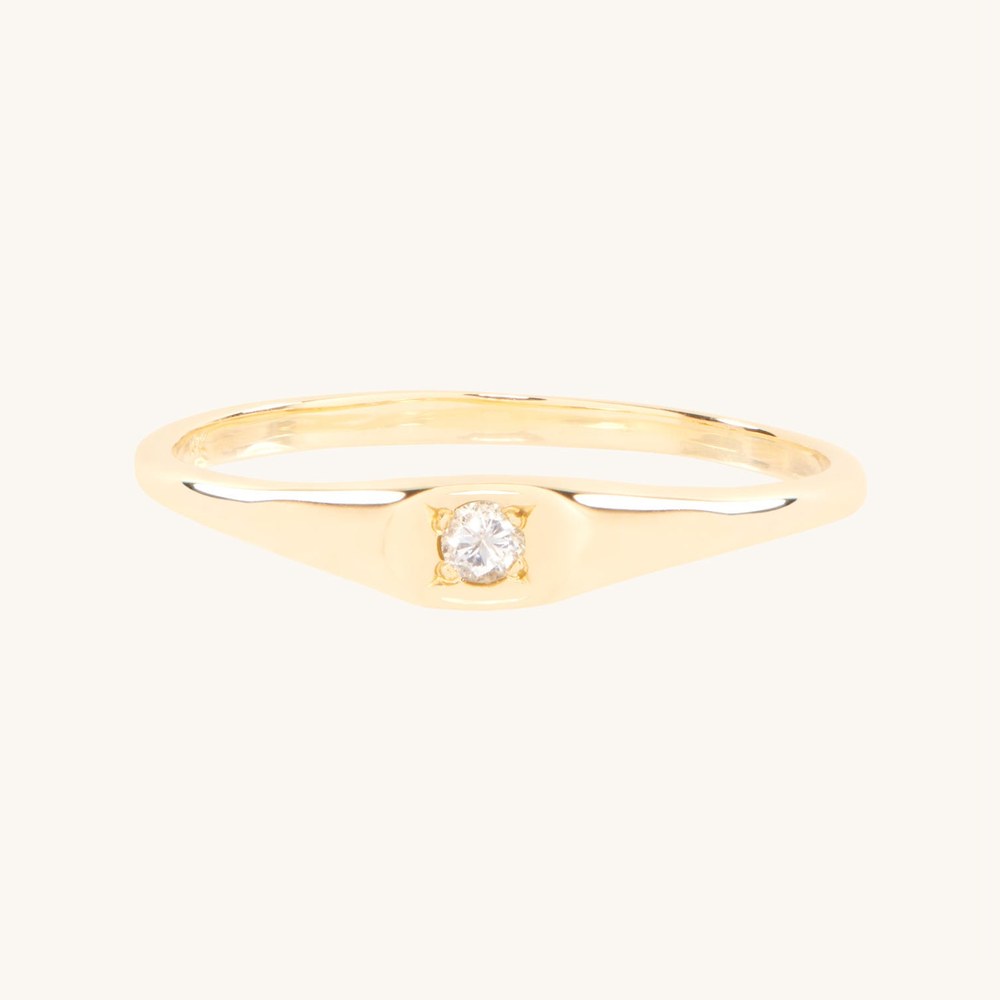
Little Signet Ring with Diamond
Catbird
$770
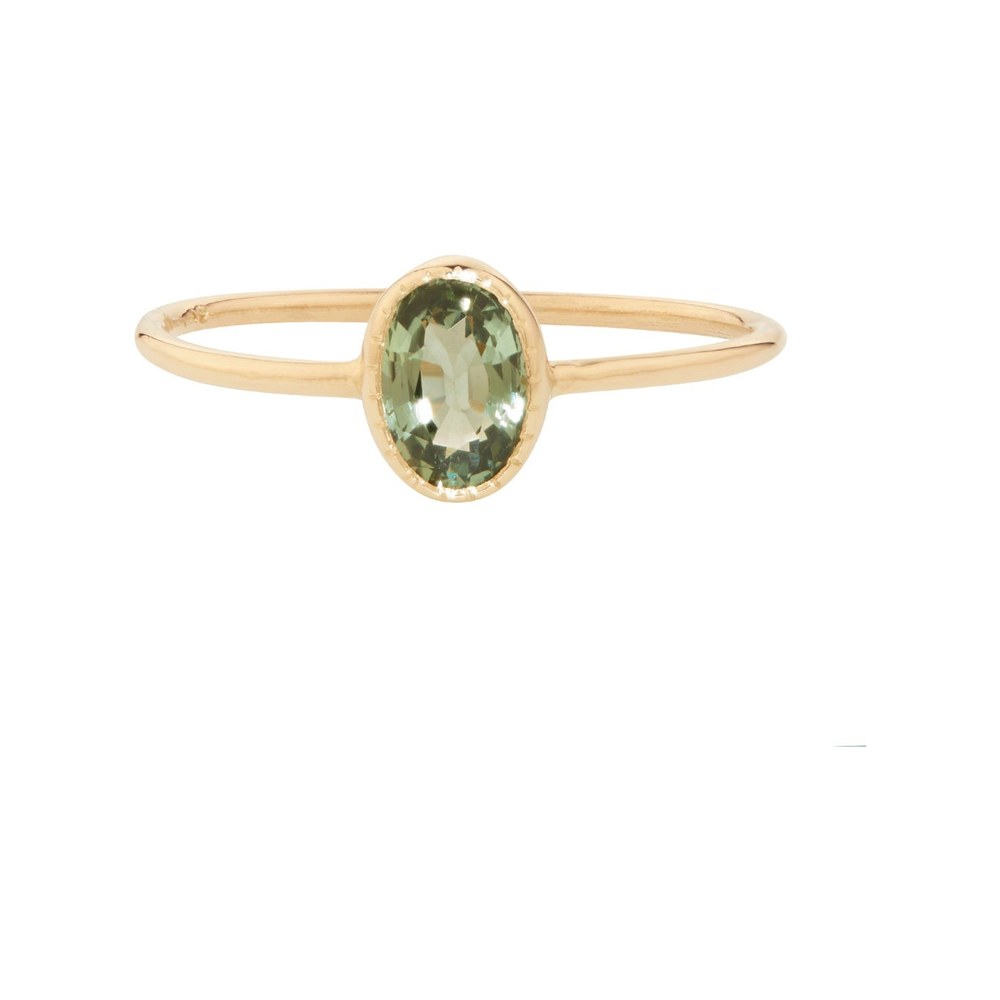
Caravaggio Ring, Green Sapphire
Catbird
$995
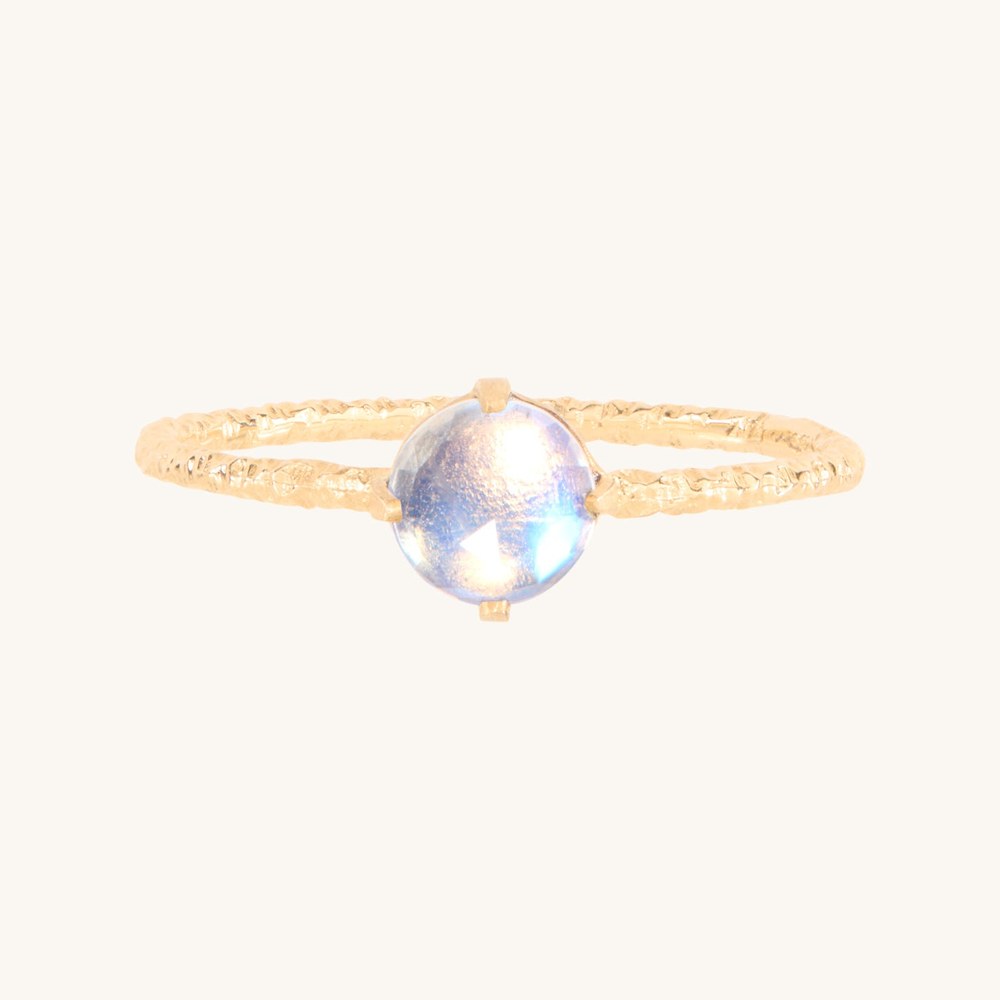
Moonstone Homespun Ring
Catbird
$752
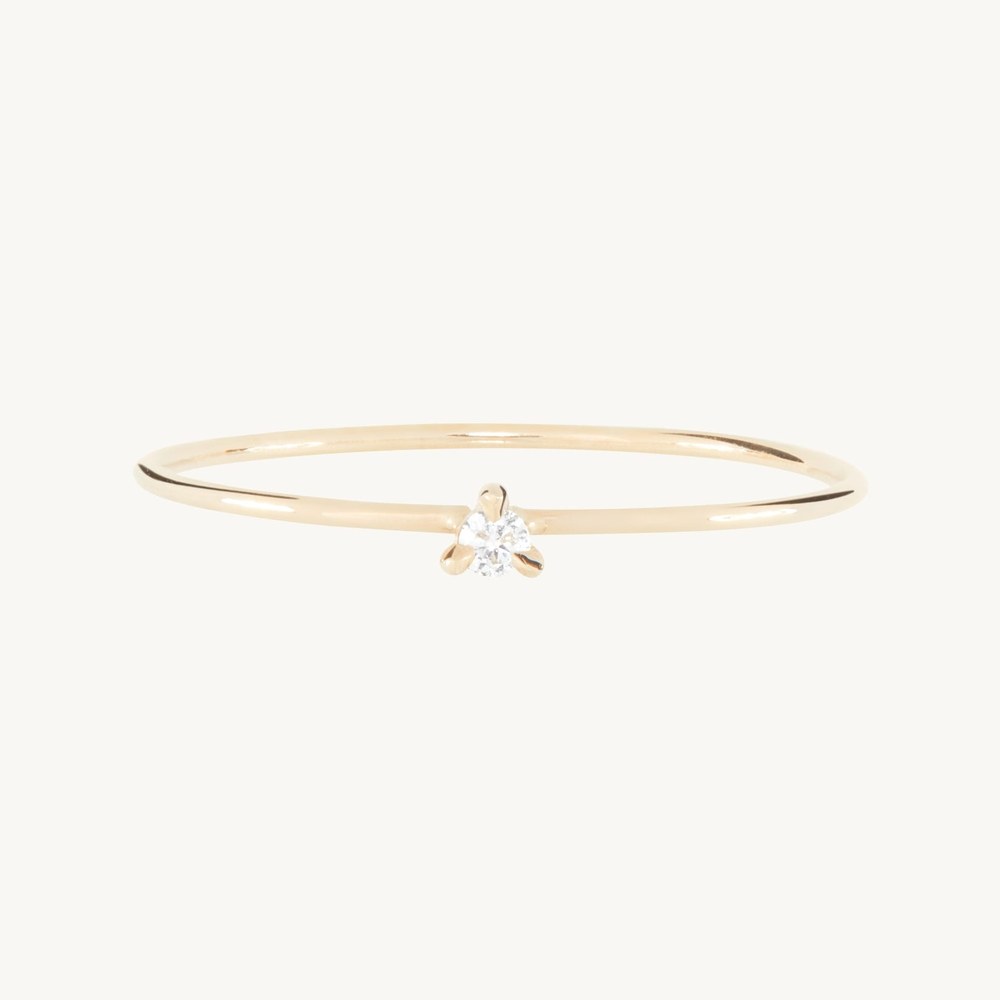
Diamond Fizz Ring, Petite
Catbird
$198
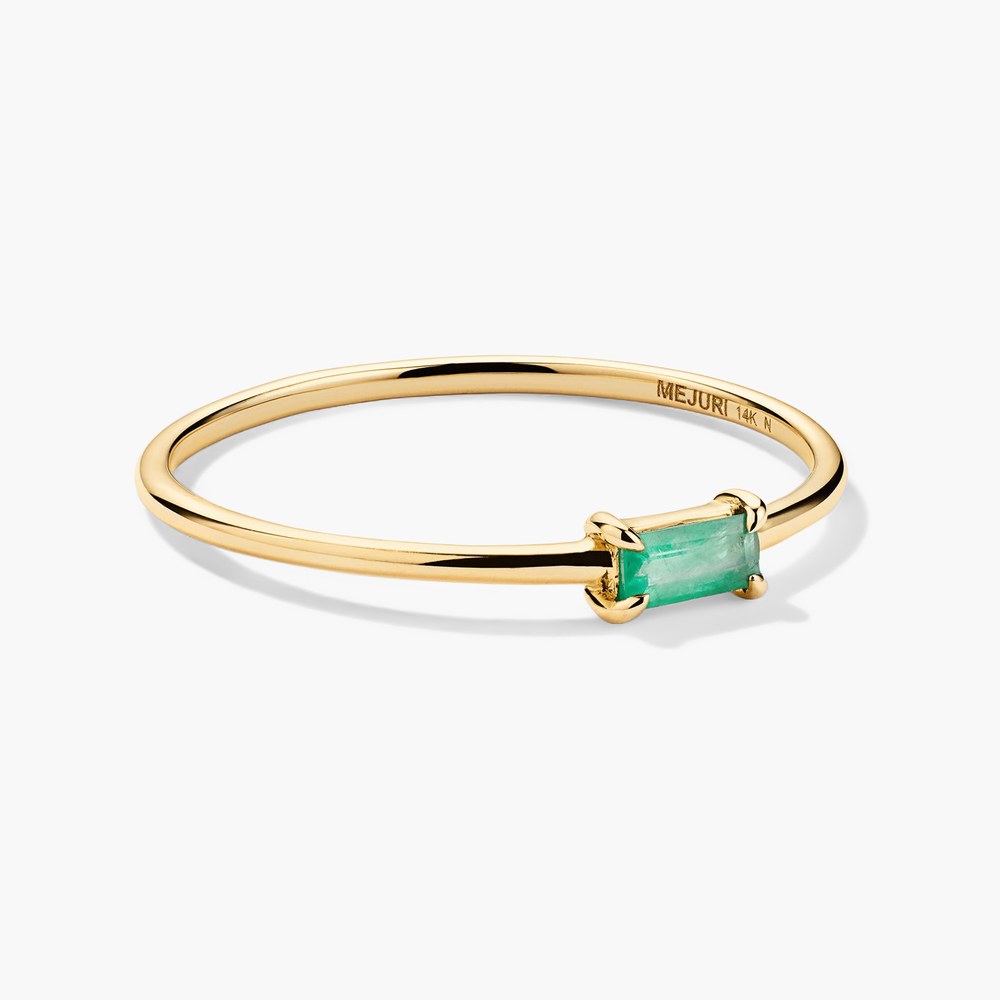
Baguette Stacker Ring, Emerald
Mejuri
$378
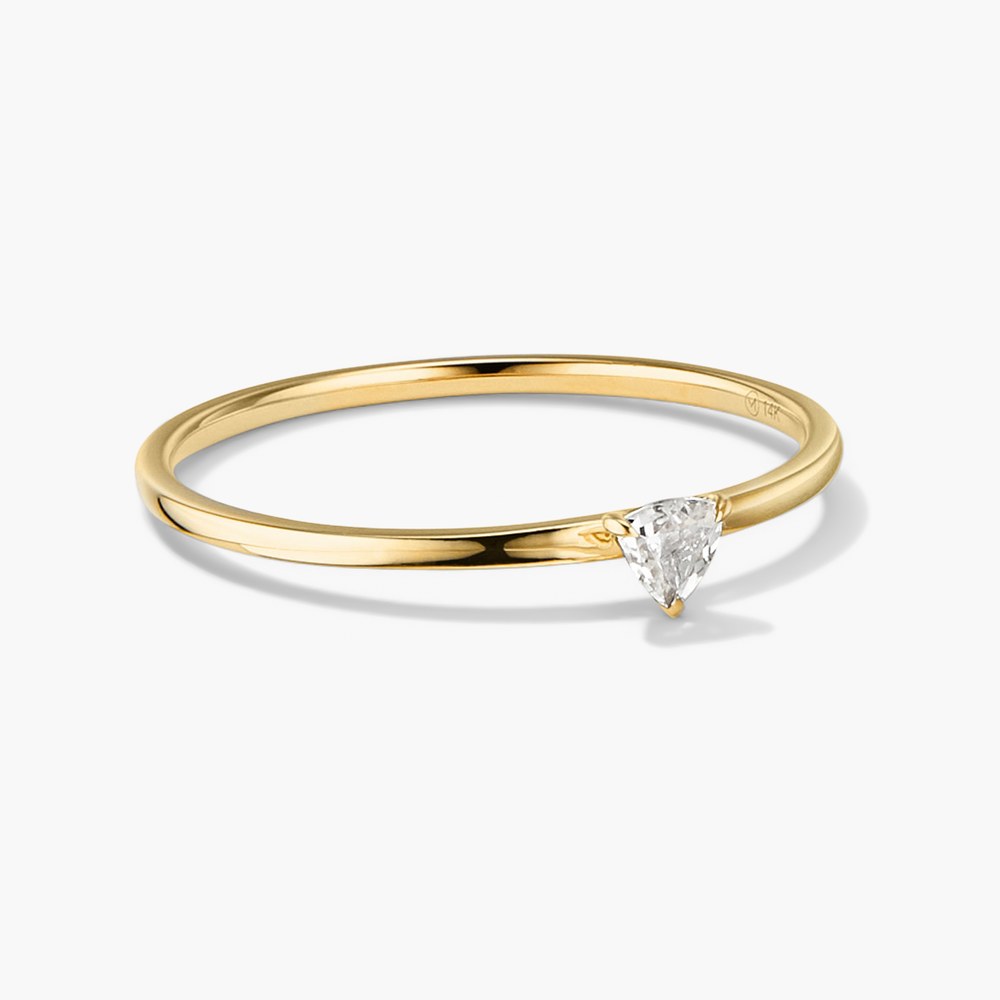
Gemstone Trillion Stacker Ring, White Sapphire
Mejuri
$198
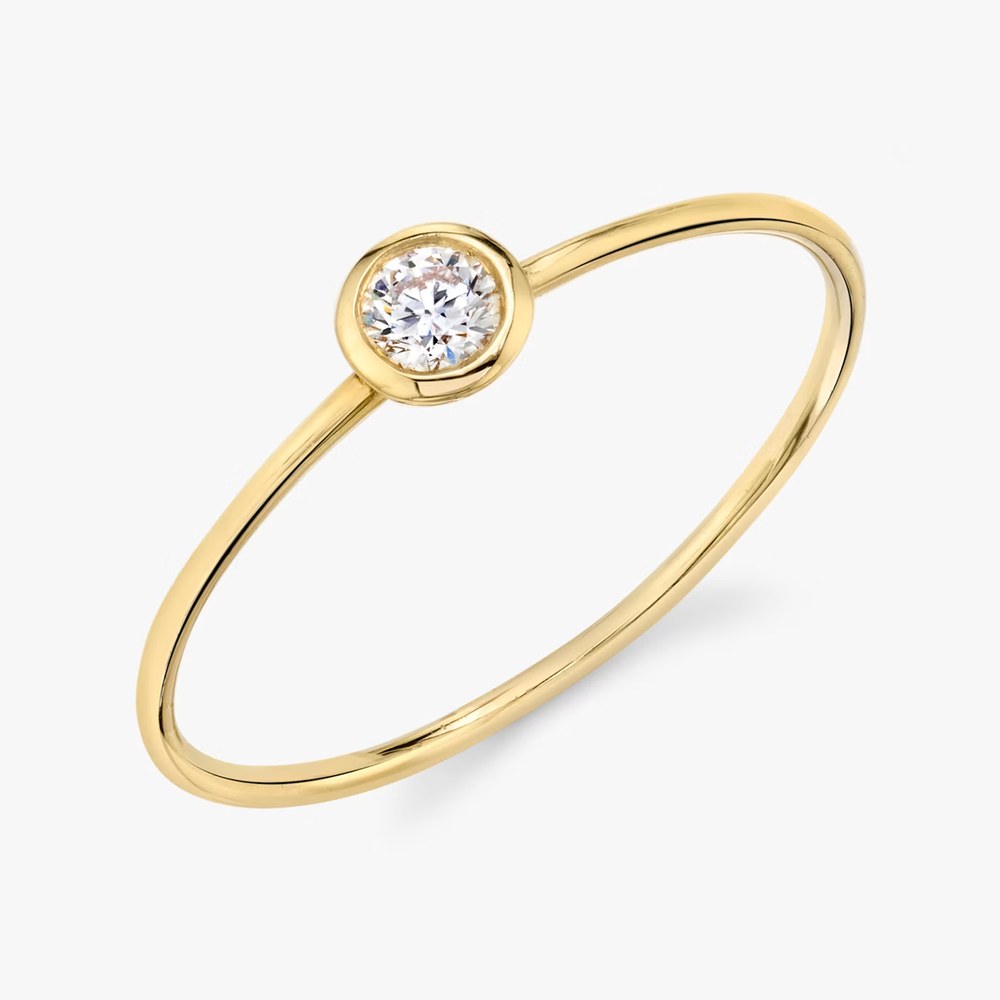
Knife-Edge Bezel Ring, Round Brilliant, Yellow Gold
VRAI
$300
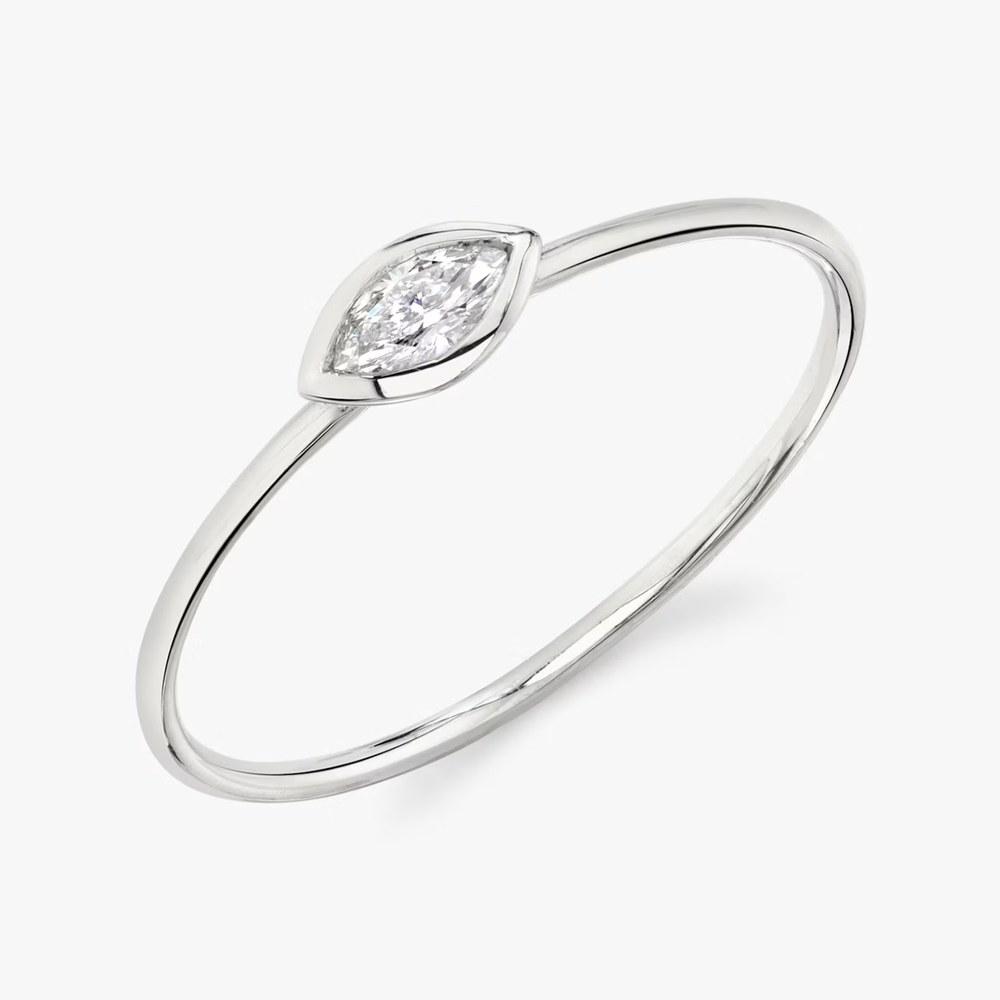
Knife-Edge Bezel Ring, Marquise, White Gold
VRAI
$325
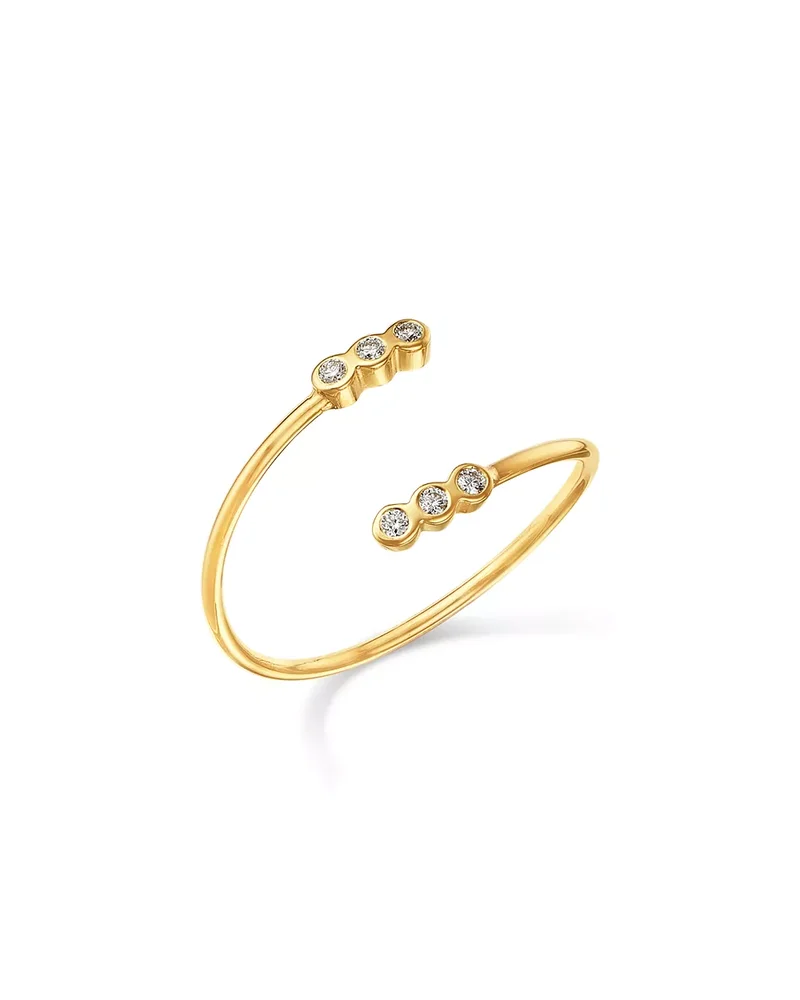
14K Yellow Gold Bezel Diamonds Bypass Ring
Zoë Chicco
$562.50
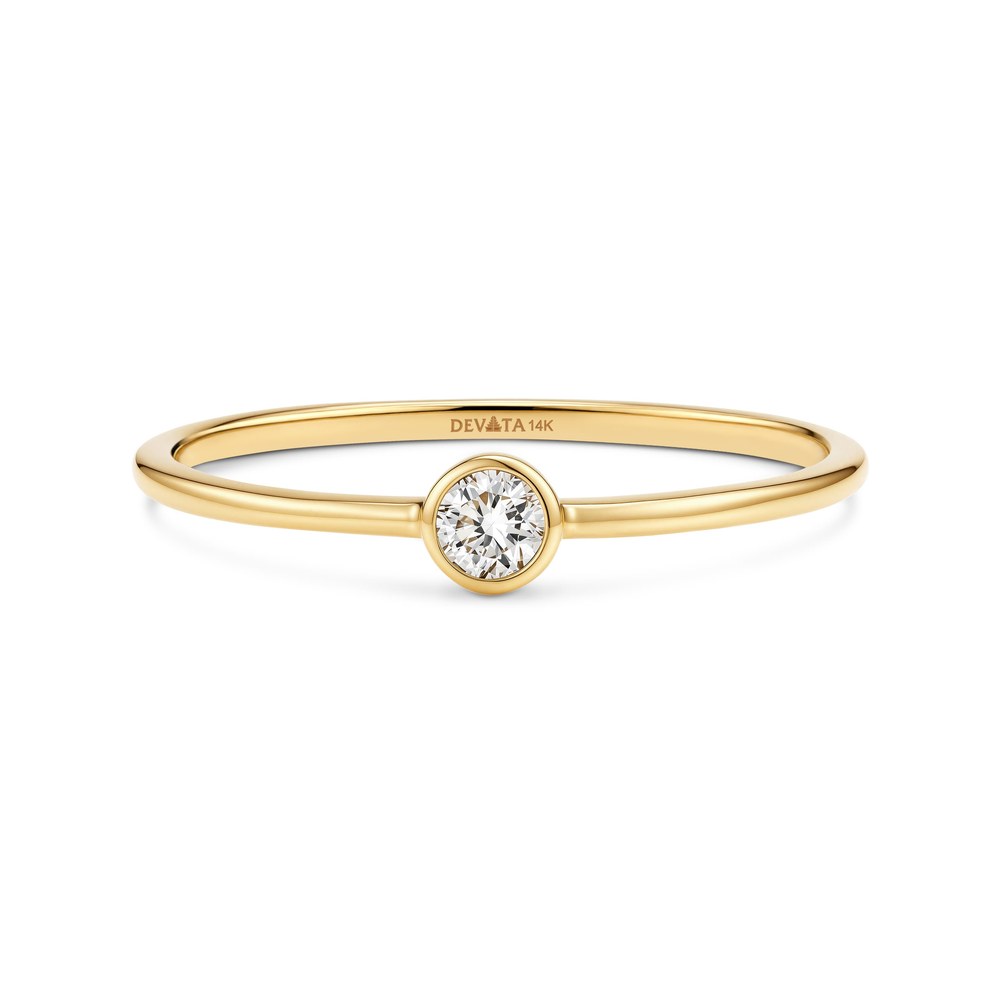
Round Bezel Lab Grown Diamond Solitaire Ring in 14K Gold
DEVATA
$262.50
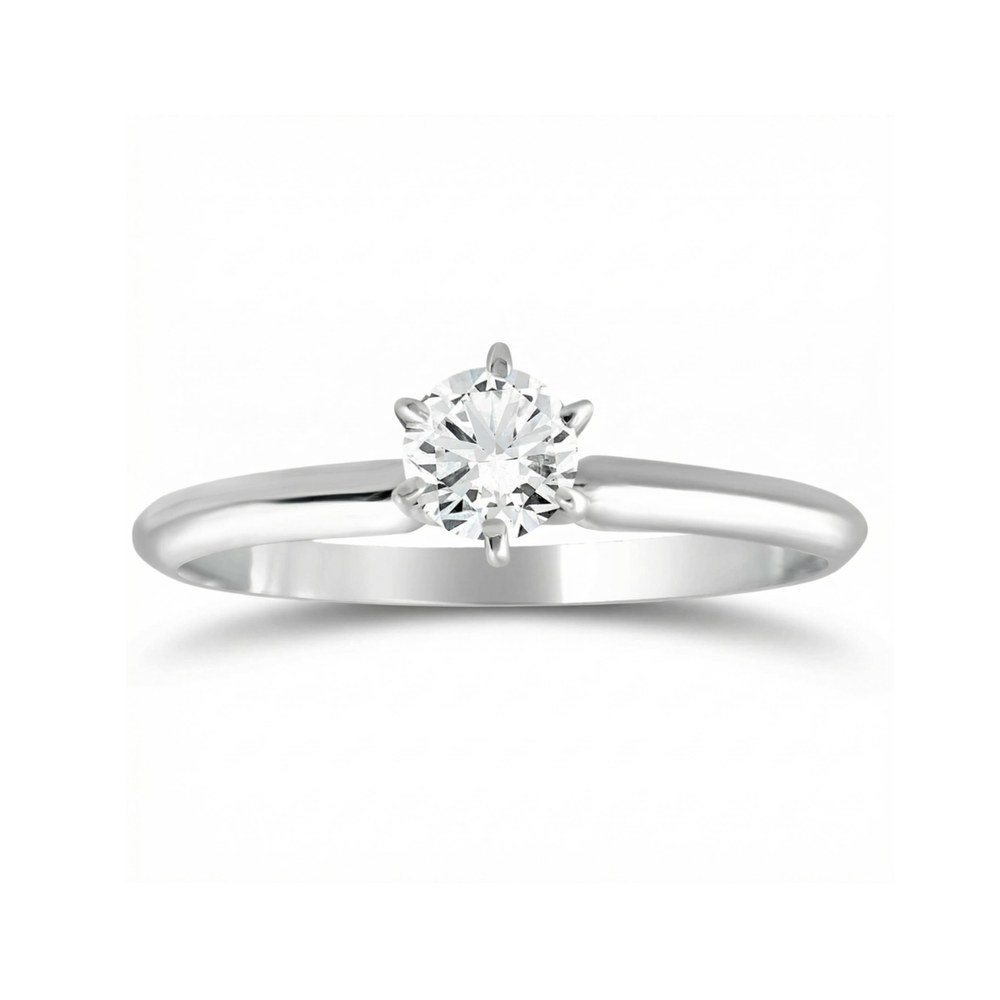
1/3Ct Solitaire Round Cut Diamond Engagement Ring in 14k Gold Lab Grown
Bliss Diamond
$542
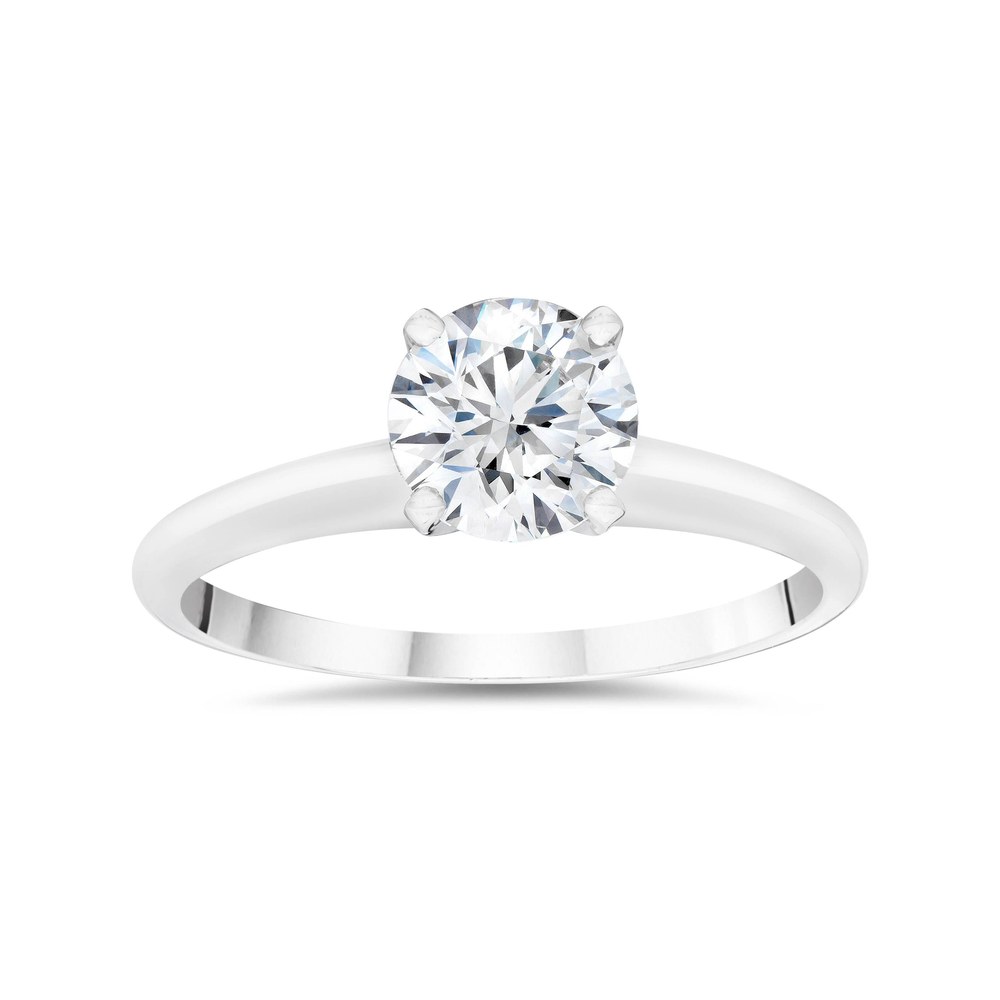
1/5ct Lab Grown Diamond Solitaire Engagement Ring 14K Gold
Bliss Diamond
$443
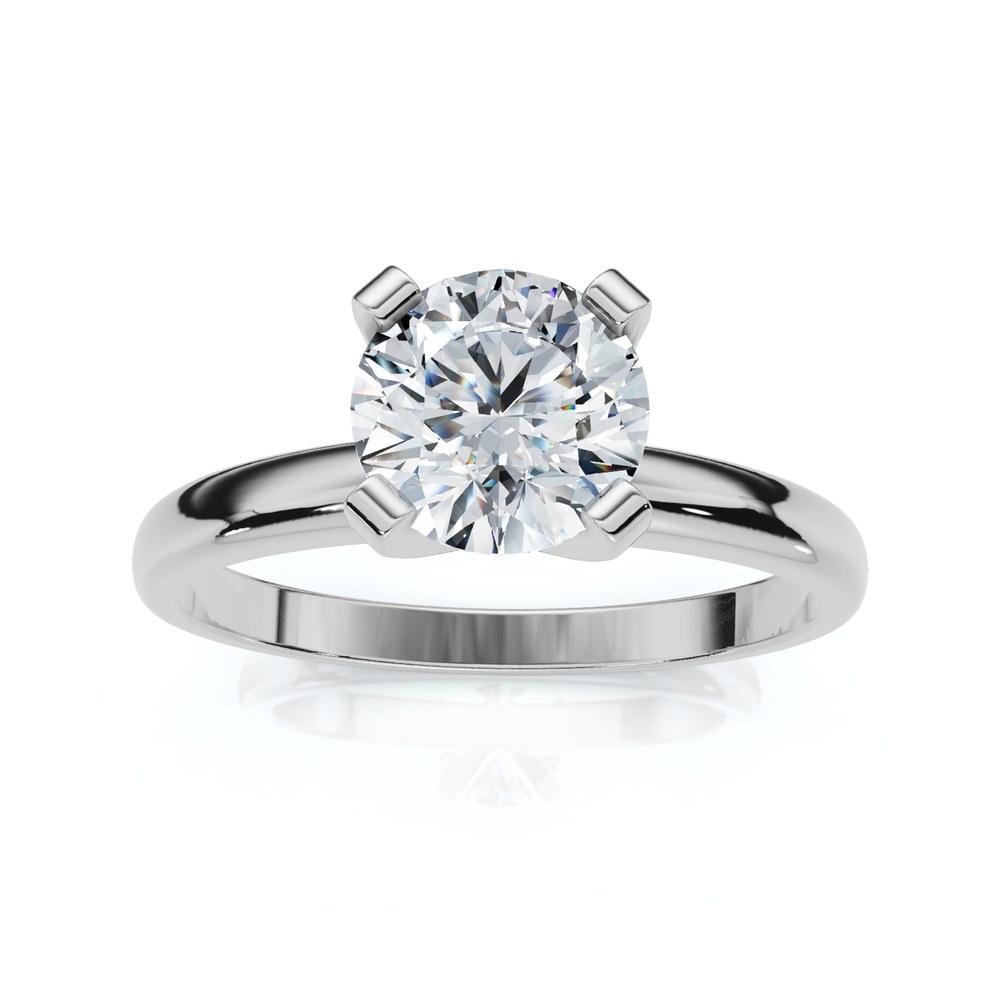
3/4ct Lab Grown Round Diamond Solitaire Engagement Ring 14k Gold
Bliss Diamond
$652
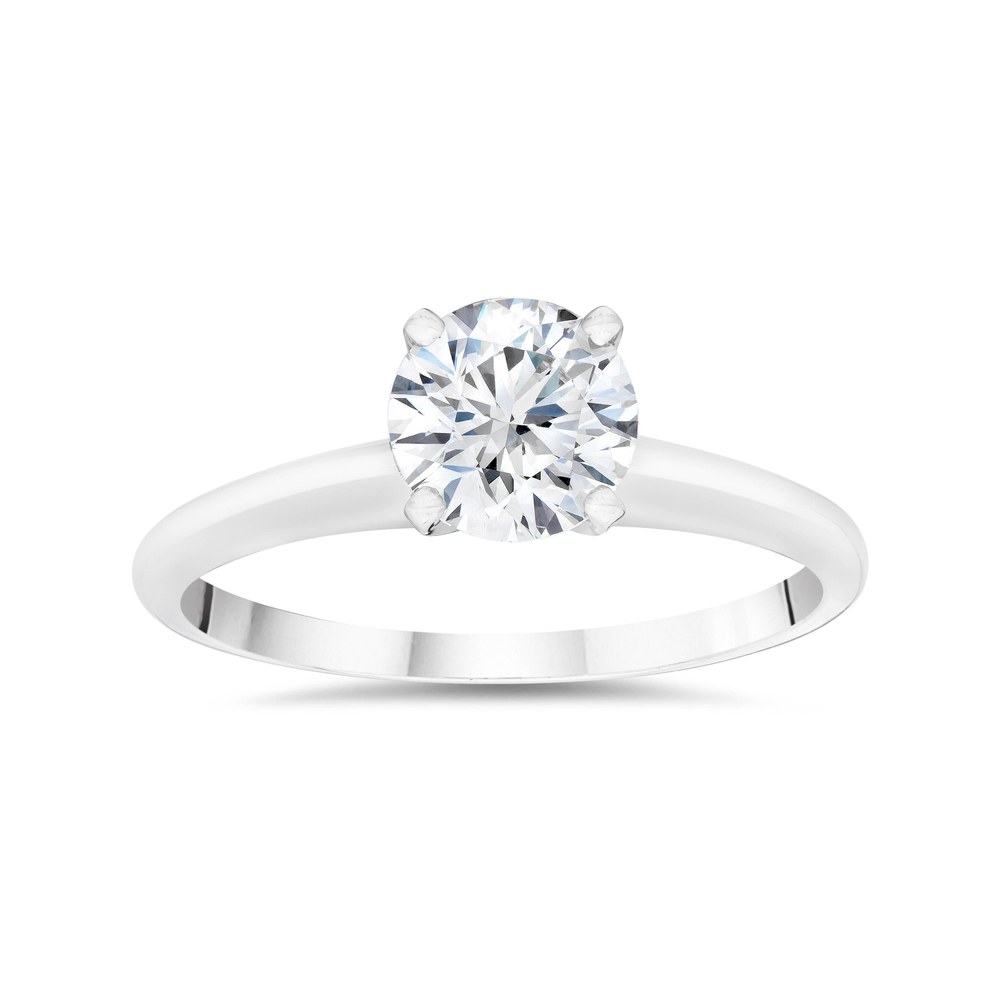
1ct Round Diamond Solitaire Engagement Ring Lab Grown
Bliss Diamond
$812
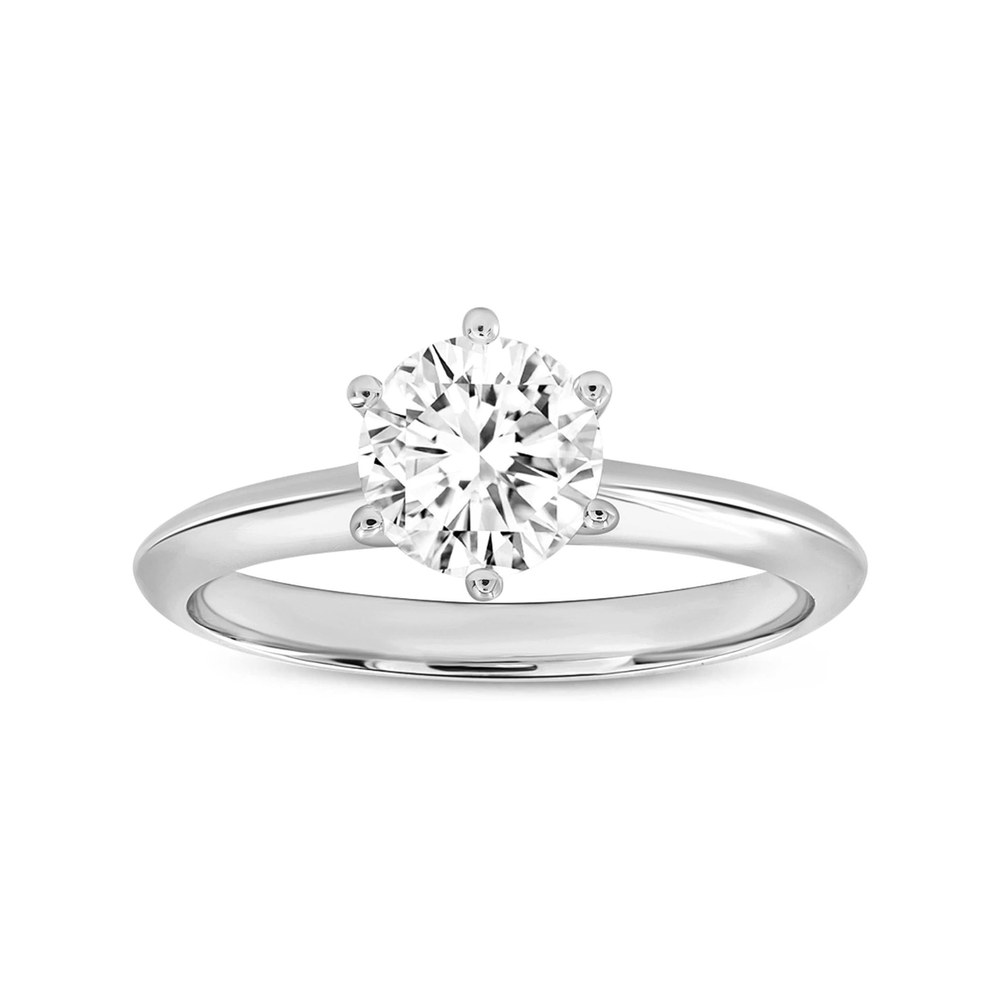
Tesi 14K White Gold Round Shape Lab Grown Diamond Solitaire Ring - 1 Ct
LuvMyJewelry
$740
Thin bands and Georgian settings
This last grid is the classic engagement shape in its quietest form. Aurate's Georgian rings in round, pear, oval and emerald take their name from the Georgian era, which GIA dates to 1714 through 1837, and the Aurate one carat bezels are the same stones in a smooth rim of gold. Both feel like jewelry first and bridal second, which is how I like them.
Brilliant Earth's thin solitaires are the most delicate rings on this page. The Brilliant Earth 1.5mm Petite Elodie Perfect Fit Solitaire Engagement Ring here has a narrow band and a round lab-grown diamond. I would choose it for a small hand, because the narrow band leaves the stone as the focus.
Bliss Diamond's moissanite rings, in oval and round, are the larger stones here, and the Bliss certified cushion and six prong pear are lab grown diamonds. LuvMyJewelry's Tesi and Rhea Princess round it out with a round and a princess cut.
Further down the grid are designer rings that read as jewelry first, like Amrapali's Kundan, Fernando Jorge's Fluid, Suzanne Kalan's Classic Eternity, Khaite's Lotus and Chloé's enamel signet. I would wear those beside an engagement ring, not instead of one.
A tip on band width: hold a pencil across the ring and look at it from arm's length. Under 2mm reads delicate, over 3mm reads bold, and the stone looks different on each.
What I would skip: going thinner than 1.5mm on a ring with a big stone. A very thin band under a large stone can bend over the years.
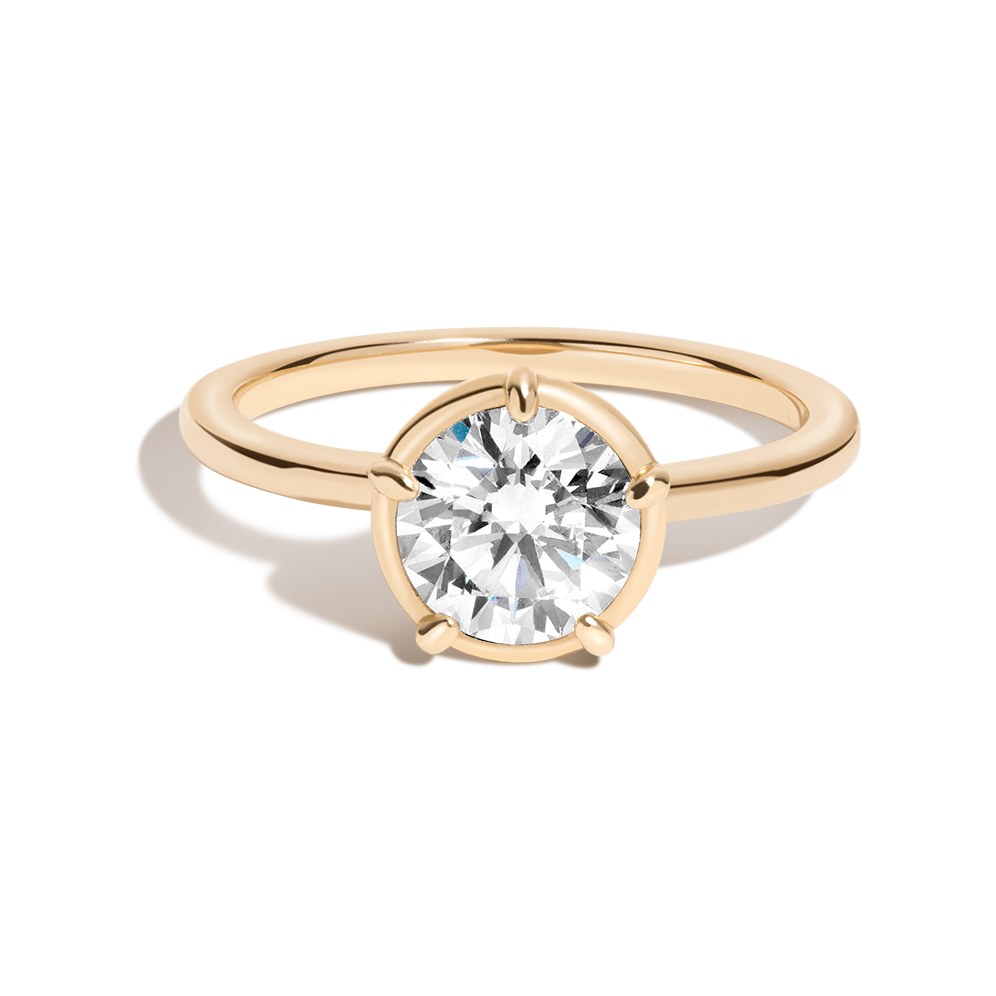
1ct Round Lab Grown Diamond Georgian Ring
Aurate New York
$1,498
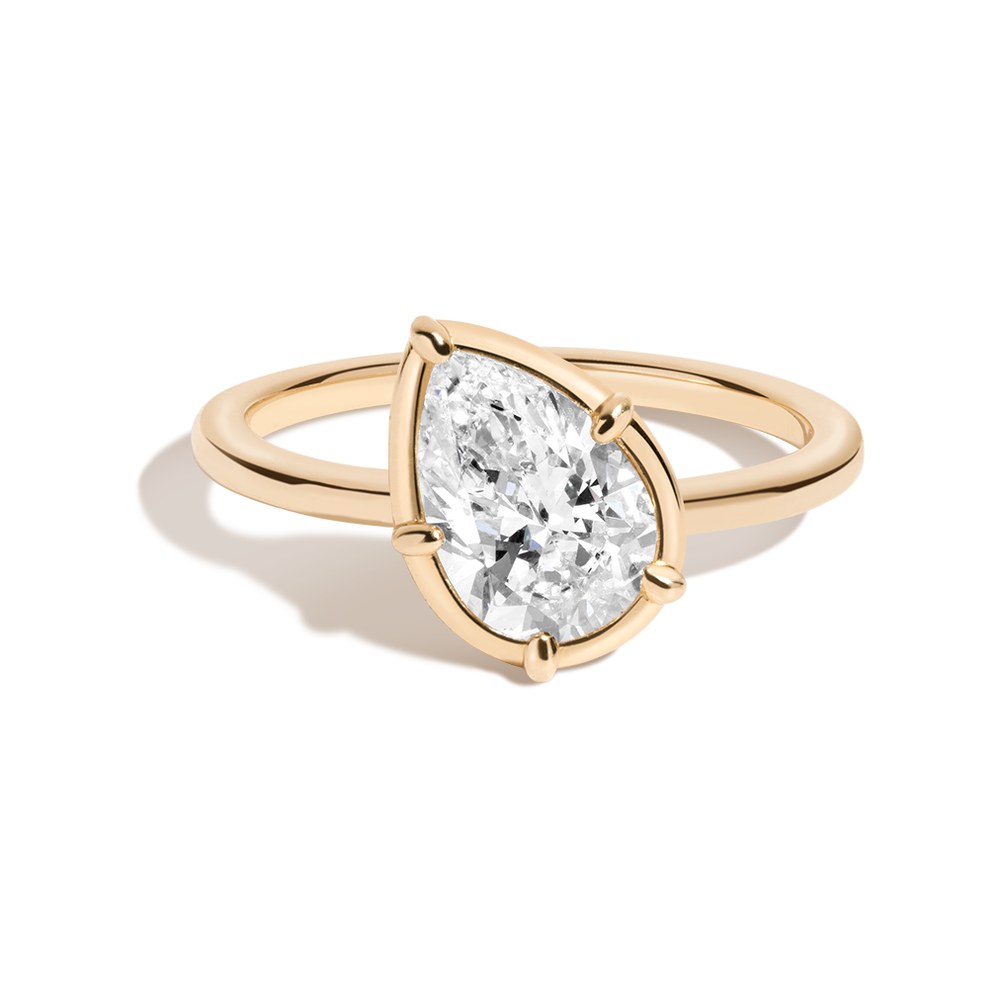
1ct Pear Lab Grown Diamond Georgian Ring
Aurate New York
$1,498
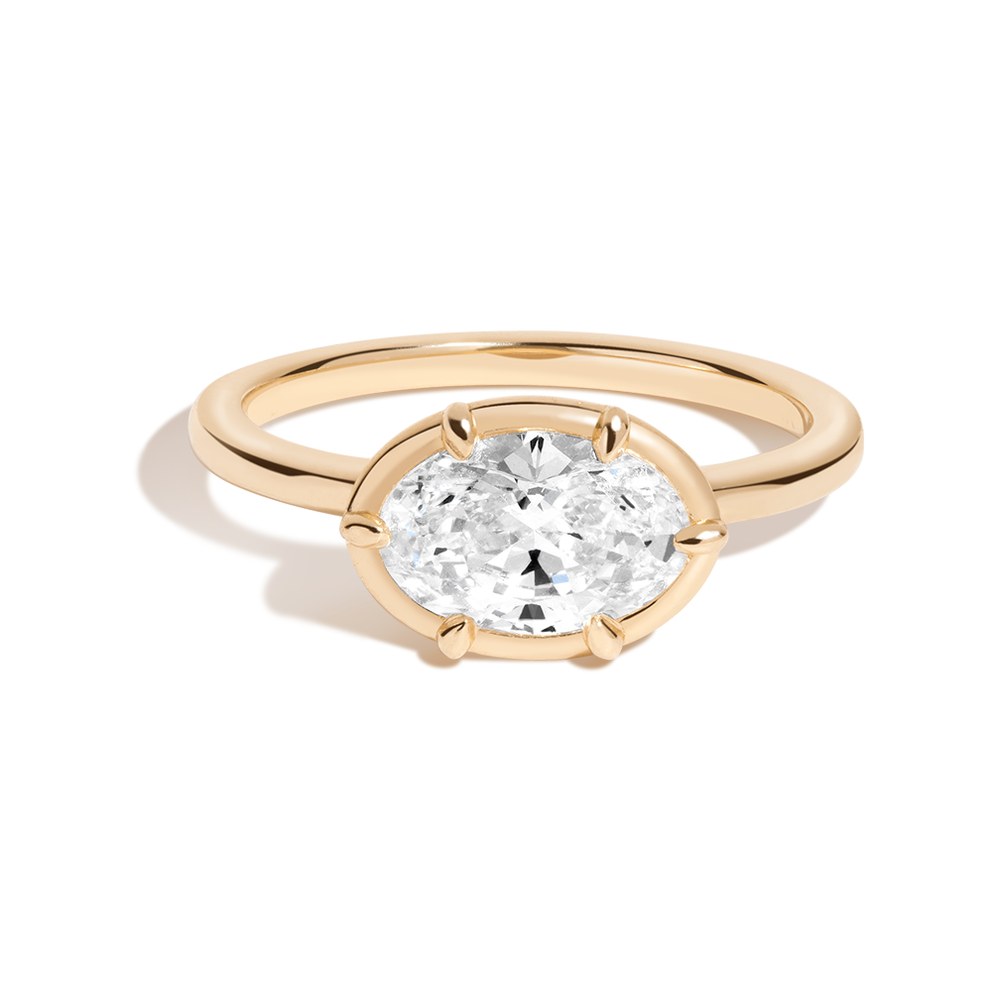
1ct Oval Lab Grown Diamond Georgian Ring
Aurate New York
$1,498
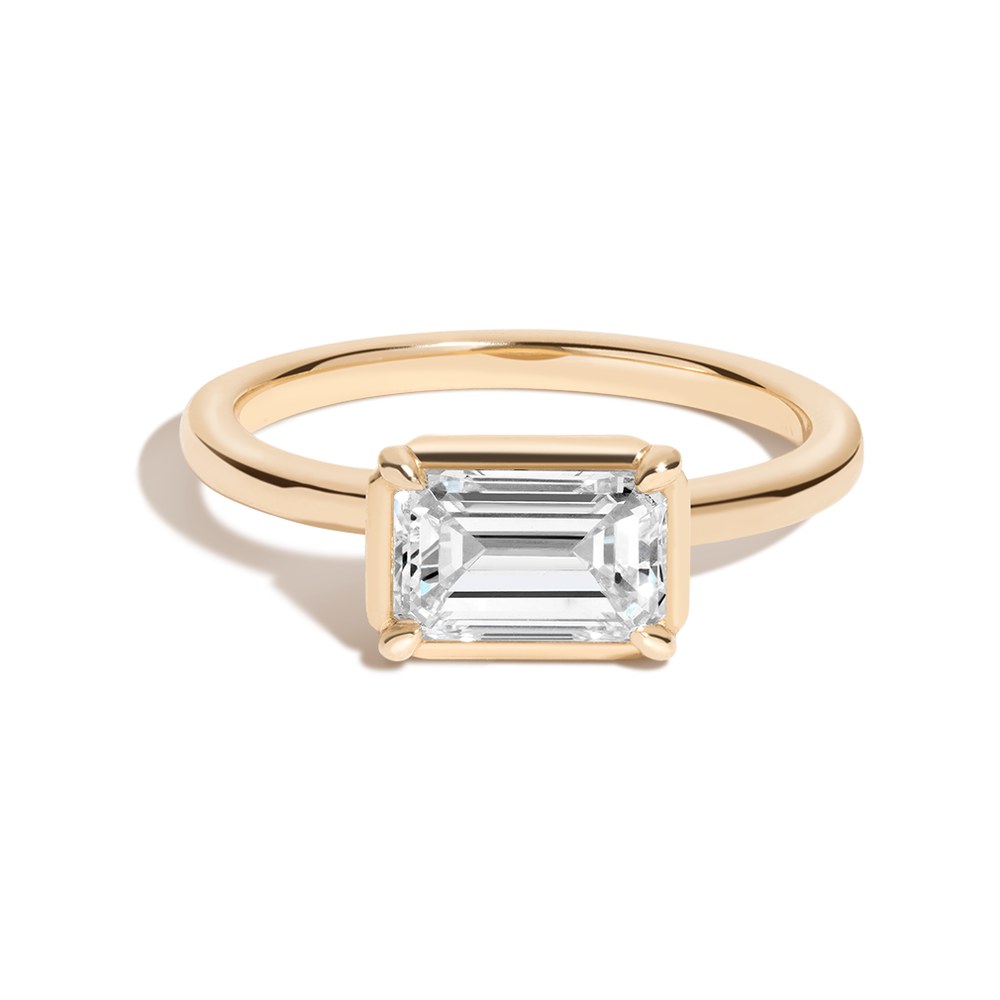
1ct Emerald Lab Grown Diamond Georgian Ring
Aurate New York
$1,498
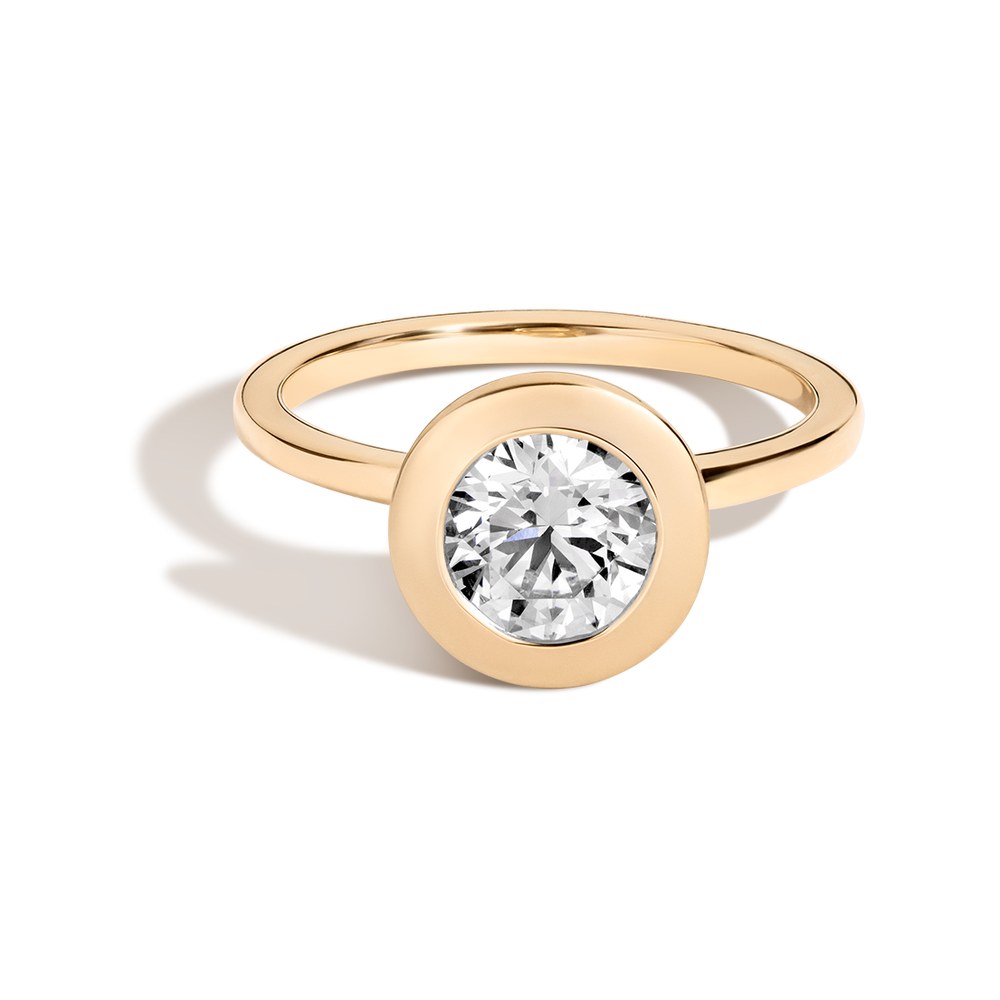
1ct Round Lab Grown Diamond Bezel Ring
Aurate New York
$1,498
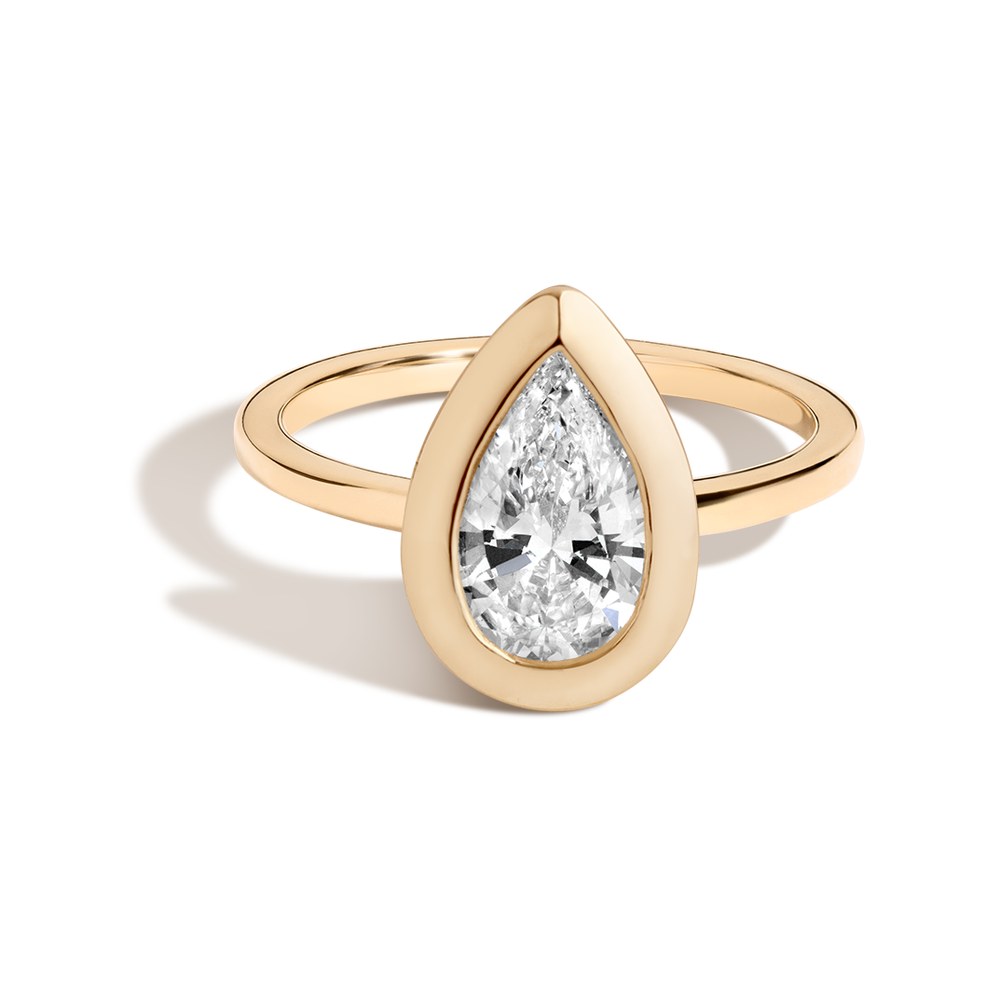
1ct Pear Lab Grown Diamond Bezel Ring
Aurate New York
$1,498
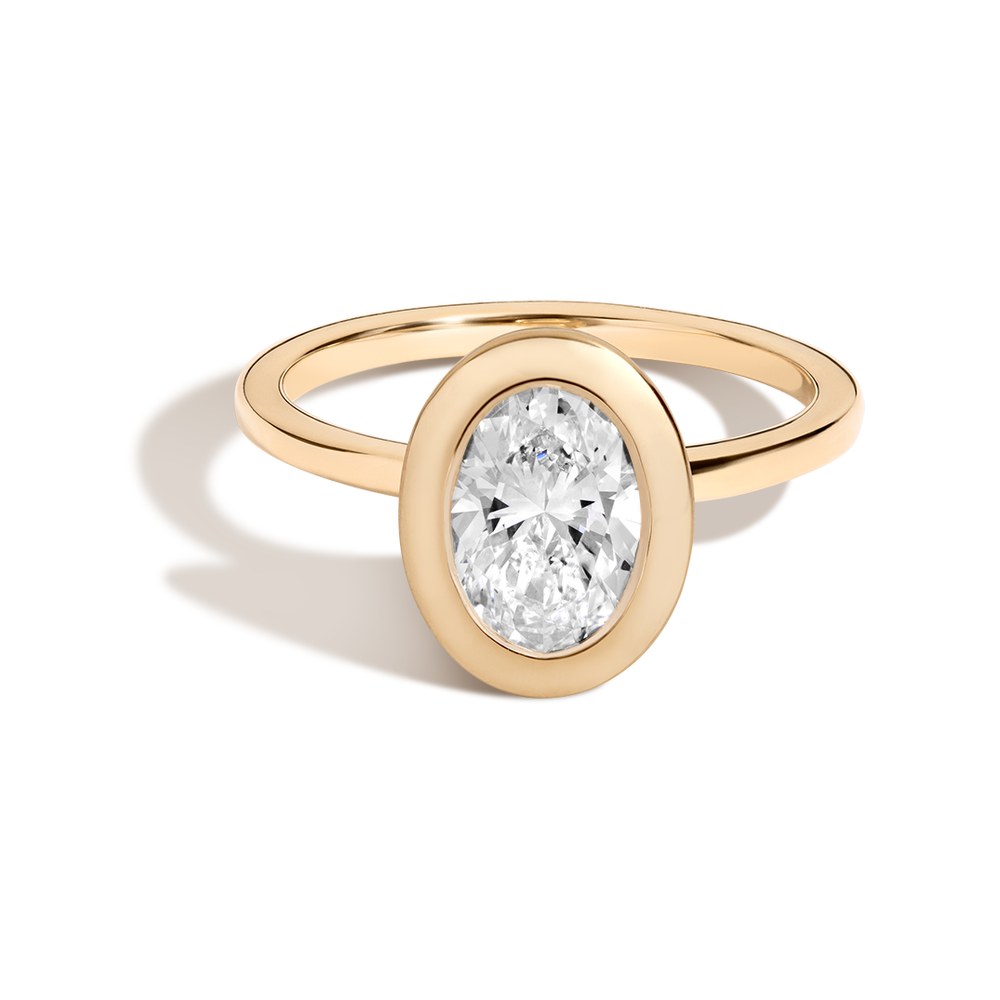
1ct Oval Lab Grown Diamond Bezel Ring
Aurate New York
$1,498
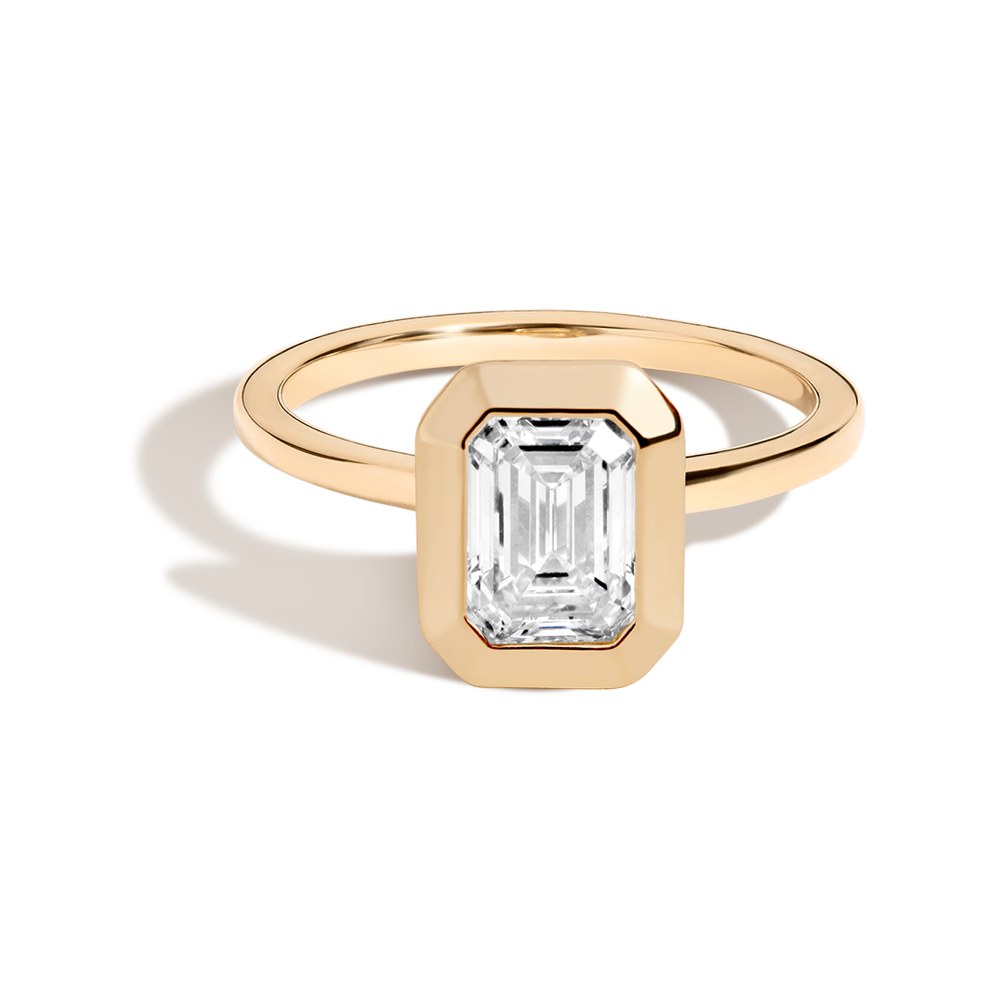
1ct Emerald Lab Grown Diamond Bezel Ring
Aurate New York
$1,498
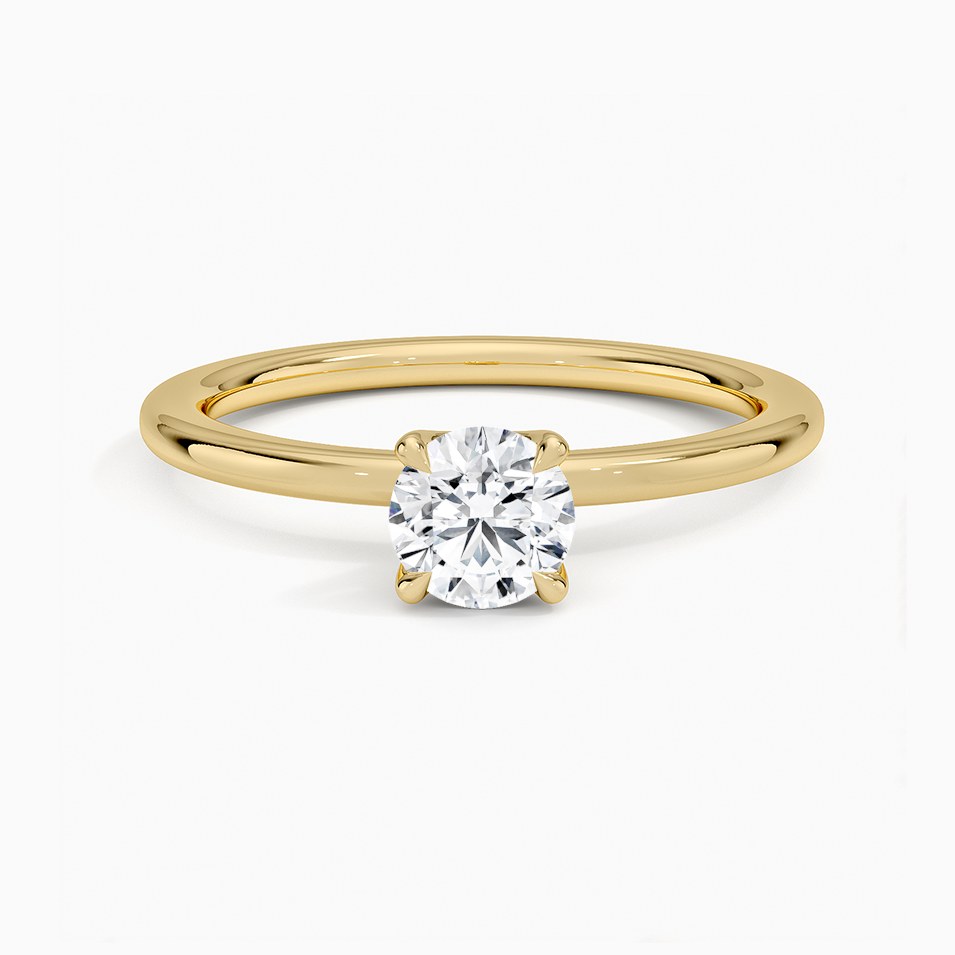
1.5mm Petite Elodie Perfect Fit Solitaire Engagement Ring, 0.28 ct Round Lab-Grown Diamond in 14K Yellow Gold
Brilliant Earth
$890
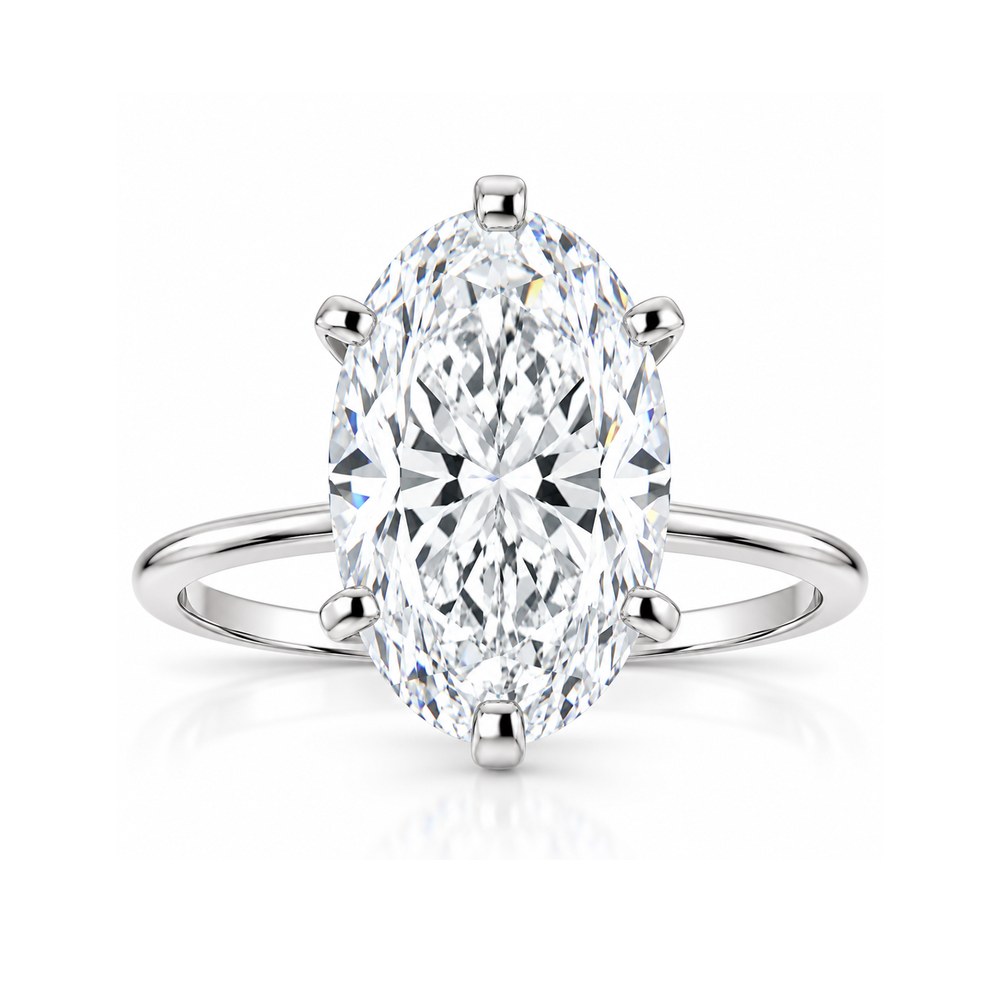
3 Ct Oval Moissanite Solitaire Engagement Ring 14k Gold
Bliss Diamond
$777
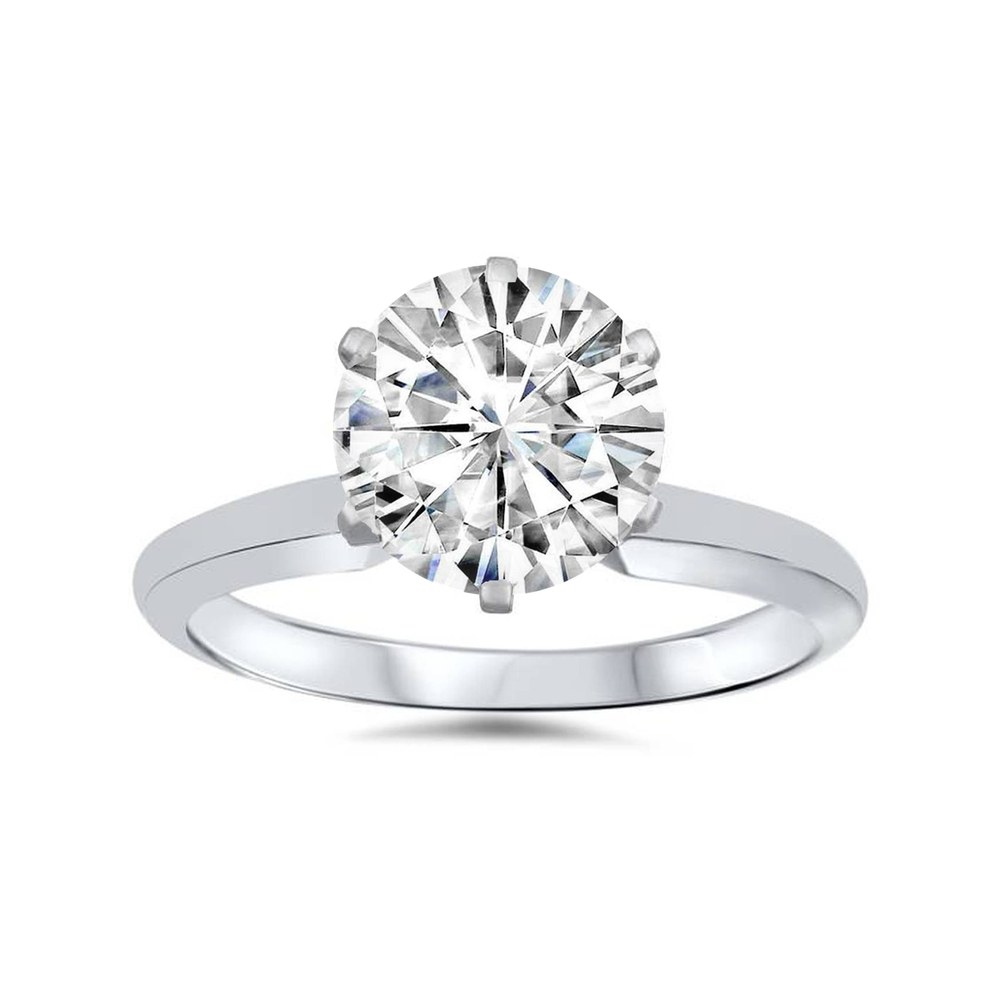
VVS 3ct Solitaire Moissanite Engagement Ring Round Brilliant 14k Gold
Bliss Diamond
$793
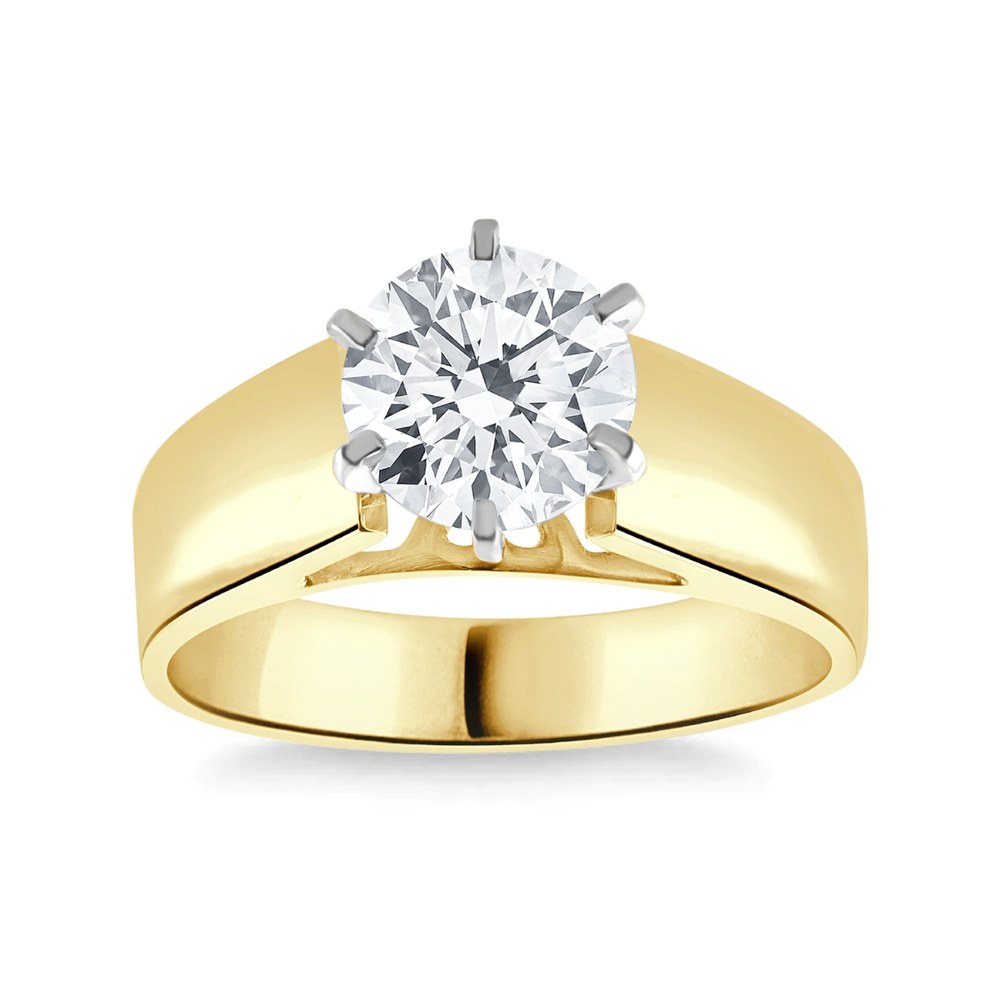
2Ct Round Moissanite Solitaire Engagement Ring Gold
Bliss Diamond
$888
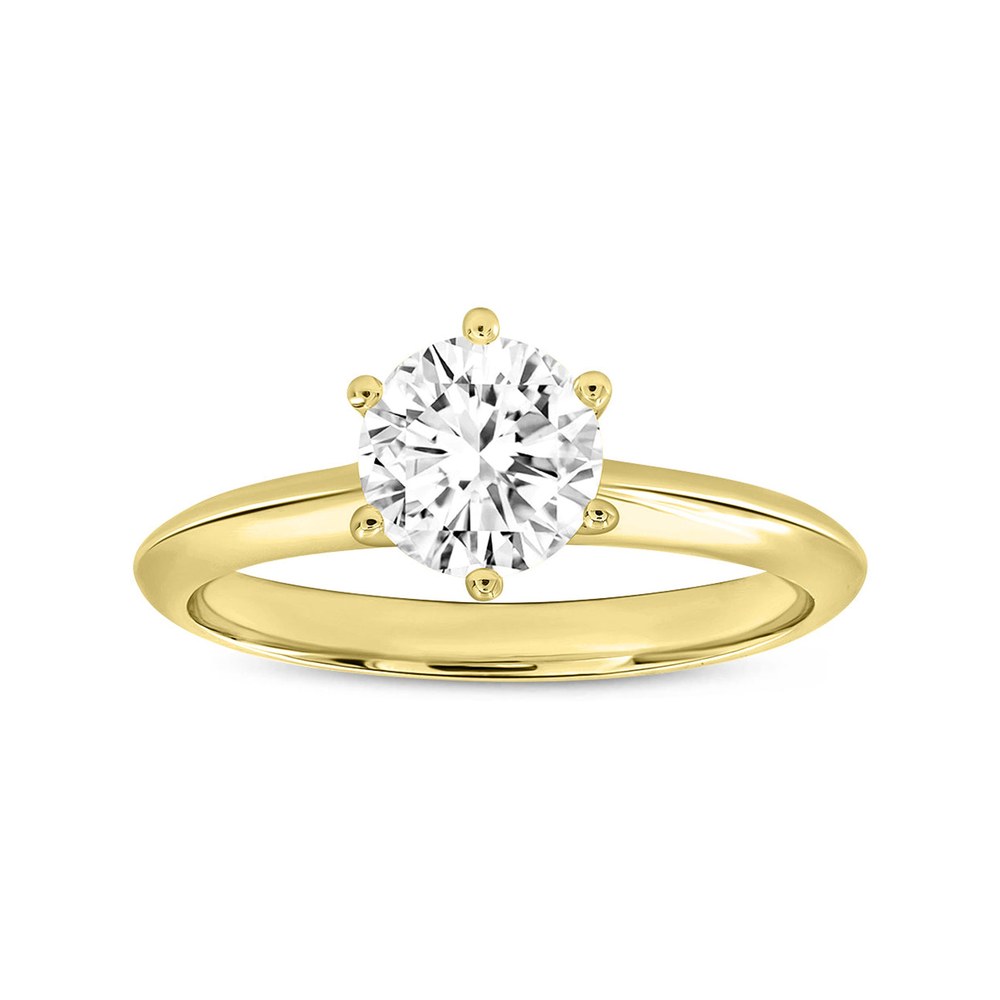
Tesi 14K Yellow Gold Round Shape Lab Grown Diamond Solitaire Ring - 1 Ct
LuvMyJewelry
$740
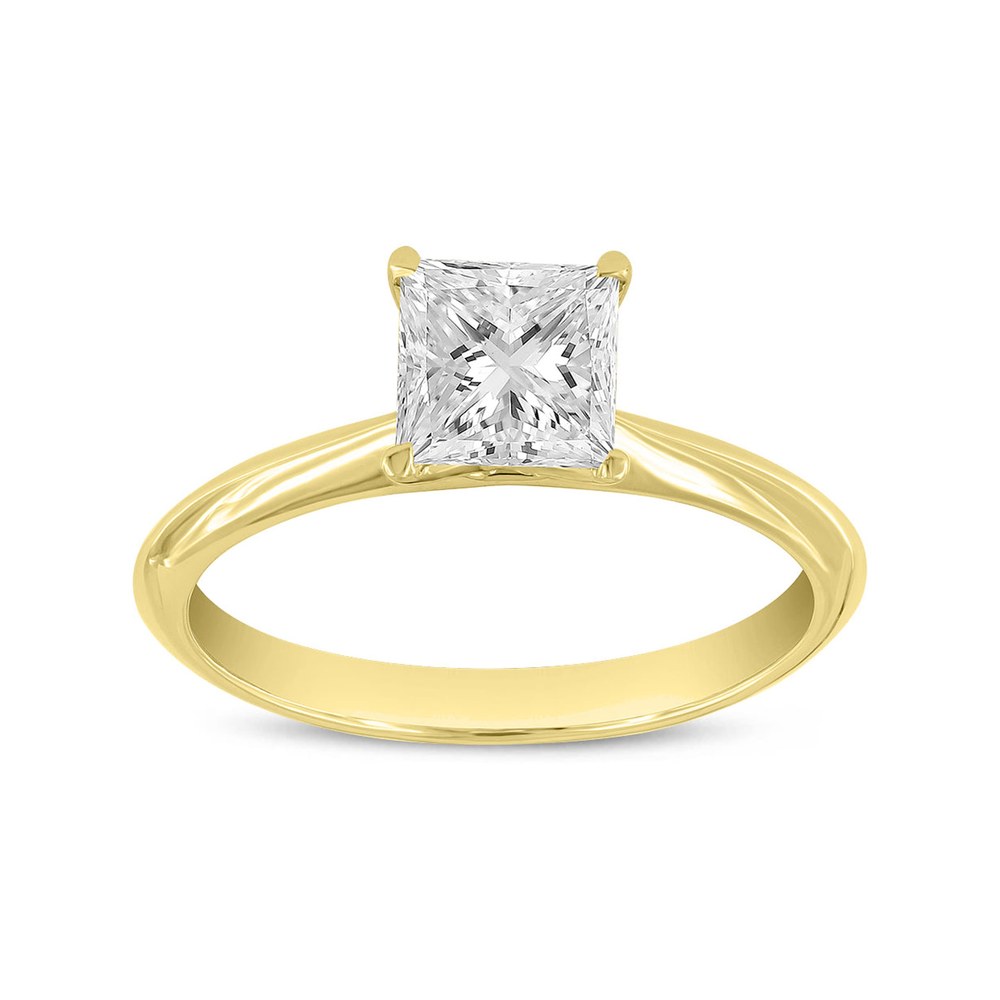
Rhea Princess 14K Gold Princess Cut Lab Grown Diamond Classic Solitaire Ring - 1.25 Ct
LuvMyJewelry
$899
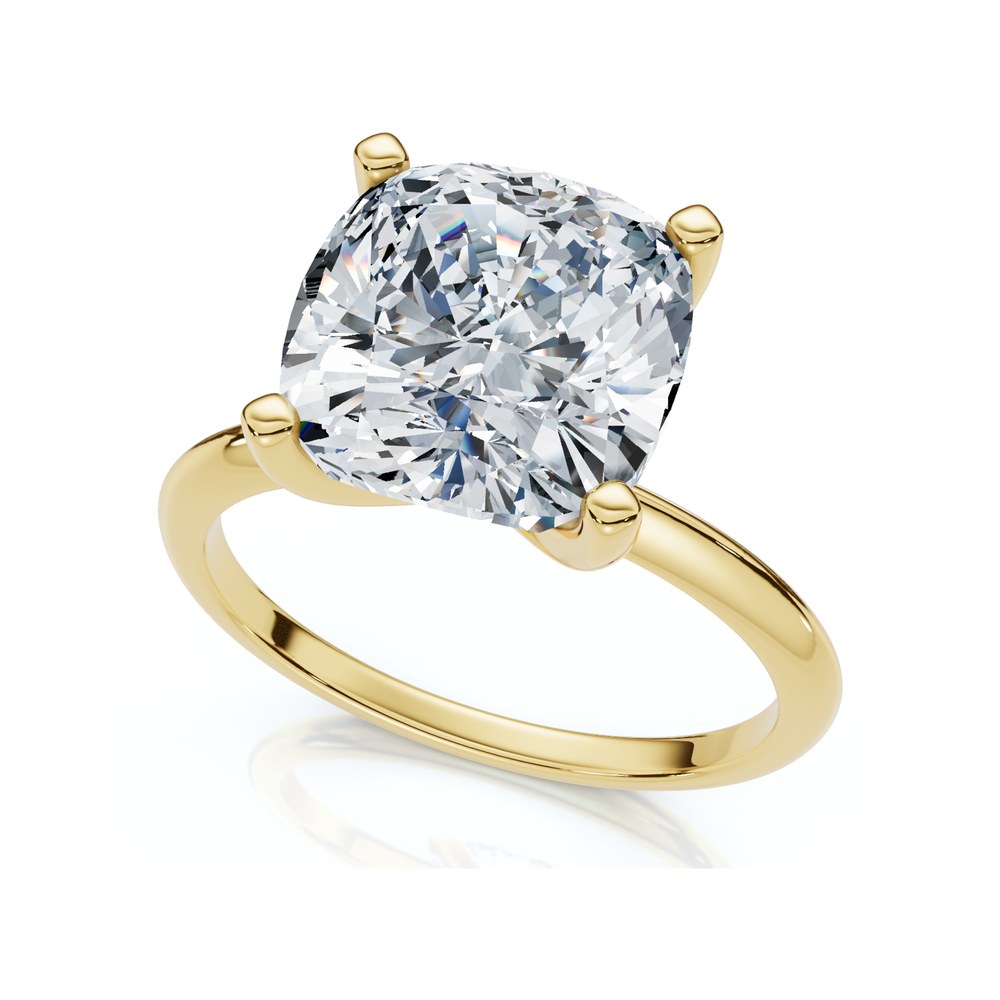
Certified 3Ct Cushion Diamond Solitaire Engagement Ring 14k Gold or Pt Lab Grown
Bliss Diamond
$1,489
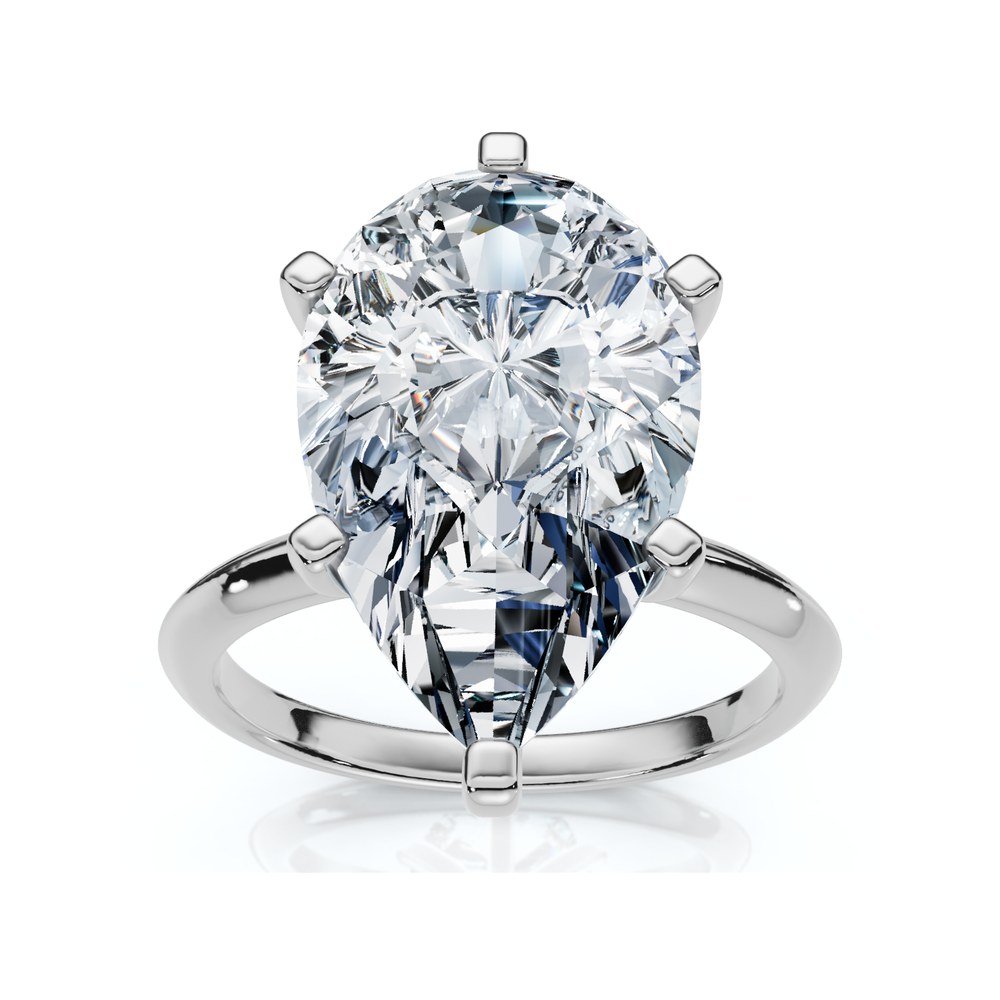
Certified 3Ct Pear Shape Solitaire Diamond Engagement Ring 6-Prong Lab Grown
Bliss Diamond
$1,489
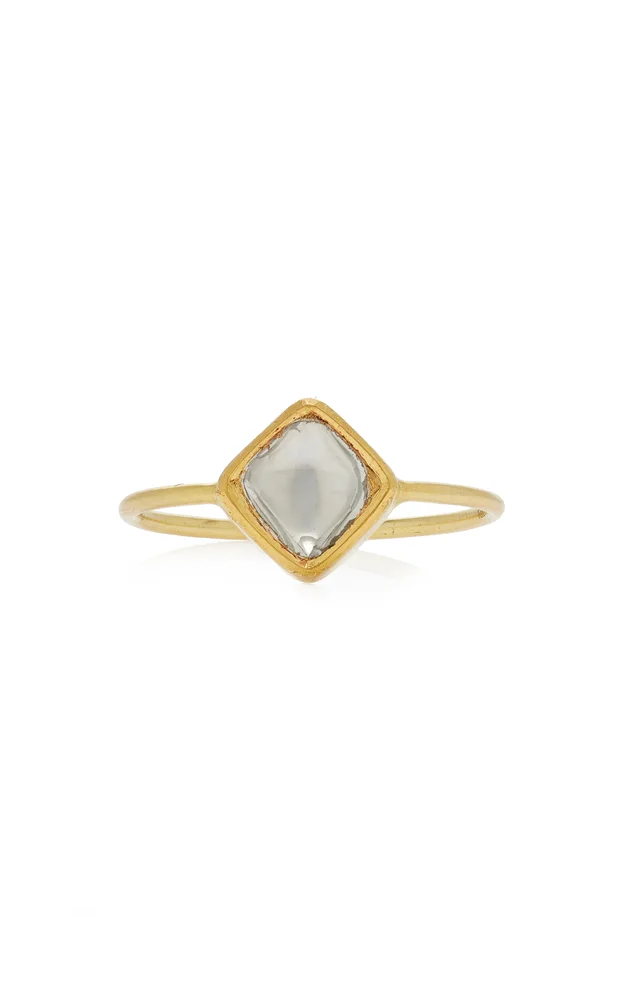
Kundan 18K Yellow Gold Vintage Diamond Ring
Amrapali
$1,080
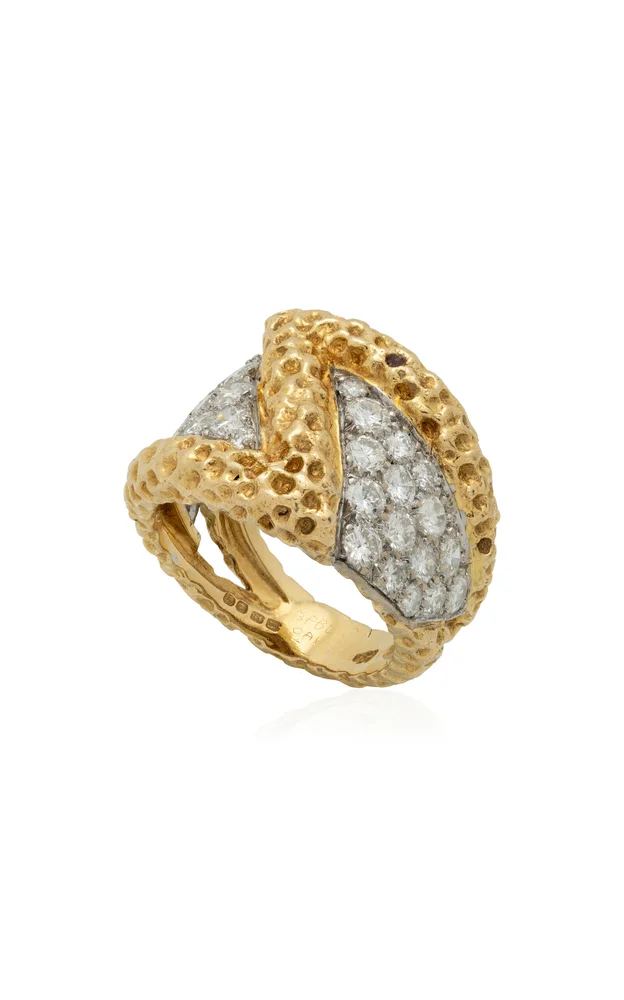
Vintage Kutchinsky 18K Yellow Gold Diamond Ring
Stephanie Windsor
$9,950
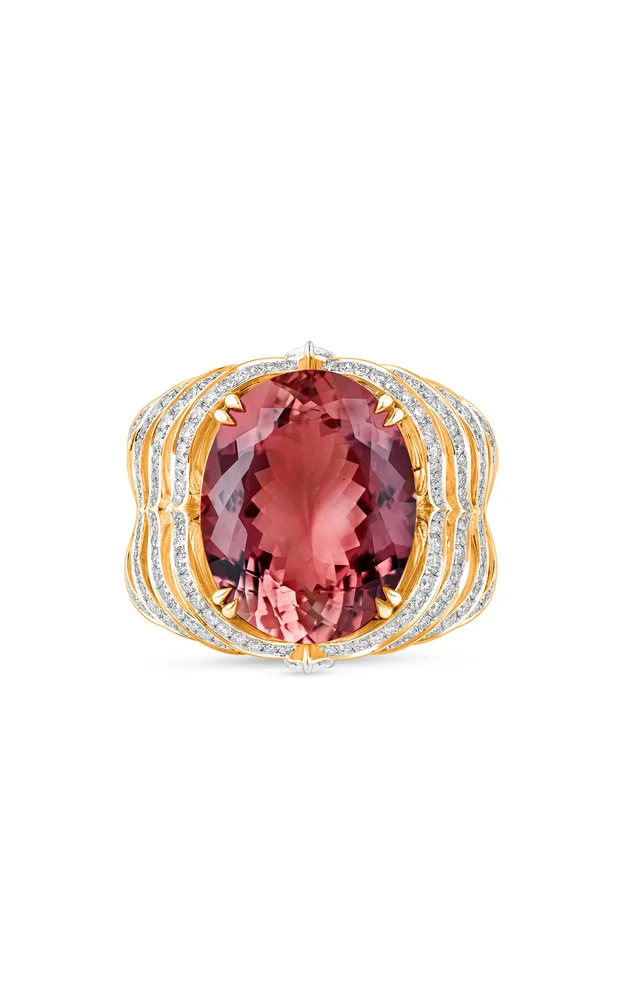
Mandala Heritage Curves 18K Yellow Gold Tourmaline Ring
Harakh
$57,000
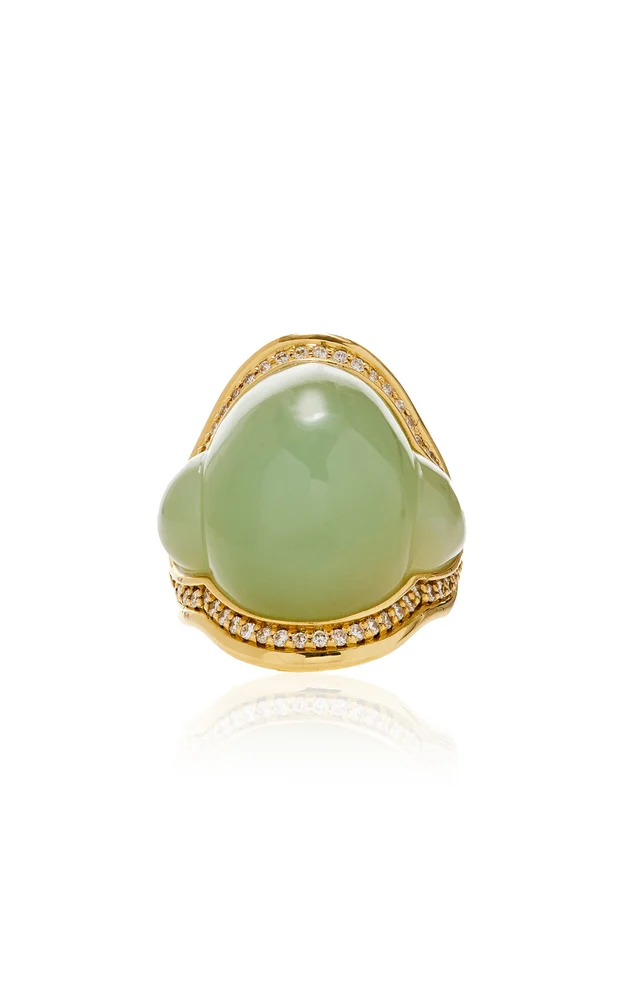
Fluid 18K Yellow Gold Diamond, Aquamarine Ring
Fernando Jorge
$13,800
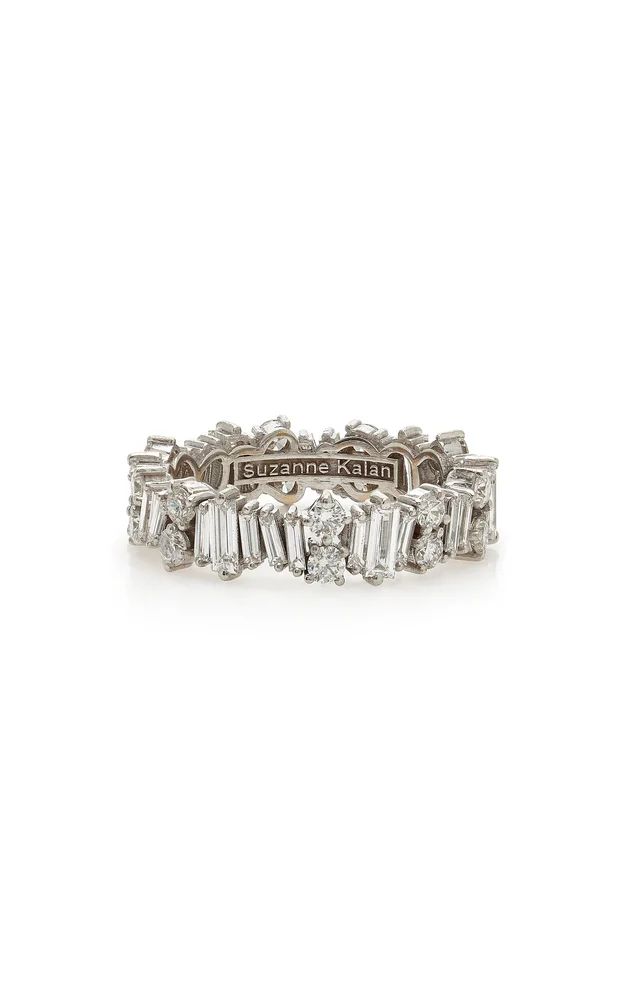
Classic Eternity 18K White Gold Diamond Ring
Suzanne Kalan
$12,800
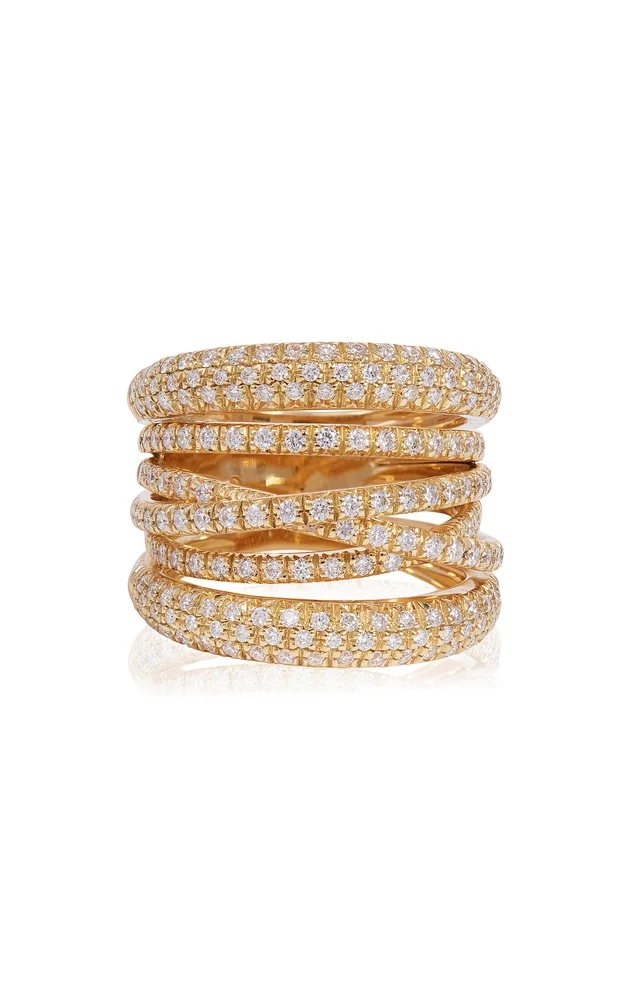
Scribble 18K Yellow Gold Diamond Ring
Sidney Garber
$12,600
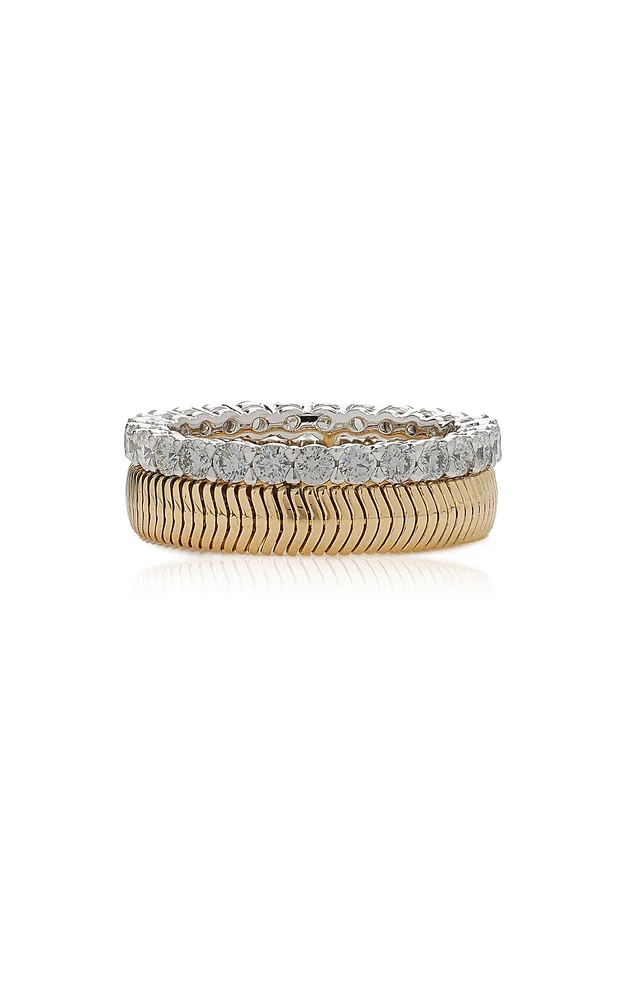
Feelings 18K Yellow And White Gold Diamond Ring
Nikos Koulis
$11,160
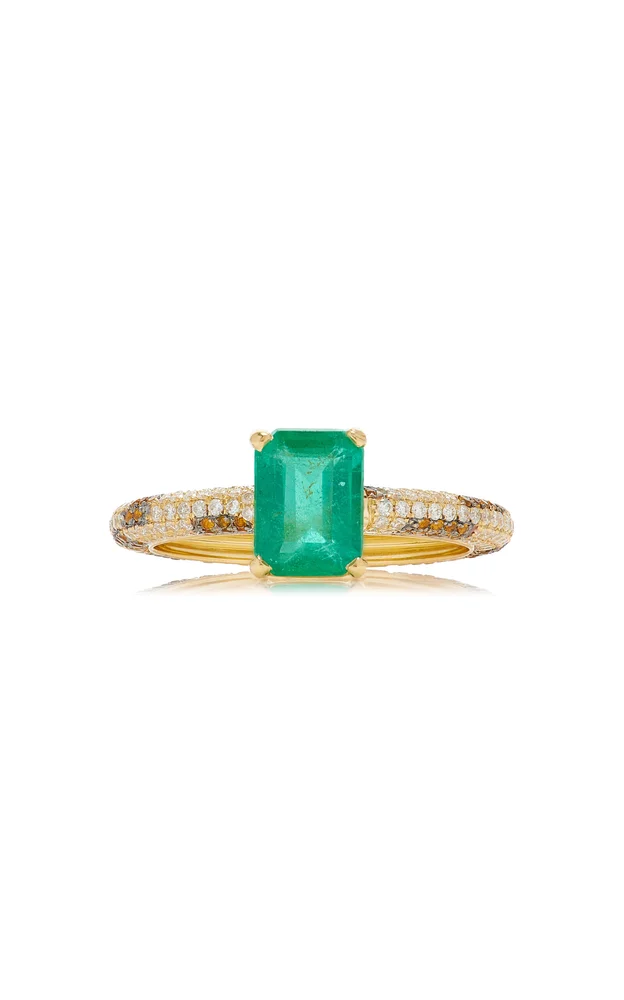
Leopard 18K Yellow Gold Emerald Ring
Yvonne Leon
$10,090
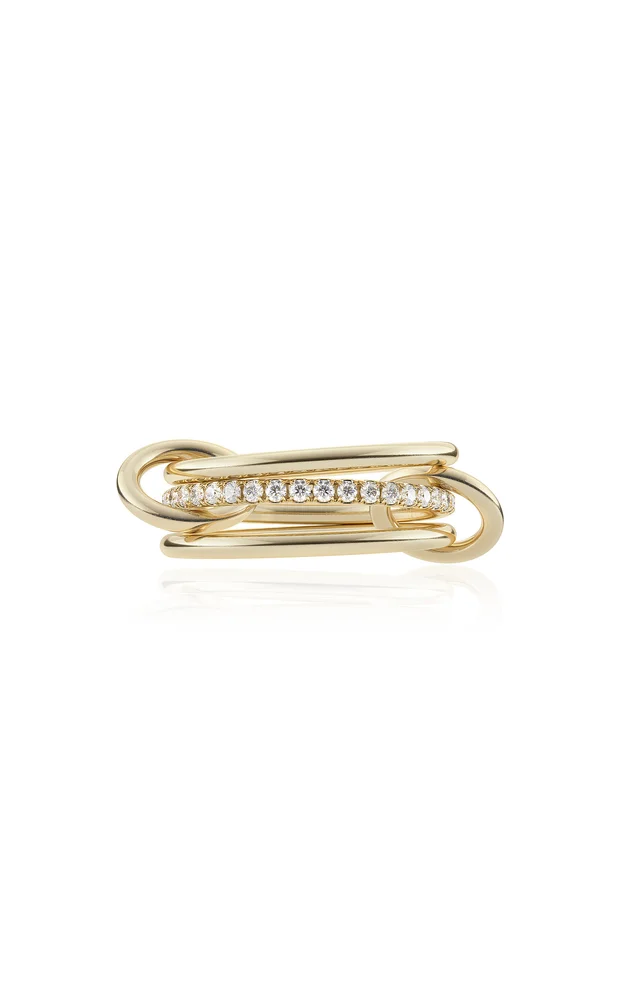
Sonny 18K Yellow Gold Diamond Ring
Spinelli Kilcollin
$5,900
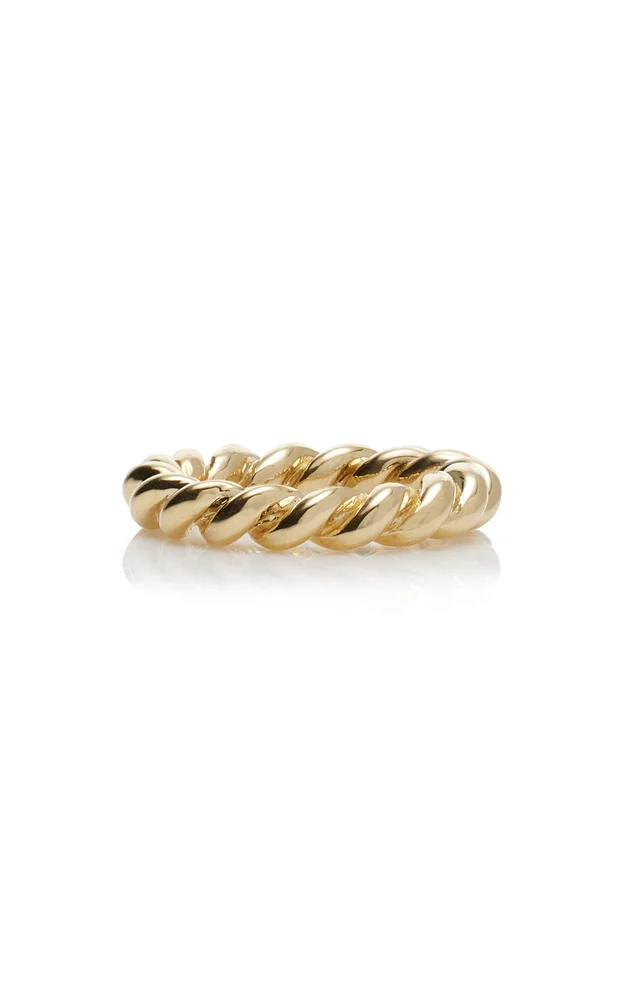
14K Gold Ring
Sydney Evan
$5,810
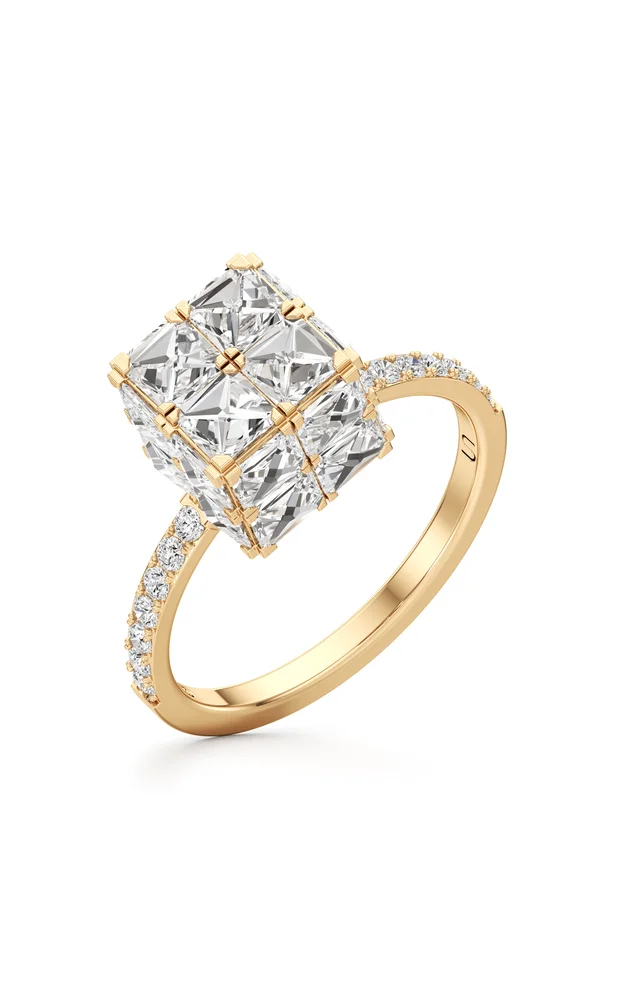
Armor Small 18K Yellow Gold Diamond Cube Ring
Unsaid
$4,300
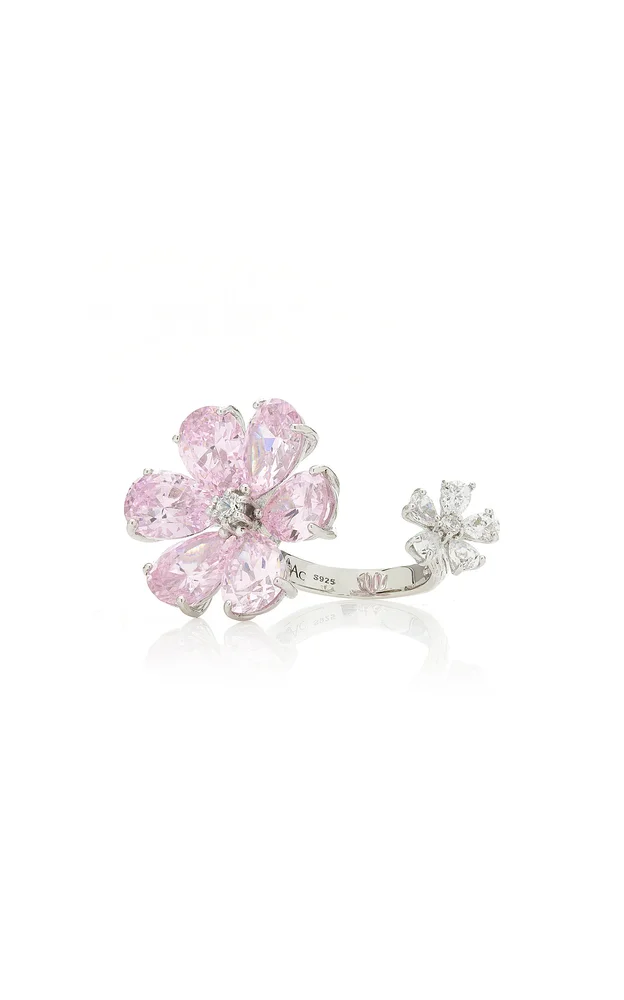
Rose Marguerite Daisy Rhodium Vermeil Diamond Ring
Anabela Chan
$2,835
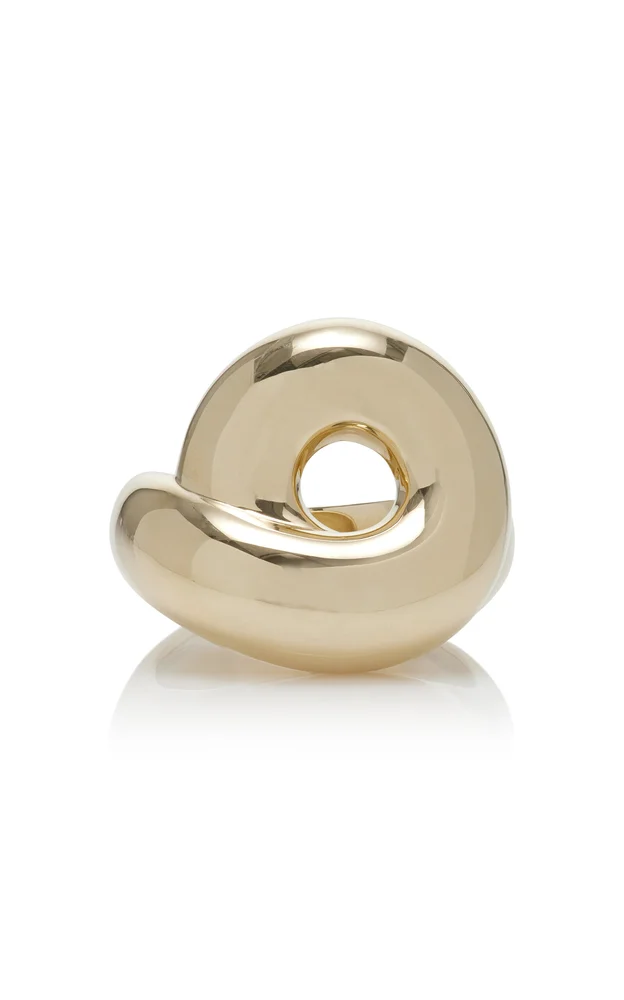
Tarallo Loop 9k Yellow Gold Ring
Bea Bongiasca
$2,415
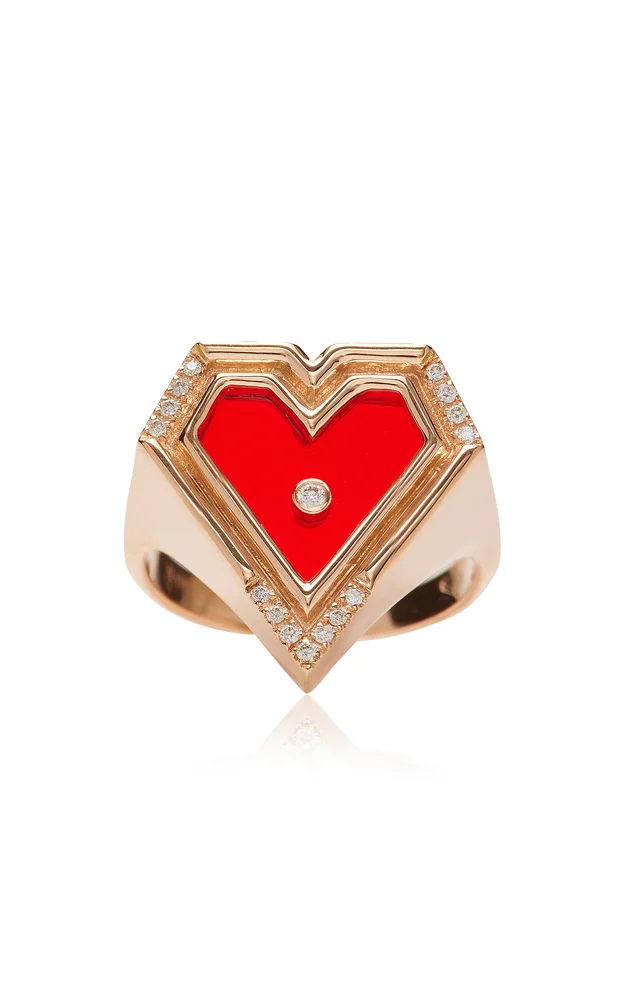
Super Heart 18K Rose Gold Agate Diamond Ring
L'Atelier Nawbar
$2,400
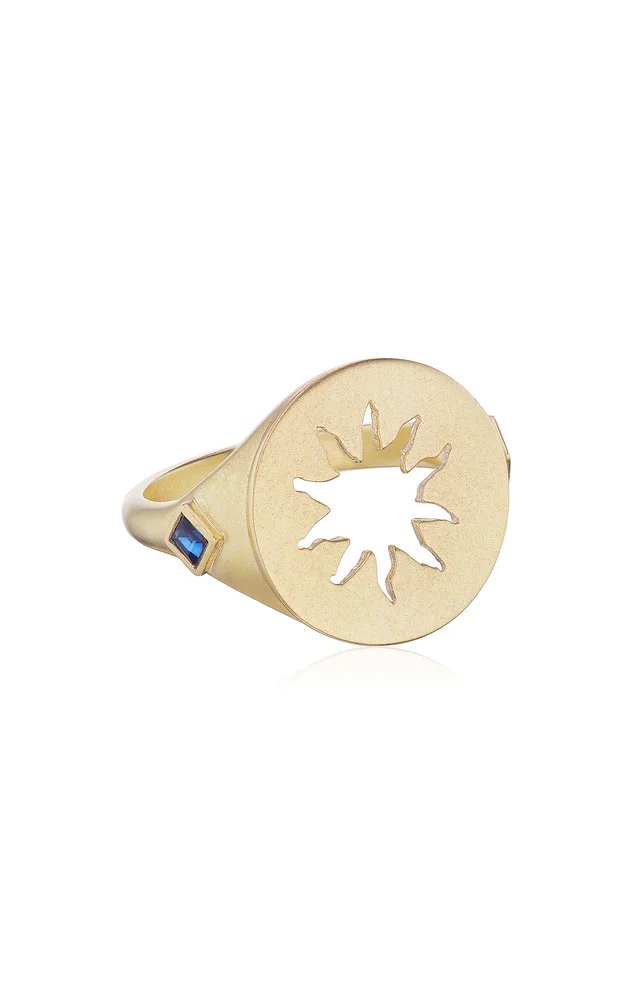
Sun Signet Ring
Gazza Ladra
$2,080
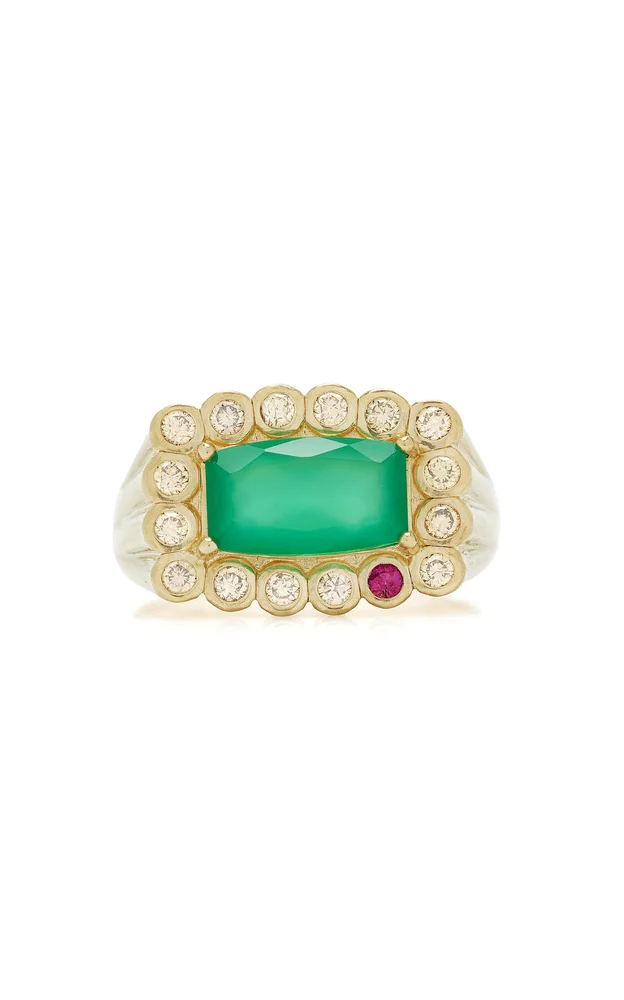
Robin N°2 Green Onyx Ring
Pascale Monvoisin
$1,520
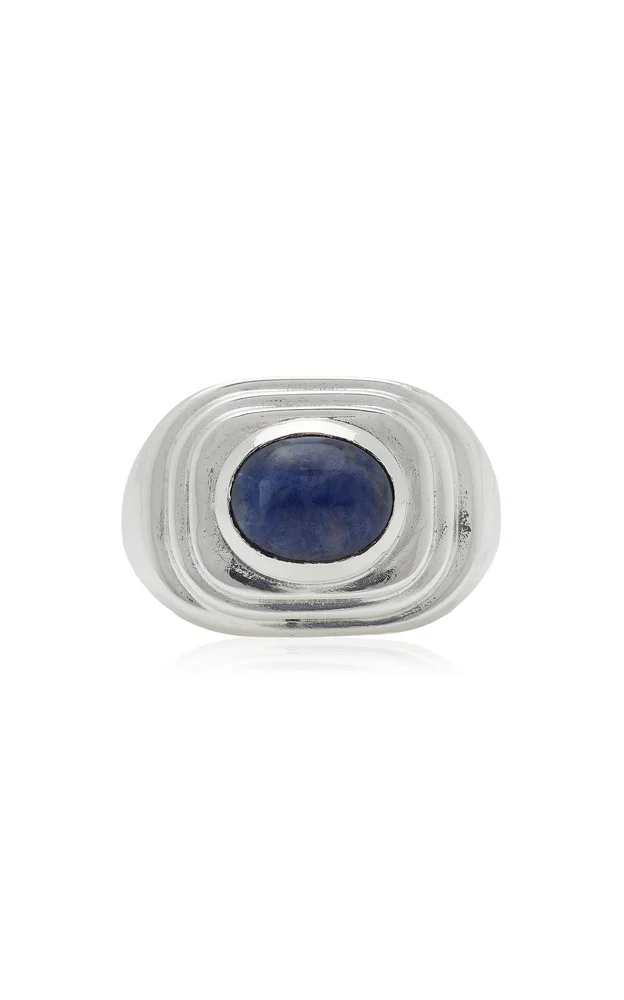
x Jeanerica The Deco Indigo Ring
Le Sundial
$825
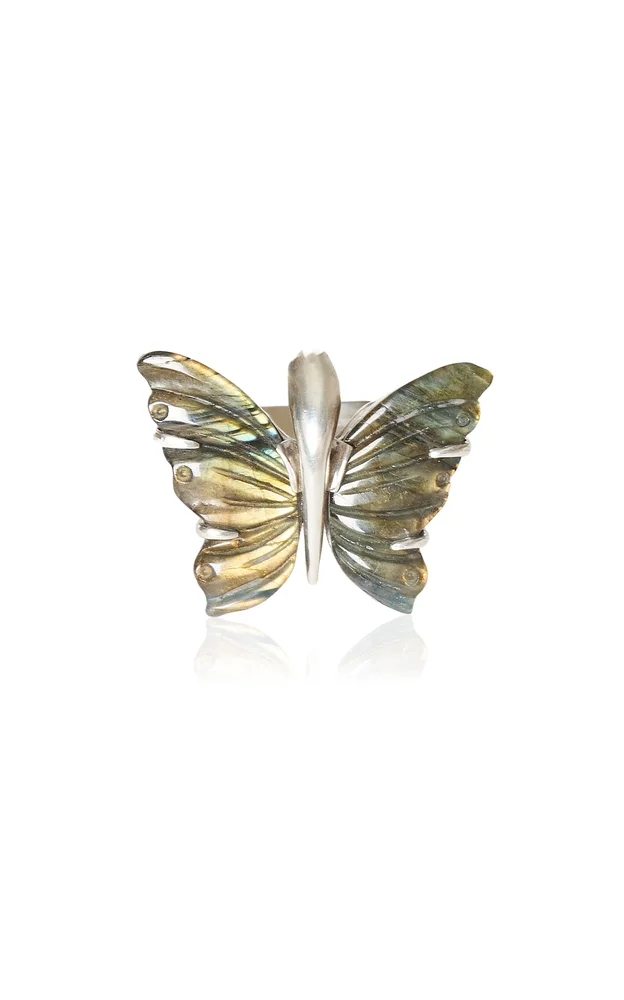
Butterfly Sterling Silver Labradorite Ring
Chan Luu
$650
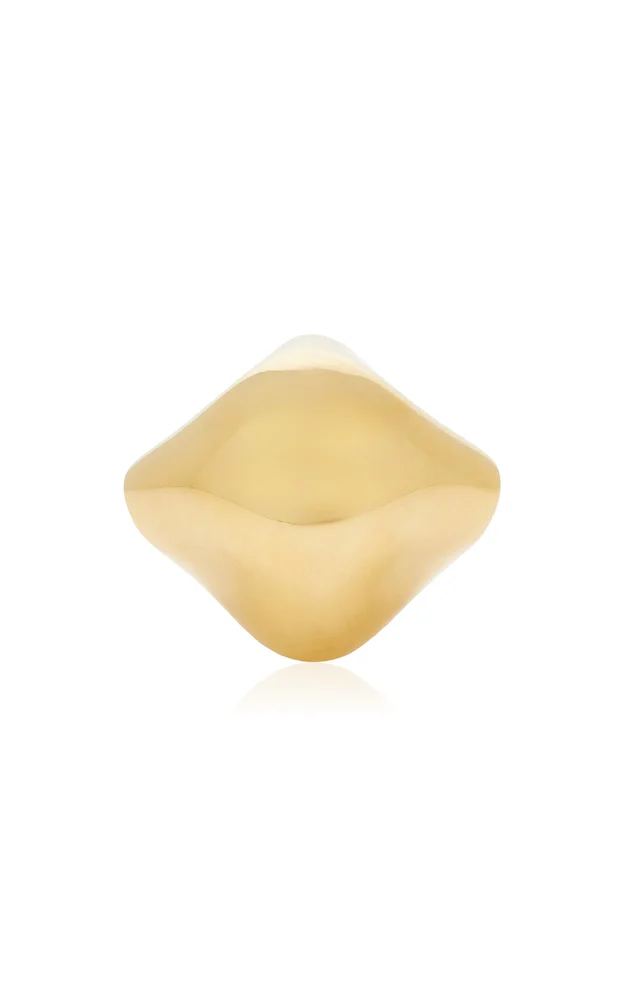
Lotus 18K Gold-Plated Brass Ring
Khaite
$580
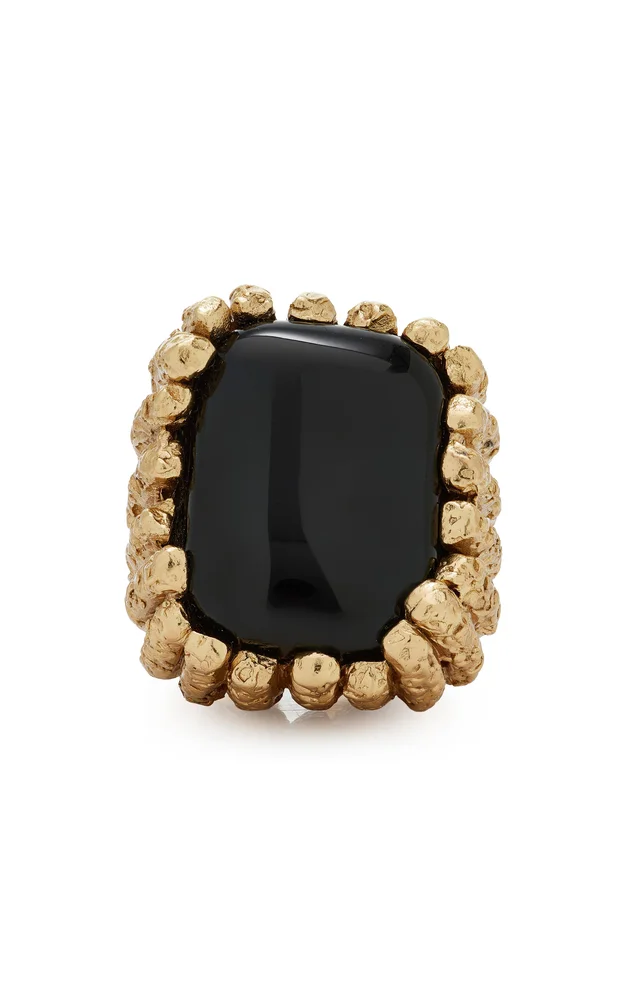
Bosco 18K Gold-Plated Pewter Resin Ring
Paola Sighinolfi
$525
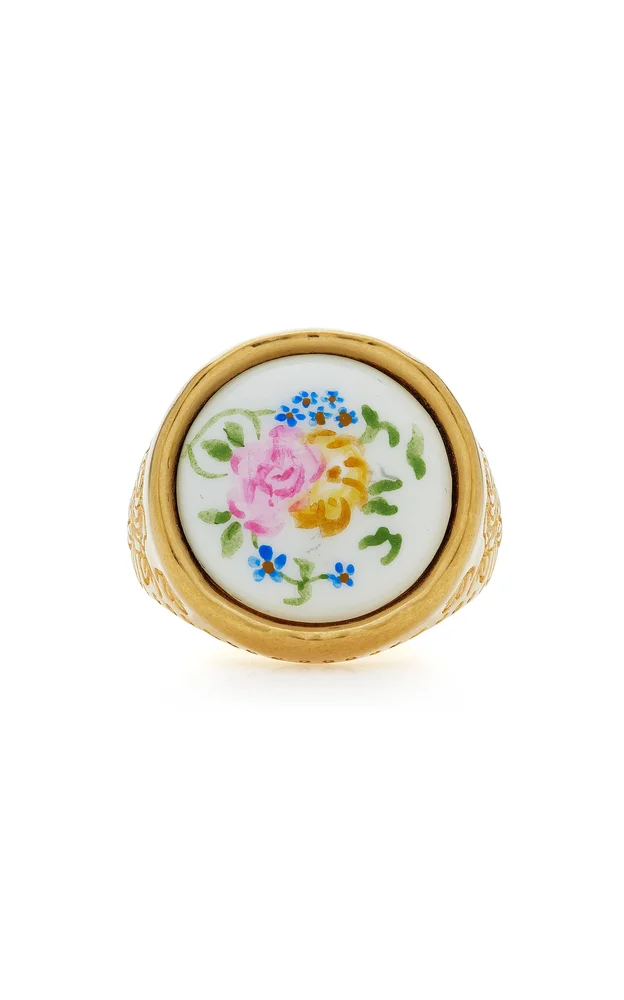
Enamel Brass Signet Ring
Chloé
$450
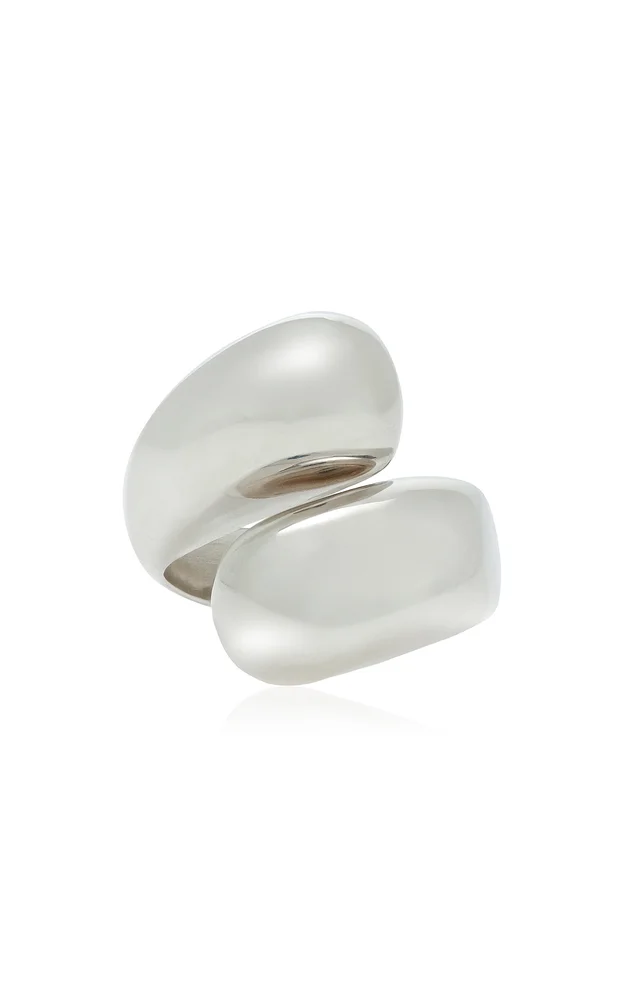
Synergy Sterling Silver Ring
AGMES
$420
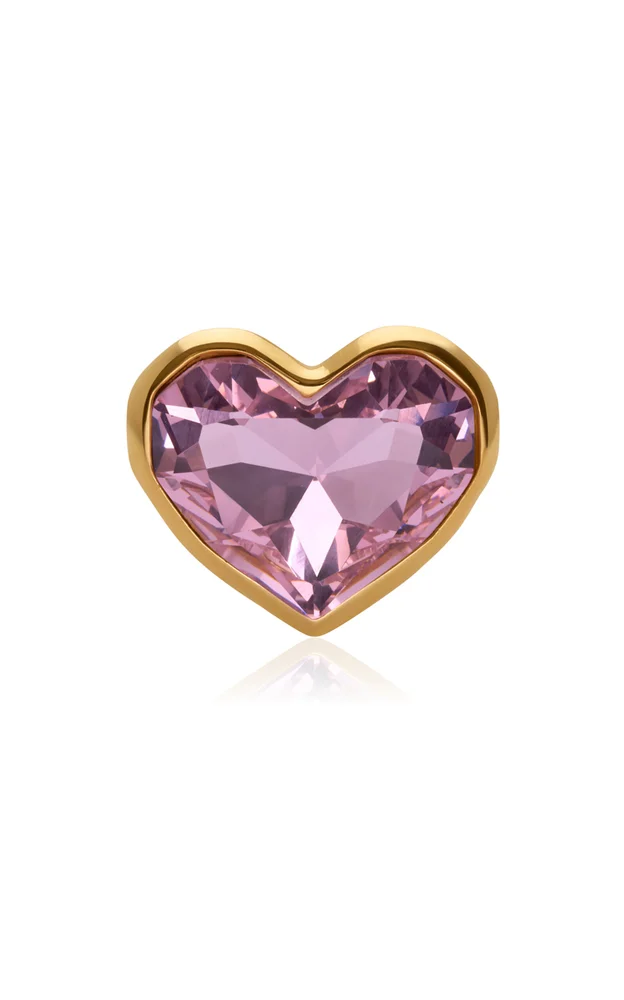
Large Heart Ring
Oscar de la Renta
$390
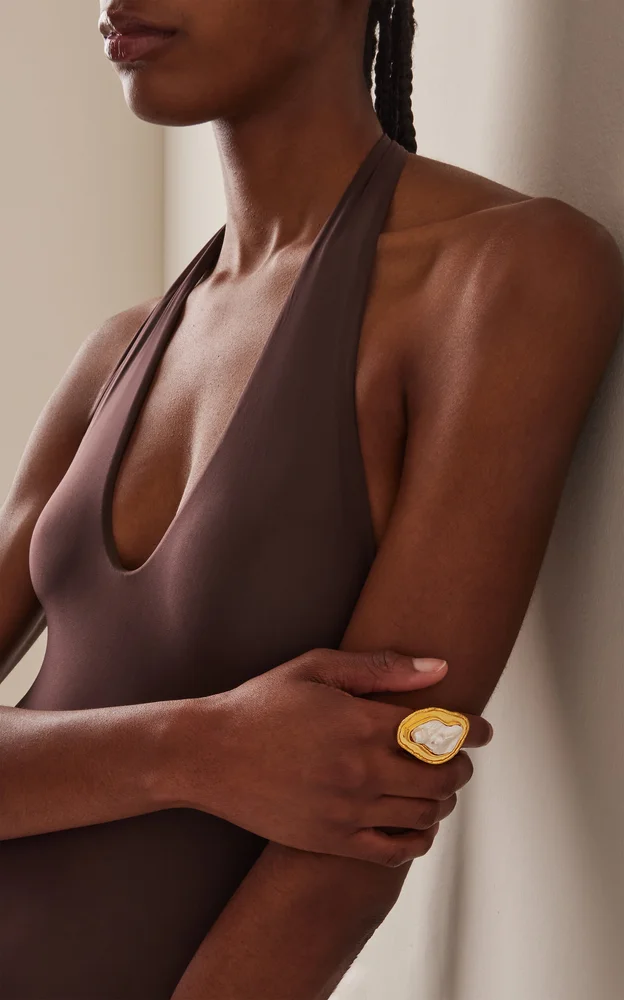
Baroque 22K Gold-Plated Pearl Ring
Sylvia Toledano
$360
How I would choose
Start with the vibe, then the stone, then the band, in that order. I would start with the mood that feels most like your own, then see which ring keeps drawing you back. Save the ones you keep coming back to, and notice which group most of them fall into.
Next, pick the shape inside that group. An oval or emerald cut if you want it to read as jewelry, a round if you want maximum sparkle, a pear or marquise if you want something with a direction. Then go lower in the setting than feels glamorous, because setting height is what decides whether a ring is worn every day or kept for evenings.
On stone size, I would take a smaller stone in a heavier, better made band every time, since the band is the part that wears. And if you are buying a solitaire for yourself, put it on your right hand and see how quickly it stops being a question. If you want to keep browsing, I also put together Stacking Rings and Thin Bracelets and The New Rules Of Rings.