This Frank & Eileen edit covers the button-ups, denim shirts, Tee Lab tees, sweatshirts and knits, and pants and jackets that grew from one founder's idea. I started with the shirts and built a fall closet around them.
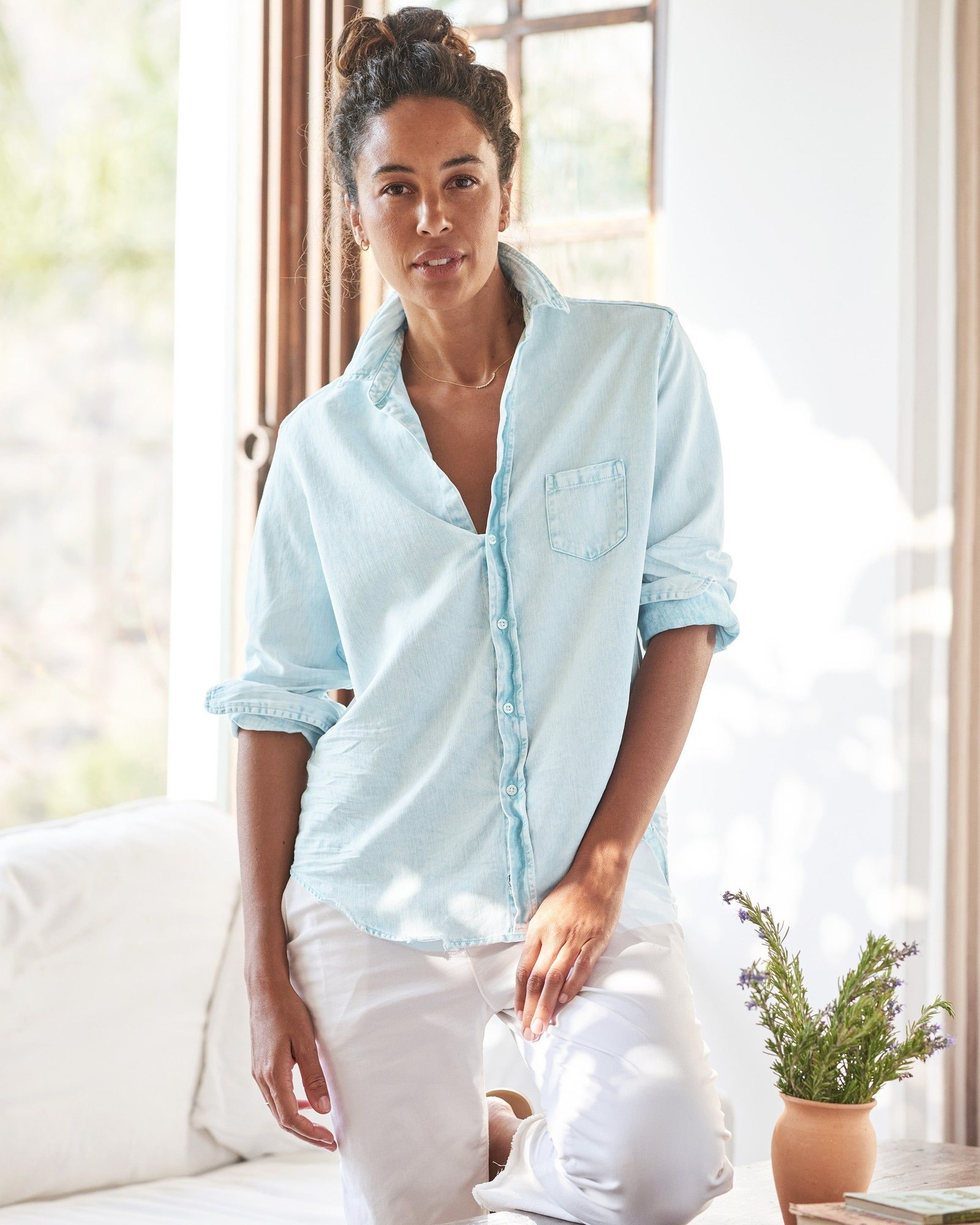
Frank & Eileen: The Italian Shirting Book That Started a Brand
This Frank & Eileen edit covers the button-ups, denim shirts, Tee Lab tees, sweatshirts and knits, and pants and jackets that grew from one
A Book of Italian Fabrics, Reimagined for Women
A woman is left alone in a Los Angeles factory conference room for too long, and starts pulling books off the shelf. One of them is a book of squares of Italian menswear fabrics. Audrey McLoghlin, an industrial engineer turned apparel maker, looked at it and decided nobody was using those fabrics in women's clothing. That is the whole origin of Frank & Eileen, and I like how small the spark was.
The name is a love story, not a marketing exercise. Frank and Eileen McLoghlin are her Irish grandparents, who married in Co. Wicklow in 1947, and each style carries the name of a family member. The idea underneath is simple: a better women's button-up in fabrics that had always been reserved for menswear. McLoghlin has called the button-up her armor, and you can feel that in the cut. These shirts are made to be worn hard, with the sleeves shoved up.
In October I would start with the flannels and corduroys. The Eileen in sand and cream small plaid is the relaxed one, with a chest patch pocket, and I would wear it open over a white tee with dark jeans. The Barry in green stripe is tailored to the waist and back with that single-button cuff, so it sits under a sweater without bunching. The Barry in camel corduroy does the same job in a warmer texture. For something louder, the Silvio in magenta has an exaggerated back pleat and an envelope pocket, and the Silvio in pumpkin small plaid is the quieter way to wear orange.
Before you buy any of them, roll the sleeves and button the cuff. If the fabric holds a clean fold at the elbow, the shirt will work in every season. The white Waverly, with its longer shirttail, is the one I would try first for tucking.
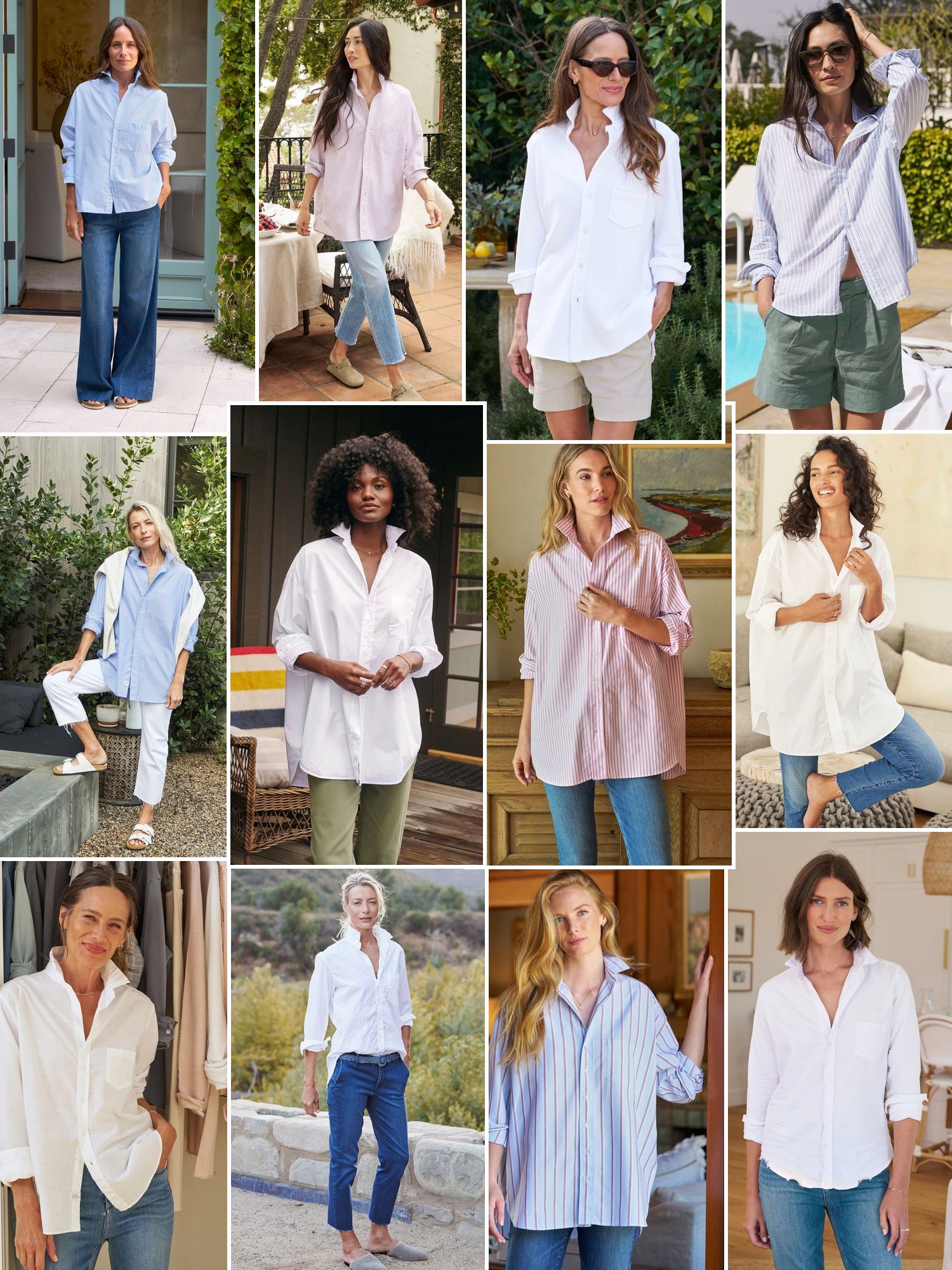
Button-up shirts
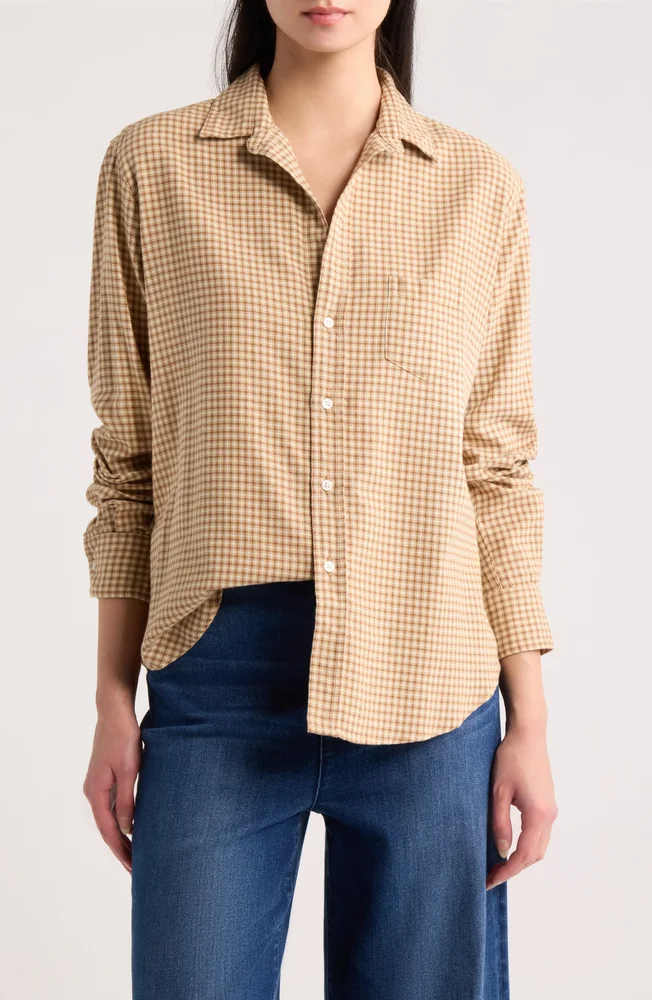
Eileen Relaxed Plaid Cotton Flannel Shirt
Frank & Eileen
$258
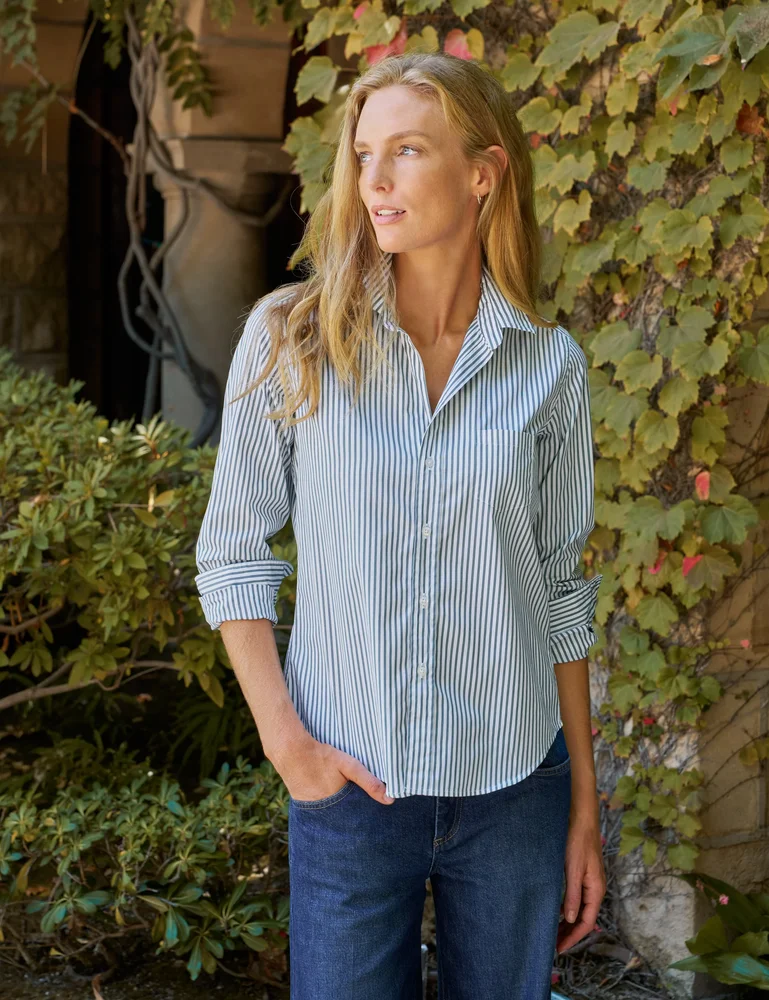
Barry Shirt, Multi Green Stripe
Frank & Eileen
$258
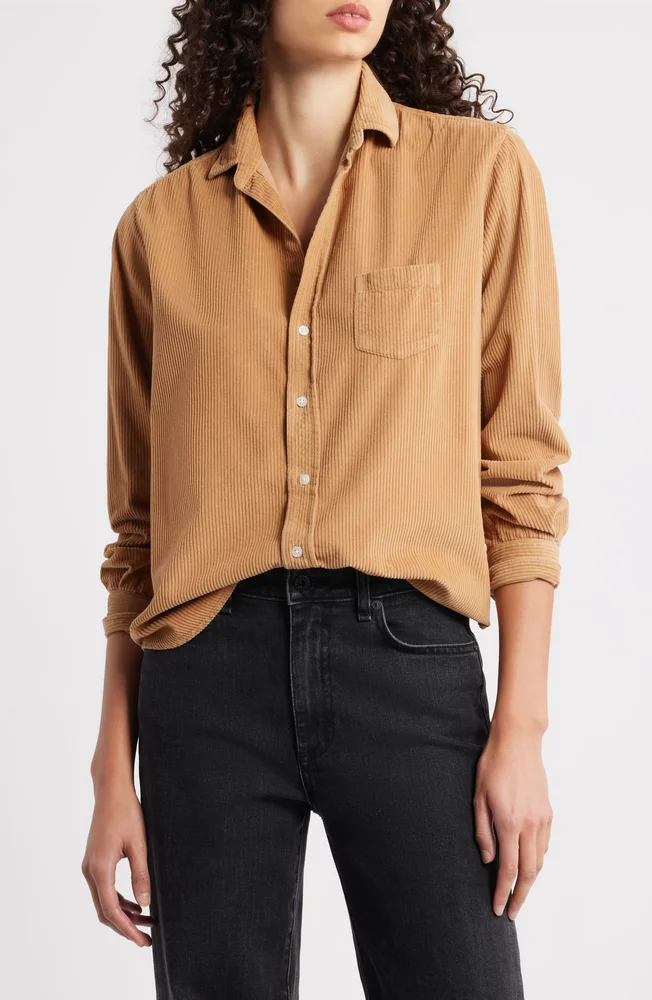
Barry Tailored Fit Corduroy Button-Up Shirt
Frank & Eileen
$288
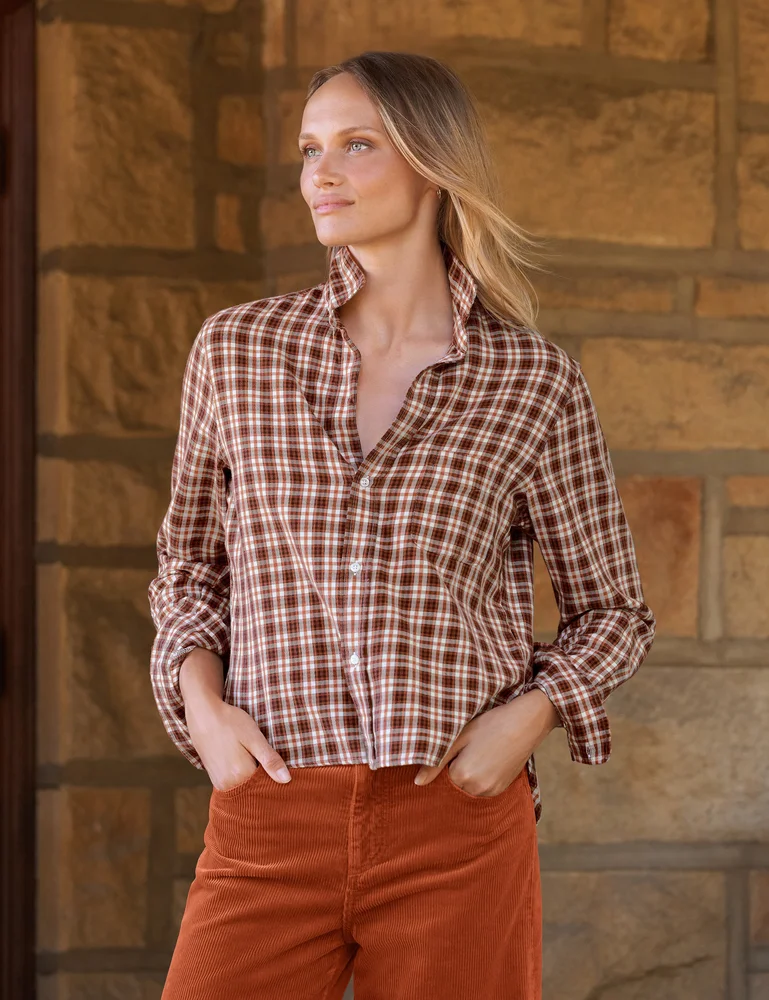
Silvio Shirt, Pumpkin and White Small Plaid
Frank & Eileen
$268
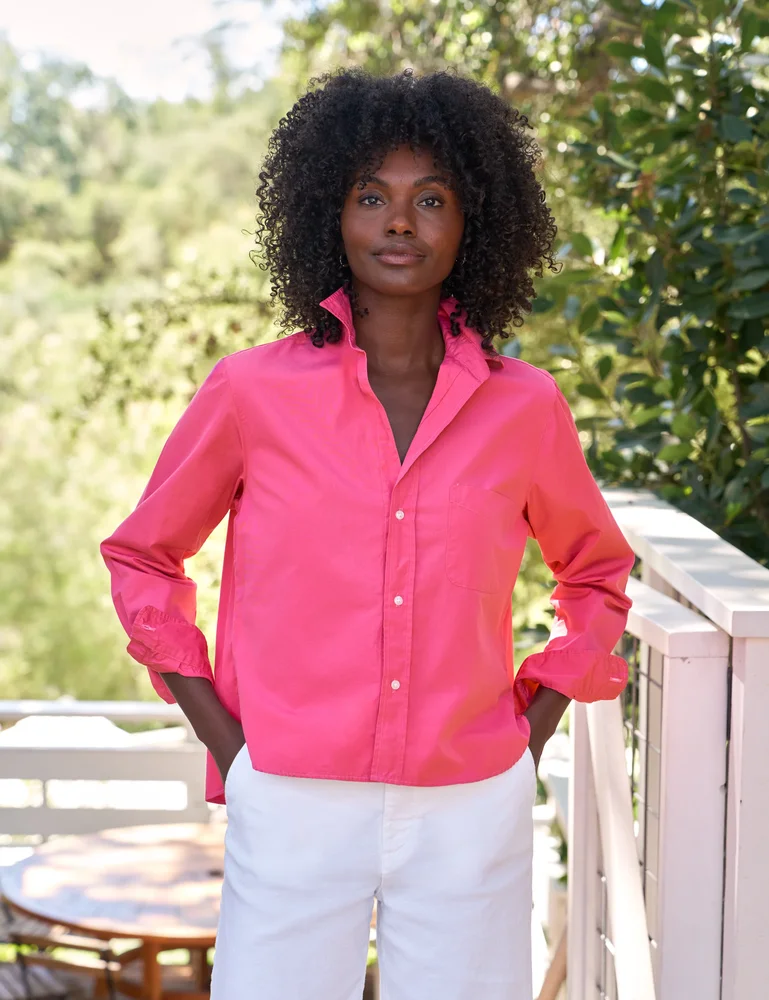
Silvio Shirt, Magenta
Frank & Eileen
$268
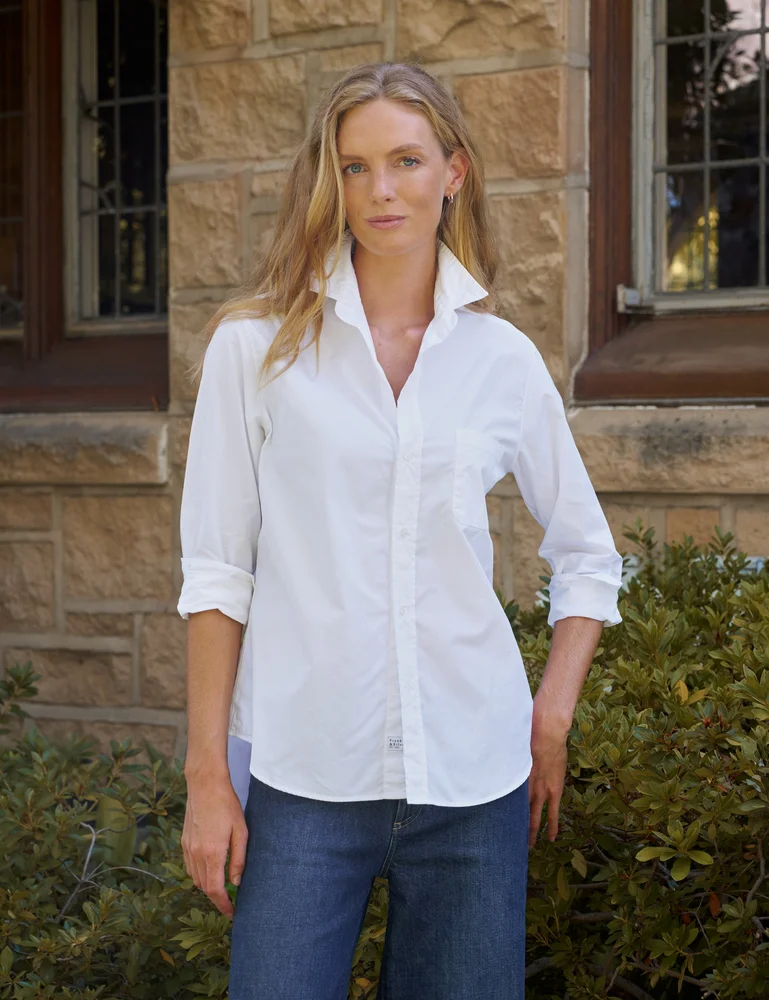
Waverly Shirt, White
Frank & Eileen
$268
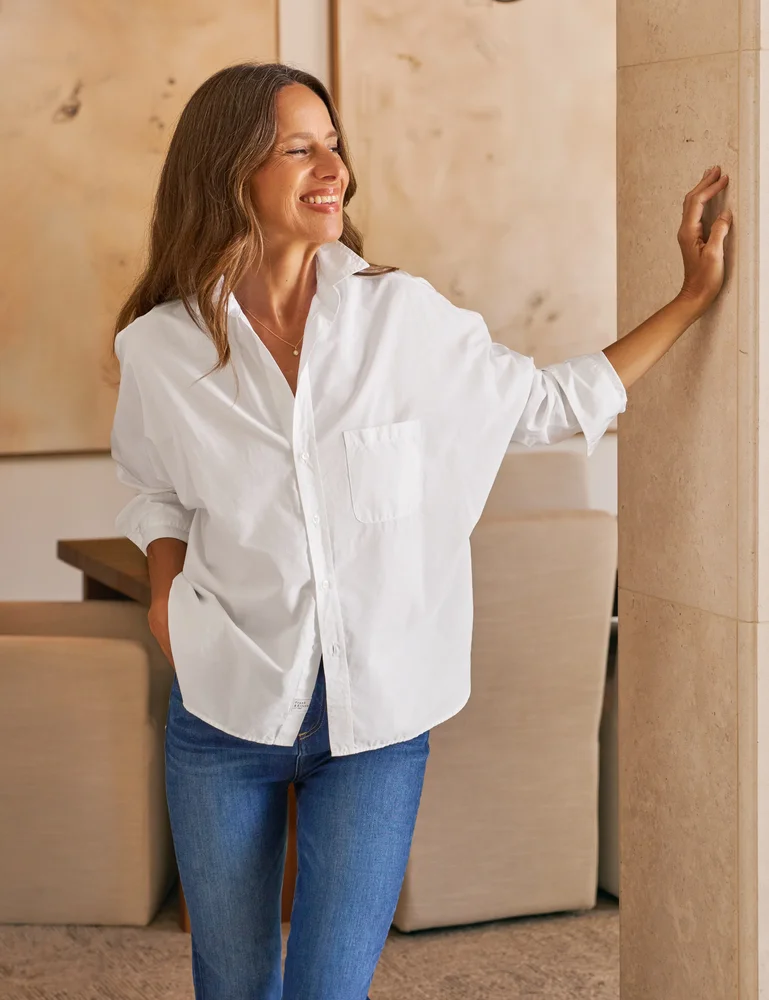
Oona Shirt, White
Frank & Eileen
$298
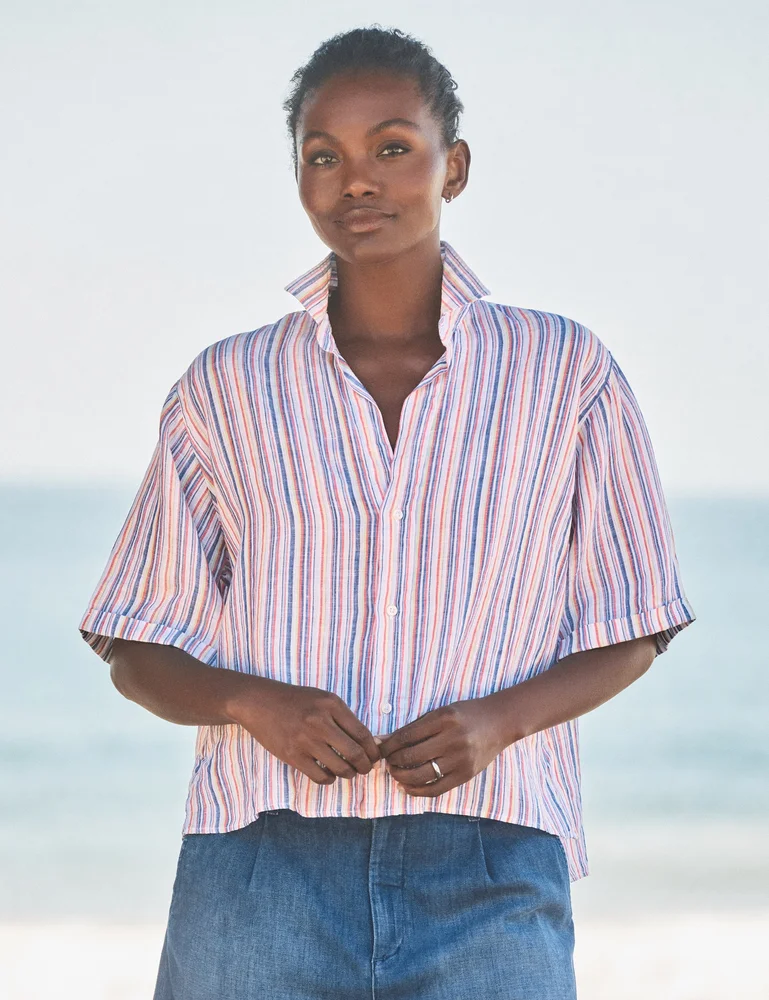
Rosie Short-Sleeve Shirt, Multi Stripe
Frank & Eileen
$248
Denim and chambray shirts, by cut
Denim shirts are where the Famous Denim name earns its keep, and the fit differences between them matter more than the wash. The Barry in classic blue wash is the tailored one, light and chambray-like, while the Barry in vintage dark indigo has a chest pocket and takes a cuff roll well. I would put the dark one under a camel coat and call it a work outfit.
The Eileen in distressed indigo is softer and looser, with a frayed hem that I would leave untucked over leggings or straight jeans. The white denim Shirley is oversized with a long curved hem, and it works as a light jacket over a tee when the afternoon turns cool. Brand note worth knowing: the Eileen in vintage white denim has bust-flattering button placement, so check the placket sits flat when you sit down.
Then there are the sleeveless and popover shapes. The Fiona has a ruffle collar and the Olivia is a collegiate v-neck with a popped collar, both in stonewashed blue. I would layer either under a fitted cardigan for fall. The Gabi in dark indigo has three-quarter sleeves and a wider hem, which suits anyone who hates cuffs.
What I would skip: the sleeveless styles if you want one denim shirt to carry you from September to January. Buy the Barry or the Eileen first, then add a sleeveless piece for layering.
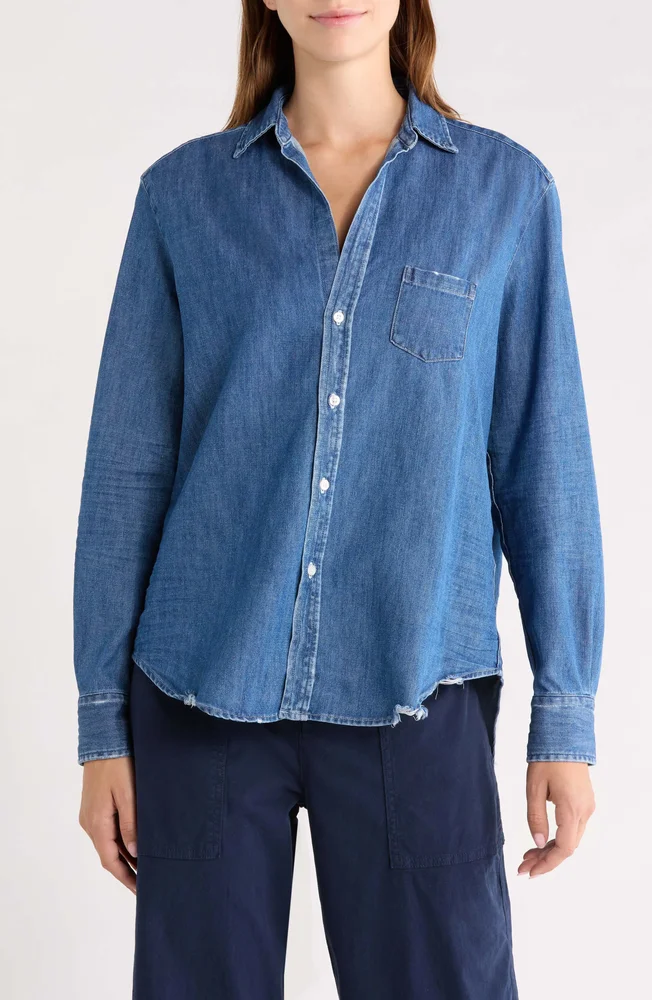
Eileen Relaxed Denim Button-Up Shirt
Frank & Eileen
$288
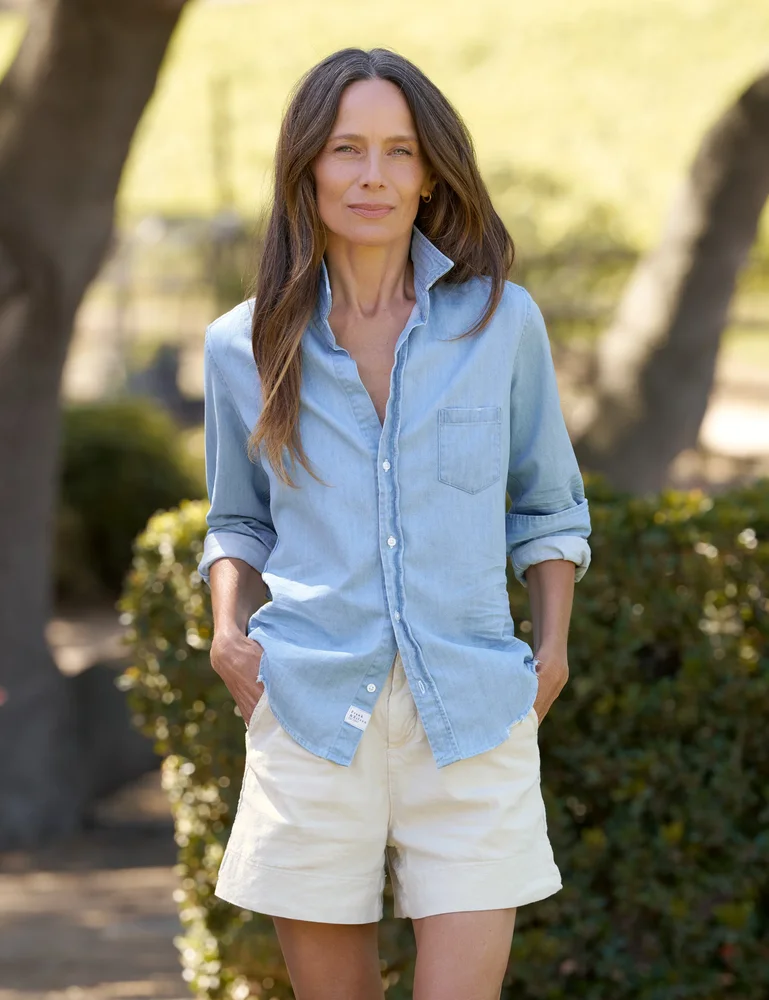
Barry Shirt, Classic Blue Wash
Frank & Eileen
$288
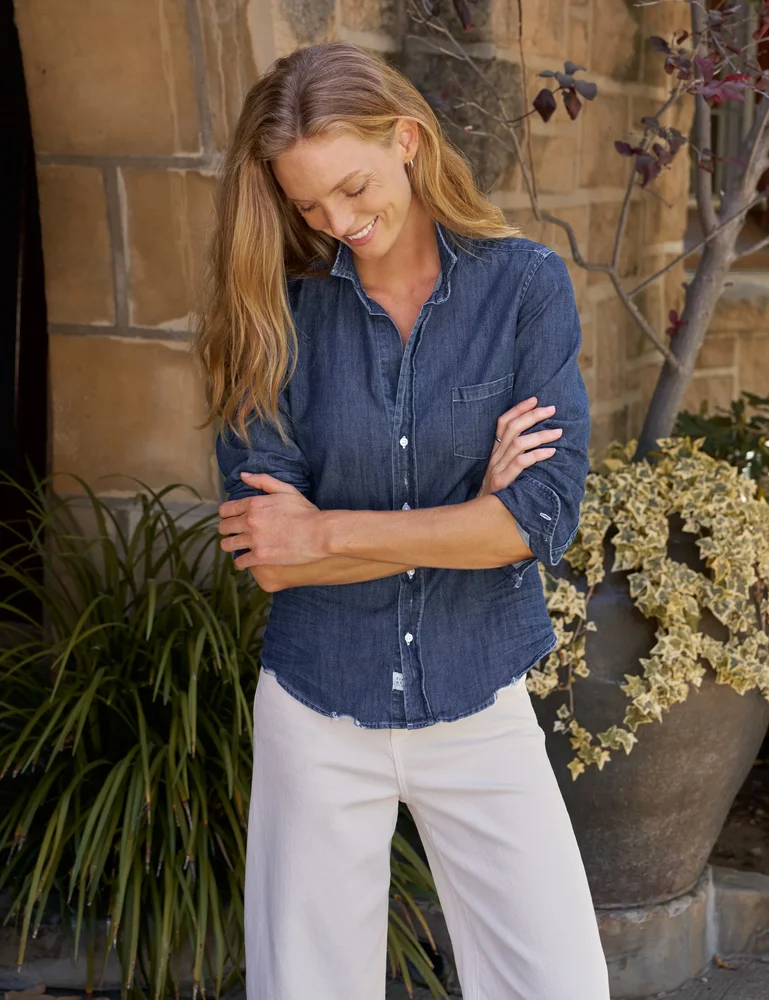
Barry Shirt, Vintage Dark Indigo Wash
Frank & Eileen
$288
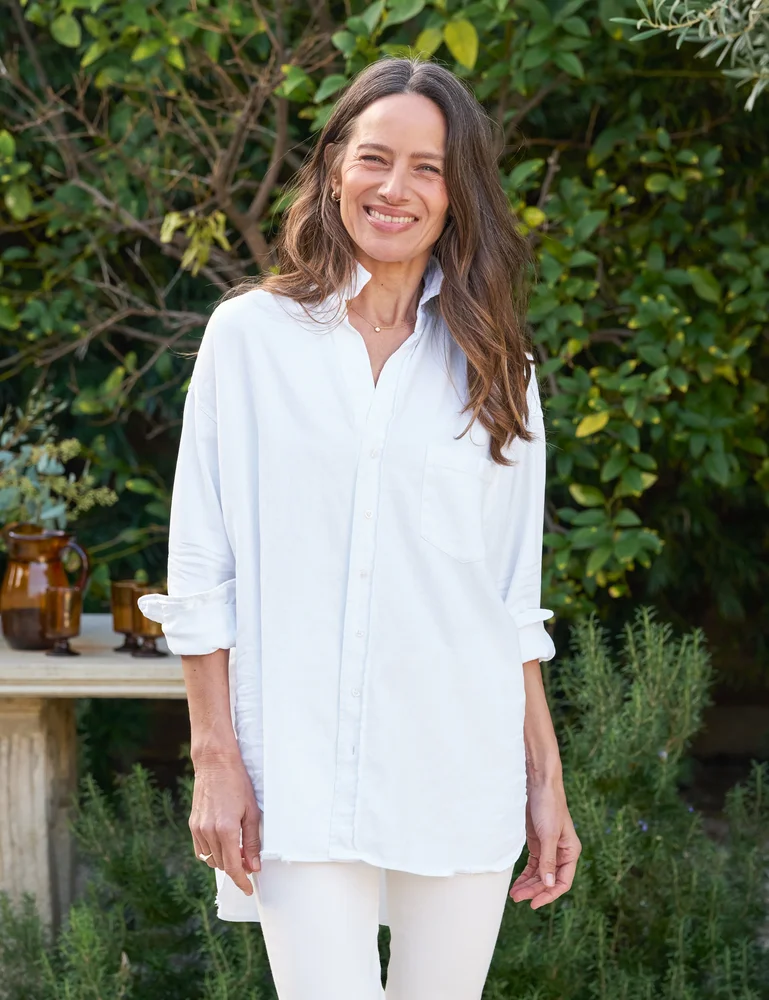
Shirley Shirt, White Denim
Frank & Eileen
$298
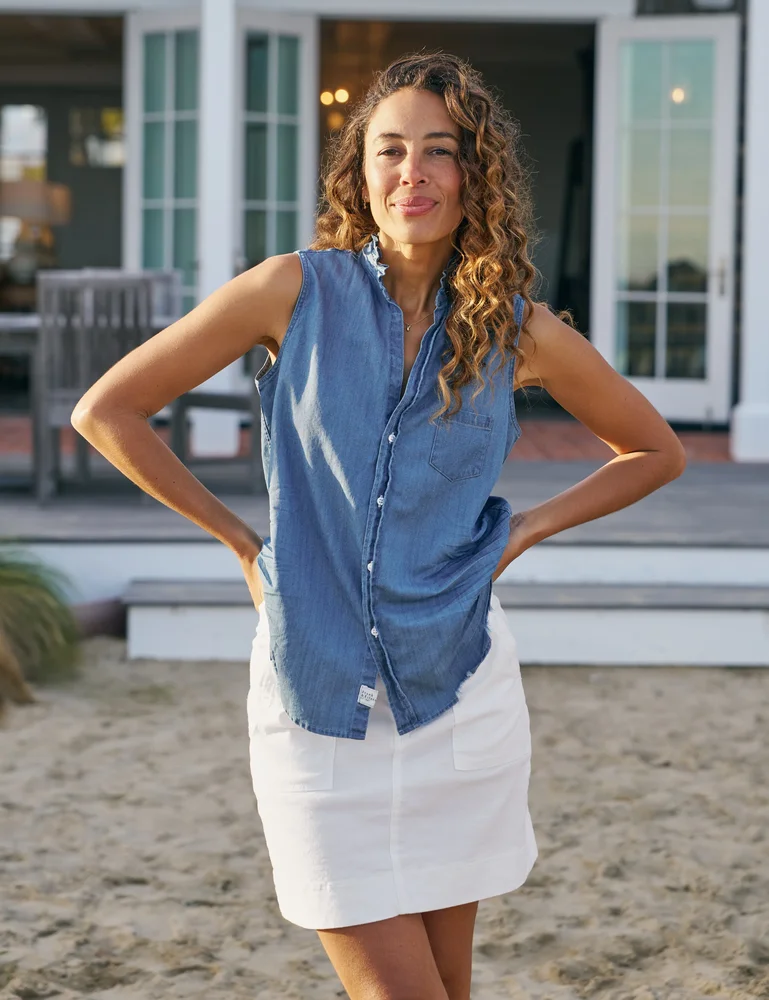
Fiona Ruffle Sleeveless Shirt, Vintage Stonewashed Indigo
Frank & Eileen
$258
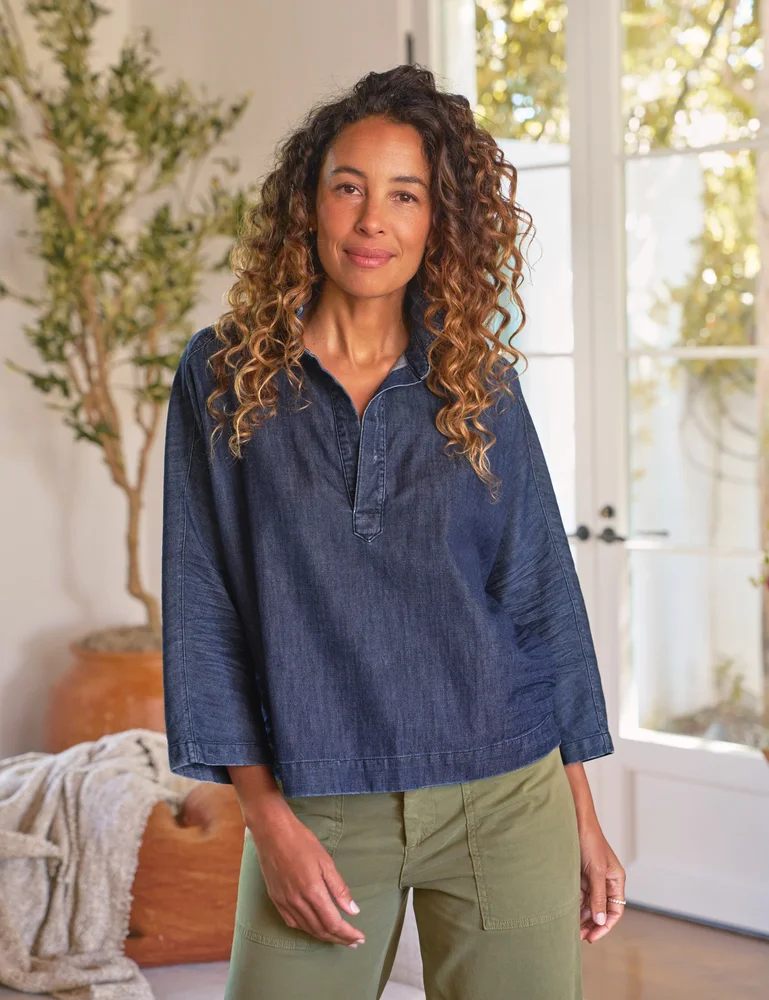
Gabi Shirt, Vintage Dark Indigo Wash
Frank & Eileen
$288
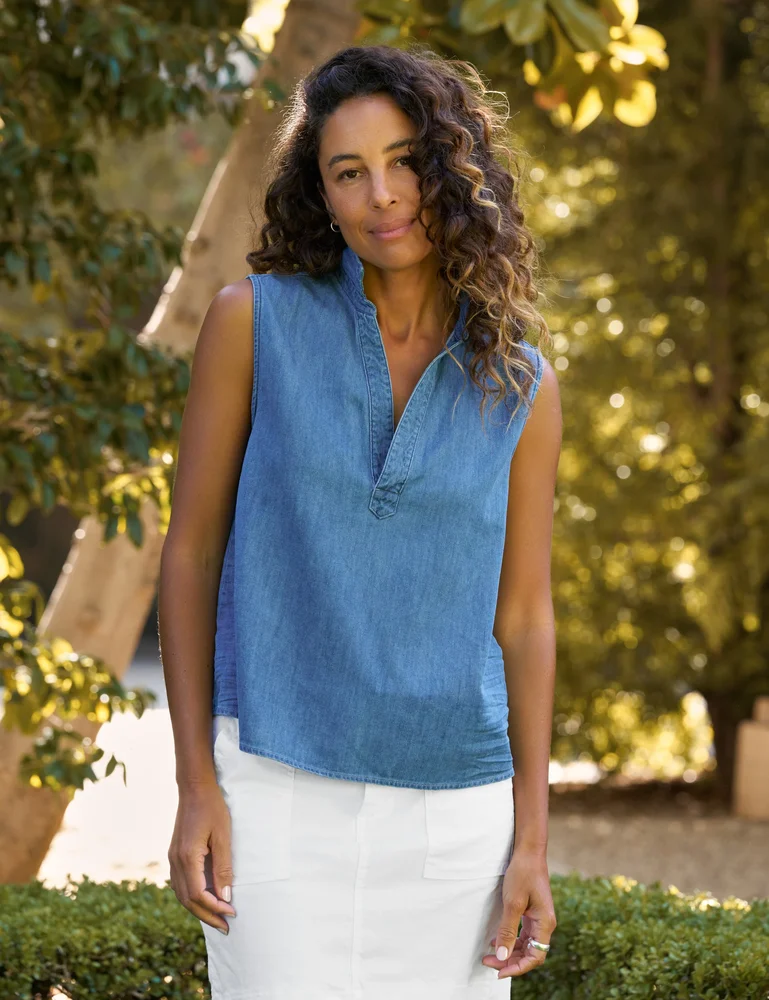
Olivia Sleeveless Top, Vintage Stonewashed Indigo
Frank & Eileen
$258
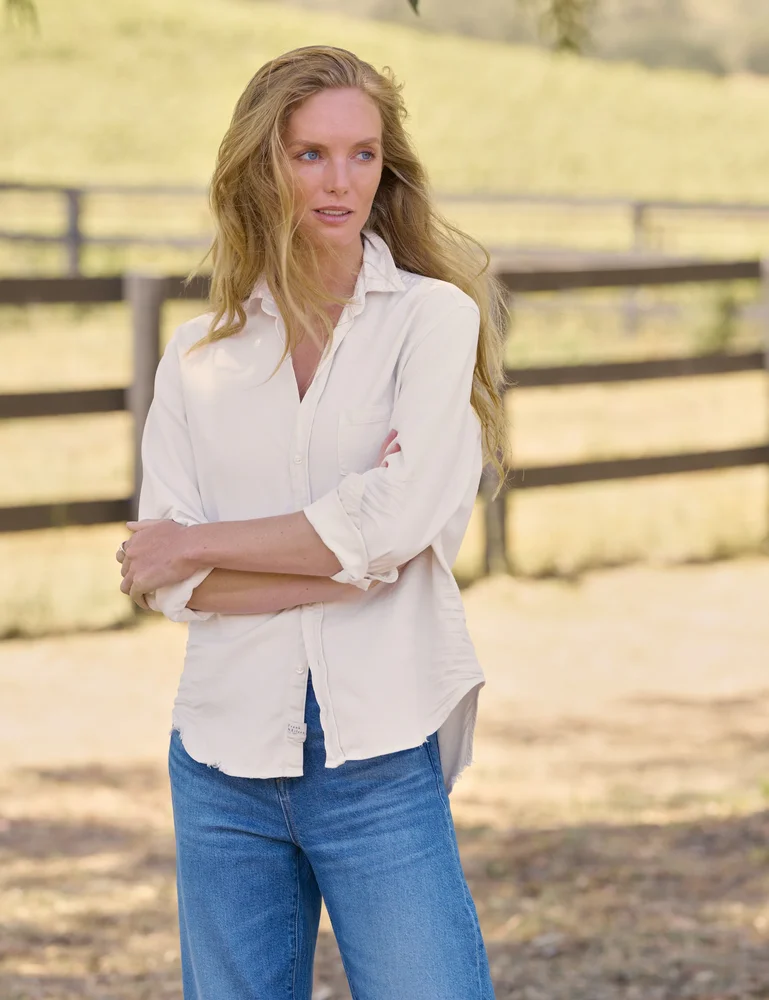
Eileen Shirt, Vintage White Denim
Frank & Eileen
$288
Tees and henleys from Tee Lab
Tee Lab is the jersey side of the brand, and it debuted for Spring and Summer 2016 as a knit counterpart to the shirts. The brand kept the same idea: soft, relaxed shapes with raw hems, just in cotton jersey instead of Italian shirting. Many of these tees are in Vintage Jersey, which used to be called Heritage Jersey.
The Jackie Henley in vintage white is cream with a snap placket and a square cut, and the Patrick Popover Henley in white and camel stripe adds a sporty v-neck and a slight drop sleeve. Both are good under a flannel shirt left open. The Ella Boatneck is relaxed through the body and arms, so I would wear it with tailored trousers and flats. The Quinn long-sleeve in camel layers under sweaters and button-ups without adding bulk.
Short sleeves still work in October if you plan for them. The Patty short-sleeve henley comes in nori green and British Royal navy French terry, a cropped look that keeps its length. I would wear the navy with a skirt, tights and knee boots. The Charlotte in black has a chest pocket and a curved hem, and the Perry crew in classic navy is the plain one to wear with everything.
Check the hem: raw edges should lie flat after washing, and the tee should hang straight, not twist. What I would skip: a color you already own three times over.
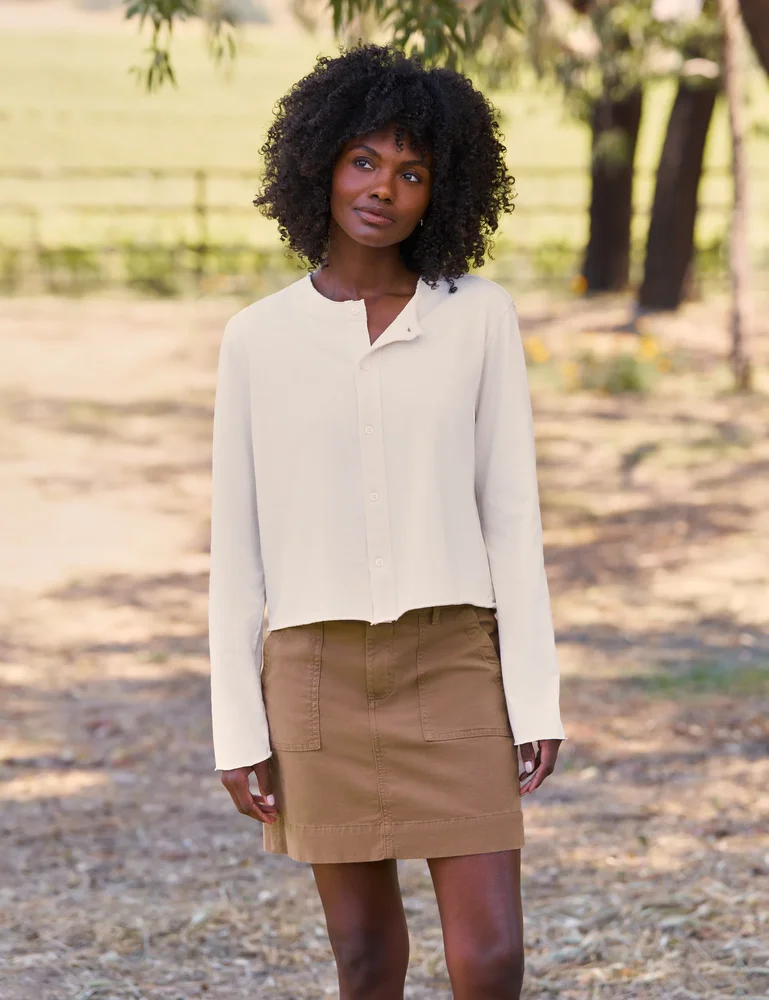
Jackie Henley, Vintage White
Frank & Eileen
$198
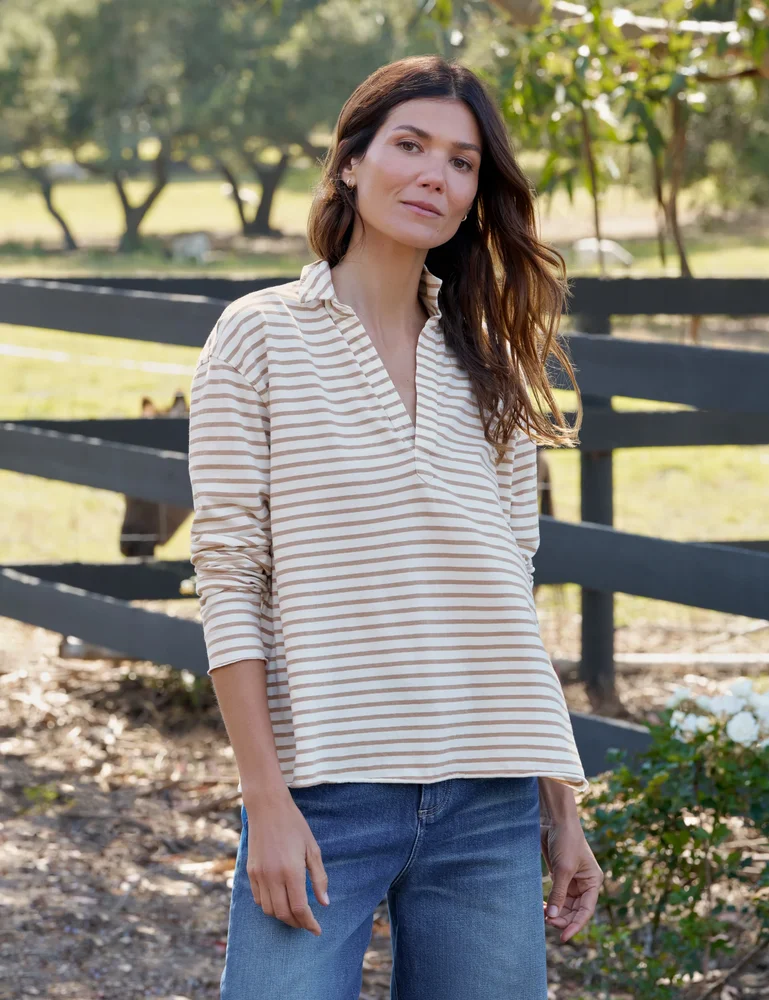
Patrick Popover Henley, Vintage White and Camel Stripe
Frank & Eileen
$168
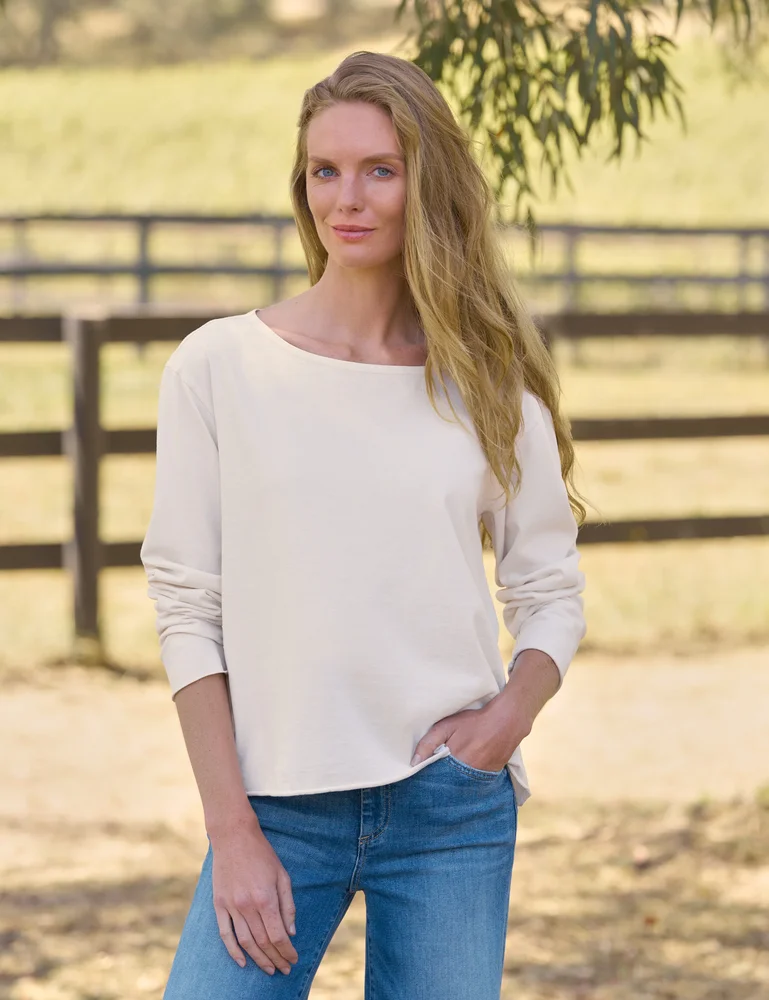
Ella Boatneck Tee, Vintage White
Frank & Eileen
$168
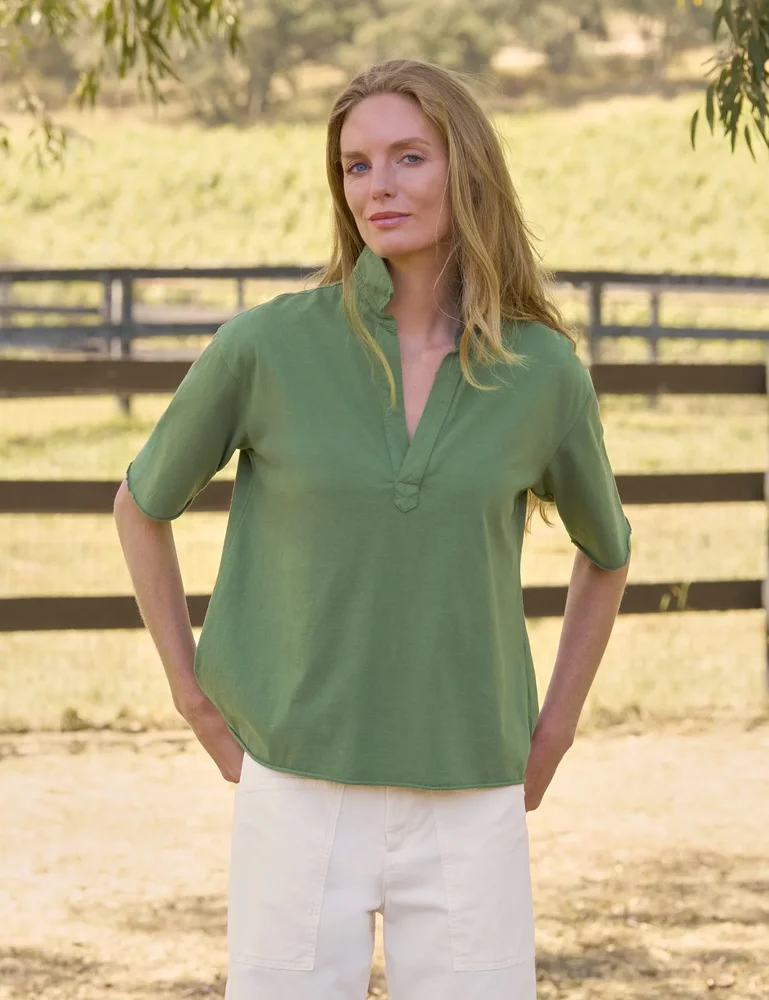
Patty Short-Sleeve Henley, Nori
Frank & Eileen
$168
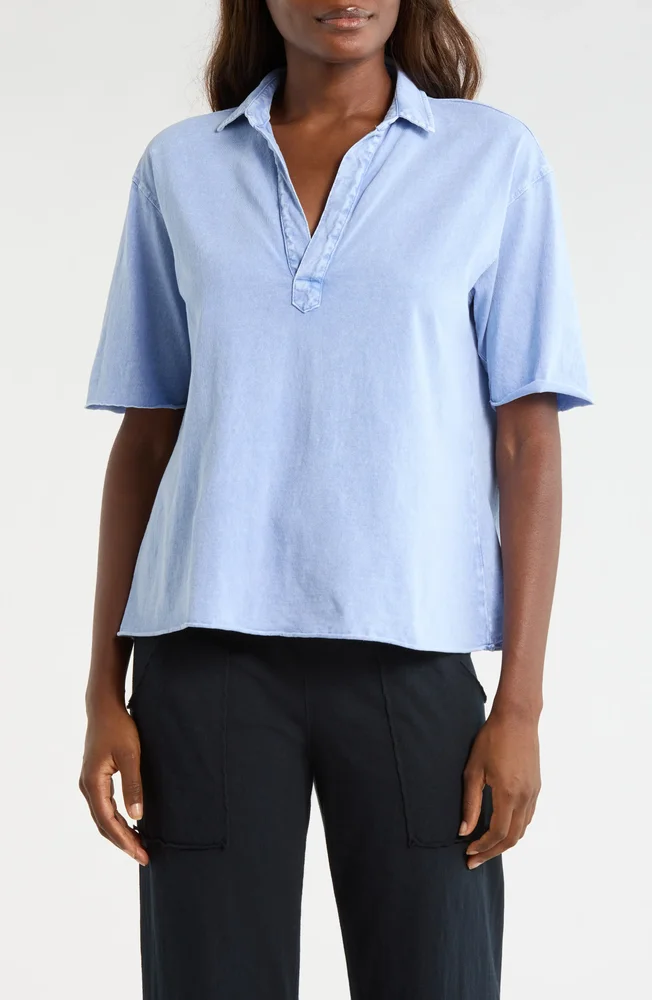
Patty Short Sleeve Henley
Frank & Eileen
$168
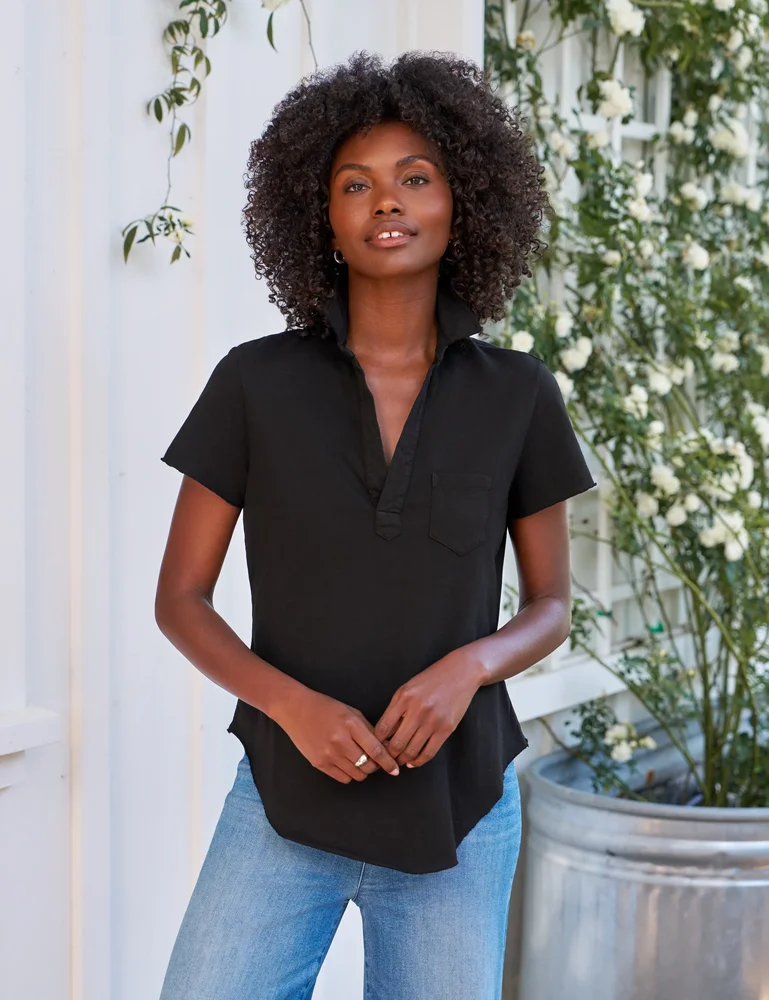
Charlotte Tee, Black
Frank & Eileen
$136
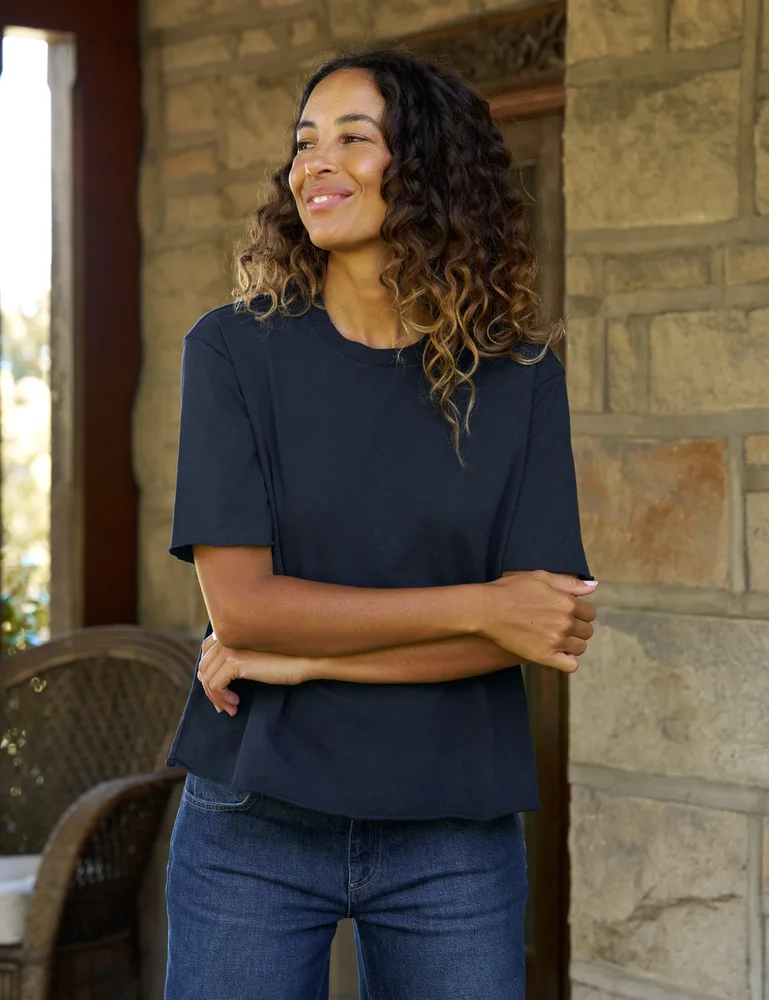
Perry Crew Tee, Classic Navy
Frank & Eileen
$158
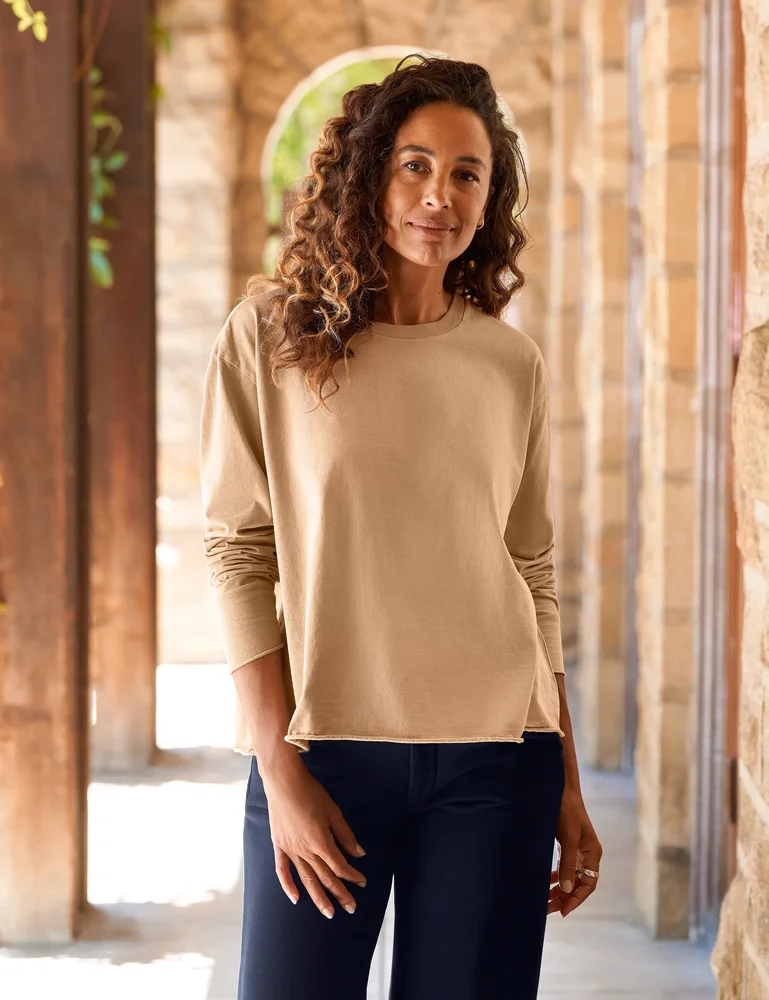
Quinn Long-Sleeve Tee, Camel
Frank & Eileen
$158
Sweatshirts and knits for cold days
The label is known for shirts, but the sweatshirts and knits are where I would look for a cold-weather uniform. The Triple Terry fabric was once called Triple Fleece, and it shows up in the Perry Sweatshirt Tee in vintage white and camel, a short-sleeve crew with a raw hem that I would wear over a long-sleeve henley. The Patrick Popover Sweatshirt in classic navy has a v-neck collar and a drop sleeve, so it behaves more like a sweater.
The knits here are listed in pure Italian cotton. The Monterey in navy with cream stripe has a funnel neck and an exposed seam down the continuous sleeve. The Montecito crewneck in ivory has a ribbed, relaxed fit, and the Montecito turtleneck in espresso is the chunky one. The Monterey pointelle in white is open-knit and light, which makes it a layering sweater for a heated office.
The Jackie Cardigan in camel has delicate buttons and a square cut. I would wear it over the white Perry tee with wide-leg pants. A quick test for any of these: hold the sleeve seam up to the light, and check the stitching is even and the rib springs back after you pull it.
What I would skip: the white knits for a day of commuting in rain. Take the espresso or navy.
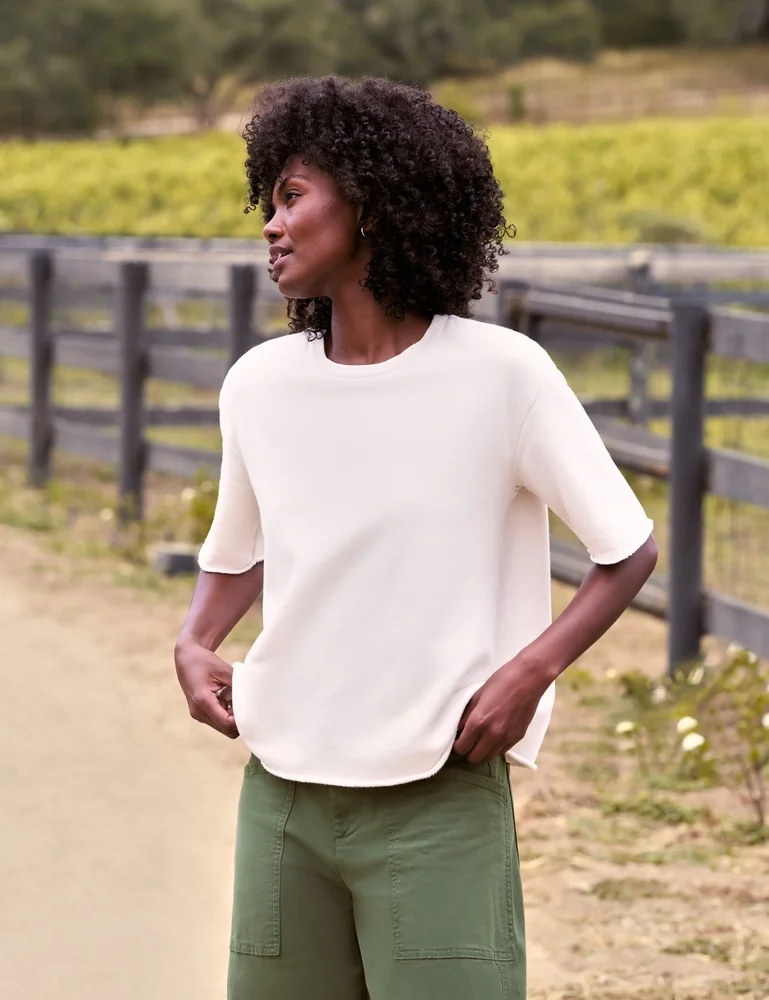
Perry Sweatshirt Tee, Vintage White
Frank & Eileen
$218
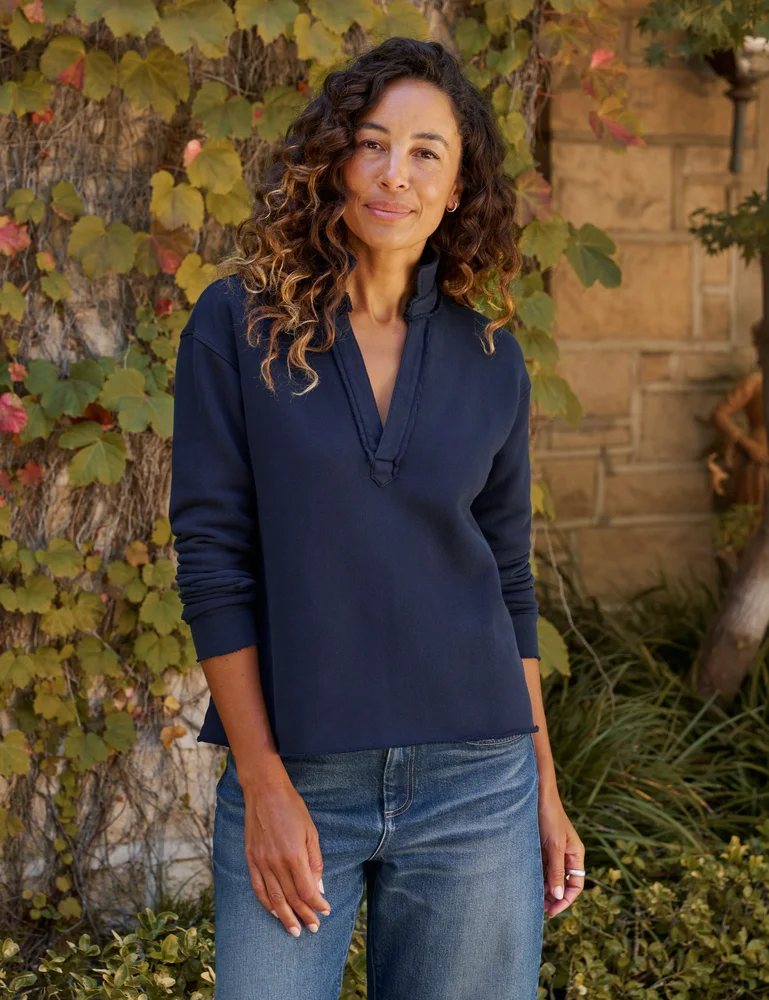
Patrick Popover Sweatshirt, Classic Navy
Frank & Eileen
$238
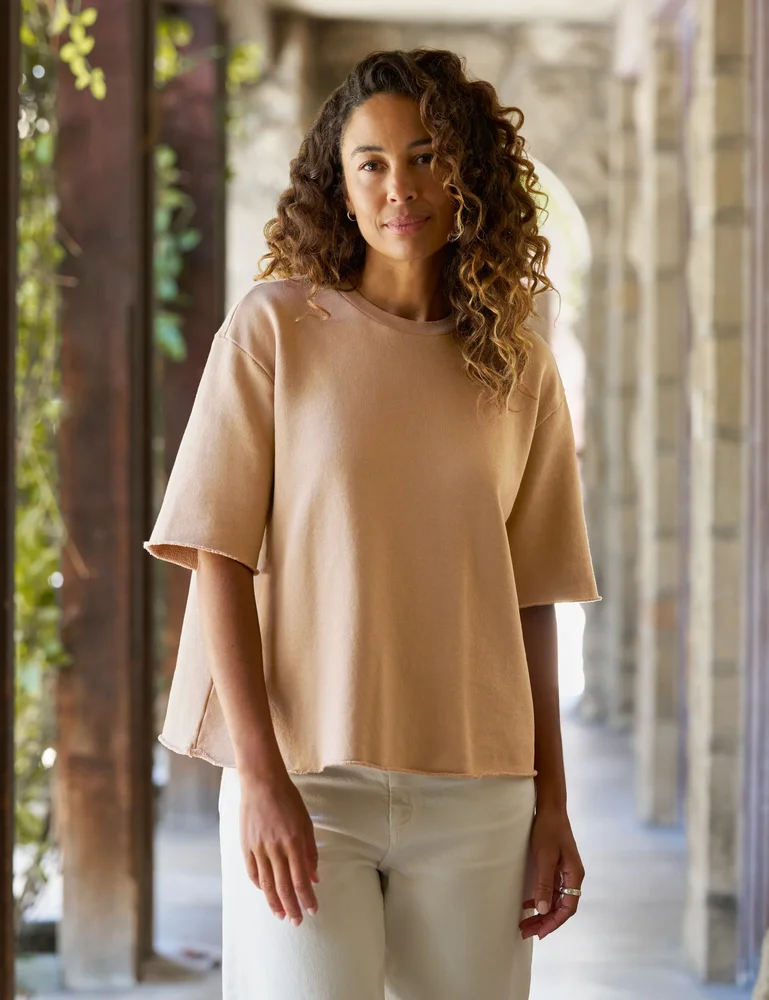
Perry Sweatshirt Tee, Camel
Frank & Eileen
$218
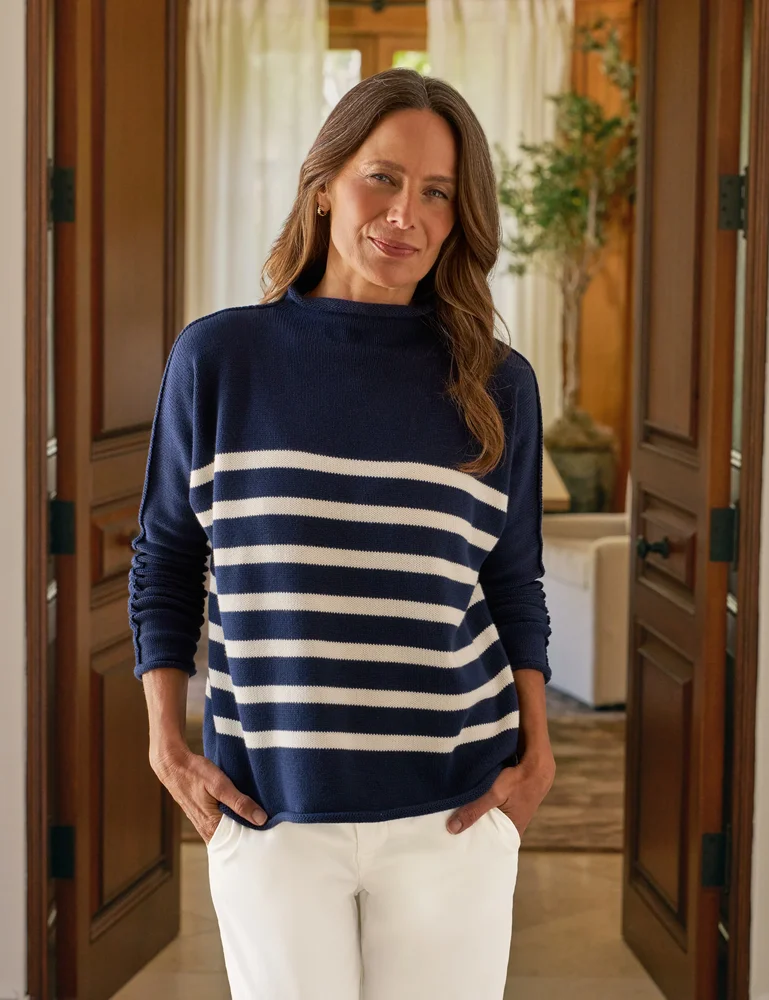
Monterey Sweater, Navy with Cream Stripe
Frank & Eileen
$278.60
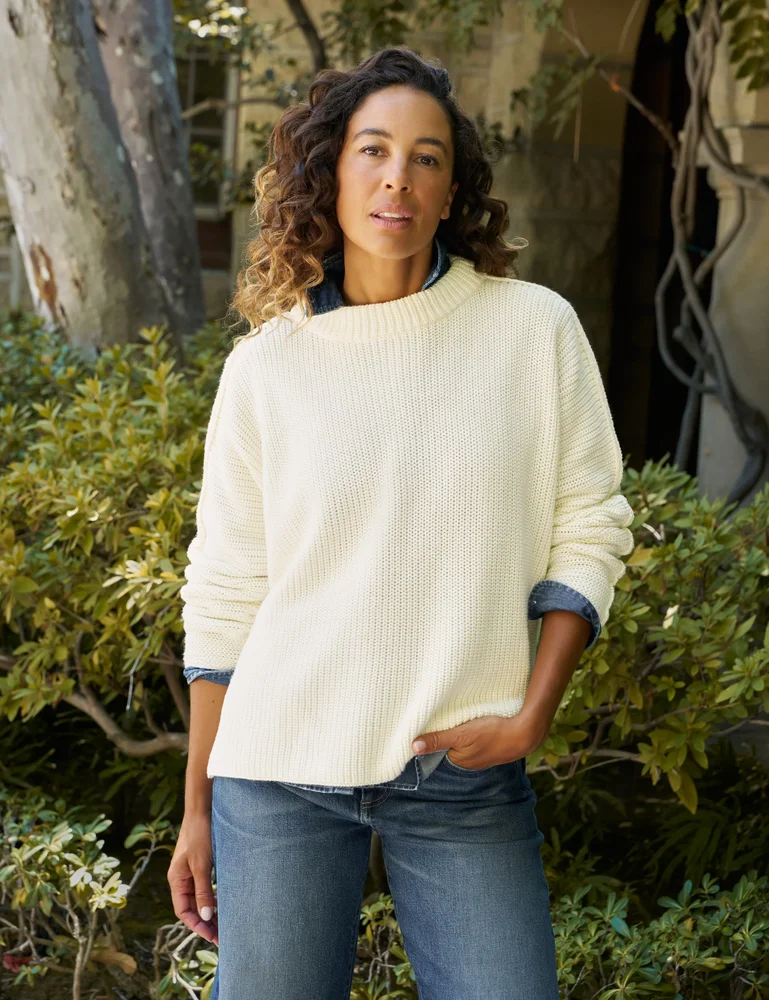
Montecito Sweater, Ivory
Frank & Eileen
$398
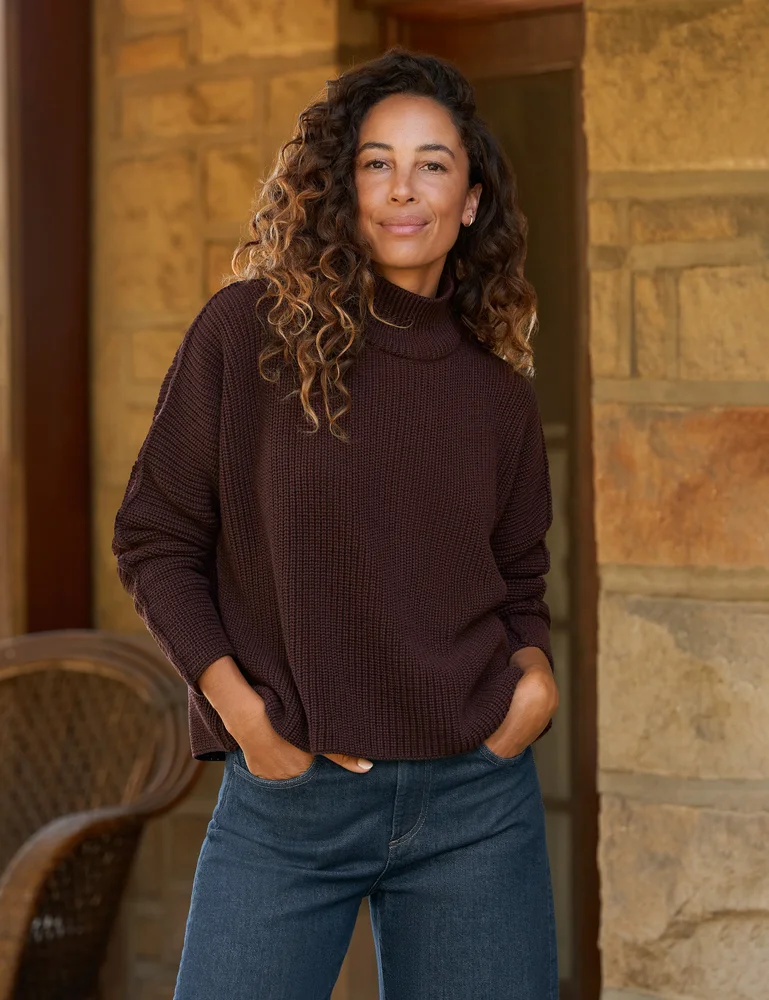
Montecito Turtleneck, Espresso
Frank & Eileen
$448
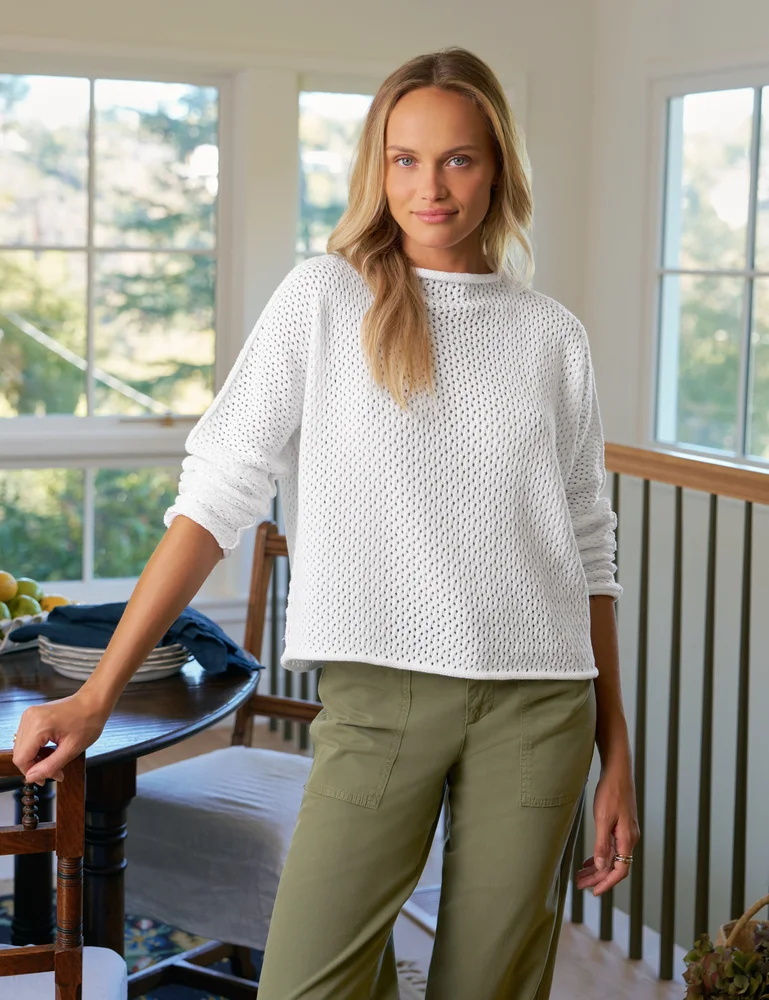
Monterey Pointelle Sweater, White
Frank & Eileen
$398
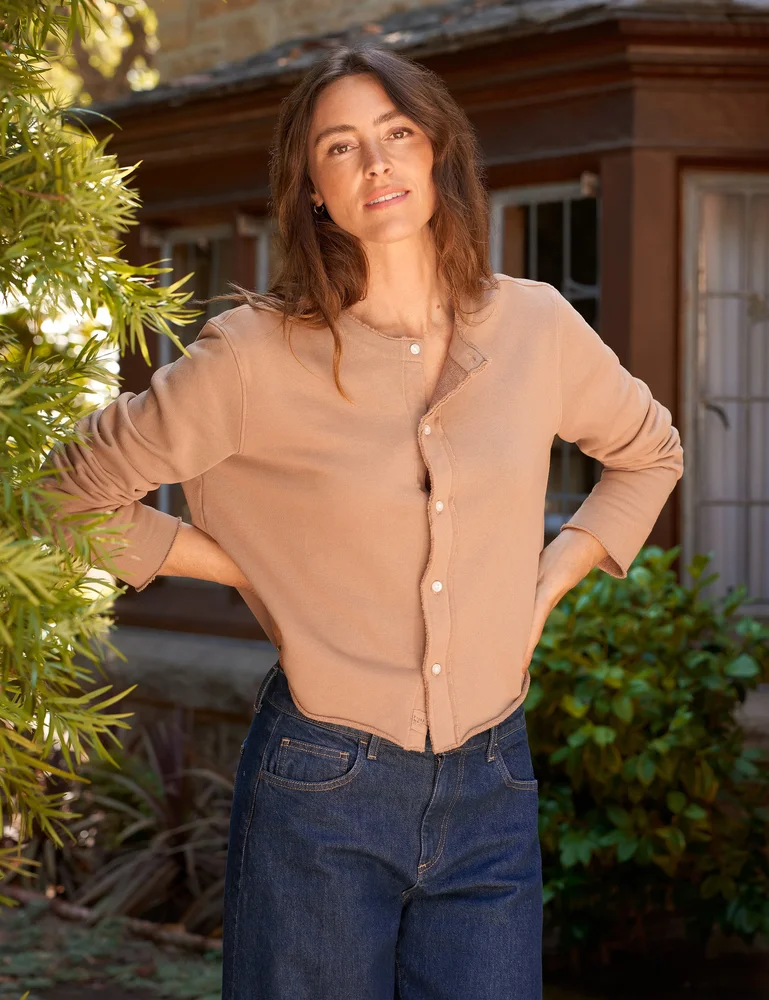
Jackie Cardigan, Camel
Frank & Eileen
$288
Barrel pants, shirtdresses and jackets
Pants, dresses and outerwear are the newest part of the story, and I would build them around the shirts. The brand's knitwear is knit, sewn, washed and dyed in Los Angeles, and the rest of the edit follows the same California habit: slouchy shapes in good cotton. The Bray Barrel Pants in chai have a cropped barrel leg and a signature joey pocket, and the Brennan Barrel Jeans in the 1993 wash are mid-blue and wide. I would wear either with a Barry shirt and a belt.
The Madeline wide-leg pants in classic navy corduroy are pull-on with patch pockets and a 30 in inseam. Check the length against your shoes before you commit, because that inseam wants a flat or a low boot. The Rory shirtdress in navy corduroy is long, with a chest pocket and sleeves that roll easily, and I would put the Rowan crop utility jacket over it. The black Emma maxi has a v-neck and raw hem for evenings.
For layering, the Belfast Trench in camel is made of Triple Terry with horn buttons and roomy pockets. The Bantry Barn Jacket in 1978 wash adds a pen pocket and denim hardware, a good weight over a flannel.
What I would skip: both trench and barn jacket if you only own one coat. Pick the one that matches the lengths you wear most.
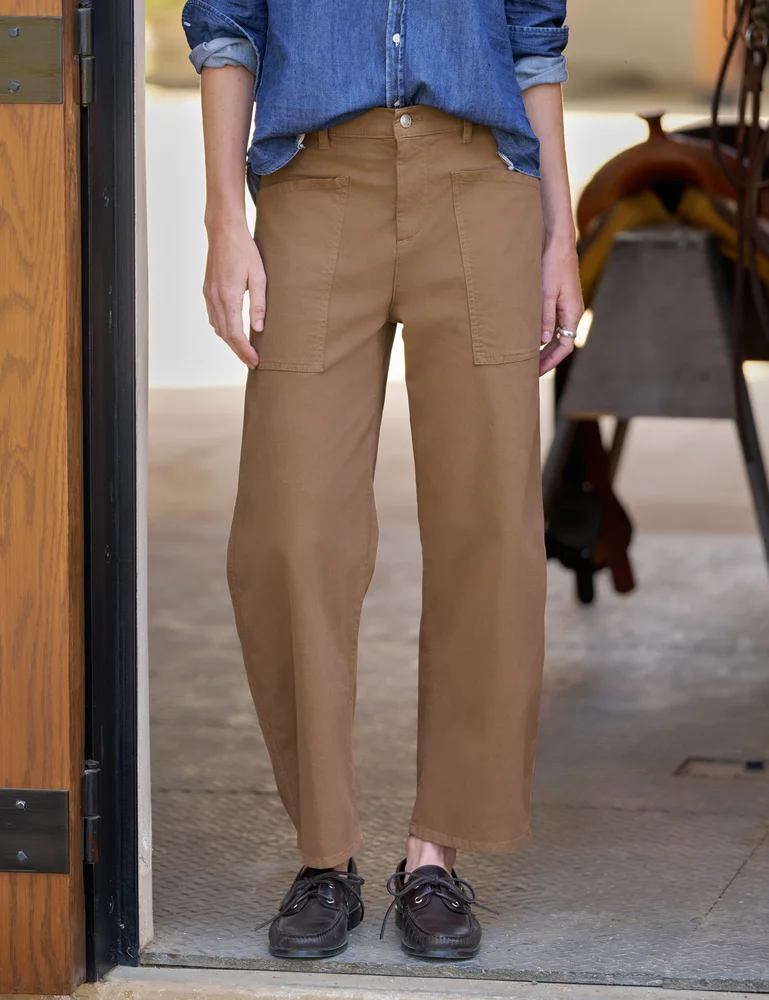
Bray Barrel Pants, Chai
Frank & Eileen
$348
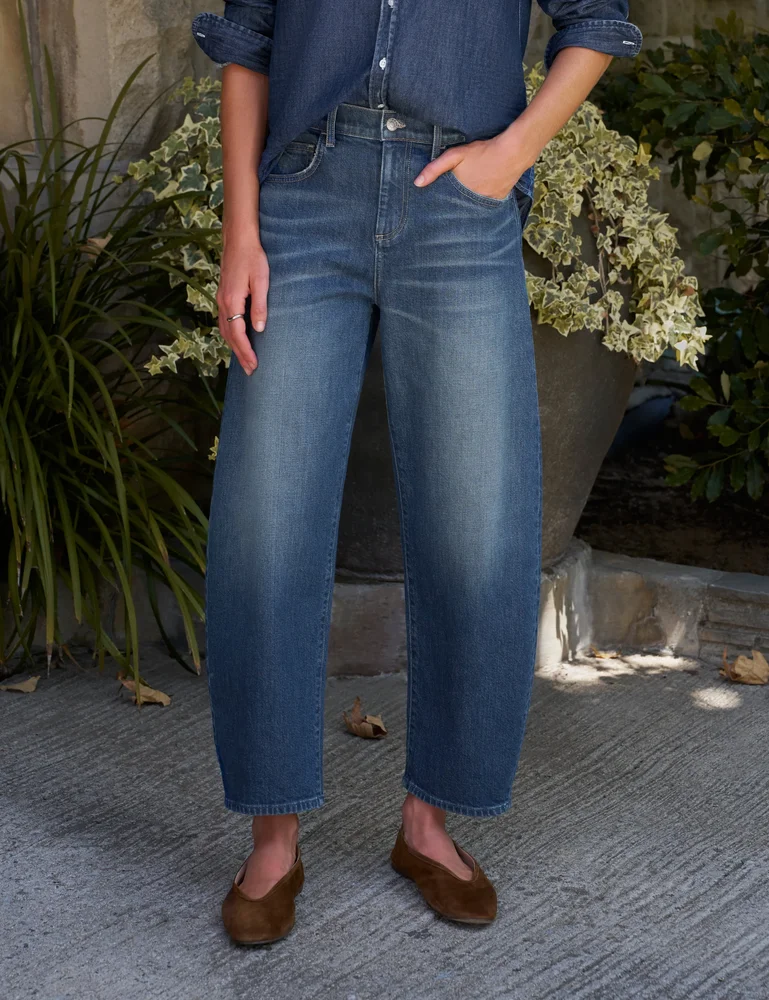
Brennan Barrel Jeans, 1993 Wash
Frank & Eileen
$368
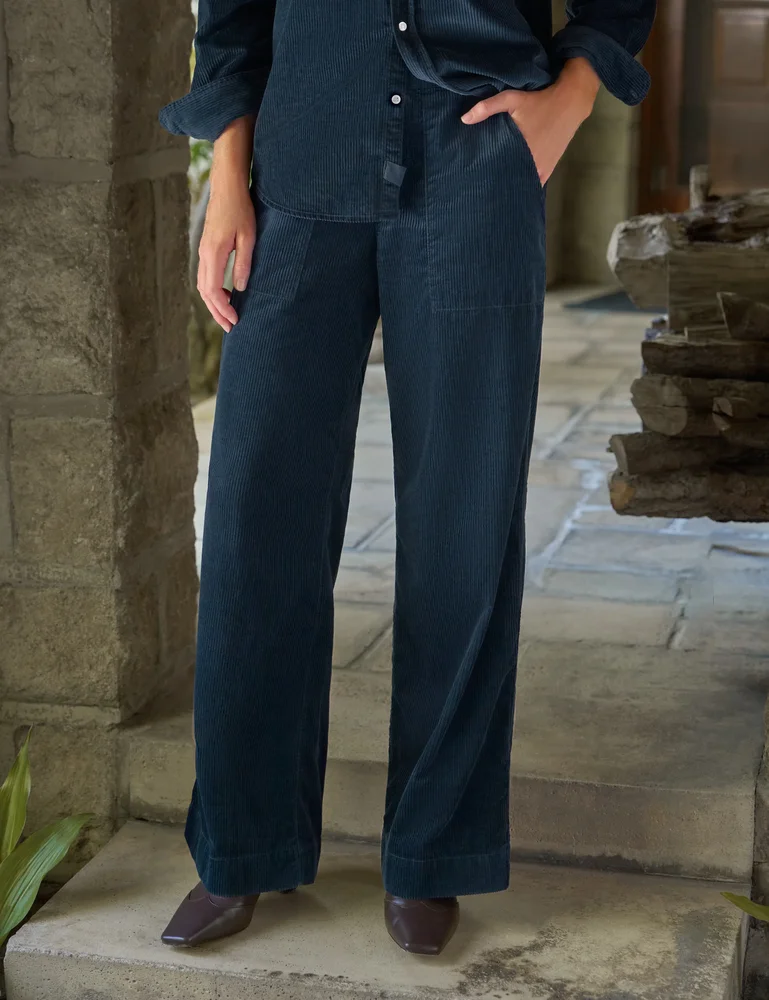
Madeline Wide-Leg Pants, Classic Navy
Frank & Eileen
$298
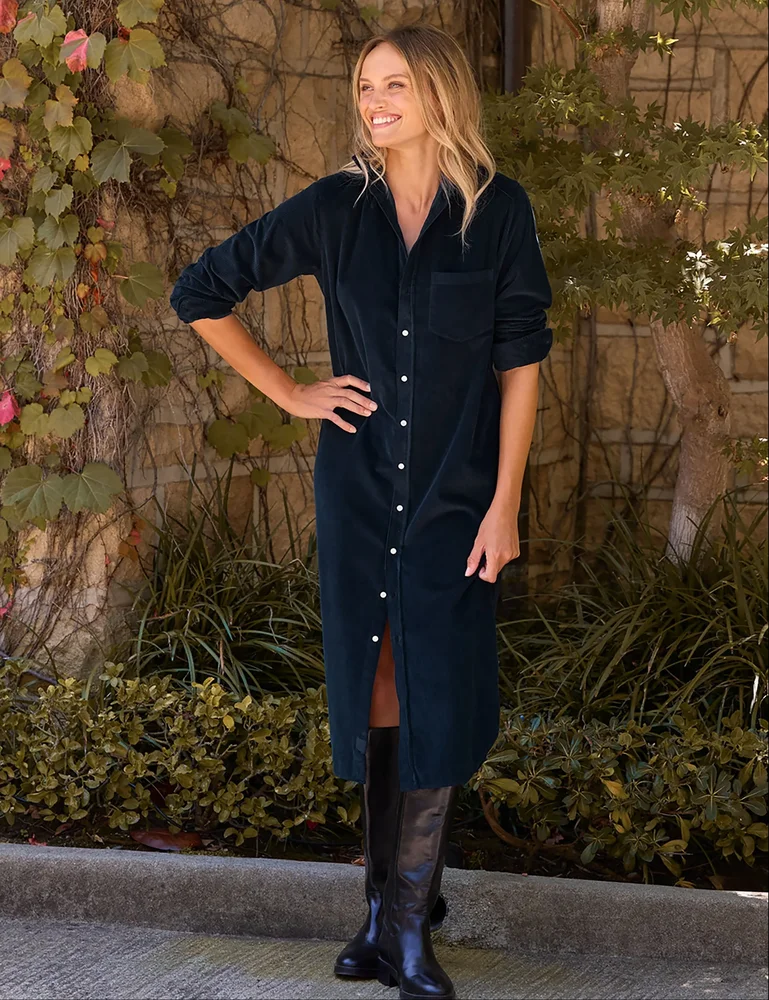
Rory Shirtdress, Classic Navy
Frank & Eileen
$398
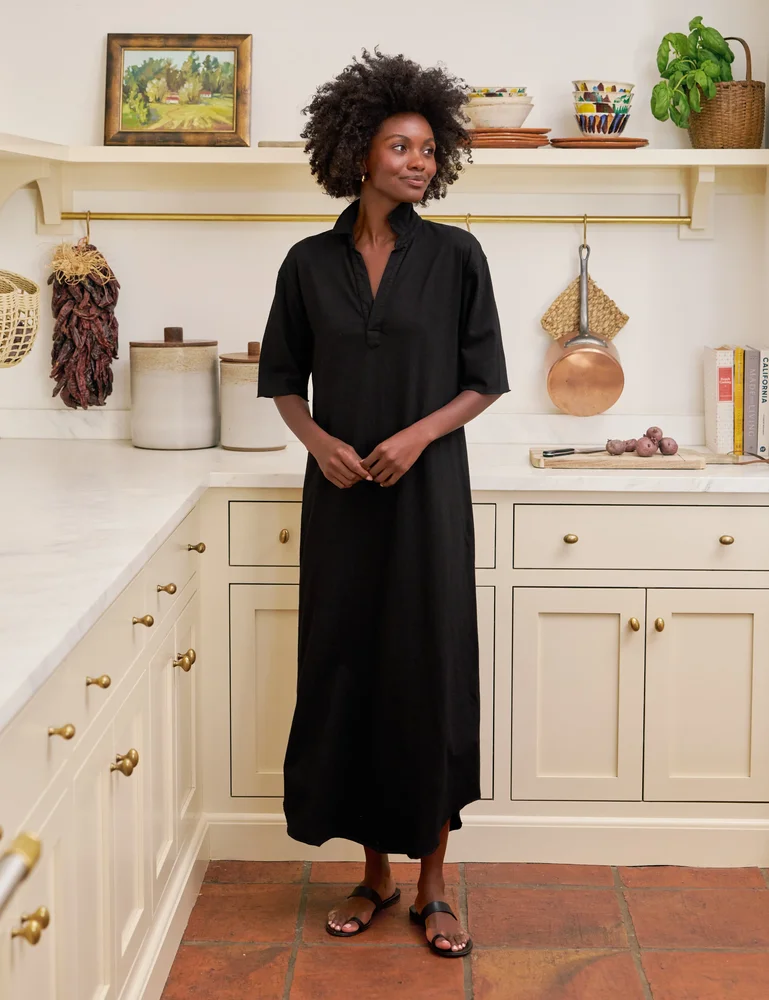
Emma Maxi Dress, Black
Frank & Eileen
$218
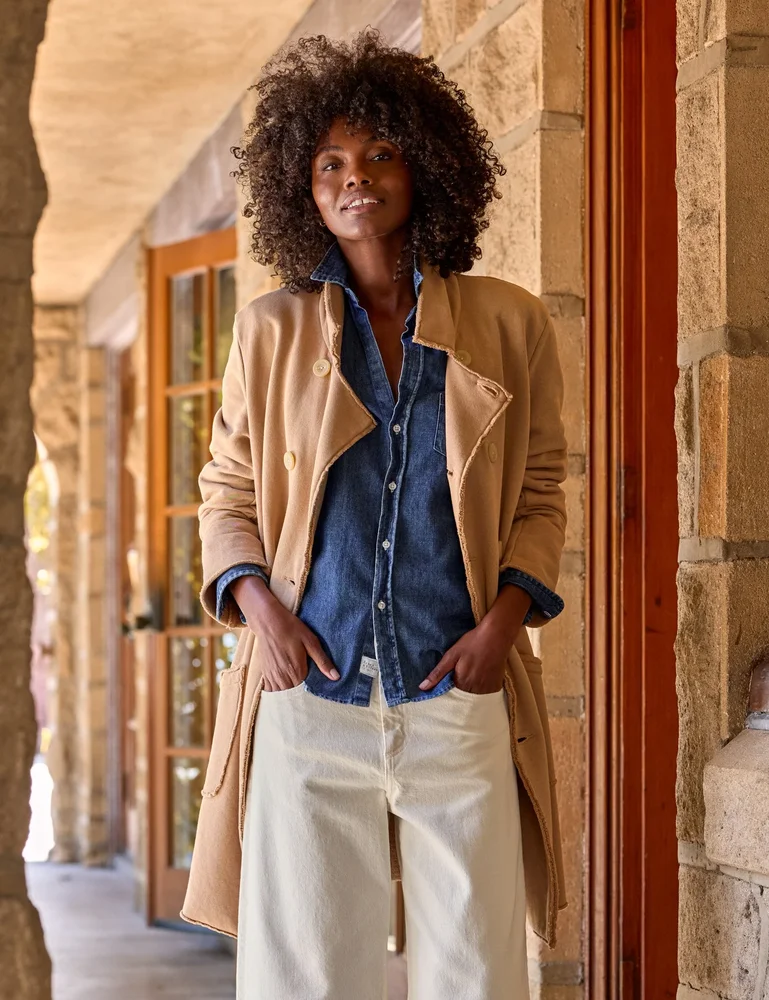
Belfast Trench, Camel
Frank & Eileen
$398
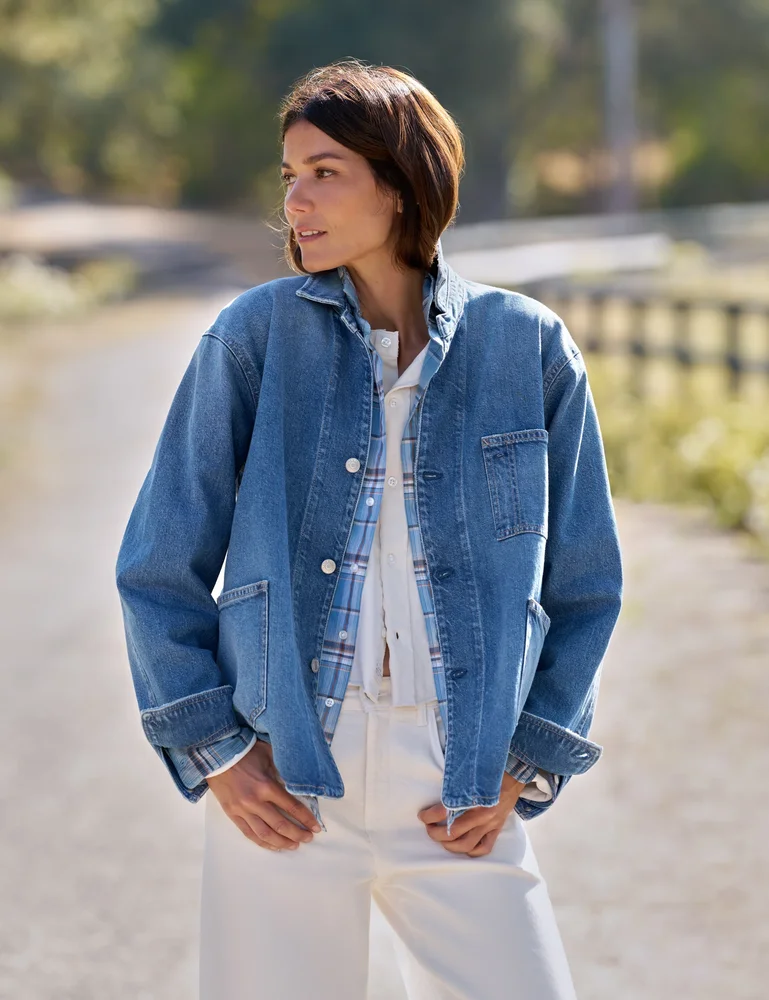
Bantry Barn Jacket, 1978 Wash
Frank & Eileen
$548
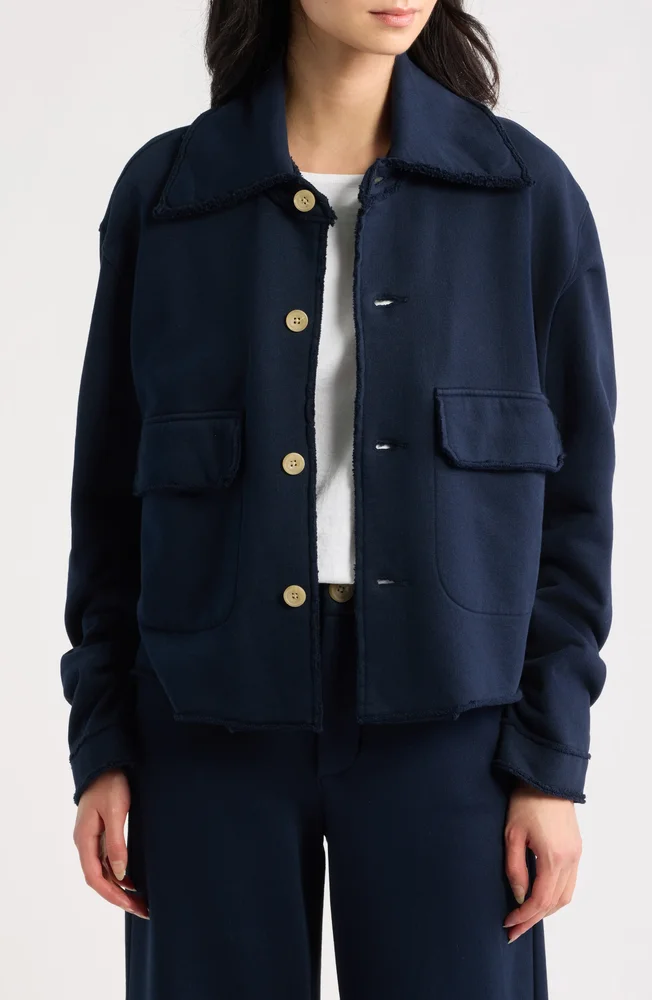
Rowan Crop Utility Jacket
Frank & Eileen
$328
How I would build the closet
I would pick in this order. One Barry shirt first, in stripe or in dark indigo, because that cut shows what the brand is about. Add a Tee Lab henley in white or camel, then a Triple Terry layer, then the pants.
I keep going back to that conference room in Los Angeles: a woman looking at a dusty book of Italian fabrics and asking why men got to wear them. The answer is a closet of shirts named after her family. Cuff rolled, sleeves up, and you are in.