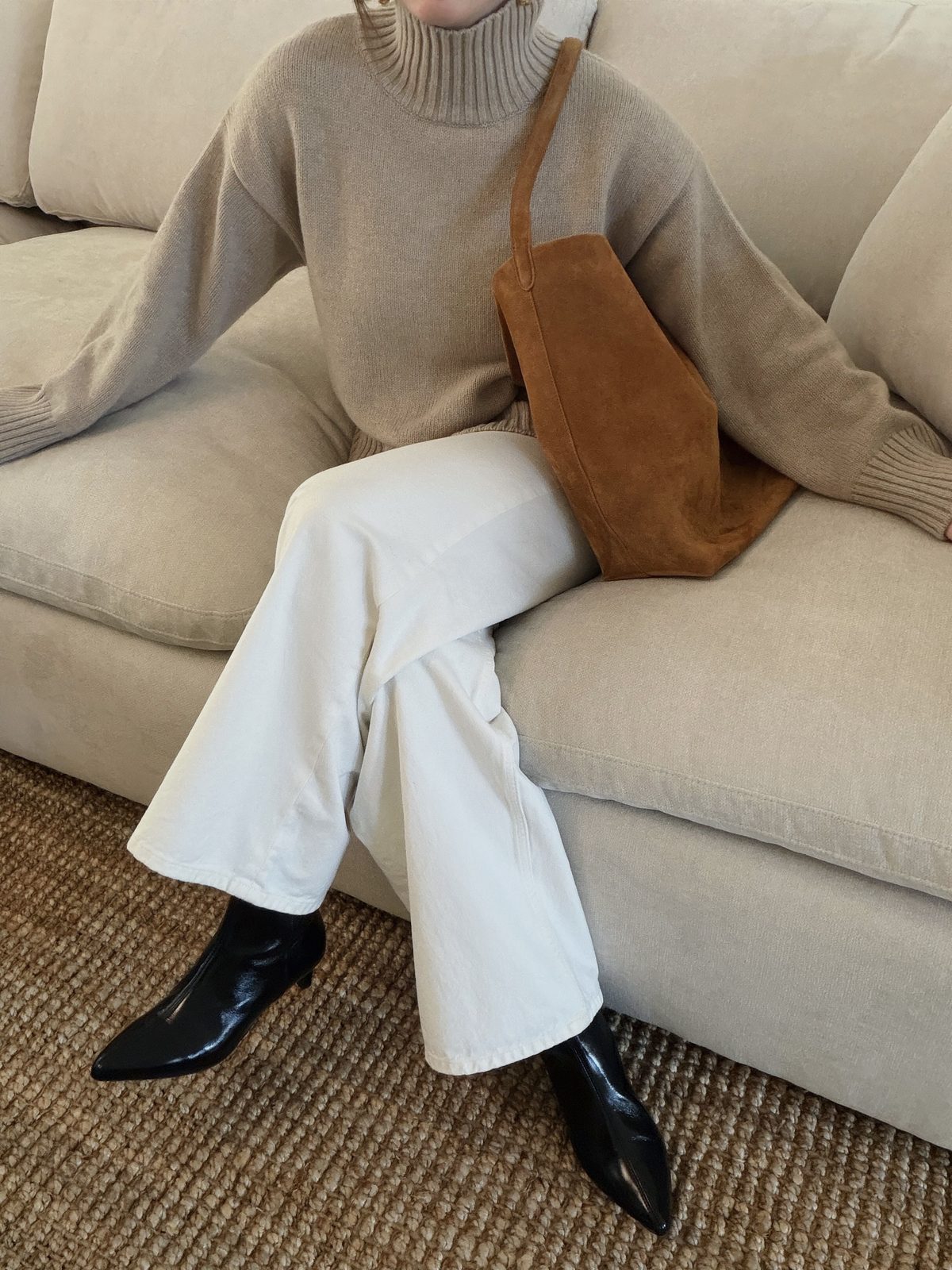
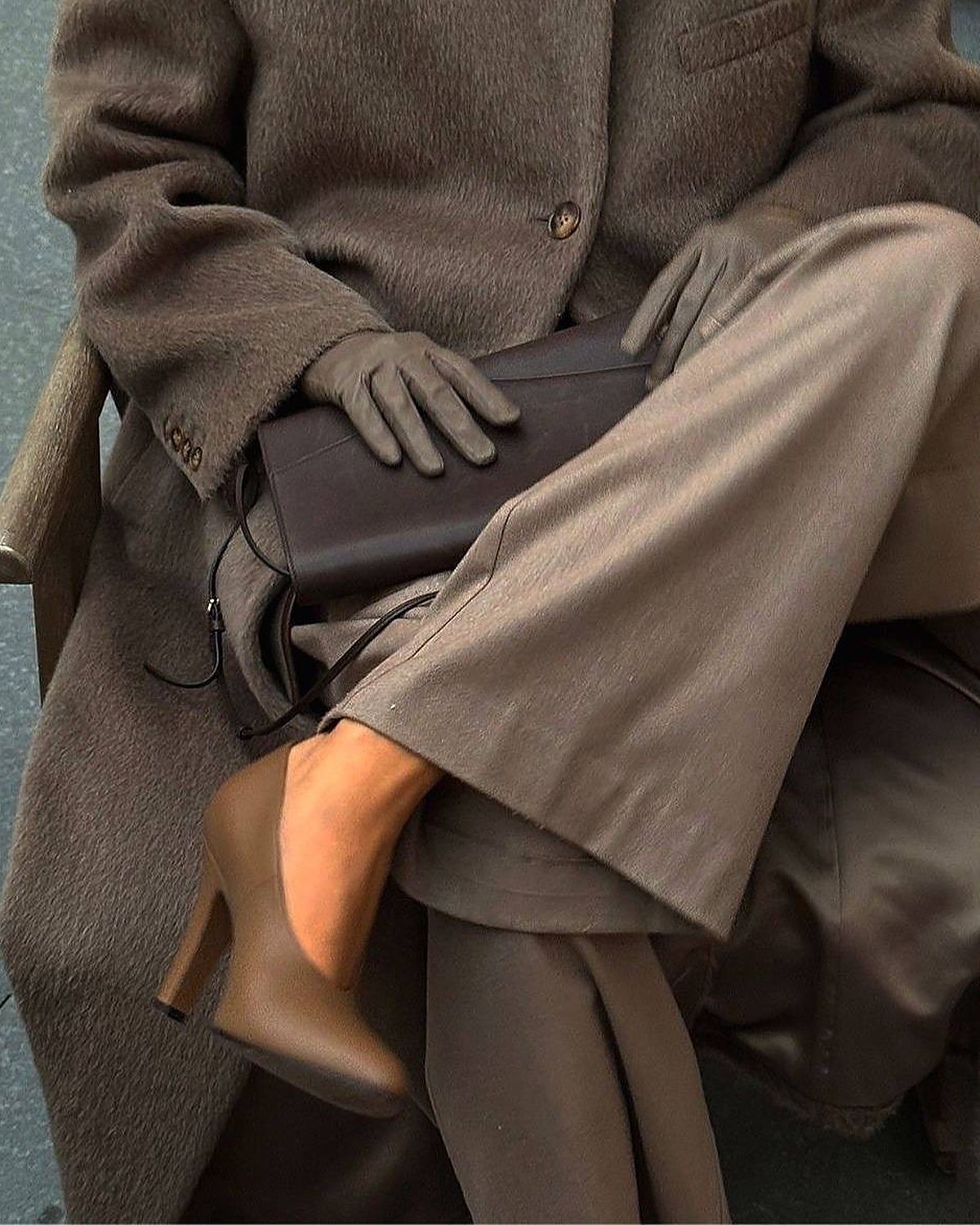
There is a stretch of autumn when ankle boots leave too much space between hem and foot, but a coat feels like overkill. I look at knee-high shapes across different shaft finishes, materials and heel heights, with fit as the detail that makes or breaks the line.

Knee High Boots Solve the Hardest Weeks of the Year
The gap nobody accounts for
Most cold-weather dressing solves for the torso and abandons everything below the knee. Tall boots close that gap and make skirts and dresses viable months longer than they otherwise are. That is a wardrobe extension, not an accessory. The tall boot has swung between 1960s Courrèges futurism and equestrian tradition for sixty years, and the current reading is firmly the riding-boot one. Practical won this round.

Calf fit decides everything
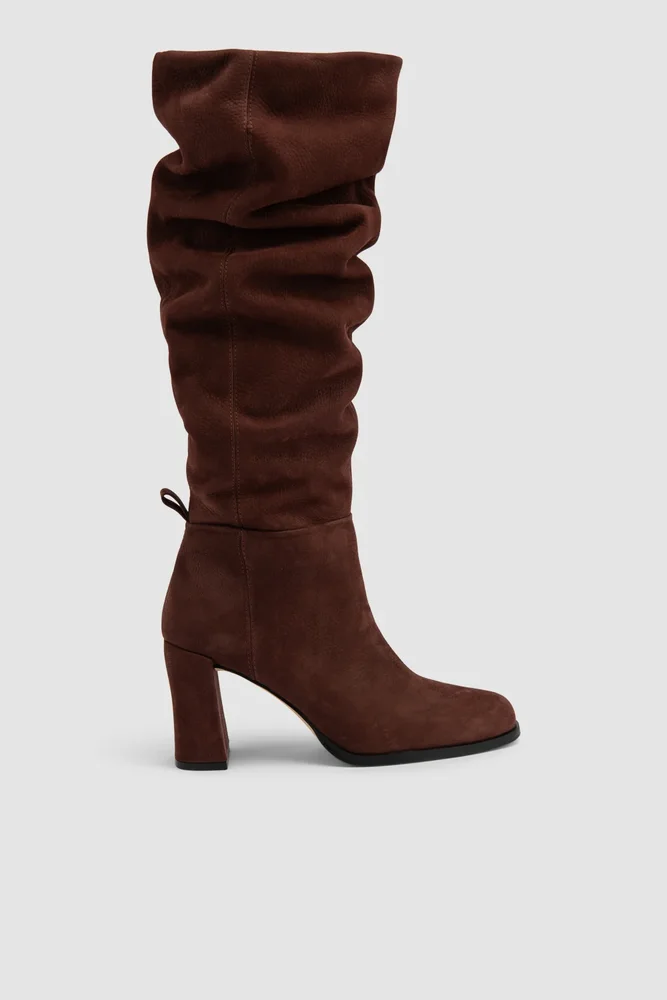
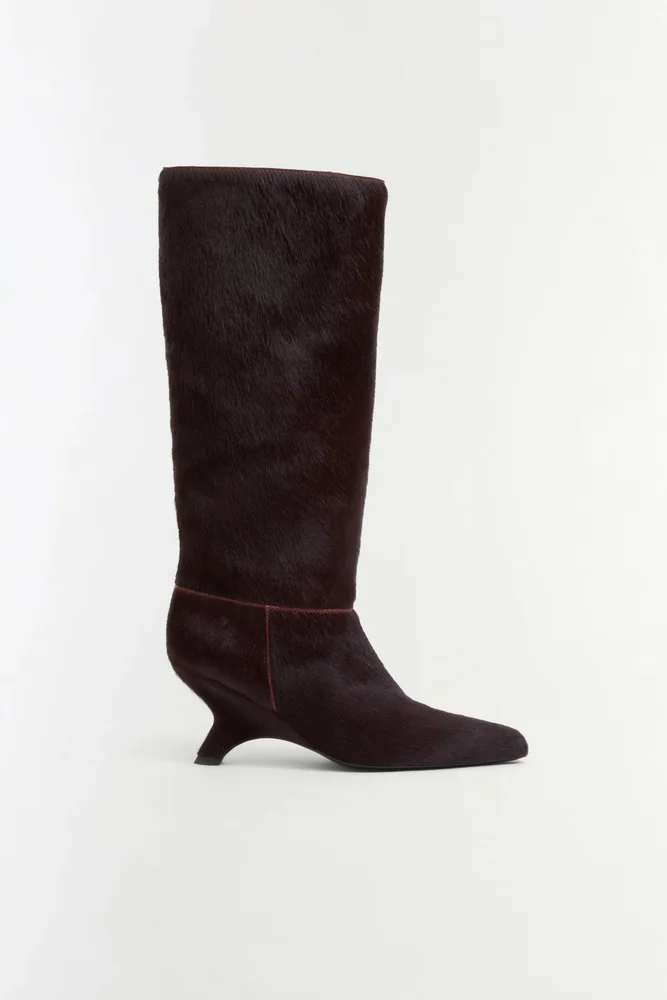
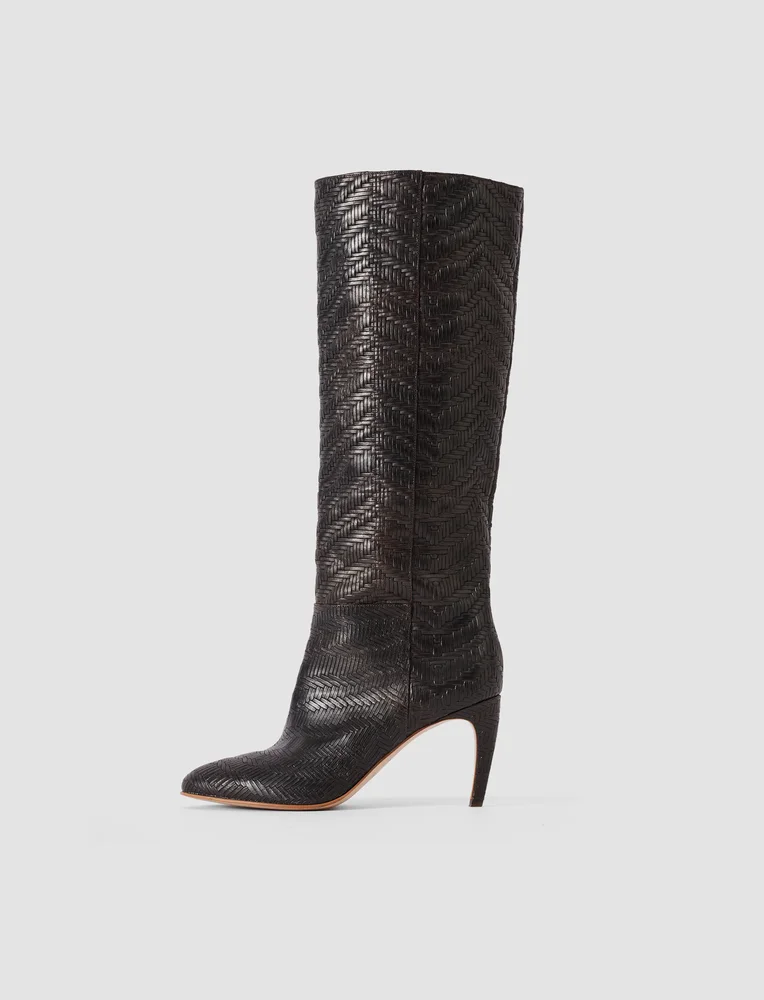
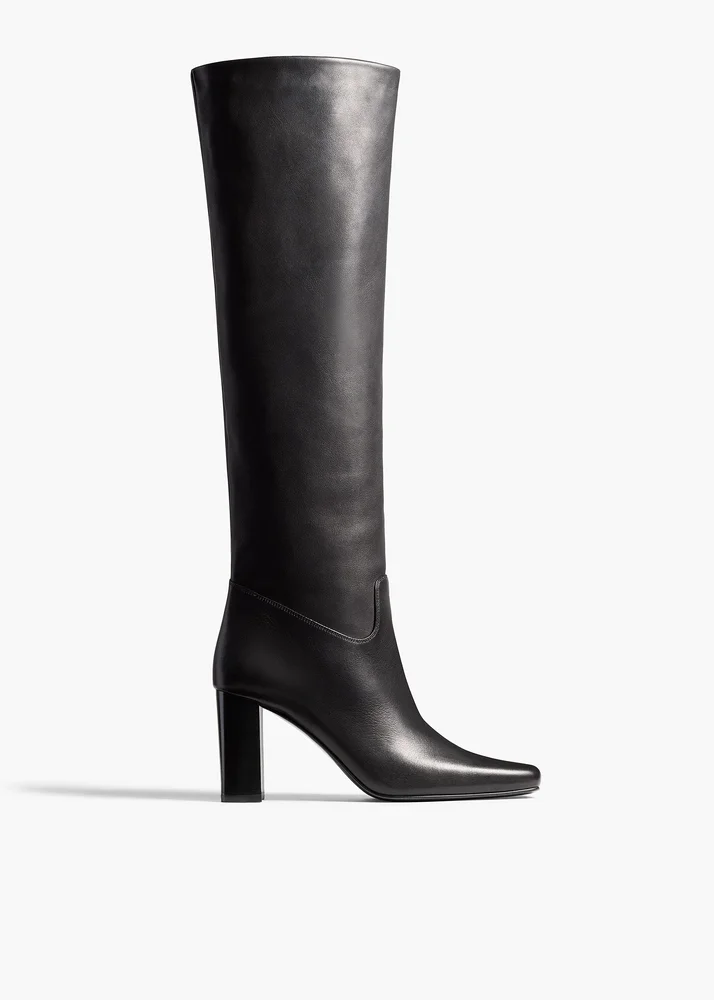
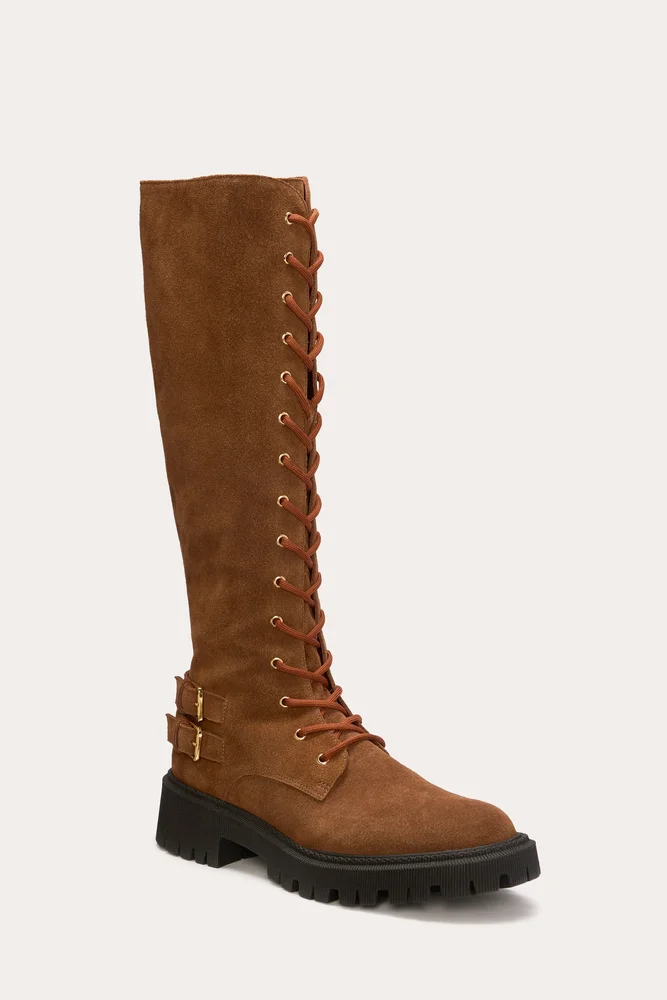
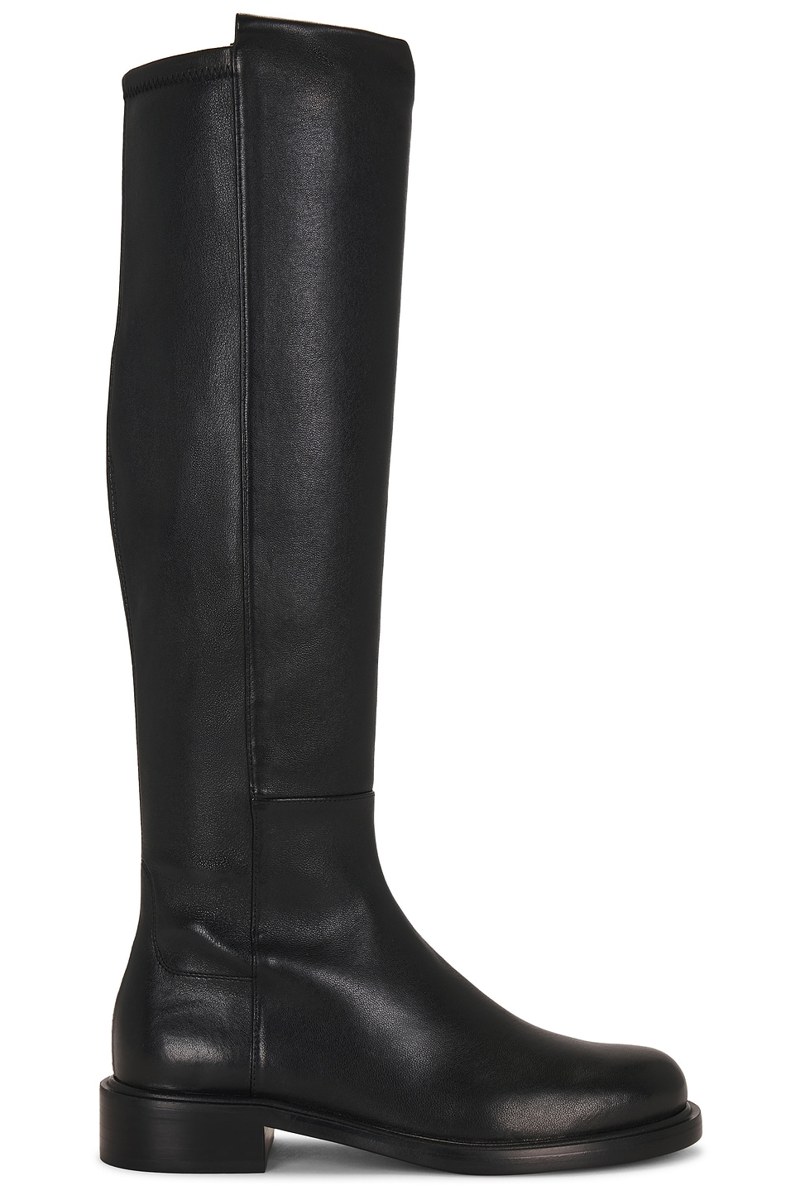
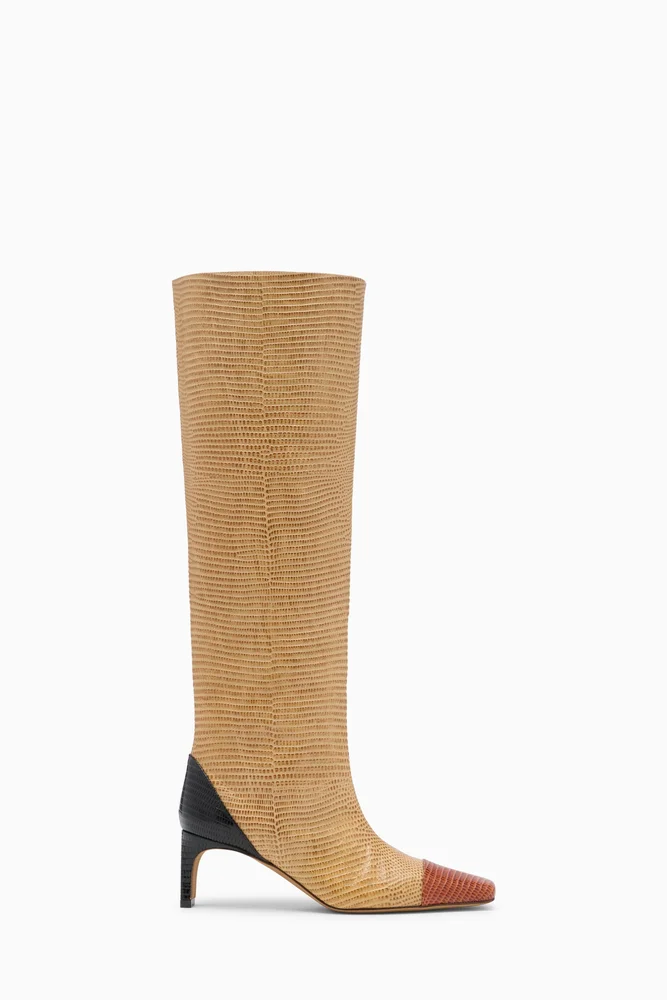
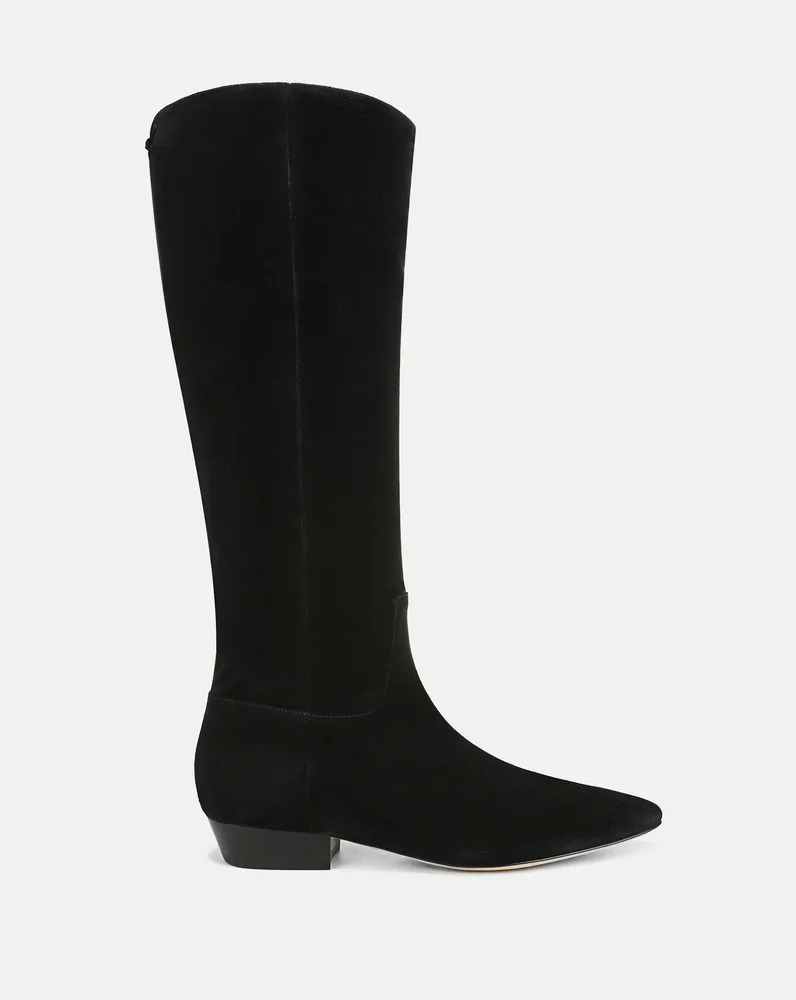
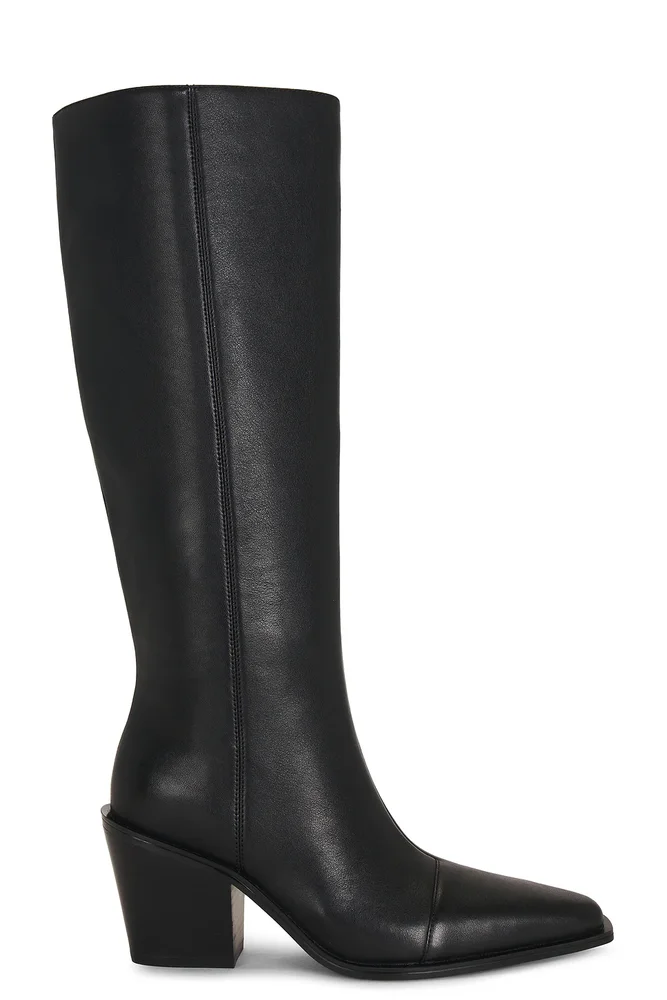
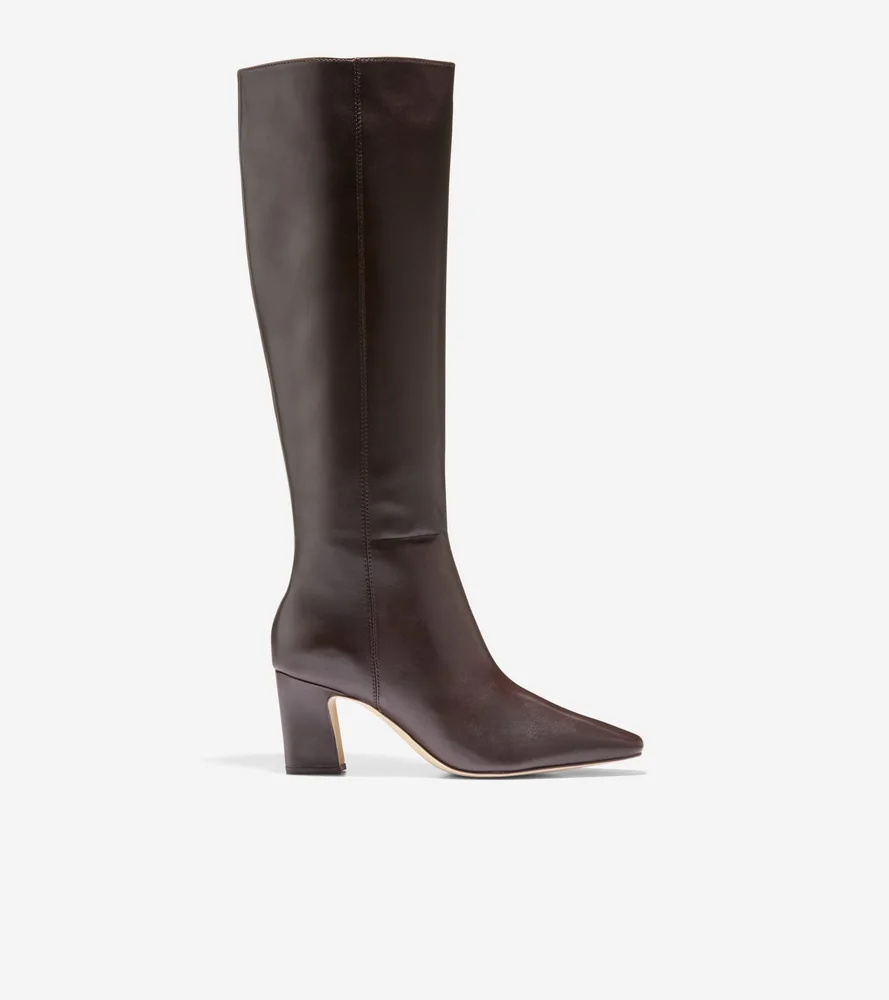
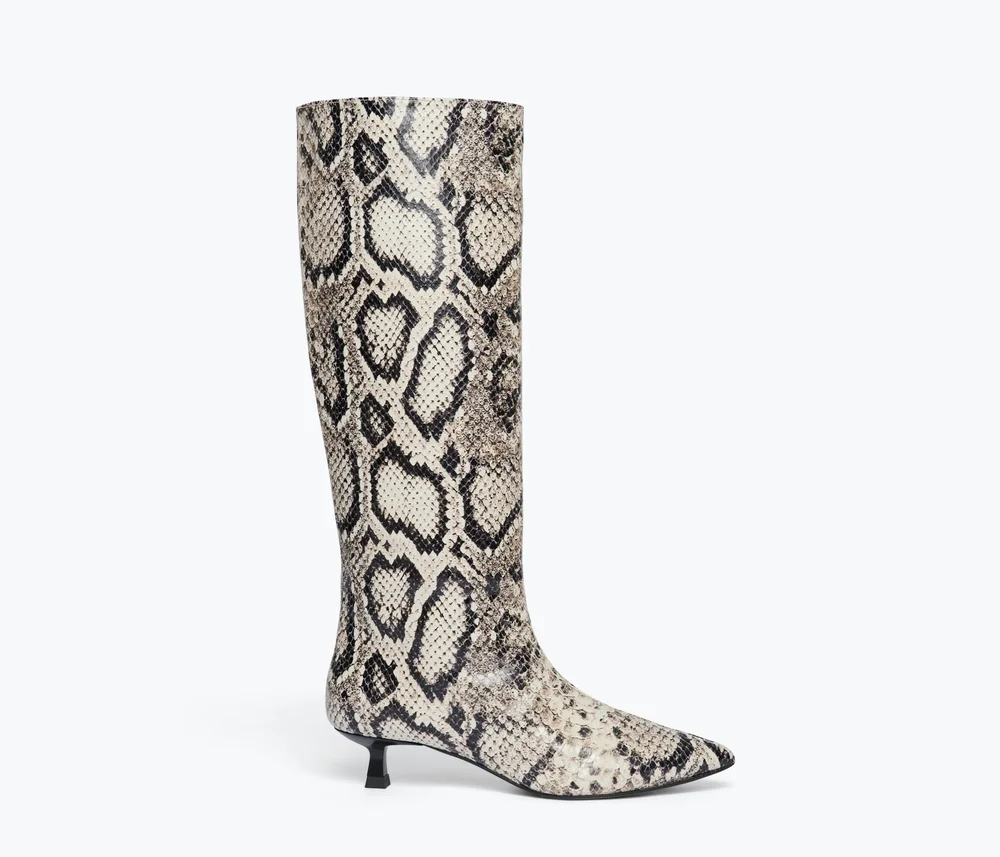
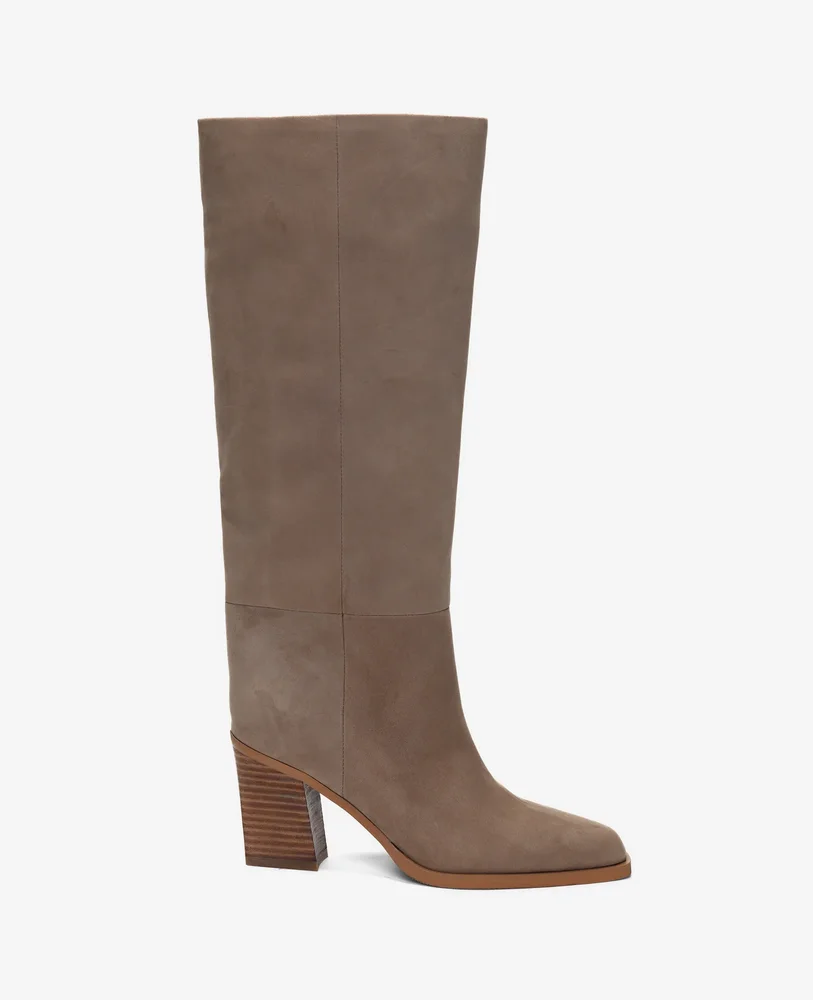
Calf fit is the first thing I check, even when the listing tries to distract me with a heel or buckle. I measure around the widest part of my calf, then compare that with the shaft circumference when I can find it. If a listing leaves that detail out, I would rather ask than guess. The Ramy Brook Valentina Buckled Tall Combat Boot has a more utilitarian feel, while the Stuart Weitzman's 5050 Gisele Knee High Boot keeps the line at the knee. I like the Ulla Johnson Carlyle Knee High Boot as a calmer counterpoint, and the Veronica Beard Gabrielle Tall Boot gives this group a clean, familiar shape. My fit test is to sit, stand and walk in them with the skirt or jeans I will really wear. The shaft should stay comfortable when my knee bends, and the top should not gape when I move. What I would skip: assuming shoe size predicts calf fit. A boot that only works while standing still is not the one I want to keep.
From riding kit to a wardrobe fixture
The tall boot came out of eighteenth century riding dress and stayed strictly functional until the 1960s, when Courreges and Yves Saint Laurent put it on a runway and it never went back. The 1970s made it a daily proposition, the 1990s slimmed it down, and the current version has widened the shaft again to sit over a jean. What has never changed is the underlying logic, which is that a boot ending at the knee removes the gap a skirt leaves. Every revival is a different answer to the same structural problem. That is why it returns roughly every decade rather than disappearing.
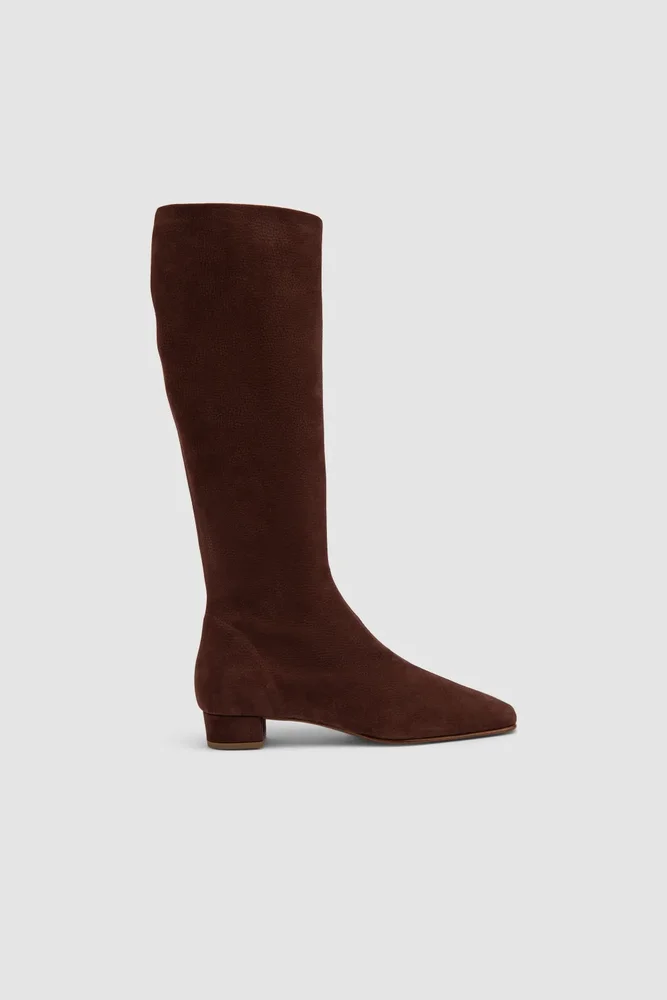
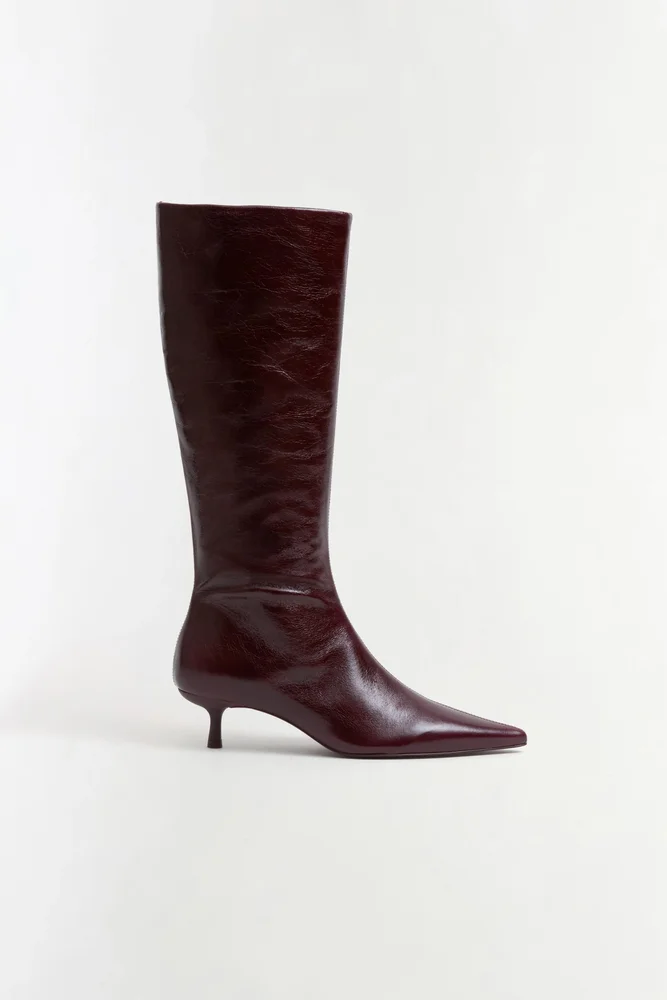
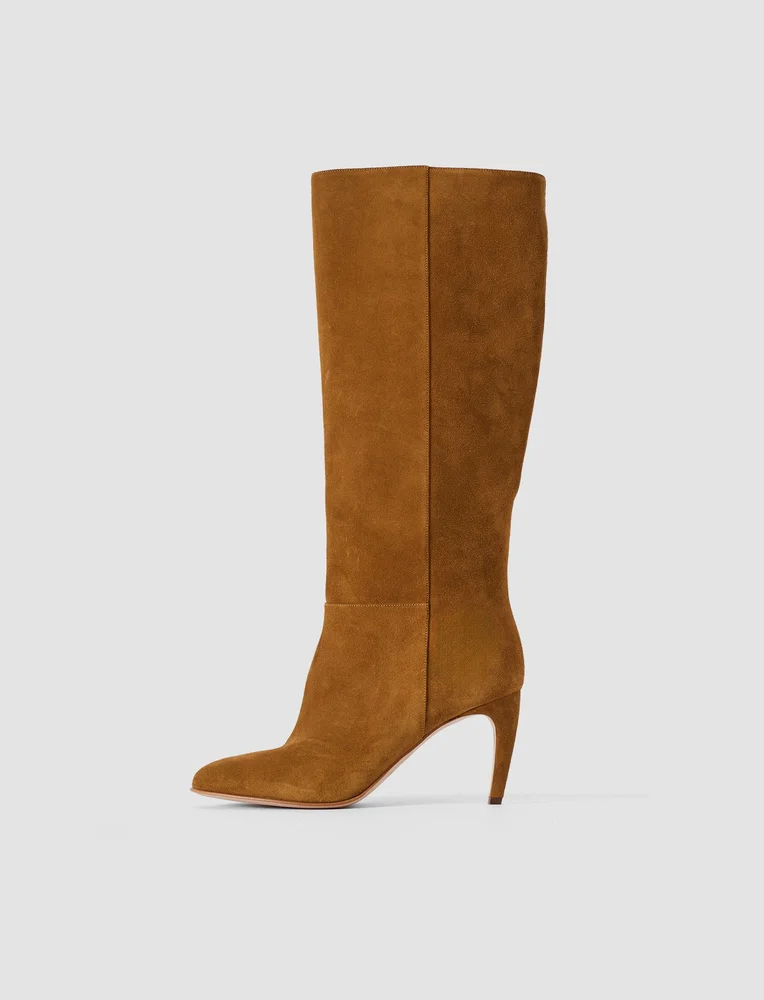
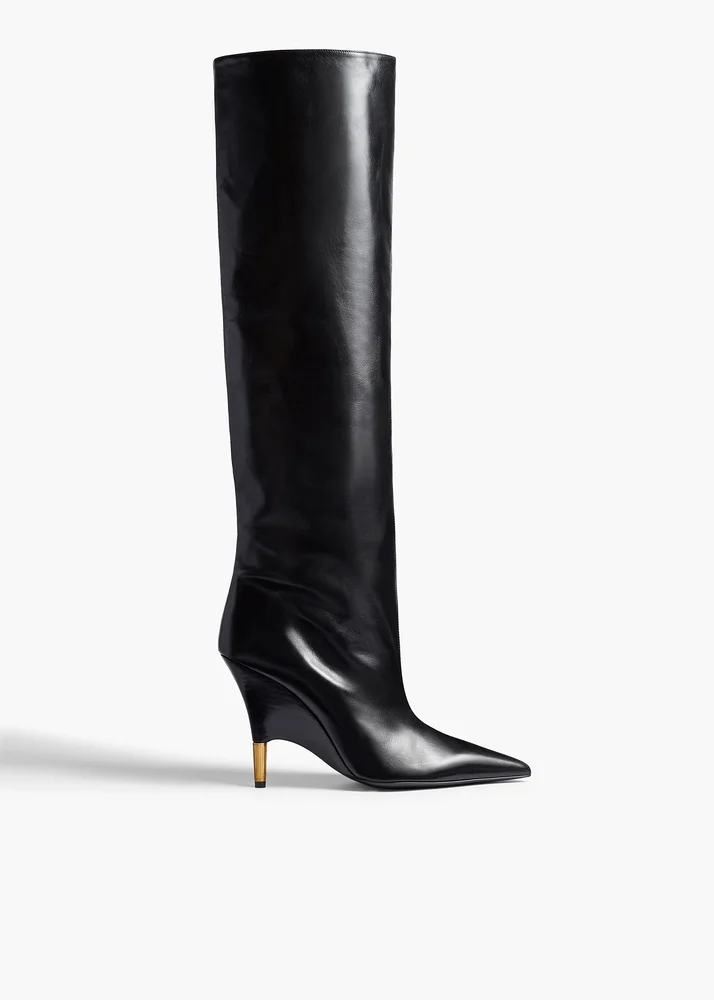
Leather choice changes the shape
A stiff box calf holds a straight column and creases at the ankle in hard folds, while a soft nappa slouches down the leg almost immediately. Suede sits between the two and takes the shape of whatever it is worn over, which is either the point or the problem. Stretch panels at the back of the shaft solve calf fit but wear out faster than the rest of the boot. A zip running the full shaft length is far easier to live with than a short ankle zip, and it is the detail most often cut to save cost. Decide whether you want a boot that holds its shape or one that takes yours.
The Pair I Would Wear All Day
I reach for a block or low heel unless I know I will be sitting down. I want a tall boot to make it through the whole day, and that means walking comfort outranks the dramatic heel in my closet. My test is to wear a pair around the house with the skirt or denim I actually plan to pair it with, then notice whether I am thinking about my feet. What I would skip: buying for an imagined winter calendar full of short car rides. The pair I wear to work, errands and dinner is the one that earns its space. If I want more ideas, I also put together Knee high boots and what to wear them with, Knee High Boots for Petite Women, and Knee High Boots And What Actually Makes Them Work.