Most media cabinets are really about what you do not want to see: the cords, the router, the game console, the remotes. Here are the low consoles, closed cabinets and cane fronts I would choose to keep a living room calm.
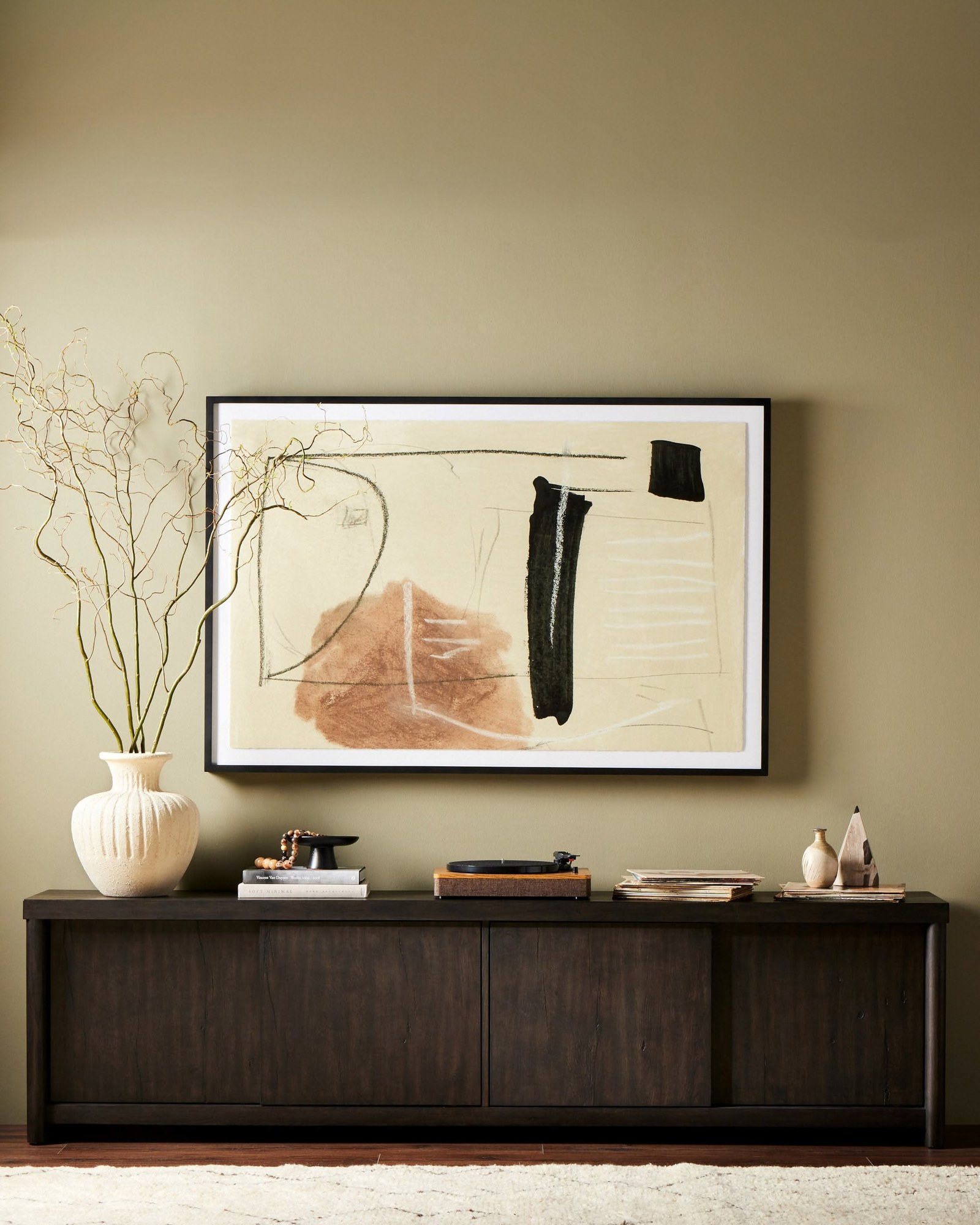
Media Cabinets That Hide the Mess
It is nine at night. The TV is off, and under it sits the real centerpiece of your living room: a nest of cords, a router blinking like a tiny airport, three remotes, a game console, a speaker you never use and a basket of things that do not live anywhere. You notice it every single evening. Everyone does.
This is why media cabinets matter more than people think. The television is a black rectangle and it will always be a black rectangle. What changes the wall is the furniture under it, and whether that furniture is hiding the mess or putting it on display.
Two measurements before anything else. First, width: the cabinet should be wider than the TV, ideally by several inches on each side, so the screen looks like it is sitting on something rather than balancing. Second, height: when you sit on the sofa, the middle of the screen should land roughly at eye level. That usually means a low console, lower than you would guess.
The first grid is low consoles, the most versatile shape. Lulu and Georgia's Rosebury and Macari are clean and grown up. Nathan James's arched open console shows off a few books and baskets, and their Mid Century console is the easy classic. Anthropologie's Wright lacquer console is glossy and a little bit glamorous, while the Betti in burl wood has a pattern so pretty you will forgive it for anything. Urban Outfitters' Alana and Ebba are the simple, apartment-friendly picks.
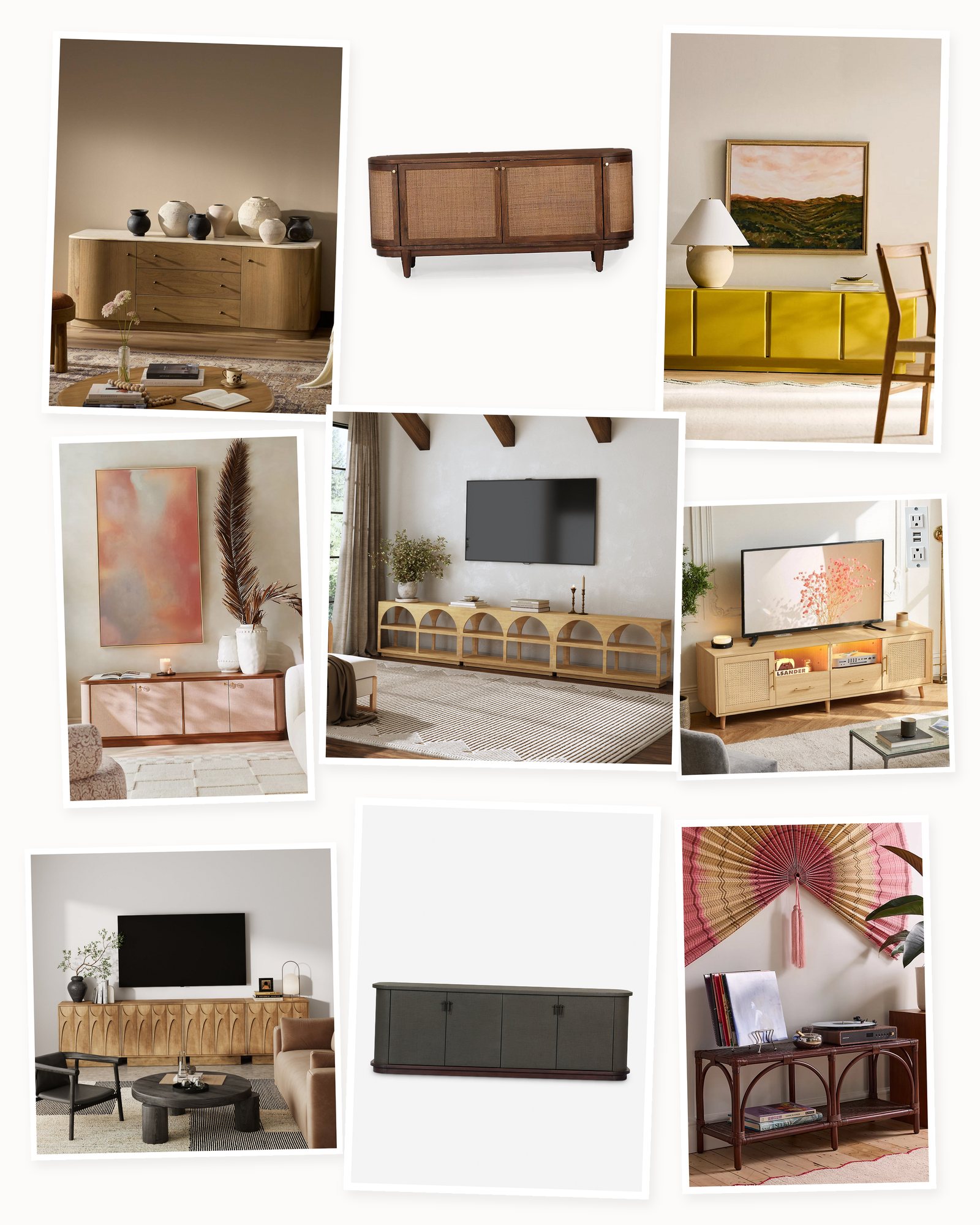
Low media consoles
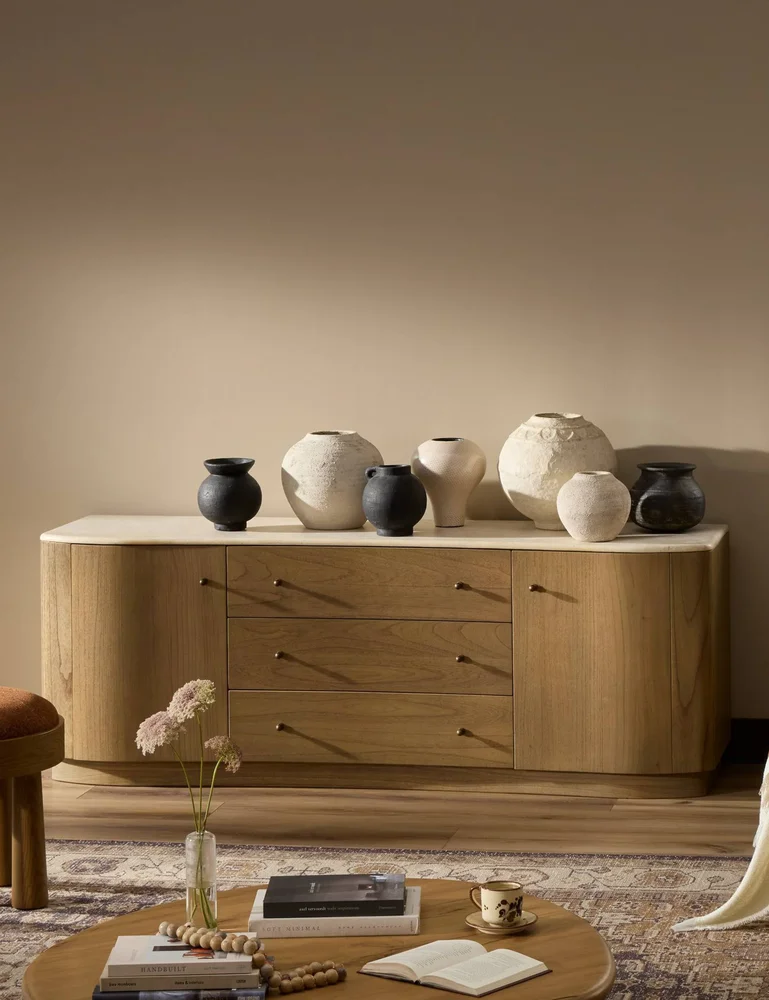
Rosebury Media Console
Lulu and Georgia
$4,499
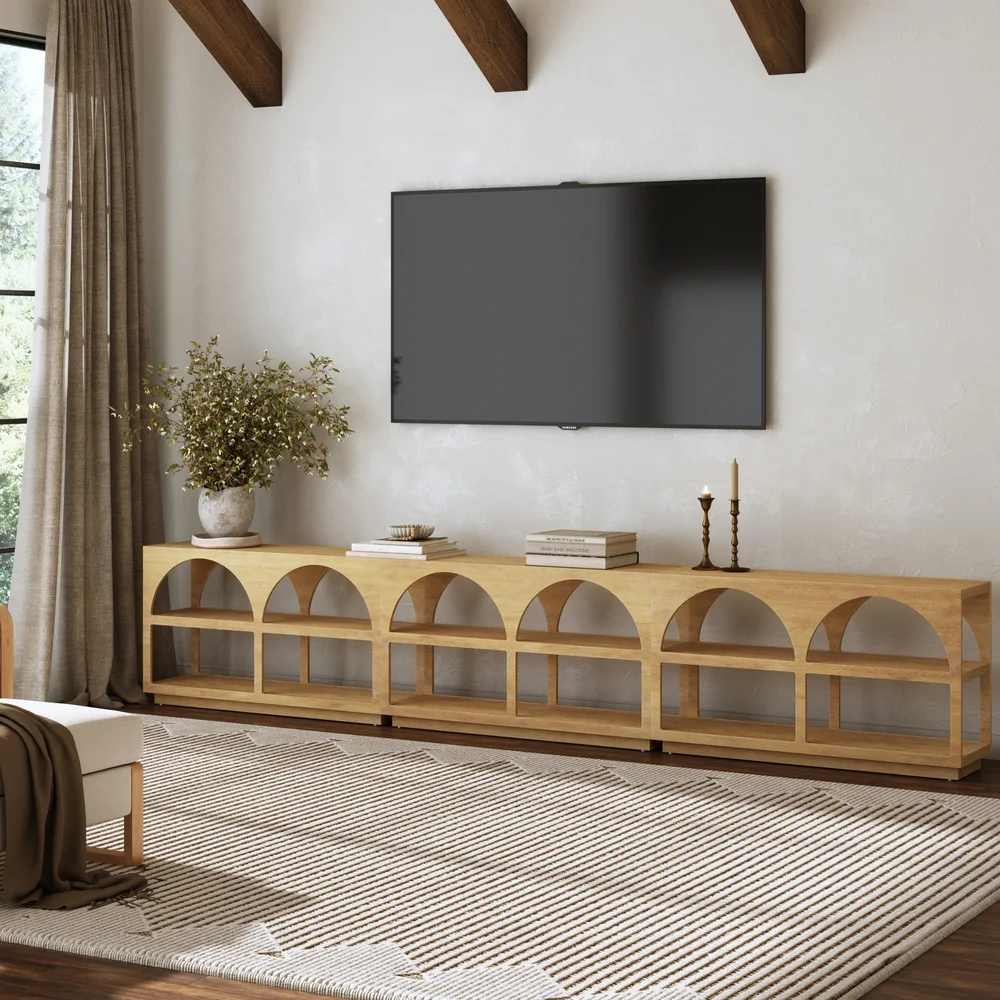
Modern Wood Arched Open TV Console
Nathan James
$929.97
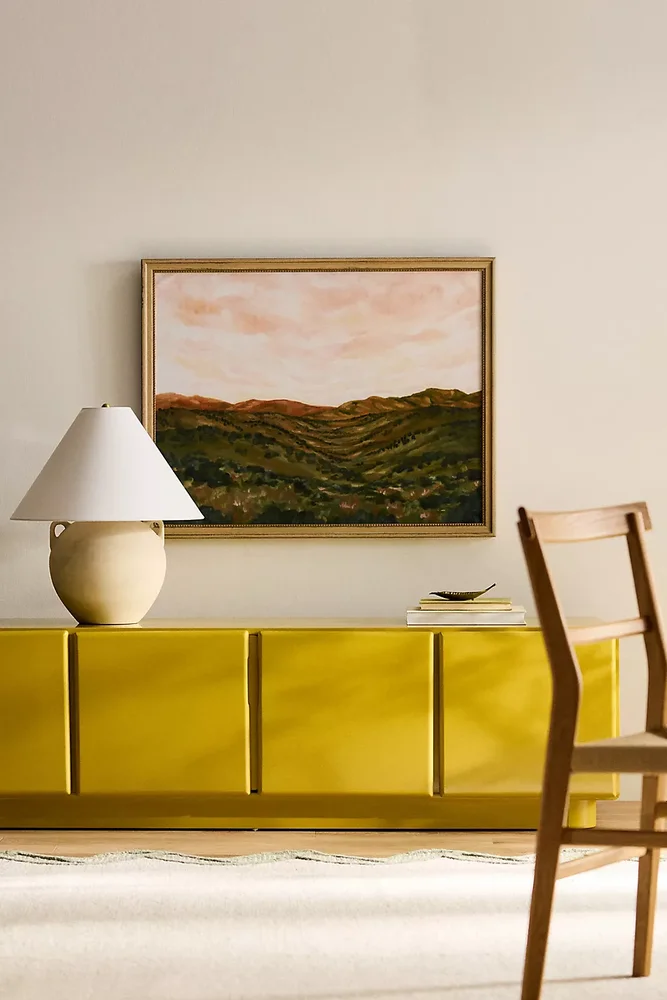
Wright Lacquer 72" Media Console
Anthropologie
$998
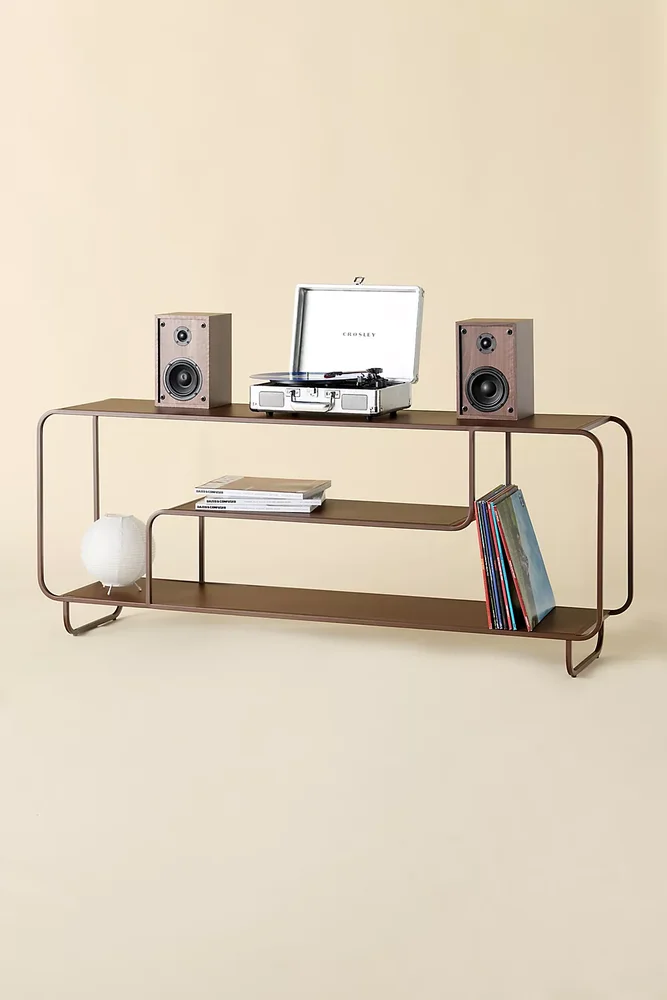
Alana Media Console
Urban Outfitters
$299
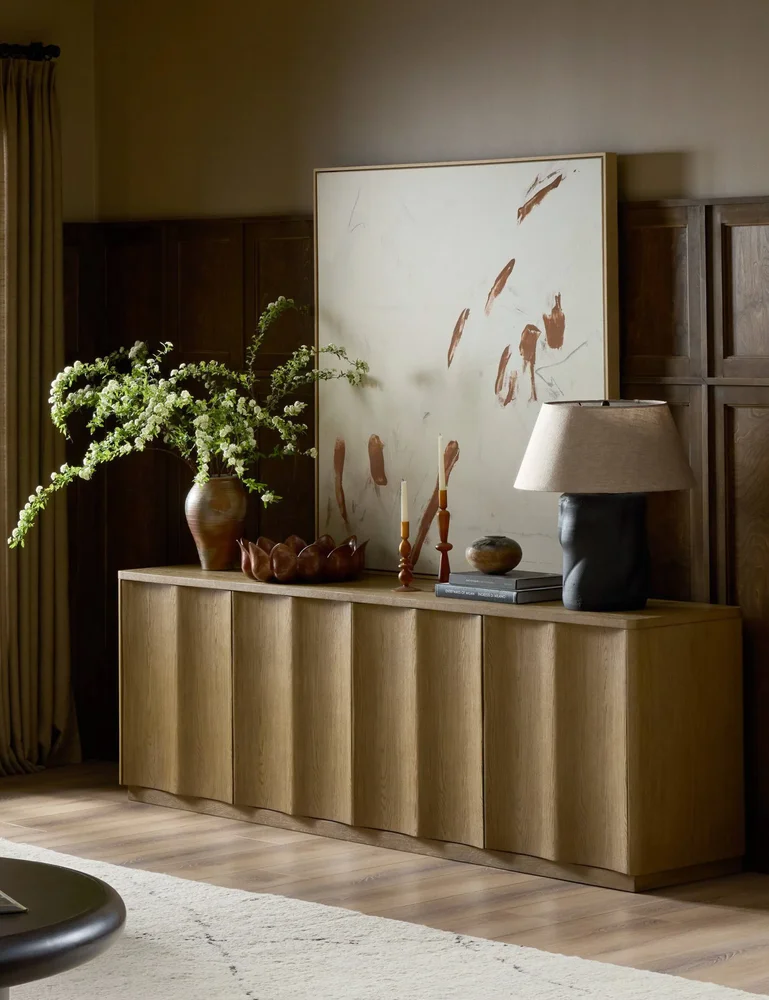
Macari Media Console
Lulu and Georgia
$1,999
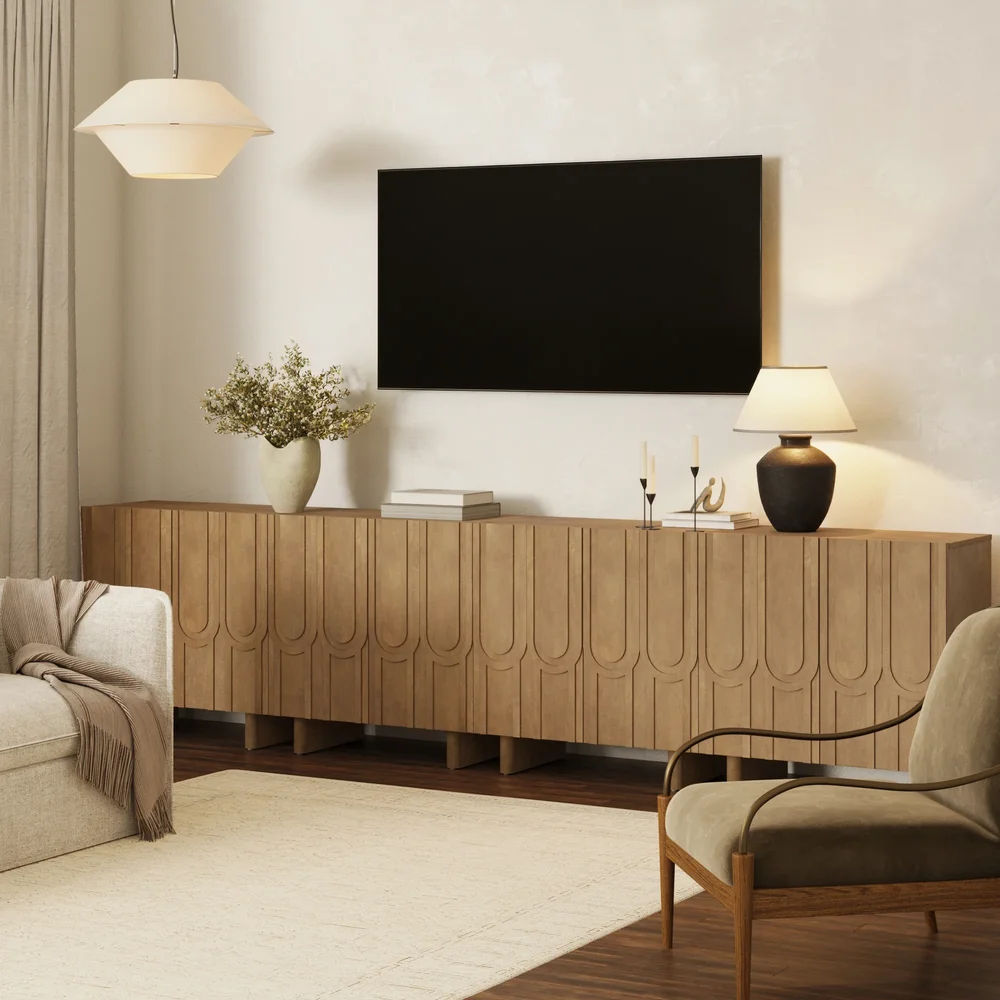
Mid Century TV Console Table
Nathan James
$1,399.96
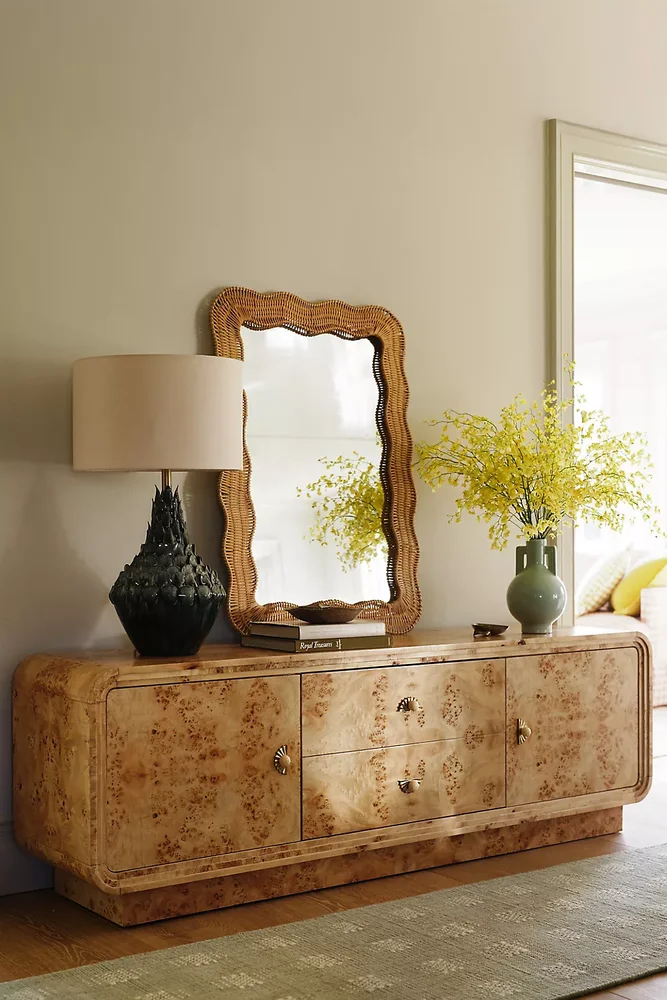
Betti 76" Burl Wood Media Console
Anthropologie
$1,598
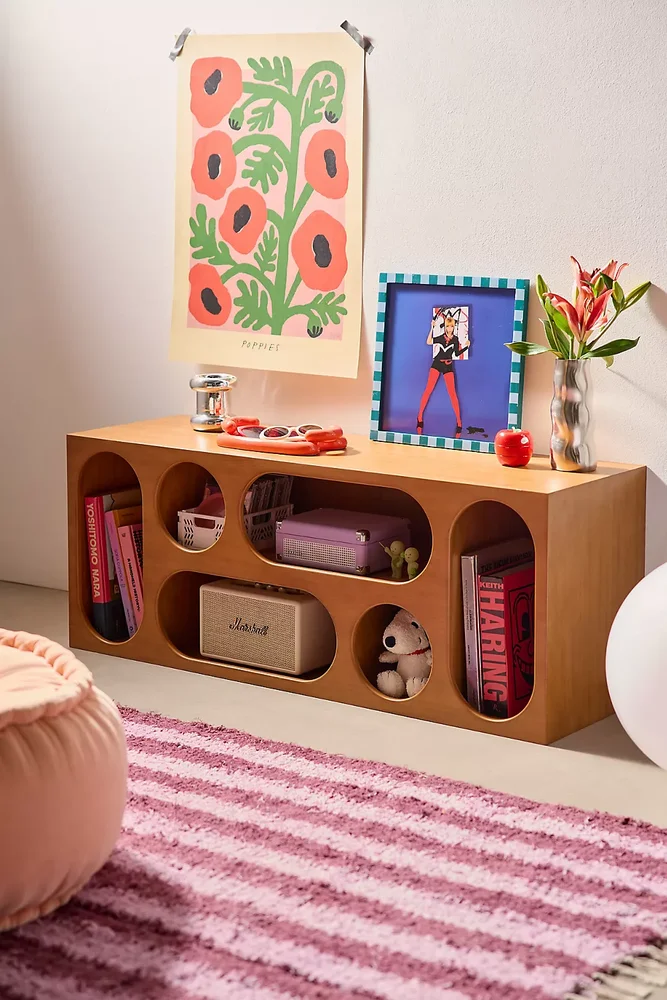
Ebba Media Console
Urban Outfitters
$499
Doors are the whole point
An open shelf looks great in a photo, where someone has styled it with two books and a vase. In real life, open shelves are where the chargers go to die. If you have a game console, a cable box or children, you want doors.
Lulu and Georgia's Vanna and Toulson are the tidy, closed versions of a low console, the kind that make the wall look calm the moment you shut them. Nathan James's console with carved doors adds texture you can see from across the room, and their textured front version does something similar in a quieter way. Anthropologie's Acadia wraps its doors in raffia and wood, warm and handmade, and the Whitney hides everything behind its curtain front. Ebern Designs' Jalonda is a plain, modern wood stand, and Wade Logan's Tillman in alder white is bright and easy in a lighter room.
A few practical things to check. Look for a cutout or an open back so cords can reach the wall without you drilling holes. Game consoles and cable boxes run warm and like a bit of air, so make sure the back is not sealed tight. And test your remote. Many remotes need a clear line to the device, which means solid doors can leave you opening the cabinet every time you want to change the channel. That is where the next grid comes in.
Measure the inside depth too. A cabinet can look generous from the front and still be too shallow for a soundbar or a console that sits on its side.
Media cabinets with doors
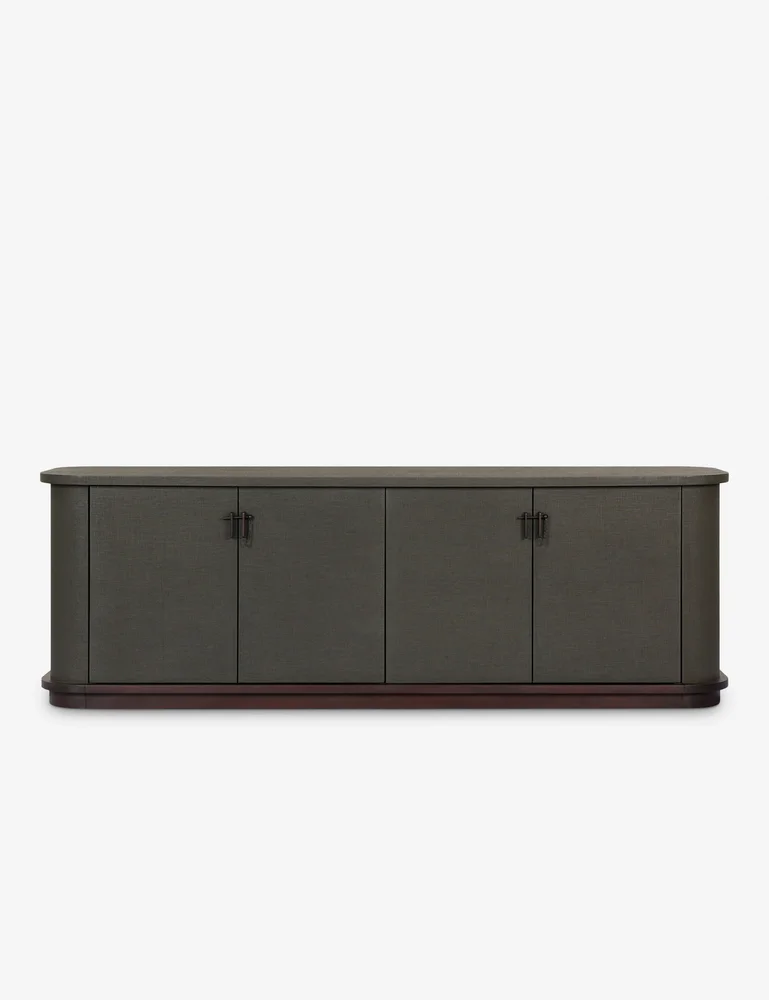
Vanna Media Console
Lulu and Georgia
$3,199
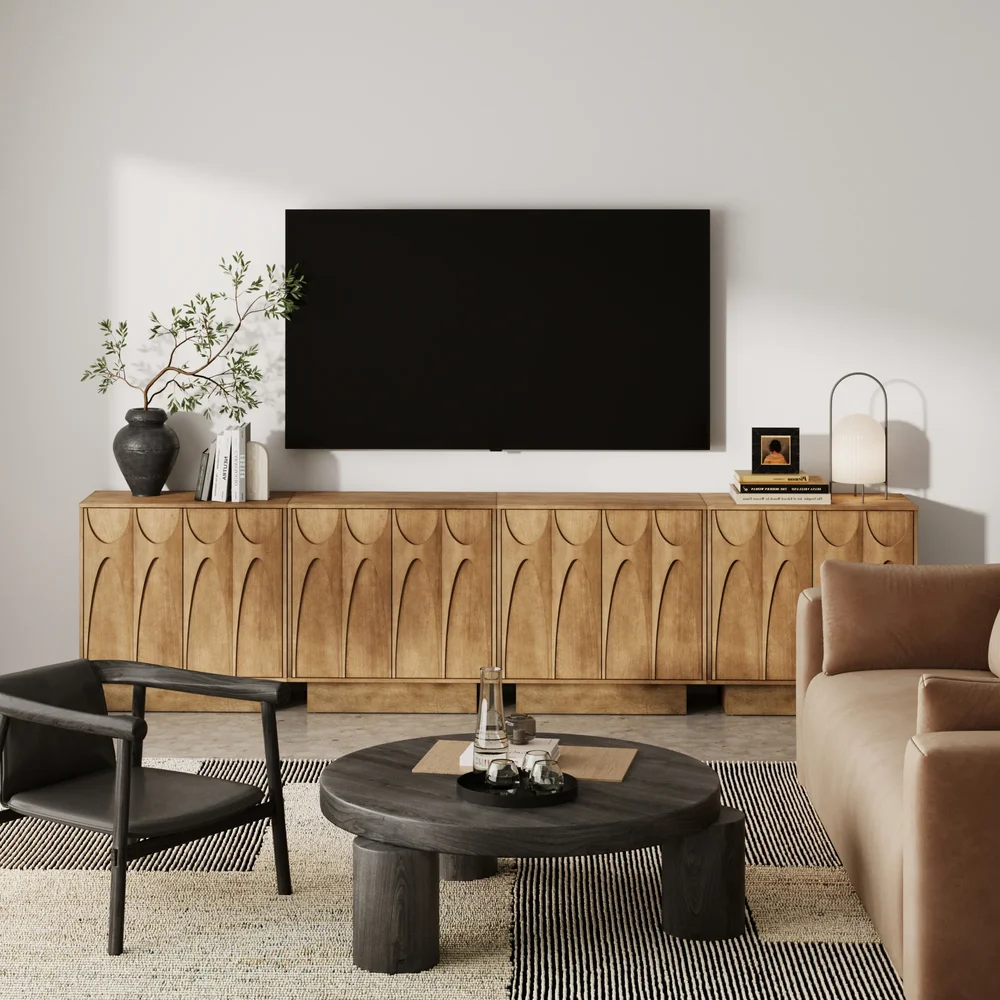
Wooden TV Console with Carved Doors
Nathan James
$1,599.96
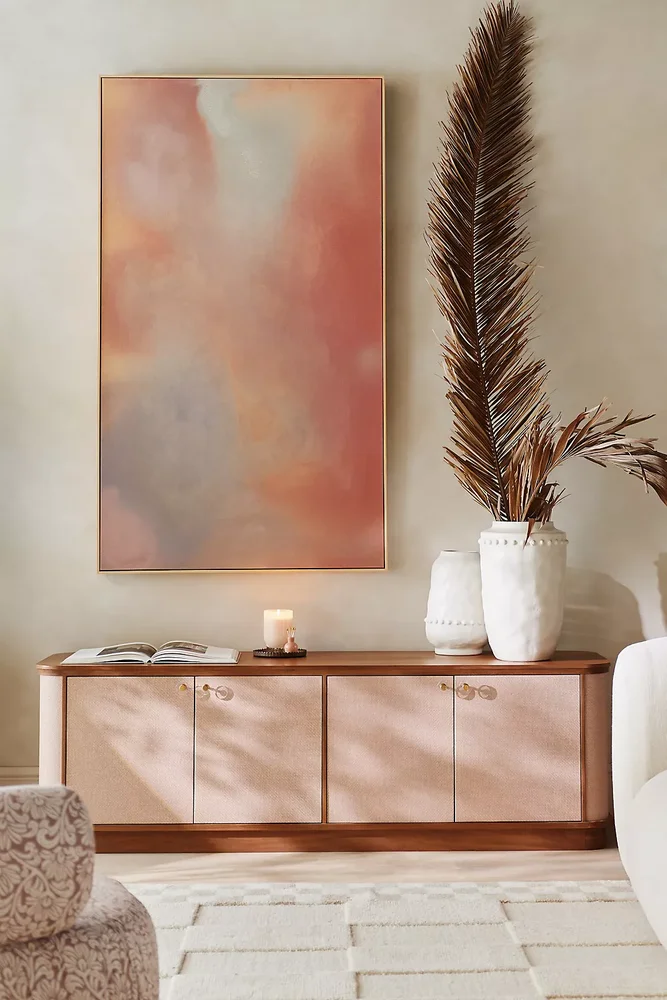
Acadia Raffia & Wood Media Cabinet
Anthropologie
$2,198
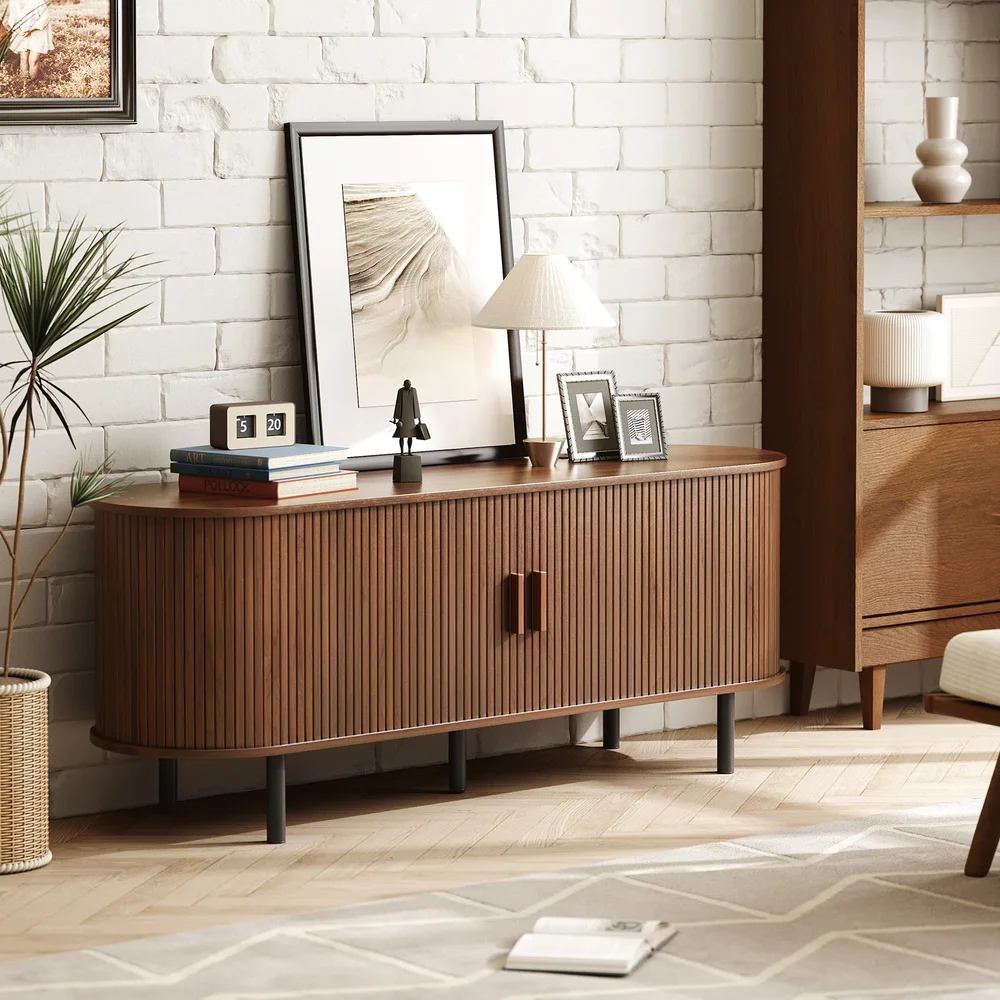
Jalonda Modern Wood TV Stand
Ebern Designs
$141.99
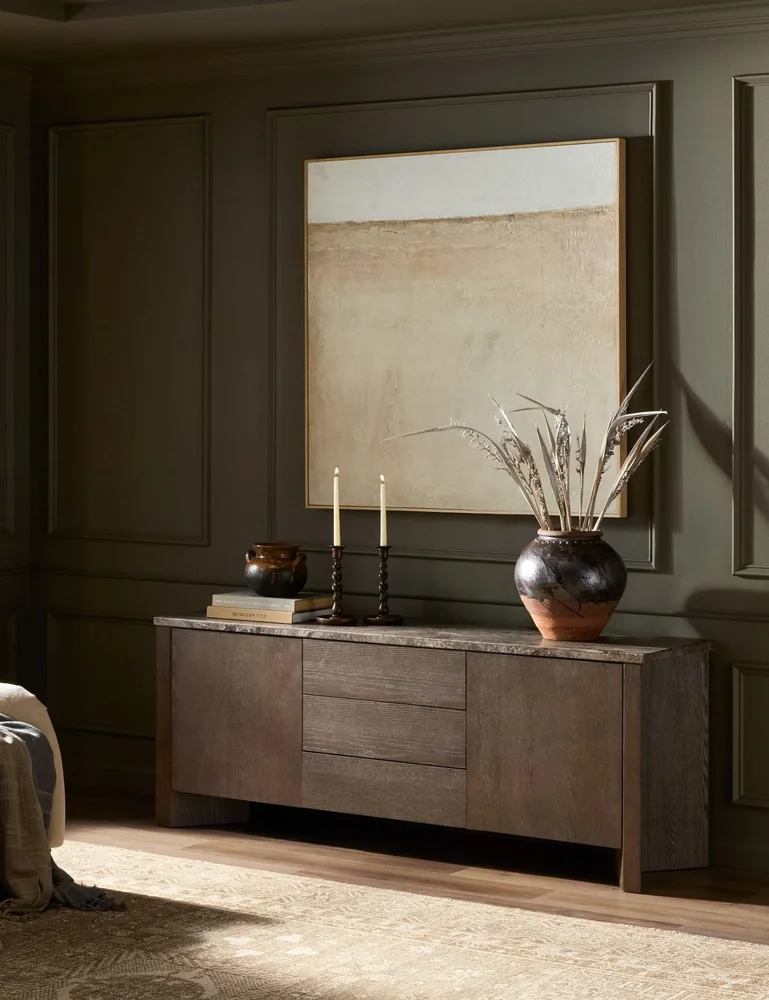
Toulson Media Console
Lulu and Georgia
$2,999
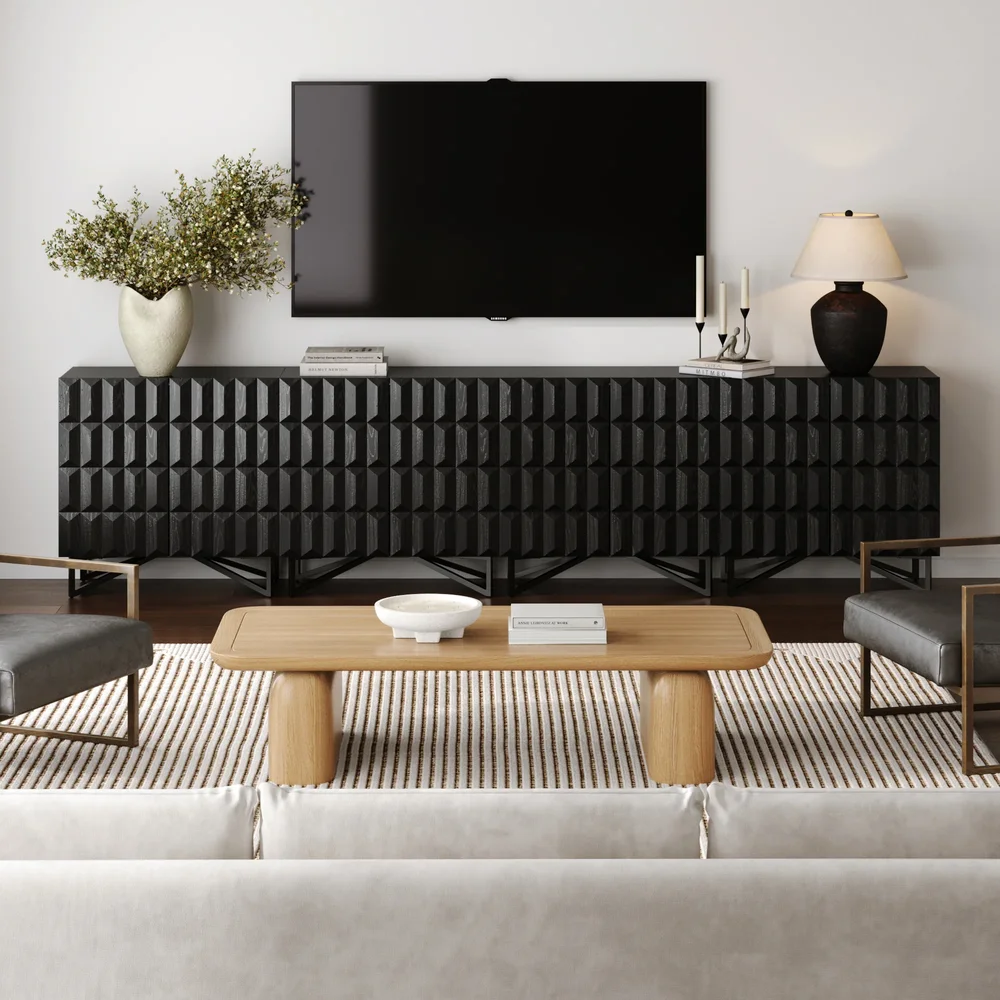
Modern TV Console with Textured Front
Nathan James
$1,599.96
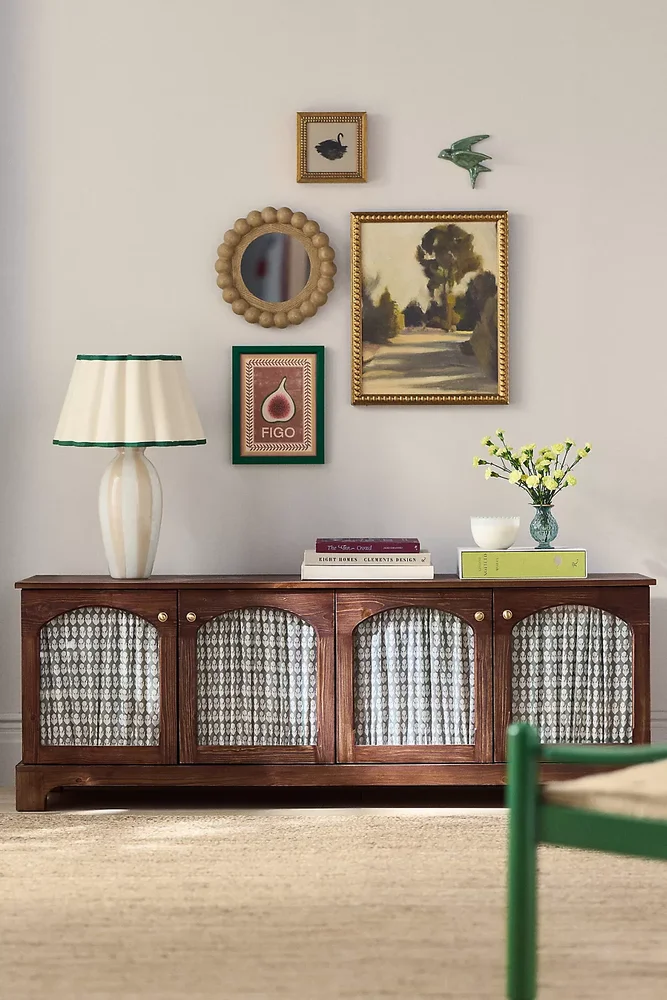
Whitney 68" Curtain Media Console
Anthropologie
$1,298
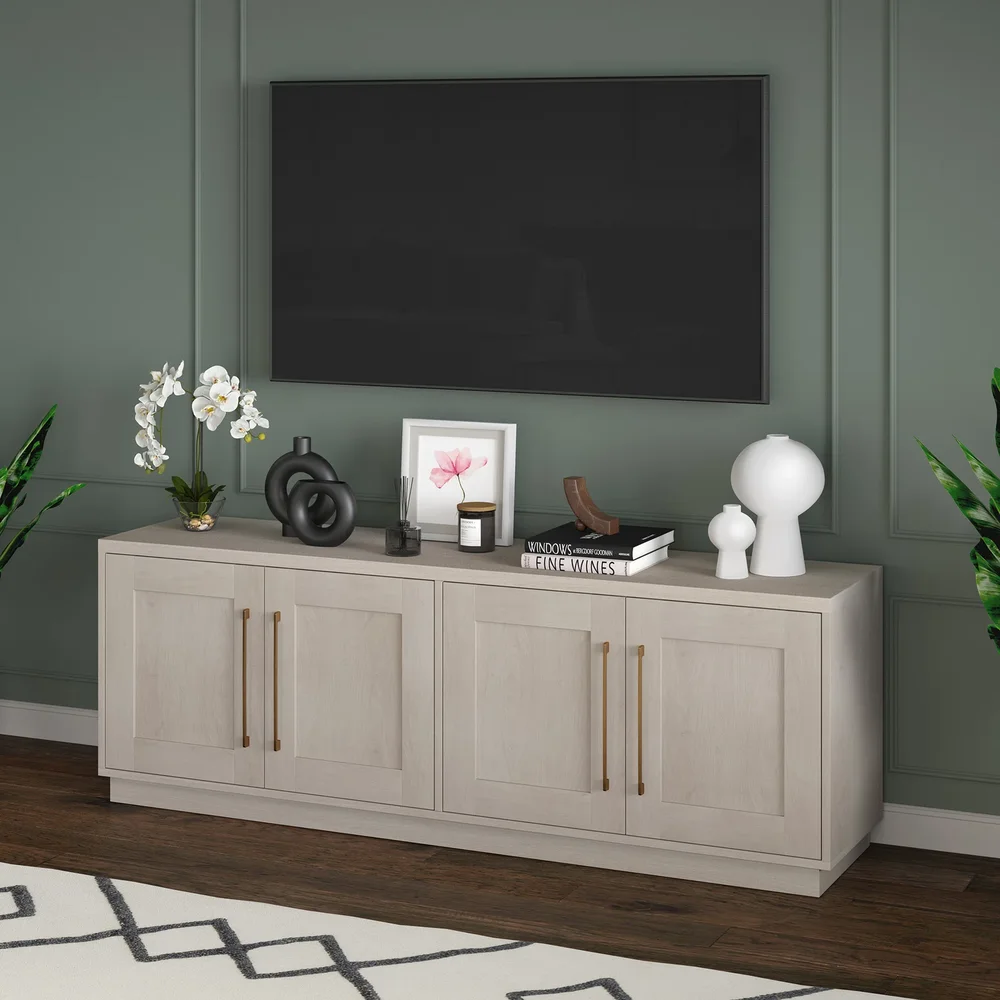
Tillman TV Stand in Alder White
Wade Logan
$299.99
Cane fronts, the best of both
Cane and rattan fronts solve the remote problem beautifully. The weave is open enough for many remote signals and a little air to pass through, but closed enough that the tangle behind it becomes a soft blur. You get the calm of a door without the fuss.
They also warm up a room in a way that painted wood does not. Bay Isle Home's Heyer pairs wood with rattan panels, and Anthropologie's Canggu stand in acacia and cane has a gentle curve that softens a boxy wall. Urban Outfitters' Cairn has a looped rattan front, a little more playful. Nathan James has three here: the boho console with rattan doors, the coastal sideboard in raw oak and the arched rattan entertainment center, which is the one for a bigger wall. Ophelia & Co.'s wood sideboard with rattan doors and Bayou Breeze's rattan sideboard with adjustable shelves both work under a TV or in a dining room later, which I love in a piece of furniture.
Cane pairs well with nearly any sofa. It looks right with linen, leather or velvet, and it sits nicely beside a wood floor or a jute rug.
What I would skip: glass doors. They hide nothing, show every fingerprint and make the cords look like they are in a museum case. I would also skip any tall entertainment unit with a TV cubby unless you have a very large wall. They tend to swallow a room.
Cane and rattan media cabinets
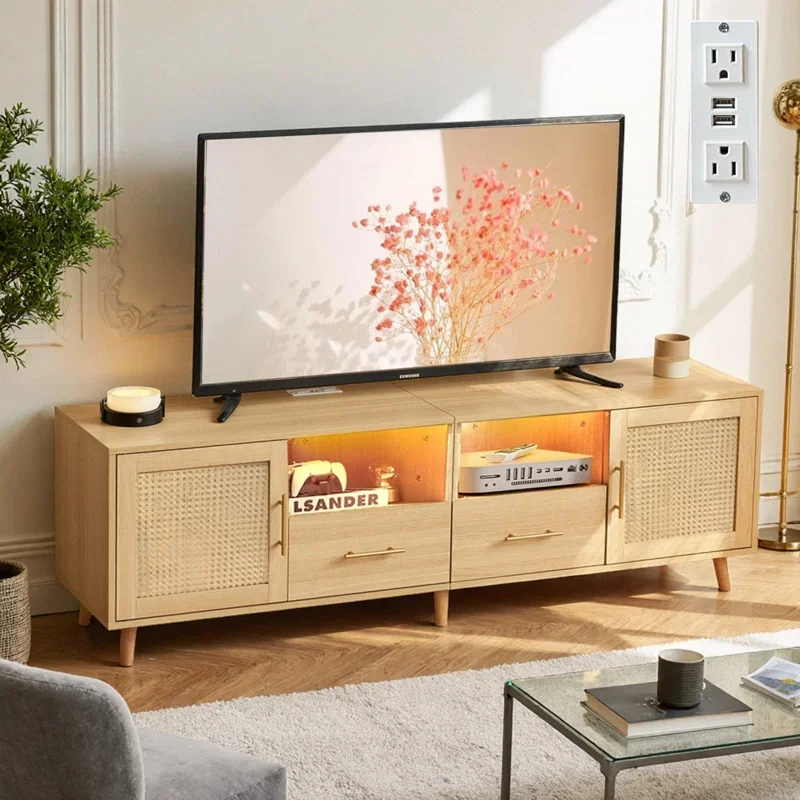
Heyer Wood and Rattan TV Stand
Bay Isle Home
$159.99
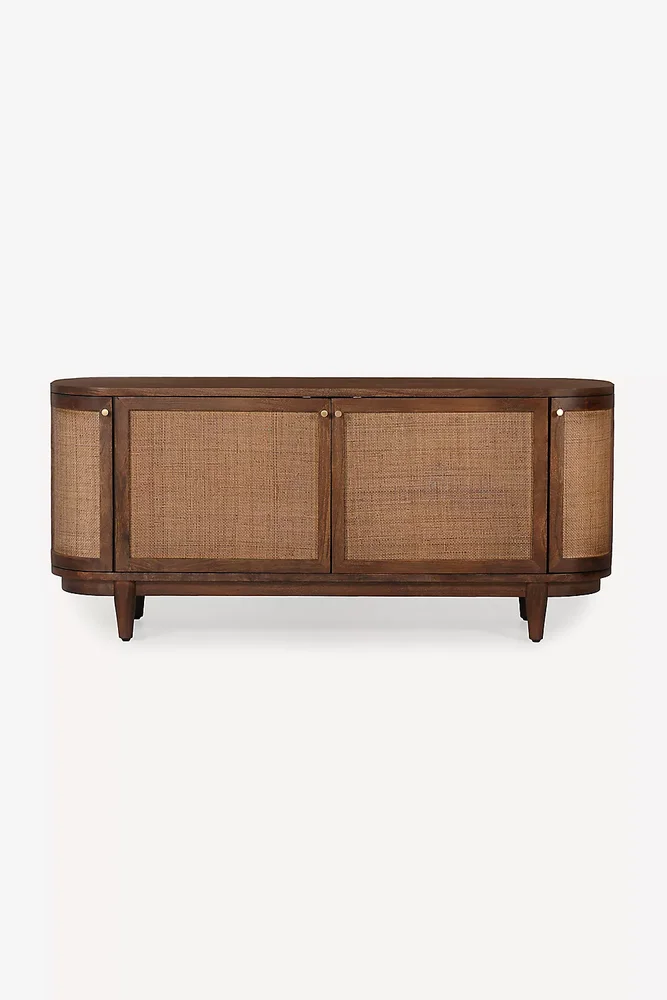
Canggu Acacia Cane Curved 68" Media Stand
Anthropologie
$2,848
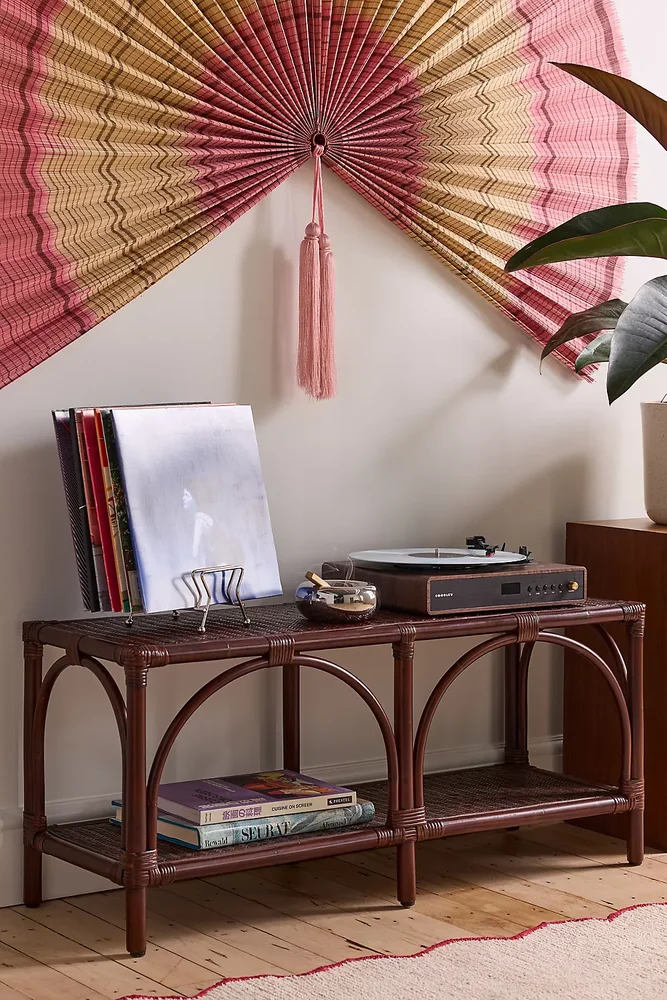
Cairn Looped Rattan Media Storage Console
Urban Outfitters
$349
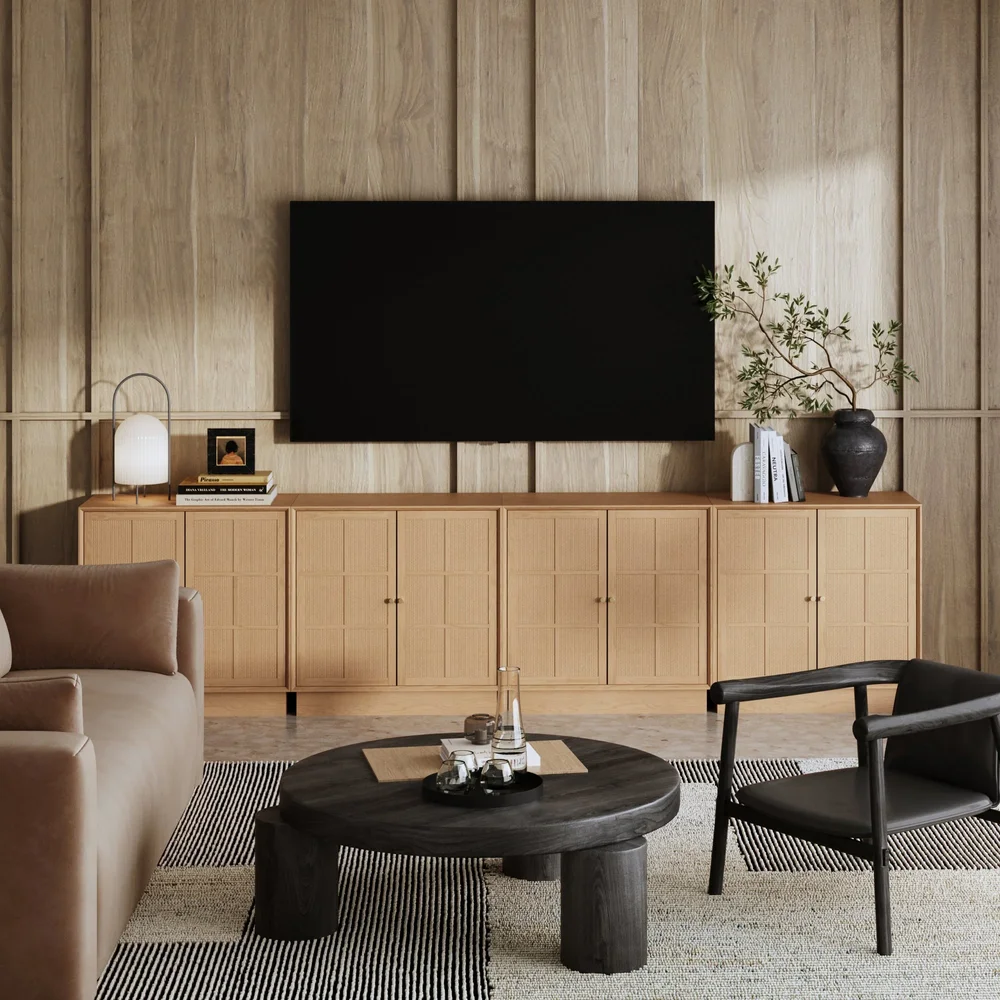
Boho Wood TV Console with Rattan Doors
Nathan James
$799.96
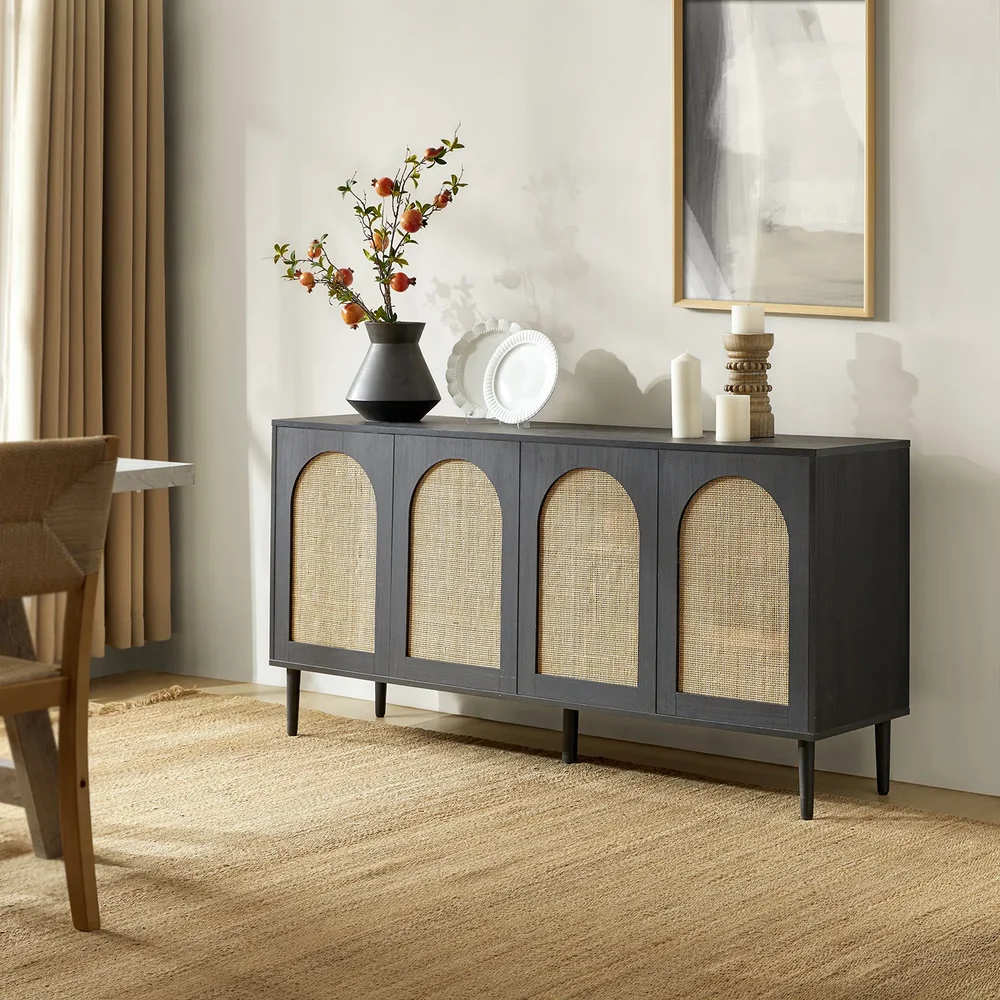
Wood Sideboard with Rattan Doors
Ophelia & Co.
$299.99
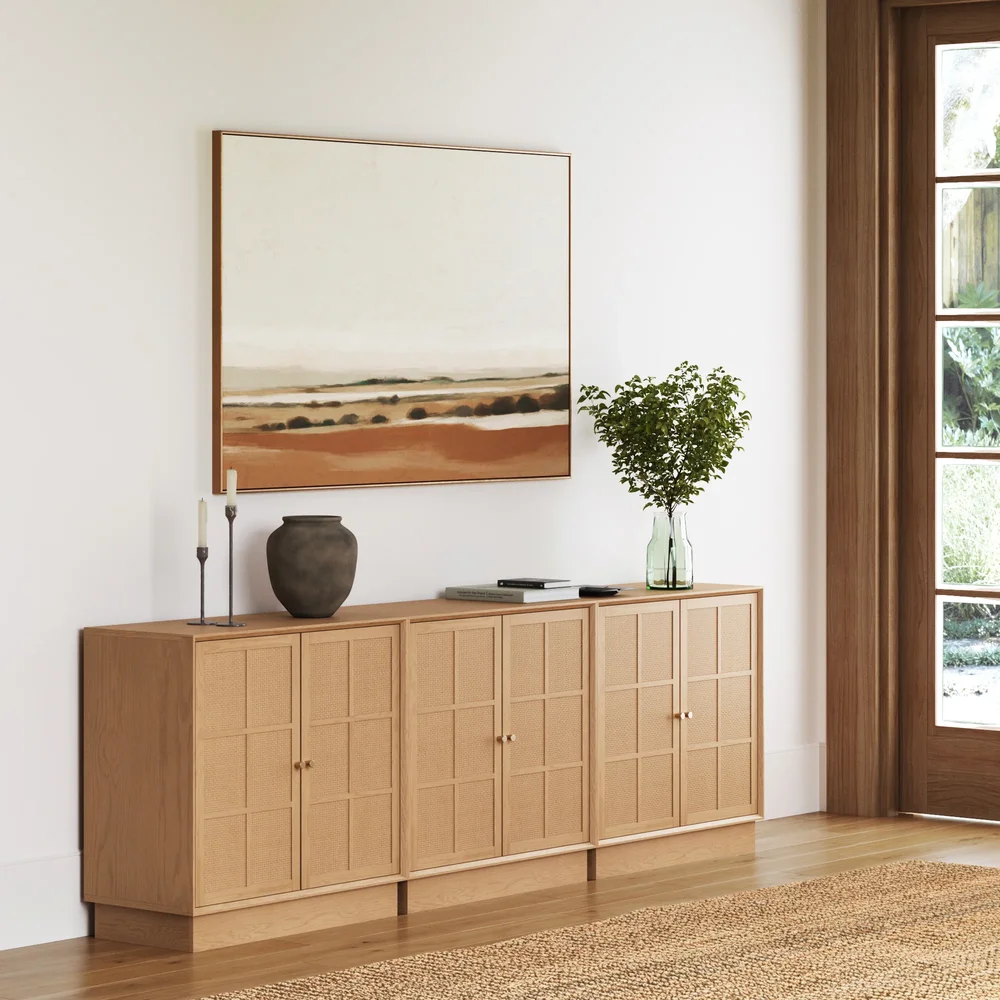
Coastal Rattan Sideboard in Raw Oak
Nathan James
$599.97
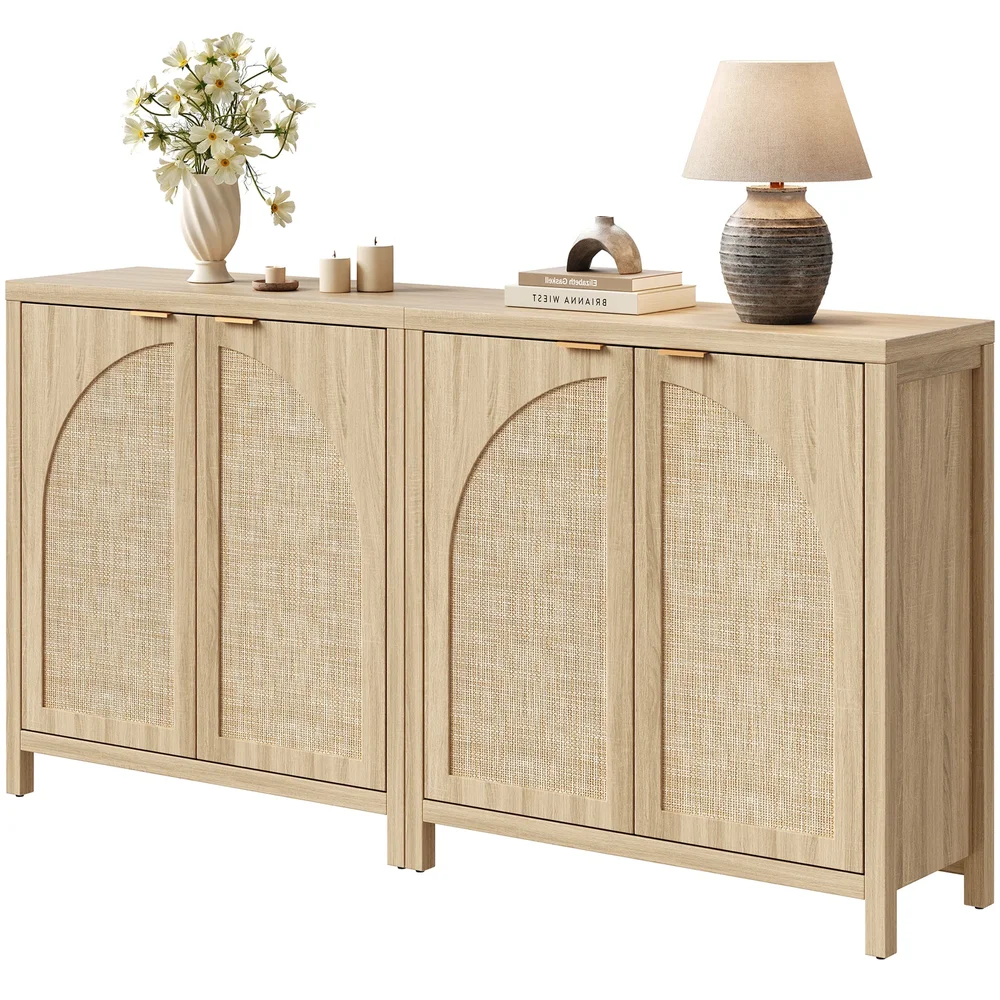
Boho - Rattan Sideboard With Adjustable Shelves
Bayou Breeze
$329.99
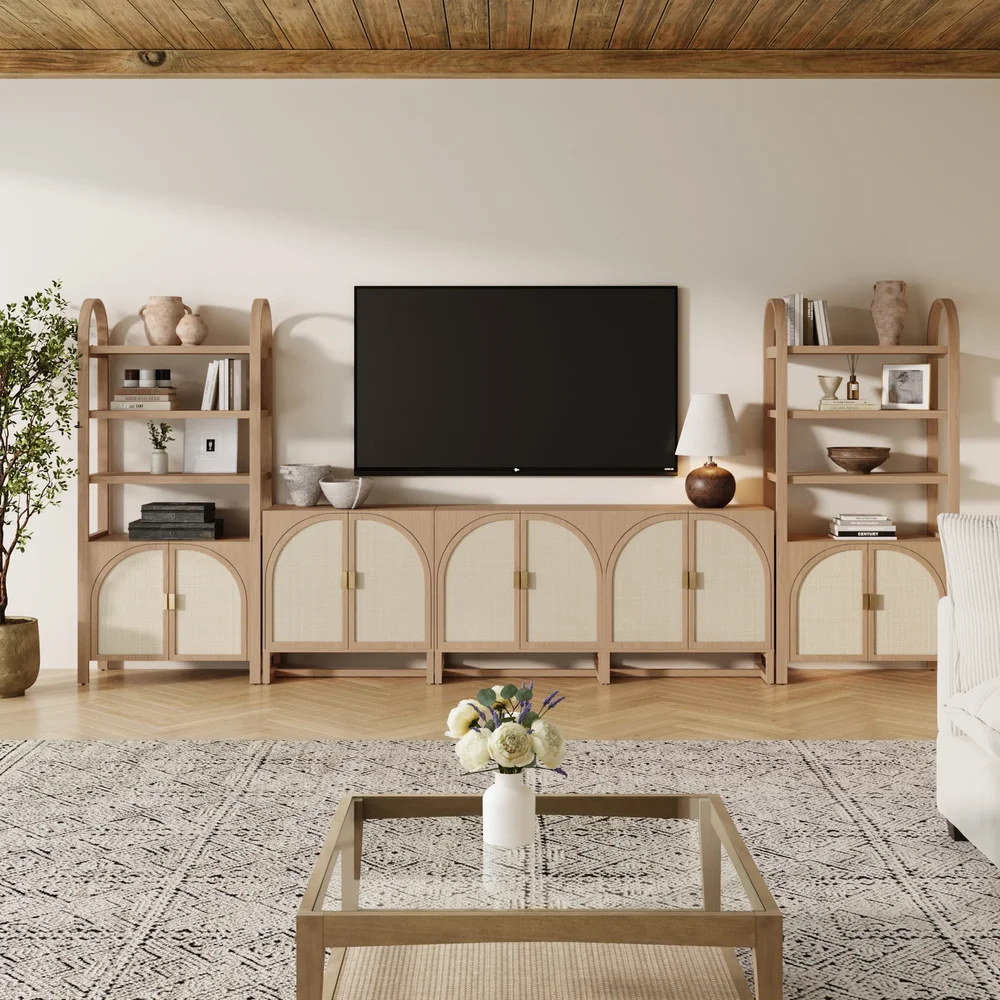
Arched Rattan Entertainment Center
Nathan James
$1,929.95
How I Would Wear It
I think the right cabinet does more for a living room than a new sofa, and almost nobody believes me until they try it. The day the cords disappear, the whole room feels older and calmer, in the best way.
Let it be this: choose a cabinet wider than your TV, low enough that the screen sits at eye level, and with doors, preferably cane, so the remote still works. Then give one evening to a pack of cable ties and a power strip you can mount inside the back. The furniture hides the mess, but the ties keep it from creeping back out. It is the least glamorous hour of decorating you will ever do, and the one you will notice most.