Onitsuka Tiger Mexico 66 begins with the brand’s sports-shoe roots, then moves through archival colorways, suede, slip-ons, metallics, and other low-profile sneakers. I would choose a pair by the colors I already wear, then let the stripes do the talking.
Onitsuka Tiger Mexico 66: The Track Shoe That Learned to Wear Color
Onitsuka Tiger Mexico 66 begins with the brand’s sports-shoe roots, then moves through archival colorways, suede, slip-ons and metallics.
A shoe with a memory
In Kobe in 1949, Kihachiro Onitsuka established ONITSUKA Shokai, the seed of the company behind these shoes. Its official history says the aim was to nurture healthy young people through sport. That is the part of this story I keep coming back to: a sneaker lineage that starts with a useful idea, not an outfit.
The first brief came from basketball. Yukio Matsumoto, coach of a powerhouse team at Hyogo Prefectural Kobe High School, wanted footwear to help players make fast breaks and sudden stops. Onitsuka’s company developed its first model around that request, then named the brand TIGER for strength and agility. I like how unromantic this is. A design starts with a movement, and the stripe comes later.
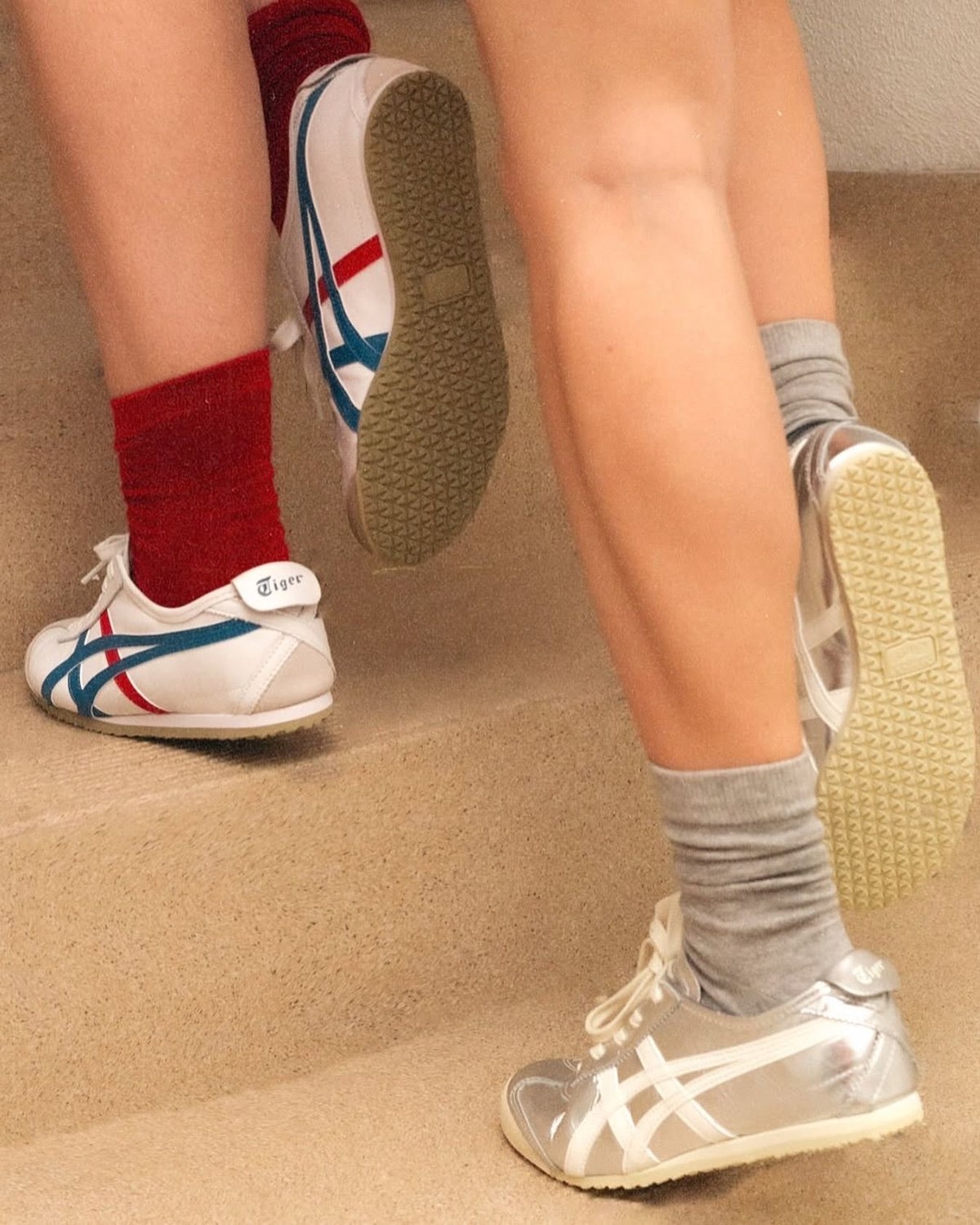
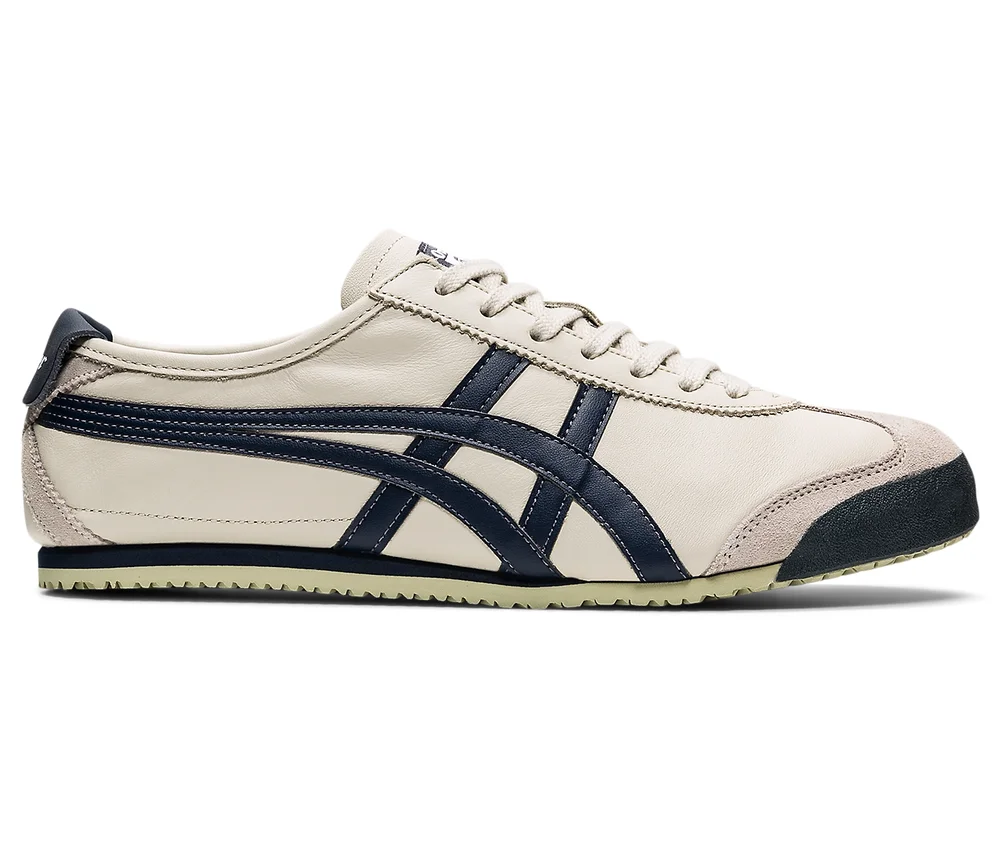
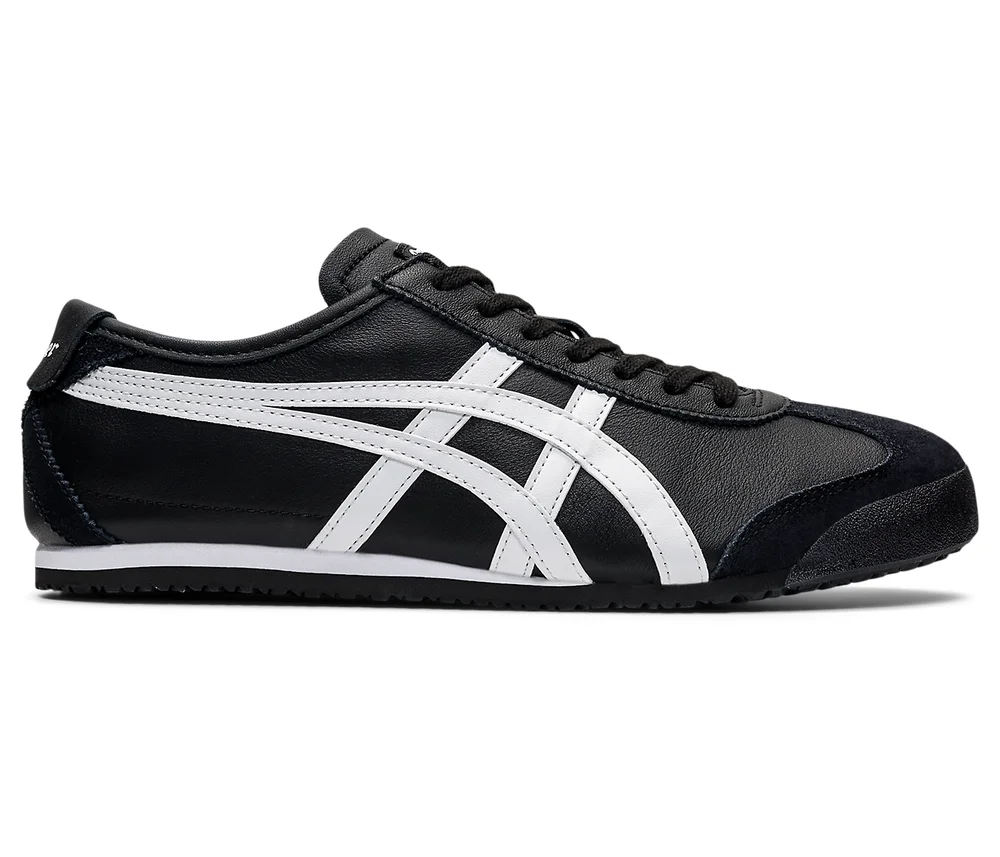
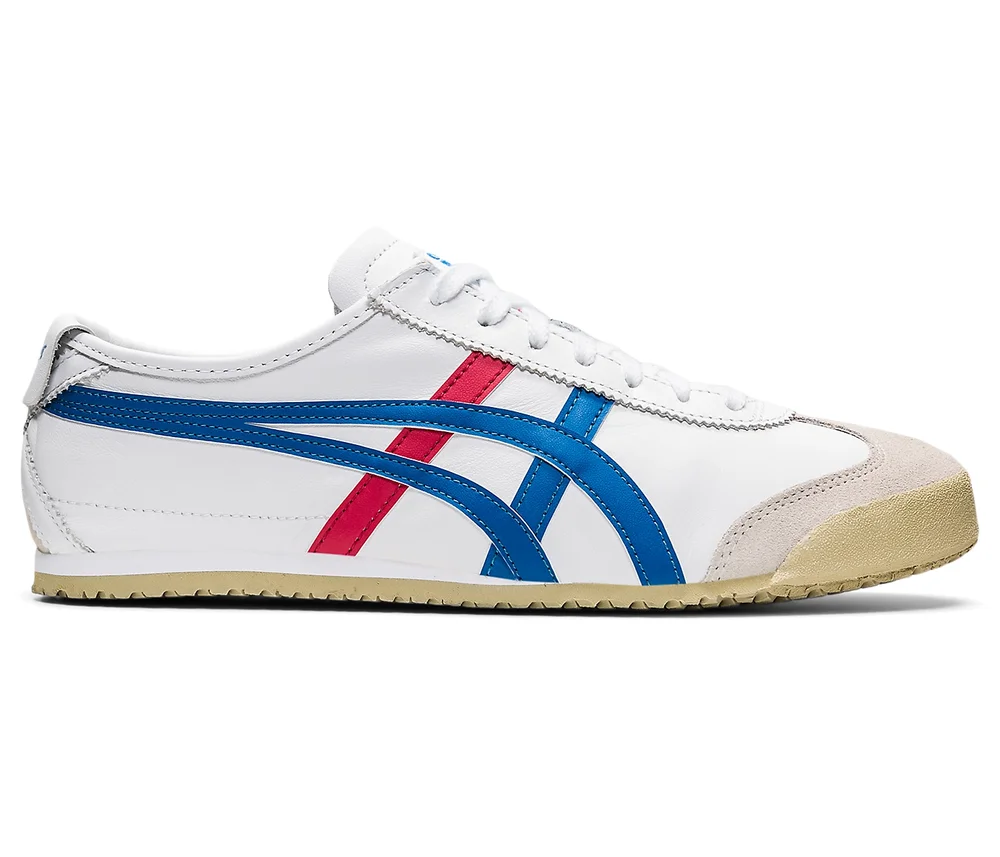
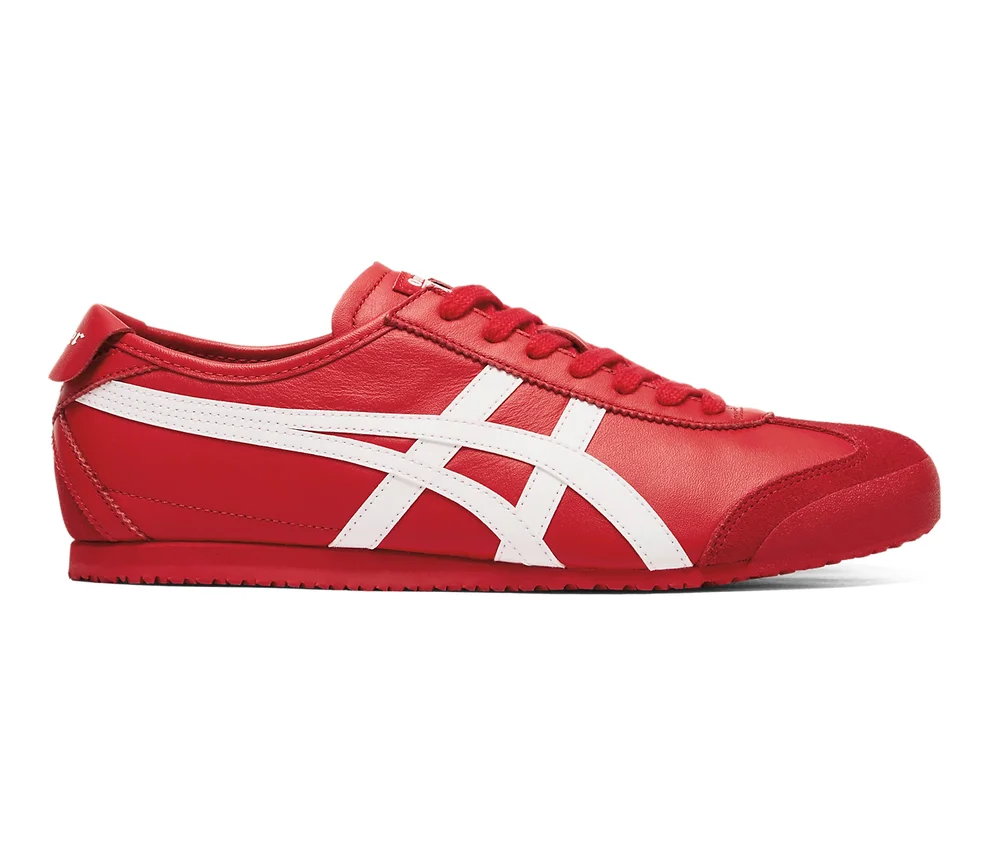
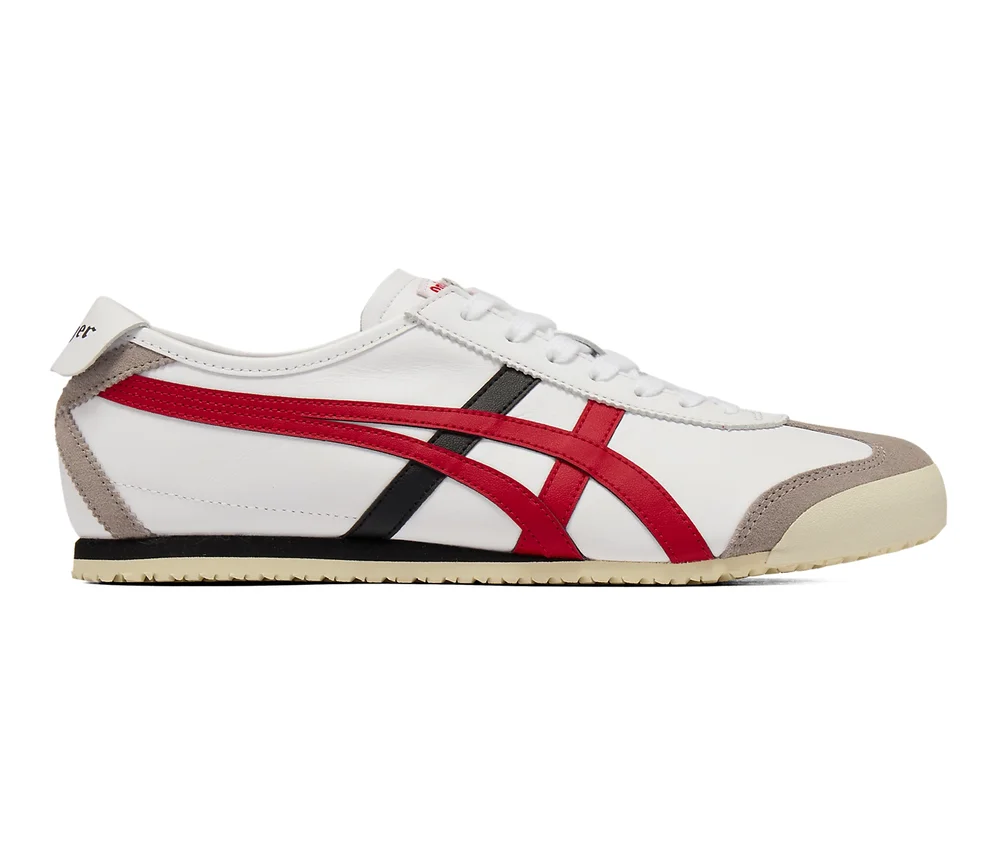
The Onitsuka Tiger Mexico 66 is where the sports-shoe archive meets the current wardrobe: the brand traces its form to the LIMBER UP and the line introduced in 1966. ELLE Japan ties Mexico to the 1968 Games and 66 to the year the model was introduced, two years earlier. I would begin with Birch/Peacoat, an ivory upper edged in navy, for quiet contrast; Black/White draws the lines harder. White/Blue brings saturated blue stripes with a red heel, while Classic Red/White flips the balance into a crisp, sporty flash.
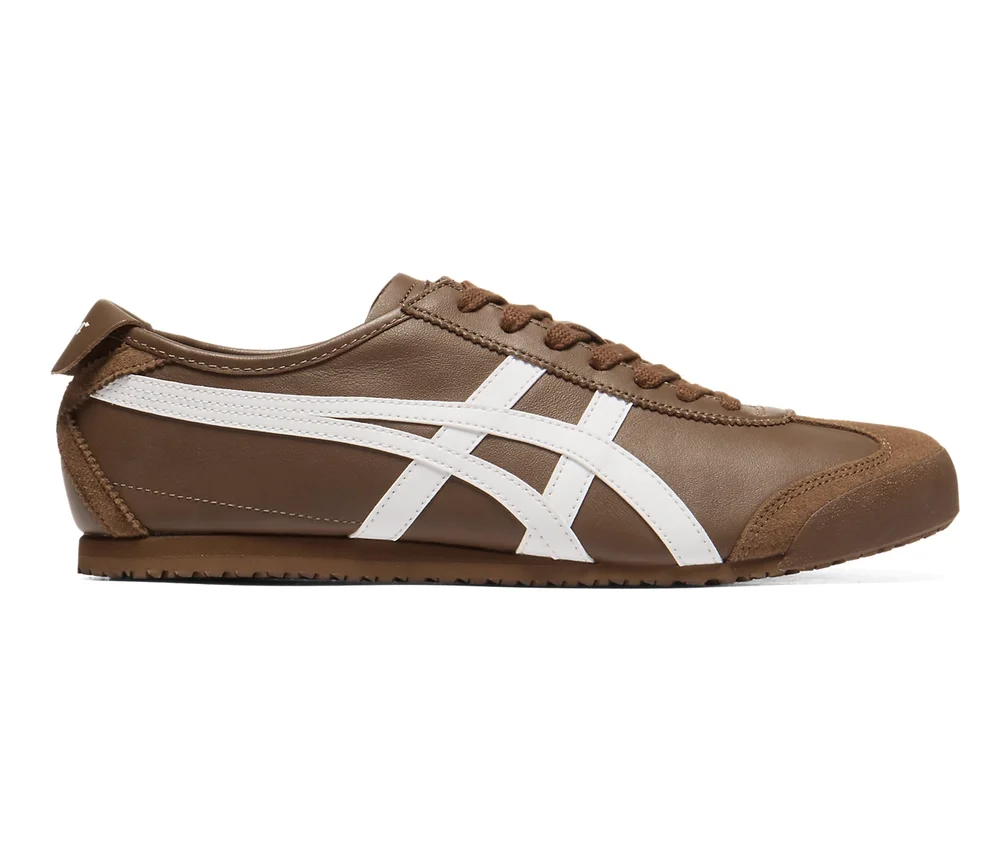
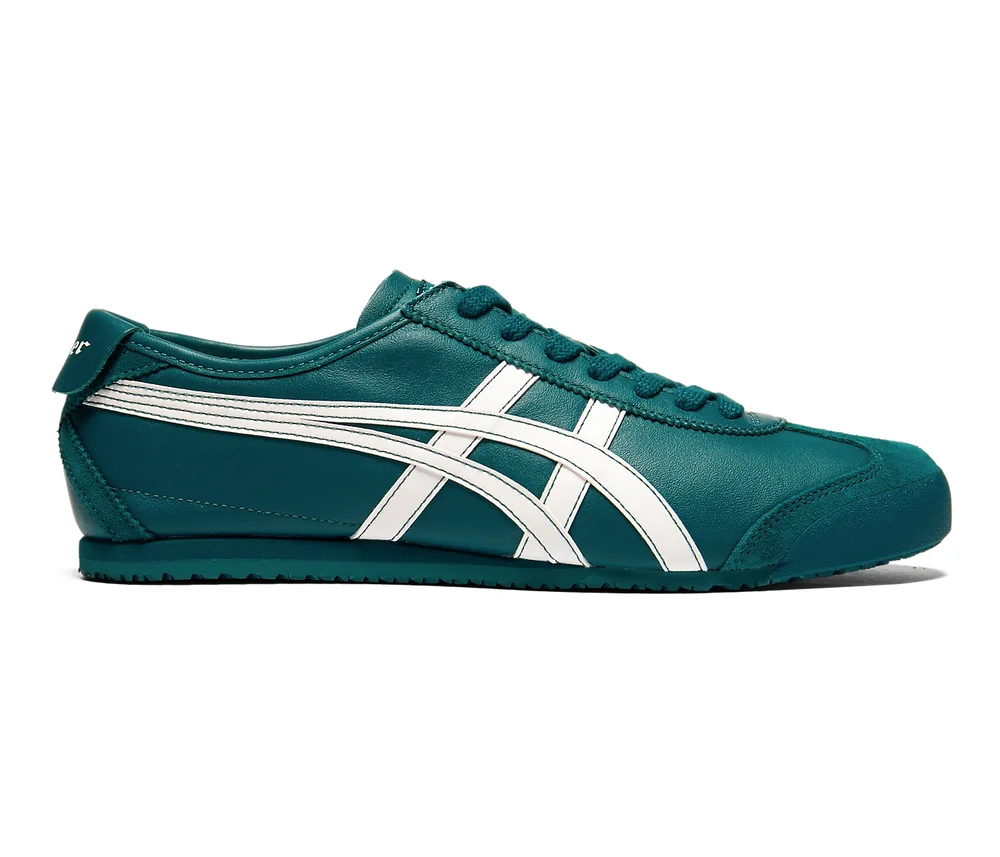
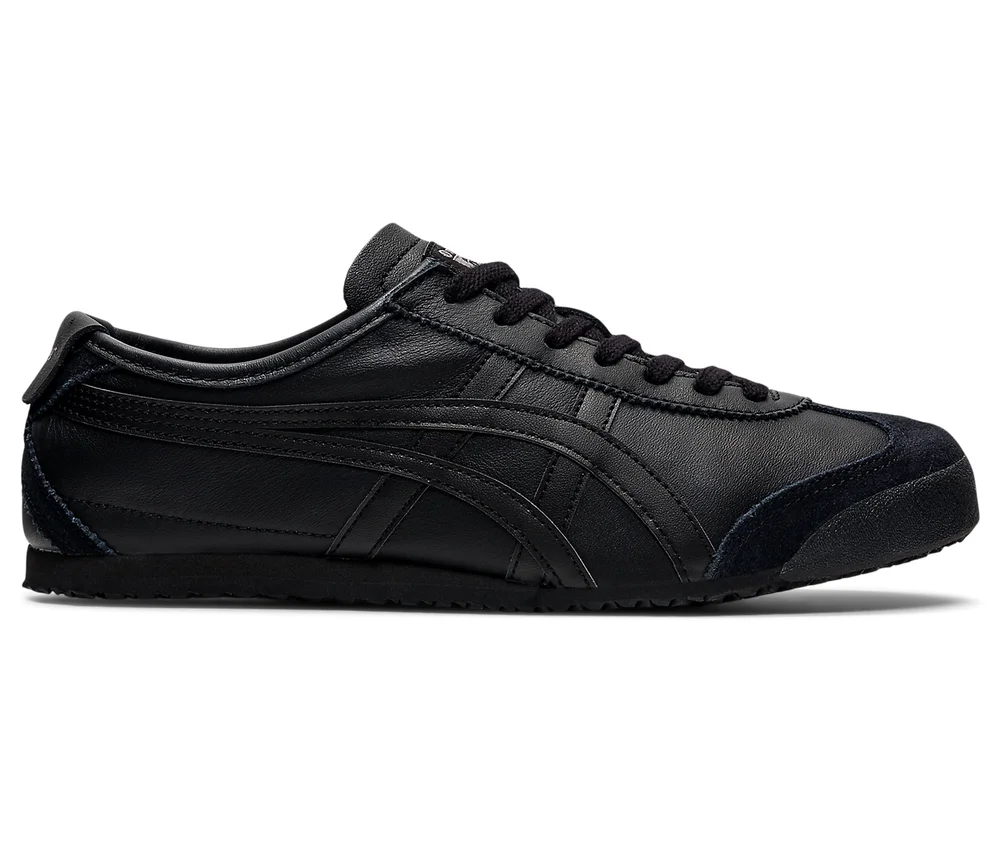
White/Classic Red can sit under dark denim or an autumn knit skirt, while Brown Storm/White softens a gray coat and Spruce Green/White gives plain jeans a small collegiate note. All black keeps the profile spare. I would check toe room and heel hold before choosing, then look at the colors in daylight. A simple shape makes proportion matter.
Suede and saturated color
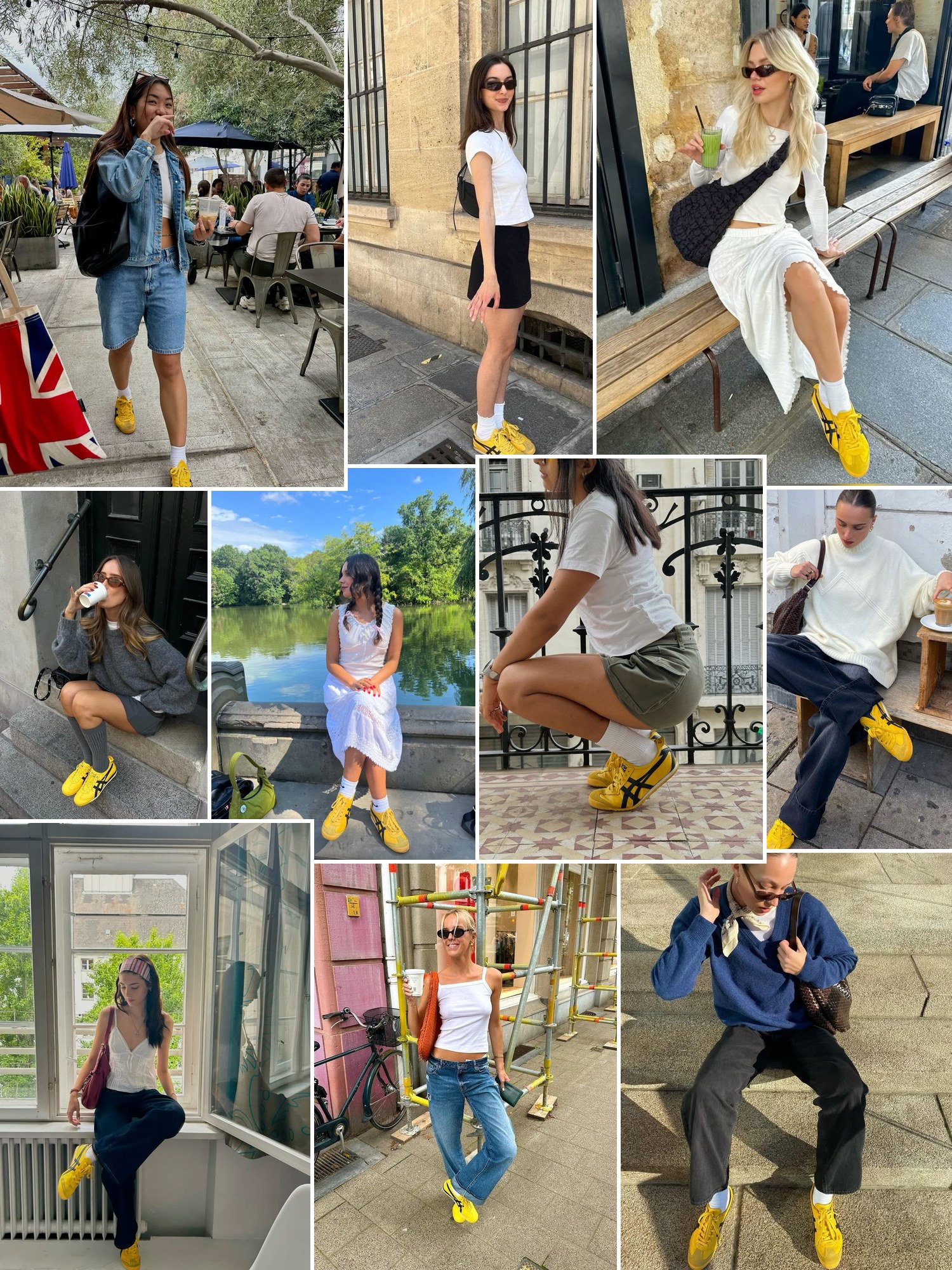
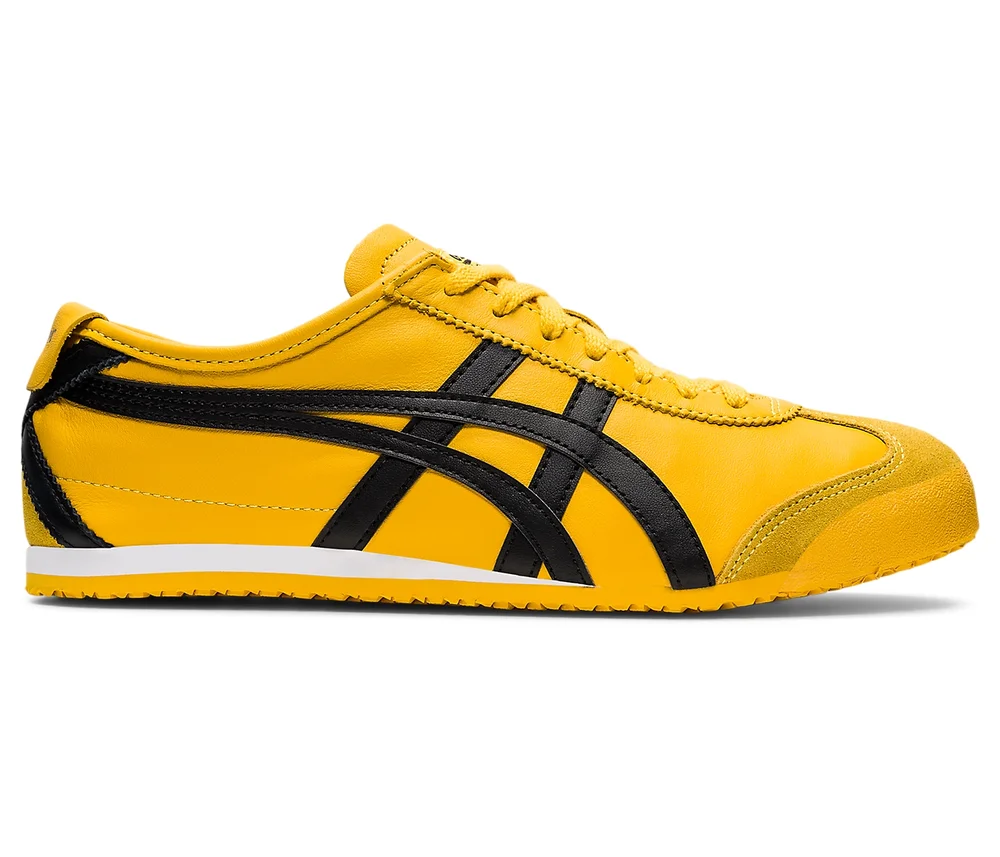
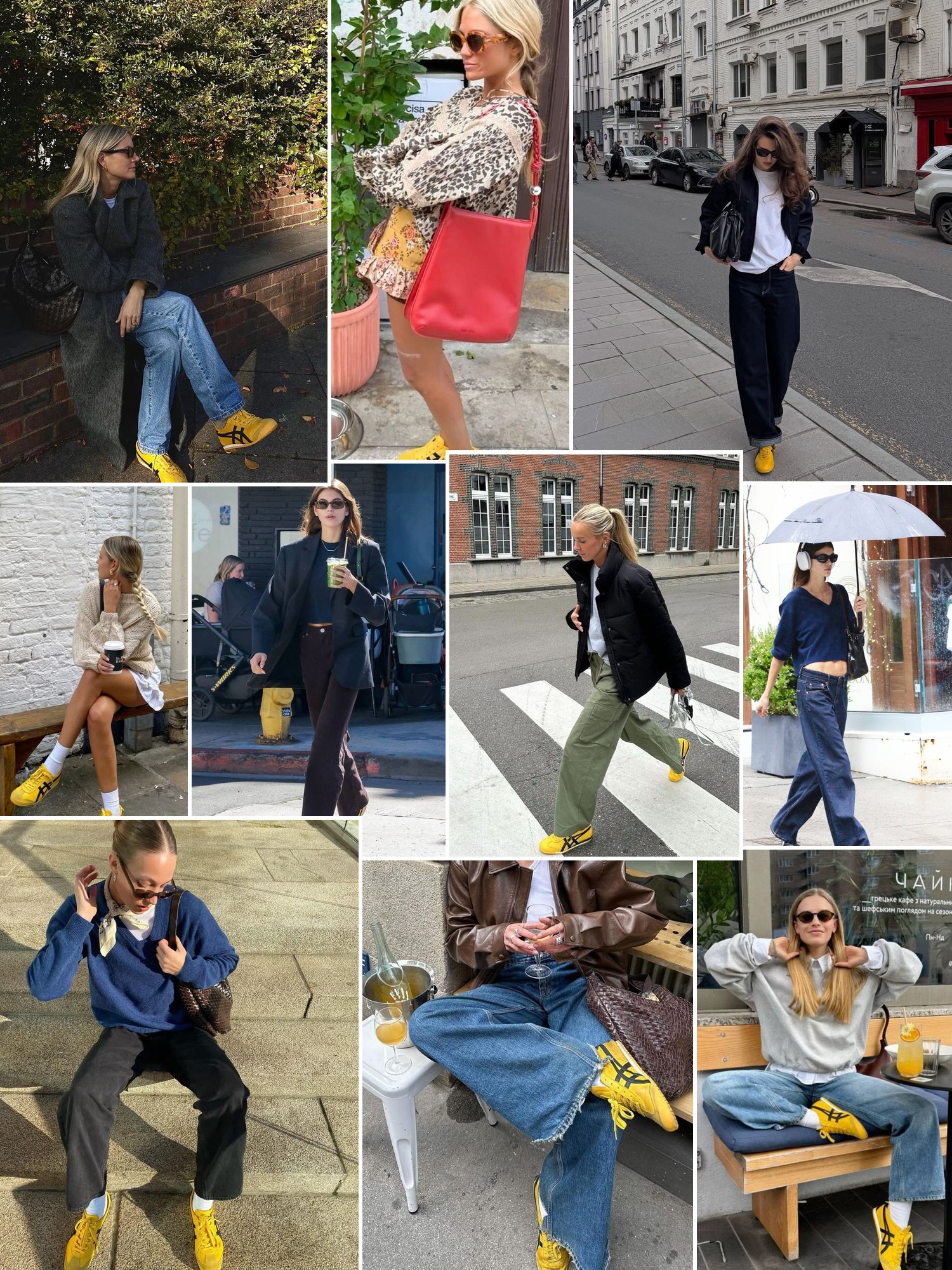
The Tiger stripe entered the story in 1966, which makes color a fair place to start. The Kill Bill reference needs a footnote: Onitsuka Tiger’s own retrospective names Uma Thurman’s on-screen sneaker as Tai-Chi, while a British Vogue costume history refers to Mexico 66 sneakers. I would call the yellow-and-black association familiar, not conclusive evidence of the model.
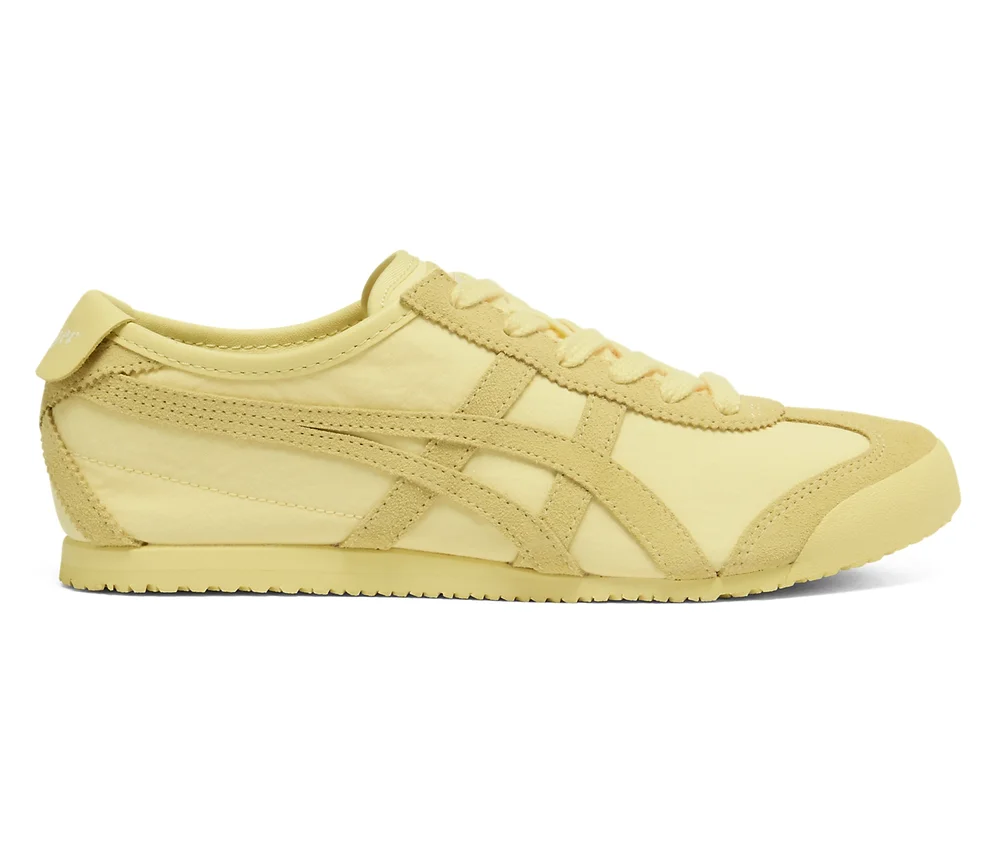
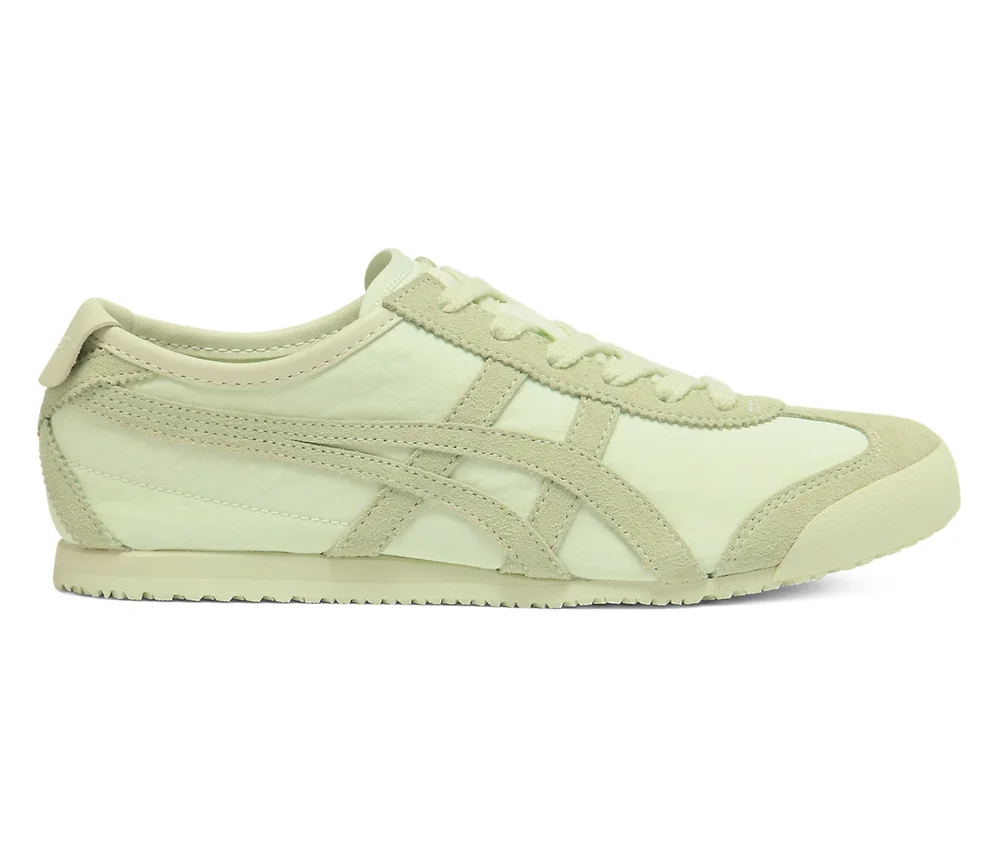
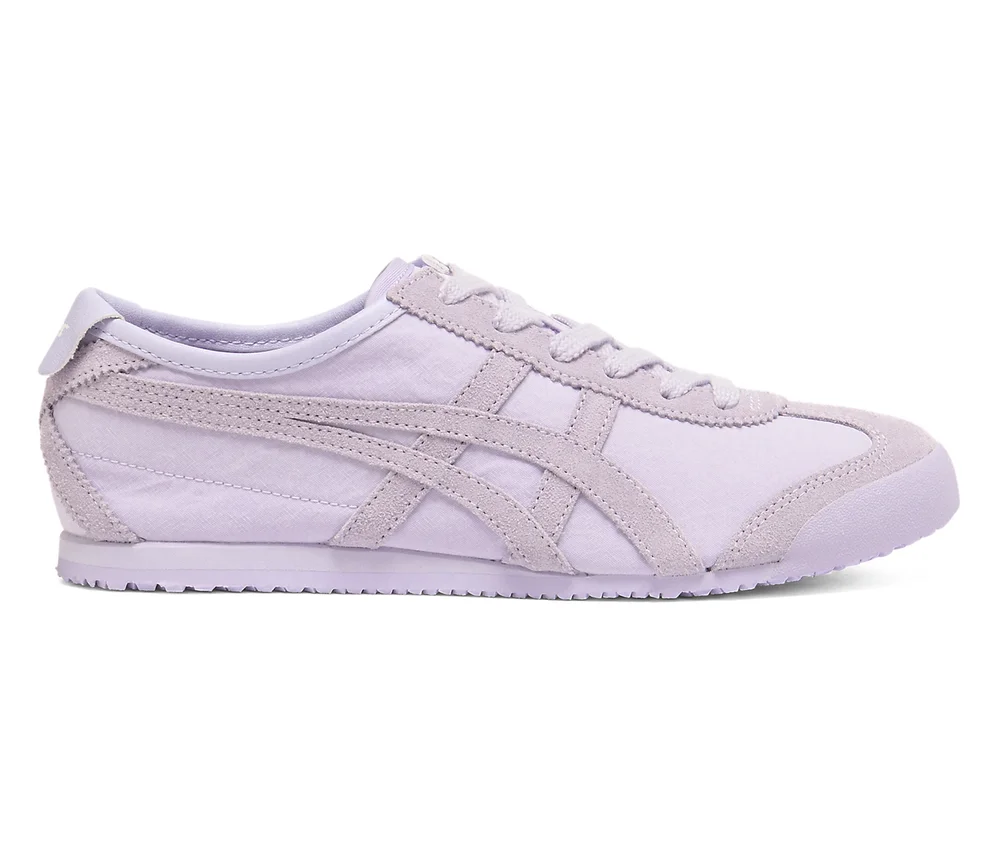
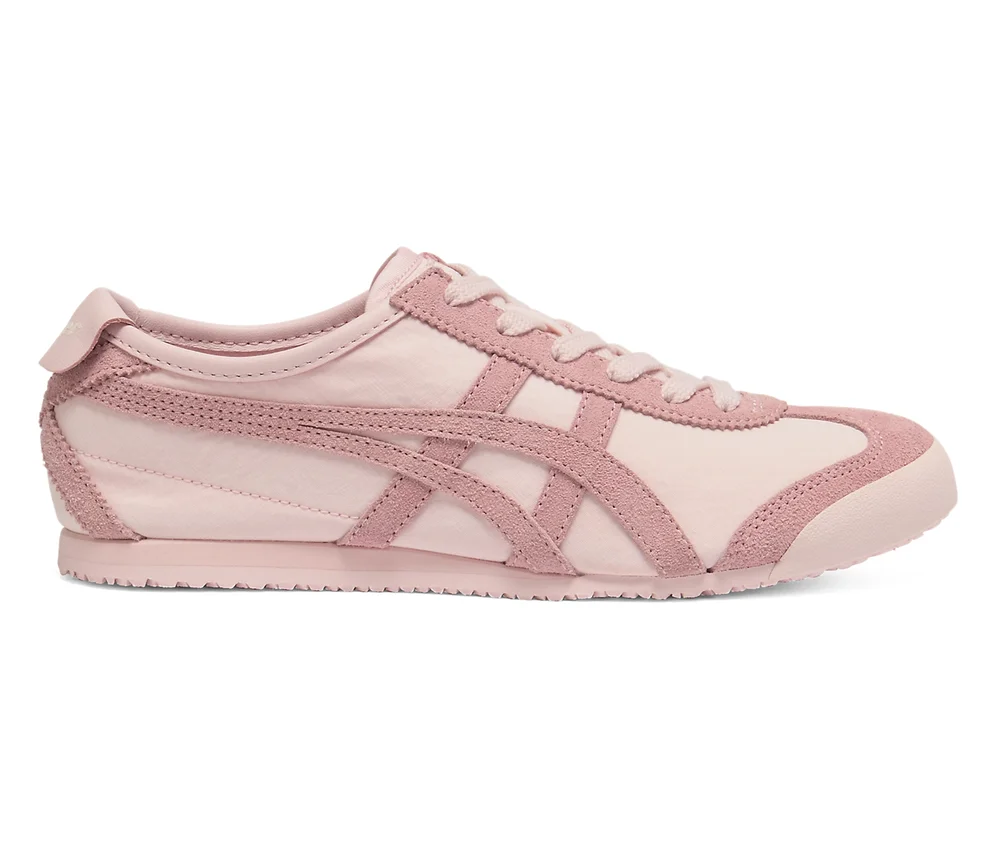
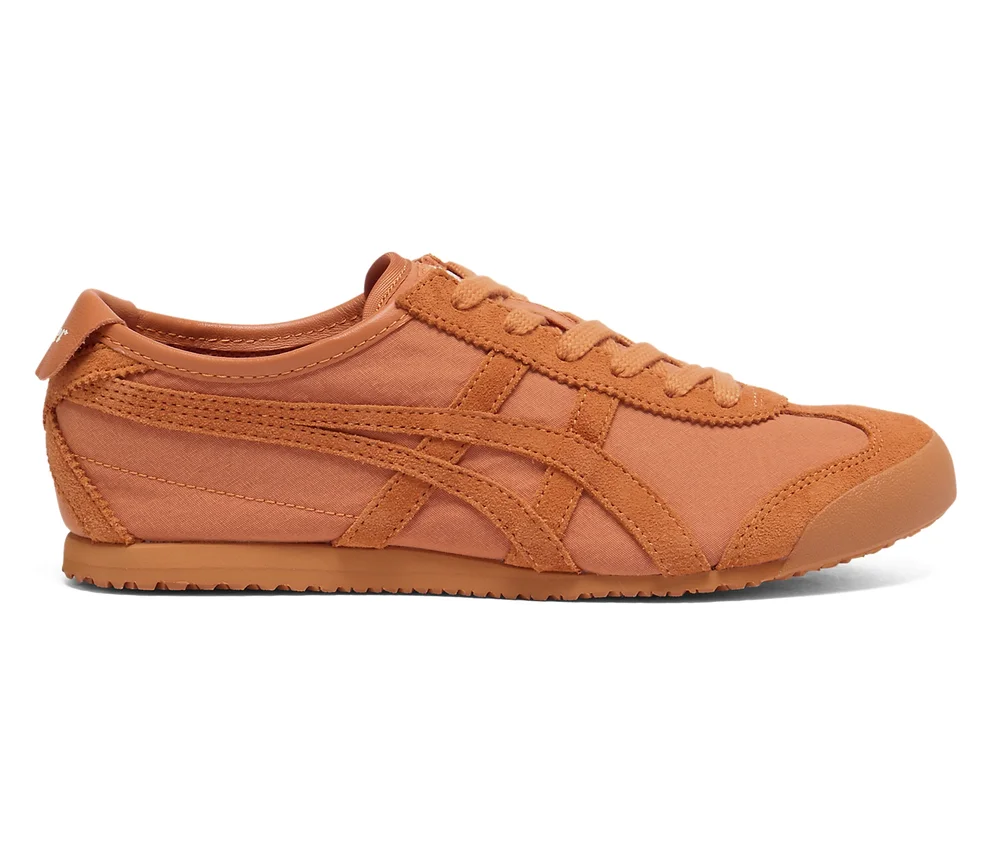
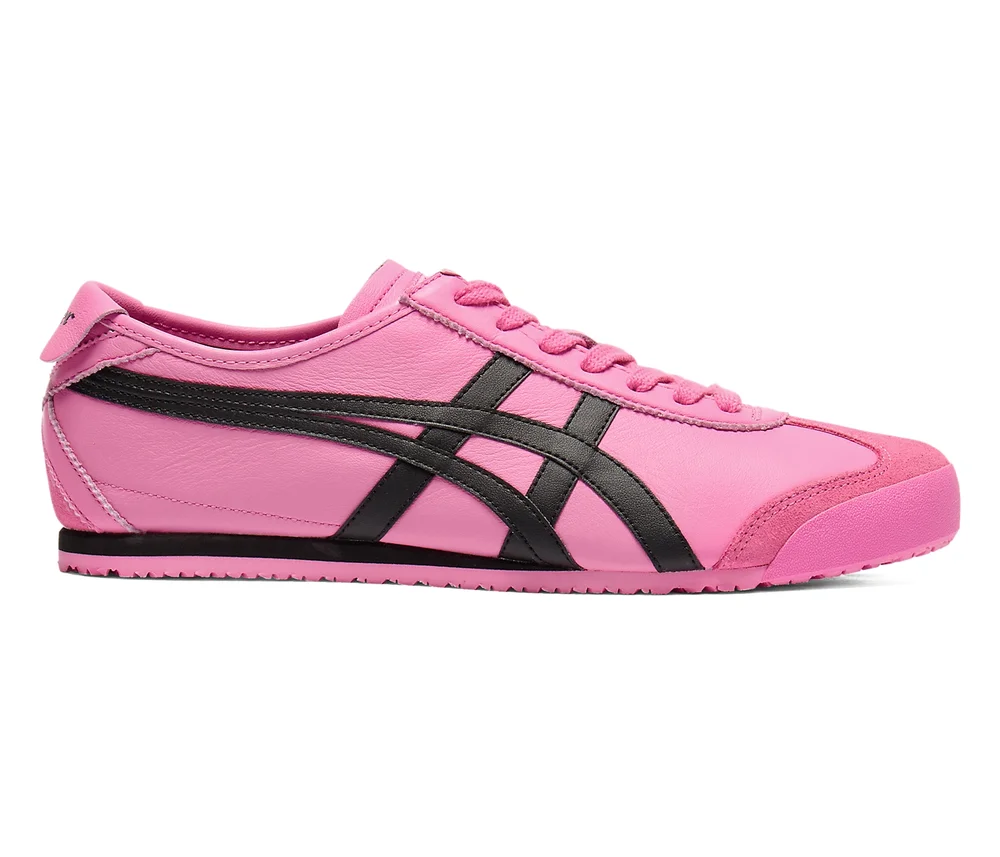
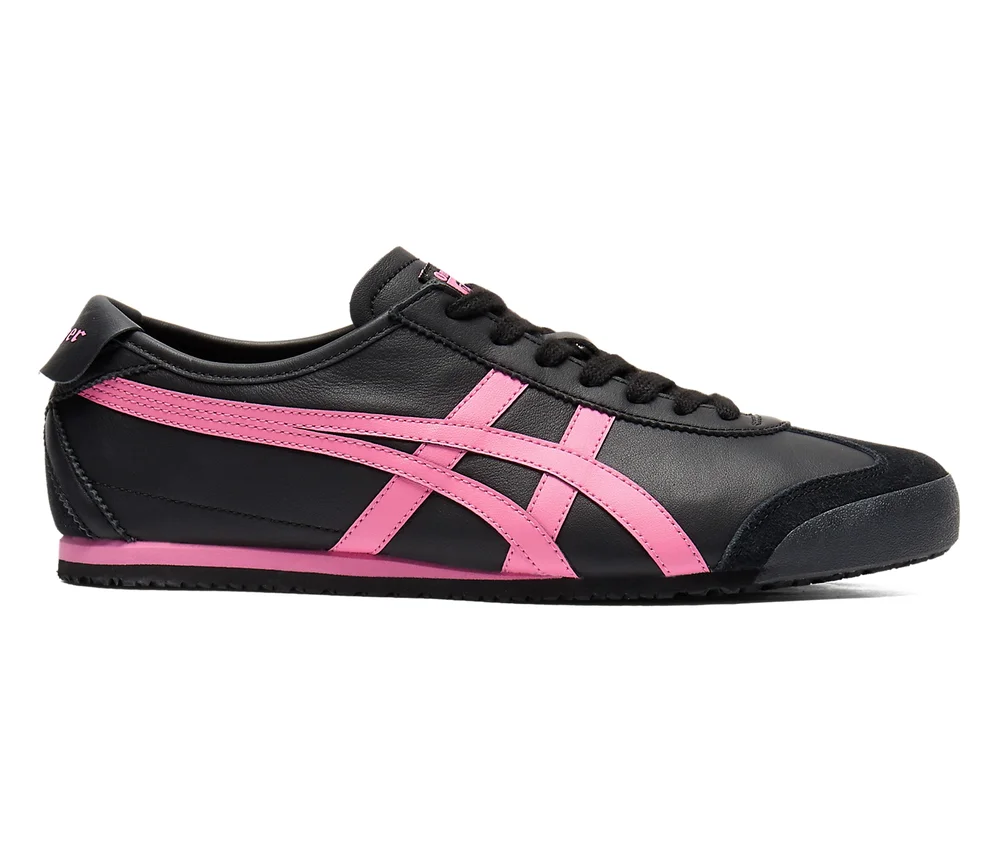
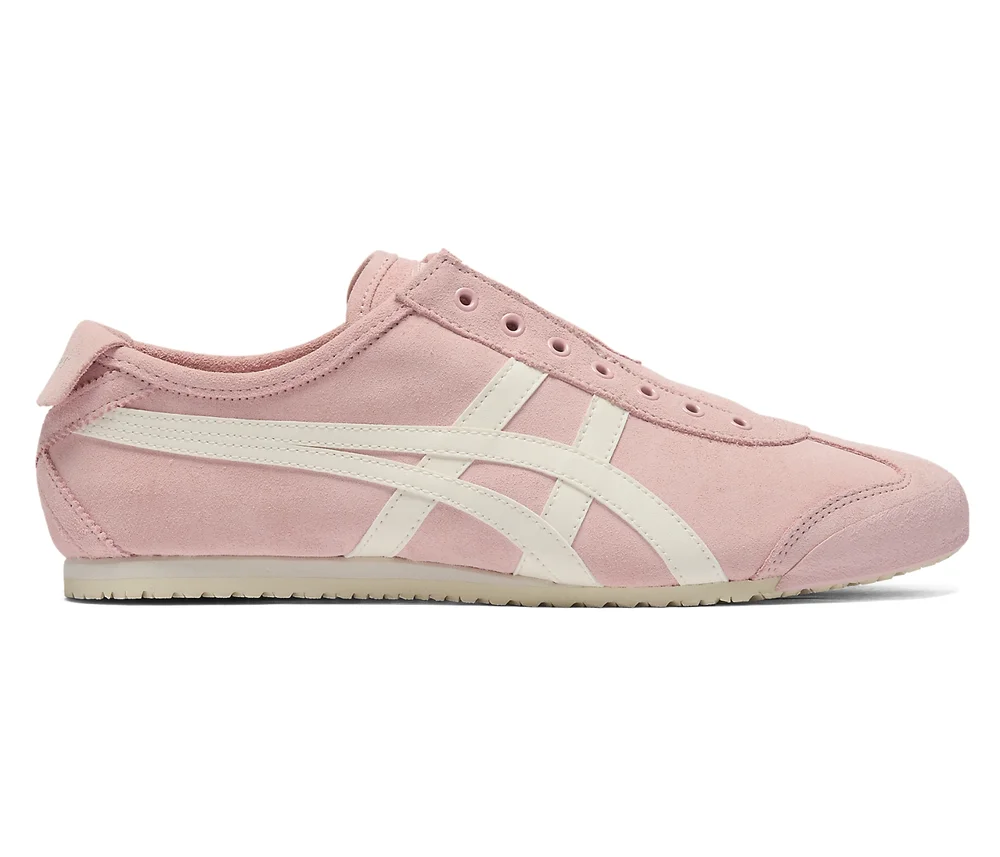
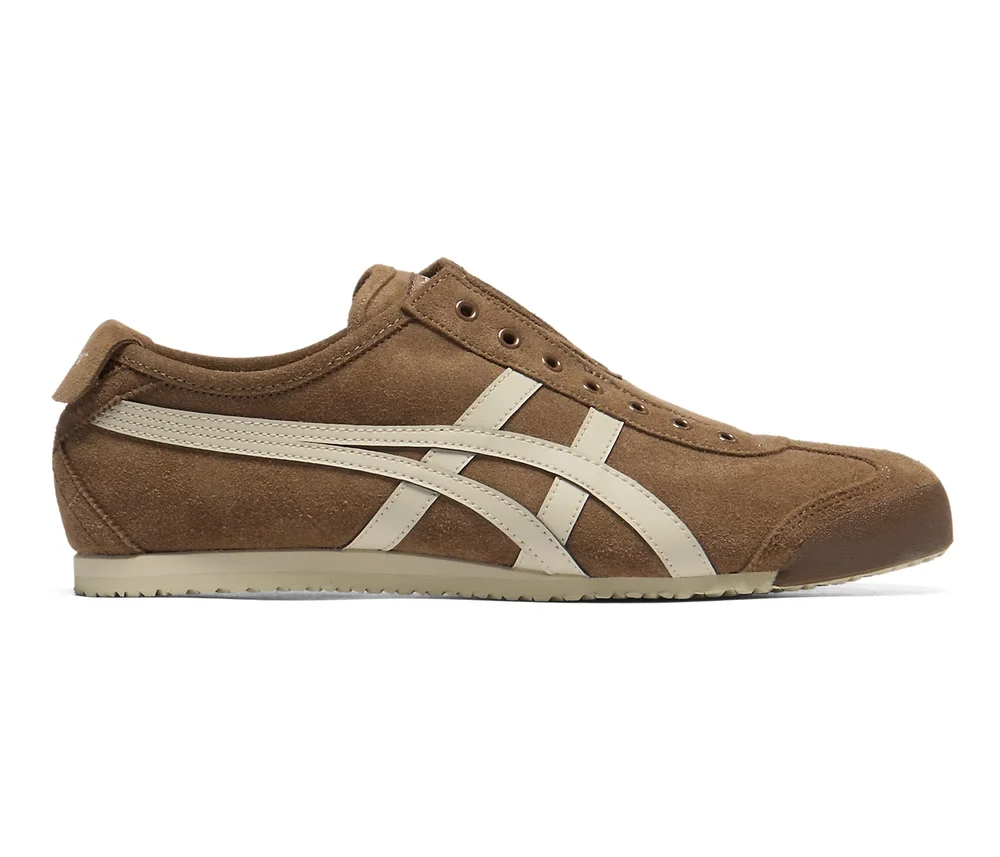
Yellow/Yellow is nylon and suede with no contrast; Green/Green keeps the silhouette quieter, and Digital Lavender/Digital Lavender is pale and tonal. Pink/Pink and Rust Orange bring the whole shoe into color, so I would keep the rest of the outfit simple: charcoal trousers for pink, an ink coat for rust. Yellow/Black is the loudest classic, while Dragon Fruit/Black and Black/Dragon Fruit let you choose whether the bright panel or stripe gets the focus.
I would ask whether I want the color to echo a coat or be the only saturated note. What I would skip: Yellow/Yellow if your fall clothes are already mostly mustard and tan. The low contrast may disappear instead of sharpening the outfit.
SD lace-ups and easy slip-ons
Lace-free is not the same as no fit check. The SD keeps the laced court shape, while the Slip-On has an elastic band at the instep, so the two versions ask different questions of the foot.
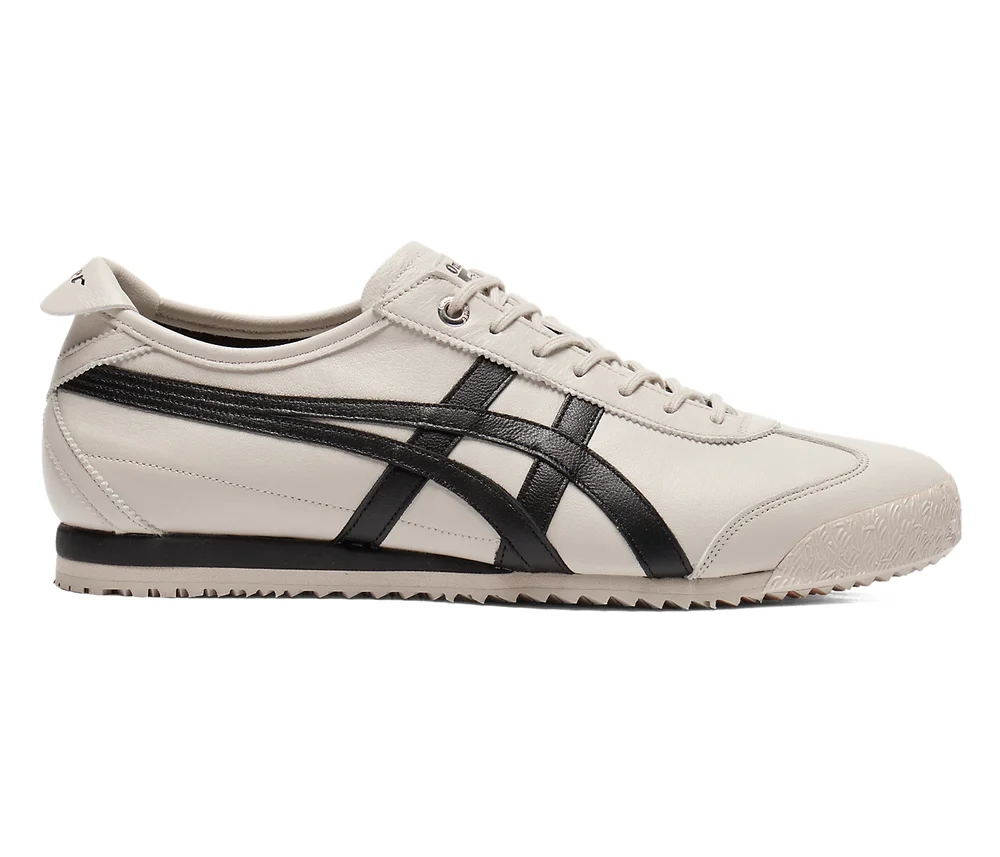
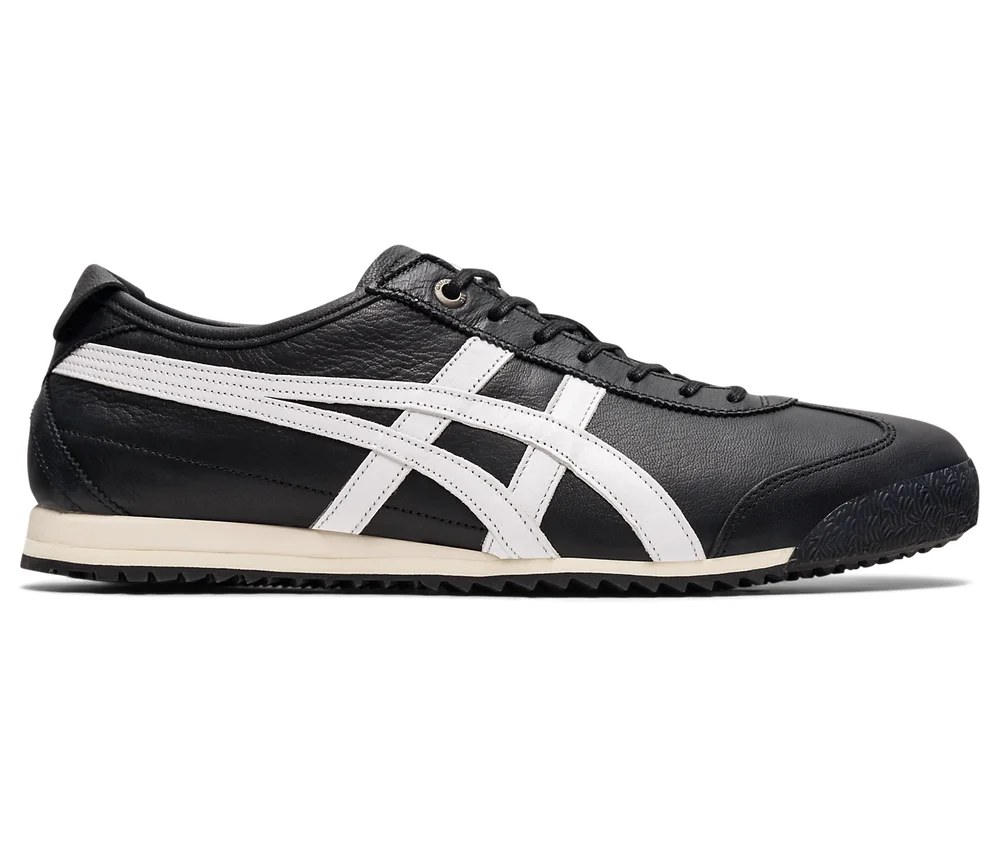
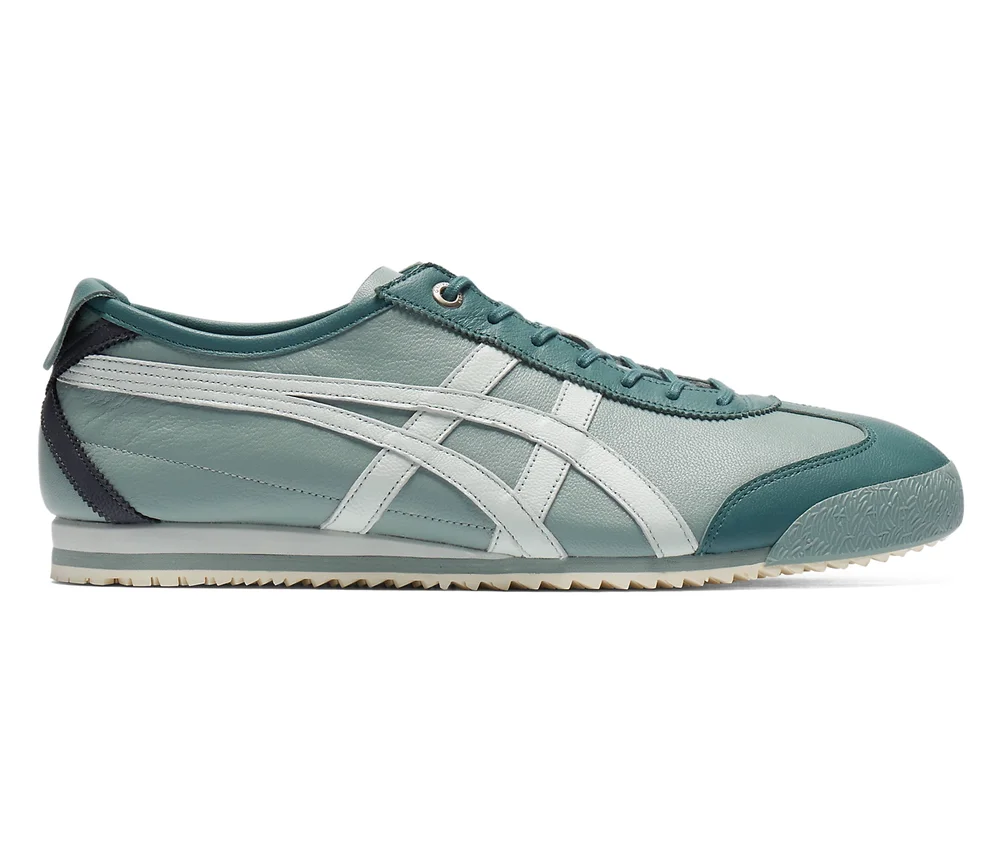
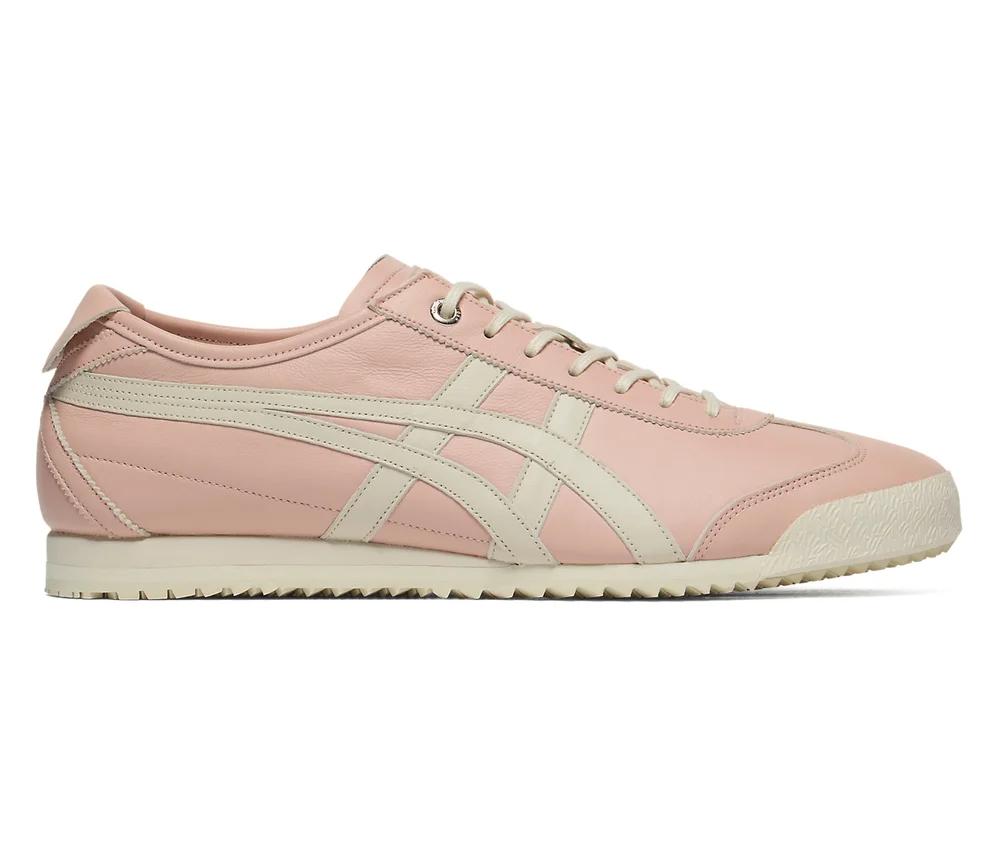
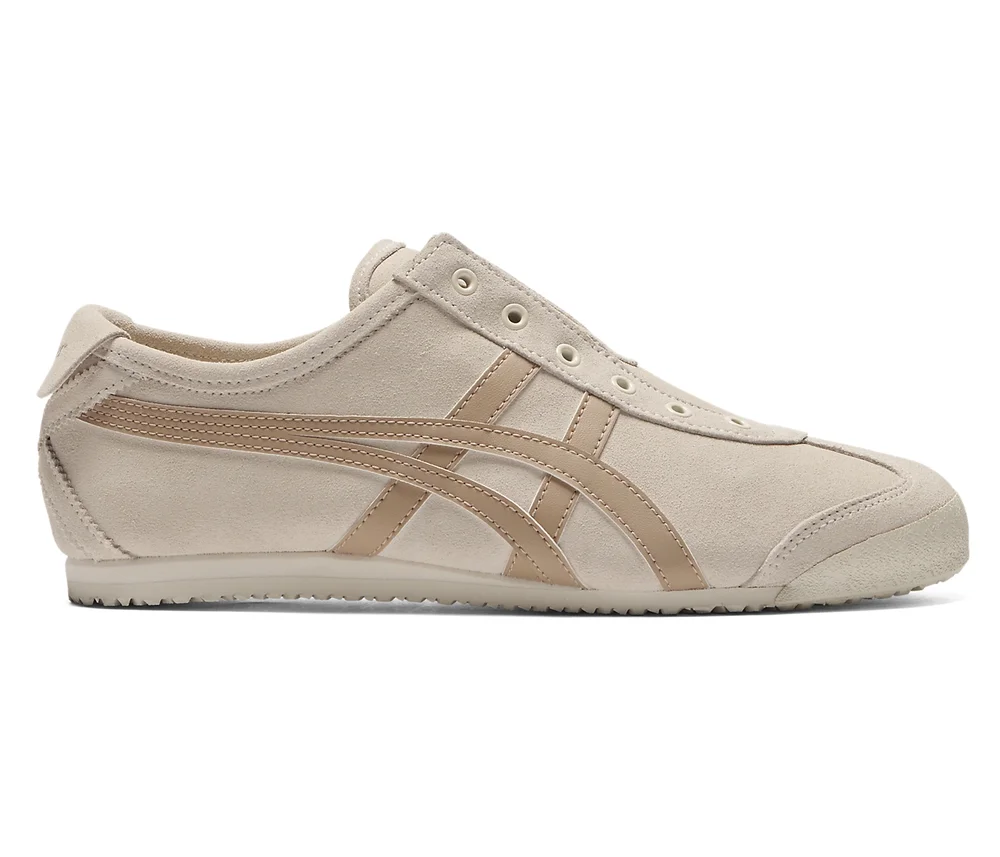
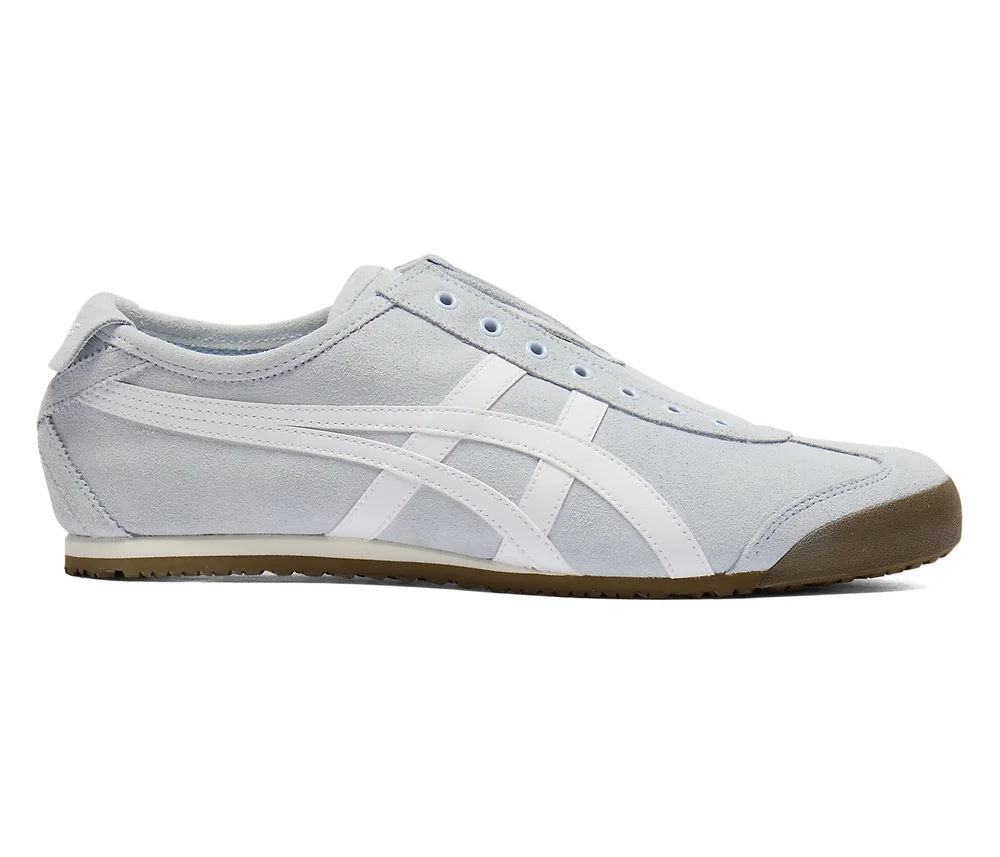
Warm Beige/Black in kid leather is a quiet way into the SD; Black/White and Ocean Haze/Pale Mint keep the line restrained but distinct. Ginger Peach/Putty brings warmth without making the stripe loud. The Slip-On in Birch/Wood Crepe is brushed suede, and its elastic instep band does the fitting work; Soft Sky/White reads cool, while Ginger Peach/Cream and Brown Storm/Putty give the lace-free shape an earthier cast.
With an oversized blazer and straight jeans, I would choose an SD; for a travel day with a long skirt or relaxed trousers, the slip-on has a lighter visual rhythm. I would check that the band sits securely without lifting the heel, and that the lace-up version does not pinch across the forefoot. I would pair Warm Beige/Black with dark straight trousers and save Ocean Haze/Pale Mint for a cream knit and denim; a slim lace changes the impression without adding fuss.
Silver, gold, and a little glint
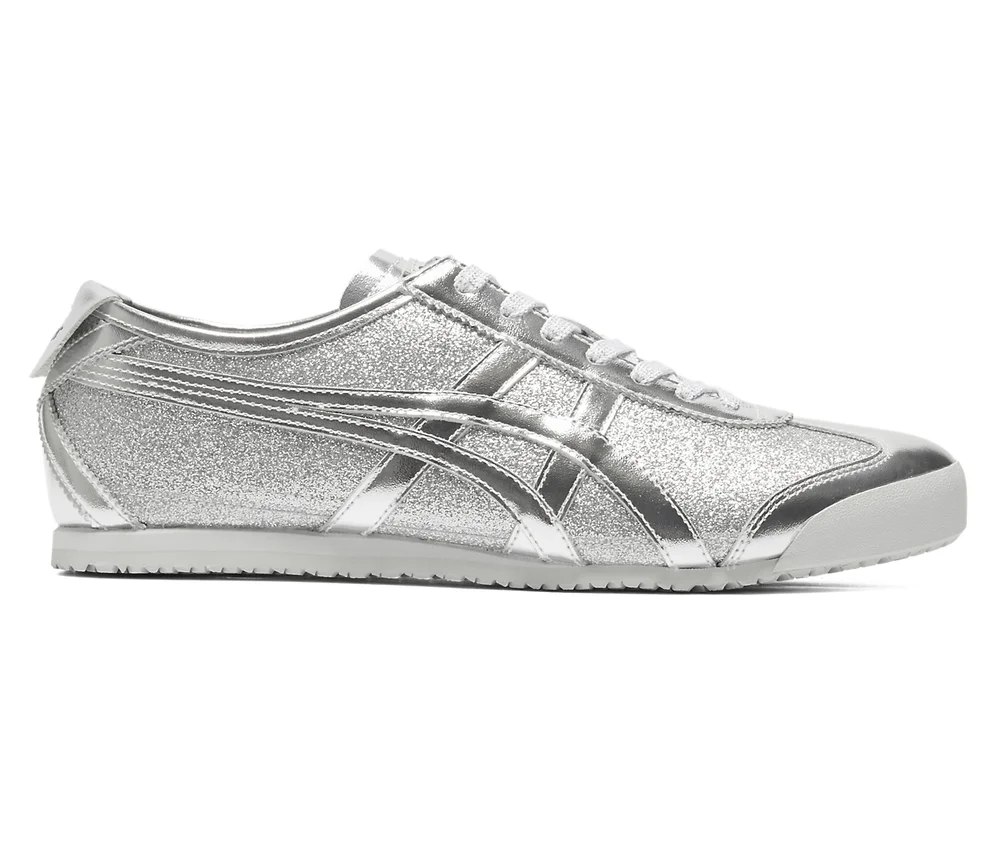
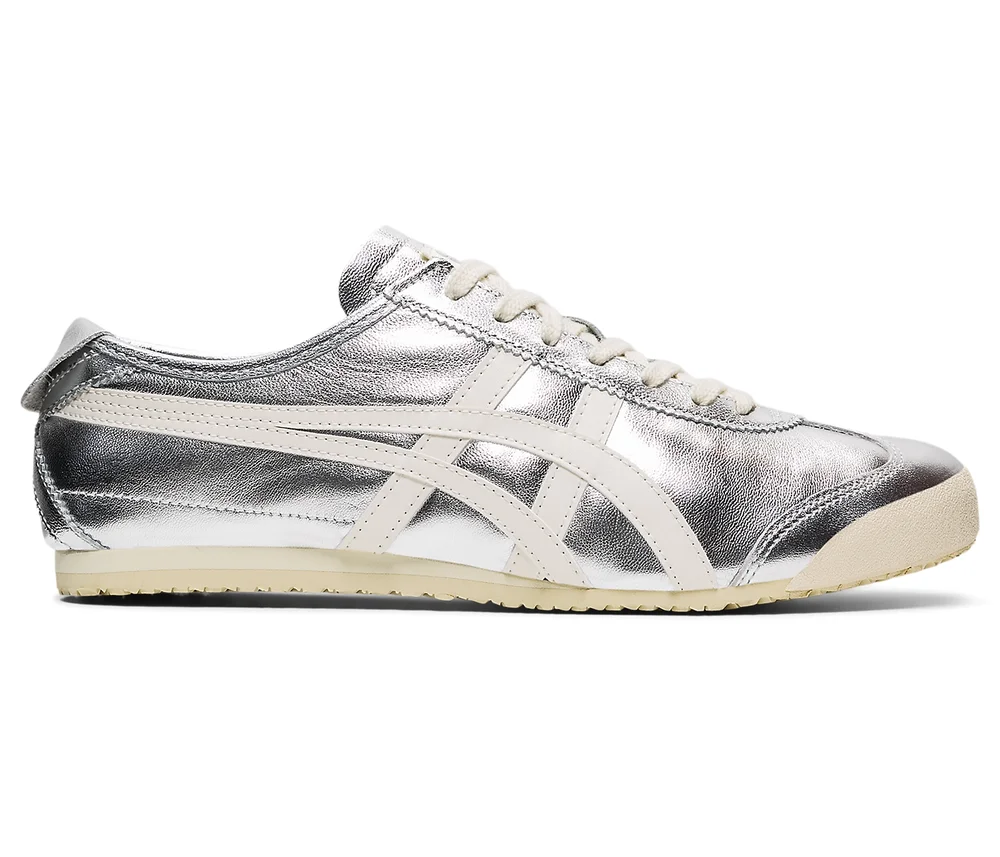
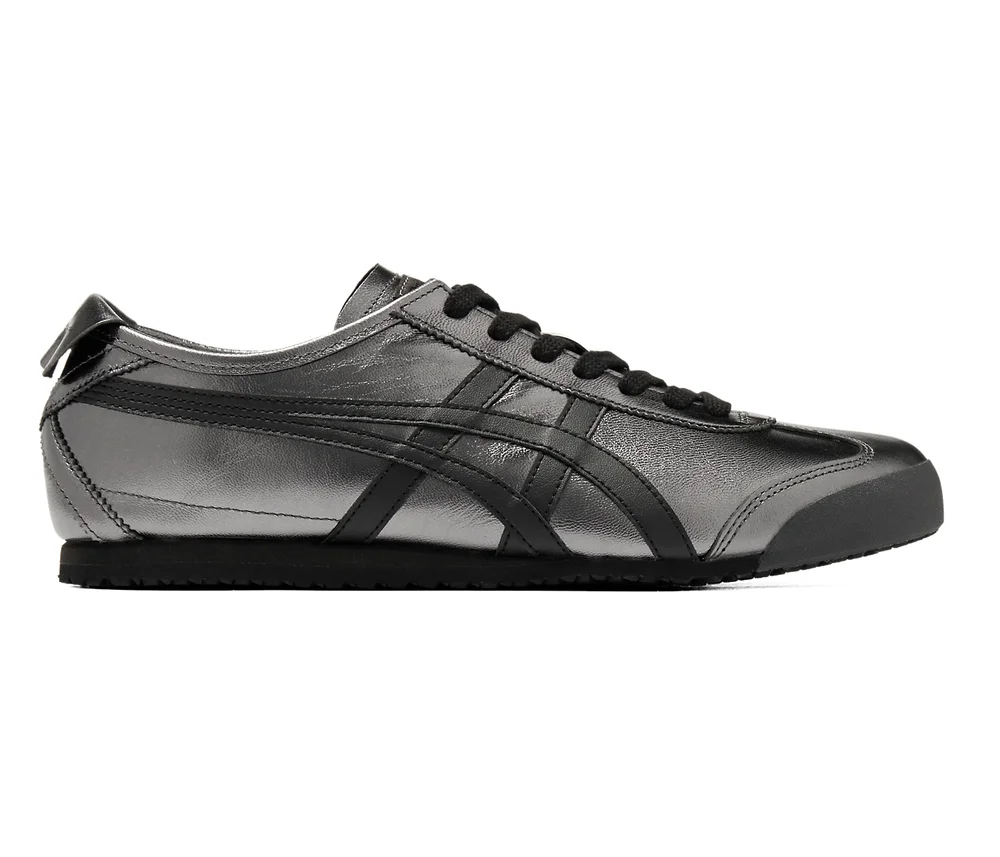
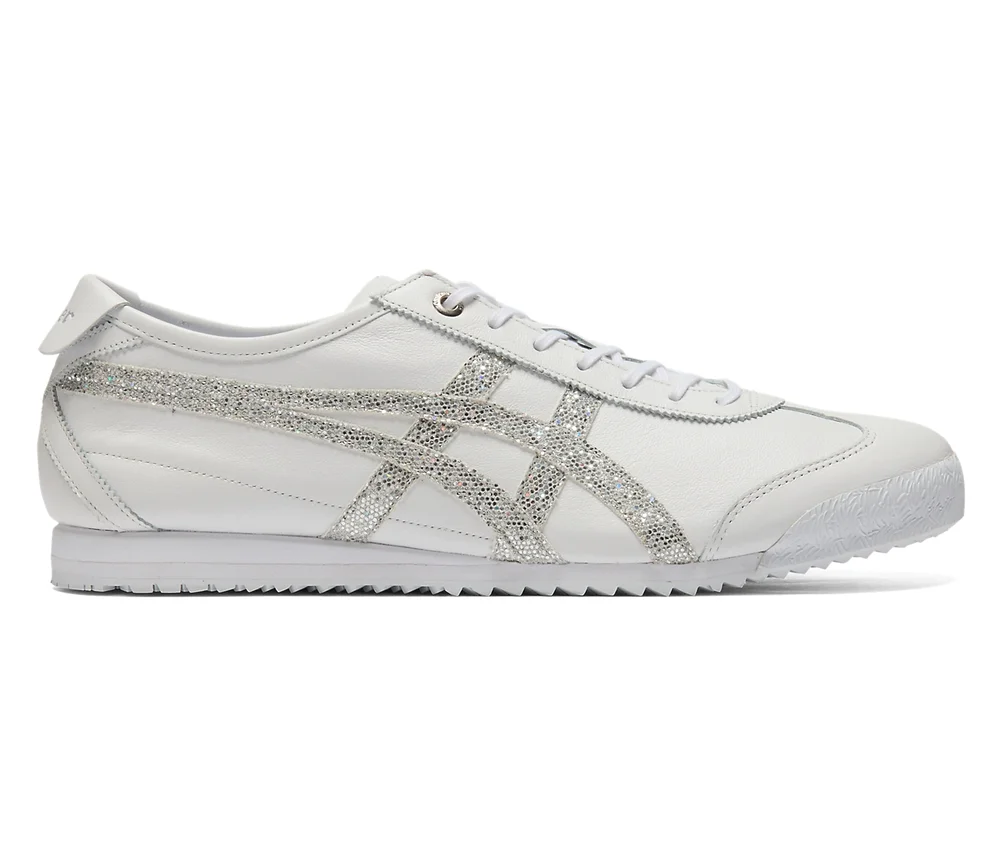
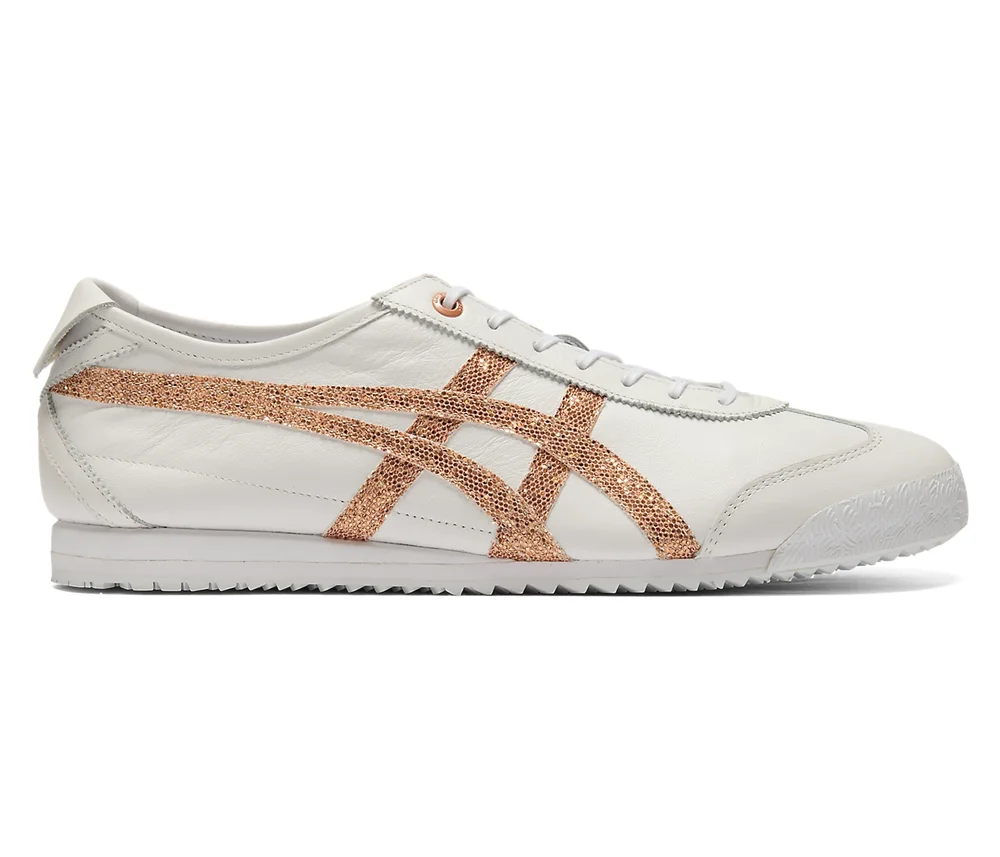
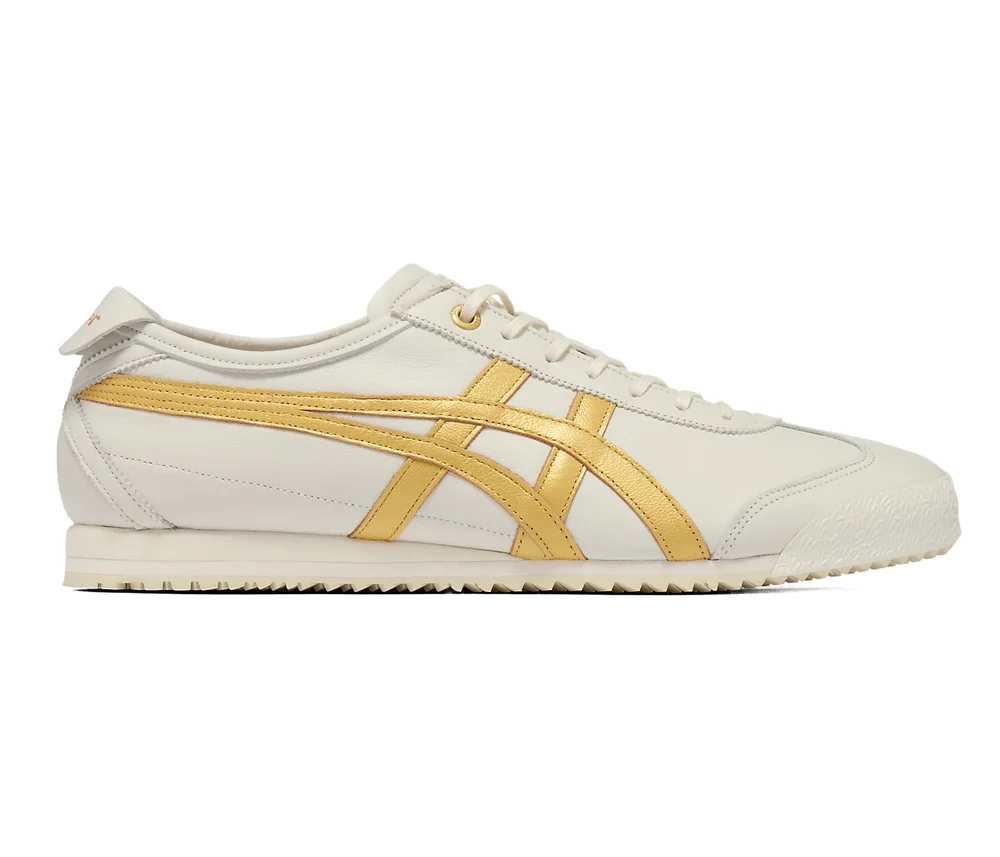
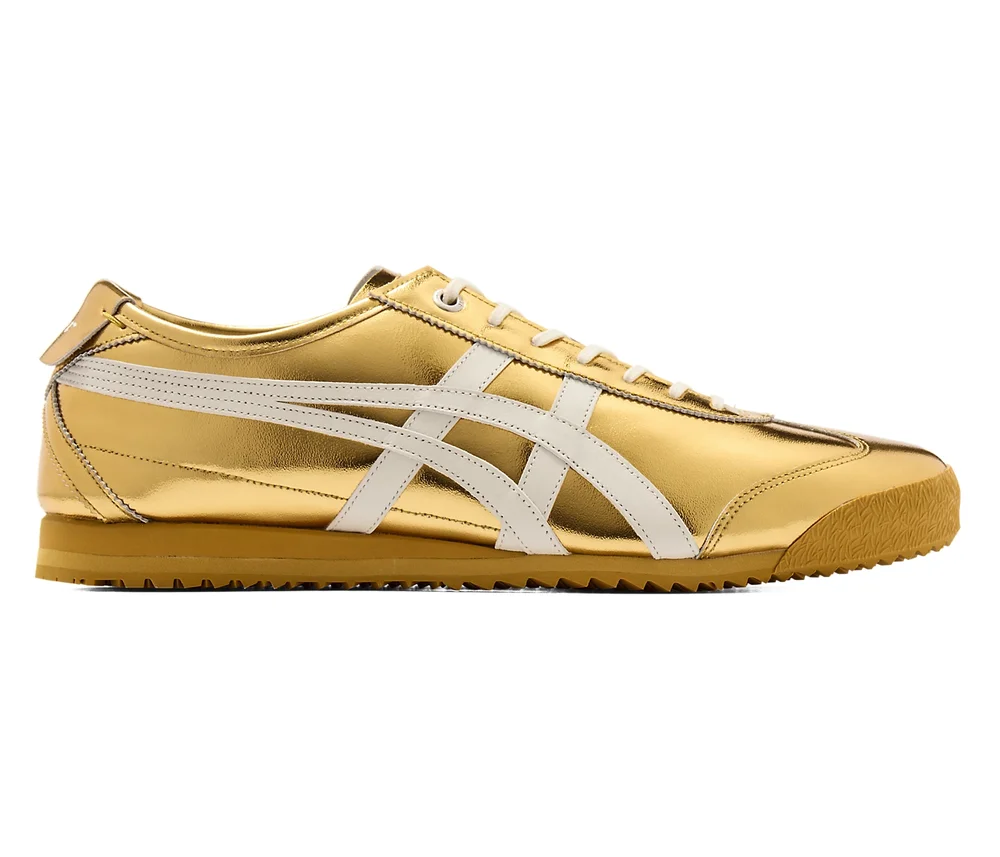
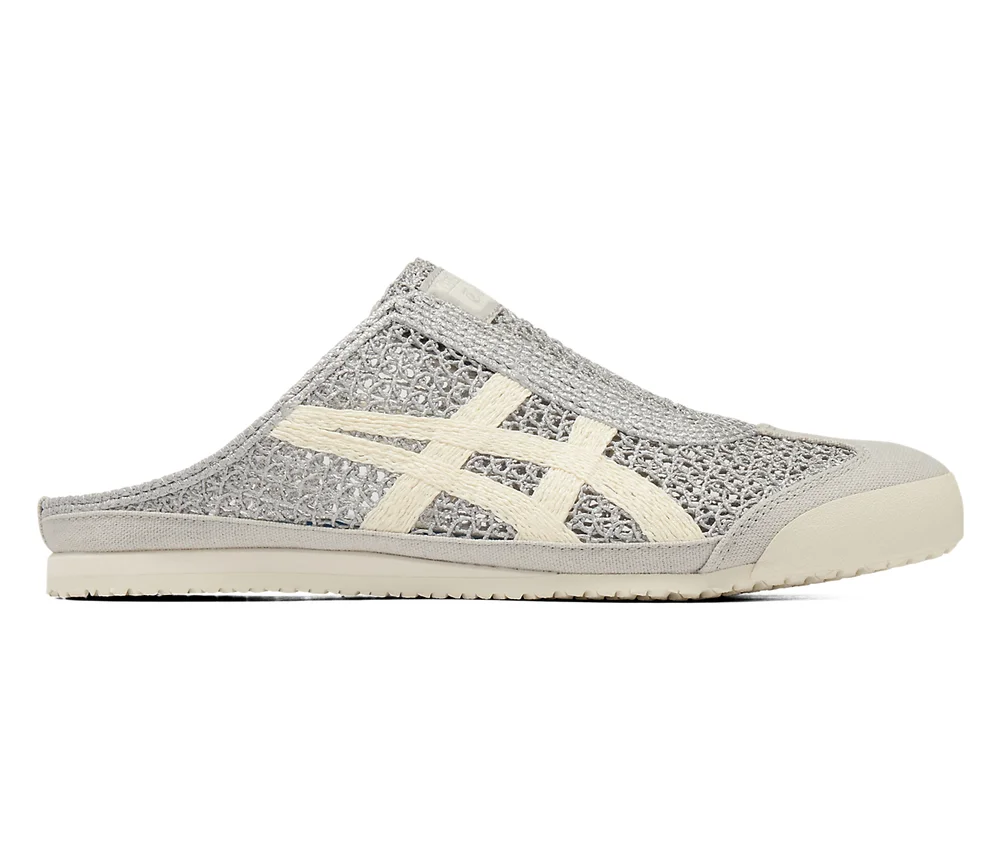
Metallics need one decision: the shine can be a flash or the whole sentence. Pure Silver/Pure Silver goes mirror-bright; Silver/Off White and Gunmetal/Black lower the volume. On the SD, White/Pure Silver keeps the upper crisp, while White/Rose Gold and Cream/Pure Gold warm the shine. Gold/Cream makes a stronger block. The Pure Silver/Cream Sabot changes the profile altogether with woven panels and an open back.
Pure Silver works as a bright note beside wool, while Gunmetal and black settle into a darker palette. I would keep one metal story at a time.
There is a historical note behind those side panels: the archive says the X-shaped cross and heel tabs date back to the second-generation LIMBER UP. The metallic colors are dressing an old design grammar, not replacing it.
With October knits, I would pair silver with charcoal or navy and rose gold with cream or brown. I would check the finish in daylight and compare it to the jewelry I already wear. What I would skip: full head-to-toe shine if your wardrobe is mostly matte layers. Let one reflective point do the work.
Track, court, and trail shoes
The company’s first model was a basketball shoe, developed after a coach asked for help with fast breaks and sudden stops. That practical brief still suits an assortment of court, trail, and track references.
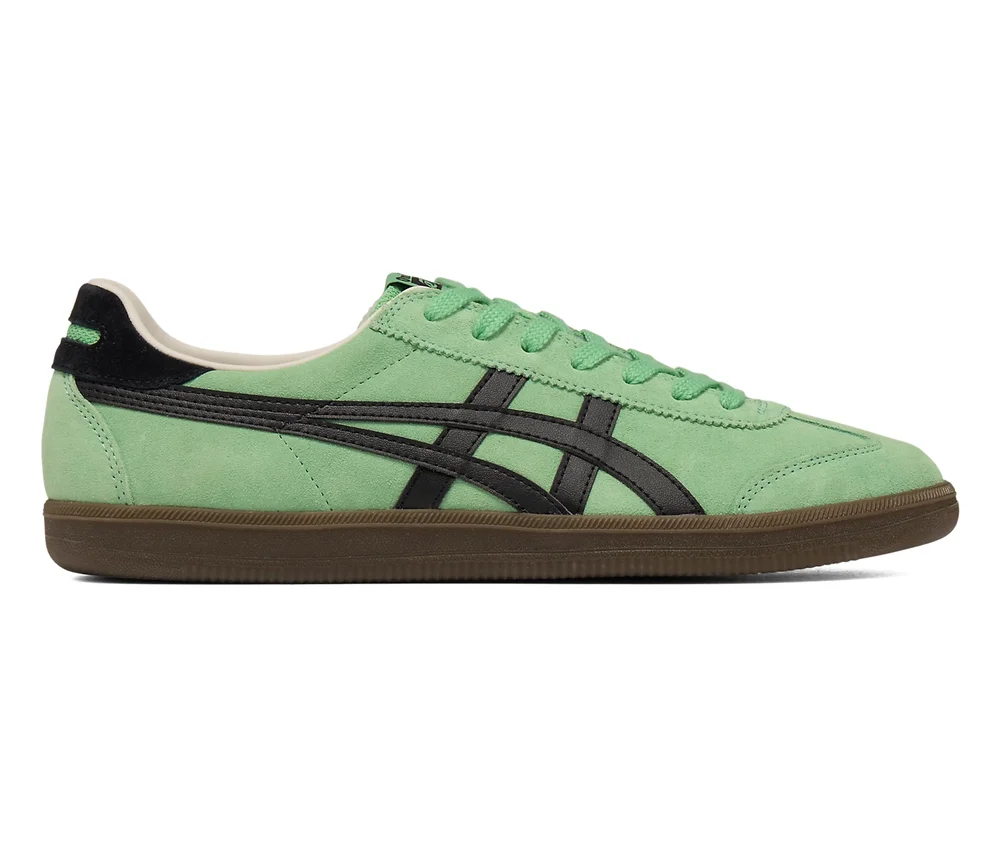
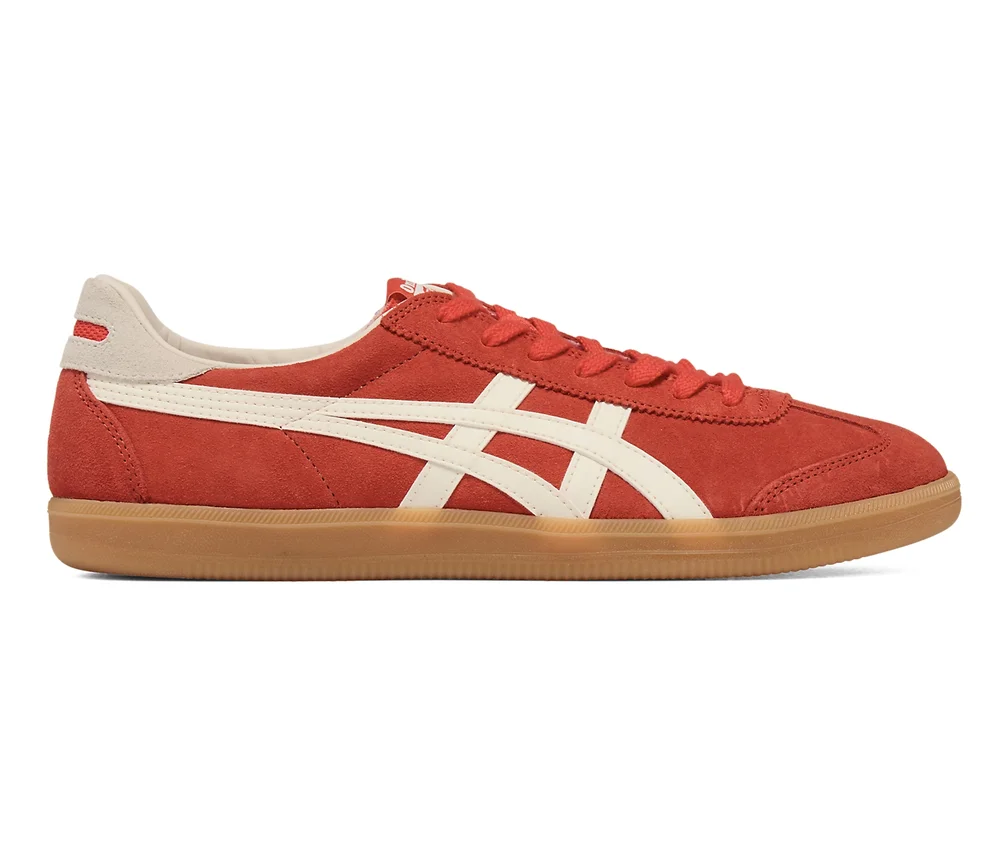
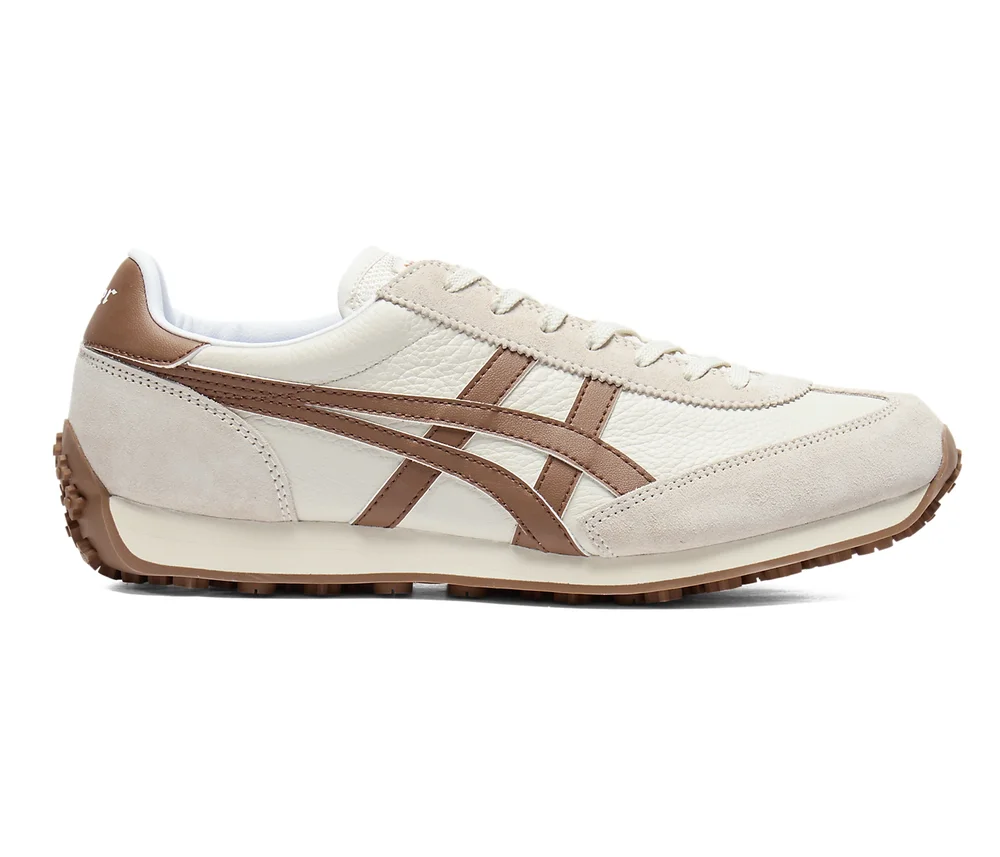
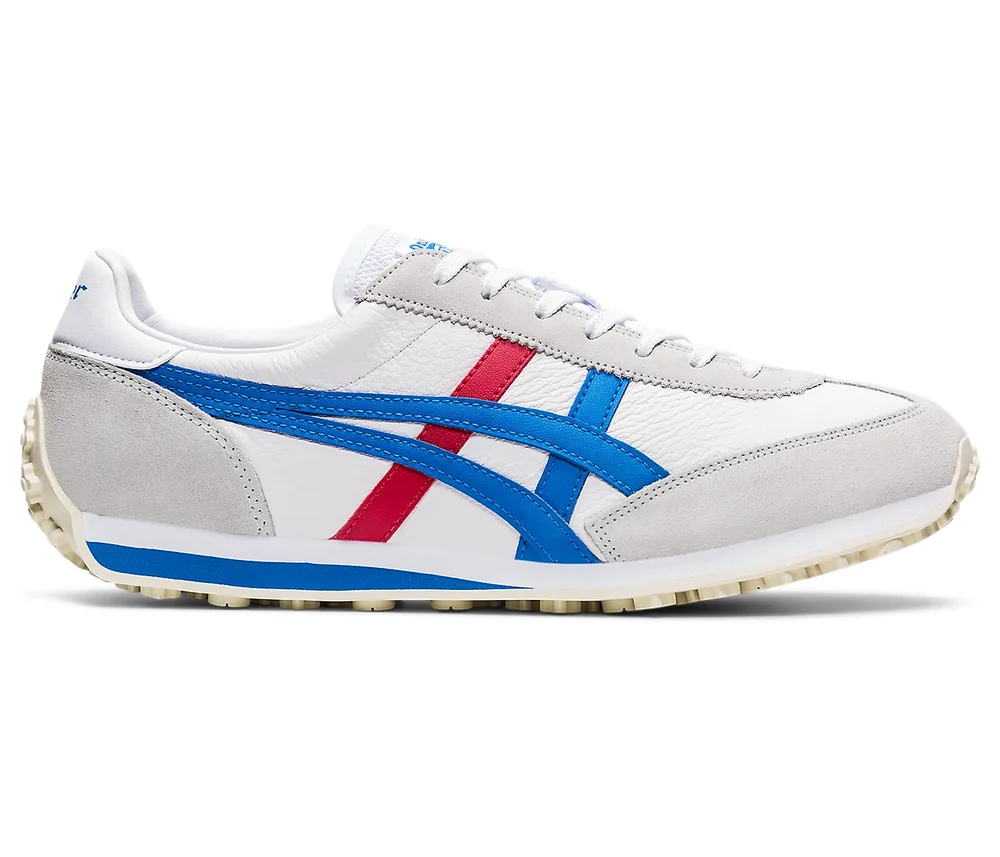
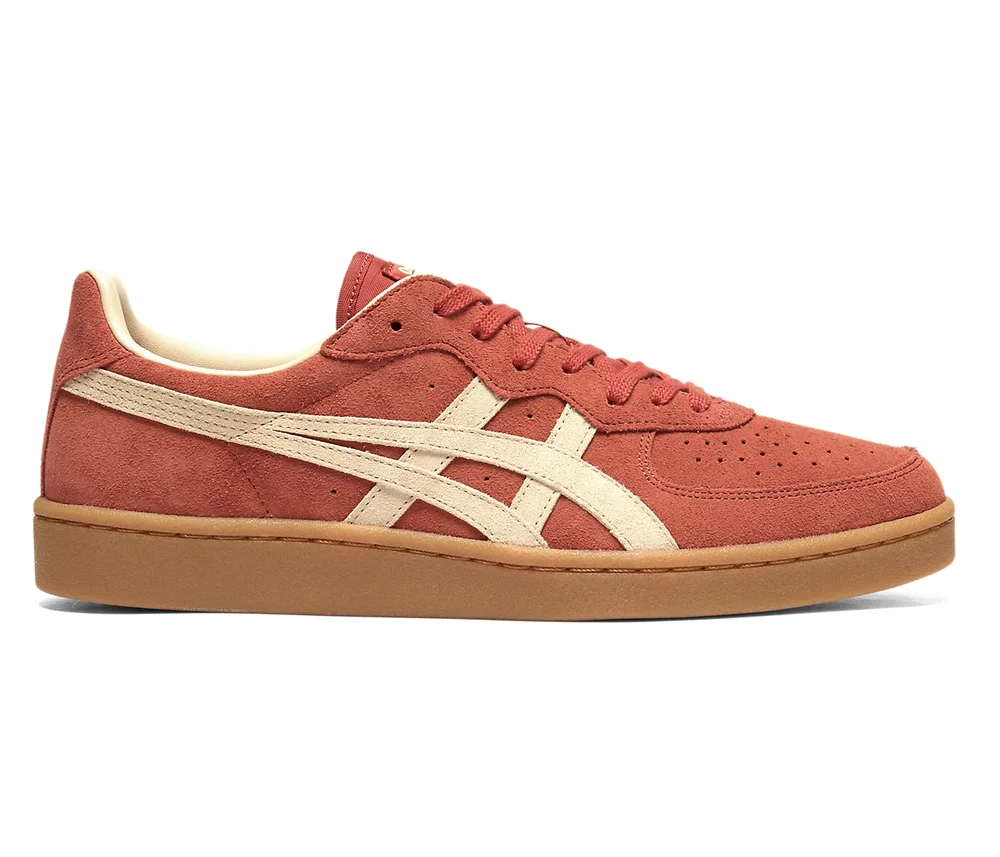
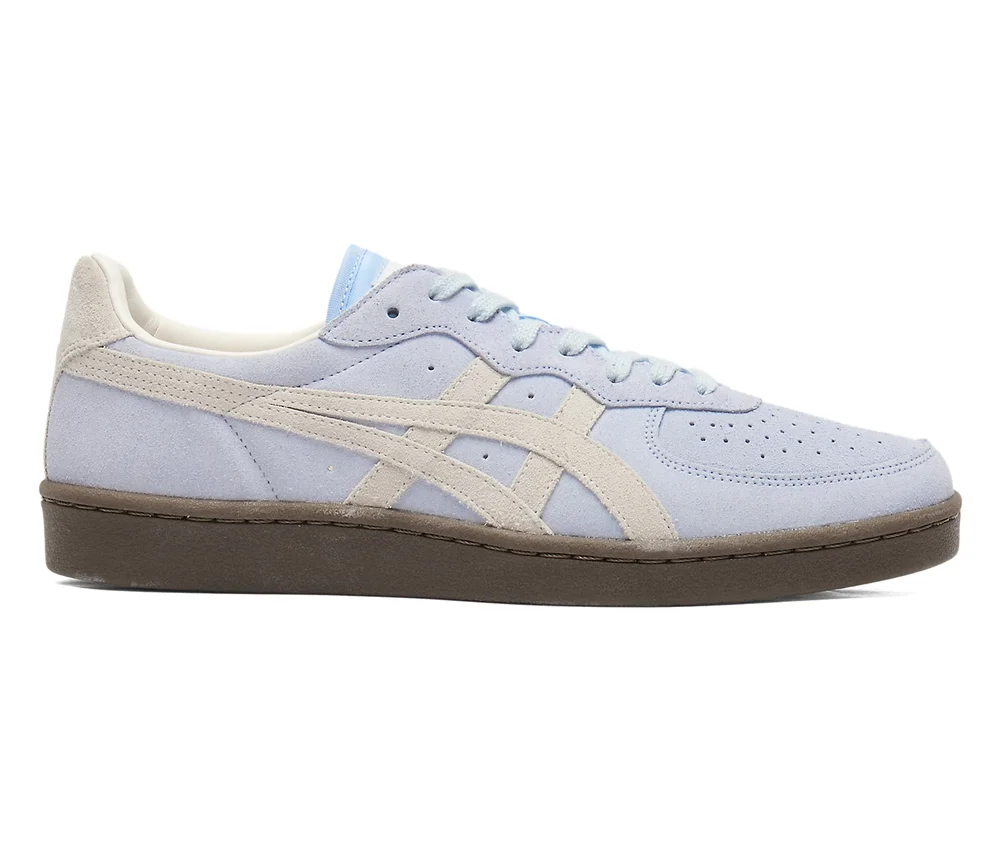
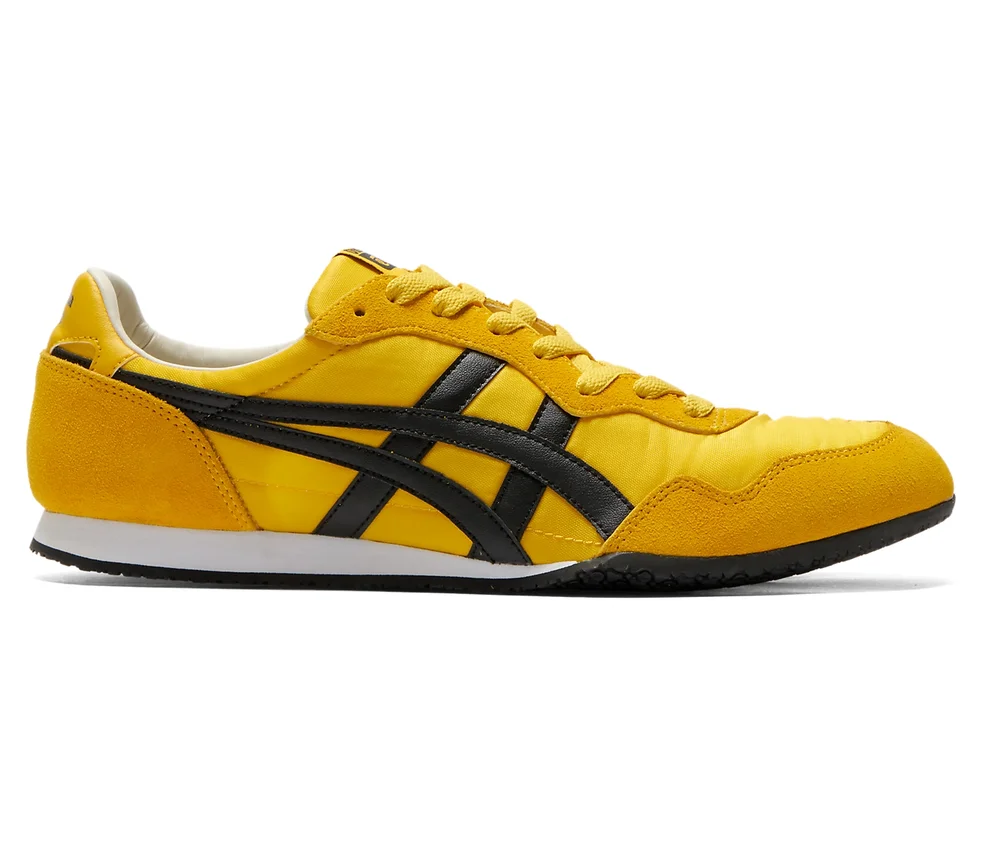
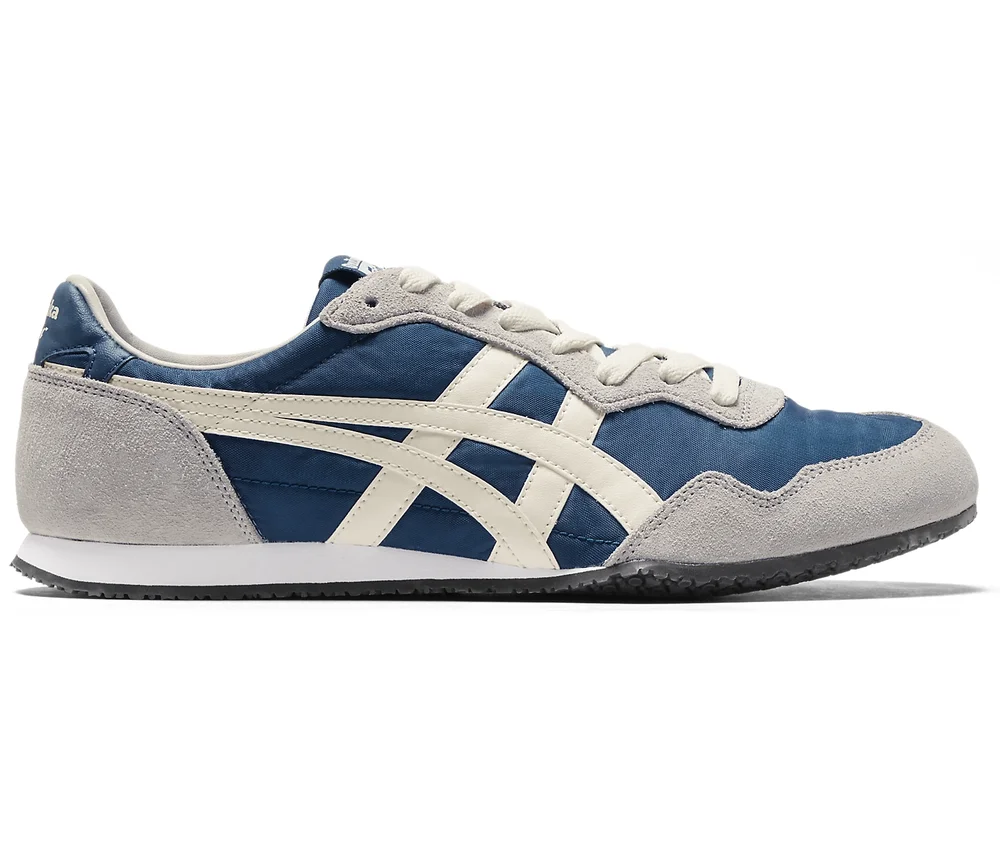
Tokuten in Peppermint/Black and Fiery Red/Cream are suede indoor-court shoes. EDR 78 in Birch/Mocha Brown has an outsole that wraps the toe and heel, while White/Directoire Blue adds a midfoot arch support pad. GSM in Burnished Red/Beige uses suede and a gum sole, and the name stands for Game, Set, Match. Soft Sky/White is the quieter cousin. Serrano in Yellow/Black or Mako Blue/Cream has a thin outsole wrapping the forefoot.
With October tights, I would start with Serrano; with straight jeans and a wool coat, GSM reads calmer. At the fitting, I would check the forefoot wrap and see whether the arch pad lands where expected. What I would skip: EDR 78 if the whole aim is the cleanest, lowest profile look. Its wrapped sole tells a more outdoorsy story. For a weekend walk, the trail references have more visual weight; GSM is easier to dress up with a blazer.
How I would choose a stripe
I would choose in order: setting, upper, stripe. For denim and knits, I would reach for classic leather with quiet contrast; I would add a slip-on, suede colorway, or metallic finish only if it brings a note not already in my closet. If all black is in regular rotation, Birch/Peacoat or Ocean Haze/Pale Mint brings variety without demanding a new outfit plan.
Then I would check toe space, heel hold, and the color in daylight. I want the old sports-shoe lines to meet clothes already in my closet, not create a costume. Kobe is where this story began, as a practical answer to how people moved; a good pair should still make getting dressed feel that direct.