Pleated dresses bring movement without asking for complicated styling. This edit helps you build fall and winter looks around the fold, from merino and jersey to midi and maxi lengths.
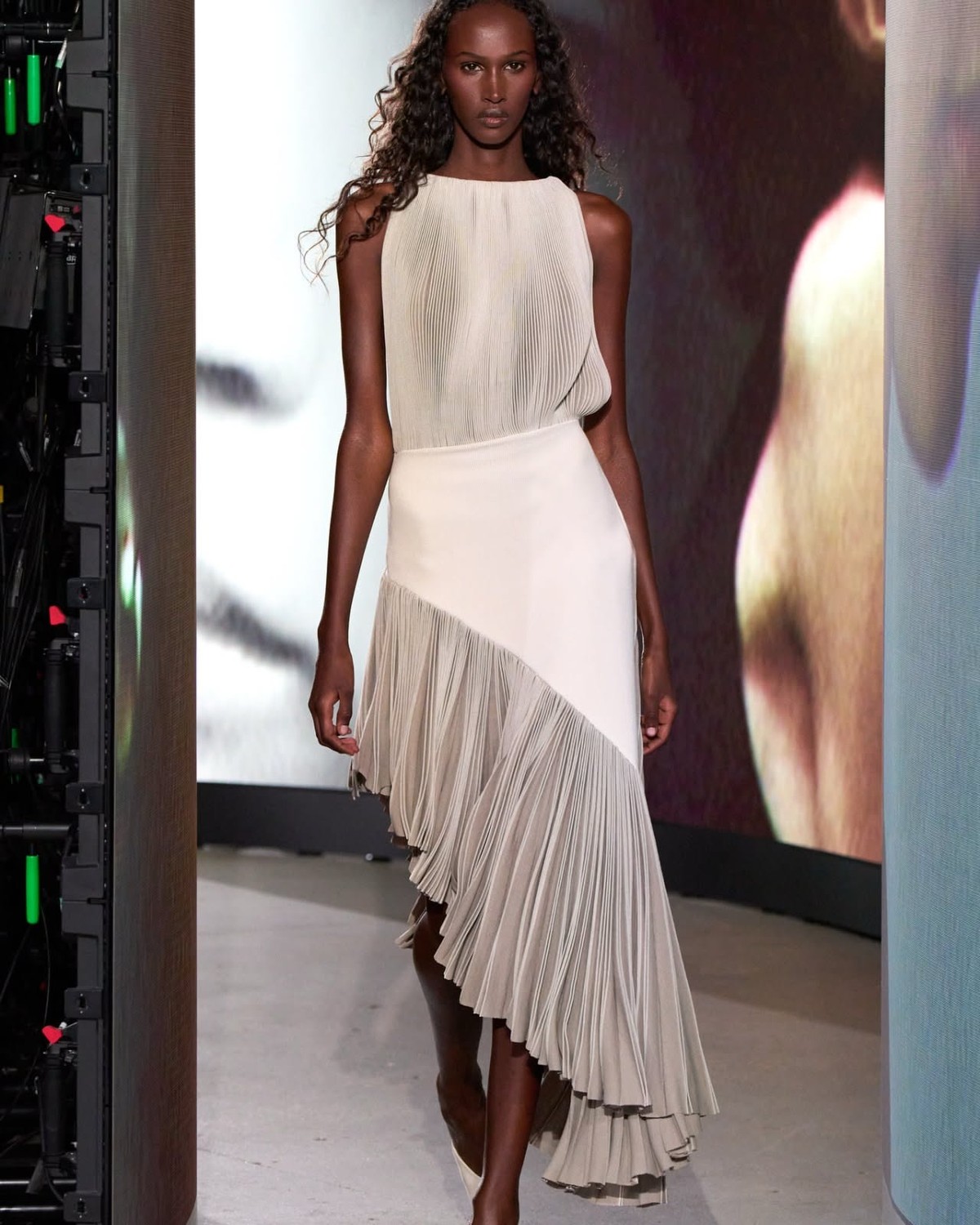
Pleated Dresses: A Winter Silhouette That Knows How to Move
Pleated dresses bring movement without asking for complicated styling.
Pleats with history
The V&A records the Delphos as a finely pleated silk dress produced in Venice from 1907, and credits Henriette Nigrin as its designer. That is a fitting starting point for pleated dresses: the fold is not merely decoration, it is a way of giving a column of fabric movement. The old Delphos was made for an entirely different wardrobe, but its fluid line still makes sense under the longer coats and heavier shoes of fall and winter.
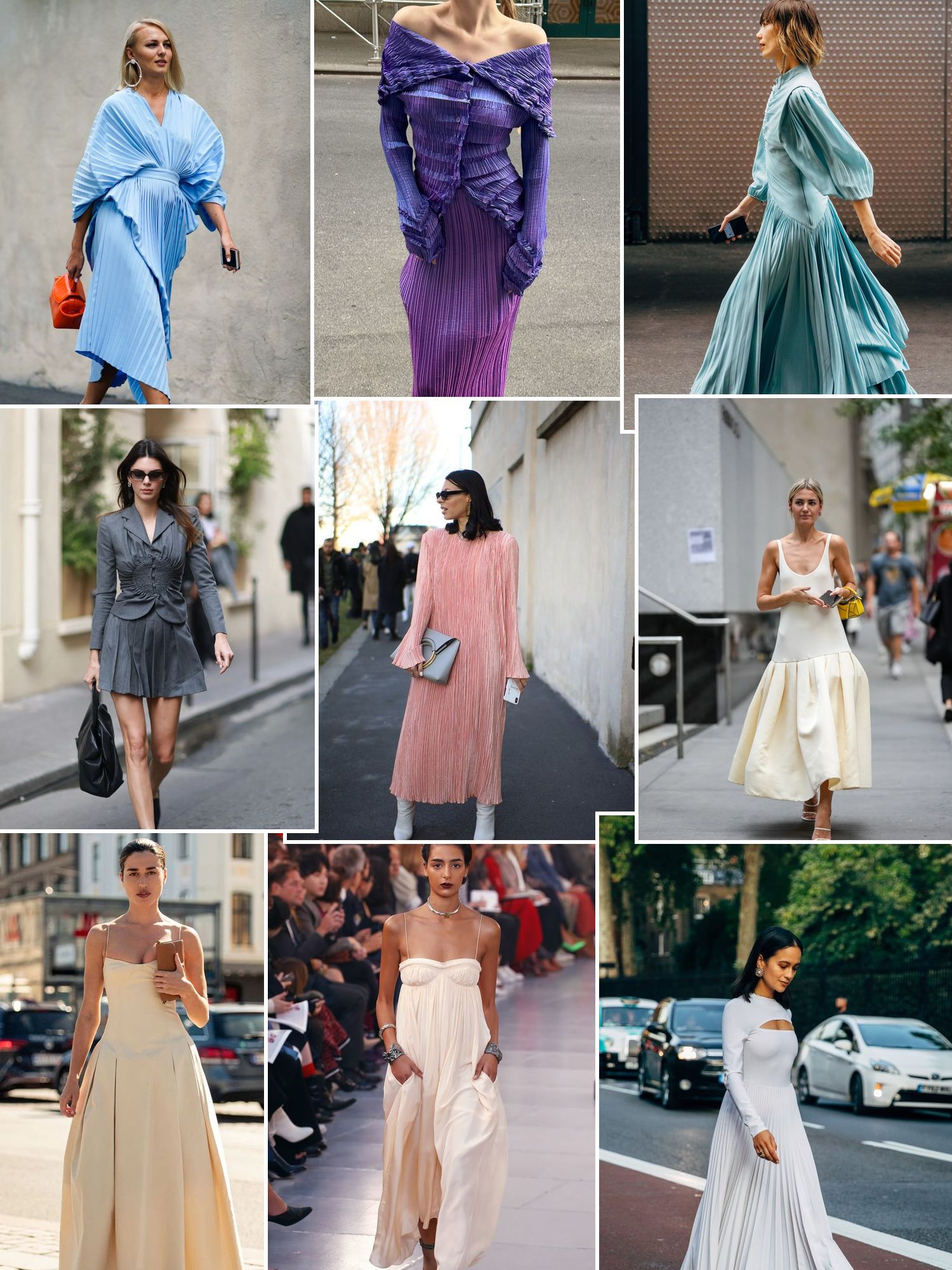
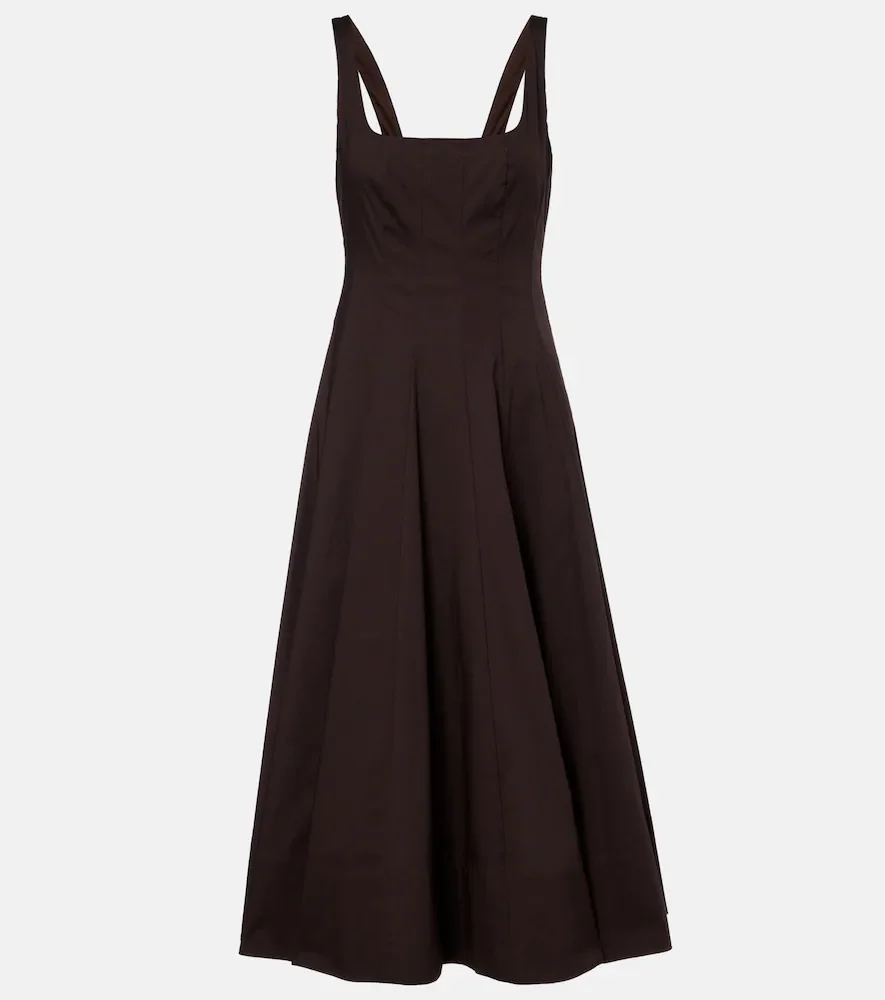
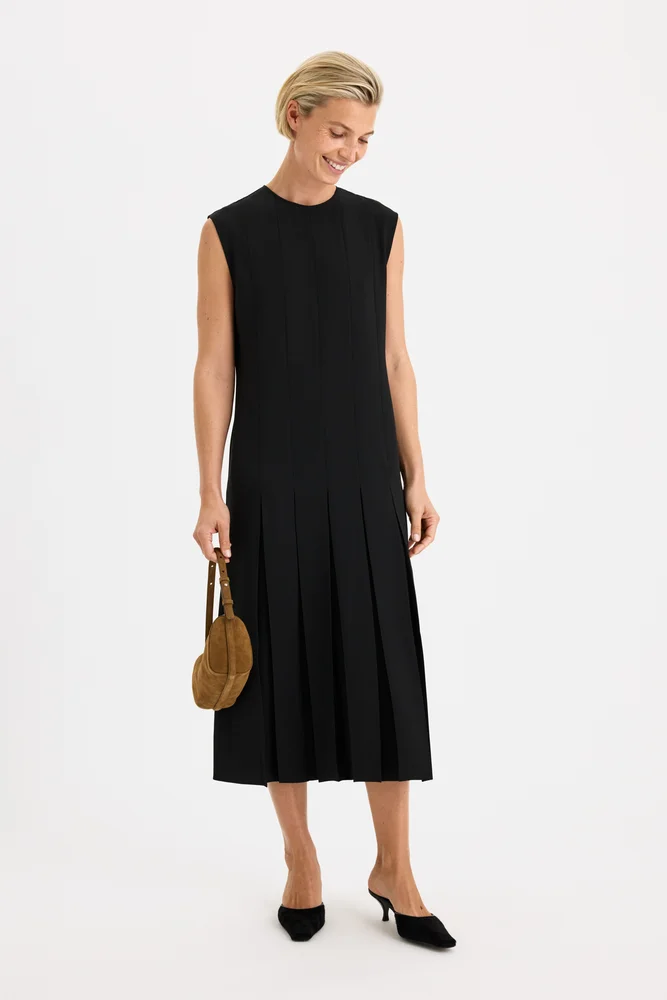
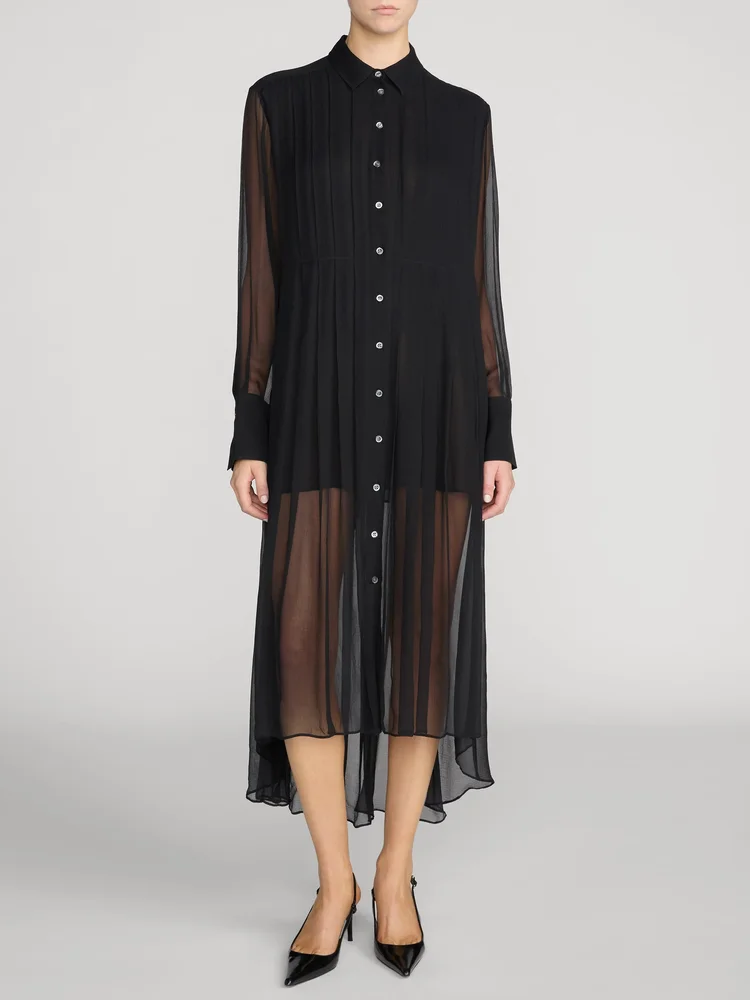
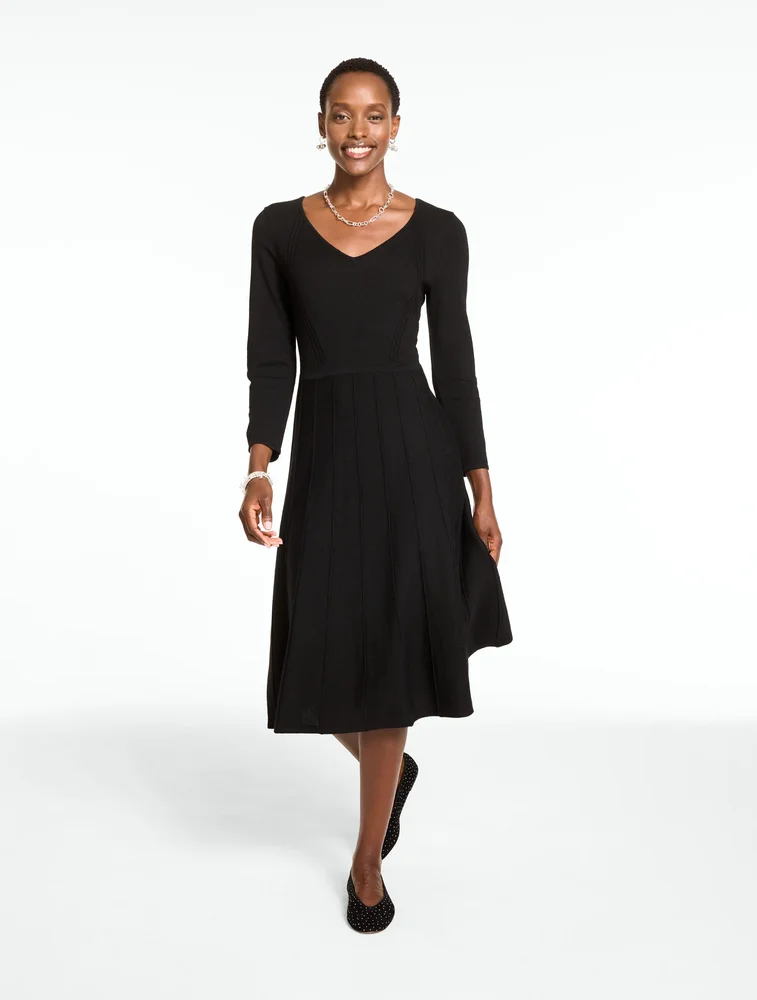
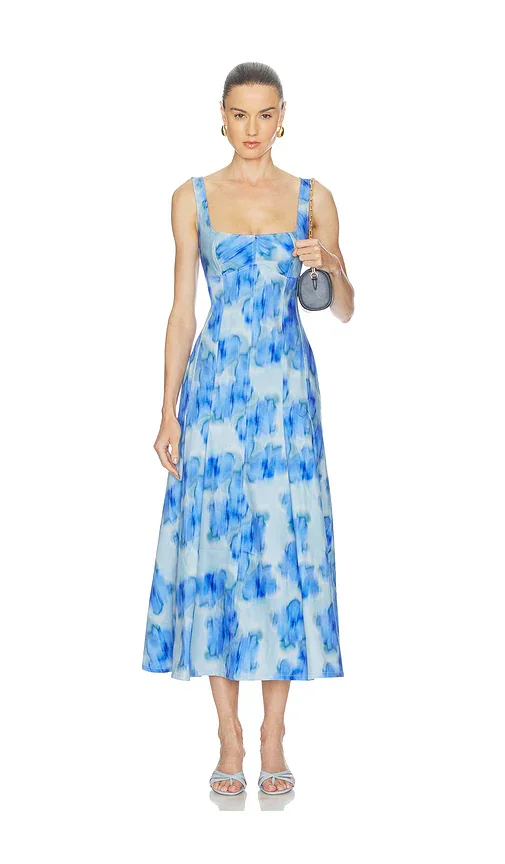
Staud's pleated cotton midi dress keeps the idea crisp, while Filippa K's Pleated Dress has a spare name that leaves the shape to do its work. Frame's Whisper Pleat Dress sounds like the softer option, and Talbots's merino wool V-neck pleated dress brings a clearly cold-weather knit into the assortment. Each one asks for a slightly different supporting cast, which is why I would choose the coat and shoe before adding jewelry.
Try a slim turtleneck under a sleeveless shape, or wear a V-neck dress over a fine long-sleeve layer when the wind turns sharp. Opaque tights and a clean ankle boot give the pleats room to move without breaking the line. The useful question is whether the folds fall freely when you walk; if they collapse under a thick cardigan, switch to a shorter jacket or a smoother base layer.
Shape under layers
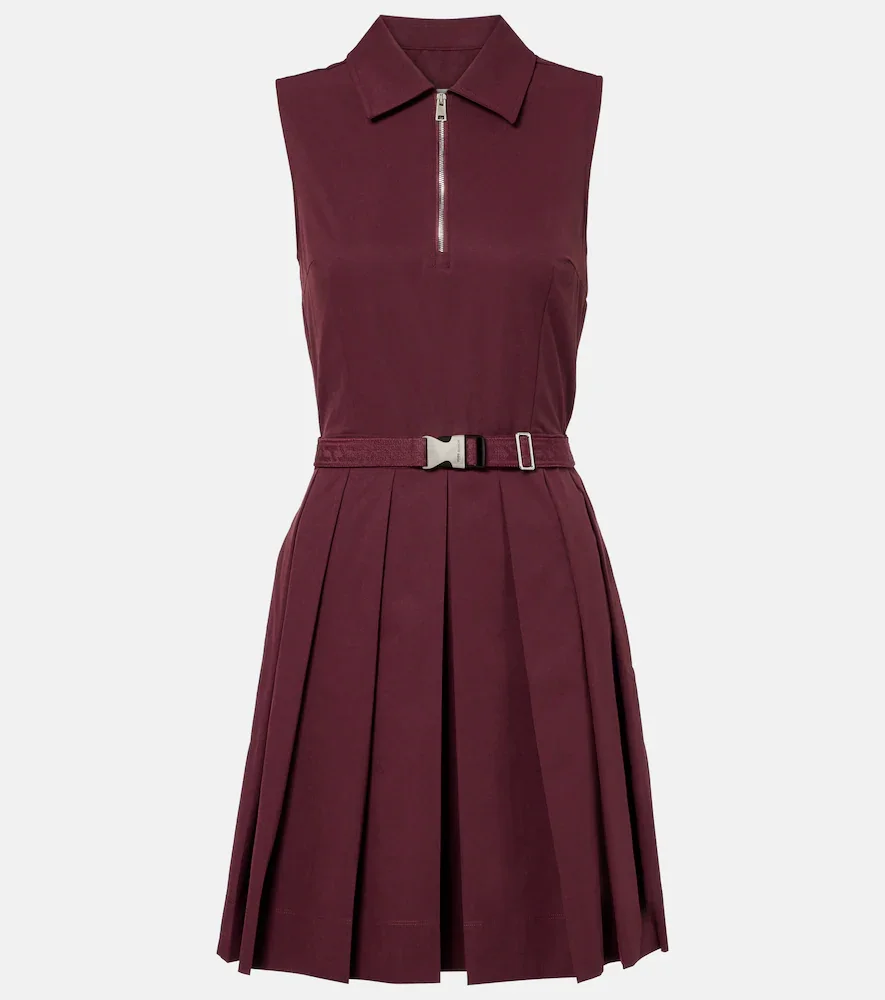
Staud's Ellison pleated maxi dress gives the second group a long, sweeping line. Vince's pleated midi is the more restrained length, while Clea's Charlie Pleat Dress offers another compact silhouette. Tory Burch's pleated tennis dress brings a sharper, sport-derived note, but I would style it for a city day with tights and a wool coat rather than treat it as activewear.
Pleated dresses work especially well in fall when the outer layer has enough structure to keep the folds in view. A tailored blazer lets a midi hem swing; a long coat can frame a maxi, but it should not be so full that the dress disappears beneath it. For a cold commute, add a thin thermal layer under the dress and choose a boot with a close shaft so the skirt does not snag.
What I would skip is an oversized sweater dropped over all that pleating. It can flatten the detail and make the proportions look accidental. Instead, mark the waist with a narrow belt or let the dress fall cleanly from the shoulder. The smaller the styling gesture, the more the construction reads as the point.
A dress for dark
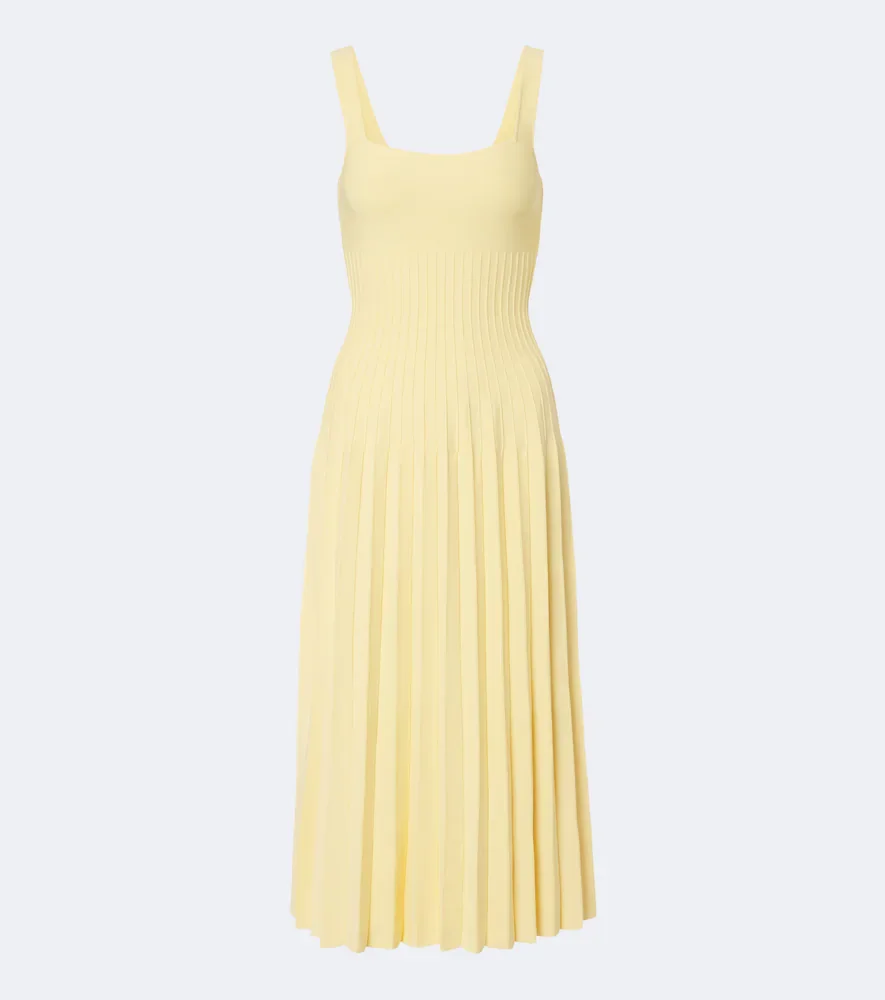
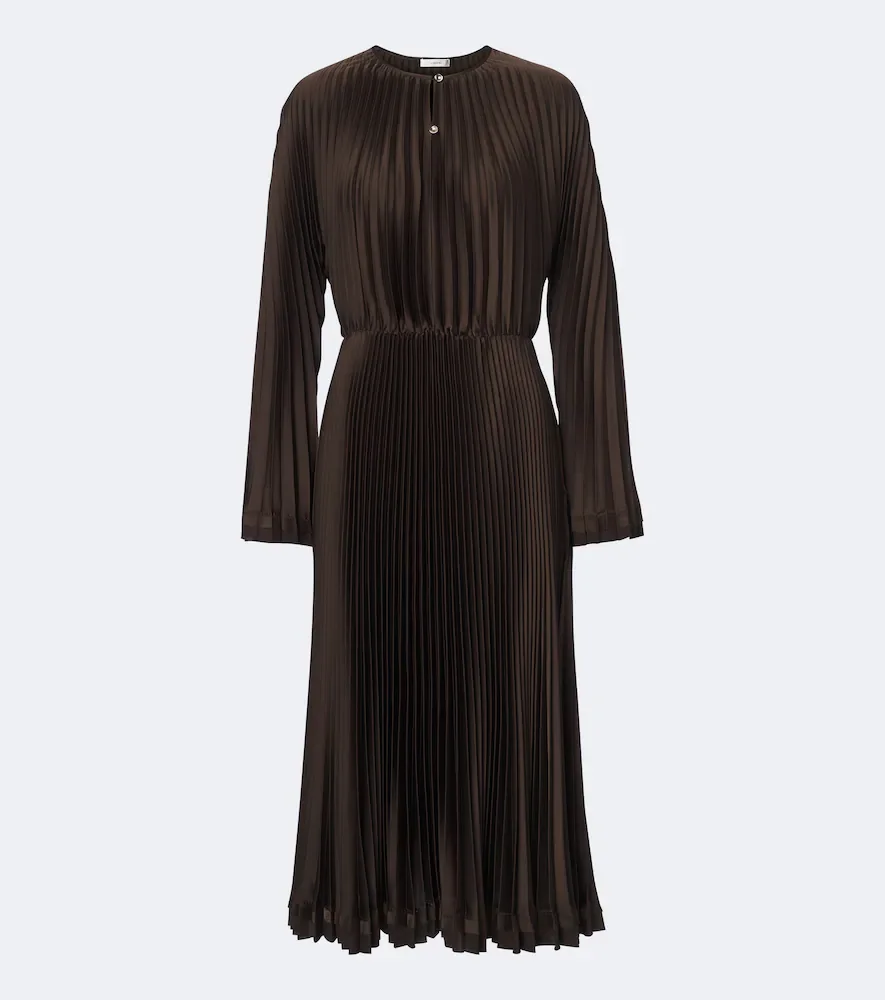
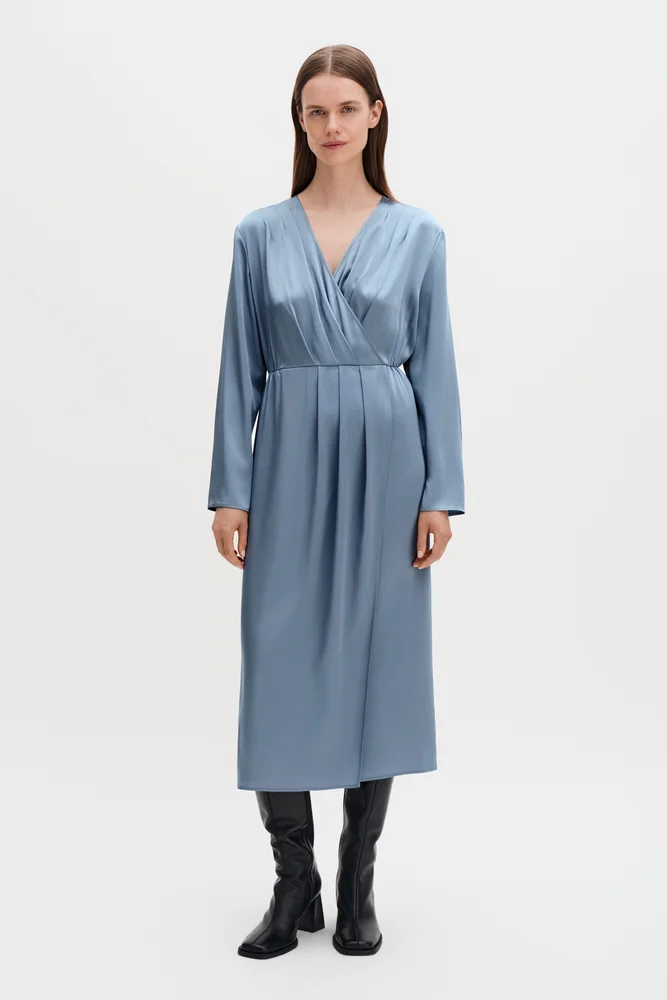
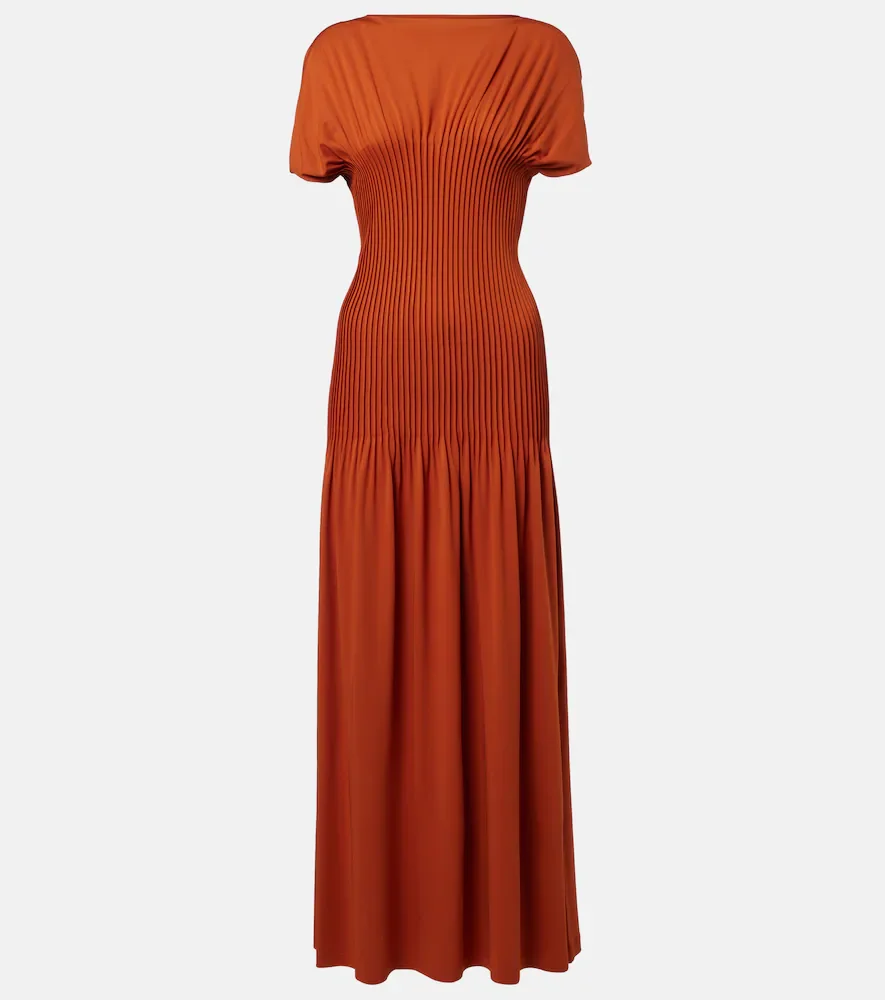
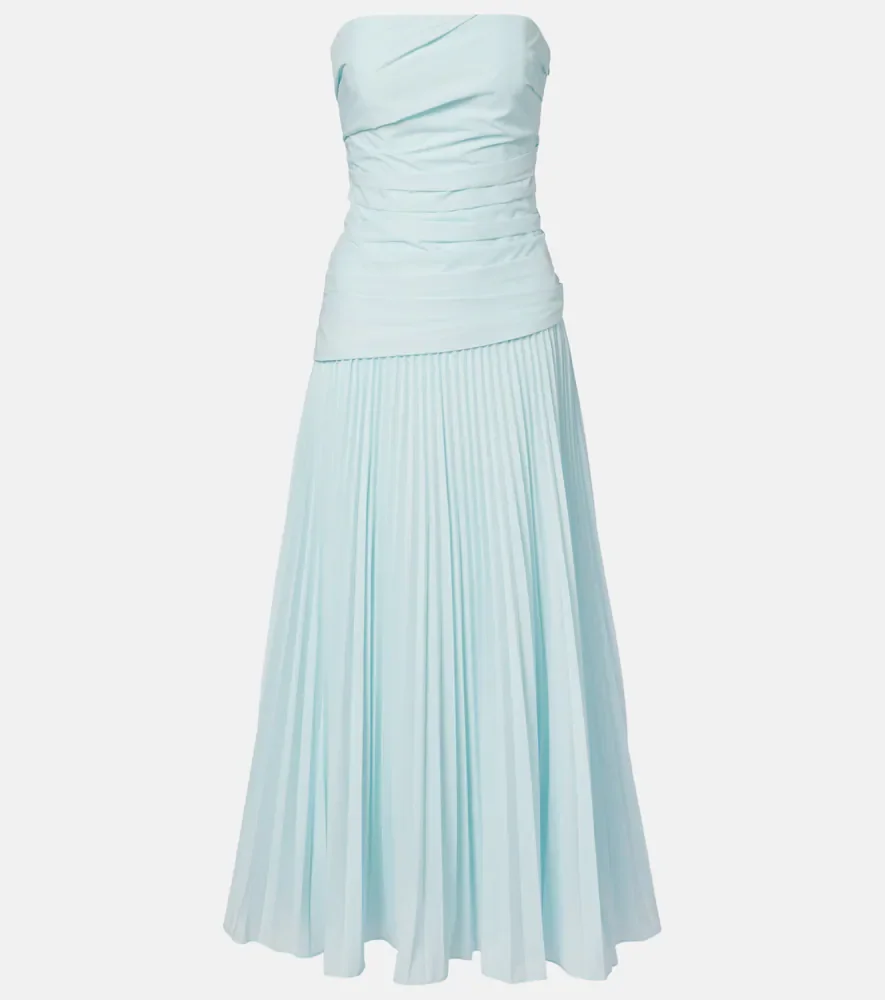
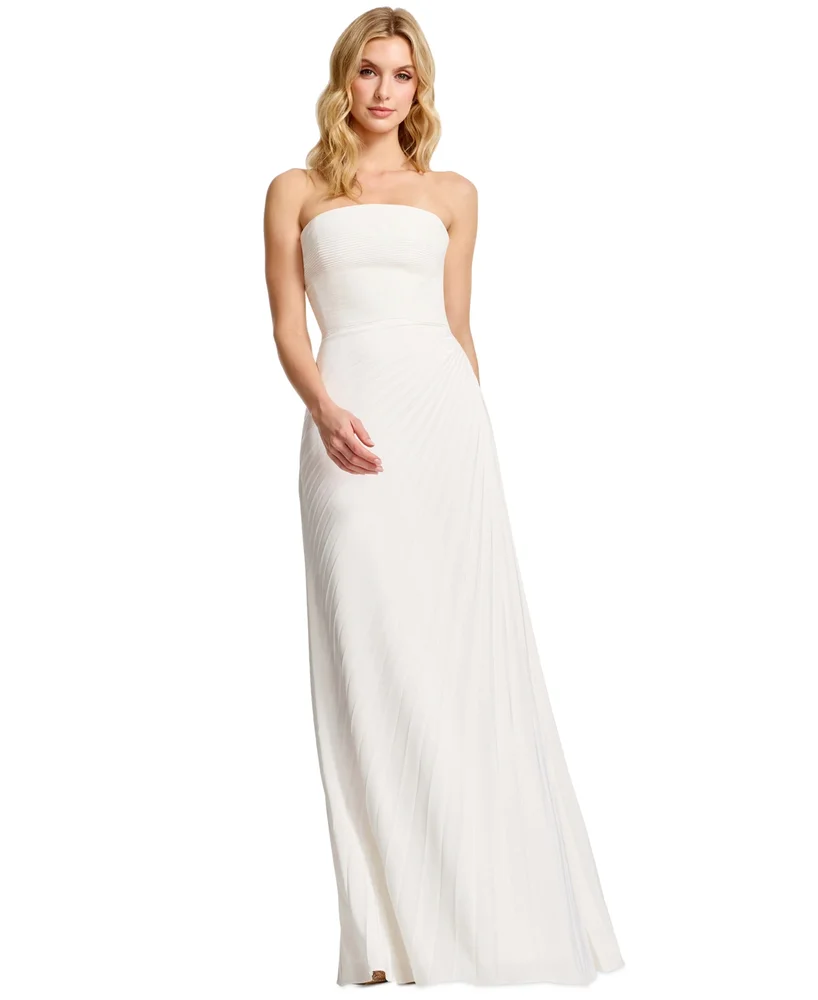
Filippa K's Pleated Wrap Dress brings a more adjustable line to the third group. Toteme's pleated jersey maxi is a streamlined option, while Simkhai's Arie pleated bustier dress has a more evening-minded structure. Dress the Population's Kinley strapless pleated A-line maxi is the fullest shape here, and the one that benefits most from a deliberate layer above it.
For winter, put a fine ribbed top beneath a strapless bodice or add a fitted jacket that ends at the waist. With the jersey maxi, try a long wool coat and a block-heeled boot; the contrast between the moving skirt and the grounded shoe keeps the look from feeling precious. A small bag worn close to the body leaves the pleats unobstructed.
What I would skip is a bulky scarf knotted over the neckline, especially if the dress already has a strong bodice. Let one detail stay visible, then use a coat with a clean lapel to do the practical work. These pleated dresses make a persuasive case for keeping one fluid shape in the cold-weather rotation, even when the rest of the outfit is firmly built for warmth.
Motion without fuss
Pleated dresses earn their place in a fall and winter wardrobe because the movement is already built in. A warm base layer, opaque tights, boots, and a coat can do the practical work while the skirt keeps its own rhythm. The trick is choosing layers that frame rather than smother the folds.
I would start with the length you wear most naturally, then decide whether the pleats should feel crisp, soft, or full. A midi is easy under a tailored coat; a maxi likes a cleaner, longer outer layer. The best version is the one that still moves when you reach for your gloves and close the door behind you.