Taylor Swift's wedding dress was Dior Haute Couture, designed with Jonathan Anderson. This edit keeps to the confirmed details of the gown, then turns to lace, satin and veils in the same romantic spirit.
Taylor Swift's Wedding Dress: The Confirmed Couture, and the Gowns Around It
The confirmed gown, and the dream
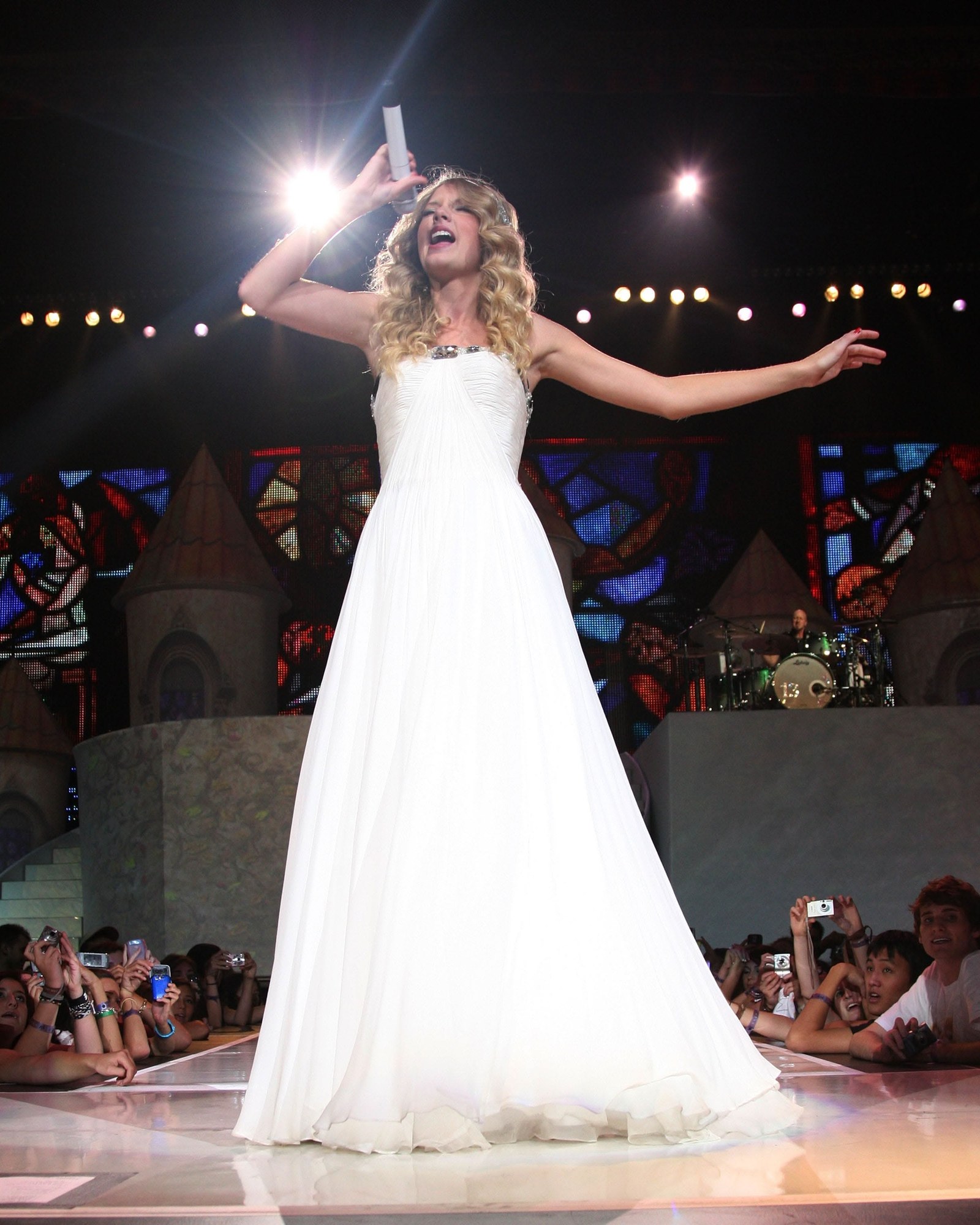
On July 3, 2026, Taylor Swift and Travis Kelce married at New York’s Madison Square Garden, as her publicist announced. That is the confirmed starting point for Taylor Swift's Wedding Dress, not an invitation to fill in what has not been shared.
Her ceremony gown was Christian Dior Haute Couture, designed with Jonathan Anderson, and the couple worked closely with him on both ceremony looks. Swift’s representative called it Anderson’s first couture wedding dress for a world-renowned celebrity. I like that the verified detail is collaboration, not a pile of invented clues. Designers had proposed other looks before the wedding, but those were ideas rather than what Swift wore.
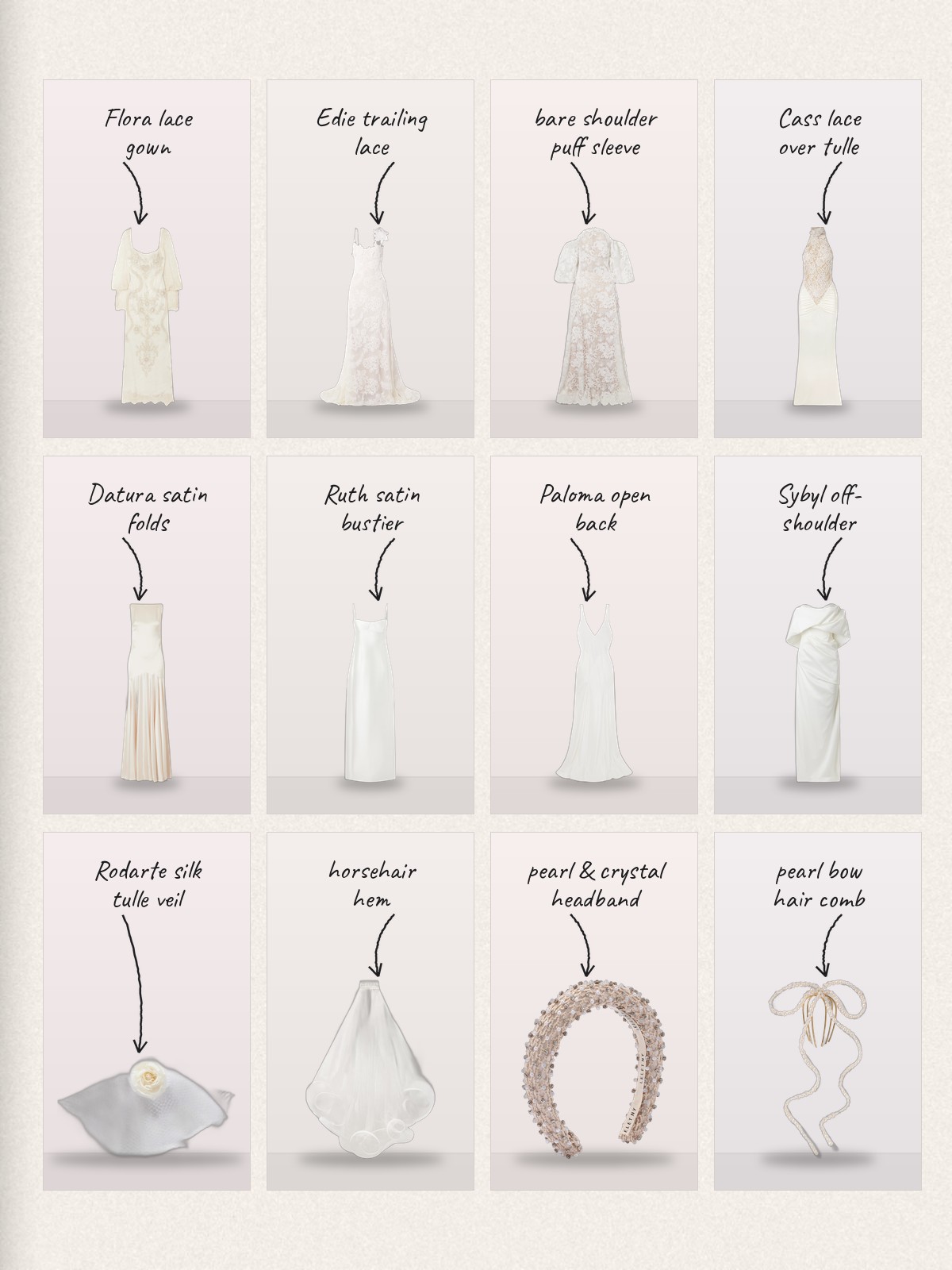
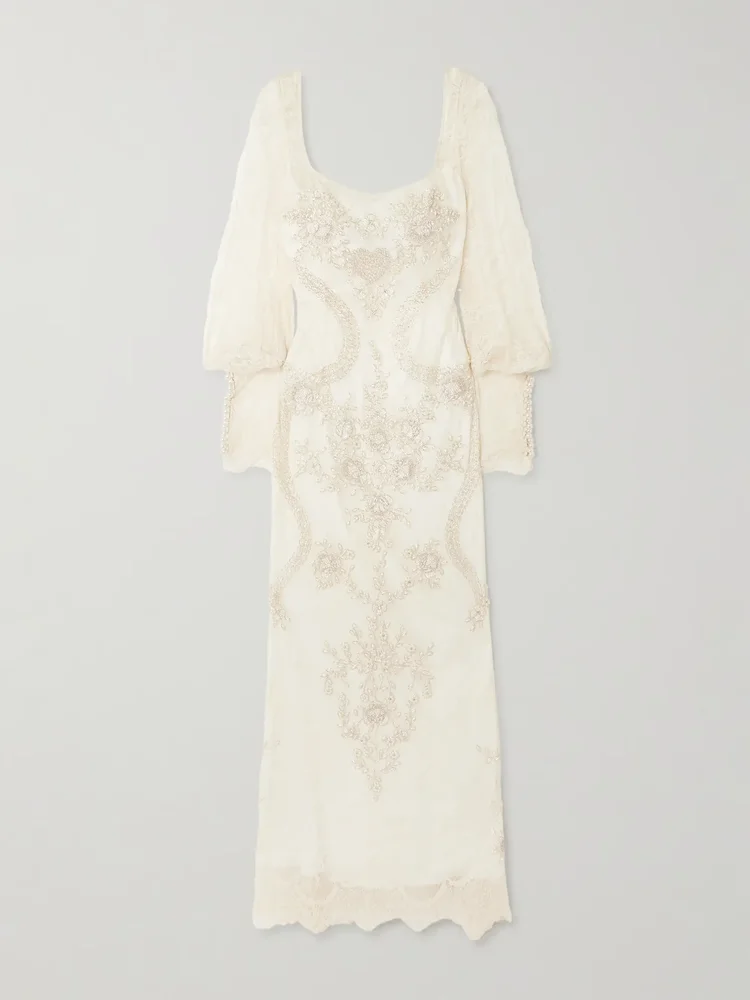
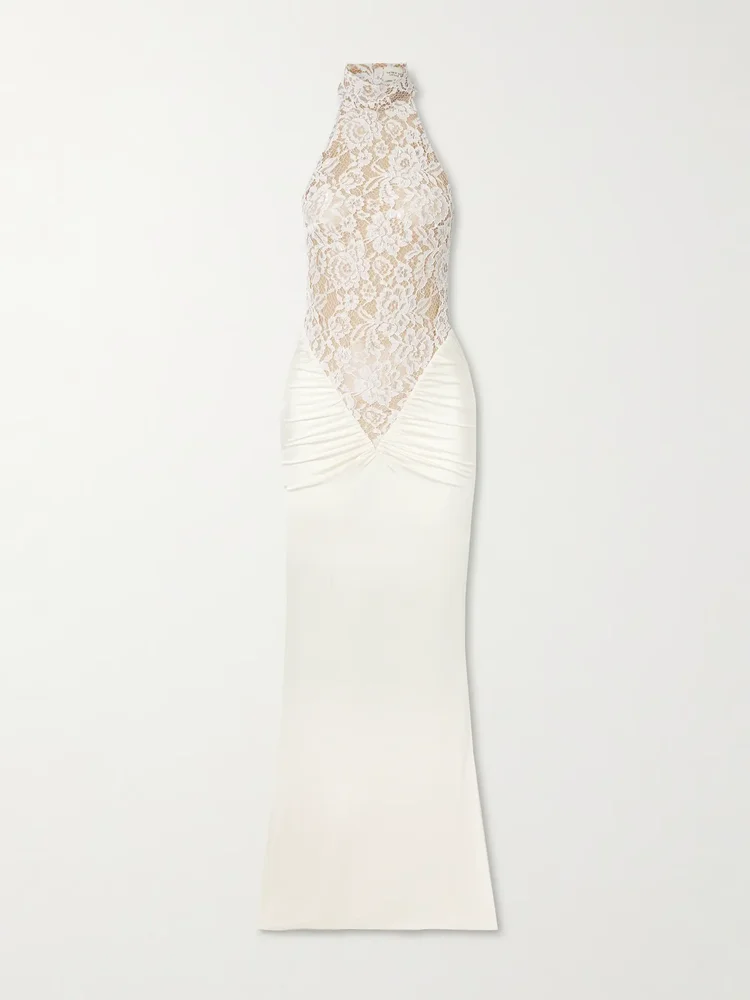
For a lace version of the daydream, I would choose details before silhouette. Clio Peppiatt’s Flora has leg-of-mutton sleeves and a scalloped hem, which would make a winter ceremony feel romantic without extra accessories. Danielle Frankel’s Edie pairs hand-cut floral appliqués with sheer chiffon panels and a long train; that train wants room and a simpler bouquet.
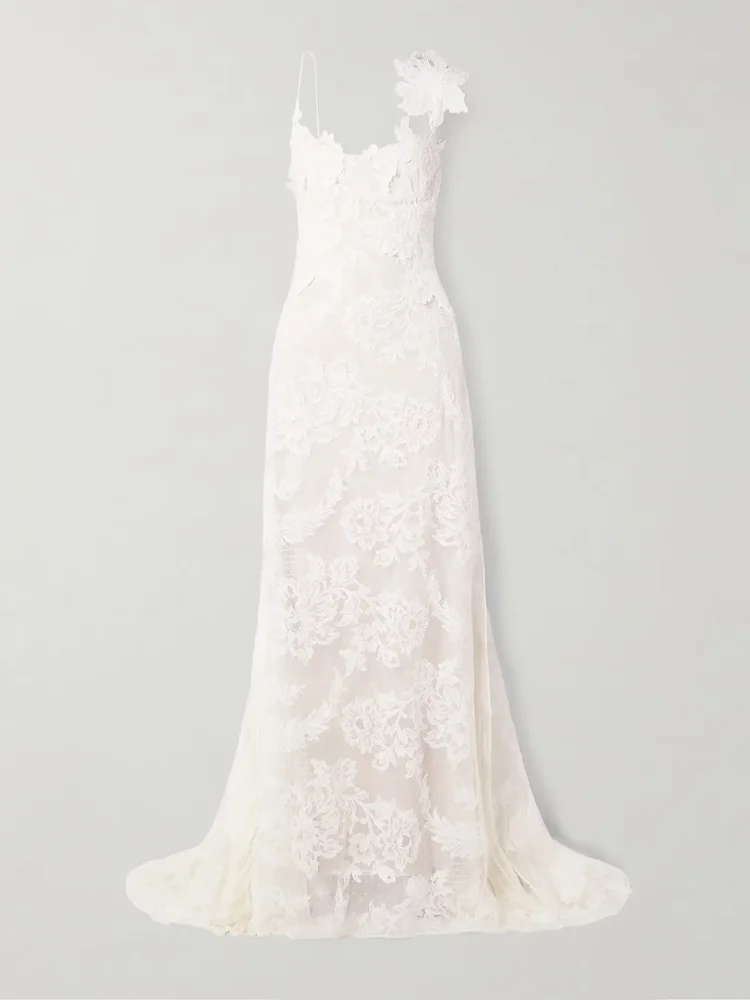
Oscar de la Renta’s off-the-shoulder gown balances puff sleeves with nude lining, while Ilkyaz Ozel’s Cass layers lace over beige tulle and gathers its satin-jersey skirt. I would decide on neckline and hem first, then check that the lace reads clearly against the lining in daylight and evening light. The scallop, the train, or the neckline is enough of a signature.
Satin for the wedding weekend
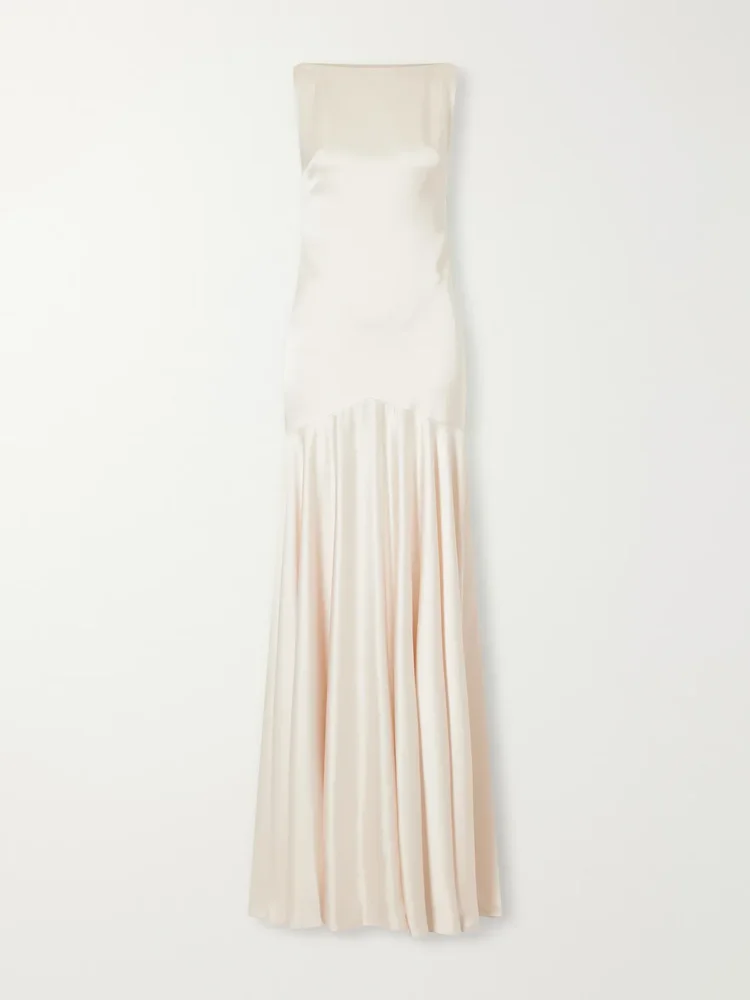
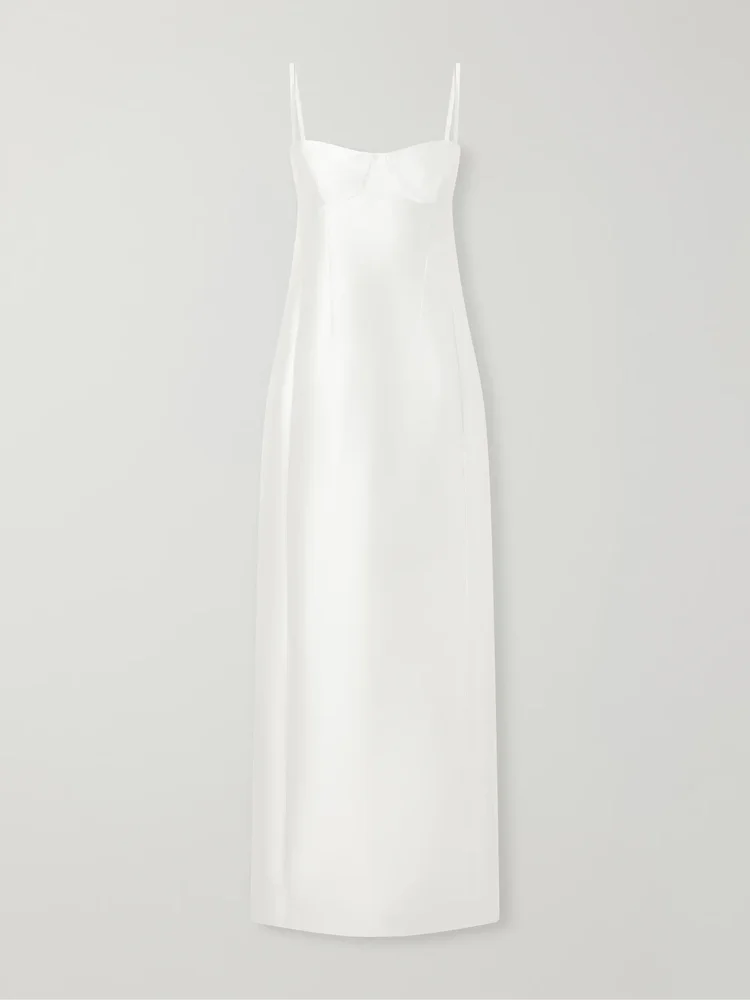
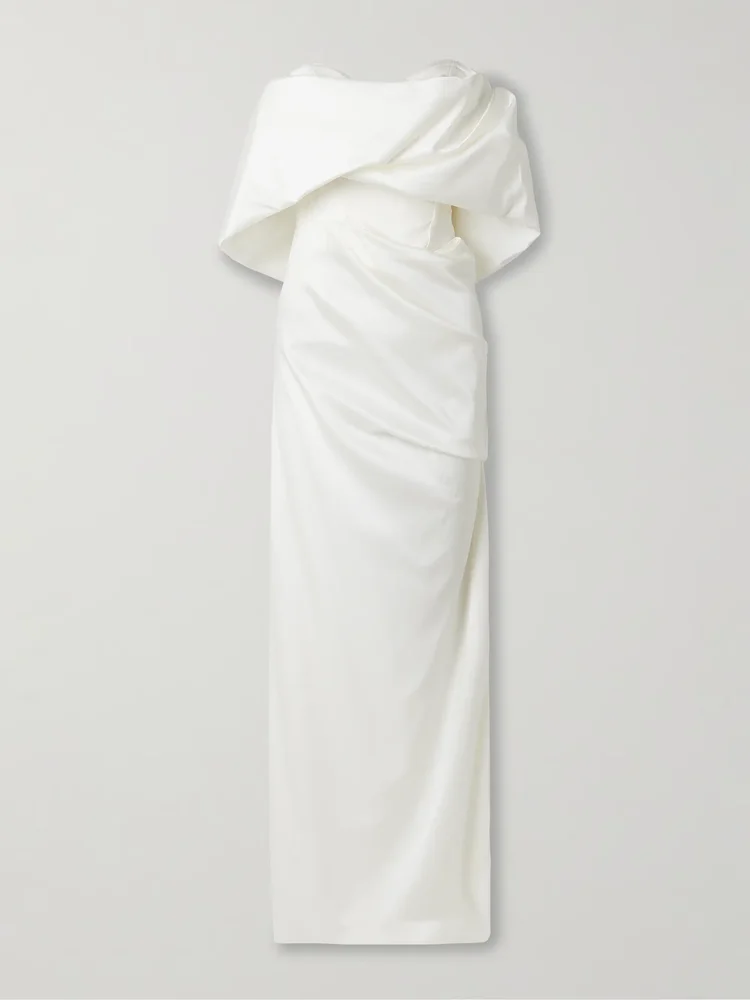
Before choosing a second look, I would decide what the evening needs: a clean line, a low back, or structure at the bodice. Ilkyaz Ozel’s Datura uses cascading folds at a dropped waist, so I would look for the waist seam to sit where it lengthens the line rather than cutting it in half. SIMKHAI’s Ruth brings contoured cups and fine straps; that is a useful choice if the neckline is meant to do the talking.
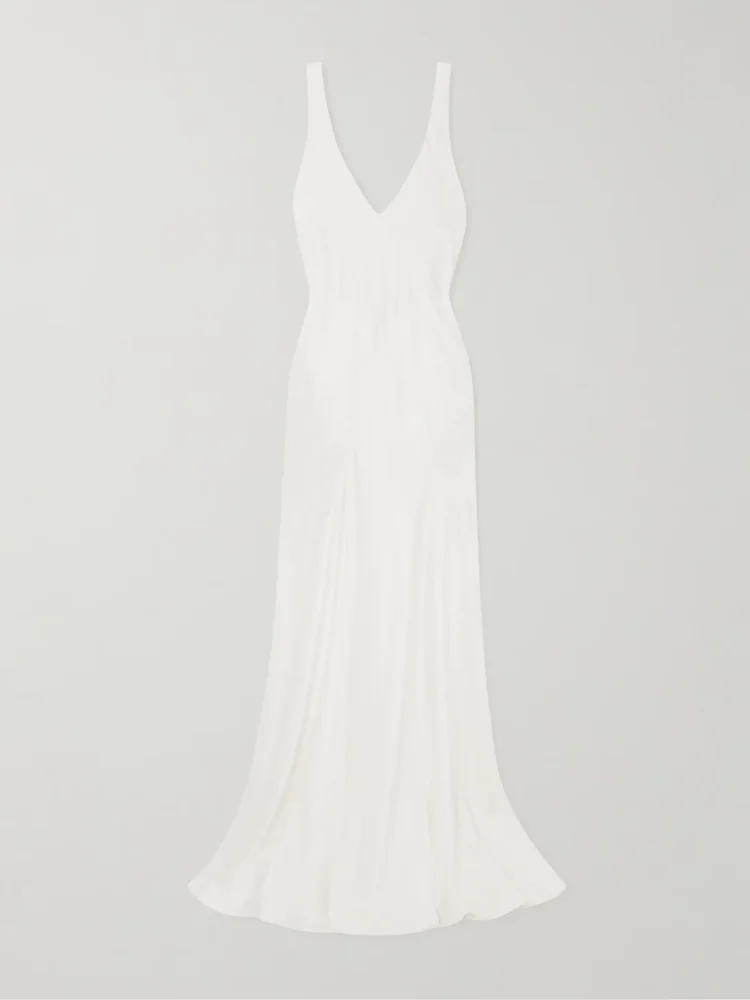
Olivia von Halle’s Paloma has a V-neck and an open back, with a soft straight skirt in silk satin. It reads like a dinner dress that happens to be bridal, especially with one pearl detail rather than a veil. Vivienne Westwood’s Sybyl takes the opposite route: off-shoulder draping over an internal corset, with a softly sculpted skirt. For Taylor Swift's Wedding Dress, I would let the contrast between lace and satin do the work, not try to make every moment grand.
At a fitting, I would sit, raise my arms, and check whether a low back or corset still feels secure; I would also check the hem against the shoes. What I would skip: a second full-ceremony silhouette if the party calls for movement. A quieter satin line can feel intentional after lace.
A veil or a smaller gesture
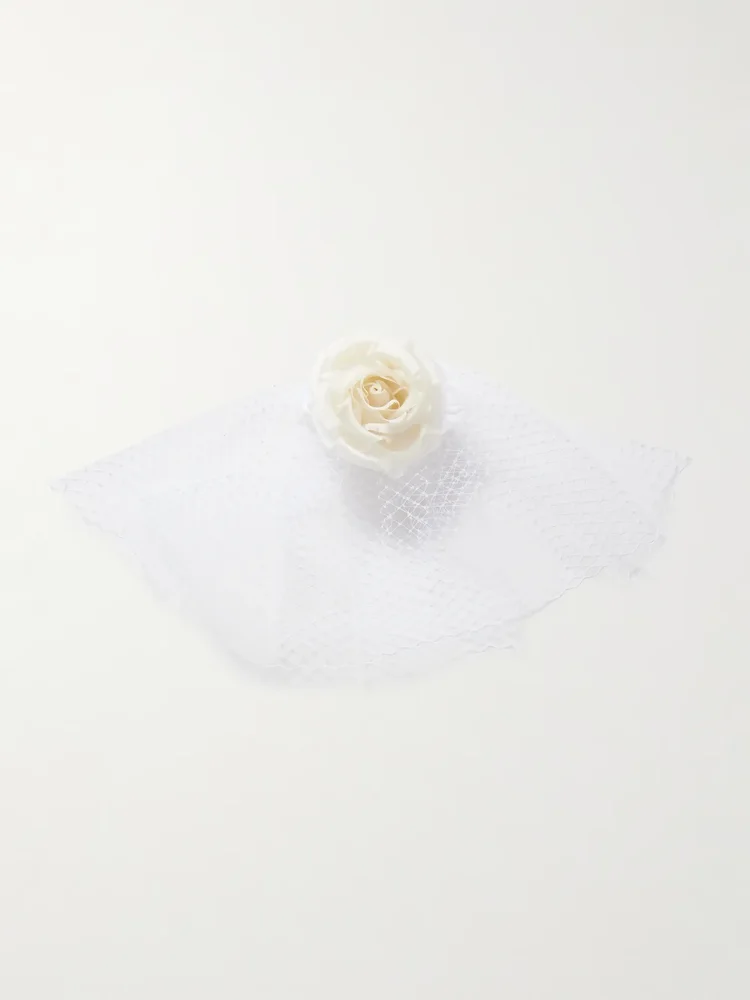
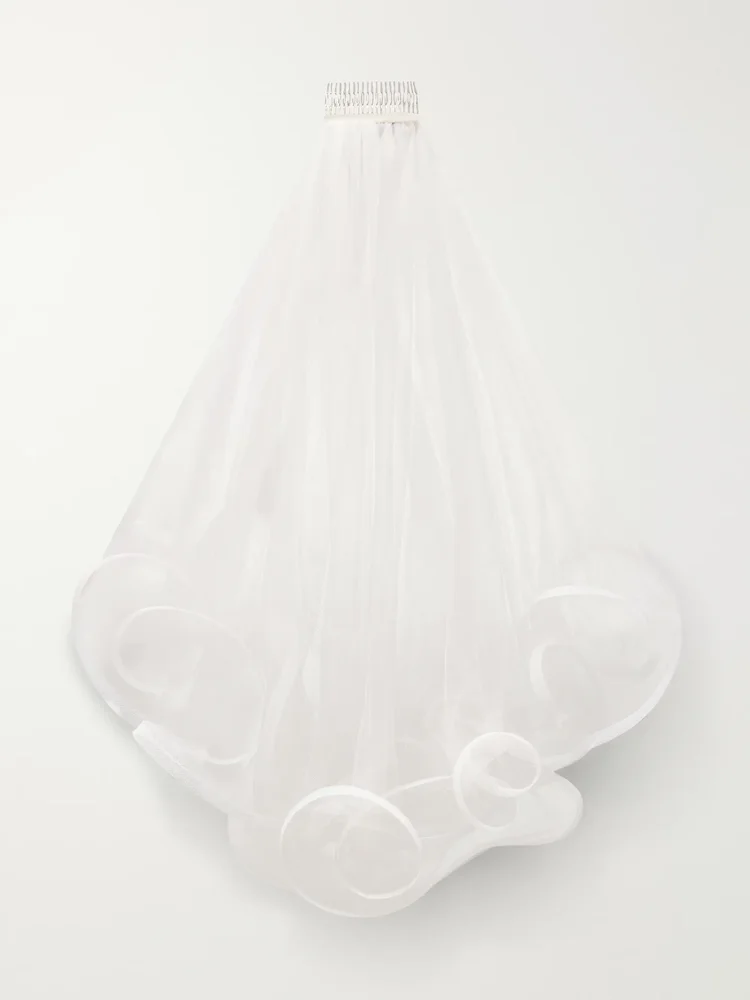
Taylor Swift's Wedding Dress has one accessory rule I would borrow: decide on the outline first. Rodarte’s silk-tulle veil rises into a floral appliqué, while Vivienne Westwood’s short white veil lets its wide horsehair braid define the hem; the difference is a handy way to choose between a grand frame and a sharper edge.
The detail I would keep
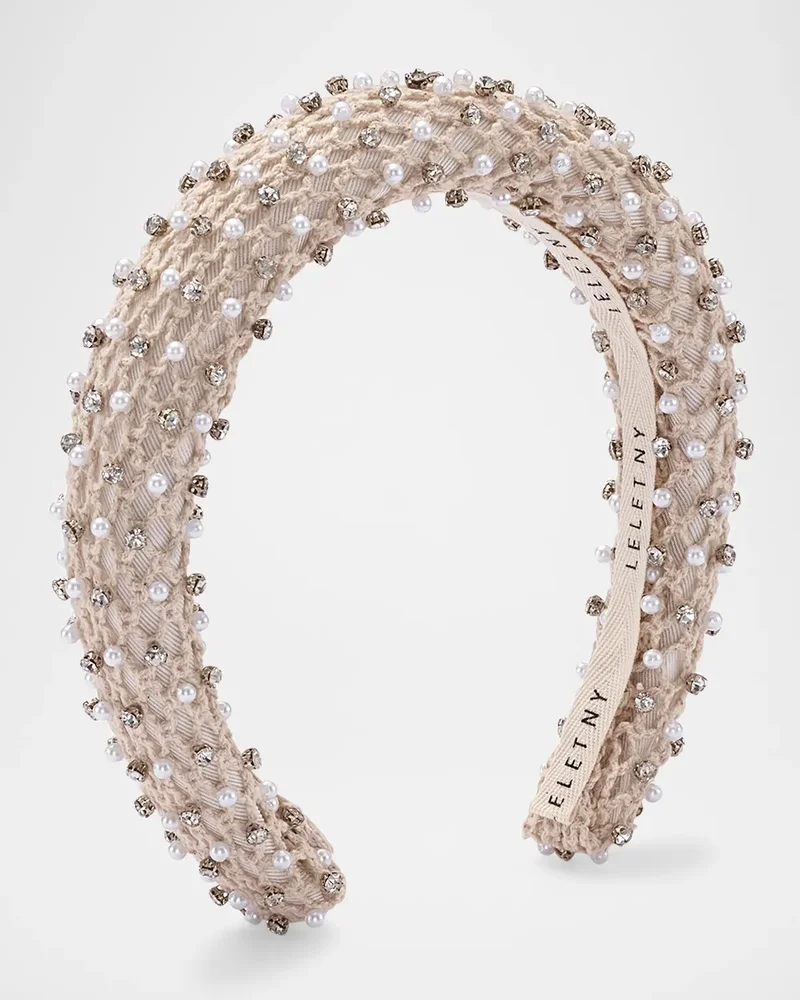
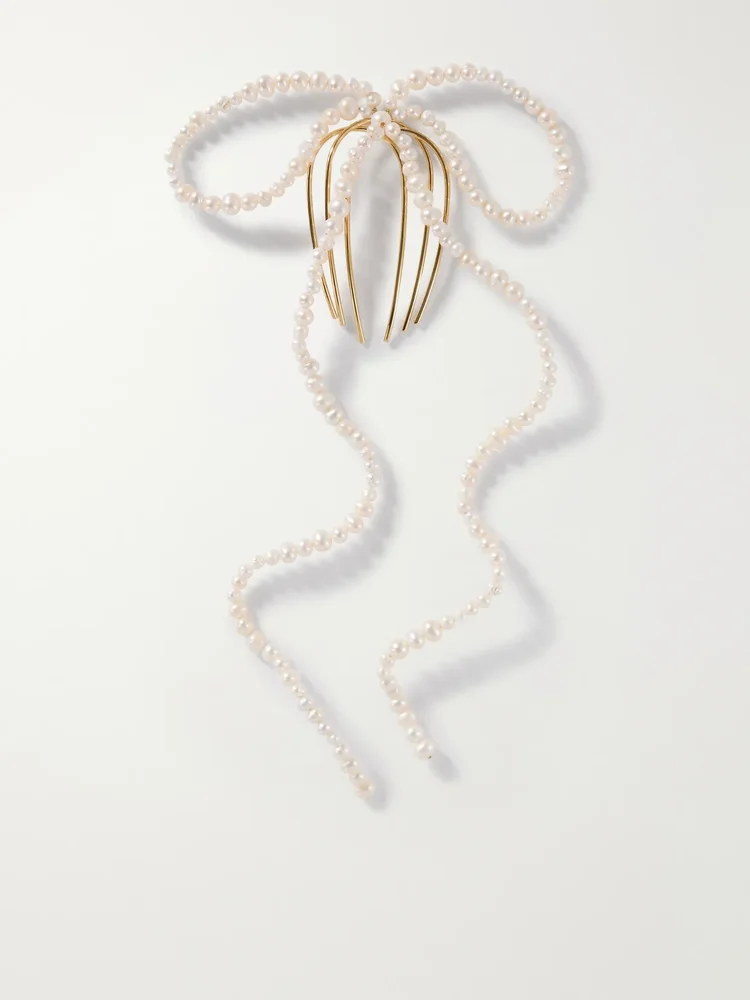
I would choose the silhouette that feels right before deciding on pearls, a bow, or a veil. Lace gives the ceremony a softer edge; satin makes the change into dinner feel natural, and a small pearl comb can be enough when the neckline already has a point of view. For Taylor Swift's Wedding Dress, the verified part is the collaboration with Anderson. I would let the setting carry the rest: the room at Madison Square Garden can be grand, but the gown can still feel personal.