This white denim jeans edit brings together relaxed cuts, skirts, jackets, and one short silhouette. Use it to compare proportions and decide where a light denim piece belongs in your everyday layers.
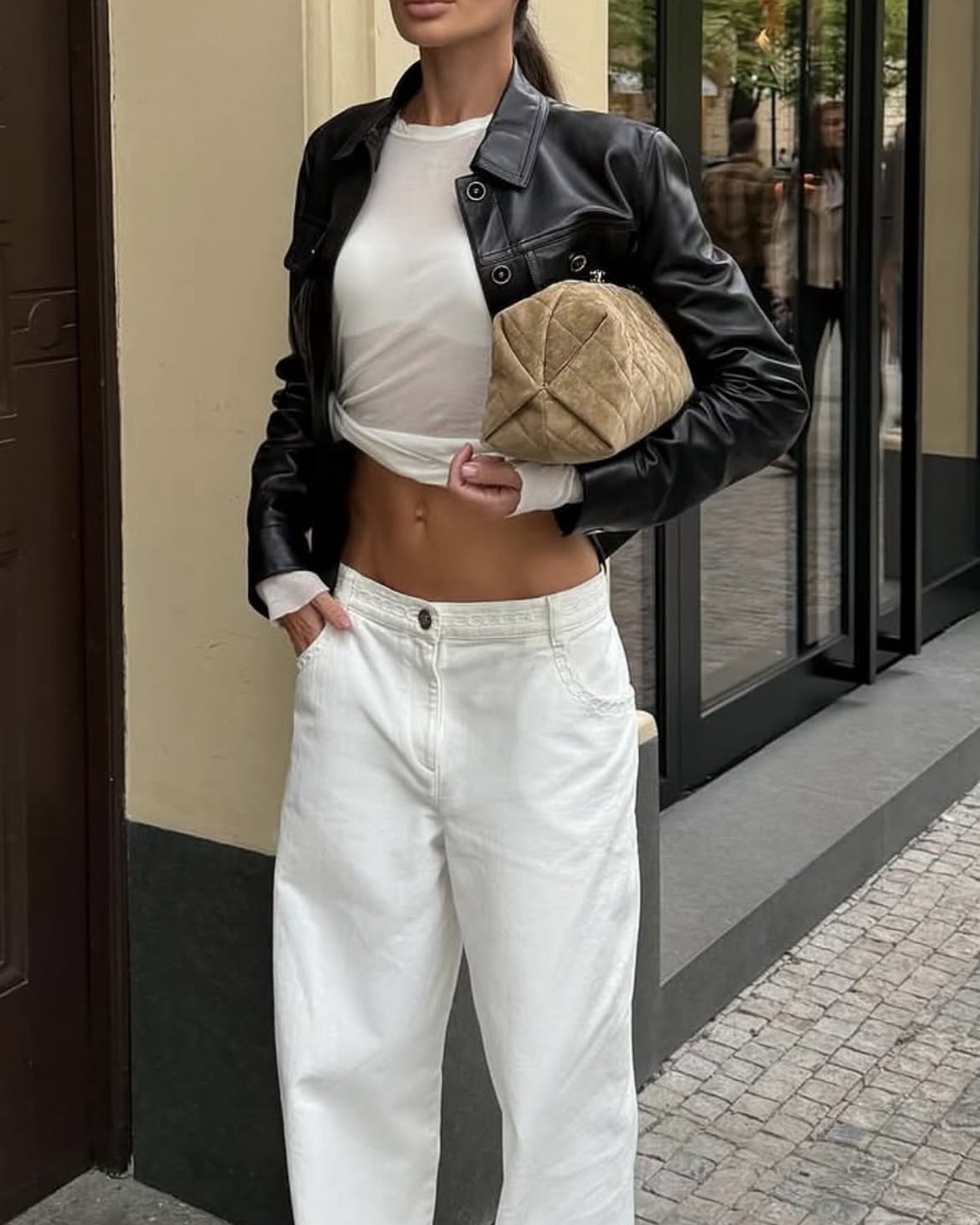
White denim jeans: A clean start with room for contrast
This white denim jeans edit brings together relaxed cuts, skirts, jackets, and one short silhouette.
Where denim began
On May 20, 1873, Levi Strauss and Jacob Davis received a patent for riveted work pants in San Francisco, the practical beginning of the blue jean. White denim jeans turn that workwear story toward a lighter palette, but the useful choice is still about shape. Decide what line you want the fabric to draw, then let the shade do its quiet work.
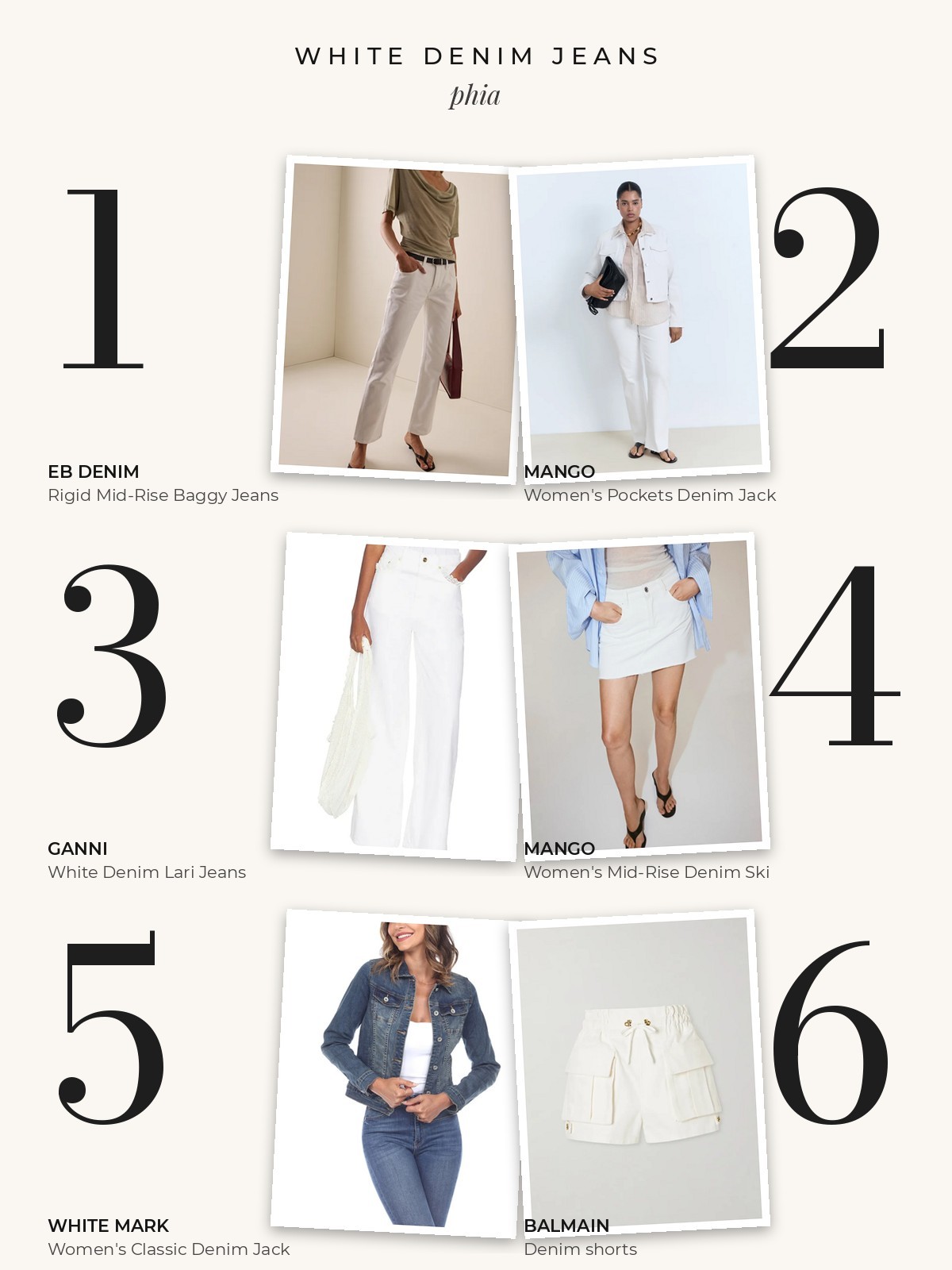
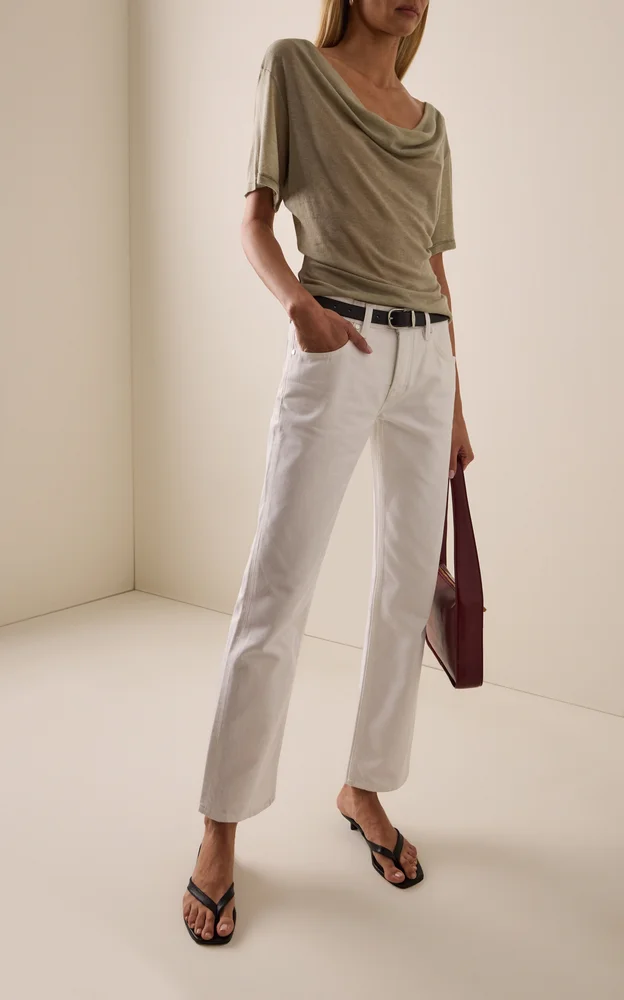
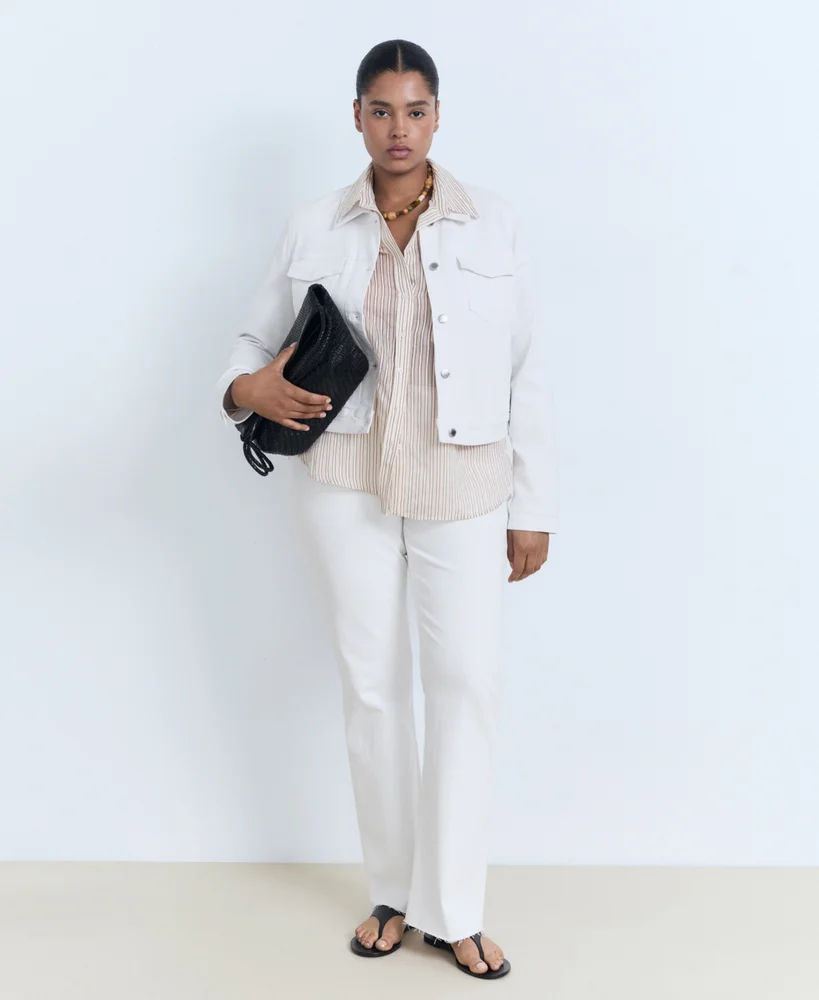
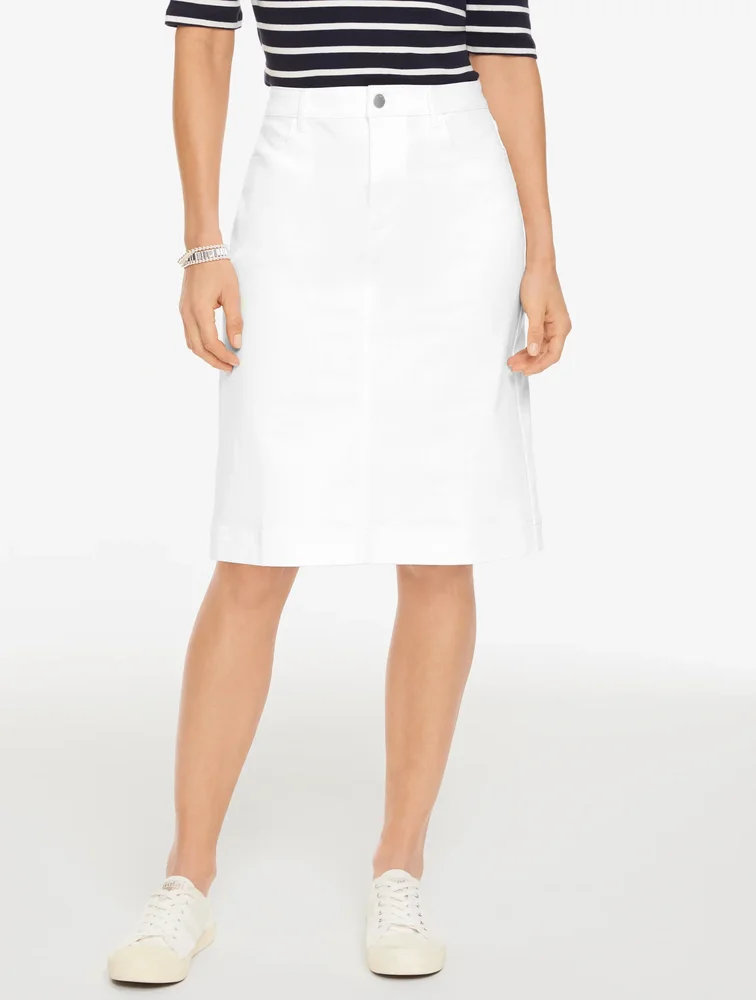
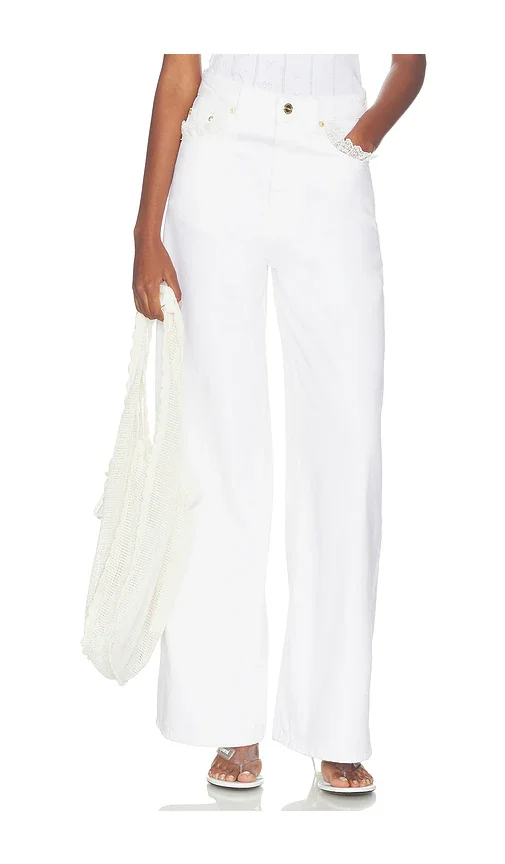
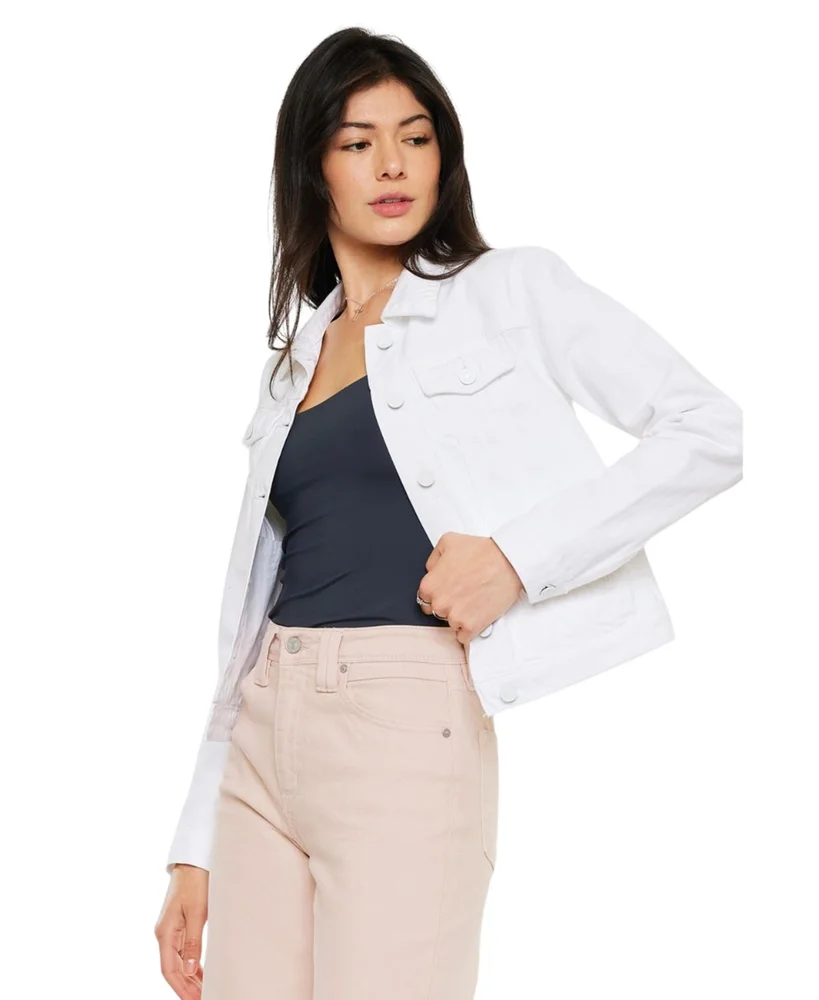
EB Denim's Rigid Mid-Rise Baggy Jeans are the direct jeans choice in this first group. The label's own foundation statement foregrounds attention to wash technique, fabrication, fit, and shape, which makes these rigid baggy jeans a good anchor for thinking about proportion. Mango's white denim jacket with pockets gives you a layer instead of another pair of pants; Talbots' white Denim A-Line Skirt shifts the same material into a more open silhouette. Ganni's White Denim Lari Jeans bring a second trouser option, so you can compare their line with EB Denim's mid-rise shape.
Try the jacket over a dark tee, or put the jeans beside a soft neutral top, and check the white in daylight before adding another pale shade. What I would skip is stacking several near-matching whites without checking their undertones first. The best white denim jeans look considered because their shapes have room to register.
Shape with a soft edge
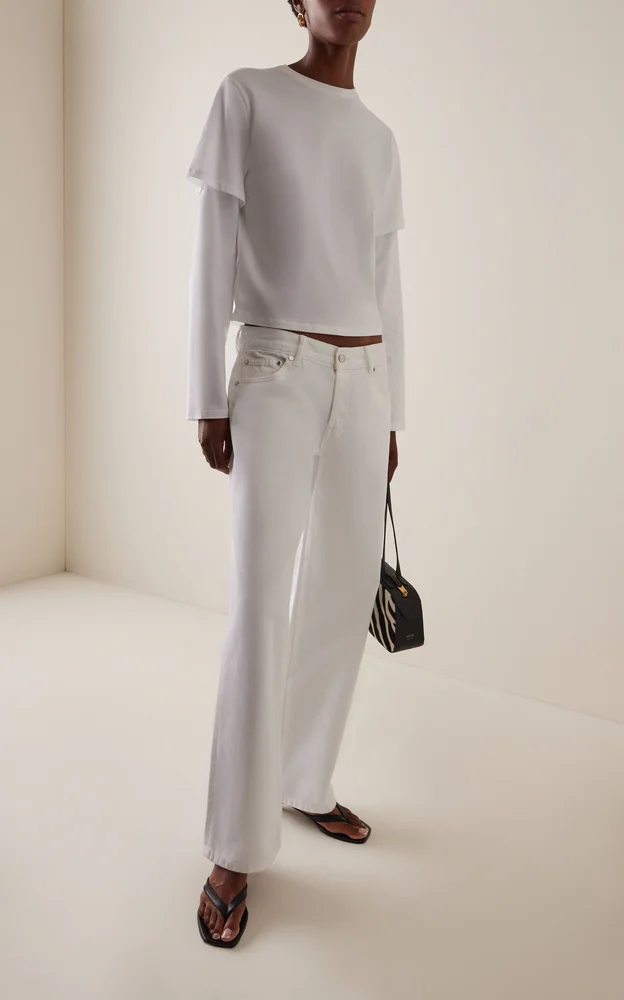
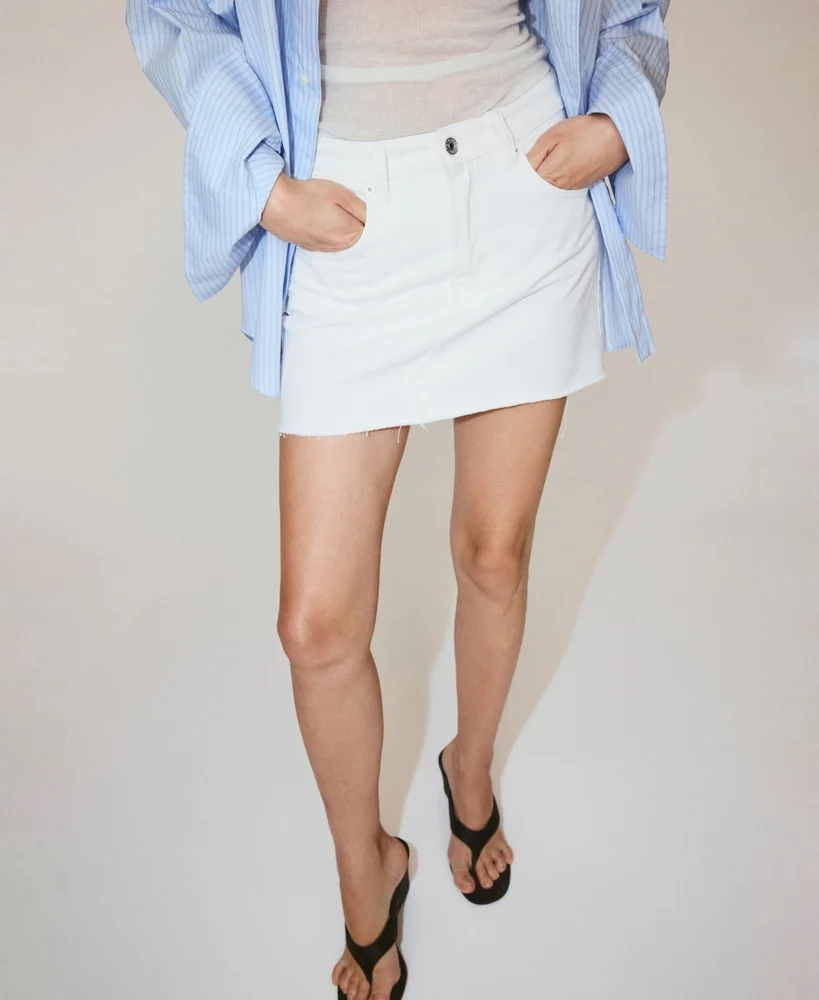
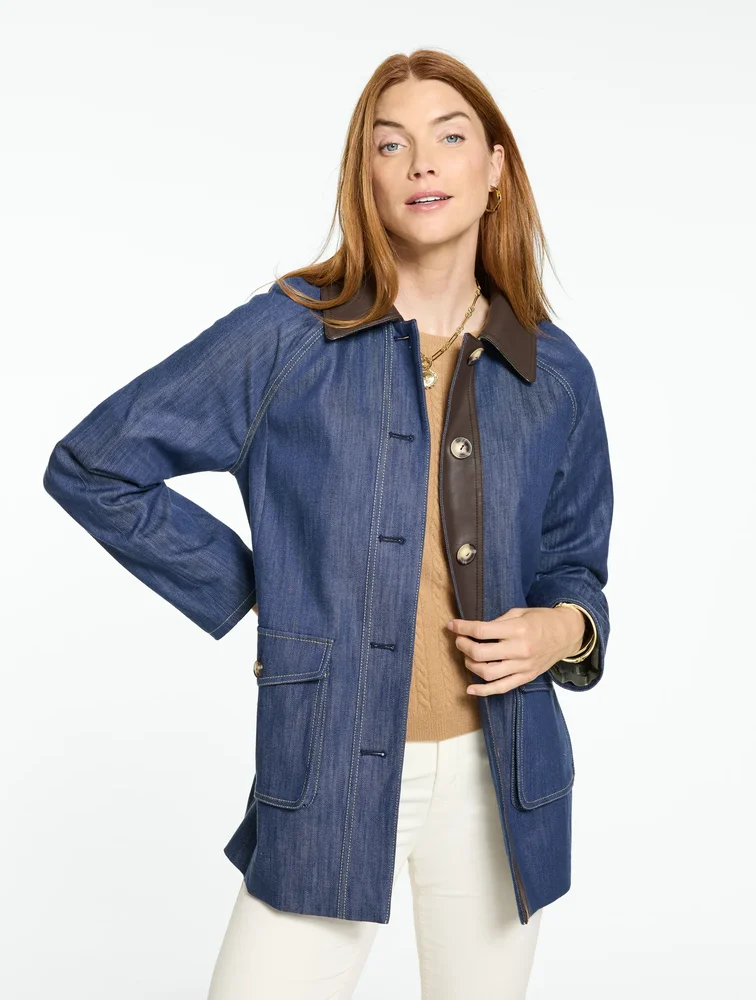
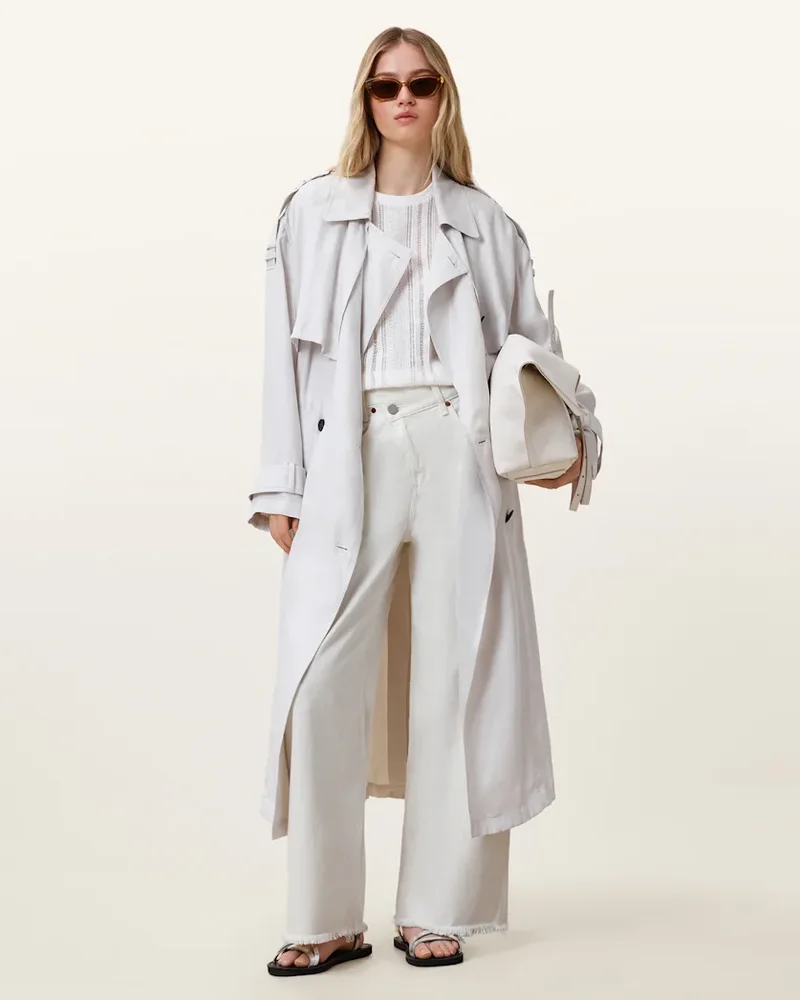
The second group is about balancing a relaxed jean with pieces that change its outline. EB Denim's Rigid Low-Rise Baggy Jeans bring the lower rise into the conversation, while Mango's white mid-rise denim skirt offers a clean break from trousers. Talbots' Refined Denim Barn Jacket in ink and white adds a two-tone layer, and AllSaints' Aki Crossover Wide Leg Denim Jeans give the grid its crossover detail and wider leg.
I like this mix because white denim jeans do not have to mean one exact uniform. Pair the low-rise baggy cut with a close-fitting top, or let the Mango skirt take the place of jeans under a simple shirt. The Talbots barn jacket can make a light bottom feel grounded, while the AllSaints wide leg asks for a shorter or tucked layer so the crossover shape stays visible.
For a practical check, put your intended top on with the jacket, then sit and stand once to see whether the waistline and hem still feel balanced. What I would skip is adding a long, loose top over both a baggy cut and a barn jacket; too many generous shapes can blur the outline. One crisp layer keeps white denim jeans easy to read.
Contrast makes it current
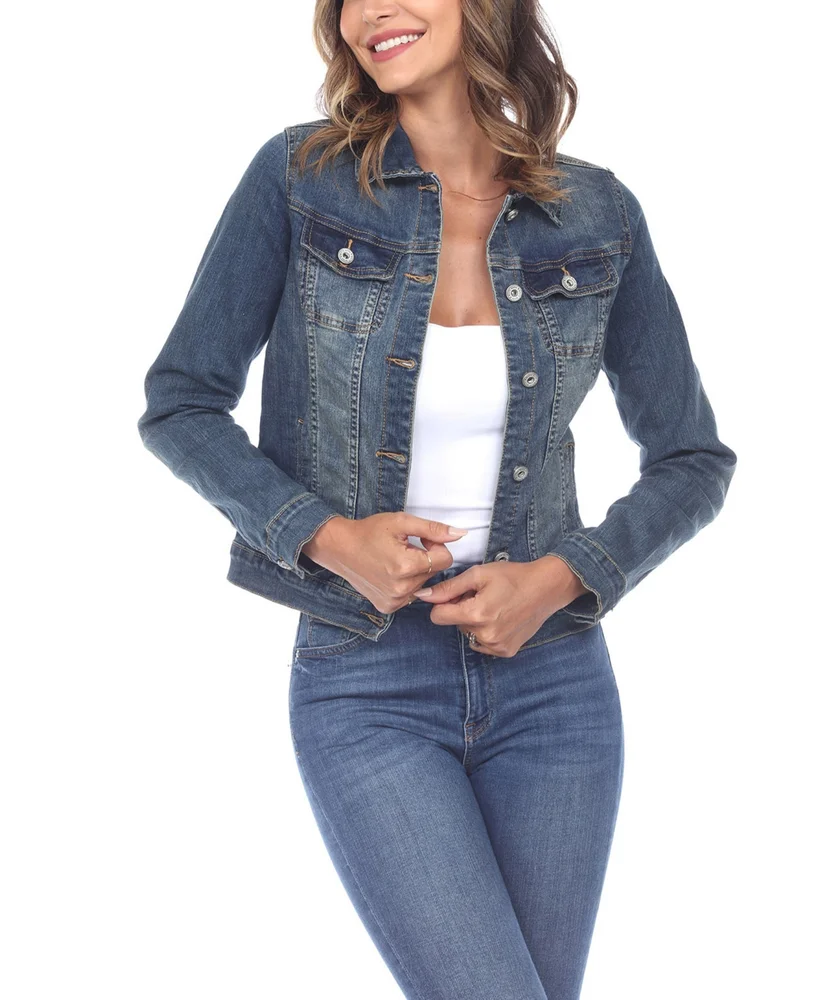
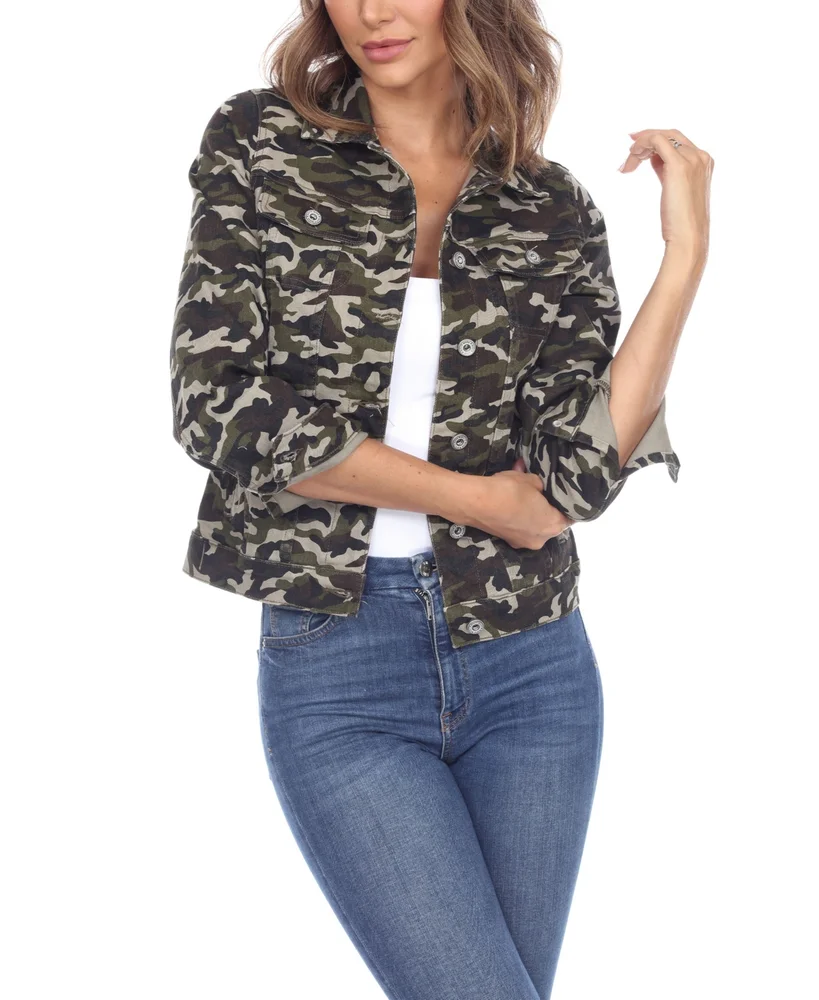
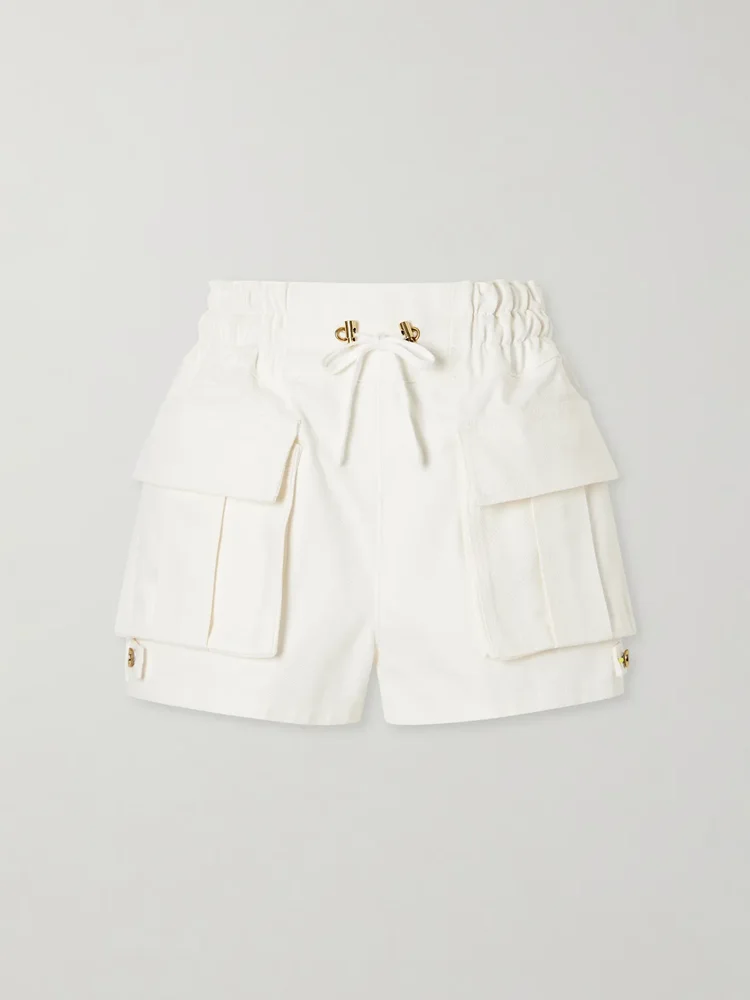
The last group deliberately widens the palette around white denim jeans. White Mark's Classic Denim Jacket is blue denim, and its Camo Denim Jacket is green army, so both work as contrast layers rather than matching white pieces. Balmain's denim shorts bring in a shorter shape, while KanCan's Delora Denim Jacket returns to white. It is a useful reminder that the light-denim idea can live in one anchor piece while the surrounding outfit carries other colors.
I would use the White Mark blue jacket with a white jean to keep the contrast simple, then bring the camo jacket into a look with a plain base layer. Balmain's denim shorts make sense as a separate warm-weather proportion, while the KanCan white jacket can sit over darker trousers when you want the light tone near your face instead. The product names give you a few different silhouettes, so you can choose whether the outfit starts at the waist, hem, or shoulder.
What I would skip is treating every denim item as if it must match. Test the two washes in the same light, then keep one of them as the accent. That way white denim jeans stay the focus without asking the full outfit to be monochrome.
A lighter denim equation
Think of white denim jeans as a shape decision before a color decision. A baggy cut, a skirt, or a jacket each changes the balance of an outfit in its own way, and a contrasting layer can make that choice feel deliberate.
I would begin with one pale denim piece, add a simple top, and bring in a jacket only if it gives the silhouette something useful. The result can be crisp without feeling precious: a familiar fabric, a different point of view, and enough contrast to make the whole outfit feel like yours.